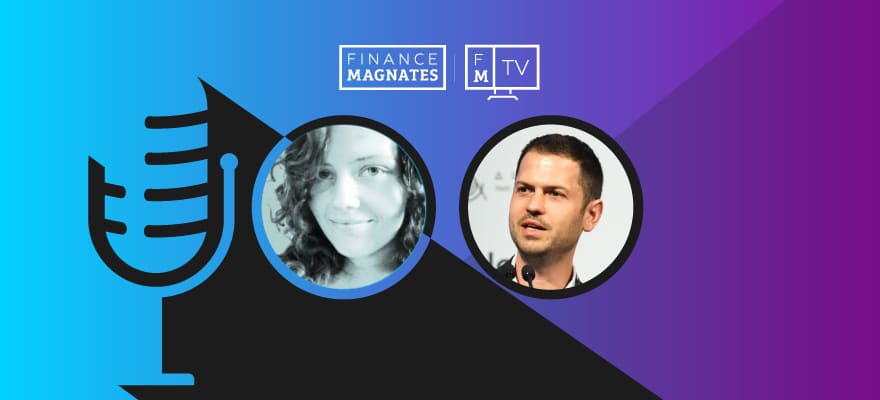
Scott Freeman speaks on crypto options, market trends throughout 2020, and more.
FM
2020 has been a huge year for crypto. Since early in the year, global uncertainty has sent shudders down the spine of the financial world. The turmoil, as well as the massive stimulus packages that emerged as a result, may have permanently changed the course of the world’s economic history.
One of the consequences of the economic events of this year has been an influx of investors into so-called 'alternative assets' as investors increasingly search for new places to find yield. For many investors, this search for yield has landed them squarely in cryptocurrency markets.
Scott Freeman, co-founder of JST Capital
Recently, Finance Magnates spoke to Scott Freeman, Co-Founder of JST Capital, about this influx of new money into crypto. JST Capital is a financial services firm specializing in the digital asset market, serving companies, foundations, and high-net-worth individuals.
Scott, who has a background in the traditional financial world, also spoke about the effects of government stimulus efforts on the economy, about current trends in the crypto markets, and about the work that JST Capital is engaged with.
Prior to co-founding JST, Scott was the co-founder and Managing Partner of Tachyon Capital Management, a quantitative hedge fund. He was also the Managing Director at Bank of America, where he oversaw the company’s electronic Foreign Exchange trading business.
Scott has also worked as an attorney with the Federal Reserve Bank of New York and served for several years as a prosecutor with the Manhattan District Attorney’s Office.
This is an excerpt. To hear Finance Magnates’ full interview with Scott Freeman, visit us on Soundcloud or Youtube.
Leveraging Crypto Options for Long-Term Gains
We asked Scott about how changes in market trends have influenced crypto options, which are an important part of JST Capital's operations. "We trade for our own book, and more importantly, we work with clients to help them use options to either generate returns or to manage their balance sheet better,” Scott said.
“[...] There are a lot of people in this ecosystem who are sitting on a large amount of crypto,” he said. “People who have been sitting on it for years and have a lot of their net wealth tied up in it, and are looking for ways to increase the return on that asset.”
At the same time, they “want to stay long on the asset,” Scott explained. “People like that are often interested in options structures where they generate premium. Maybe they give up some upside or give up some downside, but depending on their risk tolerance and their profile, we work with clients to help them generate additional returns on their assets.”
Scott explained that this group of crypto holders who have been sitting on large sums of crypto are some of JST’s ideal clients, individuals or entities that “are sitting on a large balance sheet of assets and do not necessarily want to sell those assets.” This can also include token issuers, as well as foundations within the cryptocurrency space.
“We’re big believers that over time, like every other asset, you will assess your ability to earn money on that asset when making an investment decision, like how when you buy a stock or bond, you have some expectation of return on that asset, you’ll do the same thing with crypto.
“If you can own Bitcoin and know that you can lock in a return of 5-7%, that will enhance or improve your ability to actually invest in Bitcoin.”
In March 2020, "the Overall Fear and Uncertainty in the Market Bled through to the Crypto Space."
However, “in the last month or so, we’ve seen a decay in the volatilities in crypto,” he said, a trend that JST Capital “has lots of debates internally and with clients over whether it will continue.
“We generally think that volatilities will come down from where they are, but we do expect that there will be ‘shocks’ to the system where volatilities do sway,” he said. “We do expect that in the longer-term, as crypto becomes more and more normalized as an asset and more people trade it, that it will tend to be a less volatile asset class.
“Interestingly enough, I would say that since March, when COVID hit and markets sold off pretty aggressively, crypto, at that point, became pretty correlated with other assets. I think that until then, it operated in its own bubble.
“When the world de-risked, and people started selling everything, you saw the same thing in crypto,” he said.
“[...] People got scared. When there’s fear in the market, your first reaction is to go to cash, to go to something that’s 100 percent stable that you know you can’t lose.”
“We think this could be a seminal moment for bitcoin,” - Scott Freeman, Co-Founder of JST Capital on Paul Tudor Jones and the acceptance of $btc among macro investors. His full take in @BillyBambrough’s latest for @ForbesCrypto 👇 https://t.co/g0aGwxoZ9p
“The overall fear and uncertainty in the market bled through to the crypto space, which is rational,” he said. “It was a rational response to an irrational time.”
Additionally, “At some level...you see crypto being used as another risk asset: when people are taking risk off in the market, you do see some of that crypto bleeding into the crypto space, which we hadn’t really seen prior to March of this year.”
As Traders Settle In, Volatility and Leveraging Decline
Scott also said that he believes there has been “some de-leveraging happening.
“I think that people really levered up over the summer. They saw crypto as a nice way to get additional yield,” he said. This increase in leverage boosted some of the volatility that was present in the crypto space over the summer.
“We’ve seen a lot of that leverage come out of the market now,” he continued, “looking at our own analysis of open interest, options positions, and things like that.”
As this deleveraging has continued to occur, so too has there been a decline in volatility in crypto markets. “We could argue over which one leads the other. Is it lower volatility that drives lower leverage, or lower leverage that drives lower volatility?” Scott asked.
In either case, “we have seen both of those factors come down over the last two months.”
Still, despite the volatility fluctuations in cryptocurrency markets, there has been an increased number of investors heading for the cryptocurrency space, particularly since the Federal Reserve began quantitative easing as part of its COVID-related stimulus efforts earlier this year.
Scott explained that this is because investors are hungry for returns, which are few and far between: “we’ve seen an increase in investors that are looking for yield. You can’t find yield anywhere these days.”
“The world is awash in cash right now,” he said. “People just need places to put it, and to buy a ten-year note and earn 70 basis points on it, or to buy stock in Apple that’s gone up four-fold this year. Those just aren’t great places to put it these days.”
“In the past, where people didn’t want to deal with some of the anomalies of the crypto ecosystem (the way that custody works, the way that trading works, the way that exchanges work; the lack of consistent regulations). I think that people are more comfortable with those risks now,” he said.
“They’re comfortable investing assets in this ecosystem because returns elsewhere are so anaemic right now.”
Winds in the Sails of Crypto
Scott said that he sees the trend toward crypto continuing: "we think there’s a lot of ‘tail winds’ for us that are supporting it.
“For one thing, the regulatory environment is getting a lot more favorable: there’s a lot more transparency, there are a lot more regulators that are giving clear guidance on where their lines are of what you can and can’t do.”
Additionally, “clients are valuing customers and institutions that have a clear regulatory framework. So if you are regulated, we think of that as a competitive advantage,” he said, “and clients think that’s a competitive advantage.”
There is also massive expansion happening in cryptocurrency at the moment: “we also think that the growth of the Defi space has been huge in the last six months,” he said. “We think that’s going to be a huge evolution.”
This is an excerpt. To hear Finance Magnates’ full interview, visit us on Soundcloud or Youtube.
2020 has been a huge year for crypto. Since early in the year, global uncertainty has sent shudders down the spine of the financial world. The turmoil, as well as the massive stimulus packages that emerged as a result, may have permanently changed the course of the world’s economic history.
One of the consequences of the economic events of this year has been an influx of investors into so-called 'alternative assets' as investors increasingly search for new places to find yield. For many investors, this search for yield has landed them squarely in cryptocurrency markets.
Scott Freeman, co-founder of JST Capital
Recently, Finance Magnates spoke to Scott Freeman, Co-Founder of JST Capital, about this influx of new money into crypto. JST Capital is a financial services firm specializing in the digital asset market, serving companies, foundations, and high-net-worth individuals.
Scott, who has a background in the traditional financial world, also spoke about the effects of government stimulus efforts on the economy, about current trends in the crypto markets, and about the work that JST Capital is engaged with.
Prior to co-founding JST, Scott was the co-founder and Managing Partner of Tachyon Capital Management, a quantitative hedge fund. He was also the Managing Director at Bank of America, where he oversaw the company’s electronic Foreign Exchange trading business.
Scott has also worked as an attorney with the Federal Reserve Bank of New York and served for several years as a prosecutor with the Manhattan District Attorney’s Office.
This is an excerpt. To hear Finance Magnates’ full interview with Scott Freeman, visit us on Soundcloud or Youtube.
Leveraging Crypto Options for Long-Term Gains
We asked Scott about how changes in market trends have influenced crypto options, which are an important part of JST Capital's operations. "We trade for our own book, and more importantly, we work with clients to help them use options to either generate returns or to manage their balance sheet better,” Scott said.
“[...] There are a lot of people in this ecosystem who are sitting on a large amount of crypto,” he said. “People who have been sitting on it for years and have a lot of their net wealth tied up in it, and are looking for ways to increase the return on that asset.”
At the same time, they “want to stay long on the asset,” Scott explained. “People like that are often interested in options structures where they generate premium. Maybe they give up some upside or give up some downside, but depending on their risk tolerance and their profile, we work with clients to help them generate additional returns on their assets.”
Scott explained that this group of crypto holders who have been sitting on large sums of crypto are some of JST’s ideal clients, individuals or entities that “are sitting on a large balance sheet of assets and do not necessarily want to sell those assets.” This can also include token issuers, as well as foundations within the cryptocurrency space.
“We’re big believers that over time, like every other asset, you will assess your ability to earn money on that asset when making an investment decision, like how when you buy a stock or bond, you have some expectation of return on that asset, you’ll do the same thing with crypto.
“If you can own Bitcoin and know that you can lock in a return of 5-7%, that will enhance or improve your ability to actually invest in Bitcoin.”
In March 2020, "the Overall Fear and Uncertainty in the Market Bled through to the Crypto Space."
However, “in the last month or so, we’ve seen a decay in the volatilities in crypto,” he said, a trend that JST Capital “has lots of debates internally and with clients over whether it will continue.
“We generally think that volatilities will come down from where they are, but we do expect that there will be ‘shocks’ to the system where volatilities do sway,” he said. “We do expect that in the longer-term, as crypto becomes more and more normalized as an asset and more people trade it, that it will tend to be a less volatile asset class.
“Interestingly enough, I would say that since March, when COVID hit and markets sold off pretty aggressively, crypto, at that point, became pretty correlated with other assets. I think that until then, it operated in its own bubble.
“When the world de-risked, and people started selling everything, you saw the same thing in crypto,” he said.
“[...] People got scared. When there’s fear in the market, your first reaction is to go to cash, to go to something that’s 100 percent stable that you know you can’t lose.”
“We think this could be a seminal moment for bitcoin,” - Scott Freeman, Co-Founder of JST Capital on Paul Tudor Jones and the acceptance of $btc among macro investors. His full take in @BillyBambrough’s latest for @ForbesCrypto 👇 https://t.co/g0aGwxoZ9p
“The overall fear and uncertainty in the market bled through to the crypto space, which is rational,” he said. “It was a rational response to an irrational time.”
Additionally, “At some level...you see crypto being used as another risk asset: when people are taking risk off in the market, you do see some of that crypto bleeding into the crypto space, which we hadn’t really seen prior to March of this year.”
As Traders Settle In, Volatility and Leveraging Decline
Scott also said that he believes there has been “some de-leveraging happening.
“I think that people really levered up over the summer. They saw crypto as a nice way to get additional yield,” he said. This increase in leverage boosted some of the volatility that was present in the crypto space over the summer.
“We’ve seen a lot of that leverage come out of the market now,” he continued, “looking at our own analysis of open interest, options positions, and things like that.”
As this deleveraging has continued to occur, so too has there been a decline in volatility in crypto markets. “We could argue over which one leads the other. Is it lower volatility that drives lower leverage, or lower leverage that drives lower volatility?” Scott asked.
In either case, “we have seen both of those factors come down over the last two months.”
Still, despite the volatility fluctuations in cryptocurrency markets, there has been an increased number of investors heading for the cryptocurrency space, particularly since the Federal Reserve began quantitative easing as part of its COVID-related stimulus efforts earlier this year.
Scott explained that this is because investors are hungry for returns, which are few and far between: “we’ve seen an increase in investors that are looking for yield. You can’t find yield anywhere these days.”
“The world is awash in cash right now,” he said. “People just need places to put it, and to buy a ten-year note and earn 70 basis points on it, or to buy stock in Apple that’s gone up four-fold this year. Those just aren’t great places to put it these days.”
“In the past, where people didn’t want to deal with some of the anomalies of the crypto ecosystem (the way that custody works, the way that trading works, the way that exchanges work; the lack of consistent regulations). I think that people are more comfortable with those risks now,” he said.
“They’re comfortable investing assets in this ecosystem because returns elsewhere are so anaemic right now.”
Winds in the Sails of Crypto
Scott said that he sees the trend toward crypto continuing: "we think there’s a lot of ‘tail winds’ for us that are supporting it.
“For one thing, the regulatory environment is getting a lot more favorable: there’s a lot more transparency, there are a lot more regulators that are giving clear guidance on where their lines are of what you can and can’t do.”
Additionally, “clients are valuing customers and institutions that have a clear regulatory framework. So if you are regulated, we think of that as a competitive advantage,” he said, “and clients think that’s a competitive advantage.”
There is also massive expansion happening in cryptocurrency at the moment: “we also think that the growth of the Defi space has been huge in the last six months,” he said. “We think that’s going to be a huge evolution.”
This is an excerpt. To hear Finance Magnates’ full interview, visit us on Soundcloud or Youtube.
Rachel is a self-taught crypto geek and a passionate writer. She believes in the power that the written word has to educate, connect and empower individuals to make positive and powerful financial choices. She is the Podcast Host and a Cryptocurrency Editor at Finance Magnates.
Crypto Built More Rails, but the Next Battle Is Over How Much Work a Dollar Can Do
Featured Videos
FP Markets Winner Spotlight 🏆 | Global Broker of the Year 2025 #Trading #Broker #Innovation #Shorts
FP Markets Winner Spotlight 🏆 | Global Broker of the Year 2025 #Trading #Broker #Innovation #Shorts
FP Markets Winner Spotlight 🏆 | Global Broker of the Year 2025 #Trading #Broker #Innovation #Shorts
FP Markets Winner Spotlight 🏆 | Global Broker of the Year 2025 #Trading #Broker #Innovation #Shorts
FP Markets takes the spotlight as Global Broker of the Year 2025 at the Finance Magnates Awards.
Martin Stoilov, Head of Client Experience, shares that trust, innovation, and people played a key role in the company’s success, supported by a strong foundation of integrity and client-centricity.
Following this milestone, FP Markets continues to focus on growth, technology investment, and its core values of transparency and excellence.
👉 Be part of FM Awards 2026: https://awards.financemagnates.com/#nominate
FP Markets takes the spotlight as Global Broker of the Year 2025 at the Finance Magnates Awards.
Martin Stoilov, Head of Client Experience, shares that trust, innovation, and people played a key role in the company’s success, supported by a strong foundation of integrity and client-centricity.
Following this milestone, FP Markets continues to focus on growth, technology investment, and its core values of transparency and excellence.
👉 Be part of FM Awards 2026: https://awards.financemagnates.com/#nominate
FP Markets takes the spotlight as Global Broker of the Year 2025 at the Finance Magnates Awards.
Martin Stoilov, Head of Client Experience, shares that trust, innovation, and people played a key role in the company’s success, supported by a strong foundation of integrity and client-centricity.
Following this milestone, FP Markets continues to focus on growth, technology investment, and its core values of transparency and excellence.
👉 Be part of FM Awards 2026: https://awards.financemagnates.com/#nominate
FP Markets takes the spotlight as Global Broker of the Year 2025 at the Finance Magnates Awards.
Martin Stoilov, Head of Client Experience, shares that trust, innovation, and people played a key role in the company’s success, supported by a strong foundation of integrity and client-centricity.
Following this milestone, FP Markets continues to focus on growth, technology investment, and its core values of transparency and excellence.
👉 Be part of FM Awards 2026: https://awards.financemagnates.com/#nominate
In this video, we review @HolaPrimeMarketsOfficial, a multi-asset forex and CFDs broker offering different account types, trading platforms, and flexible trading conditions.
We cover the broker’s overall offering, including account options, trading environment, platforms like MT4 and MT5, and additional services such as managed accounts and fast withdrawals.
Watch the full video to see if Hola Prime Markets fits your trading needs.
📣 Stay up to date with the latest in finance and trading. Follow Finance Magnates for industry news, insights, and global event coverage.
Connect with us:
🔗 LinkedIn: /financemagnates
👍 Facebook: /financemagnates
📸 Instagram: https://www.instagram.com/financemagnates
🐦 X: https://x.com/financemagnates
🎥 TikTok: https://www.tiktok.com/tag/financemagnates
▶️ YouTube: /@financemagnates_official
#HolaPrime #ForexBroker #CFDTrading #FinanceMagnates #Trading #Forex #BrokerReview
In this video, we review @HolaPrimeMarketsOfficial, a multi-asset forex and CFDs broker offering different account types, trading platforms, and flexible trading conditions.
We cover the broker’s overall offering, including account options, trading environment, platforms like MT4 and MT5, and additional services such as managed accounts and fast withdrawals.
Watch the full video to see if Hola Prime Markets fits your trading needs.
📣 Stay up to date with the latest in finance and trading. Follow Finance Magnates for industry news, insights, and global event coverage.
Connect with us:
🔗 LinkedIn: /financemagnates
👍 Facebook: /financemagnates
📸 Instagram: https://www.instagram.com/financemagnates
🐦 X: https://x.com/financemagnates
🎥 TikTok: https://www.tiktok.com/tag/financemagnates
▶️ YouTube: /@financemagnates_official
#HolaPrime #ForexBroker #CFDTrading #FinanceMagnates #Trading #Forex #BrokerReview
In this video, we review @HolaPrimeMarketsOfficial, a multi-asset forex and CFDs broker offering different account types, trading platforms, and flexible trading conditions.
We cover the broker’s overall offering, including account options, trading environment, platforms like MT4 and MT5, and additional services such as managed accounts and fast withdrawals.
Watch the full video to see if Hola Prime Markets fits your trading needs.
📣 Stay up to date with the latest in finance and trading. Follow Finance Magnates for industry news, insights, and global event coverage.
Connect with us:
🔗 LinkedIn: /financemagnates
👍 Facebook: /financemagnates
📸 Instagram: https://www.instagram.com/financemagnates
🐦 X: https://x.com/financemagnates
🎥 TikTok: https://www.tiktok.com/tag/financemagnates
▶️ YouTube: /@financemagnates_official
#HolaPrime #ForexBroker #CFDTrading #FinanceMagnates #Trading #Forex #BrokerReview
In this video, we review @HolaPrimeMarketsOfficial, a multi-asset forex and CFDs broker offering different account types, trading platforms, and flexible trading conditions.
We cover the broker’s overall offering, including account options, trading environment, platforms like MT4 and MT5, and additional services such as managed accounts and fast withdrawals.
Watch the full video to see if Hola Prime Markets fits your trading needs.
📣 Stay up to date with the latest in finance and trading. Follow Finance Magnates for industry news, insights, and global event coverage.
Connect with us:
🔗 LinkedIn: /financemagnates
👍 Facebook: /financemagnates
📸 Instagram: https://www.instagram.com/financemagnates
🐦 X: https://x.com/financemagnates
🎥 TikTok: https://www.tiktok.com/tag/financemagnates
▶️ YouTube: /@financemagnates_official
#HolaPrime #ForexBroker #CFDTrading #FinanceMagnates #Trading #Forex #BrokerReview
In this video, we review @HolaPrimeMarketsOfficial, a multi-asset forex and CFDs broker offering different account types, trading platforms, and flexible trading conditions.
We cover the broker’s overall offering, including account options, trading environment, platforms like MT4 and MT5, and additional services such as managed accounts and fast withdrawals.
Watch the full video to see if Hola Prime Markets fits your trading needs.
📣 Stay up to date with the latest in finance and trading. Follow Finance Magnates for industry news, insights, and global event coverage.
Connect with us:
🔗 LinkedIn: /financemagnates
👍 Facebook: /financemagnates
📸 Instagram: https://www.instagram.com/financemagnates
🐦 X: https://x.com/financemagnates
🎥 TikTok: https://www.tiktok.com/tag/financemagnates
▶️ YouTube: /@financemagnates_official
#HolaPrime #ForexBroker #CFDTrading #FinanceMagnates #Trading #Forex #BrokerReview
In this video, we review @HolaPrimeMarketsOfficial, a multi-asset forex and CFDs broker offering different account types, trading platforms, and flexible trading conditions.
We cover the broker’s overall offering, including account options, trading environment, platforms like MT4 and MT5, and additional services such as managed accounts and fast withdrawals.
Watch the full video to see if Hola Prime Markets fits your trading needs.
📣 Stay up to date with the latest in finance and trading. Follow Finance Magnates for industry news, insights, and global event coverage.
Connect with us:
🔗 LinkedIn: /financemagnates
👍 Facebook: /financemagnates
📸 Instagram: https://www.instagram.com/financemagnates
🐦 X: https://x.com/financemagnates
🎥 TikTok: https://www.tiktok.com/tag/financemagnates
▶️ YouTube: /@financemagnates_official
#HolaPrime #ForexBroker #CFDTrading #FinanceMagnates #Trading #Forex #BrokerReview
Hola Prime Review: What You Need to Know | Full Breakdown by Finance Magnates
Hola Prime Review: What You Need to Know | Full Breakdown by Finance Magnates
Hola Prime Review: What You Need to Know | Full Breakdown by Finance Magnates
Hola Prime Review: What You Need to Know | Full Breakdown by Finance Magnates
Hola Prime Review: What You Need to Know | Full Breakdown by Finance Magnates
Hola Prime Review: What You Need to Know | Full Breakdown by Finance Magnates
In this video, we review @HolaPrime_Global, a proprietary trading firm offering evaluation programs and performance-based payouts in simulated market environments.
We cover how the challenge model works, including account types, profit splits (up to 95%), trading rules, and what it takes to reach a funded account. You’ll also learn about available platforms like MT4, MT5, cTrader, and more, along with insights into payouts, support, and trading conditions.
Watch the full video to see if Hola Prime fits your trading style.
📣 Stay up to date with the latest in finance and trading. Follow Finance Magnates for industry news, insights, and global event coverage.
Connect with us:
🔗 LinkedIn: /financemagnates
👍 Facebook: /financemagnates
📸 Instagram: https://www.instagram.com/financemagnates
🐦 X: https://x.com/financemagnates
🎥 TikTok: https://www.tiktok.com/tag/financemagnates
▶️ YouTube: /@financemagnates_official
#HolaPrime #PropFirm #Trading #FinanceMagnates #Forex #FuturesTrading #TradingReview #PropFirmReview
In this video, we review @HolaPrime_Global, a proprietary trading firm offering evaluation programs and performance-based payouts in simulated market environments.
We cover how the challenge model works, including account types, profit splits (up to 95%), trading rules, and what it takes to reach a funded account. You’ll also learn about available platforms like MT4, MT5, cTrader, and more, along with insights into payouts, support, and trading conditions.
Watch the full video to see if Hola Prime fits your trading style.
📣 Stay up to date with the latest in finance and trading. Follow Finance Magnates for industry news, insights, and global event coverage.
Connect with us:
🔗 LinkedIn: /financemagnates
👍 Facebook: /financemagnates
📸 Instagram: https://www.instagram.com/financemagnates
🐦 X: https://x.com/financemagnates
🎥 TikTok: https://www.tiktok.com/tag/financemagnates
▶️ YouTube: /@financemagnates_official
#HolaPrime #PropFirm #Trading #FinanceMagnates #Forex #FuturesTrading #TradingReview #PropFirmReview
In this video, we review @HolaPrime_Global, a proprietary trading firm offering evaluation programs and performance-based payouts in simulated market environments.
We cover how the challenge model works, including account types, profit splits (up to 95%), trading rules, and what it takes to reach a funded account. You’ll also learn about available platforms like MT4, MT5, cTrader, and more, along with insights into payouts, support, and trading conditions.
Watch the full video to see if Hola Prime fits your trading style.
📣 Stay up to date with the latest in finance and trading. Follow Finance Magnates for industry news, insights, and global event coverage.
Connect with us:
🔗 LinkedIn: /financemagnates
👍 Facebook: /financemagnates
📸 Instagram: https://www.instagram.com/financemagnates
🐦 X: https://x.com/financemagnates
🎥 TikTok: https://www.tiktok.com/tag/financemagnates
▶️ YouTube: /@financemagnates_official
#HolaPrime #PropFirm #Trading #FinanceMagnates #Forex #FuturesTrading #TradingReview #PropFirmReview
In this video, we review @HolaPrime_Global, a proprietary trading firm offering evaluation programs and performance-based payouts in simulated market environments.
We cover how the challenge model works, including account types, profit splits (up to 95%), trading rules, and what it takes to reach a funded account. You’ll also learn about available platforms like MT4, MT5, cTrader, and more, along with insights into payouts, support, and trading conditions.
Watch the full video to see if Hola Prime fits your trading style.
📣 Stay up to date with the latest in finance and trading. Follow Finance Magnates for industry news, insights, and global event coverage.
Connect with us:
🔗 LinkedIn: /financemagnates
👍 Facebook: /financemagnates
📸 Instagram: https://www.instagram.com/financemagnates
🐦 X: https://x.com/financemagnates
🎥 TikTok: https://www.tiktok.com/tag/financemagnates
▶️ YouTube: /@financemagnates_official
#HolaPrime #PropFirm #Trading #FinanceMagnates #Forex #FuturesTrading #TradingReview #PropFirmReview
In this video, we review @HolaPrime_Global, a proprietary trading firm offering evaluation programs and performance-based payouts in simulated market environments.
We cover how the challenge model works, including account types, profit splits (up to 95%), trading rules, and what it takes to reach a funded account. You’ll also learn about available platforms like MT4, MT5, cTrader, and more, along with insights into payouts, support, and trading conditions.
Watch the full video to see if Hola Prime fits your trading style.
📣 Stay up to date with the latest in finance and trading. Follow Finance Magnates for industry news, insights, and global event coverage.
Connect with us:
🔗 LinkedIn: /financemagnates
👍 Facebook: /financemagnates
📸 Instagram: https://www.instagram.com/financemagnates
🐦 X: https://x.com/financemagnates
🎥 TikTok: https://www.tiktok.com/tag/financemagnates
▶️ YouTube: /@financemagnates_official
#HolaPrime #PropFirm #Trading #FinanceMagnates #Forex #FuturesTrading #TradingReview #PropFirmReview
In this video, we review @HolaPrime_Global, a proprietary trading firm offering evaluation programs and performance-based payouts in simulated market environments.
We cover how the challenge model works, including account types, profit splits (up to 95%), trading rules, and what it takes to reach a funded account. You’ll also learn about available platforms like MT4, MT5, cTrader, and more, along with insights into payouts, support, and trading conditions.
Watch the full video to see if Hola Prime fits your trading style.
📣 Stay up to date with the latest in finance and trading. Follow Finance Magnates for industry news, insights, and global event coverage.
Connect with us:
🔗 LinkedIn: /financemagnates
👍 Facebook: /financemagnates
📸 Instagram: https://www.instagram.com/financemagnates
🐦 X: https://x.com/financemagnates
🎥 TikTok: https://www.tiktok.com/tag/financemagnates
▶️ YouTube: /@financemagnates_official
#HolaPrime #PropFirm #Trading #FinanceMagnates #Forex #FuturesTrading #TradingReview #PropFirmReview
Axi Winner Spotlight 🏆 | Global Most Innovative Broker 2025 #Innovation #Trading #Fintech #Broker
Axi Winner Spotlight 🏆 | Global Most Innovative Broker 2025 #Innovation #Trading #Fintech #Broker
Axi Winner Spotlight 🏆 | Global Most Innovative Broker 2025 #Innovation #Trading #Fintech #Broker
Axi Winner Spotlight 🏆 | Global Most Innovative Broker 2025 #Innovation #Trading #Fintech #Broker
Axi Winner Spotlight 🏆 | Global Most Innovative Broker 2025 #Innovation #Trading #Fintech #Broker
Axi Winner Spotlight 🏆 | Global Most Innovative Broker 2025 #Innovation #Trading #Fintech #Broker
Axi takes the spotlight at the Finance Magnates Awards, winning Global Most Innovative Broker 2025.
Olivia Xenofontos and Ivanna Openko share how the team will feel: proud, motivated, and ready to keep delivering.
They also describe the night as well-organized, focused, and enjoyable for all.
👉 Be part of FM Awards 2026.
Axi takes the spotlight at the Finance Magnates Awards, winning Global Most Innovative Broker 2025.
Olivia Xenofontos and Ivanna Openko share how the team will feel: proud, motivated, and ready to keep delivering.
They also describe the night as well-organized, focused, and enjoyable for all.
👉 Be part of FM Awards 2026.
Axi takes the spotlight at the Finance Magnates Awards, winning Global Most Innovative Broker 2025.
Olivia Xenofontos and Ivanna Openko share how the team will feel: proud, motivated, and ready to keep delivering.
They also describe the night as well-organized, focused, and enjoyable for all.
👉 Be part of FM Awards 2026.
Axi takes the spotlight at the Finance Magnates Awards, winning Global Most Innovative Broker 2025.
Olivia Xenofontos and Ivanna Openko share how the team will feel: proud, motivated, and ready to keep delivering.
They also describe the night as well-organized, focused, and enjoyable for all.
👉 Be part of FM Awards 2026.
Axi takes the spotlight at the Finance Magnates Awards, winning Global Most Innovative Broker 2025.
Olivia Xenofontos and Ivanna Openko share how the team will feel: proud, motivated, and ready to keep delivering.
They also describe the night as well-organized, focused, and enjoyable for all.
👉 Be part of FM Awards 2026.
Axi takes the spotlight at the Finance Magnates Awards, winning Global Most Innovative Broker 2025.
Olivia Xenofontos and Ivanna Openko share how the team will feel: proud, motivated, and ready to keep delivering.
They also describe the night as well-organized, focused, and enjoyable for all.
👉 Be part of FM Awards 2026.
Recognition that matters.
Built on transparency.
Driven by the industry.
The Finance Magnates Awards 2026.
Nominations are now open.
🔗 https://awards.financemagnates.com/?utm_source=SM&utm_medium=social&utm_campaign=recognition-matters
Recognition that matters.
Built on transparency.
Driven by the industry.
The Finance Magnates Awards 2026.
Nominations are now open.
🔗 https://awards.financemagnates.com/?utm_source=SM&utm_medium=social&utm_campaign=recognition-matters
Recognition that matters.
Built on transparency.
Driven by the industry.
The Finance Magnates Awards 2026.
Nominations are now open.
🔗 https://awards.financemagnates.com/?utm_source=SM&utm_medium=social&utm_campaign=recognition-matters
Recognition that matters.
Built on transparency.
Driven by the industry.
The Finance Magnates Awards 2026.
Nominations are now open.
🔗 https://awards.financemagnates.com/?utm_source=SM&utm_medium=social&utm_campaign=recognition-matters
Recognition that matters.
Built on transparency.
Driven by the industry.
The Finance Magnates Awards 2026.
Nominations are now open.
🔗 https://awards.financemagnates.com/?utm_source=SM&utm_medium=social&utm_campaign=recognition-matters
Recognition that matters.
Built on transparency.
Driven by the industry.
The Finance Magnates Awards 2026.
Nominations are now open.
🔗 https://awards.financemagnates.com/?utm_source=SM&utm_medium=social&utm_campaign=recognition-matters