The amount of BTC on crypto exchanges has been dropping since March. Why?
FM
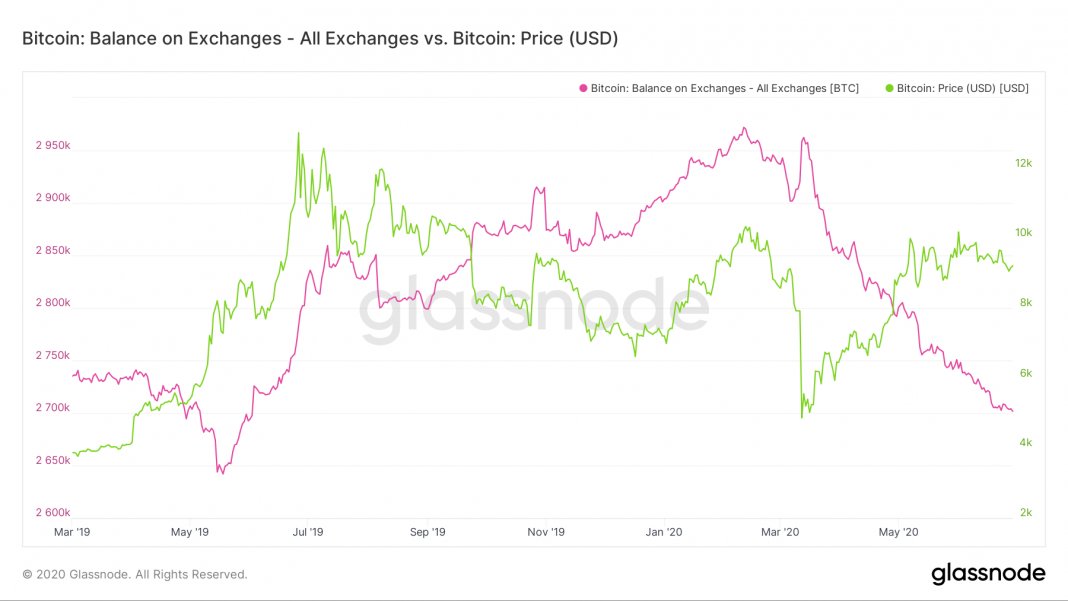
Earlier this week, data from Glassnode showed that the amount of BTC that was being kept on cryptocurrency exchanges was at its lowest point in months. The total number of Bitcoins on exchanges has been steadily declining since March 12th and 13th, when the most famous crypto market crash of the year took place.
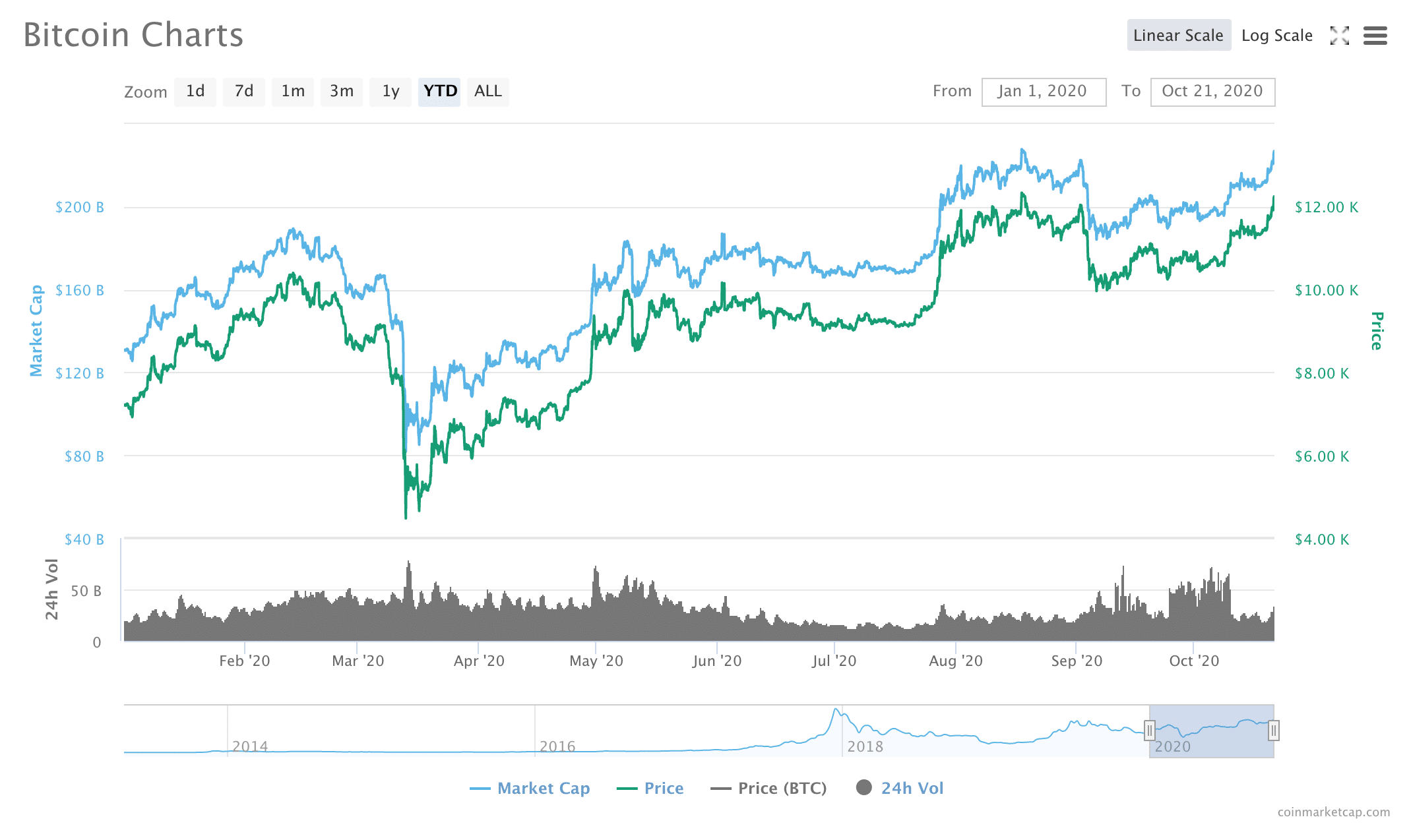
Indeed, during those two days, the price of Bitcoin swiftly fell from over $9,000 to nearly $4,000. Since then, data from Glassnode shows that the amount of Bitcoin that is stored in cryptocurrency exchange accounts has fallen $2.85 billion, from 2,950,000 BTC to 2,700,000 BTC.
Why is this happening? And what does it mean for Bitcoin?
BitMEX and OKEx Incidents May Be Fostering Mistrust in Crypto Exchanges
The decline in the amount of Bitcoins being stored on cryptocurrency exchanges could indicate declining user trust in the ability to keep their funds safe.
Indeed, the word of the wise in the cryptocurrency space has long been to never store cryptocurrency on an exchange for any longer than you absolutely have to, but that has not always been the most common practice.
Indeed, there have been a number of incidents throughout the year in which user funds on crypto exchanges and other crypto platforms have been affected: in late September, KuCoin was hacked for roughly $281 million; Eterbase, Cashaa, Balancer, and others have also been hacked.
However, two recent incidents regarding two large cryptocurrency exchanges may have served as an extra incentive for traders to get their coins out of exchange accounts as quickly as possible, though, in both cases, hackers were not involved.
Juan Aja Aguinaco, co-founder of Shyft Networ.
Instead, the trouble came from the law enforcement side of things: specifically, last week’s arrest of OKEx founder Star Xu, as well as the indictment of the four co-founders of BitMEX that took place earlier this month.
An October 20th tweet from OKEx chief executive, Jay Hao said that “no on-chain out-flow” since the exchange announced it had “temporarily suspended” withdrawals on Friday. P2P fiat activity for the Chinese yuan on the exchange has since been resumed.
While Hao promised that “your assets are safe” and that “we'll do our best to resume withdrawals ASAP,” the incident has raised concern and frustration from affected users. (Finance Magnates reached out to OKEx for commentary; comments will be added as they are received.)
”Not Your Keys, Not Your Crypto.”
After all, even if the loss of access to funds is only temporary, it is still a serious matter: “whenever exchanges block or suspend withdrawals, users enter into a panic,” explained Juan Aja Aguinaco, co-Founder of Shyft Network, to Finance Magnates.
“This further erodes confidence in third-party custody and reinforces the long recited mantra: ‘not your keys, not your crypto’...No one wants to see their funds frozen and stuck in an exchange just because it’s going through a legal battle with the US Department of Justice, or because there was a major security breach.”
Beyond frustration and panic, users’ funds could be at serious risk: John Jefferies, Chief Financial Analyst at cybersecurity firm CipherTrace, told Finance Magnates that for example, “OKEx assumes no liability if the platform is unable to operate properly for numerous reasons, including banking issues, regulation, third parties or damages to users.”
Of course, even if OKEx may not be legally liable, the exchange most likely wishes to protect its operations and users’ funds as much as possible. This has been the case with many crypto exchanges that, while that have not necessarily been legally liable, have taken steps to return hacked user funds and right other wrongs when mishaps have occurred.
John Jefferies, Chief Financial Analyst at CipherTrace.
Still, the amount of control that cryptocurrency exchanges have over their users’ funds should be raising alarm bells. John Jeffries also pointed out that according to the CFTC injunction on BitMEX, “if a customer’s margin balance drops below the Maintenance Margin level, BitMEX takes over the customer’s trading position, the position is liquidated, and the customer’s maintenance margin is lost.”
Jurisdiction-Shopping and a lack of Transparency May Be Fostering Distrust
Interestingly, the news of the BitMEX indictment had a negligible effect on the number of users who continue to regularly use the exchange. Still, the issue of legal liability is particularly important when it comes to transparency about regulations.
For example, “OKEx appears to be in Malta, a well regulated jurisdiction, but according to their Term of Service non-Maltese and non-Italian clients are serviced through a Seychelles subsidiary, Aux Cayes,” Jeffries said.
“Outside of Malta and Italy, Aux Cayes offers riskier financial products, including margin lending, peer-to-peer matching, spot services, and derivative products linked to VFAs or indices.”
Jurisdiction-shopping has long been a matter of great interest in the cryptosphere. In an attempt to gather information on BitMEX’s operations in preparation for a lawsuit, a small firm known as Bitcoin Manipulation Abatement was allegedly forwarded a meme with “incorporated in the Seychelles, come at me bro" written across an image of one of BitMEX’s founders.
An image of Arthur Hayes with the text "incorporated in Seychelles, come at me bro," was allegedly sent to BMA.
Hard Lessons
While both the BitMEX and the OKEx incidents may be a positive thing for the crypto space in the long term, Juan Aja Aguinaco pointed out that “as long as the vulnerability exists, as long as users’ funds can be hacked, frozen or seized ‘en-masse’, concerns [over the safety of exchanges] will remain valid.
“Exchanges have gradually (and painfully) learned how to improve their security systems, how to de-risk by implementing multi-sig wallets, by balancing cold/hot storage, etc. Yet, these improvements appear to be reactionary, and not proactive, which is always a cause for concern.”
But why would cryptocurrency traders who have been consistently storing their assets on exchanges for years, in spite of the risks suddenly be unwilling to do so now?
Other Factors Influencing the Flow of BTC on Exchanges? “There Are, Essentially, Fewer Sellers, and More Holders.”
Indeed, the majority of the decline in the amount of assets stored on exchanges took place prior to both of the recent OKEx and BitMEX goings-on.
Therefore, while distrust in exchanges could be a factor in the decline in the amount of BTC being stored on exchanges, a number of analysts see a different cause behind the trend, one that is a positive thing in terms of short- and long-term bullish sentiment for BTC.
After all, the fact that less BTC is being stored on exchanges could indicate that more traders are holding onto their coins for the long term, waiting for a bigger price movement before they might be willing to sell their coins.
Juan Aja Aguinaco, co-Founder of Shyft Network, told Finance Magnates that “since the dramatic drop in March and the gradual increase in BTC price, more and more users have opted to hold BTC and other cryptos in their own wallets and wait for a major break.
“There are, essentially, fewer sellers, and more holders,” he said.
This hypothesis is also supported by recorded data. According to Glassnode, a large part of the Bitcoin supply is currently being stored in so-called ‘accumulation addresses’, which “are defined as addresses that have at least 2 incoming transactions and have never spent BTC.
“Bitcoin accumulation has been on a constant upwards trend for months,” the firm said, cited by CoinTelegraph. “2.6M $BTC (14% of supply) are currently held in accumulation addresses.”
There are over 500,000 #Bitcoin "accumulation addresses" holding a total of 2.6M $BTC (~14%)
The Bitcoin Fear and Greed Index, which tracks whether buyers are more likely to sell (fear) or buy and hold (greed), has also tipped decisively toward greed. Last month, the scale was neutral, sitting around 50 points (halfway between fear and greed.) At press time, the scale had reached 56, adding 6 points toward greed.
Corporate Buyers Show Long-Term Bullish Sentiment for BTC
Additionally, Juan Aja Aguinaco pointed out to Finance Magnates that BTC has recently added a number of institutional entities to its list of long-term holders.
Indeed, last week, investment firm Stone Ridge announced a $115 million investment into Bitcoin; earlier this month, Square announced a $50 million BTC investment. Business intelligence firm Microstrategy announced a $425 million Bitcoin investment at the end of September.
Fernando Martinho, chief executive at Nimbus Platform.
Fernando Martinho, chief executive at Nimbus Platform, explained to Finance Magnates that these large-scale crypto purchases may have sprung from concerns over what COVID-related quantitative easing could do to the global economy: “corporate buyers have begun to silently purchase Bitcoin directly in their balance sheets as a hedge against inflation,” he said.
This increase in large-scale BTC purchases may have also caused a decline in the amount of BTC available for purchases on crypto exchanges: “while there is increasing pressure on the exchanges from the retail market, enterprise investors accelerate the trend exponentially, leading to an eventual supply shock,” Martinho explained.
This apparent holding period may come to an end when traders see a sharp upward movement and wish to liquidate some of their coins, but until then, exchanges may see their BTC reserves continue to stay low.
Earlier this week, data from Glassnode showed that the amount of BTC that was being kept on cryptocurrency exchanges was at its lowest point in months. The total number of Bitcoins on exchanges has been steadily declining since March 12th and 13th, when the most famous crypto market crash of the year took place.
Indeed, during those two days, the price of Bitcoin swiftly fell from over $9,000 to nearly $4,000. Since then, data from Glassnode shows that the amount of Bitcoin that is stored in cryptocurrency exchange accounts has fallen $2.85 billion, from 2,950,000 BTC to 2,700,000 BTC.
Why is this happening? And what does it mean for Bitcoin?
BitMEX and OKEx Incidents May Be Fostering Mistrust in Crypto Exchanges
The decline in the amount of Bitcoins being stored on cryptocurrency exchanges could indicate declining user trust in the ability to keep their funds safe.
Indeed, the word of the wise in the cryptocurrency space has long been to never store cryptocurrency on an exchange for any longer than you absolutely have to, but that has not always been the most common practice.
Indeed, there have been a number of incidents throughout the year in which user funds on crypto exchanges and other crypto platforms have been affected: in late September, KuCoin was hacked for roughly $281 million; Eterbase, Cashaa, Balancer, and others have also been hacked.
However, two recent incidents regarding two large cryptocurrency exchanges may have served as an extra incentive for traders to get their coins out of exchange accounts as quickly as possible, though, in both cases, hackers were not involved.
Juan Aja Aguinaco, co-founder of Shyft Networ.
Instead, the trouble came from the law enforcement side of things: specifically, last week’s arrest of OKEx founder Star Xu, as well as the indictment of the four co-founders of BitMEX that took place earlier this month.
An October 20th tweet from OKEx chief executive, Jay Hao said that “no on-chain out-flow” since the exchange announced it had “temporarily suspended” withdrawals on Friday. P2P fiat activity for the Chinese yuan on the exchange has since been resumed.
While Hao promised that “your assets are safe” and that “we'll do our best to resume withdrawals ASAP,” the incident has raised concern and frustration from affected users. (Finance Magnates reached out to OKEx for commentary; comments will be added as they are received.)
”Not Your Keys, Not Your Crypto.”
After all, even if the loss of access to funds is only temporary, it is still a serious matter: “whenever exchanges block or suspend withdrawals, users enter into a panic,” explained Juan Aja Aguinaco, co-Founder of Shyft Network, to Finance Magnates.
“This further erodes confidence in third-party custody and reinforces the long recited mantra: ‘not your keys, not your crypto’...No one wants to see their funds frozen and stuck in an exchange just because it’s going through a legal battle with the US Department of Justice, or because there was a major security breach.”
Beyond frustration and panic, users’ funds could be at serious risk: John Jefferies, Chief Financial Analyst at cybersecurity firm CipherTrace, told Finance Magnates that for example, “OKEx assumes no liability if the platform is unable to operate properly for numerous reasons, including banking issues, regulation, third parties or damages to users.”
Of course, even if OKEx may not be legally liable, the exchange most likely wishes to protect its operations and users’ funds as much as possible. This has been the case with many crypto exchanges that, while that have not necessarily been legally liable, have taken steps to return hacked user funds and right other wrongs when mishaps have occurred.
John Jefferies, Chief Financial Analyst at CipherTrace.
Still, the amount of control that cryptocurrency exchanges have over their users’ funds should be raising alarm bells. John Jeffries also pointed out that according to the CFTC injunction on BitMEX, “if a customer’s margin balance drops below the Maintenance Margin level, BitMEX takes over the customer’s trading position, the position is liquidated, and the customer’s maintenance margin is lost.”
Jurisdiction-Shopping and a lack of Transparency May Be Fostering Distrust
Interestingly, the news of the BitMEX indictment had a negligible effect on the number of users who continue to regularly use the exchange. Still, the issue of legal liability is particularly important when it comes to transparency about regulations.
For example, “OKEx appears to be in Malta, a well regulated jurisdiction, but according to their Term of Service non-Maltese and non-Italian clients are serviced through a Seychelles subsidiary, Aux Cayes,” Jeffries said.
“Outside of Malta and Italy, Aux Cayes offers riskier financial products, including margin lending, peer-to-peer matching, spot services, and derivative products linked to VFAs or indices.”
Jurisdiction-shopping has long been a matter of great interest in the cryptosphere. In an attempt to gather information on BitMEX’s operations in preparation for a lawsuit, a small firm known as Bitcoin Manipulation Abatement was allegedly forwarded a meme with “incorporated in the Seychelles, come at me bro" written across an image of one of BitMEX’s founders.
An image of Arthur Hayes with the text "incorporated in Seychelles, come at me bro," was allegedly sent to BMA.
Hard Lessons
While both the BitMEX and the OKEx incidents may be a positive thing for the crypto space in the long term, Juan Aja Aguinaco pointed out that “as long as the vulnerability exists, as long as users’ funds can be hacked, frozen or seized ‘en-masse’, concerns [over the safety of exchanges] will remain valid.
“Exchanges have gradually (and painfully) learned how to improve their security systems, how to de-risk by implementing multi-sig wallets, by balancing cold/hot storage, etc. Yet, these improvements appear to be reactionary, and not proactive, which is always a cause for concern.”
But why would cryptocurrency traders who have been consistently storing their assets on exchanges for years, in spite of the risks suddenly be unwilling to do so now?
Other Factors Influencing the Flow of BTC on Exchanges? “There Are, Essentially, Fewer Sellers, and More Holders.”
Indeed, the majority of the decline in the amount of assets stored on exchanges took place prior to both of the recent OKEx and BitMEX goings-on.
Therefore, while distrust in exchanges could be a factor in the decline in the amount of BTC being stored on exchanges, a number of analysts see a different cause behind the trend, one that is a positive thing in terms of short- and long-term bullish sentiment for BTC.
After all, the fact that less BTC is being stored on exchanges could indicate that more traders are holding onto their coins for the long term, waiting for a bigger price movement before they might be willing to sell their coins.
Juan Aja Aguinaco, co-Founder of Shyft Network, told Finance Magnates that “since the dramatic drop in March and the gradual increase in BTC price, more and more users have opted to hold BTC and other cryptos in their own wallets and wait for a major break.
“There are, essentially, fewer sellers, and more holders,” he said.
This hypothesis is also supported by recorded data. According to Glassnode, a large part of the Bitcoin supply is currently being stored in so-called ‘accumulation addresses’, which “are defined as addresses that have at least 2 incoming transactions and have never spent BTC.
“Bitcoin accumulation has been on a constant upwards trend for months,” the firm said, cited by CoinTelegraph. “2.6M $BTC (14% of supply) are currently held in accumulation addresses.”
There are over 500,000 #Bitcoin "accumulation addresses" holding a total of 2.6M $BTC (~14%)
The Bitcoin Fear and Greed Index, which tracks whether buyers are more likely to sell (fear) or buy and hold (greed), has also tipped decisively toward greed. Last month, the scale was neutral, sitting around 50 points (halfway between fear and greed.) At press time, the scale had reached 56, adding 6 points toward greed.
Corporate Buyers Show Long-Term Bullish Sentiment for BTC
Additionally, Juan Aja Aguinaco pointed out to Finance Magnates that BTC has recently added a number of institutional entities to its list of long-term holders.
Indeed, last week, investment firm Stone Ridge announced a $115 million investment into Bitcoin; earlier this month, Square announced a $50 million BTC investment. Business intelligence firm Microstrategy announced a $425 million Bitcoin investment at the end of September.
Fernando Martinho, chief executive at Nimbus Platform.
Fernando Martinho, chief executive at Nimbus Platform, explained to Finance Magnates that these large-scale crypto purchases may have sprung from concerns over what COVID-related quantitative easing could do to the global economy: “corporate buyers have begun to silently purchase Bitcoin directly in their balance sheets as a hedge against inflation,” he said.
This increase in large-scale BTC purchases may have also caused a decline in the amount of BTC available for purchases on crypto exchanges: “while there is increasing pressure on the exchanges from the retail market, enterprise investors accelerate the trend exponentially, leading to an eventual supply shock,” Martinho explained.
This apparent holding period may come to an end when traders see a sharp upward movement and wish to liquidate some of their coins, but until then, exchanges may see their BTC reserves continue to stay low.
Rachel is a self-taught crypto geek and a passionate writer. She believes in the power that the written word has to educate, connect and empower individuals to make positive and powerful financial choices. She is the Podcast Host and a Cryptocurrency Editor at Finance Magnates.
Crypto Built More Rails, but the Next Battle Is Over How Much Work a Dollar Can Do
Featured Videos
FP Markets Winner Spotlight 🏆 | Global Broker of the Year 2025 #Trading #Broker #Innovation #Shorts
FP Markets Winner Spotlight 🏆 | Global Broker of the Year 2025 #Trading #Broker #Innovation #Shorts
FP Markets Winner Spotlight 🏆 | Global Broker of the Year 2025 #Trading #Broker #Innovation #Shorts
FP Markets Winner Spotlight 🏆 | Global Broker of the Year 2025 #Trading #Broker #Innovation #Shorts
FP Markets takes the spotlight as Global Broker of the Year 2025 at the Finance Magnates Awards.
Martin Stoilov, Head of Client Experience, shares that trust, innovation, and people played a key role in the company’s success, supported by a strong foundation of integrity and client-centricity.
Following this milestone, FP Markets continues to focus on growth, technology investment, and its core values of transparency and excellence.
👉 Be part of FM Awards 2026: https://awards.financemagnates.com/#nominate
FP Markets takes the spotlight as Global Broker of the Year 2025 at the Finance Magnates Awards.
Martin Stoilov, Head of Client Experience, shares that trust, innovation, and people played a key role in the company’s success, supported by a strong foundation of integrity and client-centricity.
Following this milestone, FP Markets continues to focus on growth, technology investment, and its core values of transparency and excellence.
👉 Be part of FM Awards 2026: https://awards.financemagnates.com/#nominate
FP Markets takes the spotlight as Global Broker of the Year 2025 at the Finance Magnates Awards.
Martin Stoilov, Head of Client Experience, shares that trust, innovation, and people played a key role in the company’s success, supported by a strong foundation of integrity and client-centricity.
Following this milestone, FP Markets continues to focus on growth, technology investment, and its core values of transparency and excellence.
👉 Be part of FM Awards 2026: https://awards.financemagnates.com/#nominate
FP Markets takes the spotlight as Global Broker of the Year 2025 at the Finance Magnates Awards.
Martin Stoilov, Head of Client Experience, shares that trust, innovation, and people played a key role in the company’s success, supported by a strong foundation of integrity and client-centricity.
Following this milestone, FP Markets continues to focus on growth, technology investment, and its core values of transparency and excellence.
👉 Be part of FM Awards 2026: https://awards.financemagnates.com/#nominate
In this video, we review @HolaPrimeMarketsOfficial, a multi-asset forex and CFDs broker offering different account types, trading platforms, and flexible trading conditions.
We cover the broker’s overall offering, including account options, trading environment, platforms like MT4 and MT5, and additional services such as managed accounts and fast withdrawals.
Watch the full video to see if Hola Prime Markets fits your trading needs.
📣 Stay up to date with the latest in finance and trading. Follow Finance Magnates for industry news, insights, and global event coverage.
Connect with us:
🔗 LinkedIn: /financemagnates
👍 Facebook: /financemagnates
📸 Instagram: https://www.instagram.com/financemagnates
🐦 X: https://x.com/financemagnates
🎥 TikTok: https://www.tiktok.com/tag/financemagnates
▶️ YouTube: /@financemagnates_official
#HolaPrime #ForexBroker #CFDTrading #FinanceMagnates #Trading #Forex #BrokerReview
In this video, we review @HolaPrimeMarketsOfficial, a multi-asset forex and CFDs broker offering different account types, trading platforms, and flexible trading conditions.
We cover the broker’s overall offering, including account options, trading environment, platforms like MT4 and MT5, and additional services such as managed accounts and fast withdrawals.
Watch the full video to see if Hola Prime Markets fits your trading needs.
📣 Stay up to date with the latest in finance and trading. Follow Finance Magnates for industry news, insights, and global event coverage.
Connect with us:
🔗 LinkedIn: /financemagnates
👍 Facebook: /financemagnates
📸 Instagram: https://www.instagram.com/financemagnates
🐦 X: https://x.com/financemagnates
🎥 TikTok: https://www.tiktok.com/tag/financemagnates
▶️ YouTube: /@financemagnates_official
#HolaPrime #ForexBroker #CFDTrading #FinanceMagnates #Trading #Forex #BrokerReview
In this video, we review @HolaPrimeMarketsOfficial, a multi-asset forex and CFDs broker offering different account types, trading platforms, and flexible trading conditions.
We cover the broker’s overall offering, including account options, trading environment, platforms like MT4 and MT5, and additional services such as managed accounts and fast withdrawals.
Watch the full video to see if Hola Prime Markets fits your trading needs.
📣 Stay up to date with the latest in finance and trading. Follow Finance Magnates for industry news, insights, and global event coverage.
Connect with us:
🔗 LinkedIn: /financemagnates
👍 Facebook: /financemagnates
📸 Instagram: https://www.instagram.com/financemagnates
🐦 X: https://x.com/financemagnates
🎥 TikTok: https://www.tiktok.com/tag/financemagnates
▶️ YouTube: /@financemagnates_official
#HolaPrime #ForexBroker #CFDTrading #FinanceMagnates #Trading #Forex #BrokerReview
In this video, we review @HolaPrimeMarketsOfficial, a multi-asset forex and CFDs broker offering different account types, trading platforms, and flexible trading conditions.
We cover the broker’s overall offering, including account options, trading environment, platforms like MT4 and MT5, and additional services such as managed accounts and fast withdrawals.
Watch the full video to see if Hola Prime Markets fits your trading needs.
📣 Stay up to date with the latest in finance and trading. Follow Finance Magnates for industry news, insights, and global event coverage.
Connect with us:
🔗 LinkedIn: /financemagnates
👍 Facebook: /financemagnates
📸 Instagram: https://www.instagram.com/financemagnates
🐦 X: https://x.com/financemagnates
🎥 TikTok: https://www.tiktok.com/tag/financemagnates
▶️ YouTube: /@financemagnates_official
#HolaPrime #ForexBroker #CFDTrading #FinanceMagnates #Trading #Forex #BrokerReview
In this video, we review @HolaPrimeMarketsOfficial, a multi-asset forex and CFDs broker offering different account types, trading platforms, and flexible trading conditions.
We cover the broker’s overall offering, including account options, trading environment, platforms like MT4 and MT5, and additional services such as managed accounts and fast withdrawals.
Watch the full video to see if Hola Prime Markets fits your trading needs.
📣 Stay up to date with the latest in finance and trading. Follow Finance Magnates for industry news, insights, and global event coverage.
Connect with us:
🔗 LinkedIn: /financemagnates
👍 Facebook: /financemagnates
📸 Instagram: https://www.instagram.com/financemagnates
🐦 X: https://x.com/financemagnates
🎥 TikTok: https://www.tiktok.com/tag/financemagnates
▶️ YouTube: /@financemagnates_official
#HolaPrime #ForexBroker #CFDTrading #FinanceMagnates #Trading #Forex #BrokerReview
In this video, we review @HolaPrimeMarketsOfficial, a multi-asset forex and CFDs broker offering different account types, trading platforms, and flexible trading conditions.
We cover the broker’s overall offering, including account options, trading environment, platforms like MT4 and MT5, and additional services such as managed accounts and fast withdrawals.
Watch the full video to see if Hola Prime Markets fits your trading needs.
📣 Stay up to date with the latest in finance and trading. Follow Finance Magnates for industry news, insights, and global event coverage.
Connect with us:
🔗 LinkedIn: /financemagnates
👍 Facebook: /financemagnates
📸 Instagram: https://www.instagram.com/financemagnates
🐦 X: https://x.com/financemagnates
🎥 TikTok: https://www.tiktok.com/tag/financemagnates
▶️ YouTube: /@financemagnates_official
#HolaPrime #ForexBroker #CFDTrading #FinanceMagnates #Trading #Forex #BrokerReview
Hola Prime Review: What You Need to Know | Full Breakdown by Finance Magnates
Hola Prime Review: What You Need to Know | Full Breakdown by Finance Magnates
Hola Prime Review: What You Need to Know | Full Breakdown by Finance Magnates
Hola Prime Review: What You Need to Know | Full Breakdown by Finance Magnates
Hola Prime Review: What You Need to Know | Full Breakdown by Finance Magnates
Hola Prime Review: What You Need to Know | Full Breakdown by Finance Magnates
In this video, we review @HolaPrime_Global, a proprietary trading firm offering evaluation programs and performance-based payouts in simulated market environments.
We cover how the challenge model works, including account types, profit splits (up to 95%), trading rules, and what it takes to reach a funded account. You’ll also learn about available platforms like MT4, MT5, cTrader, and more, along with insights into payouts, support, and trading conditions.
Watch the full video to see if Hola Prime fits your trading style.
📣 Stay up to date with the latest in finance and trading. Follow Finance Magnates for industry news, insights, and global event coverage.
Connect with us:
🔗 LinkedIn: /financemagnates
👍 Facebook: /financemagnates
📸 Instagram: https://www.instagram.com/financemagnates
🐦 X: https://x.com/financemagnates
🎥 TikTok: https://www.tiktok.com/tag/financemagnates
▶️ YouTube: /@financemagnates_official
#HolaPrime #PropFirm #Trading #FinanceMagnates #Forex #FuturesTrading #TradingReview #PropFirmReview
In this video, we review @HolaPrime_Global, a proprietary trading firm offering evaluation programs and performance-based payouts in simulated market environments.
We cover how the challenge model works, including account types, profit splits (up to 95%), trading rules, and what it takes to reach a funded account. You’ll also learn about available platforms like MT4, MT5, cTrader, and more, along with insights into payouts, support, and trading conditions.
Watch the full video to see if Hola Prime fits your trading style.
📣 Stay up to date with the latest in finance and trading. Follow Finance Magnates for industry news, insights, and global event coverage.
Connect with us:
🔗 LinkedIn: /financemagnates
👍 Facebook: /financemagnates
📸 Instagram: https://www.instagram.com/financemagnates
🐦 X: https://x.com/financemagnates
🎥 TikTok: https://www.tiktok.com/tag/financemagnates
▶️ YouTube: /@financemagnates_official
#HolaPrime #PropFirm #Trading #FinanceMagnates #Forex #FuturesTrading #TradingReview #PropFirmReview
In this video, we review @HolaPrime_Global, a proprietary trading firm offering evaluation programs and performance-based payouts in simulated market environments.
We cover how the challenge model works, including account types, profit splits (up to 95%), trading rules, and what it takes to reach a funded account. You’ll also learn about available platforms like MT4, MT5, cTrader, and more, along with insights into payouts, support, and trading conditions.
Watch the full video to see if Hola Prime fits your trading style.
📣 Stay up to date with the latest in finance and trading. Follow Finance Magnates for industry news, insights, and global event coverage.
Connect with us:
🔗 LinkedIn: /financemagnates
👍 Facebook: /financemagnates
📸 Instagram: https://www.instagram.com/financemagnates
🐦 X: https://x.com/financemagnates
🎥 TikTok: https://www.tiktok.com/tag/financemagnates
▶️ YouTube: /@financemagnates_official
#HolaPrime #PropFirm #Trading #FinanceMagnates #Forex #FuturesTrading #TradingReview #PropFirmReview
In this video, we review @HolaPrime_Global, a proprietary trading firm offering evaluation programs and performance-based payouts in simulated market environments.
We cover how the challenge model works, including account types, profit splits (up to 95%), trading rules, and what it takes to reach a funded account. You’ll also learn about available platforms like MT4, MT5, cTrader, and more, along with insights into payouts, support, and trading conditions.
Watch the full video to see if Hola Prime fits your trading style.
📣 Stay up to date with the latest in finance and trading. Follow Finance Magnates for industry news, insights, and global event coverage.
Connect with us:
🔗 LinkedIn: /financemagnates
👍 Facebook: /financemagnates
📸 Instagram: https://www.instagram.com/financemagnates
🐦 X: https://x.com/financemagnates
🎥 TikTok: https://www.tiktok.com/tag/financemagnates
▶️ YouTube: /@financemagnates_official
#HolaPrime #PropFirm #Trading #FinanceMagnates #Forex #FuturesTrading #TradingReview #PropFirmReview
In this video, we review @HolaPrime_Global, a proprietary trading firm offering evaluation programs and performance-based payouts in simulated market environments.
We cover how the challenge model works, including account types, profit splits (up to 95%), trading rules, and what it takes to reach a funded account. You’ll also learn about available platforms like MT4, MT5, cTrader, and more, along with insights into payouts, support, and trading conditions.
Watch the full video to see if Hola Prime fits your trading style.
📣 Stay up to date with the latest in finance and trading. Follow Finance Magnates for industry news, insights, and global event coverage.
Connect with us:
🔗 LinkedIn: /financemagnates
👍 Facebook: /financemagnates
📸 Instagram: https://www.instagram.com/financemagnates
🐦 X: https://x.com/financemagnates
🎥 TikTok: https://www.tiktok.com/tag/financemagnates
▶️ YouTube: /@financemagnates_official
#HolaPrime #PropFirm #Trading #FinanceMagnates #Forex #FuturesTrading #TradingReview #PropFirmReview
In this video, we review @HolaPrime_Global, a proprietary trading firm offering evaluation programs and performance-based payouts in simulated market environments.
We cover how the challenge model works, including account types, profit splits (up to 95%), trading rules, and what it takes to reach a funded account. You’ll also learn about available platforms like MT4, MT5, cTrader, and more, along with insights into payouts, support, and trading conditions.
Watch the full video to see if Hola Prime fits your trading style.
📣 Stay up to date with the latest in finance and trading. Follow Finance Magnates for industry news, insights, and global event coverage.
Connect with us:
🔗 LinkedIn: /financemagnates
👍 Facebook: /financemagnates
📸 Instagram: https://www.instagram.com/financemagnates
🐦 X: https://x.com/financemagnates
🎥 TikTok: https://www.tiktok.com/tag/financemagnates
▶️ YouTube: /@financemagnates_official
#HolaPrime #PropFirm #Trading #FinanceMagnates #Forex #FuturesTrading #TradingReview #PropFirmReview
Axi Winner Spotlight 🏆 | Global Most Innovative Broker 2025 #Innovation #Trading #Fintech #Broker
Axi Winner Spotlight 🏆 | Global Most Innovative Broker 2025 #Innovation #Trading #Fintech #Broker
Axi Winner Spotlight 🏆 | Global Most Innovative Broker 2025 #Innovation #Trading #Fintech #Broker
Axi Winner Spotlight 🏆 | Global Most Innovative Broker 2025 #Innovation #Trading #Fintech #Broker
Axi Winner Spotlight 🏆 | Global Most Innovative Broker 2025 #Innovation #Trading #Fintech #Broker
Axi Winner Spotlight 🏆 | Global Most Innovative Broker 2025 #Innovation #Trading #Fintech #Broker
Axi takes the spotlight at the Finance Magnates Awards, winning Global Most Innovative Broker 2025.
Olivia Xenofontos and Ivanna Openko share how the team will feel: proud, motivated, and ready to keep delivering.
They also describe the night as well-organized, focused, and enjoyable for all.
👉 Be part of FM Awards 2026.
Axi takes the spotlight at the Finance Magnates Awards, winning Global Most Innovative Broker 2025.
Olivia Xenofontos and Ivanna Openko share how the team will feel: proud, motivated, and ready to keep delivering.
They also describe the night as well-organized, focused, and enjoyable for all.
👉 Be part of FM Awards 2026.
Axi takes the spotlight at the Finance Magnates Awards, winning Global Most Innovative Broker 2025.
Olivia Xenofontos and Ivanna Openko share how the team will feel: proud, motivated, and ready to keep delivering.
They also describe the night as well-organized, focused, and enjoyable for all.
👉 Be part of FM Awards 2026.
Axi takes the spotlight at the Finance Magnates Awards, winning Global Most Innovative Broker 2025.
Olivia Xenofontos and Ivanna Openko share how the team will feel: proud, motivated, and ready to keep delivering.
They also describe the night as well-organized, focused, and enjoyable for all.
👉 Be part of FM Awards 2026.
Axi takes the spotlight at the Finance Magnates Awards, winning Global Most Innovative Broker 2025.
Olivia Xenofontos and Ivanna Openko share how the team will feel: proud, motivated, and ready to keep delivering.
They also describe the night as well-organized, focused, and enjoyable for all.
👉 Be part of FM Awards 2026.
Axi takes the spotlight at the Finance Magnates Awards, winning Global Most Innovative Broker 2025.
Olivia Xenofontos and Ivanna Openko share how the team will feel: proud, motivated, and ready to keep delivering.
They also describe the night as well-organized, focused, and enjoyable for all.
👉 Be part of FM Awards 2026.
Recognition that matters.
Built on transparency.
Driven by the industry.
The Finance Magnates Awards 2026.
Nominations are now open.
🔗 https://awards.financemagnates.com/?utm_source=SM&utm_medium=social&utm_campaign=recognition-matters
Recognition that matters.
Built on transparency.
Driven by the industry.
The Finance Magnates Awards 2026.
Nominations are now open.
🔗 https://awards.financemagnates.com/?utm_source=SM&utm_medium=social&utm_campaign=recognition-matters
Recognition that matters.
Built on transparency.
Driven by the industry.
The Finance Magnates Awards 2026.
Nominations are now open.
🔗 https://awards.financemagnates.com/?utm_source=SM&utm_medium=social&utm_campaign=recognition-matters
Recognition that matters.
Built on transparency.
Driven by the industry.
The Finance Magnates Awards 2026.
Nominations are now open.
🔗 https://awards.financemagnates.com/?utm_source=SM&utm_medium=social&utm_campaign=recognition-matters
Recognition that matters.
Built on transparency.
Driven by the industry.
The Finance Magnates Awards 2026.
Nominations are now open.
🔗 https://awards.financemagnates.com/?utm_source=SM&utm_medium=social&utm_campaign=recognition-matters
Recognition that matters.
Built on transparency.
Driven by the industry.
The Finance Magnates Awards 2026.
Nominations are now open.
🔗 https://awards.financemagnates.com/?utm_source=SM&utm_medium=social&utm_campaign=recognition-matters