The Winklevoss' VCA is the latest SRO to appear on the crypto scene. How are they affecting regulators?
FM
While the cryptocurrency markets are generally regarded to be far less volatile this year than in 2017, the industry is still seen as a sort of ‘Wild West.’ Largely unregulated, anything is possible in the crypto industry--for better or for worse.
As many large governments have not been agile enough to adequately regulate the industry, some cryptocurrency firms in various locations around the world have formed their own self-regulatory organizations (SROs). Essentially, SROs are non-government institutions that establish rules that promote ethical practices within any industry.
Within the cryptocurrency industry, in particular, these organizations have been formed primarily as a way to shape government regulations. Because the cryptocurrency industry is so new, most of the world’s major governments have not had the chance to quickly create the regulations that would be appropriate for the industry.
But how exactly have SROs affected the legislative process? Have the expedited the process of legislation--or are they slowing it down?
SROs Have Played an Important Role in Educating Regulators
One thing’s for sure--SROs have certainly played an important role in educating governments about the crypto industry. The esoteric nature of what cryptocurrency actually is requires the crossing of a major learning curve for most people--regulators who may not have a solid understanding of the technology that powers cryptocurrency may not know how to regulate it appropriately.
“There is always a risk that a knee-jerk reaction [on the part of regulators] will lead to unnecessarily draconian measures, and this is where self-regulatory organizations come into their own, providing input and guidance to shape, rather than prevent, regulation,” wrote Founder and CEO of KeyoCoin Matt Baer in an email to Finance Magnates. “It’s not so much a matter of getting regulators to ‘back off’ but instead helping them to take a balanced and measured response to the rapidly evolving sector.”
Matt Baer, Founder and CEO of KeyoCoin.
Thus, SROs came along to prevent governments from doing irreparable damage to the cryptocurrency industry. While SROs do not have the power to actually enforce regulations themselves, they do have the ability to demonstrate what good regulation should look like. Many members of the crypto industry SROs have also taken it upon themselves to work directly with regulators in order to build positive regulations.
'It’s Actually Remarkable that [the Cryptocurrency Industry is] Operating Without Any Control'
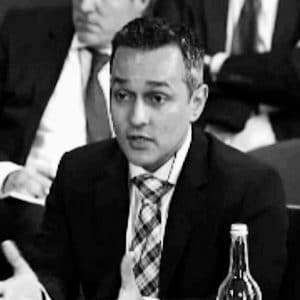
Why are regulations important? Zeeshan Feroz, CEO of Coinbase UK, pointed out to Finance Magnates that “we have millions of customers in Europe, and we handle billion of euros and pounds every year, but there is no regulation as such that covers that crypto space.”
“It’s actually remarkable that [the cryptocurrency industry is] operating without any control,” he said.
“Having those controls will start to legitimize the space in many ways–I’m not saying that it’s not legitimate today, but having an official regulatory endorsement will help drive that forward.”
Zeeshan Feroz, CEO of Coinbase UK.
What exactly is the link between SROs in the cryptocurrency industry and actual regulations that have been created for the cryptocurrency industry? The link between SROs and regulatory enforcement? And--most importantly--have SROs been effective in their mission to guide regulation?
Baer asked a similar question. “If we’re all in agreement that the industry is better off with some form of oversight, it begs the question: should the industry suffer the slings and arrows of outrageous state regulation?”
“Or [should it] take up arms itself against this sea of troubles, and by opposing, end them?”
SROs May Have Prevented 'Draconian' Legislation
Baer believes that the SROs have been at least somewhat effective. After all, the overall lack of “draconian” measures against the cryptocurrency industry in most of the world is certainly evidential that most regulators aren’t seeking to squelch the industry completely.
“Regulators are answering the call for greater clarity, and as their outlook slowly comes into sharper focus it’s becoming clear that outright bans and hard-ball policies are mostly off the table. The mood is one of cautious optimism, which is a very healthy place to be,” Baer explained.
However, understanding how effective SROs have actually been requiring taking a deeper dive into the work that each of them has done within their countries of origin. Of course, the crypto industry is a global industry, without a doubt; still, though, the most direct effects of each of these SROs can be seen in the domiciles where they were formed.
Self-regulatory organizations have been formed in a number of nations around the world, but we’ll focus now on SROs in three major financial world powers: Japan, the UK, and the US.
Then, the JBA announced possible plans to merge with the JCBA (Japan Cryptocurrency Business Association) in February of this year. However, eight months later, the merger still hasn’t happened.
However, the Japan Virtual Currency Exchange Association (or JVCEA, yet another Japanese SRO) has been forging ahead. The JVCEA was formed by sixteen Japanese virtual currency exchanges in April of 2018, in an effort to restore trust in virtual currency exchanges following the $530 million Coincheck exchange hack. The organization applied with the Japanese government in August to earn the right to enforce its rules on member firms.
Indeed, things appear to be heading in a favorable direction for the JVCEA. According to local news source Jiji Press, the Japanese Financial Services Agency (or FSA, a ‘real’ government organization) has “plans to entrust the organization with the flexibility to rapidly develop technologies and to combine technological innovation and customer protection.”
CryptoUK Brought Britain Onto the Scene as a Self-Regulatory Leader
The formation of CryptoUK in February of 2018 was another milestone for the cryptocurrency industry. The organization (whose seven founding members included eToro, Coinbase, and CryptoCompare) published a set of guidelines to “promote best practice and to work with government and regulators,” and form “the blueprint for what a future regulatory framework will look like,” according to Chairman Iqbal Gandham.
Indeed, when the organization was formed, Gandham told Finance Magnates in an exclusive interview that “there was a lot of misunderstanding [about cryptocurrency], and we wanted to try to raise awareness and actually work with the regulators, the government, et cetera.”
Iqbal Gandham, Chairman of CryptoUK.
CryptoUK was created to provide resources “which the masses and the wider audience in the UK would understand in terms of what crypto is, how we want to regulate it, and what the best practices that we as organizations choose to follow,” Gandham explained. Perhaps one of the most significant of these resources was the 12-point Code of Conduct that CryptoUK published as soon as it was formed.
Regulators in the UK still haven’t made any major moves in terms of signing laws into place specifically for the cryptocurrency industry.
The Winklevoss ‘Virtual Commodities Agency’ (VCA) Ushers in a New Era of Self-Regulation in the US
Twin tech entrepreneurs and Bitcoin billionaires Cameron and Tyler Winklevoss have made names for themselves as notable figures in the cryptocurrency industry in the US. In addition to founding the Gemini digital asset exchange, the brothers have acted as leaders in the attempt to apply for a Bitcoin ETF. In their latest move, the Winklevoss twins launched their own SRO, the Virtual Commodities Agency (VCA) for the US crypto industry in August.
“We believe adding a layer of oversight on virtual commodity cash markets, in the form of self-regulation, is important for consumer protection and to ensure the integrity of these markets,” the Winklevoss brothers wrote in a blog post.
The VCA is an industry-sponsored, self-regulatory organization (SRO) for the U.S. virtual currency industry, specifically virtual commodity exchanges and custodians. https://t.co/FPvFmsJ2ZMpic.twitter.com/FCwVu0Ouab
— Virtual Commodities Association (@VCAdotorg) August 20, 2018
The effort has been welcomed by some US regulators. “Ultimately, an independent and empowered SRO-like entity could have a meaningful impact on the integrity and credibility of this young marketplace,” said Brian Quintetz, CFTC commissioner, regarding the launch of the VCA.
However, it remains to be seen exactly how impactful the VCA will be. The US government has been slow in creating and enforcing legislation for the cryptocurrency industry--while some analysts praise the fact that the US government didn’t act too quickly, others have noted that the development of the blockchain industry in the US has been relatively slow as a result.
SROs Won’t Be Effective Unless Everyone Joins In
Perhaps the most significant effect that SROs have had on the cryptocurrency industry is to create an atmosphere of “peer pressure”--companies who comply with the standards outlined by SROs are respected by other companies that follow suit. These companies are also more likely to form partnerships with one another. Companies who take part in SROs may also appear more legitimate in the eyes of their customers.
However, SROs will never be truly effective unless every single member firm of the cryptocurrency industry joined in. As long as big players in the industry, in particular, continue to operate as lone wolves (i.e., Bitfinex and BitMEX), the jurisdiction of SROs can only reach so far. Until then, we can only hope that SROs expedite government efforts to create adequate regulatory structures for the crypto industry.
While the cryptocurrency markets are generally regarded to be far less volatile this year than in 2017, the industry is still seen as a sort of ‘Wild West.’ Largely unregulated, anything is possible in the crypto industry--for better or for worse.
As many large governments have not been agile enough to adequately regulate the industry, some cryptocurrency firms in various locations around the world have formed their own self-regulatory organizations (SROs). Essentially, SROs are non-government institutions that establish rules that promote ethical practices within any industry.
Within the cryptocurrency industry, in particular, these organizations have been formed primarily as a way to shape government regulations. Because the cryptocurrency industry is so new, most of the world’s major governments have not had the chance to quickly create the regulations that would be appropriate for the industry.
But how exactly have SROs affected the legislative process? Have the expedited the process of legislation--or are they slowing it down?
SROs Have Played an Important Role in Educating Regulators
One thing’s for sure--SROs have certainly played an important role in educating governments about the crypto industry. The esoteric nature of what cryptocurrency actually is requires the crossing of a major learning curve for most people--regulators who may not have a solid understanding of the technology that powers cryptocurrency may not know how to regulate it appropriately.
“There is always a risk that a knee-jerk reaction [on the part of regulators] will lead to unnecessarily draconian measures, and this is where self-regulatory organizations come into their own, providing input and guidance to shape, rather than prevent, regulation,” wrote Founder and CEO of KeyoCoin Matt Baer in an email to Finance Magnates. “It’s not so much a matter of getting regulators to ‘back off’ but instead helping them to take a balanced and measured response to the rapidly evolving sector.”
Matt Baer, Founder and CEO of KeyoCoin.
Thus, SROs came along to prevent governments from doing irreparable damage to the cryptocurrency industry. While SROs do not have the power to actually enforce regulations themselves, they do have the ability to demonstrate what good regulation should look like. Many members of the crypto industry SROs have also taken it upon themselves to work directly with regulators in order to build positive regulations.
'It’s Actually Remarkable that [the Cryptocurrency Industry is] Operating Without Any Control'
Why are regulations important? Zeeshan Feroz, CEO of Coinbase UK, pointed out to Finance Magnates that “we have millions of customers in Europe, and we handle billion of euros and pounds every year, but there is no regulation as such that covers that crypto space.”
“It’s actually remarkable that [the cryptocurrency industry is] operating without any control,” he said.
“Having those controls will start to legitimize the space in many ways–I’m not saying that it’s not legitimate today, but having an official regulatory endorsement will help drive that forward.”
Zeeshan Feroz, CEO of Coinbase UK.
What exactly is the link between SROs in the cryptocurrency industry and actual regulations that have been created for the cryptocurrency industry? The link between SROs and regulatory enforcement? And--most importantly--have SROs been effective in their mission to guide regulation?
Baer asked a similar question. “If we’re all in agreement that the industry is better off with some form of oversight, it begs the question: should the industry suffer the slings and arrows of outrageous state regulation?”
“Or [should it] take up arms itself against this sea of troubles, and by opposing, end them?”
SROs May Have Prevented 'Draconian' Legislation
Baer believes that the SROs have been at least somewhat effective. After all, the overall lack of “draconian” measures against the cryptocurrency industry in most of the world is certainly evidential that most regulators aren’t seeking to squelch the industry completely.
“Regulators are answering the call for greater clarity, and as their outlook slowly comes into sharper focus it’s becoming clear that outright bans and hard-ball policies are mostly off the table. The mood is one of cautious optimism, which is a very healthy place to be,” Baer explained.
However, understanding how effective SROs have actually been requiring taking a deeper dive into the work that each of them has done within their countries of origin. Of course, the crypto industry is a global industry, without a doubt; still, though, the most direct effects of each of these SROs can be seen in the domiciles where they were formed.
Self-regulatory organizations have been formed in a number of nations around the world, but we’ll focus now on SROs in three major financial world powers: Japan, the UK, and the US.
Then, the JBA announced possible plans to merge with the JCBA (Japan Cryptocurrency Business Association) in February of this year. However, eight months later, the merger still hasn’t happened.
However, the Japan Virtual Currency Exchange Association (or JVCEA, yet another Japanese SRO) has been forging ahead. The JVCEA was formed by sixteen Japanese virtual currency exchanges in April of 2018, in an effort to restore trust in virtual currency exchanges following the $530 million Coincheck exchange hack. The organization applied with the Japanese government in August to earn the right to enforce its rules on member firms.
Indeed, things appear to be heading in a favorable direction for the JVCEA. According to local news source Jiji Press, the Japanese Financial Services Agency (or FSA, a ‘real’ government organization) has “plans to entrust the organization with the flexibility to rapidly develop technologies and to combine technological innovation and customer protection.”
CryptoUK Brought Britain Onto the Scene as a Self-Regulatory Leader
The formation of CryptoUK in February of 2018 was another milestone for the cryptocurrency industry. The organization (whose seven founding members included eToro, Coinbase, and CryptoCompare) published a set of guidelines to “promote best practice and to work with government and regulators,” and form “the blueprint for what a future regulatory framework will look like,” according to Chairman Iqbal Gandham.
Indeed, when the organization was formed, Gandham told Finance Magnates in an exclusive interview that “there was a lot of misunderstanding [about cryptocurrency], and we wanted to try to raise awareness and actually work with the regulators, the government, et cetera.”
Iqbal Gandham, Chairman of CryptoUK.
CryptoUK was created to provide resources “which the masses and the wider audience in the UK would understand in terms of what crypto is, how we want to regulate it, and what the best practices that we as organizations choose to follow,” Gandham explained. Perhaps one of the most significant of these resources was the 12-point Code of Conduct that CryptoUK published as soon as it was formed.
Regulators in the UK still haven’t made any major moves in terms of signing laws into place specifically for the cryptocurrency industry.
The Winklevoss ‘Virtual Commodities Agency’ (VCA) Ushers in a New Era of Self-Regulation in the US
Twin tech entrepreneurs and Bitcoin billionaires Cameron and Tyler Winklevoss have made names for themselves as notable figures in the cryptocurrency industry in the US. In addition to founding the Gemini digital asset exchange, the brothers have acted as leaders in the attempt to apply for a Bitcoin ETF. In their latest move, the Winklevoss twins launched their own SRO, the Virtual Commodities Agency (VCA) for the US crypto industry in August.
“We believe adding a layer of oversight on virtual commodity cash markets, in the form of self-regulation, is important for consumer protection and to ensure the integrity of these markets,” the Winklevoss brothers wrote in a blog post.
The VCA is an industry-sponsored, self-regulatory organization (SRO) for the U.S. virtual currency industry, specifically virtual commodity exchanges and custodians. https://t.co/FPvFmsJ2ZMpic.twitter.com/FCwVu0Ouab
— Virtual Commodities Association (@VCAdotorg) August 20, 2018
The effort has been welcomed by some US regulators. “Ultimately, an independent and empowered SRO-like entity could have a meaningful impact on the integrity and credibility of this young marketplace,” said Brian Quintetz, CFTC commissioner, regarding the launch of the VCA.
However, it remains to be seen exactly how impactful the VCA will be. The US government has been slow in creating and enforcing legislation for the cryptocurrency industry--while some analysts praise the fact that the US government didn’t act too quickly, others have noted that the development of the blockchain industry in the US has been relatively slow as a result.
SROs Won’t Be Effective Unless Everyone Joins In
Perhaps the most significant effect that SROs have had on the cryptocurrency industry is to create an atmosphere of “peer pressure”--companies who comply with the standards outlined by SROs are respected by other companies that follow suit. These companies are also more likely to form partnerships with one another. Companies who take part in SROs may also appear more legitimate in the eyes of their customers.
However, SROs will never be truly effective unless every single member firm of the cryptocurrency industry joined in. As long as big players in the industry, in particular, continue to operate as lone wolves (i.e., Bitfinex and BitMEX), the jurisdiction of SROs can only reach so far. Until then, we can only hope that SROs expedite government efforts to create adequate regulatory structures for the crypto industry.
Rachel is a self-taught crypto geek and a passionate writer. She believes in the power that the written word has to educate, connect and empower individuals to make positive and powerful financial choices. She is the Podcast Host and a Cryptocurrency Editor at Finance Magnates.
Crypto Built More Rails, but the Next Battle Is Over How Much Work a Dollar Can Do
Featured Videos
FP Markets Winner Spotlight 🏆 | Global Broker of the Year 2025 #Trading #Broker #Innovation #Shorts
FP Markets Winner Spotlight 🏆 | Global Broker of the Year 2025 #Trading #Broker #Innovation #Shorts
FP Markets Winner Spotlight 🏆 | Global Broker of the Year 2025 #Trading #Broker #Innovation #Shorts
FP Markets Winner Spotlight 🏆 | Global Broker of the Year 2025 #Trading #Broker #Innovation #Shorts
FP Markets takes the spotlight as Global Broker of the Year 2025 at the Finance Magnates Awards.
Martin Stoilov, Head of Client Experience, shares that trust, innovation, and people played a key role in the company’s success, supported by a strong foundation of integrity and client-centricity.
Following this milestone, FP Markets continues to focus on growth, technology investment, and its core values of transparency and excellence.
👉 Be part of FM Awards 2026: https://awards.financemagnates.com/#nominate
FP Markets takes the spotlight as Global Broker of the Year 2025 at the Finance Magnates Awards.
Martin Stoilov, Head of Client Experience, shares that trust, innovation, and people played a key role in the company’s success, supported by a strong foundation of integrity and client-centricity.
Following this milestone, FP Markets continues to focus on growth, technology investment, and its core values of transparency and excellence.
👉 Be part of FM Awards 2026: https://awards.financemagnates.com/#nominate
FP Markets takes the spotlight as Global Broker of the Year 2025 at the Finance Magnates Awards.
Martin Stoilov, Head of Client Experience, shares that trust, innovation, and people played a key role in the company’s success, supported by a strong foundation of integrity and client-centricity.
Following this milestone, FP Markets continues to focus on growth, technology investment, and its core values of transparency and excellence.
👉 Be part of FM Awards 2026: https://awards.financemagnates.com/#nominate
FP Markets takes the spotlight as Global Broker of the Year 2025 at the Finance Magnates Awards.
Martin Stoilov, Head of Client Experience, shares that trust, innovation, and people played a key role in the company’s success, supported by a strong foundation of integrity and client-centricity.
Following this milestone, FP Markets continues to focus on growth, technology investment, and its core values of transparency and excellence.
👉 Be part of FM Awards 2026: https://awards.financemagnates.com/#nominate
In this video, we review @HolaPrimeMarketsOfficial, a multi-asset forex and CFDs broker offering different account types, trading platforms, and flexible trading conditions.
We cover the broker’s overall offering, including account options, trading environment, platforms like MT4 and MT5, and additional services such as managed accounts and fast withdrawals.
Watch the full video to see if Hola Prime Markets fits your trading needs.
📣 Stay up to date with the latest in finance and trading. Follow Finance Magnates for industry news, insights, and global event coverage.
Connect with us:
🔗 LinkedIn: /financemagnates
👍 Facebook: /financemagnates
📸 Instagram: https://www.instagram.com/financemagnates
🐦 X: https://x.com/financemagnates
🎥 TikTok: https://www.tiktok.com/tag/financemagnates
▶️ YouTube: /@financemagnates_official
#HolaPrime #ForexBroker #CFDTrading #FinanceMagnates #Trading #Forex #BrokerReview
In this video, we review @HolaPrimeMarketsOfficial, a multi-asset forex and CFDs broker offering different account types, trading platforms, and flexible trading conditions.
We cover the broker’s overall offering, including account options, trading environment, platforms like MT4 and MT5, and additional services such as managed accounts and fast withdrawals.
Watch the full video to see if Hola Prime Markets fits your trading needs.
📣 Stay up to date with the latest in finance and trading. Follow Finance Magnates for industry news, insights, and global event coverage.
Connect with us:
🔗 LinkedIn: /financemagnates
👍 Facebook: /financemagnates
📸 Instagram: https://www.instagram.com/financemagnates
🐦 X: https://x.com/financemagnates
🎥 TikTok: https://www.tiktok.com/tag/financemagnates
▶️ YouTube: /@financemagnates_official
#HolaPrime #ForexBroker #CFDTrading #FinanceMagnates #Trading #Forex #BrokerReview
In this video, we review @HolaPrimeMarketsOfficial, a multi-asset forex and CFDs broker offering different account types, trading platforms, and flexible trading conditions.
We cover the broker’s overall offering, including account options, trading environment, platforms like MT4 and MT5, and additional services such as managed accounts and fast withdrawals.
Watch the full video to see if Hola Prime Markets fits your trading needs.
📣 Stay up to date with the latest in finance and trading. Follow Finance Magnates for industry news, insights, and global event coverage.
Connect with us:
🔗 LinkedIn: /financemagnates
👍 Facebook: /financemagnates
📸 Instagram: https://www.instagram.com/financemagnates
🐦 X: https://x.com/financemagnates
🎥 TikTok: https://www.tiktok.com/tag/financemagnates
▶️ YouTube: /@financemagnates_official
#HolaPrime #ForexBroker #CFDTrading #FinanceMagnates #Trading #Forex #BrokerReview
In this video, we review @HolaPrimeMarketsOfficial, a multi-asset forex and CFDs broker offering different account types, trading platforms, and flexible trading conditions.
We cover the broker’s overall offering, including account options, trading environment, platforms like MT4 and MT5, and additional services such as managed accounts and fast withdrawals.
Watch the full video to see if Hola Prime Markets fits your trading needs.
📣 Stay up to date with the latest in finance and trading. Follow Finance Magnates for industry news, insights, and global event coverage.
Connect with us:
🔗 LinkedIn: /financemagnates
👍 Facebook: /financemagnates
📸 Instagram: https://www.instagram.com/financemagnates
🐦 X: https://x.com/financemagnates
🎥 TikTok: https://www.tiktok.com/tag/financemagnates
▶️ YouTube: /@financemagnates_official
#HolaPrime #ForexBroker #CFDTrading #FinanceMagnates #Trading #Forex #BrokerReview
In this video, we review @HolaPrimeMarketsOfficial, a multi-asset forex and CFDs broker offering different account types, trading platforms, and flexible trading conditions.
We cover the broker’s overall offering, including account options, trading environment, platforms like MT4 and MT5, and additional services such as managed accounts and fast withdrawals.
Watch the full video to see if Hola Prime Markets fits your trading needs.
📣 Stay up to date with the latest in finance and trading. Follow Finance Magnates for industry news, insights, and global event coverage.
Connect with us:
🔗 LinkedIn: /financemagnates
👍 Facebook: /financemagnates
📸 Instagram: https://www.instagram.com/financemagnates
🐦 X: https://x.com/financemagnates
🎥 TikTok: https://www.tiktok.com/tag/financemagnates
▶️ YouTube: /@financemagnates_official
#HolaPrime #ForexBroker #CFDTrading #FinanceMagnates #Trading #Forex #BrokerReview
In this video, we review @HolaPrimeMarketsOfficial, a multi-asset forex and CFDs broker offering different account types, trading platforms, and flexible trading conditions.
We cover the broker’s overall offering, including account options, trading environment, platforms like MT4 and MT5, and additional services such as managed accounts and fast withdrawals.
Watch the full video to see if Hola Prime Markets fits your trading needs.
📣 Stay up to date with the latest in finance and trading. Follow Finance Magnates for industry news, insights, and global event coverage.
Connect with us:
🔗 LinkedIn: /financemagnates
👍 Facebook: /financemagnates
📸 Instagram: https://www.instagram.com/financemagnates
🐦 X: https://x.com/financemagnates
🎥 TikTok: https://www.tiktok.com/tag/financemagnates
▶️ YouTube: /@financemagnates_official
#HolaPrime #ForexBroker #CFDTrading #FinanceMagnates #Trading #Forex #BrokerReview
Hola Prime Review: What You Need to Know | Full Breakdown by Finance Magnates
Hola Prime Review: What You Need to Know | Full Breakdown by Finance Magnates
Hola Prime Review: What You Need to Know | Full Breakdown by Finance Magnates
Hola Prime Review: What You Need to Know | Full Breakdown by Finance Magnates
Hola Prime Review: What You Need to Know | Full Breakdown by Finance Magnates
Hola Prime Review: What You Need to Know | Full Breakdown by Finance Magnates
In this video, we review @HolaPrime_Global, a proprietary trading firm offering evaluation programs and performance-based payouts in simulated market environments.
We cover how the challenge model works, including account types, profit splits (up to 95%), trading rules, and what it takes to reach a funded account. You’ll also learn about available platforms like MT4, MT5, cTrader, and more, along with insights into payouts, support, and trading conditions.
Watch the full video to see if Hola Prime fits your trading style.
📣 Stay up to date with the latest in finance and trading. Follow Finance Magnates for industry news, insights, and global event coverage.
Connect with us:
🔗 LinkedIn: /financemagnates
👍 Facebook: /financemagnates
📸 Instagram: https://www.instagram.com/financemagnates
🐦 X: https://x.com/financemagnates
🎥 TikTok: https://www.tiktok.com/tag/financemagnates
▶️ YouTube: /@financemagnates_official
#HolaPrime #PropFirm #Trading #FinanceMagnates #Forex #FuturesTrading #TradingReview #PropFirmReview
In this video, we review @HolaPrime_Global, a proprietary trading firm offering evaluation programs and performance-based payouts in simulated market environments.
We cover how the challenge model works, including account types, profit splits (up to 95%), trading rules, and what it takes to reach a funded account. You’ll also learn about available platforms like MT4, MT5, cTrader, and more, along with insights into payouts, support, and trading conditions.
Watch the full video to see if Hola Prime fits your trading style.
📣 Stay up to date with the latest in finance and trading. Follow Finance Magnates for industry news, insights, and global event coverage.
Connect with us:
🔗 LinkedIn: /financemagnates
👍 Facebook: /financemagnates
📸 Instagram: https://www.instagram.com/financemagnates
🐦 X: https://x.com/financemagnates
🎥 TikTok: https://www.tiktok.com/tag/financemagnates
▶️ YouTube: /@financemagnates_official
#HolaPrime #PropFirm #Trading #FinanceMagnates #Forex #FuturesTrading #TradingReview #PropFirmReview
In this video, we review @HolaPrime_Global, a proprietary trading firm offering evaluation programs and performance-based payouts in simulated market environments.
We cover how the challenge model works, including account types, profit splits (up to 95%), trading rules, and what it takes to reach a funded account. You’ll also learn about available platforms like MT4, MT5, cTrader, and more, along with insights into payouts, support, and trading conditions.
Watch the full video to see if Hola Prime fits your trading style.
📣 Stay up to date with the latest in finance and trading. Follow Finance Magnates for industry news, insights, and global event coverage.
Connect with us:
🔗 LinkedIn: /financemagnates
👍 Facebook: /financemagnates
📸 Instagram: https://www.instagram.com/financemagnates
🐦 X: https://x.com/financemagnates
🎥 TikTok: https://www.tiktok.com/tag/financemagnates
▶️ YouTube: /@financemagnates_official
#HolaPrime #PropFirm #Trading #FinanceMagnates #Forex #FuturesTrading #TradingReview #PropFirmReview
In this video, we review @HolaPrime_Global, a proprietary trading firm offering evaluation programs and performance-based payouts in simulated market environments.
We cover how the challenge model works, including account types, profit splits (up to 95%), trading rules, and what it takes to reach a funded account. You’ll also learn about available platforms like MT4, MT5, cTrader, and more, along with insights into payouts, support, and trading conditions.
Watch the full video to see if Hola Prime fits your trading style.
📣 Stay up to date with the latest in finance and trading. Follow Finance Magnates for industry news, insights, and global event coverage.
Connect with us:
🔗 LinkedIn: /financemagnates
👍 Facebook: /financemagnates
📸 Instagram: https://www.instagram.com/financemagnates
🐦 X: https://x.com/financemagnates
🎥 TikTok: https://www.tiktok.com/tag/financemagnates
▶️ YouTube: /@financemagnates_official
#HolaPrime #PropFirm #Trading #FinanceMagnates #Forex #FuturesTrading #TradingReview #PropFirmReview
In this video, we review @HolaPrime_Global, a proprietary trading firm offering evaluation programs and performance-based payouts in simulated market environments.
We cover how the challenge model works, including account types, profit splits (up to 95%), trading rules, and what it takes to reach a funded account. You’ll also learn about available platforms like MT4, MT5, cTrader, and more, along with insights into payouts, support, and trading conditions.
Watch the full video to see if Hola Prime fits your trading style.
📣 Stay up to date with the latest in finance and trading. Follow Finance Magnates for industry news, insights, and global event coverage.
Connect with us:
🔗 LinkedIn: /financemagnates
👍 Facebook: /financemagnates
📸 Instagram: https://www.instagram.com/financemagnates
🐦 X: https://x.com/financemagnates
🎥 TikTok: https://www.tiktok.com/tag/financemagnates
▶️ YouTube: /@financemagnates_official
#HolaPrime #PropFirm #Trading #FinanceMagnates #Forex #FuturesTrading #TradingReview #PropFirmReview
In this video, we review @HolaPrime_Global, a proprietary trading firm offering evaluation programs and performance-based payouts in simulated market environments.
We cover how the challenge model works, including account types, profit splits (up to 95%), trading rules, and what it takes to reach a funded account. You’ll also learn about available platforms like MT4, MT5, cTrader, and more, along with insights into payouts, support, and trading conditions.
Watch the full video to see if Hola Prime fits your trading style.
📣 Stay up to date with the latest in finance and trading. Follow Finance Magnates for industry news, insights, and global event coverage.
Connect with us:
🔗 LinkedIn: /financemagnates
👍 Facebook: /financemagnates
📸 Instagram: https://www.instagram.com/financemagnates
🐦 X: https://x.com/financemagnates
🎥 TikTok: https://www.tiktok.com/tag/financemagnates
▶️ YouTube: /@financemagnates_official
#HolaPrime #PropFirm #Trading #FinanceMagnates #Forex #FuturesTrading #TradingReview #PropFirmReview
Axi Winner Spotlight 🏆 | Global Most Innovative Broker 2025 #Innovation #Trading #Fintech #Broker
Axi Winner Spotlight 🏆 | Global Most Innovative Broker 2025 #Innovation #Trading #Fintech #Broker
Axi Winner Spotlight 🏆 | Global Most Innovative Broker 2025 #Innovation #Trading #Fintech #Broker
Axi Winner Spotlight 🏆 | Global Most Innovative Broker 2025 #Innovation #Trading #Fintech #Broker
Axi Winner Spotlight 🏆 | Global Most Innovative Broker 2025 #Innovation #Trading #Fintech #Broker
Axi Winner Spotlight 🏆 | Global Most Innovative Broker 2025 #Innovation #Trading #Fintech #Broker
Axi takes the spotlight at the Finance Magnates Awards, winning Global Most Innovative Broker 2025.
Olivia Xenofontos and Ivanna Openko share how the team will feel: proud, motivated, and ready to keep delivering.
They also describe the night as well-organized, focused, and enjoyable for all.
👉 Be part of FM Awards 2026.
Axi takes the spotlight at the Finance Magnates Awards, winning Global Most Innovative Broker 2025.
Olivia Xenofontos and Ivanna Openko share how the team will feel: proud, motivated, and ready to keep delivering.
They also describe the night as well-organized, focused, and enjoyable for all.
👉 Be part of FM Awards 2026.
Axi takes the spotlight at the Finance Magnates Awards, winning Global Most Innovative Broker 2025.
Olivia Xenofontos and Ivanna Openko share how the team will feel: proud, motivated, and ready to keep delivering.
They also describe the night as well-organized, focused, and enjoyable for all.
👉 Be part of FM Awards 2026.
Axi takes the spotlight at the Finance Magnates Awards, winning Global Most Innovative Broker 2025.
Olivia Xenofontos and Ivanna Openko share how the team will feel: proud, motivated, and ready to keep delivering.
They also describe the night as well-organized, focused, and enjoyable for all.
👉 Be part of FM Awards 2026.
Axi takes the spotlight at the Finance Magnates Awards, winning Global Most Innovative Broker 2025.
Olivia Xenofontos and Ivanna Openko share how the team will feel: proud, motivated, and ready to keep delivering.
They also describe the night as well-organized, focused, and enjoyable for all.
👉 Be part of FM Awards 2026.
Axi takes the spotlight at the Finance Magnates Awards, winning Global Most Innovative Broker 2025.
Olivia Xenofontos and Ivanna Openko share how the team will feel: proud, motivated, and ready to keep delivering.
They also describe the night as well-organized, focused, and enjoyable for all.
👉 Be part of FM Awards 2026.
Recognition that matters.
Built on transparency.
Driven by the industry.
The Finance Magnates Awards 2026.
Nominations are now open.
🔗 https://awards.financemagnates.com/?utm_source=SM&utm_medium=social&utm_campaign=recognition-matters
Recognition that matters.
Built on transparency.
Driven by the industry.
The Finance Magnates Awards 2026.
Nominations are now open.
🔗 https://awards.financemagnates.com/?utm_source=SM&utm_medium=social&utm_campaign=recognition-matters
Recognition that matters.
Built on transparency.
Driven by the industry.
The Finance Magnates Awards 2026.
Nominations are now open.
🔗 https://awards.financemagnates.com/?utm_source=SM&utm_medium=social&utm_campaign=recognition-matters
Recognition that matters.
Built on transparency.
Driven by the industry.
The Finance Magnates Awards 2026.
Nominations are now open.
🔗 https://awards.financemagnates.com/?utm_source=SM&utm_medium=social&utm_campaign=recognition-matters
Recognition that matters.
Built on transparency.
Driven by the industry.
The Finance Magnates Awards 2026.
Nominations are now open.
🔗 https://awards.financemagnates.com/?utm_source=SM&utm_medium=social&utm_campaign=recognition-matters
Recognition that matters.
Built on transparency.
Driven by the industry.
The Finance Magnates Awards 2026.
Nominations are now open.
🔗 https://awards.financemagnates.com/?utm_source=SM&utm_medium=social&utm_campaign=recognition-matters