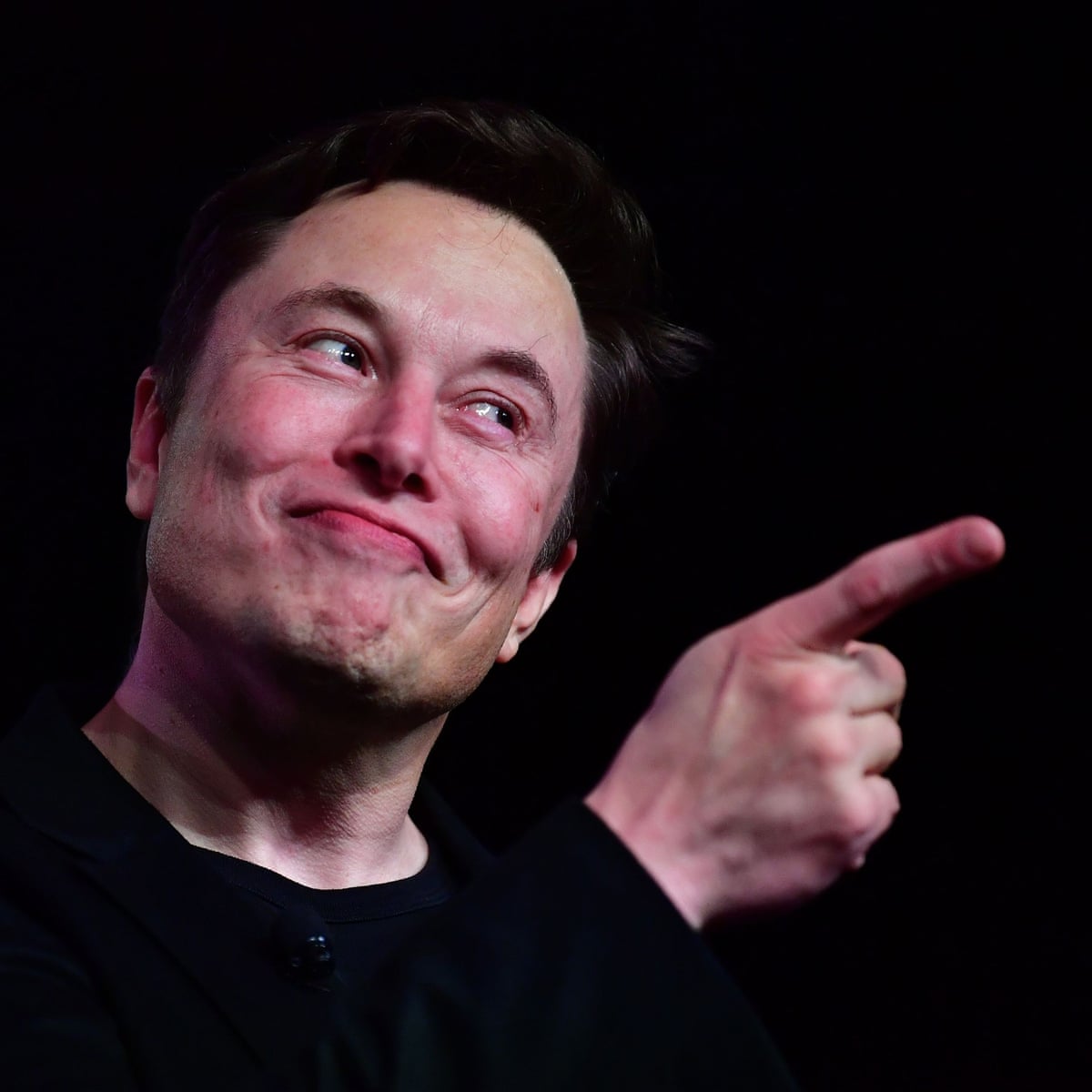
Earlier this year, Elon Musk was well on his way to becoming a crypto darling. What now?
Elon Musk (via Frederic J Brown/AFP via Getty Images)
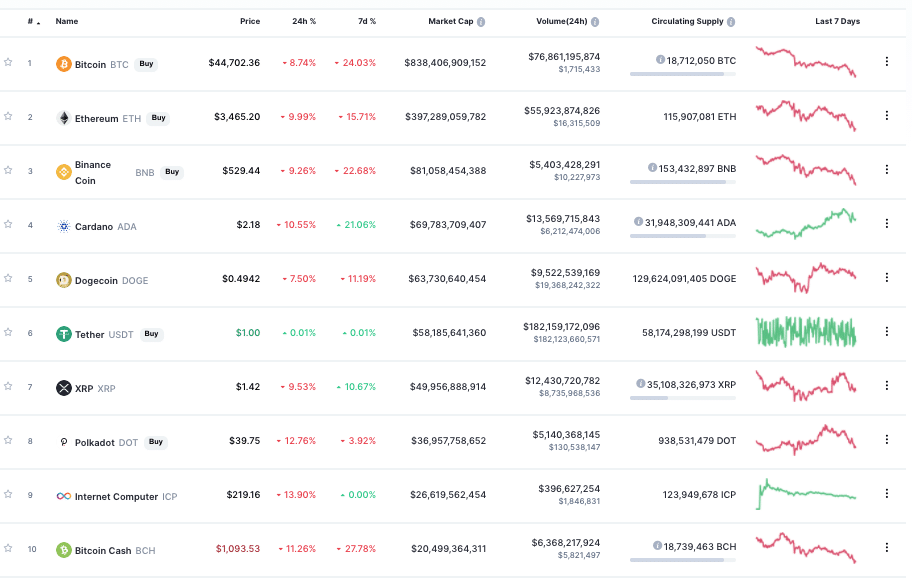
Over the past 24 hours, cryptocurrency’s collective market cap has dropped approximately 10 percent, falling from $2.3 trillion to approximately $2.08 trillion. The losses are not centralized to any specific asset or group of assets this Monday morning, as cryptocurrency markets are seeing red across the board.
Indeed, BTC is down more than 9 percent, sitting at $44.6K at press time; Ether (ETH) is down just over 12 percent with a price of $3.4K. Binance Coin (BNB), DogeCoin (DOGE), Cardano (ADA) and XRP are all down approximately 10 percent.
Some commentators are blaming the downward turn in cryptocurrency markets, and Bitcoin in particular, on none other than Tesla Founder, Elon Musk.
I think many people aren’t mad because of the price, they’re confident Bitcoin will bounce back stronger. They’re mad because Elon is shamelessly spreading harmful misinformation while making countless people FOMO into a high-risk meme coin in the most irresponsible way.
Bitcoin had not managed to fully recover before Elon Sent out another Twitter hint that Tesla may be offloading some of its BTC holdings seemed to ignite further sell-offs in Bitcoin markets. As the BTC price dropped, investors in other assets seemed to feel a sudden urge to take profits.
Twitter user @CryptoWhale, who has been called a 'scammer' by a number of members of the crypto community, wrote, “Bitcoiners are going to slap themselves next quarter when they find out Tesla dumped the rest of their #Bitcoin holdings. With the amount of hate @elonmusk is getting, I wouldn’t blame him,” to which Elon replied, “Indeed.”
This latest tweet, as well as Tesla’s announcement that it would be dropping Bitcoin payments last week, seem to represent something of a heel-turn for Mr Musk, who, for a brief moment, was lauded by the crypto community. Today, crypto Twitter, and perhaps the crypto community at large, seems to be souring on Elon Musk.
When Elon began his public love affair with DogeCoin earlier this year, it was unclear what his intentions were. To some, the fixation seemed like a joke; however, as time went on, it seemed that Elon did have some kind of serious agenda with DOGE. He referred to it as “the people’s crypto”; he offered to buy out DOGE whales to make the currency less centralized. He even asked the public if Tesla should accept DOGE payments.
But, as serious as Elon may or may not be about DOGE, many analysts pointed out the apparent glee that Musk took in with the power that he had over the price of the asset. At one point, he tweeted a meme of himself as Lion King character Rafiki holding a Simba DOGE up to the sun with the caption, “you’re welcome.”
Then, when Tesla announced that it would be accepting BTC payments and adding BTC to its balance sheet, more people seemed to start to see Elon as a sort of champion of crypto that the company’s adoption of Bitcoin could lead the way to an era of corporate Bitcoin adoption.
Tesla’s Change of Heart
But, this hope seemed to be short-lived. When Tesla announced that it would no longer be accepting BTC payments, and would be exploring other cryptocurrencies as possible payment options before then, some members of other crypto communities jumped at the opportunity to get Musks’ attention. Others made it clear that Musk’s touch was unwelcome.
For example, a Cardano (ADA) fan with the Twitter handle @CryptoNelson17 wrote that: “While I would love [Tesla to accept ADA] from a utility-perspective, I feel like @elonmusk is a bit unstable & it could hurt $ADA somehow,” he wrote.
“I mean take this ‘no longer purchasing teslas with $BTC’ thing – you’re telling me Elon didn’t know it wasn’t green? He’s a kid in a candy store, playing (sic).” he wrote. Moreover, members of the XRP community responded negatively to attempts to vie for Musk’s attention.
The Bitcoin crowd is no different. After Musk’s most recent “Indeed” tweet, crypto analyst Michael van der Poppe told Musk that he “look[s] utterly pathetic.”
“If you don’t believe in #Bitcoin, sell them and stop teasing millions of people,” van der Poppe wrote. “We’re done with it.”
You are responding to a scammer and you look utterly pathetic.
If you don’t believe in #Bitcoin, sell them and stop teasing millions of people.
We’re done with it.
— Michaël van de Poppe (@CryptoMichNL) May 16, 2021
Also, anonymous crypto analyst @notgrubles responded with “history has not been kind to people rage selling” alongside a photo of Roger Ver.
Journalist Bede MacGowan wrote, “Let him dump. The crypto community really shouldn’t be so dependent on the whims of one celebrity tweeter.”
Let him dump. The crypto community really shouldn’t be so dependent on the whims of one celebrity tweeter #bitcoin
Ari Paul, CIO of BlockTower Capital, wrote "Bitcoin isn’t PayPal, it’s a serious attempt at providing permissionless money to the world. You don’t seem to have much to contribute to that endeavor."
Dump it. Use doge as your plaything. Bitcoin isn’t PayPal, it’s a serious attempt at providing permissionless money to the world. You don’t seem to have much to contribute to that endeavor.
However, others are sticking up for Elon: "The Bitcoin community celebrated when Musk manipulated the market in their favour, didn't seem to reflect for one second on why that was bad, because it profited them," one Twitter user wrote.
"The second his manipulation hurts them, they act all mad."
What are your thoughts on Elon's crypto-related tweets? Let us know in the comments below.
Over the past 24 hours, cryptocurrency’s collective market cap has dropped approximately 10 percent, falling from $2.3 trillion to approximately $2.08 trillion. The losses are not centralized to any specific asset or group of assets this Monday morning, as cryptocurrency markets are seeing red across the board.
Indeed, BTC is down more than 9 percent, sitting at $44.6K at press time; Ether (ETH) is down just over 12 percent with a price of $3.4K. Binance Coin (BNB), DogeCoin (DOGE), Cardano (ADA) and XRP are all down approximately 10 percent.
Some commentators are blaming the downward turn in cryptocurrency markets, and Bitcoin in particular, on none other than Tesla Founder, Elon Musk.
I think many people aren’t mad because of the price, they’re confident Bitcoin will bounce back stronger. They’re mad because Elon is shamelessly spreading harmful misinformation while making countless people FOMO into a high-risk meme coin in the most irresponsible way.
Bitcoin had not managed to fully recover before Elon Sent out another Twitter hint that Tesla may be offloading some of its BTC holdings seemed to ignite further sell-offs in Bitcoin markets. As the BTC price dropped, investors in other assets seemed to feel a sudden urge to take profits.
Twitter user @CryptoWhale, who has been called a 'scammer' by a number of members of the crypto community, wrote, “Bitcoiners are going to slap themselves next quarter when they find out Tesla dumped the rest of their #Bitcoin holdings. With the amount of hate @elonmusk is getting, I wouldn’t blame him,” to which Elon replied, “Indeed.”
This latest tweet, as well as Tesla’s announcement that it would be dropping Bitcoin payments last week, seem to represent something of a heel-turn for Mr Musk, who, for a brief moment, was lauded by the crypto community. Today, crypto Twitter, and perhaps the crypto community at large, seems to be souring on Elon Musk.
When Elon began his public love affair with DogeCoin earlier this year, it was unclear what his intentions were. To some, the fixation seemed like a joke; however, as time went on, it seemed that Elon did have some kind of serious agenda with DOGE. He referred to it as “the people’s crypto”; he offered to buy out DOGE whales to make the currency less centralized. He even asked the public if Tesla should accept DOGE payments.
But, as serious as Elon may or may not be about DOGE, many analysts pointed out the apparent glee that Musk took in with the power that he had over the price of the asset. At one point, he tweeted a meme of himself as Lion King character Rafiki holding a Simba DOGE up to the sun with the caption, “you’re welcome.”
Then, when Tesla announced that it would be accepting BTC payments and adding BTC to its balance sheet, more people seemed to start to see Elon as a sort of champion of crypto that the company’s adoption of Bitcoin could lead the way to an era of corporate Bitcoin adoption.
Tesla’s Change of Heart
But, this hope seemed to be short-lived. When Tesla announced that it would no longer be accepting BTC payments, and would be exploring other cryptocurrencies as possible payment options before then, some members of other crypto communities jumped at the opportunity to get Musks’ attention. Others made it clear that Musk’s touch was unwelcome.
For example, a Cardano (ADA) fan with the Twitter handle @CryptoNelson17 wrote that: “While I would love [Tesla to accept ADA] from a utility-perspective, I feel like @elonmusk is a bit unstable & it could hurt $ADA somehow,” he wrote.
“I mean take this ‘no longer purchasing teslas with $BTC’ thing – you’re telling me Elon didn’t know it wasn’t green? He’s a kid in a candy store, playing (sic).” he wrote. Moreover, members of the XRP community responded negatively to attempts to vie for Musk’s attention.
The Bitcoin crowd is no different. After Musk’s most recent “Indeed” tweet, crypto analyst Michael van der Poppe told Musk that he “look[s] utterly pathetic.”
“If you don’t believe in #Bitcoin, sell them and stop teasing millions of people,” van der Poppe wrote. “We’re done with it.”
You are responding to a scammer and you look utterly pathetic.
If you don’t believe in #Bitcoin, sell them and stop teasing millions of people.
We’re done with it.
— Michaël van de Poppe (@CryptoMichNL) May 16, 2021
Also, anonymous crypto analyst @notgrubles responded with “history has not been kind to people rage selling” alongside a photo of Roger Ver.
Journalist Bede MacGowan wrote, “Let him dump. The crypto community really shouldn’t be so dependent on the whims of one celebrity tweeter.”
Let him dump. The crypto community really shouldn’t be so dependent on the whims of one celebrity tweeter #bitcoin
Ari Paul, CIO of BlockTower Capital, wrote "Bitcoin isn’t PayPal, it’s a serious attempt at providing permissionless money to the world. You don’t seem to have much to contribute to that endeavor."
Dump it. Use doge as your plaything. Bitcoin isn’t PayPal, it’s a serious attempt at providing permissionless money to the world. You don’t seem to have much to contribute to that endeavor.
However, others are sticking up for Elon: "The Bitcoin community celebrated when Musk manipulated the market in their favour, didn't seem to reflect for one second on why that was bad, because it profited them," one Twitter user wrote.
"The second his manipulation hurts them, they act all mad."
What are your thoughts on Elon's crypto-related tweets? Let us know in the comments below.
Rachel is a self-taught crypto geek and a passionate writer. She believes in the power that the written word has to educate, connect and empower individuals to make positive and powerful financial choices. She is the Podcast Host and a Cryptocurrency Editor at Finance Magnates.
Crypto Built More Rails, but the Next Battle Is Over How Much Work a Dollar Can Do
Featured Videos
FP Markets Winner Spotlight 🏆 | Global Broker of the Year 2025 #Trading #Broker #Innovation #Shorts
FP Markets Winner Spotlight 🏆 | Global Broker of the Year 2025 #Trading #Broker #Innovation #Shorts
FP Markets Winner Spotlight 🏆 | Global Broker of the Year 2025 #Trading #Broker #Innovation #Shorts
FP Markets Winner Spotlight 🏆 | Global Broker of the Year 2025 #Trading #Broker #Innovation #Shorts
FP Markets takes the spotlight as Global Broker of the Year 2025 at the Finance Magnates Awards.
Martin Stoilov, Head of Client Experience, shares that trust, innovation, and people played a key role in the company’s success, supported by a strong foundation of integrity and client-centricity.
Following this milestone, FP Markets continues to focus on growth, technology investment, and its core values of transparency and excellence.
👉 Be part of FM Awards 2026: https://awards.financemagnates.com/#nominate
FP Markets takes the spotlight as Global Broker of the Year 2025 at the Finance Magnates Awards.
Martin Stoilov, Head of Client Experience, shares that trust, innovation, and people played a key role in the company’s success, supported by a strong foundation of integrity and client-centricity.
Following this milestone, FP Markets continues to focus on growth, technology investment, and its core values of transparency and excellence.
👉 Be part of FM Awards 2026: https://awards.financemagnates.com/#nominate
FP Markets takes the spotlight as Global Broker of the Year 2025 at the Finance Magnates Awards.
Martin Stoilov, Head of Client Experience, shares that trust, innovation, and people played a key role in the company’s success, supported by a strong foundation of integrity and client-centricity.
Following this milestone, FP Markets continues to focus on growth, technology investment, and its core values of transparency and excellence.
👉 Be part of FM Awards 2026: https://awards.financemagnates.com/#nominate
FP Markets takes the spotlight as Global Broker of the Year 2025 at the Finance Magnates Awards.
Martin Stoilov, Head of Client Experience, shares that trust, innovation, and people played a key role in the company’s success, supported by a strong foundation of integrity and client-centricity.
Following this milestone, FP Markets continues to focus on growth, technology investment, and its core values of transparency and excellence.
👉 Be part of FM Awards 2026: https://awards.financemagnates.com/#nominate
In this video, we review @HolaPrimeMarketsOfficial, a multi-asset forex and CFDs broker offering different account types, trading platforms, and flexible trading conditions.
We cover the broker’s overall offering, including account options, trading environment, platforms like MT4 and MT5, and additional services such as managed accounts and fast withdrawals.
Watch the full video to see if Hola Prime Markets fits your trading needs.
📣 Stay up to date with the latest in finance and trading. Follow Finance Magnates for industry news, insights, and global event coverage.
Connect with us:
🔗 LinkedIn: /financemagnates
👍 Facebook: /financemagnates
📸 Instagram: https://www.instagram.com/financemagnates
🐦 X: https://x.com/financemagnates
🎥 TikTok: https://www.tiktok.com/tag/financemagnates
▶️ YouTube: /@financemagnates_official
#HolaPrime #ForexBroker #CFDTrading #FinanceMagnates #Trading #Forex #BrokerReview
In this video, we review @HolaPrimeMarketsOfficial, a multi-asset forex and CFDs broker offering different account types, trading platforms, and flexible trading conditions.
We cover the broker’s overall offering, including account options, trading environment, platforms like MT4 and MT5, and additional services such as managed accounts and fast withdrawals.
Watch the full video to see if Hola Prime Markets fits your trading needs.
📣 Stay up to date with the latest in finance and trading. Follow Finance Magnates for industry news, insights, and global event coverage.
Connect with us:
🔗 LinkedIn: /financemagnates
👍 Facebook: /financemagnates
📸 Instagram: https://www.instagram.com/financemagnates
🐦 X: https://x.com/financemagnates
🎥 TikTok: https://www.tiktok.com/tag/financemagnates
▶️ YouTube: /@financemagnates_official
#HolaPrime #ForexBroker #CFDTrading #FinanceMagnates #Trading #Forex #BrokerReview
In this video, we review @HolaPrimeMarketsOfficial, a multi-asset forex and CFDs broker offering different account types, trading platforms, and flexible trading conditions.
We cover the broker’s overall offering, including account options, trading environment, platforms like MT4 and MT5, and additional services such as managed accounts and fast withdrawals.
Watch the full video to see if Hola Prime Markets fits your trading needs.
📣 Stay up to date with the latest in finance and trading. Follow Finance Magnates for industry news, insights, and global event coverage.
Connect with us:
🔗 LinkedIn: /financemagnates
👍 Facebook: /financemagnates
📸 Instagram: https://www.instagram.com/financemagnates
🐦 X: https://x.com/financemagnates
🎥 TikTok: https://www.tiktok.com/tag/financemagnates
▶️ YouTube: /@financemagnates_official
#HolaPrime #ForexBroker #CFDTrading #FinanceMagnates #Trading #Forex #BrokerReview
In this video, we review @HolaPrimeMarketsOfficial, a multi-asset forex and CFDs broker offering different account types, trading platforms, and flexible trading conditions.
We cover the broker’s overall offering, including account options, trading environment, platforms like MT4 and MT5, and additional services such as managed accounts and fast withdrawals.
Watch the full video to see if Hola Prime Markets fits your trading needs.
📣 Stay up to date with the latest in finance and trading. Follow Finance Magnates for industry news, insights, and global event coverage.
Connect with us:
🔗 LinkedIn: /financemagnates
👍 Facebook: /financemagnates
📸 Instagram: https://www.instagram.com/financemagnates
🐦 X: https://x.com/financemagnates
🎥 TikTok: https://www.tiktok.com/tag/financemagnates
▶️ YouTube: /@financemagnates_official
#HolaPrime #ForexBroker #CFDTrading #FinanceMagnates #Trading #Forex #BrokerReview
In this video, we review @HolaPrimeMarketsOfficial, a multi-asset forex and CFDs broker offering different account types, trading platforms, and flexible trading conditions.
We cover the broker’s overall offering, including account options, trading environment, platforms like MT4 and MT5, and additional services such as managed accounts and fast withdrawals.
Watch the full video to see if Hola Prime Markets fits your trading needs.
📣 Stay up to date with the latest in finance and trading. Follow Finance Magnates for industry news, insights, and global event coverage.
Connect with us:
🔗 LinkedIn: /financemagnates
👍 Facebook: /financemagnates
📸 Instagram: https://www.instagram.com/financemagnates
🐦 X: https://x.com/financemagnates
🎥 TikTok: https://www.tiktok.com/tag/financemagnates
▶️ YouTube: /@financemagnates_official
#HolaPrime #ForexBroker #CFDTrading #FinanceMagnates #Trading #Forex #BrokerReview
In this video, we review @HolaPrimeMarketsOfficial, a multi-asset forex and CFDs broker offering different account types, trading platforms, and flexible trading conditions.
We cover the broker’s overall offering, including account options, trading environment, platforms like MT4 and MT5, and additional services such as managed accounts and fast withdrawals.
Watch the full video to see if Hola Prime Markets fits your trading needs.
📣 Stay up to date with the latest in finance and trading. Follow Finance Magnates for industry news, insights, and global event coverage.
Connect with us:
🔗 LinkedIn: /financemagnates
👍 Facebook: /financemagnates
📸 Instagram: https://www.instagram.com/financemagnates
🐦 X: https://x.com/financemagnates
🎥 TikTok: https://www.tiktok.com/tag/financemagnates
▶️ YouTube: /@financemagnates_official
#HolaPrime #ForexBroker #CFDTrading #FinanceMagnates #Trading #Forex #BrokerReview
Hola Prime Review: What You Need to Know | Full Breakdown by Finance Magnates
Hola Prime Review: What You Need to Know | Full Breakdown by Finance Magnates
Hola Prime Review: What You Need to Know | Full Breakdown by Finance Magnates
Hola Prime Review: What You Need to Know | Full Breakdown by Finance Magnates
Hola Prime Review: What You Need to Know | Full Breakdown by Finance Magnates
Hola Prime Review: What You Need to Know | Full Breakdown by Finance Magnates
In this video, we review @HolaPrime_Global, a proprietary trading firm offering evaluation programs and performance-based payouts in simulated market environments.
We cover how the challenge model works, including account types, profit splits (up to 95%), trading rules, and what it takes to reach a funded account. You’ll also learn about available platforms like MT4, MT5, cTrader, and more, along with insights into payouts, support, and trading conditions.
Watch the full video to see if Hola Prime fits your trading style.
📣 Stay up to date with the latest in finance and trading. Follow Finance Magnates for industry news, insights, and global event coverage.
Connect with us:
🔗 LinkedIn: /financemagnates
👍 Facebook: /financemagnates
📸 Instagram: https://www.instagram.com/financemagnates
🐦 X: https://x.com/financemagnates
🎥 TikTok: https://www.tiktok.com/tag/financemagnates
▶️ YouTube: /@financemagnates_official
#HolaPrime #PropFirm #Trading #FinanceMagnates #Forex #FuturesTrading #TradingReview #PropFirmReview
In this video, we review @HolaPrime_Global, a proprietary trading firm offering evaluation programs and performance-based payouts in simulated market environments.
We cover how the challenge model works, including account types, profit splits (up to 95%), trading rules, and what it takes to reach a funded account. You’ll also learn about available platforms like MT4, MT5, cTrader, and more, along with insights into payouts, support, and trading conditions.
Watch the full video to see if Hola Prime fits your trading style.
📣 Stay up to date with the latest in finance and trading. Follow Finance Magnates for industry news, insights, and global event coverage.
Connect with us:
🔗 LinkedIn: /financemagnates
👍 Facebook: /financemagnates
📸 Instagram: https://www.instagram.com/financemagnates
🐦 X: https://x.com/financemagnates
🎥 TikTok: https://www.tiktok.com/tag/financemagnates
▶️ YouTube: /@financemagnates_official
#HolaPrime #PropFirm #Trading #FinanceMagnates #Forex #FuturesTrading #TradingReview #PropFirmReview
In this video, we review @HolaPrime_Global, a proprietary trading firm offering evaluation programs and performance-based payouts in simulated market environments.
We cover how the challenge model works, including account types, profit splits (up to 95%), trading rules, and what it takes to reach a funded account. You’ll also learn about available platforms like MT4, MT5, cTrader, and more, along with insights into payouts, support, and trading conditions.
Watch the full video to see if Hola Prime fits your trading style.
📣 Stay up to date with the latest in finance and trading. Follow Finance Magnates for industry news, insights, and global event coverage.
Connect with us:
🔗 LinkedIn: /financemagnates
👍 Facebook: /financemagnates
📸 Instagram: https://www.instagram.com/financemagnates
🐦 X: https://x.com/financemagnates
🎥 TikTok: https://www.tiktok.com/tag/financemagnates
▶️ YouTube: /@financemagnates_official
#HolaPrime #PropFirm #Trading #FinanceMagnates #Forex #FuturesTrading #TradingReview #PropFirmReview
In this video, we review @HolaPrime_Global, a proprietary trading firm offering evaluation programs and performance-based payouts in simulated market environments.
We cover how the challenge model works, including account types, profit splits (up to 95%), trading rules, and what it takes to reach a funded account. You’ll also learn about available platforms like MT4, MT5, cTrader, and more, along with insights into payouts, support, and trading conditions.
Watch the full video to see if Hola Prime fits your trading style.
📣 Stay up to date with the latest in finance and trading. Follow Finance Magnates for industry news, insights, and global event coverage.
Connect with us:
🔗 LinkedIn: /financemagnates
👍 Facebook: /financemagnates
📸 Instagram: https://www.instagram.com/financemagnates
🐦 X: https://x.com/financemagnates
🎥 TikTok: https://www.tiktok.com/tag/financemagnates
▶️ YouTube: /@financemagnates_official
#HolaPrime #PropFirm #Trading #FinanceMagnates #Forex #FuturesTrading #TradingReview #PropFirmReview
In this video, we review @HolaPrime_Global, a proprietary trading firm offering evaluation programs and performance-based payouts in simulated market environments.
We cover how the challenge model works, including account types, profit splits (up to 95%), trading rules, and what it takes to reach a funded account. You’ll also learn about available platforms like MT4, MT5, cTrader, and more, along with insights into payouts, support, and trading conditions.
Watch the full video to see if Hola Prime fits your trading style.
📣 Stay up to date with the latest in finance and trading. Follow Finance Magnates for industry news, insights, and global event coverage.
Connect with us:
🔗 LinkedIn: /financemagnates
👍 Facebook: /financemagnates
📸 Instagram: https://www.instagram.com/financemagnates
🐦 X: https://x.com/financemagnates
🎥 TikTok: https://www.tiktok.com/tag/financemagnates
▶️ YouTube: /@financemagnates_official
#HolaPrime #PropFirm #Trading #FinanceMagnates #Forex #FuturesTrading #TradingReview #PropFirmReview
In this video, we review @HolaPrime_Global, a proprietary trading firm offering evaluation programs and performance-based payouts in simulated market environments.
We cover how the challenge model works, including account types, profit splits (up to 95%), trading rules, and what it takes to reach a funded account. You’ll also learn about available platforms like MT4, MT5, cTrader, and more, along with insights into payouts, support, and trading conditions.
Watch the full video to see if Hola Prime fits your trading style.
📣 Stay up to date with the latest in finance and trading. Follow Finance Magnates for industry news, insights, and global event coverage.
Connect with us:
🔗 LinkedIn: /financemagnates
👍 Facebook: /financemagnates
📸 Instagram: https://www.instagram.com/financemagnates
🐦 X: https://x.com/financemagnates
🎥 TikTok: https://www.tiktok.com/tag/financemagnates
▶️ YouTube: /@financemagnates_official
#HolaPrime #PropFirm #Trading #FinanceMagnates #Forex #FuturesTrading #TradingReview #PropFirmReview
Axi Winner Spotlight 🏆 | Global Most Innovative Broker 2025 #Innovation #Trading #Fintech #Broker
Axi Winner Spotlight 🏆 | Global Most Innovative Broker 2025 #Innovation #Trading #Fintech #Broker
Axi Winner Spotlight 🏆 | Global Most Innovative Broker 2025 #Innovation #Trading #Fintech #Broker
Axi Winner Spotlight 🏆 | Global Most Innovative Broker 2025 #Innovation #Trading #Fintech #Broker
Axi Winner Spotlight 🏆 | Global Most Innovative Broker 2025 #Innovation #Trading #Fintech #Broker
Axi Winner Spotlight 🏆 | Global Most Innovative Broker 2025 #Innovation #Trading #Fintech #Broker
Axi takes the spotlight at the Finance Magnates Awards, winning Global Most Innovative Broker 2025.
Olivia Xenofontos and Ivanna Openko share how the team will feel: proud, motivated, and ready to keep delivering.
They also describe the night as well-organized, focused, and enjoyable for all.
👉 Be part of FM Awards 2026.
Axi takes the spotlight at the Finance Magnates Awards, winning Global Most Innovative Broker 2025.
Olivia Xenofontos and Ivanna Openko share how the team will feel: proud, motivated, and ready to keep delivering.
They also describe the night as well-organized, focused, and enjoyable for all.
👉 Be part of FM Awards 2026.
Axi takes the spotlight at the Finance Magnates Awards, winning Global Most Innovative Broker 2025.
Olivia Xenofontos and Ivanna Openko share how the team will feel: proud, motivated, and ready to keep delivering.
They also describe the night as well-organized, focused, and enjoyable for all.
👉 Be part of FM Awards 2026.
Axi takes the spotlight at the Finance Magnates Awards, winning Global Most Innovative Broker 2025.
Olivia Xenofontos and Ivanna Openko share how the team will feel: proud, motivated, and ready to keep delivering.
They also describe the night as well-organized, focused, and enjoyable for all.
👉 Be part of FM Awards 2026.
Axi takes the spotlight at the Finance Magnates Awards, winning Global Most Innovative Broker 2025.
Olivia Xenofontos and Ivanna Openko share how the team will feel: proud, motivated, and ready to keep delivering.
They also describe the night as well-organized, focused, and enjoyable for all.
👉 Be part of FM Awards 2026.
Axi takes the spotlight at the Finance Magnates Awards, winning Global Most Innovative Broker 2025.
Olivia Xenofontos and Ivanna Openko share how the team will feel: proud, motivated, and ready to keep delivering.
They also describe the night as well-organized, focused, and enjoyable for all.
👉 Be part of FM Awards 2026.
Recognition that matters.
Built on transparency.
Driven by the industry.
The Finance Magnates Awards 2026.
Nominations are now open.
🔗 https://awards.financemagnates.com/?utm_source=SM&utm_medium=social&utm_campaign=recognition-matters
Recognition that matters.
Built on transparency.
Driven by the industry.
The Finance Magnates Awards 2026.
Nominations are now open.
🔗 https://awards.financemagnates.com/?utm_source=SM&utm_medium=social&utm_campaign=recognition-matters
Recognition that matters.
Built on transparency.
Driven by the industry.
The Finance Magnates Awards 2026.
Nominations are now open.
🔗 https://awards.financemagnates.com/?utm_source=SM&utm_medium=social&utm_campaign=recognition-matters
Recognition that matters.
Built on transparency.
Driven by the industry.
The Finance Magnates Awards 2026.
Nominations are now open.
🔗 https://awards.financemagnates.com/?utm_source=SM&utm_medium=social&utm_campaign=recognition-matters
Recognition that matters.
Built on transparency.
Driven by the industry.
The Finance Magnates Awards 2026.
Nominations are now open.
🔗 https://awards.financemagnates.com/?utm_source=SM&utm_medium=social&utm_campaign=recognition-matters
Recognition that matters.
Built on transparency.
Driven by the industry.
The Finance Magnates Awards 2026.
Nominations are now open.
🔗 https://awards.financemagnates.com/?utm_source=SM&utm_medium=social&utm_campaign=recognition-matters