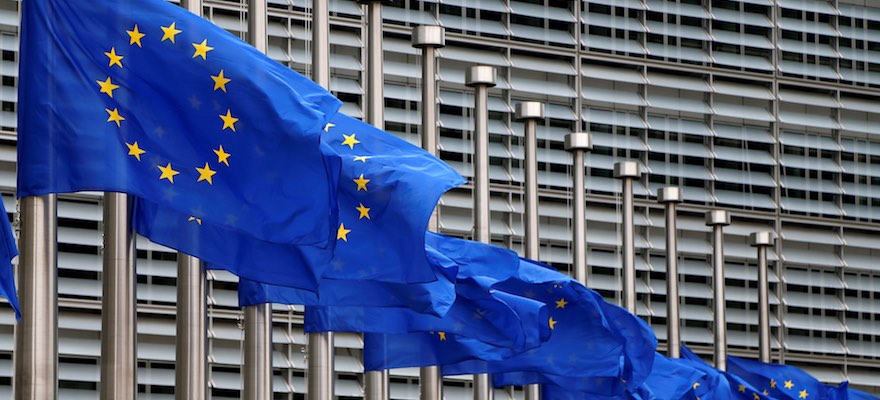
Last week, an Association of over 200 banks in Germany called for the launch of a digital euro.
Reuters
The advent of Facebook’s Libra project has caused quite a bit of regulatory stir across the world.
Government bodies on nearly every continent have come forth to question the project’s motives and mechanics, and--in some cases--to try and shut the project down completely, or at least delay its development.
However, as the eventual launch of Libra or a similar platform seems increasingly inevitable, a growing number of government and financial industry bodies seem to be adopting another approach toward combating the possible negative effects of Libra or something like it: competition.
Indeed, it was the launch of Libra that seems to have catalyzed China to make the final push into preparing the launch of its digital CNY, which is expected to launch in the near future, although the exact timing of the launch is not yet known.
The Association claimed in a statement that this kind of digital money has advantages over the current financial system, including faster transactions and the ability to create smart contracts.
Is the launch of a sovereign digital currency the EU’s best option when it comes to combat the possibility of financial dominance by Libra or a similar project? And would a digital euro improve upon the EU’s current financial system, or would it merely move a set of existing problems onto a new platform?
“Europe must keep up with this competition so that the global financial architecture does not lead to a polarisation between American or Chinese solutions,”
The Association’s statement also acknowledged that while Europe does already have a system for instant digital payments--the Single Euro Payments Area (SEPA)--that it is “not yet possible to integrate it into digital processes and smart contacts.”
Therefore, the banks argue, the banking industry should work together with central banks at the European level to create a new payment infrastructure that addresses the existing problems of the current financial system while retaining the benefits of the current system.
Why is this so important at this particular moment in time? “This is the only way to withstand the competitive pressure from the U.S., and soon probably also Chinese, technology companies,” the statement said, without naming Libra or China’s digital CNY specifically.
“Europe must keep up with this competition so that the global financial architecture does not lead to a polarisation between American or Chinese solutions,” the paper said.
Do national currencies need to “digitize or die”?
Anthony Pompliano, Co-founder & Partner at Morgan Creek Digital and well-known Crypto Twitter commentator, said that this call for a digital Euro signals that “the Great Currency Race is upon us,” and that “national currencies must digitize or die.”
The European Union is now considering launching a digital Euro.
The Great Currency Race is upon us.
National currencies must digitize or die.
— Pomp ? (@APompliano) November 6, 2019
And indeed, regulators around the world have expressed great concern over the fact that Libra or another privately-issued digital currency could have serious consequences for the global financial system.
“If enough Europeans move their money out of the Euro and into private currencies like Libra, it would reduce the effectiveness of monetary policy,” said Charles Phan, Founding Engineer of cryptocurrency exchange Interdax, in an email to Finance Magnates.
Charles Phan, Founding Engineer of cryptocurrency exchange Interdax.
“If enough people switched to Libra or Bitcoin, the amount of broad money in the economy would shrink,” he explained. “In an extreme scenario, the central bank’s duty of providing broad money would cease to be an effective tool to manage interest rates. If interest rates can no longer be managed by the central bank, their power in stimulating the economy vanishes.”
Eric Benz, CEO of cryptocurrency exchange Changelly, added that while Libra may be the first example of a private company attempting to take steps toward creating a global financial network based on digital currency, it certainly won’t be the last.
Eric Benz, CEO of cryptocurrency exchange Changelly
“Projects like Libra are a good example of where we are heading as there will be more to follow Libra’s footsteps. In the coming decade or two, we will see a shift away from government-backed fiat into a more global asset class,” he told Finance Magnates. To that end, “having a digital euro would only help to aid the growth and adoption of this new financial ecosystem.”
”Creating a different form of digital euro won’t make a big difference in the underlying problems.”
However, a number of analysts have pointed out that without significant changes, the digitization of the Euro wouldn’t bring any real benefits with it; instead, it would merely transplant a flawed system onto a new kind of platform.
“The Euro is already digital and the European Central Bank has a hard enough time managing its currency as is,” wrote Director, Digital Assets Strategy at VanEck/MVIS, in response to Anthony Pompliano’s tweet on the call for the digital euro. “Creating a different form of digital euro won’t make a big difference in the underlying problems.[...]”
The Euro is already digital and the European Central Bank has a hard enough time managing its currency as is. Creating a different form of digital euro won’t make a big difference in the underlying problems. Adopting Bitcoin might make a difference.
Indeed, in an interview with Finance Magnatesconducted earlier this week, Daniel Popa, CEO of stablecoin Anchor, explained that fiat-pegged stablecoins (which is what the digital euro would likely be) have the same kinds of problems that fiat currencies do.
“While [fiat-backed stablecoins are] a natural transition in the evolution of digital currencies since fiat is what we are most familiar with, these assets are mere digitizations of the current flawed monetary systems,” Popa told Finance Magnates. “Fiat currencies and fiat-pegged stablecoins are susceptible to inflation, depreciation, and other external economic forces that cause instability.”
Phan also explained that there could be a number of other logistical concerns when it comes to the development of something like a digital Euro. “The main risk of a digital euro relates to the transition to a new financial system, which requires careful design and extensive testing of the infrastructure,” he said.
“A blockchain-based currency for the Eurozone may also involve the introduction of new legislation and would require coordination with foreign banks and financial institutions. As there is no historical experience to draw on, introducing a digital euro would need to go through a lot of scrutiny, testing, and planning.”
This would include the development and implementation of a suitable consensus model. “The design of any distributed system must also tackle the problem of how to ensure that consensus is achieved between all participants,” Phan said. “A digital euro would entail costs related to storage and synchronization of multiple ledgers and these costs will increase if there is a lack of trust between participants.”
Even if these kinds of logistical problems are solved, Eric Benz pointed out that building user trust in a new economic system could pose its own set of challenges “As stable coins quickly flood the market we have to ask ourselves, ‘who do we actually trust?’,” he said.
“I trust the euros in my bank, but can I trust a crypto euro? The problems are easy to point out but one obvious one would be, ‘trust.’ Changing a consumer mindset when it comes to money is a very difficult process and one we have been trying to do for thousands of years.”
Indeed, “in terms of financial stability, the overall effect of introducing a blockchain-based EUR is not clear,” Charles Phan said. “There will be some benefits (more efficient and resilient payment infrastructure) but the costs could outweigh these benefits. Mismanagement of the transition could be fatal."
Additionally, Justin Smith, CTO of SIBEX AG, said to Finance Magnates that “there are a number of considerations to take into account here; How is it secured? Is there a back door? Can it be used freely, as a bearer instrument? The design decisions will have far-reaching consequences.”
Justin Smith, CTO of SIBEX AG.
A digital euro could pose a trade-off between data privacy and efficiency
Still, though, a digital euro could potentially have benefits outside of simply faster payments and smart contracts.
“The introduction of a more efficient means to boost trade and liquidity across global markets is a big step in the inevitable direction of change,” Eric Benz said.
“The digital euro would be able to move across markets and boost the economy in a much more efficient manner. The ability to then trade digital euro for other digital currencies like the CNY would mean that we open up new ways to boost each currency but in a way that is blockchain-based.”
Additionally, Charles Phan pointed to “an increase in competition in the provision of deposit accounts and payment services,” as well as greater accessibility to central banks and possible protection against bank failure.
Phan also said that “a blockchain-based euro would provide a wealth of real-time data in which could have positive effects on policy-making”--which, of course, brings up the question of data privacy and the digital euro.
“The paper put forward by the German banks wants every user of a digital euro to be identifiable, which means linking currency to identities,” Phan said, “something that Bitcoin avoids.”
“How identities would be protected and kept private is another open question. The Know-Your-Customer function could fall on the central bank, and all of your transactions would be traced by the central bank and they’d probably share this information with the relevant tax agencies and authorities. “
“This is a scenario whereby the ECB is damned if it does, and damned if it doesn't.”
Jeffrey Cammack, COO & Editorial Director of FX Scouts, told Finance Magnates that there may come a point when the European Central Bank essentially has no choice but to pursue the launch of a digital euro--and that that point may have already come.
Jeffrey Cammack, COO & Editorial Director of FX Scouts.
“This is a scenario whereby the ECB is damned if it does, and damned if it doesn't,” Cammack said. “The future of currency will become more global and more liberalized, and there is no way for the Eurozone to get away from that.”
“While the Euro will never be able to be liberalized to the extent of other leading cryptocurrencies or Libra, but there is a possibility to create movement away from the rigid economic structures currently in place,” he continued.
“Just how far will remain to be seen, because the stability of a currency requires trust in the management of the currency, and unless governments lose the faith of their population, governments will remain the golden standard of trust.”
The advent of Facebook’s Libra project has caused quite a bit of regulatory stir across the world.
Government bodies on nearly every continent have come forth to question the project’s motives and mechanics, and--in some cases--to try and shut the project down completely, or at least delay its development.
However, as the eventual launch of Libra or a similar platform seems increasingly inevitable, a growing number of government and financial industry bodies seem to be adopting another approach toward combating the possible negative effects of Libra or something like it: competition.
Indeed, it was the launch of Libra that seems to have catalyzed China to make the final push into preparing the launch of its digital CNY, which is expected to launch in the near future, although the exact timing of the launch is not yet known.
The Association claimed in a statement that this kind of digital money has advantages over the current financial system, including faster transactions and the ability to create smart contracts.
Is the launch of a sovereign digital currency the EU’s best option when it comes to combat the possibility of financial dominance by Libra or a similar project? And would a digital euro improve upon the EU’s current financial system, or would it merely move a set of existing problems onto a new platform?
“Europe must keep up with this competition so that the global financial architecture does not lead to a polarisation between American or Chinese solutions,”
The Association’s statement also acknowledged that while Europe does already have a system for instant digital payments--the Single Euro Payments Area (SEPA)--that it is “not yet possible to integrate it into digital processes and smart contacts.”
Therefore, the banks argue, the banking industry should work together with central banks at the European level to create a new payment infrastructure that addresses the existing problems of the current financial system while retaining the benefits of the current system.
Why is this so important at this particular moment in time? “This is the only way to withstand the competitive pressure from the U.S., and soon probably also Chinese, technology companies,” the statement said, without naming Libra or China’s digital CNY specifically.
“Europe must keep up with this competition so that the global financial architecture does not lead to a polarisation between American or Chinese solutions,” the paper said.
Do national currencies need to “digitize or die”?
Anthony Pompliano, Co-founder & Partner at Morgan Creek Digital and well-known Crypto Twitter commentator, said that this call for a digital Euro signals that “the Great Currency Race is upon us,” and that “national currencies must digitize or die.”
The European Union is now considering launching a digital Euro.
The Great Currency Race is upon us.
National currencies must digitize or die.
— Pomp ? (@APompliano) November 6, 2019
And indeed, regulators around the world have expressed great concern over the fact that Libra or another privately-issued digital currency could have serious consequences for the global financial system.
“If enough Europeans move their money out of the Euro and into private currencies like Libra, it would reduce the effectiveness of monetary policy,” said Charles Phan, Founding Engineer of cryptocurrency exchange Interdax, in an email to Finance Magnates.
Charles Phan, Founding Engineer of cryptocurrency exchange Interdax.
“If enough people switched to Libra or Bitcoin, the amount of broad money in the economy would shrink,” he explained. “In an extreme scenario, the central bank’s duty of providing broad money would cease to be an effective tool to manage interest rates. If interest rates can no longer be managed by the central bank, their power in stimulating the economy vanishes.”
Eric Benz, CEO of cryptocurrency exchange Changelly, added that while Libra may be the first example of a private company attempting to take steps toward creating a global financial network based on digital currency, it certainly won’t be the last.
Eric Benz, CEO of cryptocurrency exchange Changelly
“Projects like Libra are a good example of where we are heading as there will be more to follow Libra’s footsteps. In the coming decade or two, we will see a shift away from government-backed fiat into a more global asset class,” he told Finance Magnates. To that end, “having a digital euro would only help to aid the growth and adoption of this new financial ecosystem.”
”Creating a different form of digital euro won’t make a big difference in the underlying problems.”
However, a number of analysts have pointed out that without significant changes, the digitization of the Euro wouldn’t bring any real benefits with it; instead, it would merely transplant a flawed system onto a new kind of platform.
“The Euro is already digital and the European Central Bank has a hard enough time managing its currency as is,” wrote Director, Digital Assets Strategy at VanEck/MVIS, in response to Anthony Pompliano’s tweet on the call for the digital euro. “Creating a different form of digital euro won’t make a big difference in the underlying problems.[...]”
The Euro is already digital and the European Central Bank has a hard enough time managing its currency as is. Creating a different form of digital euro won’t make a big difference in the underlying problems. Adopting Bitcoin might make a difference.
Indeed, in an interview with Finance Magnatesconducted earlier this week, Daniel Popa, CEO of stablecoin Anchor, explained that fiat-pegged stablecoins (which is what the digital euro would likely be) have the same kinds of problems that fiat currencies do.
“While [fiat-backed stablecoins are] a natural transition in the evolution of digital currencies since fiat is what we are most familiar with, these assets are mere digitizations of the current flawed monetary systems,” Popa told Finance Magnates. “Fiat currencies and fiat-pegged stablecoins are susceptible to inflation, depreciation, and other external economic forces that cause instability.”
Phan also explained that there could be a number of other logistical concerns when it comes to the development of something like a digital Euro. “The main risk of a digital euro relates to the transition to a new financial system, which requires careful design and extensive testing of the infrastructure,” he said.
“A blockchain-based currency for the Eurozone may also involve the introduction of new legislation and would require coordination with foreign banks and financial institutions. As there is no historical experience to draw on, introducing a digital euro would need to go through a lot of scrutiny, testing, and planning.”
This would include the development and implementation of a suitable consensus model. “The design of any distributed system must also tackle the problem of how to ensure that consensus is achieved between all participants,” Phan said. “A digital euro would entail costs related to storage and synchronization of multiple ledgers and these costs will increase if there is a lack of trust between participants.”
Even if these kinds of logistical problems are solved, Eric Benz pointed out that building user trust in a new economic system could pose its own set of challenges “As stable coins quickly flood the market we have to ask ourselves, ‘who do we actually trust?’,” he said.
“I trust the euros in my bank, but can I trust a crypto euro? The problems are easy to point out but one obvious one would be, ‘trust.’ Changing a consumer mindset when it comes to money is a very difficult process and one we have been trying to do for thousands of years.”
Indeed, “in terms of financial stability, the overall effect of introducing a blockchain-based EUR is not clear,” Charles Phan said. “There will be some benefits (more efficient and resilient payment infrastructure) but the costs could outweigh these benefits. Mismanagement of the transition could be fatal."
Additionally, Justin Smith, CTO of SIBEX AG, said to Finance Magnates that “there are a number of considerations to take into account here; How is it secured? Is there a back door? Can it be used freely, as a bearer instrument? The design decisions will have far-reaching consequences.”
Justin Smith, CTO of SIBEX AG.
A digital euro could pose a trade-off between data privacy and efficiency
Still, though, a digital euro could potentially have benefits outside of simply faster payments and smart contracts.
“The introduction of a more efficient means to boost trade and liquidity across global markets is a big step in the inevitable direction of change,” Eric Benz said.
“The digital euro would be able to move across markets and boost the economy in a much more efficient manner. The ability to then trade digital euro for other digital currencies like the CNY would mean that we open up new ways to boost each currency but in a way that is blockchain-based.”
Additionally, Charles Phan pointed to “an increase in competition in the provision of deposit accounts and payment services,” as well as greater accessibility to central banks and possible protection against bank failure.
Phan also said that “a blockchain-based euro would provide a wealth of real-time data in which could have positive effects on policy-making”--which, of course, brings up the question of data privacy and the digital euro.
“The paper put forward by the German banks wants every user of a digital euro to be identifiable, which means linking currency to identities,” Phan said, “something that Bitcoin avoids.”
“How identities would be protected and kept private is another open question. The Know-Your-Customer function could fall on the central bank, and all of your transactions would be traced by the central bank and they’d probably share this information with the relevant tax agencies and authorities. “
“This is a scenario whereby the ECB is damned if it does, and damned if it doesn't.”
Jeffrey Cammack, COO & Editorial Director of FX Scouts, told Finance Magnates that there may come a point when the European Central Bank essentially has no choice but to pursue the launch of a digital euro--and that that point may have already come.
Jeffrey Cammack, COO & Editorial Director of FX Scouts.
“This is a scenario whereby the ECB is damned if it does, and damned if it doesn't,” Cammack said. “The future of currency will become more global and more liberalized, and there is no way for the Eurozone to get away from that.”
“While the Euro will never be able to be liberalized to the extent of other leading cryptocurrencies or Libra, but there is a possibility to create movement away from the rigid economic structures currently in place,” he continued.
“Just how far will remain to be seen, because the stability of a currency requires trust in the management of the currency, and unless governments lose the faith of their population, governments will remain the golden standard of trust.”
Rachel is a self-taught crypto geek and a passionate writer. She believes in the power that the written word has to educate, connect and empower individuals to make positive and powerful financial choices. She is the Podcast Host and a Cryptocurrency Editor at Finance Magnates.
Crypto Built More Rails, but the Next Battle Is Over How Much Work a Dollar Can Do
Featured Videos
FP Markets Winner Spotlight 🏆 | Global Broker of the Year 2025 #Trading #Broker #Innovation #Shorts
FP Markets Winner Spotlight 🏆 | Global Broker of the Year 2025 #Trading #Broker #Innovation #Shorts
FP Markets Winner Spotlight 🏆 | Global Broker of the Year 2025 #Trading #Broker #Innovation #Shorts
FP Markets Winner Spotlight 🏆 | Global Broker of the Year 2025 #Trading #Broker #Innovation #Shorts
FP Markets takes the spotlight as Global Broker of the Year 2025 at the Finance Magnates Awards.
Martin Stoilov, Head of Client Experience, shares that trust, innovation, and people played a key role in the company’s success, supported by a strong foundation of integrity and client-centricity.
Following this milestone, FP Markets continues to focus on growth, technology investment, and its core values of transparency and excellence.
👉 Be part of FM Awards 2026: https://awards.financemagnates.com/#nominate
FP Markets takes the spotlight as Global Broker of the Year 2025 at the Finance Magnates Awards.
Martin Stoilov, Head of Client Experience, shares that trust, innovation, and people played a key role in the company’s success, supported by a strong foundation of integrity and client-centricity.
Following this milestone, FP Markets continues to focus on growth, technology investment, and its core values of transparency and excellence.
👉 Be part of FM Awards 2026: https://awards.financemagnates.com/#nominate
FP Markets takes the spotlight as Global Broker of the Year 2025 at the Finance Magnates Awards.
Martin Stoilov, Head of Client Experience, shares that trust, innovation, and people played a key role in the company’s success, supported by a strong foundation of integrity and client-centricity.
Following this milestone, FP Markets continues to focus on growth, technology investment, and its core values of transparency and excellence.
👉 Be part of FM Awards 2026: https://awards.financemagnates.com/#nominate
FP Markets takes the spotlight as Global Broker of the Year 2025 at the Finance Magnates Awards.
Martin Stoilov, Head of Client Experience, shares that trust, innovation, and people played a key role in the company’s success, supported by a strong foundation of integrity and client-centricity.
Following this milestone, FP Markets continues to focus on growth, technology investment, and its core values of transparency and excellence.
👉 Be part of FM Awards 2026: https://awards.financemagnates.com/#nominate
In this video, we review @HolaPrimeMarketsOfficial, a multi-asset forex and CFDs broker offering different account types, trading platforms, and flexible trading conditions.
We cover the broker’s overall offering, including account options, trading environment, platforms like MT4 and MT5, and additional services such as managed accounts and fast withdrawals.
Watch the full video to see if Hola Prime Markets fits your trading needs.
📣 Stay up to date with the latest in finance and trading. Follow Finance Magnates for industry news, insights, and global event coverage.
Connect with us:
🔗 LinkedIn: /financemagnates
👍 Facebook: /financemagnates
📸 Instagram: https://www.instagram.com/financemagnates
🐦 X: https://x.com/financemagnates
🎥 TikTok: https://www.tiktok.com/tag/financemagnates
▶️ YouTube: /@financemagnates_official
#HolaPrime #ForexBroker #CFDTrading #FinanceMagnates #Trading #Forex #BrokerReview
In this video, we review @HolaPrimeMarketsOfficial, a multi-asset forex and CFDs broker offering different account types, trading platforms, and flexible trading conditions.
We cover the broker’s overall offering, including account options, trading environment, platforms like MT4 and MT5, and additional services such as managed accounts and fast withdrawals.
Watch the full video to see if Hola Prime Markets fits your trading needs.
📣 Stay up to date with the latest in finance and trading. Follow Finance Magnates for industry news, insights, and global event coverage.
Connect with us:
🔗 LinkedIn: /financemagnates
👍 Facebook: /financemagnates
📸 Instagram: https://www.instagram.com/financemagnates
🐦 X: https://x.com/financemagnates
🎥 TikTok: https://www.tiktok.com/tag/financemagnates
▶️ YouTube: /@financemagnates_official
#HolaPrime #ForexBroker #CFDTrading #FinanceMagnates #Trading #Forex #BrokerReview
In this video, we review @HolaPrimeMarketsOfficial, a multi-asset forex and CFDs broker offering different account types, trading platforms, and flexible trading conditions.
We cover the broker’s overall offering, including account options, trading environment, platforms like MT4 and MT5, and additional services such as managed accounts and fast withdrawals.
Watch the full video to see if Hola Prime Markets fits your trading needs.
📣 Stay up to date with the latest in finance and trading. Follow Finance Magnates for industry news, insights, and global event coverage.
Connect with us:
🔗 LinkedIn: /financemagnates
👍 Facebook: /financemagnates
📸 Instagram: https://www.instagram.com/financemagnates
🐦 X: https://x.com/financemagnates
🎥 TikTok: https://www.tiktok.com/tag/financemagnates
▶️ YouTube: /@financemagnates_official
#HolaPrime #ForexBroker #CFDTrading #FinanceMagnates #Trading #Forex #BrokerReview
In this video, we review @HolaPrimeMarketsOfficial, a multi-asset forex and CFDs broker offering different account types, trading platforms, and flexible trading conditions.
We cover the broker’s overall offering, including account options, trading environment, platforms like MT4 and MT5, and additional services such as managed accounts and fast withdrawals.
Watch the full video to see if Hola Prime Markets fits your trading needs.
📣 Stay up to date with the latest in finance and trading. Follow Finance Magnates for industry news, insights, and global event coverage.
Connect with us:
🔗 LinkedIn: /financemagnates
👍 Facebook: /financemagnates
📸 Instagram: https://www.instagram.com/financemagnates
🐦 X: https://x.com/financemagnates
🎥 TikTok: https://www.tiktok.com/tag/financemagnates
▶️ YouTube: /@financemagnates_official
#HolaPrime #ForexBroker #CFDTrading #FinanceMagnates #Trading #Forex #BrokerReview
In this video, we review @HolaPrimeMarketsOfficial, a multi-asset forex and CFDs broker offering different account types, trading platforms, and flexible trading conditions.
We cover the broker’s overall offering, including account options, trading environment, platforms like MT4 and MT5, and additional services such as managed accounts and fast withdrawals.
Watch the full video to see if Hola Prime Markets fits your trading needs.
📣 Stay up to date with the latest in finance and trading. Follow Finance Magnates for industry news, insights, and global event coverage.
Connect with us:
🔗 LinkedIn: /financemagnates
👍 Facebook: /financemagnates
📸 Instagram: https://www.instagram.com/financemagnates
🐦 X: https://x.com/financemagnates
🎥 TikTok: https://www.tiktok.com/tag/financemagnates
▶️ YouTube: /@financemagnates_official
#HolaPrime #ForexBroker #CFDTrading #FinanceMagnates #Trading #Forex #BrokerReview
In this video, we review @HolaPrimeMarketsOfficial, a multi-asset forex and CFDs broker offering different account types, trading platforms, and flexible trading conditions.
We cover the broker’s overall offering, including account options, trading environment, platforms like MT4 and MT5, and additional services such as managed accounts and fast withdrawals.
Watch the full video to see if Hola Prime Markets fits your trading needs.
📣 Stay up to date with the latest in finance and trading. Follow Finance Magnates for industry news, insights, and global event coverage.
Connect with us:
🔗 LinkedIn: /financemagnates
👍 Facebook: /financemagnates
📸 Instagram: https://www.instagram.com/financemagnates
🐦 X: https://x.com/financemagnates
🎥 TikTok: https://www.tiktok.com/tag/financemagnates
▶️ YouTube: /@financemagnates_official
#HolaPrime #ForexBroker #CFDTrading #FinanceMagnates #Trading #Forex #BrokerReview
Hola Prime Review: What You Need to Know | Full Breakdown by Finance Magnates
Hola Prime Review: What You Need to Know | Full Breakdown by Finance Magnates
Hola Prime Review: What You Need to Know | Full Breakdown by Finance Magnates
Hola Prime Review: What You Need to Know | Full Breakdown by Finance Magnates
Hola Prime Review: What You Need to Know | Full Breakdown by Finance Magnates
Hola Prime Review: What You Need to Know | Full Breakdown by Finance Magnates
In this video, we review @HolaPrime_Global, a proprietary trading firm offering evaluation programs and performance-based payouts in simulated market environments.
We cover how the challenge model works, including account types, profit splits (up to 95%), trading rules, and what it takes to reach a funded account. You’ll also learn about available platforms like MT4, MT5, cTrader, and more, along with insights into payouts, support, and trading conditions.
Watch the full video to see if Hola Prime fits your trading style.
📣 Stay up to date with the latest in finance and trading. Follow Finance Magnates for industry news, insights, and global event coverage.
Connect with us:
🔗 LinkedIn: /financemagnates
👍 Facebook: /financemagnates
📸 Instagram: https://www.instagram.com/financemagnates
🐦 X: https://x.com/financemagnates
🎥 TikTok: https://www.tiktok.com/tag/financemagnates
▶️ YouTube: /@financemagnates_official
#HolaPrime #PropFirm #Trading #FinanceMagnates #Forex #FuturesTrading #TradingReview #PropFirmReview
In this video, we review @HolaPrime_Global, a proprietary trading firm offering evaluation programs and performance-based payouts in simulated market environments.
We cover how the challenge model works, including account types, profit splits (up to 95%), trading rules, and what it takes to reach a funded account. You’ll also learn about available platforms like MT4, MT5, cTrader, and more, along with insights into payouts, support, and trading conditions.
Watch the full video to see if Hola Prime fits your trading style.
📣 Stay up to date with the latest in finance and trading. Follow Finance Magnates for industry news, insights, and global event coverage.
Connect with us:
🔗 LinkedIn: /financemagnates
👍 Facebook: /financemagnates
📸 Instagram: https://www.instagram.com/financemagnates
🐦 X: https://x.com/financemagnates
🎥 TikTok: https://www.tiktok.com/tag/financemagnates
▶️ YouTube: /@financemagnates_official
#HolaPrime #PropFirm #Trading #FinanceMagnates #Forex #FuturesTrading #TradingReview #PropFirmReview
In this video, we review @HolaPrime_Global, a proprietary trading firm offering evaluation programs and performance-based payouts in simulated market environments.
We cover how the challenge model works, including account types, profit splits (up to 95%), trading rules, and what it takes to reach a funded account. You’ll also learn about available platforms like MT4, MT5, cTrader, and more, along with insights into payouts, support, and trading conditions.
Watch the full video to see if Hola Prime fits your trading style.
📣 Stay up to date with the latest in finance and trading. Follow Finance Magnates for industry news, insights, and global event coverage.
Connect with us:
🔗 LinkedIn: /financemagnates
👍 Facebook: /financemagnates
📸 Instagram: https://www.instagram.com/financemagnates
🐦 X: https://x.com/financemagnates
🎥 TikTok: https://www.tiktok.com/tag/financemagnates
▶️ YouTube: /@financemagnates_official
#HolaPrime #PropFirm #Trading #FinanceMagnates #Forex #FuturesTrading #TradingReview #PropFirmReview
In this video, we review @HolaPrime_Global, a proprietary trading firm offering evaluation programs and performance-based payouts in simulated market environments.
We cover how the challenge model works, including account types, profit splits (up to 95%), trading rules, and what it takes to reach a funded account. You’ll also learn about available platforms like MT4, MT5, cTrader, and more, along with insights into payouts, support, and trading conditions.
Watch the full video to see if Hola Prime fits your trading style.
📣 Stay up to date with the latest in finance and trading. Follow Finance Magnates for industry news, insights, and global event coverage.
Connect with us:
🔗 LinkedIn: /financemagnates
👍 Facebook: /financemagnates
📸 Instagram: https://www.instagram.com/financemagnates
🐦 X: https://x.com/financemagnates
🎥 TikTok: https://www.tiktok.com/tag/financemagnates
▶️ YouTube: /@financemagnates_official
#HolaPrime #PropFirm #Trading #FinanceMagnates #Forex #FuturesTrading #TradingReview #PropFirmReview
In this video, we review @HolaPrime_Global, a proprietary trading firm offering evaluation programs and performance-based payouts in simulated market environments.
We cover how the challenge model works, including account types, profit splits (up to 95%), trading rules, and what it takes to reach a funded account. You’ll also learn about available platforms like MT4, MT5, cTrader, and more, along with insights into payouts, support, and trading conditions.
Watch the full video to see if Hola Prime fits your trading style.
📣 Stay up to date with the latest in finance and trading. Follow Finance Magnates for industry news, insights, and global event coverage.
Connect with us:
🔗 LinkedIn: /financemagnates
👍 Facebook: /financemagnates
📸 Instagram: https://www.instagram.com/financemagnates
🐦 X: https://x.com/financemagnates
🎥 TikTok: https://www.tiktok.com/tag/financemagnates
▶️ YouTube: /@financemagnates_official
#HolaPrime #PropFirm #Trading #FinanceMagnates #Forex #FuturesTrading #TradingReview #PropFirmReview
In this video, we review @HolaPrime_Global, a proprietary trading firm offering evaluation programs and performance-based payouts in simulated market environments.
We cover how the challenge model works, including account types, profit splits (up to 95%), trading rules, and what it takes to reach a funded account. You’ll also learn about available platforms like MT4, MT5, cTrader, and more, along with insights into payouts, support, and trading conditions.
Watch the full video to see if Hola Prime fits your trading style.
📣 Stay up to date with the latest in finance and trading. Follow Finance Magnates for industry news, insights, and global event coverage.
Connect with us:
🔗 LinkedIn: /financemagnates
👍 Facebook: /financemagnates
📸 Instagram: https://www.instagram.com/financemagnates
🐦 X: https://x.com/financemagnates
🎥 TikTok: https://www.tiktok.com/tag/financemagnates
▶️ YouTube: /@financemagnates_official
#HolaPrime #PropFirm #Trading #FinanceMagnates #Forex #FuturesTrading #TradingReview #PropFirmReview
Axi Winner Spotlight 🏆 | Global Most Innovative Broker 2025 #Innovation #Trading #Fintech #Broker
Axi Winner Spotlight 🏆 | Global Most Innovative Broker 2025 #Innovation #Trading #Fintech #Broker
Axi Winner Spotlight 🏆 | Global Most Innovative Broker 2025 #Innovation #Trading #Fintech #Broker
Axi Winner Spotlight 🏆 | Global Most Innovative Broker 2025 #Innovation #Trading #Fintech #Broker
Axi Winner Spotlight 🏆 | Global Most Innovative Broker 2025 #Innovation #Trading #Fintech #Broker
Axi Winner Spotlight 🏆 | Global Most Innovative Broker 2025 #Innovation #Trading #Fintech #Broker
Axi takes the spotlight at the Finance Magnates Awards, winning Global Most Innovative Broker 2025.
Olivia Xenofontos and Ivanna Openko share how the team will feel: proud, motivated, and ready to keep delivering.
They also describe the night as well-organized, focused, and enjoyable for all.
👉 Be part of FM Awards 2026.
Axi takes the spotlight at the Finance Magnates Awards, winning Global Most Innovative Broker 2025.
Olivia Xenofontos and Ivanna Openko share how the team will feel: proud, motivated, and ready to keep delivering.
They also describe the night as well-organized, focused, and enjoyable for all.
👉 Be part of FM Awards 2026.
Axi takes the spotlight at the Finance Magnates Awards, winning Global Most Innovative Broker 2025.
Olivia Xenofontos and Ivanna Openko share how the team will feel: proud, motivated, and ready to keep delivering.
They also describe the night as well-organized, focused, and enjoyable for all.
👉 Be part of FM Awards 2026.
Axi takes the spotlight at the Finance Magnates Awards, winning Global Most Innovative Broker 2025.
Olivia Xenofontos and Ivanna Openko share how the team will feel: proud, motivated, and ready to keep delivering.
They also describe the night as well-organized, focused, and enjoyable for all.
👉 Be part of FM Awards 2026.
Axi takes the spotlight at the Finance Magnates Awards, winning Global Most Innovative Broker 2025.
Olivia Xenofontos and Ivanna Openko share how the team will feel: proud, motivated, and ready to keep delivering.
They also describe the night as well-organized, focused, and enjoyable for all.
👉 Be part of FM Awards 2026.
Axi takes the spotlight at the Finance Magnates Awards, winning Global Most Innovative Broker 2025.
Olivia Xenofontos and Ivanna Openko share how the team will feel: proud, motivated, and ready to keep delivering.
They also describe the night as well-organized, focused, and enjoyable for all.
👉 Be part of FM Awards 2026.
Recognition that matters.
Built on transparency.
Driven by the industry.
The Finance Magnates Awards 2026.
Nominations are now open.
🔗 https://awards.financemagnates.com/?utm_source=SM&utm_medium=social&utm_campaign=recognition-matters
Recognition that matters.
Built on transparency.
Driven by the industry.
The Finance Magnates Awards 2026.
Nominations are now open.
🔗 https://awards.financemagnates.com/?utm_source=SM&utm_medium=social&utm_campaign=recognition-matters
Recognition that matters.
Built on transparency.
Driven by the industry.
The Finance Magnates Awards 2026.
Nominations are now open.
🔗 https://awards.financemagnates.com/?utm_source=SM&utm_medium=social&utm_campaign=recognition-matters
Recognition that matters.
Built on transparency.
Driven by the industry.
The Finance Magnates Awards 2026.
Nominations are now open.
🔗 https://awards.financemagnates.com/?utm_source=SM&utm_medium=social&utm_campaign=recognition-matters
Recognition that matters.
Built on transparency.
Driven by the industry.
The Finance Magnates Awards 2026.
Nominations are now open.
🔗 https://awards.financemagnates.com/?utm_source=SM&utm_medium=social&utm_campaign=recognition-matters
Recognition that matters.
Built on transparency.
Driven by the industry.
The Finance Magnates Awards 2026.
Nominations are now open.
🔗 https://awards.financemagnates.com/?utm_source=SM&utm_medium=social&utm_campaign=recognition-matters