Google is obviously much more than just a search engine or even an all-included internet service. If the internet is a global village, then Google is its chief. And now the chief seems to be going after one of the most prominent and fast-growing industries.
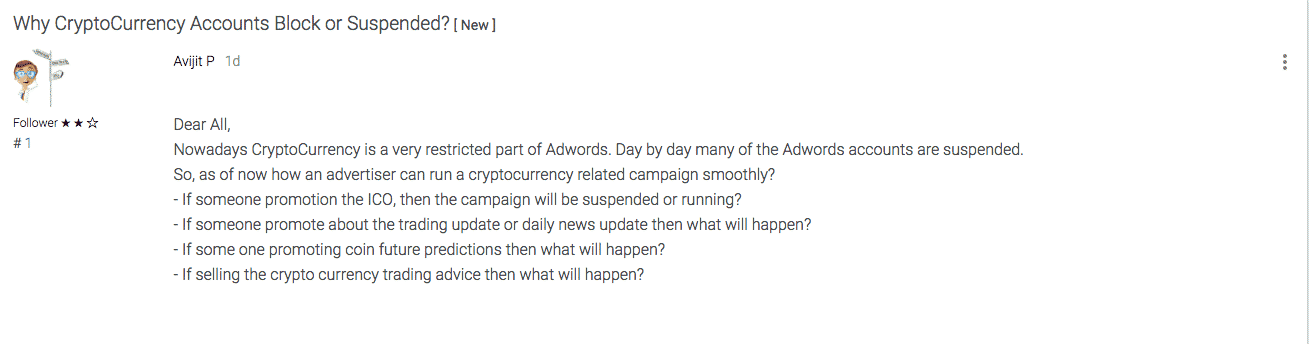
Google AdWords hasn't published any official changes to its policy, or made any official statement. However, myriad Google AdWords clients, such as firms doing direct advertising, marketing firms and PR agencies, report a significant drop in the performance of Google advertising for customers offering cryptocurrency services. In some cases, the advertisers even find their adverts rejected, or their accounts suspended.
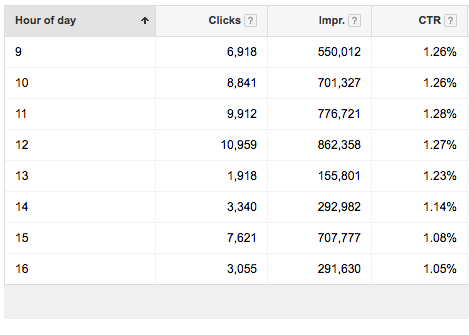
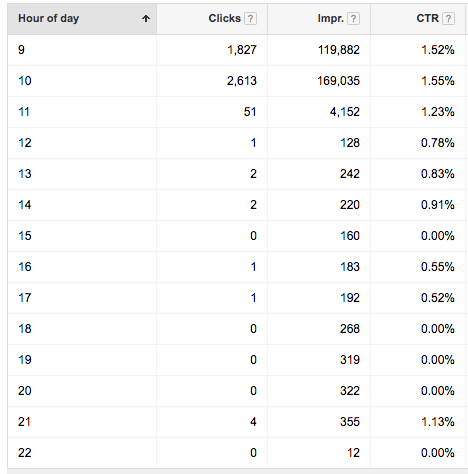
One marketing company that specializes in ICO marketing (and that asked to remain anonymous) told Finance Magnates that it saw its daily AdWords performance dropping by thousands in a matter of days. Here's an example of a daily performance sheet from a crypto marketing company:
Day 1
Day 2
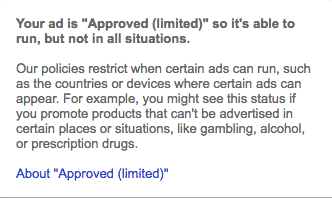
This change in numbers coincided with cryptocurrency-related adverts beginning to be defined as "limited" upon submission.
Judging from the list of practices mentioned in Google's official policy that merit defining an advertiser as limited, the closest definition to cryptocurrency would be gambling. Could this be Google's interpretation of the crypto space?
In another case, Finnish blockchain startup Lamium, that tried to advertise its platform on Google a month ago, saw the termination of not only its advert, but also of its Google Ads account. "So I understand why the ad was suspended, but why was the account itself suspended?" it wrote on the Google AdWords support page. A similar case happened to an algo-trading platform called Crypto Bot Settings, that also saw its account suspended. And the list goes on.
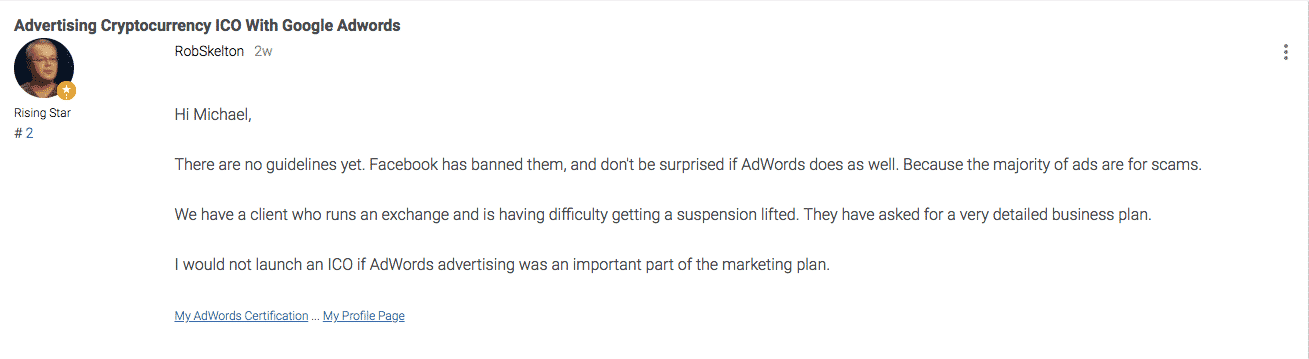
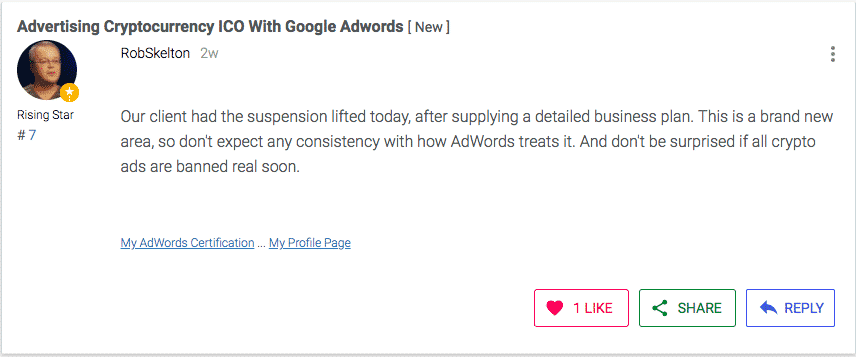
While different advertisers got different reasoning from Google AdWords support for the suspension of their accounts, there is a consensus on the official forum as to the common denominator - all blocked ads and accounts come from the crypto industry.
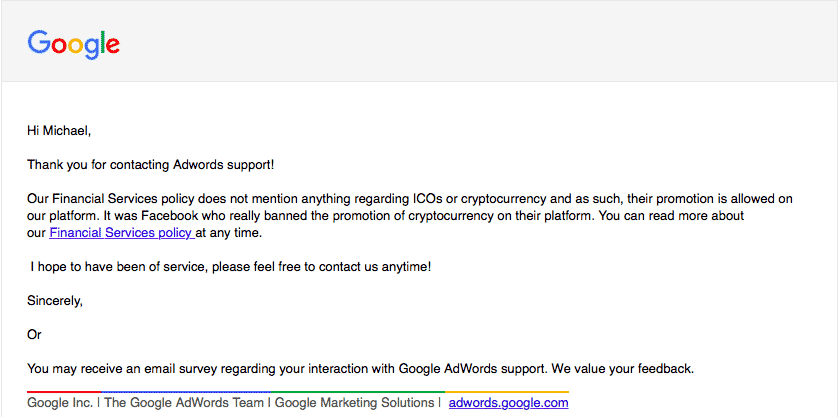
We reached out to Google and received an answer that denies any changes to the official policy:
Youtube Purge?
But this special approach to crypto doesn't seem to be limited to the advertisement realm. Some crypto Vloggers and shows reported that their channels being restricted or even taken down altogether. The restrictions include demonetizing, cancelling the Live Video feature, and more.
The protest hashtag #YouTubePurge has been trending for a while on Twitter. But until now it was used mostly by political thought leaders from the right-hand side of the isle. Now, we are starting to see it being used by cryptocurrency-oriented content. In one case, Bad Crypto, one of the most viewed / listened to crypto podcasts, has been unavailable on Youtube from this week.
Hmm I wonder if Facebook & Google are trying to ban crypto leaders in addition to ads. Love your podcasts
So, why is all that happening? There are a few theories, some overlap and some are contradictory. One answer is that this phenomenon is an overreach of Google's policy against fake news, malicious ads and crypto mining scams. A similar move was announced this week by yet another technology leader, Twitter. This means that the aforementioned advertisers probably did something wrong by mentioning a word or a sequence that targeted Google's algorithms.
Another interpretation, which is the most common, talks about Google being extremely meticulous with regard to ads coming from crypto advertisers. Google has a very elaborate policy on how to advertise on its platform, especially when it comes to firms offering financial services. Is seems that when it comes to crypto firms, its approach is much stricter and less forgiving than it is for other industries.
Prospects of a total ban
Another explanation that we have been hearing from our sources, and that is being raised in professional forums as well, is that we are seeing an intentional and gradual effort to restrict crypto ads or to even block them altogether. Moreover, a source with close connections to Google claimed that the technology behemoth is mulling an official ban in March.
The notion of banning crypto ads from Google was raised a month ago by a Canadian regulator. Jason Roy, a senior investigator at the Manitoba Securities Commission in Canada, openly turned to Google and asked it to follow Facebook's lead. "We’re very pleased with Facebook’s decision. My hope is that Google will enact a similar policy, where they specifically name products like binary options, ICOs and cryptocurrencies," said Roy.
Back then, the request was declined. Google explained that while it already bans misleading and fraudulent ads, it doesn't want to prevent the entire industry from advertising on its platform. Right now it seems that it might have changed its mind.
Nicc Lewis, marketing expert and founder of Expozive, says that such a ban is a possibility. "I know that there is a lot of pressure on Google, coming from the US and Canadian regulators. It's possible that if the pressure is strong enough, Google might decide to act globally. It seems it's ICOs that will be affected first."
Google is obviously much more than just a search engine or even an all-included internet service. If the internet is a global village, then Google is its chief. And now the chief seems to be going after one of the most prominent and fast-growing industries.
Google AdWords hasn't published any official changes to its policy, or made any official statement. However, myriad Google AdWords clients, such as firms doing direct advertising, marketing firms and PR agencies, report a significant drop in the performance of Google advertising for customers offering cryptocurrency services. In some cases, the advertisers even find their adverts rejected, or their accounts suspended.
One marketing company that specializes in ICO marketing (and that asked to remain anonymous) told Finance Magnates that it saw its daily AdWords performance dropping by thousands in a matter of days. Here's an example of a daily performance sheet from a crypto marketing company:
Day 1
Day 2
This change in numbers coincided with cryptocurrency-related adverts beginning to be defined as "limited" upon submission.
Judging from the list of practices mentioned in Google's official policy that merit defining an advertiser as limited, the closest definition to cryptocurrency would be gambling. Could this be Google's interpretation of the crypto space?
In another case, Finnish blockchain startup Lamium, that tried to advertise its platform on Google a month ago, saw the termination of not only its advert, but also of its Google Ads account. "So I understand why the ad was suspended, but why was the account itself suspended?" it wrote on the Google AdWords support page. A similar case happened to an algo-trading platform called Crypto Bot Settings, that also saw its account suspended. And the list goes on.
While different advertisers got different reasoning from Google AdWords support for the suspension of their accounts, there is a consensus on the official forum as to the common denominator - all blocked ads and accounts come from the crypto industry.
We reached out to Google and received an answer that denies any changes to the official policy:
Youtube Purge?
But this special approach to crypto doesn't seem to be limited to the advertisement realm. Some crypto Vloggers and shows reported that their channels being restricted or even taken down altogether. The restrictions include demonetizing, cancelling the Live Video feature, and more.
The protest hashtag #YouTubePurge has been trending for a while on Twitter. But until now it was used mostly by political thought leaders from the right-hand side of the isle. Now, we are starting to see it being used by cryptocurrency-oriented content. In one case, Bad Crypto, one of the most viewed / listened to crypto podcasts, has been unavailable on Youtube from this week.
Hmm I wonder if Facebook & Google are trying to ban crypto leaders in addition to ads. Love your podcasts
So, why is all that happening? There are a few theories, some overlap and some are contradictory. One answer is that this phenomenon is an overreach of Google's policy against fake news, malicious ads and crypto mining scams. A similar move was announced this week by yet another technology leader, Twitter. This means that the aforementioned advertisers probably did something wrong by mentioning a word or a sequence that targeted Google's algorithms.
Another interpretation, which is the most common, talks about Google being extremely meticulous with regard to ads coming from crypto advertisers. Google has a very elaborate policy on how to advertise on its platform, especially when it comes to firms offering financial services. Is seems that when it comes to crypto firms, its approach is much stricter and less forgiving than it is for other industries.
Prospects of a total ban
Another explanation that we have been hearing from our sources, and that is being raised in professional forums as well, is that we are seeing an intentional and gradual effort to restrict crypto ads or to even block them altogether. Moreover, a source with close connections to Google claimed that the technology behemoth is mulling an official ban in March.
The notion of banning crypto ads from Google was raised a month ago by a Canadian regulator. Jason Roy, a senior investigator at the Manitoba Securities Commission in Canada, openly turned to Google and asked it to follow Facebook's lead. "We’re very pleased with Facebook’s decision. My hope is that Google will enact a similar policy, where they specifically name products like binary options, ICOs and cryptocurrencies," said Roy.
Back then, the request was declined. Google explained that while it already bans misleading and fraudulent ads, it doesn't want to prevent the entire industry from advertising on its platform. Right now it seems that it might have changed its mind.
Nicc Lewis, marketing expert and founder of Expozive, says that such a ban is a possibility. "I know that there is a lot of pressure on Google, coming from the US and Canadian regulators. It's possible that if the pressure is strong enough, Google might decide to act globally. It seems it's ICOs that will be affected first."
Kraken Steps Up Speed Race with New Equinix Colocation Service for Crypto Traders
Featured Videos
FP Markets Winner Spotlight 🏆 | Global Broker of the Year 2025 #Trading #Broker #Innovation #Shorts
FP Markets Winner Spotlight 🏆 | Global Broker of the Year 2025 #Trading #Broker #Innovation #Shorts
FP Markets Winner Spotlight 🏆 | Global Broker of the Year 2025 #Trading #Broker #Innovation #Shorts
FP Markets Winner Spotlight 🏆 | Global Broker of the Year 2025 #Trading #Broker #Innovation #Shorts
FP Markets takes the spotlight as Global Broker of the Year 2025 at the Finance Magnates Awards.
Martin Stoilov, Head of Client Experience, shares that trust, innovation, and people played a key role in the company’s success, supported by a strong foundation of integrity and client-centricity.
Following this milestone, FP Markets continues to focus on growth, technology investment, and its core values of transparency and excellence.
👉 Be part of FM Awards 2026: https://awards.financemagnates.com/#nominate
FP Markets takes the spotlight as Global Broker of the Year 2025 at the Finance Magnates Awards.
Martin Stoilov, Head of Client Experience, shares that trust, innovation, and people played a key role in the company’s success, supported by a strong foundation of integrity and client-centricity.
Following this milestone, FP Markets continues to focus on growth, technology investment, and its core values of transparency and excellence.
👉 Be part of FM Awards 2026: https://awards.financemagnates.com/#nominate
FP Markets takes the spotlight as Global Broker of the Year 2025 at the Finance Magnates Awards.
Martin Stoilov, Head of Client Experience, shares that trust, innovation, and people played a key role in the company’s success, supported by a strong foundation of integrity and client-centricity.
Following this milestone, FP Markets continues to focus on growth, technology investment, and its core values of transparency and excellence.
👉 Be part of FM Awards 2026: https://awards.financemagnates.com/#nominate
FP Markets takes the spotlight as Global Broker of the Year 2025 at the Finance Magnates Awards.
Martin Stoilov, Head of Client Experience, shares that trust, innovation, and people played a key role in the company’s success, supported by a strong foundation of integrity and client-centricity.
Following this milestone, FP Markets continues to focus on growth, technology investment, and its core values of transparency and excellence.
👉 Be part of FM Awards 2026: https://awards.financemagnates.com/#nominate
In this video, we review @HolaPrimeMarketsOfficial, a multi-asset forex and CFDs broker offering different account types, trading platforms, and flexible trading conditions.
We cover the broker’s overall offering, including account options, trading environment, platforms like MT4 and MT5, and additional services such as managed accounts and fast withdrawals.
Watch the full video to see if Hola Prime Markets fits your trading needs.
📣 Stay up to date with the latest in finance and trading. Follow Finance Magnates for industry news, insights, and global event coverage.
Connect with us:
🔗 LinkedIn: /financemagnates
👍 Facebook: /financemagnates
📸 Instagram: https://www.instagram.com/financemagnates
🐦 X: https://x.com/financemagnates
🎥 TikTok: https://www.tiktok.com/tag/financemagnates
▶️ YouTube: /@financemagnates_official
#HolaPrime #ForexBroker #CFDTrading #FinanceMagnates #Trading #Forex #BrokerReview
In this video, we review @HolaPrimeMarketsOfficial, a multi-asset forex and CFDs broker offering different account types, trading platforms, and flexible trading conditions.
We cover the broker’s overall offering, including account options, trading environment, platforms like MT4 and MT5, and additional services such as managed accounts and fast withdrawals.
Watch the full video to see if Hola Prime Markets fits your trading needs.
📣 Stay up to date with the latest in finance and trading. Follow Finance Magnates for industry news, insights, and global event coverage.
Connect with us:
🔗 LinkedIn: /financemagnates
👍 Facebook: /financemagnates
📸 Instagram: https://www.instagram.com/financemagnates
🐦 X: https://x.com/financemagnates
🎥 TikTok: https://www.tiktok.com/tag/financemagnates
▶️ YouTube: /@financemagnates_official
#HolaPrime #ForexBroker #CFDTrading #FinanceMagnates #Trading #Forex #BrokerReview
In this video, we review @HolaPrimeMarketsOfficial, a multi-asset forex and CFDs broker offering different account types, trading platforms, and flexible trading conditions.
We cover the broker’s overall offering, including account options, trading environment, platforms like MT4 and MT5, and additional services such as managed accounts and fast withdrawals.
Watch the full video to see if Hola Prime Markets fits your trading needs.
📣 Stay up to date with the latest in finance and trading. Follow Finance Magnates for industry news, insights, and global event coverage.
Connect with us:
🔗 LinkedIn: /financemagnates
👍 Facebook: /financemagnates
📸 Instagram: https://www.instagram.com/financemagnates
🐦 X: https://x.com/financemagnates
🎥 TikTok: https://www.tiktok.com/tag/financemagnates
▶️ YouTube: /@financemagnates_official
#HolaPrime #ForexBroker #CFDTrading #FinanceMagnates #Trading #Forex #BrokerReview
In this video, we review @HolaPrimeMarketsOfficial, a multi-asset forex and CFDs broker offering different account types, trading platforms, and flexible trading conditions.
We cover the broker’s overall offering, including account options, trading environment, platforms like MT4 and MT5, and additional services such as managed accounts and fast withdrawals.
Watch the full video to see if Hola Prime Markets fits your trading needs.
📣 Stay up to date with the latest in finance and trading. Follow Finance Magnates for industry news, insights, and global event coverage.
Connect with us:
🔗 LinkedIn: /financemagnates
👍 Facebook: /financemagnates
📸 Instagram: https://www.instagram.com/financemagnates
🐦 X: https://x.com/financemagnates
🎥 TikTok: https://www.tiktok.com/tag/financemagnates
▶️ YouTube: /@financemagnates_official
#HolaPrime #ForexBroker #CFDTrading #FinanceMagnates #Trading #Forex #BrokerReview
In this video, we review @HolaPrimeMarketsOfficial, a multi-asset forex and CFDs broker offering different account types, trading platforms, and flexible trading conditions.
We cover the broker’s overall offering, including account options, trading environment, platforms like MT4 and MT5, and additional services such as managed accounts and fast withdrawals.
Watch the full video to see if Hola Prime Markets fits your trading needs.
📣 Stay up to date with the latest in finance and trading. Follow Finance Magnates for industry news, insights, and global event coverage.
Connect with us:
🔗 LinkedIn: /financemagnates
👍 Facebook: /financemagnates
📸 Instagram: https://www.instagram.com/financemagnates
🐦 X: https://x.com/financemagnates
🎥 TikTok: https://www.tiktok.com/tag/financemagnates
▶️ YouTube: /@financemagnates_official
#HolaPrime #ForexBroker #CFDTrading #FinanceMagnates #Trading #Forex #BrokerReview
In this video, we review @HolaPrimeMarketsOfficial, a multi-asset forex and CFDs broker offering different account types, trading platforms, and flexible trading conditions.
We cover the broker’s overall offering, including account options, trading environment, platforms like MT4 and MT5, and additional services such as managed accounts and fast withdrawals.
Watch the full video to see if Hola Prime Markets fits your trading needs.
📣 Stay up to date with the latest in finance and trading. Follow Finance Magnates for industry news, insights, and global event coverage.
Connect with us:
🔗 LinkedIn: /financemagnates
👍 Facebook: /financemagnates
📸 Instagram: https://www.instagram.com/financemagnates
🐦 X: https://x.com/financemagnates
🎥 TikTok: https://www.tiktok.com/tag/financemagnates
▶️ YouTube: /@financemagnates_official
#HolaPrime #ForexBroker #CFDTrading #FinanceMagnates #Trading #Forex #BrokerReview
Hola Prime Review: What You Need to Know | Full Breakdown by Finance Magnates
Hola Prime Review: What You Need to Know | Full Breakdown by Finance Magnates
Hola Prime Review: What You Need to Know | Full Breakdown by Finance Magnates
Hola Prime Review: What You Need to Know | Full Breakdown by Finance Magnates
Hola Prime Review: What You Need to Know | Full Breakdown by Finance Magnates
Hola Prime Review: What You Need to Know | Full Breakdown by Finance Magnates
In this video, we review @HolaPrime_Global, a proprietary trading firm offering evaluation programs and performance-based payouts in simulated market environments.
We cover how the challenge model works, including account types, profit splits (up to 95%), trading rules, and what it takes to reach a funded account. You’ll also learn about available platforms like MT4, MT5, cTrader, and more, along with insights into payouts, support, and trading conditions.
Watch the full video to see if Hola Prime fits your trading style.
📣 Stay up to date with the latest in finance and trading. Follow Finance Magnates for industry news, insights, and global event coverage.
Connect with us:
🔗 LinkedIn: /financemagnates
👍 Facebook: /financemagnates
📸 Instagram: https://www.instagram.com/financemagnates
🐦 X: https://x.com/financemagnates
🎥 TikTok: https://www.tiktok.com/tag/financemagnates
▶️ YouTube: /@financemagnates_official
#HolaPrime #PropFirm #Trading #FinanceMagnates #Forex #FuturesTrading #TradingReview #PropFirmReview
In this video, we review @HolaPrime_Global, a proprietary trading firm offering evaluation programs and performance-based payouts in simulated market environments.
We cover how the challenge model works, including account types, profit splits (up to 95%), trading rules, and what it takes to reach a funded account. You’ll also learn about available platforms like MT4, MT5, cTrader, and more, along with insights into payouts, support, and trading conditions.
Watch the full video to see if Hola Prime fits your trading style.
📣 Stay up to date with the latest in finance and trading. Follow Finance Magnates for industry news, insights, and global event coverage.
Connect with us:
🔗 LinkedIn: /financemagnates
👍 Facebook: /financemagnates
📸 Instagram: https://www.instagram.com/financemagnates
🐦 X: https://x.com/financemagnates
🎥 TikTok: https://www.tiktok.com/tag/financemagnates
▶️ YouTube: /@financemagnates_official
#HolaPrime #PropFirm #Trading #FinanceMagnates #Forex #FuturesTrading #TradingReview #PropFirmReview
In this video, we review @HolaPrime_Global, a proprietary trading firm offering evaluation programs and performance-based payouts in simulated market environments.
We cover how the challenge model works, including account types, profit splits (up to 95%), trading rules, and what it takes to reach a funded account. You’ll also learn about available platforms like MT4, MT5, cTrader, and more, along with insights into payouts, support, and trading conditions.
Watch the full video to see if Hola Prime fits your trading style.
📣 Stay up to date with the latest in finance and trading. Follow Finance Magnates for industry news, insights, and global event coverage.
Connect with us:
🔗 LinkedIn: /financemagnates
👍 Facebook: /financemagnates
📸 Instagram: https://www.instagram.com/financemagnates
🐦 X: https://x.com/financemagnates
🎥 TikTok: https://www.tiktok.com/tag/financemagnates
▶️ YouTube: /@financemagnates_official
#HolaPrime #PropFirm #Trading #FinanceMagnates #Forex #FuturesTrading #TradingReview #PropFirmReview
In this video, we review @HolaPrime_Global, a proprietary trading firm offering evaluation programs and performance-based payouts in simulated market environments.
We cover how the challenge model works, including account types, profit splits (up to 95%), trading rules, and what it takes to reach a funded account. You’ll also learn about available platforms like MT4, MT5, cTrader, and more, along with insights into payouts, support, and trading conditions.
Watch the full video to see if Hola Prime fits your trading style.
📣 Stay up to date with the latest in finance and trading. Follow Finance Magnates for industry news, insights, and global event coverage.
Connect with us:
🔗 LinkedIn: /financemagnates
👍 Facebook: /financemagnates
📸 Instagram: https://www.instagram.com/financemagnates
🐦 X: https://x.com/financemagnates
🎥 TikTok: https://www.tiktok.com/tag/financemagnates
▶️ YouTube: /@financemagnates_official
#HolaPrime #PropFirm #Trading #FinanceMagnates #Forex #FuturesTrading #TradingReview #PropFirmReview
In this video, we review @HolaPrime_Global, a proprietary trading firm offering evaluation programs and performance-based payouts in simulated market environments.
We cover how the challenge model works, including account types, profit splits (up to 95%), trading rules, and what it takes to reach a funded account. You’ll also learn about available platforms like MT4, MT5, cTrader, and more, along with insights into payouts, support, and trading conditions.
Watch the full video to see if Hola Prime fits your trading style.
📣 Stay up to date with the latest in finance and trading. Follow Finance Magnates for industry news, insights, and global event coverage.
Connect with us:
🔗 LinkedIn: /financemagnates
👍 Facebook: /financemagnates
📸 Instagram: https://www.instagram.com/financemagnates
🐦 X: https://x.com/financemagnates
🎥 TikTok: https://www.tiktok.com/tag/financemagnates
▶️ YouTube: /@financemagnates_official
#HolaPrime #PropFirm #Trading #FinanceMagnates #Forex #FuturesTrading #TradingReview #PropFirmReview
In this video, we review @HolaPrime_Global, a proprietary trading firm offering evaluation programs and performance-based payouts in simulated market environments.
We cover how the challenge model works, including account types, profit splits (up to 95%), trading rules, and what it takes to reach a funded account. You’ll also learn about available platforms like MT4, MT5, cTrader, and more, along with insights into payouts, support, and trading conditions.
Watch the full video to see if Hola Prime fits your trading style.
📣 Stay up to date with the latest in finance and trading. Follow Finance Magnates for industry news, insights, and global event coverage.
Connect with us:
🔗 LinkedIn: /financemagnates
👍 Facebook: /financemagnates
📸 Instagram: https://www.instagram.com/financemagnates
🐦 X: https://x.com/financemagnates
🎥 TikTok: https://www.tiktok.com/tag/financemagnates
▶️ YouTube: /@financemagnates_official
#HolaPrime #PropFirm #Trading #FinanceMagnates #Forex #FuturesTrading #TradingReview #PropFirmReview
Axi Winner Spotlight 🏆 | Global Most Innovative Broker 2025 #Innovation #Trading #Fintech #Broker
Axi Winner Spotlight 🏆 | Global Most Innovative Broker 2025 #Innovation #Trading #Fintech #Broker
Axi Winner Spotlight 🏆 | Global Most Innovative Broker 2025 #Innovation #Trading #Fintech #Broker
Axi Winner Spotlight 🏆 | Global Most Innovative Broker 2025 #Innovation #Trading #Fintech #Broker
Axi Winner Spotlight 🏆 | Global Most Innovative Broker 2025 #Innovation #Trading #Fintech #Broker
Axi Winner Spotlight 🏆 | Global Most Innovative Broker 2025 #Innovation #Trading #Fintech #Broker
Axi takes the spotlight at the Finance Magnates Awards, winning Global Most Innovative Broker 2025.
Olivia Xenofontos and Ivanna Openko share how the team will feel: proud, motivated, and ready to keep delivering.
They also describe the night as well-organized, focused, and enjoyable for all.
👉 Be part of FM Awards 2026.
Axi takes the spotlight at the Finance Magnates Awards, winning Global Most Innovative Broker 2025.
Olivia Xenofontos and Ivanna Openko share how the team will feel: proud, motivated, and ready to keep delivering.
They also describe the night as well-organized, focused, and enjoyable for all.
👉 Be part of FM Awards 2026.
Axi takes the spotlight at the Finance Magnates Awards, winning Global Most Innovative Broker 2025.
Olivia Xenofontos and Ivanna Openko share how the team will feel: proud, motivated, and ready to keep delivering.
They also describe the night as well-organized, focused, and enjoyable for all.
👉 Be part of FM Awards 2026.
Axi takes the spotlight at the Finance Magnates Awards, winning Global Most Innovative Broker 2025.
Olivia Xenofontos and Ivanna Openko share how the team will feel: proud, motivated, and ready to keep delivering.
They also describe the night as well-organized, focused, and enjoyable for all.
👉 Be part of FM Awards 2026.
Axi takes the spotlight at the Finance Magnates Awards, winning Global Most Innovative Broker 2025.
Olivia Xenofontos and Ivanna Openko share how the team will feel: proud, motivated, and ready to keep delivering.
They also describe the night as well-organized, focused, and enjoyable for all.
👉 Be part of FM Awards 2026.
Axi takes the spotlight at the Finance Magnates Awards, winning Global Most Innovative Broker 2025.
Olivia Xenofontos and Ivanna Openko share how the team will feel: proud, motivated, and ready to keep delivering.
They also describe the night as well-organized, focused, and enjoyable for all.
👉 Be part of FM Awards 2026.
Recognition that matters.
Built on transparency.
Driven by the industry.
The Finance Magnates Awards 2026.
Nominations are now open.
🔗 https://awards.financemagnates.com/?utm_source=SM&utm_medium=social&utm_campaign=recognition-matters
Recognition that matters.
Built on transparency.
Driven by the industry.
The Finance Magnates Awards 2026.
Nominations are now open.
🔗 https://awards.financemagnates.com/?utm_source=SM&utm_medium=social&utm_campaign=recognition-matters
Recognition that matters.
Built on transparency.
Driven by the industry.
The Finance Magnates Awards 2026.
Nominations are now open.
🔗 https://awards.financemagnates.com/?utm_source=SM&utm_medium=social&utm_campaign=recognition-matters
Recognition that matters.
Built on transparency.
Driven by the industry.
The Finance Magnates Awards 2026.
Nominations are now open.
🔗 https://awards.financemagnates.com/?utm_source=SM&utm_medium=social&utm_campaign=recognition-matters
Recognition that matters.
Built on transparency.
Driven by the industry.
The Finance Magnates Awards 2026.
Nominations are now open.
🔗 https://awards.financemagnates.com/?utm_source=SM&utm_medium=social&utm_campaign=recognition-matters
Recognition that matters.
Built on transparency.
Driven by the industry.
The Finance Magnates Awards 2026.
Nominations are now open.
🔗 https://awards.financemagnates.com/?utm_source=SM&utm_medium=social&utm_campaign=recognition-matters