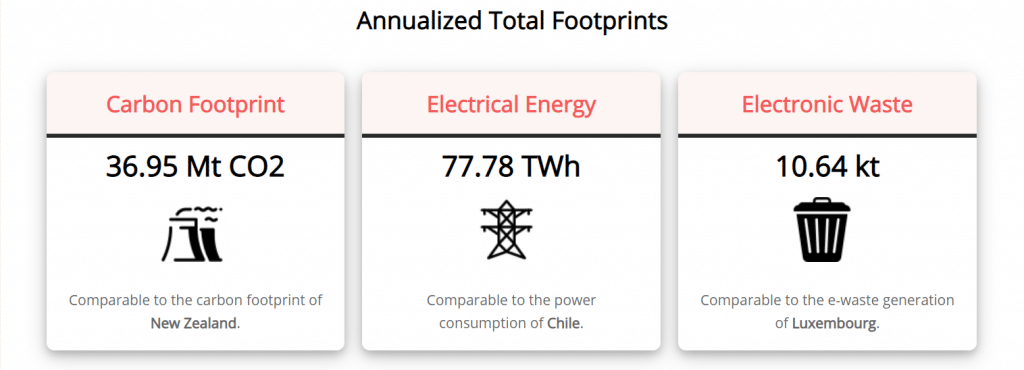
Indeed, through his website, Digiconimist, which Mr. DeVries founded to highlight Bitcoin’s energy problem, Bitcoin generates as much e-waste each year as the nation of Luxembourg, which has a population of over 600,000 people (2018).
“It’s impossible for 98 percent of [mining] devices during their lifetime to make the calculation that actually results in a reward.
“The shocking thing is the average lifetime of a bitcoin mining machine is one and a half years, because we have a new generation of machines which are better at doing these calculations,” Mr. DeVries told the Telegraph.
He also pointed out that the nature of Bitcoin mining is such that myriad machines are constantly competing for a reward that most of them will never get: “they are sort of participating in a massive lottery and every 10 minutes one gets lucky and gets to produce the next block,” he explained.

Alex DeVries, blockchain expert at accounting firm PriceWaterhouseCoopers.
“That means it’s impossible for 98 percent of the devices during their lifetime to make the calculation that actually results in a reward. So, the rest are just running pointlessly for a few years, using up energy, and producing heat, and then they will just get trashed because they can’t be repurposed. It's insane."
The footprint of a single transaction is the same as 780,650 Visa transactions or spending 52,043 hours watching YouTube.
According to Digiconmist, it is estimated that the amount of energy needed to run the Bitcoin network annually has surged to a record-breaking 77.78 terawatt-hours. That's roughly the same as the entire electrical consumption of the nation of Chile, which has a population of more than 18 million people who use an estimated 2,028.89 kilograms of oil equivalent per capita each year (as of 2015).
Based on these estimates, as well as the estimated e-waste generated by the Bitcoin mining industry, Mr. DeVries has said that the footprint of a single transaction is the same as 780,650 Visa transactions or spending 52,043 hours watching YouTube.
Time for innovation
But does this mean that we should all stop using the Bitcoin network? While there are certainly some that argue that this is the solution, others are calling for innovation and policy decisions that could alleviate the environmental impact of Bitcoin.
Indeed, in spite of its massive carbon footprint, the other social benefits of the Bitcoin network are increasingly well known. In the July 2018 edition of Energy Research & Social Science, researcher Jon Truby of Qatar University wrote that “blockchain technology has been advocated as being capable of delivering environmental and social benefits under the UN’s Sustainable Development Goals.”
Therefore, “[...]The question is how to encourage a shift to less energy-intensive Blockchain technology without damaging the sector, “ Truby wrote.
Some blockchain networks--including Ethereum and Decred--have already made the effort towards switching from Proof-of-Work (PoW) consensus mechanisms (which are very energy-intensive) to Proof-of-Stake (PoS) consensus mechanisms or blended mechanisms that use elements of both PoW and PoS.
What do you think the solution is for reducing the impact of the Bitcoin network on the environment? Let us know in the comments below.
Indeed, through his website, Digiconimist, which Mr. DeVries founded to highlight Bitcoin’s energy problem, Bitcoin generates as much e-waste each year as the nation of Luxembourg, which has a population of over 600,000 people (2018).
“It’s impossible for 98 percent of [mining] devices during their lifetime to make the calculation that actually results in a reward.
“The shocking thing is the average lifetime of a bitcoin mining machine is one and a half years, because we have a new generation of machines which are better at doing these calculations,” Mr. DeVries told the Telegraph.
He also pointed out that the nature of Bitcoin mining is such that myriad machines are constantly competing for a reward that most of them will never get: “they are sort of participating in a massive lottery and every 10 minutes one gets lucky and gets to produce the next block,” he explained.
Alex DeVries, blockchain expert at accounting firm PriceWaterhouseCoopers.
“That means it’s impossible for 98 percent of the devices during their lifetime to make the calculation that actually results in a reward. So, the rest are just running pointlessly for a few years, using up energy, and producing heat, and then they will just get trashed because they can’t be repurposed. It's insane."
The footprint of a single transaction is the same as 780,650 Visa transactions or spending 52,043 hours watching YouTube.
According to Digiconmist, it is estimated that the amount of energy needed to run the Bitcoin network annually has surged to a record-breaking 77.78 terawatt-hours. That's roughly the same as the entire electrical consumption of the nation of Chile, which has a population of more than 18 million people who use an estimated 2,028.89 kilograms of oil equivalent per capita each year (as of 2015).
Based on these estimates, as well as the estimated e-waste generated by the Bitcoin mining industry, Mr. DeVries has said that the footprint of a single transaction is the same as 780,650 Visa transactions or spending 52,043 hours watching YouTube.
Time for innovation
But does this mean that we should all stop using the Bitcoin network? While there are certainly some that argue that this is the solution, others are calling for innovation and policy decisions that could alleviate the environmental impact of Bitcoin.
Indeed, in spite of its massive carbon footprint, the other social benefits of the Bitcoin network are increasingly well known. In the July 2018 edition of Energy Research & Social Science, researcher Jon Truby of Qatar University wrote that “blockchain technology has been advocated as being capable of delivering environmental and social benefits under the UN’s Sustainable Development Goals.”
Therefore, “[...]The question is how to encourage a shift to less energy-intensive Blockchain technology without damaging the sector, “ Truby wrote.
Some blockchain networks--including Ethereum and Decred--have already made the effort towards switching from Proof-of-Work (PoW) consensus mechanisms (which are very energy-intensive) to Proof-of-Stake (PoS) consensus mechanisms or blended mechanisms that use elements of both PoW and PoS.
What do you think the solution is for reducing the impact of the Bitcoin network on the environment? Let us know in the comments below.
Rachel is a self-taught crypto geek and a passionate writer. She believes in the power that the written word has to educate, connect and empower individuals to make positive and powerful financial choices. She is the Podcast Host and a Cryptocurrency Editor at Finance Magnates.
Uphold Cuts Staff. The Money Now Goes to Its Bank-Facing Business
Featured Videos
FM Daily Brief – 29 July 2026
Today's Wednesday, the 29th of July 2026, and these are our main stories: Cyprus and Poland go head-to-head as CFD licensing hubs, but is there a winner? Mas Markets takes a stake in Solid, and Swissquote UK's losses deepen.
Today's Tuesday, the 28th of July 2026, and these are our main stories: tastytrade enters the CFTC regulated prediction markets, Mitrade renews its Argentina football sponsorship, and the Tokyo Stock Exchange pushes to lower the cost of investing.
FM Daily Brief – 27 July 2026
Today's Monday, the 27th of July 2026, and these are our main stories: iFOREX reports stronger client growth despite currency headwinds, BlackBull's New Zealand business expands, and the FCA highlights Consumer Duty good practice.
FM Daily Brief – 24 July 2026
Today's Friday, the 24th of July 2026, and these are our main stories: the FCA finds major gaps in anti-money laundering controls at alternative asset managers, Wise shares tumble after a US banking licence setback, and Google's EU fines could benefit fintech apps.
FM Daily Brief – 23 July 2026
Today's Thursday, the 23rd of July 2026, and these are our main stories: BitMEX announces it will shut down its crypto trading platform, the Financial Commission launches a certification programme for prop firms, and the SEC settles a records lawsuit with Coinbase.