ErisX is slated as the next big player in the race for institutional investors in crypto.
FM
Earlier this year, head of crypto merchant bank Galaxy Digital Mike Novogratz said that a “herd of institutional investors” was headed straight for the crypto space.
And indeed, a host of firms sought to create products and services catering specifically to high-volume clients. A slew of applications was submitted (and subsequently denied) by the SEC; Wall Street-backed cryptocurrency hedge funds continue to appear on the scene despite floundering crypto markets. CME’s Bitcoin Futures trading volume hit an all-time high of $572 million in July.
Still, the huge influx of institutional cash that many in the crypto community were hoping would come to revive cryptocurrency markets still hasn’t really come. For as many new platforms and products that are available to institutional investors now, there still seems to be a missing link between Wall Street and the crypto space that no company has truly been able to fill - that is, perhaps, until now.
ErisX Enters the Scene With A Long List of Wall Street Backers
Last week, it was announced that a group of Wall Street firms would be backing ErisX, a new cryptocurrency exchange. Among the known backers are various brokerages and trading firms, including TD Ameritrade, DRW, Virtu Financial, and Susquehanna International Group. A number of VC firms have also been named as investors in the exchange, including Digital Currency Group, Nex Opportunities, and CMT Digital.
Led by veteran trader and Citigroup's former head of quantitative Thomas Chippas, the exchange is a relaunch of Eris Exchange, a derivatives market that originally launched in 2010 and failed to ever gain any traction. With a 25-person team, the exchange is slated to provide both individuals and institutions a platform to trade digital currencies and derivatives tied to digital assets.
The market seems to be ripe for entities seeking a compliant crypto exchange. “In our opinion there is no lack of interest in building out markets for people wishing to trade digital assets and there is plenty of space for people to come in with a regulated exchange and clearing house,” Chippas said in a phone interview with The Block. He declined to share how much capital ErisX has managed to raise.
DRW founder Don Wilson said in an official statement that “ErisX will eliminate many of the impediments to institutional adoption and usher in a new wave of market participants.”
ErisX May Be Strong Competition for Bakkt, But ”It’s Too Early to Name Any Winners”
For as much hype as there is around ErisX, however, the exchange isn’t the only player in the market vying for institutional cash. In fact, crypto exchange Bakkt launched earlier this year with an eye-popping list of involved brands, including Microsoft, Starbucks, and the Intercontinental Exchange.
5/ crypto assets are capturing retail and institutional attention because they appear to present an asymmetrical risk / reward profile. this remains to be proven. until the next market run up driven by new capital inflows, jury is out.
Is ErisX a viable competitor for Bakkt? Some analysts say yes. Market insiders told The Block that “I think it’s fair to say that this is shaping up to be Bakkt’s biggest competition...It’s a smart team and it’s smart how they structured it.”
“That’s where we see CQG’s [partnership with] ErisX and Bakkt from ICE: known quantities attempting to ‘big-foot’ down on the crypto world,” he said. “On paper, they’re both very appealing products, but it’s too early to name any winners.”
Jeff also pointed out that despite the fact that these two firms are in competition with one another, they are essentially fighting on the same team: “the other battleground sees the crypto world ‘punching up’ to Wall St’s weight class: Coinbase and their custodial solutions, Gemini’s expansion of services and so forth.”
“Both arenas are critical for crypto’s long-term success,” he continued. “We need conservative money to dip their toes, and we need the crypto community to be more legit.”
“All that being said, I won’t be surprised to see a wildcard entrant land in the middle and eat all their lunches. This is crypto, after all.”
While Both Bakkt and ErisX May Be Important to the US Market, “The World is Much Bigger than Just the USA”
Daniel Skowronski, co-founder of DX Exchange, said that “there is a tremendous opportunity in the cryptocurrency market and we will continue to see more of these types of larger players enter the market.”
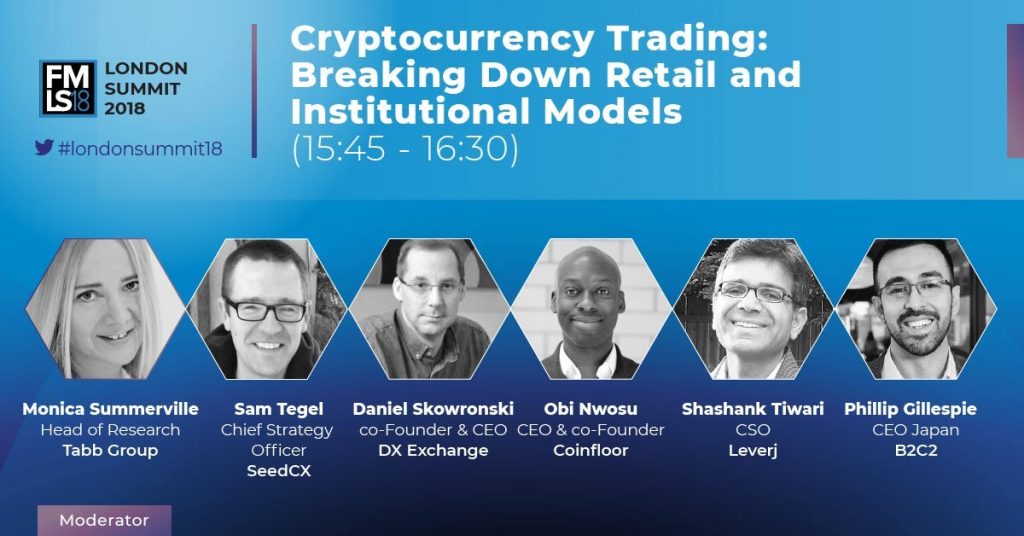
Daniel Skowronski will appear as a panelist on a discussion entitled 'Cryptocurrency Trading: Breaking Down Retail and Institutional Models' at the Finance Magnates London Summit on November 13th and 14th at the Old Billingsgate. For more information, click here.
“The difference is that it will be through regulation and trusted name brands,” a factor that could knock the wind out of both Bakkt and ErisX. “Family office and institutional money will want to trade with a regulated and trusted name.”
For now, however, “Both [ErisX and Bakkt] are important.”
If neither firm manages to gain the user base that it’s hoping for, both will inevitably contribute to the clarification of crypto market regulations. “As we know some major jurisdictions (such as the USA) are still unclear exactly how companies can operate, so we need bigger institutions to help pave the way built upon the precedent that has already been established.”
Skowronski also pointed out that as big as these two players are slated to be in the US market, there is a whole world outside of Wall Street.
“We must remember that ErisX is just a USA based exchange and most likely will only offer the top 3-5 cryptos,” he said. “But the crypto world is much more than just those top pairs and the world is much bigger than just the USA.” He added that DX Exchange supports over 50 trading pairs.
Skowronski added that therefore, it’s likely that neither ErisX or Bakkt will be the final stepping stone toward an influx of institutional capital: “is this move the ‘missing piece? No, it’s just another milestone in a long list that the crypto industry needs to get to for wider crypto adoption around the world.”
Another milestone indeed. And if the SEC can approve a Bitcoin ETF, that influx of institutional cash we’ve all been waiting for could finally revive the crypto markets.
Earlier this year, head of crypto merchant bank Galaxy Digital Mike Novogratz said that a “herd of institutional investors” was headed straight for the crypto space.
And indeed, a host of firms sought to create products and services catering specifically to high-volume clients. A slew of applications was submitted (and subsequently denied) by the SEC; Wall Street-backed cryptocurrency hedge funds continue to appear on the scene despite floundering crypto markets. CME’s Bitcoin Futures trading volume hit an all-time high of $572 million in July.
Still, the huge influx of institutional cash that many in the crypto community were hoping would come to revive cryptocurrency markets still hasn’t really come. For as many new platforms and products that are available to institutional investors now, there still seems to be a missing link between Wall Street and the crypto space that no company has truly been able to fill - that is, perhaps, until now.
ErisX Enters the Scene With A Long List of Wall Street Backers
Last week, it was announced that a group of Wall Street firms would be backing ErisX, a new cryptocurrency exchange. Among the known backers are various brokerages and trading firms, including TD Ameritrade, DRW, Virtu Financial, and Susquehanna International Group. A number of VC firms have also been named as investors in the exchange, including Digital Currency Group, Nex Opportunities, and CMT Digital.
Led by veteran trader and Citigroup's former head of quantitative Thomas Chippas, the exchange is a relaunch of Eris Exchange, a derivatives market that originally launched in 2010 and failed to ever gain any traction. With a 25-person team, the exchange is slated to provide both individuals and institutions a platform to trade digital currencies and derivatives tied to digital assets.
The market seems to be ripe for entities seeking a compliant crypto exchange. “In our opinion there is no lack of interest in building out markets for people wishing to trade digital assets and there is plenty of space for people to come in with a regulated exchange and clearing house,” Chippas said in a phone interview with The Block. He declined to share how much capital ErisX has managed to raise.
DRW founder Don Wilson said in an official statement that “ErisX will eliminate many of the impediments to institutional adoption and usher in a new wave of market participants.”
ErisX May Be Strong Competition for Bakkt, But ”It’s Too Early to Name Any Winners”
For as much hype as there is around ErisX, however, the exchange isn’t the only player in the market vying for institutional cash. In fact, crypto exchange Bakkt launched earlier this year with an eye-popping list of involved brands, including Microsoft, Starbucks, and the Intercontinental Exchange.
5/ crypto assets are capturing retail and institutional attention because they appear to present an asymmetrical risk / reward profile. this remains to be proven. until the next market run up driven by new capital inflows, jury is out.
Is ErisX a viable competitor for Bakkt? Some analysts say yes. Market insiders told The Block that “I think it’s fair to say that this is shaping up to be Bakkt’s biggest competition...It’s a smart team and it’s smart how they structured it.”
“That’s where we see CQG’s [partnership with] ErisX and Bakkt from ICE: known quantities attempting to ‘big-foot’ down on the crypto world,” he said. “On paper, they’re both very appealing products, but it’s too early to name any winners.”
Jeff also pointed out that despite the fact that these two firms are in competition with one another, they are essentially fighting on the same team: “the other battleground sees the crypto world ‘punching up’ to Wall St’s weight class: Coinbase and their custodial solutions, Gemini’s expansion of services and so forth.”
“Both arenas are critical for crypto’s long-term success,” he continued. “We need conservative money to dip their toes, and we need the crypto community to be more legit.”
“All that being said, I won’t be surprised to see a wildcard entrant land in the middle and eat all their lunches. This is crypto, after all.”
While Both Bakkt and ErisX May Be Important to the US Market, “The World is Much Bigger than Just the USA”
Daniel Skowronski, co-founder of DX Exchange, said that “there is a tremendous opportunity in the cryptocurrency market and we will continue to see more of these types of larger players enter the market.”
Daniel Skowronski will appear as a panelist on a discussion entitled 'Cryptocurrency Trading: Breaking Down Retail and Institutional Models' at the Finance Magnates London Summit on November 13th and 14th at the Old Billingsgate. For more information, click here.
“The difference is that it will be through regulation and trusted name brands,” a factor that could knock the wind out of both Bakkt and ErisX. “Family office and institutional money will want to trade with a regulated and trusted name.”
For now, however, “Both [ErisX and Bakkt] are important.”
If neither firm manages to gain the user base that it’s hoping for, both will inevitably contribute to the clarification of crypto market regulations. “As we know some major jurisdictions (such as the USA) are still unclear exactly how companies can operate, so we need bigger institutions to help pave the way built upon the precedent that has already been established.”
Skowronski also pointed out that as big as these two players are slated to be in the US market, there is a whole world outside of Wall Street.
“We must remember that ErisX is just a USA based exchange and most likely will only offer the top 3-5 cryptos,” he said. “But the crypto world is much more than just those top pairs and the world is much bigger than just the USA.” He added that DX Exchange supports over 50 trading pairs.
Skowronski added that therefore, it’s likely that neither ErisX or Bakkt will be the final stepping stone toward an influx of institutional capital: “is this move the ‘missing piece? No, it’s just another milestone in a long list that the crypto industry needs to get to for wider crypto adoption around the world.”
Another milestone indeed. And if the SEC can approve a Bitcoin ETF, that influx of institutional cash we’ve all been waiting for could finally revive the crypto markets.
Rachel is a self-taught crypto geek and a passionate writer. She believes in the power that the written word has to educate, connect and empower individuals to make positive and powerful financial choices. She is the Podcast Host and a Cryptocurrency Editor at Finance Magnates.
Crypto Built More Rails, but the Next Battle Is Over How Much Work a Dollar Can Do
Featured Videos
FP Markets Winner Spotlight 🏆 | Global Broker of the Year 2025 #Trading #Broker #Innovation #Shorts
FP Markets Winner Spotlight 🏆 | Global Broker of the Year 2025 #Trading #Broker #Innovation #Shorts
FP Markets Winner Spotlight 🏆 | Global Broker of the Year 2025 #Trading #Broker #Innovation #Shorts
FP Markets Winner Spotlight 🏆 | Global Broker of the Year 2025 #Trading #Broker #Innovation #Shorts
FP Markets takes the spotlight as Global Broker of the Year 2025 at the Finance Magnates Awards.
Martin Stoilov, Head of Client Experience, shares that trust, innovation, and people played a key role in the company’s success, supported by a strong foundation of integrity and client-centricity.
Following this milestone, FP Markets continues to focus on growth, technology investment, and its core values of transparency and excellence.
👉 Be part of FM Awards 2026: https://awards.financemagnates.com/#nominate
FP Markets takes the spotlight as Global Broker of the Year 2025 at the Finance Magnates Awards.
Martin Stoilov, Head of Client Experience, shares that trust, innovation, and people played a key role in the company’s success, supported by a strong foundation of integrity and client-centricity.
Following this milestone, FP Markets continues to focus on growth, technology investment, and its core values of transparency and excellence.
👉 Be part of FM Awards 2026: https://awards.financemagnates.com/#nominate
FP Markets takes the spotlight as Global Broker of the Year 2025 at the Finance Magnates Awards.
Martin Stoilov, Head of Client Experience, shares that trust, innovation, and people played a key role in the company’s success, supported by a strong foundation of integrity and client-centricity.
Following this milestone, FP Markets continues to focus on growth, technology investment, and its core values of transparency and excellence.
👉 Be part of FM Awards 2026: https://awards.financemagnates.com/#nominate
FP Markets takes the spotlight as Global Broker of the Year 2025 at the Finance Magnates Awards.
Martin Stoilov, Head of Client Experience, shares that trust, innovation, and people played a key role in the company’s success, supported by a strong foundation of integrity and client-centricity.
Following this milestone, FP Markets continues to focus on growth, technology investment, and its core values of transparency and excellence.
👉 Be part of FM Awards 2026: https://awards.financemagnates.com/#nominate
In this video, we review @HolaPrimeMarketsOfficial, a multi-asset forex and CFDs broker offering different account types, trading platforms, and flexible trading conditions.
We cover the broker’s overall offering, including account options, trading environment, platforms like MT4 and MT5, and additional services such as managed accounts and fast withdrawals.
Watch the full video to see if Hola Prime Markets fits your trading needs.
📣 Stay up to date with the latest in finance and trading. Follow Finance Magnates for industry news, insights, and global event coverage.
Connect with us:
🔗 LinkedIn: /financemagnates
👍 Facebook: /financemagnates
📸 Instagram: https://www.instagram.com/financemagnates
🐦 X: https://x.com/financemagnates
🎥 TikTok: https://www.tiktok.com/tag/financemagnates
▶️ YouTube: /@financemagnates_official
#HolaPrime #ForexBroker #CFDTrading #FinanceMagnates #Trading #Forex #BrokerReview
In this video, we review @HolaPrimeMarketsOfficial, a multi-asset forex and CFDs broker offering different account types, trading platforms, and flexible trading conditions.
We cover the broker’s overall offering, including account options, trading environment, platforms like MT4 and MT5, and additional services such as managed accounts and fast withdrawals.
Watch the full video to see if Hola Prime Markets fits your trading needs.
📣 Stay up to date with the latest in finance and trading. Follow Finance Magnates for industry news, insights, and global event coverage.
Connect with us:
🔗 LinkedIn: /financemagnates
👍 Facebook: /financemagnates
📸 Instagram: https://www.instagram.com/financemagnates
🐦 X: https://x.com/financemagnates
🎥 TikTok: https://www.tiktok.com/tag/financemagnates
▶️ YouTube: /@financemagnates_official
#HolaPrime #ForexBroker #CFDTrading #FinanceMagnates #Trading #Forex #BrokerReview
In this video, we review @HolaPrimeMarketsOfficial, a multi-asset forex and CFDs broker offering different account types, trading platforms, and flexible trading conditions.
We cover the broker’s overall offering, including account options, trading environment, platforms like MT4 and MT5, and additional services such as managed accounts and fast withdrawals.
Watch the full video to see if Hola Prime Markets fits your trading needs.
📣 Stay up to date with the latest in finance and trading. Follow Finance Magnates for industry news, insights, and global event coverage.
Connect with us:
🔗 LinkedIn: /financemagnates
👍 Facebook: /financemagnates
📸 Instagram: https://www.instagram.com/financemagnates
🐦 X: https://x.com/financemagnates
🎥 TikTok: https://www.tiktok.com/tag/financemagnates
▶️ YouTube: /@financemagnates_official
#HolaPrime #ForexBroker #CFDTrading #FinanceMagnates #Trading #Forex #BrokerReview
In this video, we review @HolaPrimeMarketsOfficial, a multi-asset forex and CFDs broker offering different account types, trading platforms, and flexible trading conditions.
We cover the broker’s overall offering, including account options, trading environment, platforms like MT4 and MT5, and additional services such as managed accounts and fast withdrawals.
Watch the full video to see if Hola Prime Markets fits your trading needs.
📣 Stay up to date with the latest in finance and trading. Follow Finance Magnates for industry news, insights, and global event coverage.
Connect with us:
🔗 LinkedIn: /financemagnates
👍 Facebook: /financemagnates
📸 Instagram: https://www.instagram.com/financemagnates
🐦 X: https://x.com/financemagnates
🎥 TikTok: https://www.tiktok.com/tag/financemagnates
▶️ YouTube: /@financemagnates_official
#HolaPrime #ForexBroker #CFDTrading #FinanceMagnates #Trading #Forex #BrokerReview
In this video, we review @HolaPrimeMarketsOfficial, a multi-asset forex and CFDs broker offering different account types, trading platforms, and flexible trading conditions.
We cover the broker’s overall offering, including account options, trading environment, platforms like MT4 and MT5, and additional services such as managed accounts and fast withdrawals.
Watch the full video to see if Hola Prime Markets fits your trading needs.
📣 Stay up to date with the latest in finance and trading. Follow Finance Magnates for industry news, insights, and global event coverage.
Connect with us:
🔗 LinkedIn: /financemagnates
👍 Facebook: /financemagnates
📸 Instagram: https://www.instagram.com/financemagnates
🐦 X: https://x.com/financemagnates
🎥 TikTok: https://www.tiktok.com/tag/financemagnates
▶️ YouTube: /@financemagnates_official
#HolaPrime #ForexBroker #CFDTrading #FinanceMagnates #Trading #Forex #BrokerReview
In this video, we review @HolaPrimeMarketsOfficial, a multi-asset forex and CFDs broker offering different account types, trading platforms, and flexible trading conditions.
We cover the broker’s overall offering, including account options, trading environment, platforms like MT4 and MT5, and additional services such as managed accounts and fast withdrawals.
Watch the full video to see if Hola Prime Markets fits your trading needs.
📣 Stay up to date with the latest in finance and trading. Follow Finance Magnates for industry news, insights, and global event coverage.
Connect with us:
🔗 LinkedIn: /financemagnates
👍 Facebook: /financemagnates
📸 Instagram: https://www.instagram.com/financemagnates
🐦 X: https://x.com/financemagnates
🎥 TikTok: https://www.tiktok.com/tag/financemagnates
▶️ YouTube: /@financemagnates_official
#HolaPrime #ForexBroker #CFDTrading #FinanceMagnates #Trading #Forex #BrokerReview
Hola Prime Review: What You Need to Know | Full Breakdown by Finance Magnates
Hola Prime Review: What You Need to Know | Full Breakdown by Finance Magnates
Hola Prime Review: What You Need to Know | Full Breakdown by Finance Magnates
Hola Prime Review: What You Need to Know | Full Breakdown by Finance Magnates
Hola Prime Review: What You Need to Know | Full Breakdown by Finance Magnates
Hola Prime Review: What You Need to Know | Full Breakdown by Finance Magnates
In this video, we review @HolaPrime_Global, a proprietary trading firm offering evaluation programs and performance-based payouts in simulated market environments.
We cover how the challenge model works, including account types, profit splits (up to 95%), trading rules, and what it takes to reach a funded account. You’ll also learn about available platforms like MT4, MT5, cTrader, and more, along with insights into payouts, support, and trading conditions.
Watch the full video to see if Hola Prime fits your trading style.
📣 Stay up to date with the latest in finance and trading. Follow Finance Magnates for industry news, insights, and global event coverage.
Connect with us:
🔗 LinkedIn: /financemagnates
👍 Facebook: /financemagnates
📸 Instagram: https://www.instagram.com/financemagnates
🐦 X: https://x.com/financemagnates
🎥 TikTok: https://www.tiktok.com/tag/financemagnates
▶️ YouTube: /@financemagnates_official
#HolaPrime #PropFirm #Trading #FinanceMagnates #Forex #FuturesTrading #TradingReview #PropFirmReview
In this video, we review @HolaPrime_Global, a proprietary trading firm offering evaluation programs and performance-based payouts in simulated market environments.
We cover how the challenge model works, including account types, profit splits (up to 95%), trading rules, and what it takes to reach a funded account. You’ll also learn about available platforms like MT4, MT5, cTrader, and more, along with insights into payouts, support, and trading conditions.
Watch the full video to see if Hola Prime fits your trading style.
📣 Stay up to date with the latest in finance and trading. Follow Finance Magnates for industry news, insights, and global event coverage.
Connect with us:
🔗 LinkedIn: /financemagnates
👍 Facebook: /financemagnates
📸 Instagram: https://www.instagram.com/financemagnates
🐦 X: https://x.com/financemagnates
🎥 TikTok: https://www.tiktok.com/tag/financemagnates
▶️ YouTube: /@financemagnates_official
#HolaPrime #PropFirm #Trading #FinanceMagnates #Forex #FuturesTrading #TradingReview #PropFirmReview
In this video, we review @HolaPrime_Global, a proprietary trading firm offering evaluation programs and performance-based payouts in simulated market environments.
We cover how the challenge model works, including account types, profit splits (up to 95%), trading rules, and what it takes to reach a funded account. You’ll also learn about available platforms like MT4, MT5, cTrader, and more, along with insights into payouts, support, and trading conditions.
Watch the full video to see if Hola Prime fits your trading style.
📣 Stay up to date with the latest in finance and trading. Follow Finance Magnates for industry news, insights, and global event coverage.
Connect with us:
🔗 LinkedIn: /financemagnates
👍 Facebook: /financemagnates
📸 Instagram: https://www.instagram.com/financemagnates
🐦 X: https://x.com/financemagnates
🎥 TikTok: https://www.tiktok.com/tag/financemagnates
▶️ YouTube: /@financemagnates_official
#HolaPrime #PropFirm #Trading #FinanceMagnates #Forex #FuturesTrading #TradingReview #PropFirmReview
In this video, we review @HolaPrime_Global, a proprietary trading firm offering evaluation programs and performance-based payouts in simulated market environments.
We cover how the challenge model works, including account types, profit splits (up to 95%), trading rules, and what it takes to reach a funded account. You’ll also learn about available platforms like MT4, MT5, cTrader, and more, along with insights into payouts, support, and trading conditions.
Watch the full video to see if Hola Prime fits your trading style.
📣 Stay up to date with the latest in finance and trading. Follow Finance Magnates for industry news, insights, and global event coverage.
Connect with us:
🔗 LinkedIn: /financemagnates
👍 Facebook: /financemagnates
📸 Instagram: https://www.instagram.com/financemagnates
🐦 X: https://x.com/financemagnates
🎥 TikTok: https://www.tiktok.com/tag/financemagnates
▶️ YouTube: /@financemagnates_official
#HolaPrime #PropFirm #Trading #FinanceMagnates #Forex #FuturesTrading #TradingReview #PropFirmReview
In this video, we review @HolaPrime_Global, a proprietary trading firm offering evaluation programs and performance-based payouts in simulated market environments.
We cover how the challenge model works, including account types, profit splits (up to 95%), trading rules, and what it takes to reach a funded account. You’ll also learn about available platforms like MT4, MT5, cTrader, and more, along with insights into payouts, support, and trading conditions.
Watch the full video to see if Hola Prime fits your trading style.
📣 Stay up to date with the latest in finance and trading. Follow Finance Magnates for industry news, insights, and global event coverage.
Connect with us:
🔗 LinkedIn: /financemagnates
👍 Facebook: /financemagnates
📸 Instagram: https://www.instagram.com/financemagnates
🐦 X: https://x.com/financemagnates
🎥 TikTok: https://www.tiktok.com/tag/financemagnates
▶️ YouTube: /@financemagnates_official
#HolaPrime #PropFirm #Trading #FinanceMagnates #Forex #FuturesTrading #TradingReview #PropFirmReview
In this video, we review @HolaPrime_Global, a proprietary trading firm offering evaluation programs and performance-based payouts in simulated market environments.
We cover how the challenge model works, including account types, profit splits (up to 95%), trading rules, and what it takes to reach a funded account. You’ll also learn about available platforms like MT4, MT5, cTrader, and more, along with insights into payouts, support, and trading conditions.
Watch the full video to see if Hola Prime fits your trading style.
📣 Stay up to date with the latest in finance and trading. Follow Finance Magnates for industry news, insights, and global event coverage.
Connect with us:
🔗 LinkedIn: /financemagnates
👍 Facebook: /financemagnates
📸 Instagram: https://www.instagram.com/financemagnates
🐦 X: https://x.com/financemagnates
🎥 TikTok: https://www.tiktok.com/tag/financemagnates
▶️ YouTube: /@financemagnates_official
#HolaPrime #PropFirm #Trading #FinanceMagnates #Forex #FuturesTrading #TradingReview #PropFirmReview
Axi Winner Spotlight 🏆 | Global Most Innovative Broker 2025 #Innovation #Trading #Fintech #Broker
Axi Winner Spotlight 🏆 | Global Most Innovative Broker 2025 #Innovation #Trading #Fintech #Broker
Axi Winner Spotlight 🏆 | Global Most Innovative Broker 2025 #Innovation #Trading #Fintech #Broker
Axi Winner Spotlight 🏆 | Global Most Innovative Broker 2025 #Innovation #Trading #Fintech #Broker
Axi Winner Spotlight 🏆 | Global Most Innovative Broker 2025 #Innovation #Trading #Fintech #Broker
Axi Winner Spotlight 🏆 | Global Most Innovative Broker 2025 #Innovation #Trading #Fintech #Broker
Axi takes the spotlight at the Finance Magnates Awards, winning Global Most Innovative Broker 2025.
Olivia Xenofontos and Ivanna Openko share how the team will feel: proud, motivated, and ready to keep delivering.
They also describe the night as well-organized, focused, and enjoyable for all.
👉 Be part of FM Awards 2026.
Axi takes the spotlight at the Finance Magnates Awards, winning Global Most Innovative Broker 2025.
Olivia Xenofontos and Ivanna Openko share how the team will feel: proud, motivated, and ready to keep delivering.
They also describe the night as well-organized, focused, and enjoyable for all.
👉 Be part of FM Awards 2026.
Axi takes the spotlight at the Finance Magnates Awards, winning Global Most Innovative Broker 2025.
Olivia Xenofontos and Ivanna Openko share how the team will feel: proud, motivated, and ready to keep delivering.
They also describe the night as well-organized, focused, and enjoyable for all.
👉 Be part of FM Awards 2026.
Axi takes the spotlight at the Finance Magnates Awards, winning Global Most Innovative Broker 2025.
Olivia Xenofontos and Ivanna Openko share how the team will feel: proud, motivated, and ready to keep delivering.
They also describe the night as well-organized, focused, and enjoyable for all.
👉 Be part of FM Awards 2026.
Axi takes the spotlight at the Finance Magnates Awards, winning Global Most Innovative Broker 2025.
Olivia Xenofontos and Ivanna Openko share how the team will feel: proud, motivated, and ready to keep delivering.
They also describe the night as well-organized, focused, and enjoyable for all.
👉 Be part of FM Awards 2026.
Axi takes the spotlight at the Finance Magnates Awards, winning Global Most Innovative Broker 2025.
Olivia Xenofontos and Ivanna Openko share how the team will feel: proud, motivated, and ready to keep delivering.
They also describe the night as well-organized, focused, and enjoyable for all.
👉 Be part of FM Awards 2026.
Recognition that matters.
Built on transparency.
Driven by the industry.
The Finance Magnates Awards 2026.
Nominations are now open.
🔗 https://awards.financemagnates.com/?utm_source=SM&utm_medium=social&utm_campaign=recognition-matters
Recognition that matters.
Built on transparency.
Driven by the industry.
The Finance Magnates Awards 2026.
Nominations are now open.
🔗 https://awards.financemagnates.com/?utm_source=SM&utm_medium=social&utm_campaign=recognition-matters
Recognition that matters.
Built on transparency.
Driven by the industry.
The Finance Magnates Awards 2026.
Nominations are now open.
🔗 https://awards.financemagnates.com/?utm_source=SM&utm_medium=social&utm_campaign=recognition-matters
Recognition that matters.
Built on transparency.
Driven by the industry.
The Finance Magnates Awards 2026.
Nominations are now open.
🔗 https://awards.financemagnates.com/?utm_source=SM&utm_medium=social&utm_campaign=recognition-matters
Recognition that matters.
Built on transparency.
Driven by the industry.
The Finance Magnates Awards 2026.
Nominations are now open.
🔗 https://awards.financemagnates.com/?utm_source=SM&utm_medium=social&utm_campaign=recognition-matters
Recognition that matters.
Built on transparency.
Driven by the industry.
The Finance Magnates Awards 2026.
Nominations are now open.
🔗 https://awards.financemagnates.com/?utm_source=SM&utm_medium=social&utm_campaign=recognition-matters