Bitcoin's latest price run is exciting. But, are the gains sustainable over the long-term?
FM
It has been a big week for Bitcoin.
At press time Bitcoin has held levels above $12,000 since Wednesday, and appeared to be on track to break through the $13,000 resistance.
BTC has not broken through $13,000 since June of 2019. Before that, the only other time that Bitcoin has crossed the $13,000 mark was during the crypto bubble that formed at the end of 2017.
However, both times that Bitcoin managed to reach past the $13,000 point, the gains were fairly short-lived. In June of 2019, the past over $13,000 only lasted one day; BTC was back under $12,000 in less than a month. In the bubble of 2017, BTC’s pass above $13,000 extended all the way to roughly $20,000 but lasted only six weeks.
Will this time be any different?
Bitcoin Has Been Gaining and Plateauing throughout the Year
For a number of analysts, the answer is yes.
In large part, this pass over $13,000 appears to have been the result of steady growth that has taken place over the course of the last seven months (or 10 months, if you exclude March’s 'Black Thursday' crash.)
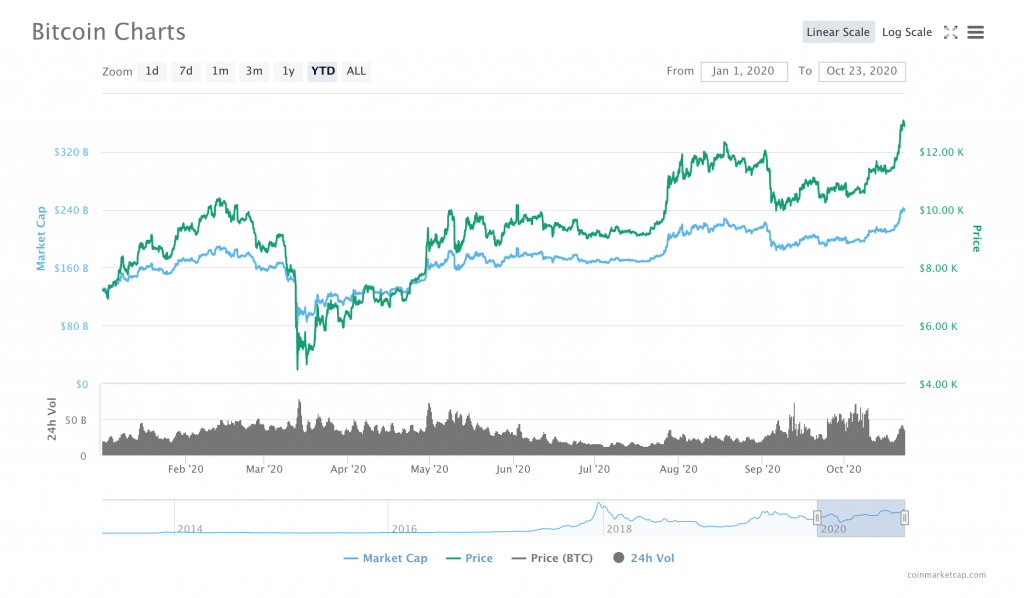
Throughout most of this year, Bitcoin has oscillated between gaining and plateauing.
In January and February, BTC steadily rose from $7,000 to $10,300; of course, BTC crashed to roughly $4,000 in the second week of March, but by the end of April, BTC was almost completely recovered, continuing the along the upward trajectory that had begun to form earlier in the year.
After some light volatility in late May and early June, Bitcoin formed a plateau between $9,000 and $10,000 throughout most of June and July.
Then, Bitcoin swiftly swung upward: from July 24th to 28th, the value of BTC hit $11,000; the month of August saw the BTC price form a plateau between $10,000 and $11,000. The price dipped at the end of the month: September saw BTC sitting between $10,000 and $11,000.
This pump is organically spot driven.
There is almost no order book resistance.
Yes things can change quickly, it's crypto.
But this is a very healthy move.
Something we have never seen before at 12K plus #bitcoin.
The bull run that is currently bringing Bitcoin over $13,000 began on October 18th, when BTC was at $11,400; BTC has made consistent daily gains since then.
If the pattern that seems to have been formed by Bitcoin’s price movements throughout this year continues, this latest upward move could result in a plateau.
Are BTC's PayPal-Related Gains Short-Lived?
However, it is unclear whether or not the support to sustain a price level over $13,000 for more than a brief moment is there.
After all, while the latest bull run that has brought Bitcoin up from $11,400 to more than $13,000 started late last week, the continuation of the run appears to have been largely driven by an important piece of news.
This is huge news for Bitcoin and for the crypto space more generally. Arguably, crypto has never before been such a practical and accessible option for payments.
As important as PayPal’s announcements are for Bitcoin, BTC could be riding a little too high on the news. Bloomberg editor Dave Liedtka said that Bitcoin “appears to be a bit overheated.”
After all, Liedtka wrote, the recent rally boosted Bitcoin’s 14-day Relative Strength Index to 80, a level that is considered to be unstable and overbought.
Even so, Mike McGlone, a commodity strategist with Bloomberg Intelligence, wrote that “something unanticipated needs to occur to trip up advancing Bitcoin.”
However, if Bitcoin manages to sustain levels over $13,00, it may need another push to get past the next $1,000-milestone: “as we see it, the crypto may need a new catalyst to sustain above $14,000,” McGlone said.
Still, the push past $14,000 appears to be within reach: “absent a reversal in key metrics showing increasing demand and adoption, breaching resistance should be a matter of time.”
Sell-Offs That Took Place This Week Appear to Have Been Absorbed by Bullish Gains
The push past $13,000, and its continuing upward momentum, are especially impressive considering that a number of BTC holders seem to have rushed to sell their coins when BTC crossed the $13k mark.
Therefore, it is likely that a number of BTC holders have already sold their coins. However, BTC’s run is so strong that the asset appears to be more or less unphased.
Speaking to CoinDesk, Philip Gradwell, chief economist at Chainalysis, said that "the pickup in exchange inflows indicates some investors rushed to liquidate their holdings (take profit) in the rising market.
“However, there's reason to believe that any higher levels of sales were absorbed Wednesday, as bitcoin's trade intensity (a measure of how many times an inflowing coin is traded) jumped to a two-month high of 5.8. That's more than double the 90-day average.”
In other words, people may have been rushing to sell Bitcoin this week, but other people were rushing to buy it.
“Bitcoin Accumulation Has Been on a Constant Upwards Trend for Months.”
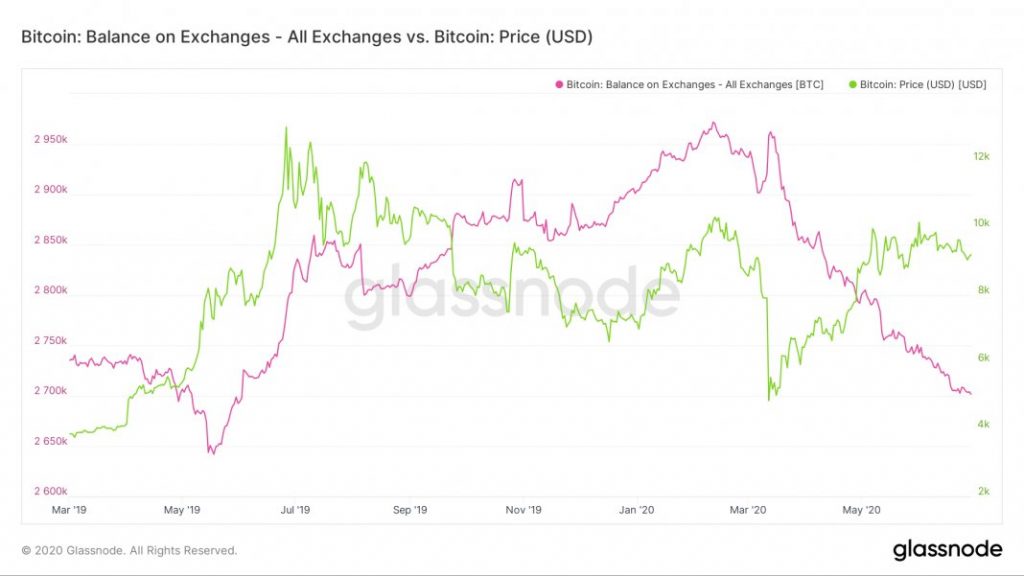
And indeed, before the influx of BTC deposits on exchanges this week, Data from crypto analytics firm Glassnode showed that in general, the amount of Bitcoin being kept on exchanges was at its lowest point in months.
At the same time, Glassnode reported that the number of Bitcoins stored in so-called ‘accumulation addresses’, which are digital wallets that BTC has been moved into and never out of, has been increasing.
“Bitcoin accumulation has been on a constant upwards trend for months. 2.6M $BTC (14% of supply) are currently held in accumulation addresses. Accumulation addresses are defined as addresses that have at least 2 incoming [transactions] and have never spent BTC,” the firm said.
Additionally, Bitcoin’s Fear and Greed Index, which tracks whether buyers are more likely to sell (fear) or buy and hold (greed), has made a sharp move toward Greed. On Monday, the scale sat at 56, slightly tipped in a greedy direction; at press time, the scale had moved to 73, quite greedy indeed.
What could this mean? While there may have been some selloffs earlier this week, the overall landscape of reduced BTC on exchanges, increased BTC in accumulation in addresses, and greedy market sentiment means that Bitcoin’s pass over $13,000 may be safe for now.
Paul Tudor Jones: Investing in Bitcoin Is “like Investing with Steve Jobs and Apple or Investing in Google Early.”
In addition to the PayPal announcement, Bitcoin’s gains over the past month may have been boosted by some high-volume investments by several institutional players, as well as some high-profile endorsements.
Yesterday, billionaire and renowned Wall Street investor, Paul Tudor Jones said on CNBC’s Squawk Box that he likes Bitcoin “even more than I did then,” referencing his Bitcoin investment in May of 2020.
While Jones said that his own investment in BTC remains in the single digits, investing in Bitcoin is “like investing with Steve Jobs and Apple or investing in Google early.”
“Bitcoin has this enormous contingence of really, really smart and sophisticated people who believe in it,” he said.
Legendary investor Paul Tudor Jones compares investing in #Bitcoin to investing with Steve Jobs and Apple. Smartest people in the room continue to buy bitcoin and extol its virtues. I have yet to hear one intelligent argument not to own BTC. Still waiting. https://t.co/uie0jjoUbG
Over the last month, Bitcoin seems to have been getting more attention from the institutional investing world more generally. Last week, investment firm Stone Ridge announced a $115 million investment into Bitcoin; earlier this month, Square announced a $50 million BTC investment. Business intelligence firm Microstrategy announced a $425 million Bitcoin investment at the end of September.
What are your thoughts on Bitcoin’s movements this week? Let us know in the comments below.
It has been a big week for Bitcoin.
At press time Bitcoin has held levels above $12,000 since Wednesday, and appeared to be on track to break through the $13,000 resistance.
BTC has not broken through $13,000 since June of 2019. Before that, the only other time that Bitcoin has crossed the $13,000 mark was during the crypto bubble that formed at the end of 2017.
However, both times that Bitcoin managed to reach past the $13,000 point, the gains were fairly short-lived. In June of 2019, the past over $13,000 only lasted one day; BTC was back under $12,000 in less than a month. In the bubble of 2017, BTC’s pass above $13,000 extended all the way to roughly $20,000 but lasted only six weeks.
Will this time be any different?
Bitcoin Has Been Gaining and Plateauing throughout the Year
For a number of analysts, the answer is yes.
In large part, this pass over $13,000 appears to have been the result of steady growth that has taken place over the course of the last seven months (or 10 months, if you exclude March’s 'Black Thursday' crash.)
Throughout most of this year, Bitcoin has oscillated between gaining and plateauing.
In January and February, BTC steadily rose from $7,000 to $10,300; of course, BTC crashed to roughly $4,000 in the second week of March, but by the end of April, BTC was almost completely recovered, continuing the along the upward trajectory that had begun to form earlier in the year.
After some light volatility in late May and early June, Bitcoin formed a plateau between $9,000 and $10,000 throughout most of June and July.
Then, Bitcoin swiftly swung upward: from July 24th to 28th, the value of BTC hit $11,000; the month of August saw the BTC price form a plateau between $10,000 and $11,000. The price dipped at the end of the month: September saw BTC sitting between $10,000 and $11,000.
This pump is organically spot driven.
There is almost no order book resistance.
Yes things can change quickly, it's crypto.
But this is a very healthy move.
Something we have never seen before at 12K plus #bitcoin.
The bull run that is currently bringing Bitcoin over $13,000 began on October 18th, when BTC was at $11,400; BTC has made consistent daily gains since then.
If the pattern that seems to have been formed by Bitcoin’s price movements throughout this year continues, this latest upward move could result in a plateau.
Are BTC's PayPal-Related Gains Short-Lived?
However, it is unclear whether or not the support to sustain a price level over $13,000 for more than a brief moment is there.
After all, while the latest bull run that has brought Bitcoin up from $11,400 to more than $13,000 started late last week, the continuation of the run appears to have been largely driven by an important piece of news.
This is huge news for Bitcoin and for the crypto space more generally. Arguably, crypto has never before been such a practical and accessible option for payments.
As important as PayPal’s announcements are for Bitcoin, BTC could be riding a little too high on the news. Bloomberg editor Dave Liedtka said that Bitcoin “appears to be a bit overheated.”
After all, Liedtka wrote, the recent rally boosted Bitcoin’s 14-day Relative Strength Index to 80, a level that is considered to be unstable and overbought.
Even so, Mike McGlone, a commodity strategist with Bloomberg Intelligence, wrote that “something unanticipated needs to occur to trip up advancing Bitcoin.”
However, if Bitcoin manages to sustain levels over $13,00, it may need another push to get past the next $1,000-milestone: “as we see it, the crypto may need a new catalyst to sustain above $14,000,” McGlone said.
Still, the push past $14,000 appears to be within reach: “absent a reversal in key metrics showing increasing demand and adoption, breaching resistance should be a matter of time.”
Sell-Offs That Took Place This Week Appear to Have Been Absorbed by Bullish Gains
The push past $13,000, and its continuing upward momentum, are especially impressive considering that a number of BTC holders seem to have rushed to sell their coins when BTC crossed the $13k mark.
Therefore, it is likely that a number of BTC holders have already sold their coins. However, BTC’s run is so strong that the asset appears to be more or less unphased.
Speaking to CoinDesk, Philip Gradwell, chief economist at Chainalysis, said that "the pickup in exchange inflows indicates some investors rushed to liquidate their holdings (take profit) in the rising market.
“However, there's reason to believe that any higher levels of sales were absorbed Wednesday, as bitcoin's trade intensity (a measure of how many times an inflowing coin is traded) jumped to a two-month high of 5.8. That's more than double the 90-day average.”
In other words, people may have been rushing to sell Bitcoin this week, but other people were rushing to buy it.
“Bitcoin Accumulation Has Been on a Constant Upwards Trend for Months.”
And indeed, before the influx of BTC deposits on exchanges this week, Data from crypto analytics firm Glassnode showed that in general, the amount of Bitcoin being kept on exchanges was at its lowest point in months.
At the same time, Glassnode reported that the number of Bitcoins stored in so-called ‘accumulation addresses’, which are digital wallets that BTC has been moved into and never out of, has been increasing.
“Bitcoin accumulation has been on a constant upwards trend for months. 2.6M $BTC (14% of supply) are currently held in accumulation addresses. Accumulation addresses are defined as addresses that have at least 2 incoming [transactions] and have never spent BTC,” the firm said.
Additionally, Bitcoin’s Fear and Greed Index, which tracks whether buyers are more likely to sell (fear) or buy and hold (greed), has made a sharp move toward Greed. On Monday, the scale sat at 56, slightly tipped in a greedy direction; at press time, the scale had moved to 73, quite greedy indeed.
What could this mean? While there may have been some selloffs earlier this week, the overall landscape of reduced BTC on exchanges, increased BTC in accumulation in addresses, and greedy market sentiment means that Bitcoin’s pass over $13,000 may be safe for now.
Paul Tudor Jones: Investing in Bitcoin Is “like Investing with Steve Jobs and Apple or Investing in Google Early.”
In addition to the PayPal announcement, Bitcoin’s gains over the past month may have been boosted by some high-volume investments by several institutional players, as well as some high-profile endorsements.
Yesterday, billionaire and renowned Wall Street investor, Paul Tudor Jones said on CNBC’s Squawk Box that he likes Bitcoin “even more than I did then,” referencing his Bitcoin investment in May of 2020.
While Jones said that his own investment in BTC remains in the single digits, investing in Bitcoin is “like investing with Steve Jobs and Apple or investing in Google early.”
“Bitcoin has this enormous contingence of really, really smart and sophisticated people who believe in it,” he said.
Legendary investor Paul Tudor Jones compares investing in #Bitcoin to investing with Steve Jobs and Apple. Smartest people in the room continue to buy bitcoin and extol its virtues. I have yet to hear one intelligent argument not to own BTC. Still waiting. https://t.co/uie0jjoUbG
Over the last month, Bitcoin seems to have been getting more attention from the institutional investing world more generally. Last week, investment firm Stone Ridge announced a $115 million investment into Bitcoin; earlier this month, Square announced a $50 million BTC investment. Business intelligence firm Microstrategy announced a $425 million Bitcoin investment at the end of September.
What are your thoughts on Bitcoin’s movements this week? Let us know in the comments below.
Rachel is a self-taught crypto geek and a passionate writer. She believes in the power that the written word has to educate, connect and empower individuals to make positive and powerful financial choices. She is the Podcast Host and a Cryptocurrency Editor at Finance Magnates.
European Traders Get MiFID-Regulated Crypto Leverage as OKX Launches X-Perps
Featured Videos
TradingPro Winner Spotlight 🏆 | Global Best Overall Broker 2025
TradingPro Winner Spotlight 🏆 | Global Best Overall Broker 2025
TradingPro Winner Spotlight 🏆 | Global Best Overall Broker 2025
TradingPro Winner Spotlight 🏆 | Global Best Overall Broker 2025
TradingPro takes the spotlight as Global Best Overall Broker 2025 at the Finance Magnates Awards.
Yusna Yusman, Head of Global Marketing, describes the night as inspiring, elegant, and full of energy.
She also shares a message of appreciation to the clients and community whose support made this achievement possible.
👉 Be part of FM Awards 2026.
#FinanceMagnatesAwards #TradingPro #Trading #Fintech #Broker #WinnerSpotlight #Shorts
TradingPro takes the spotlight as Global Best Overall Broker 2025 at the Finance Magnates Awards.
Yusna Yusman, Head of Global Marketing, describes the night as inspiring, elegant, and full of energy.
She also shares a message of appreciation to the clients and community whose support made this achievement possible.
👉 Be part of FM Awards 2026.
#FinanceMagnatesAwards #TradingPro #Trading #Fintech #Broker #WinnerSpotlight #Shorts
TradingPro takes the spotlight as Global Best Overall Broker 2025 at the Finance Magnates Awards.
Yusna Yusman, Head of Global Marketing, describes the night as inspiring, elegant, and full of energy.
She also shares a message of appreciation to the clients and community whose support made this achievement possible.
👉 Be part of FM Awards 2026.
#FinanceMagnatesAwards #TradingPro #Trading #Fintech #Broker #WinnerSpotlight #Shorts
TradingPro takes the spotlight as Global Best Overall Broker 2025 at the Finance Magnates Awards.
Yusna Yusman, Head of Global Marketing, describes the night as inspiring, elegant, and full of energy.
She also shares a message of appreciation to the clients and community whose support made this achievement possible.
👉 Be part of FM Awards 2026.
#FinanceMagnatesAwards #TradingPro #Trading #Fintech #Broker #WinnerSpotlight #Shorts
In this video, we review @deriv an online broker offering CFDs and options across a wide range of markets, including forex, stocks, indices, commodities, cryptocurrencies, and derived indices.
We cover the broker’s overall offering, including its multi-jurisdiction regulatory structure, platform ecosystem, and range of account types. We also explore key features such as product availability, funding options, and trading conditions.
Watch the full video to see if Deriv fits your trading needs.
#Deriv #ForexBroker #CFDTrading #FinanceMagnates #Trading #BrokerReview #OnlineTrading
In this video, we review @deriv an online broker offering CFDs and options across a wide range of markets, including forex, stocks, indices, commodities, cryptocurrencies, and derived indices.
We cover the broker’s overall offering, including its multi-jurisdiction regulatory structure, platform ecosystem, and range of account types. We also explore key features such as product availability, funding options, and trading conditions.
Watch the full video to see if Deriv fits your trading needs.
#Deriv #ForexBroker #CFDTrading #FinanceMagnates #Trading #BrokerReview #OnlineTrading
In this video, we review @deriv an online broker offering CFDs and options across a wide range of markets, including forex, stocks, indices, commodities, cryptocurrencies, and derived indices.
We cover the broker’s overall offering, including its multi-jurisdiction regulatory structure, platform ecosystem, and range of account types. We also explore key features such as product availability, funding options, and trading conditions.
Watch the full video to see if Deriv fits your trading needs.
#Deriv #ForexBroker #CFDTrading #FinanceMagnates #Trading #BrokerReview #OnlineTrading
In this video, we review @deriv an online broker offering CFDs and options across a wide range of markets, including forex, stocks, indices, commodities, cryptocurrencies, and derived indices.
We cover the broker’s overall offering, including its multi-jurisdiction regulatory structure, platform ecosystem, and range of account types. We also explore key features such as product availability, funding options, and trading conditions.
Watch the full video to see if Deriv fits your trading needs.
#Deriv #ForexBroker #CFDTrading #FinanceMagnates #Trading #BrokerReview #OnlineTrading
In this video, we review @deriv an online broker offering CFDs and options across a wide range of markets, including forex, stocks, indices, commodities, cryptocurrencies, and derived indices.
We cover the broker’s overall offering, including its multi-jurisdiction regulatory structure, platform ecosystem, and range of account types. We also explore key features such as product availability, funding options, and trading conditions.
Watch the full video to see if Deriv fits your trading needs.
#Deriv #ForexBroker #CFDTrading #FinanceMagnates #Trading #BrokerReview #OnlineTrading
In this video, we review @deriv an online broker offering CFDs and options across a wide range of markets, including forex, stocks, indices, commodities, cryptocurrencies, and derived indices.
We cover the broker’s overall offering, including its multi-jurisdiction regulatory structure, platform ecosystem, and range of account types. We also explore key features such as product availability, funding options, and trading conditions.
Watch the full video to see if Deriv fits your trading needs.
#Deriv #ForexBroker #CFDTrading #FinanceMagnates #Trading #BrokerReview #OnlineTrading
Opening-Up eWallets’ Future: The Enduring Value of eWallets in the Trading Space ︳FM Talks x Paysafe
Opening-Up eWallets’ Future: The Enduring Value of eWallets in the Trading Space ︳FM Talks x Paysafe
Opening-Up eWallets’ Future: The Enduring Value of eWallets in the Trading Space ︳FM Talks x Paysafe
Opening-Up eWallets’ Future: The Enduring Value of eWallets in the Trading Space ︳FM Talks x Paysafe
Opening-Up eWallets’ Future: The Enduring Value of eWallets in the Trading Space ︳FM Talks x Paysafe
Opening-Up eWallets’ Future: The Enduring Value of eWallets in the Trading Space ︳FM Talks x Paysafe
eWallets aren’t just moving money anymore, they’re running the show.
In this episode of FM Talks, Adonis Adoni (News Editor at Finance Magnates) sits down with Paysafe 's:
•Bob Legters, Chief Product Officer
•Jeannie Lam, VP of Sales & Account Management for Forex & Financial Trading
to break down how wallets evolved from simple payment tools into core trading infrastructure.
💥 Inside the conversation:
•Why wallets now drive growth, retention, and global scale for brokers
•The hidden power behind deposit success, fraud prevention, and UX
•Stablecoins: hype, reality, and where they actually fit today
•AI in wallets: smarter flows vs rising fraud risks
•The rise of white-label wallets and full ecosystem control
•What the future looks like when wallets become your financial brain
🔗 Learn more about @PaysafeGroup : https://www.paysafe.com/en/optimize-forex-payments-for-growth-in-2026/fm/?utm_source=fm&utm_medium=podcast&utm_campaign=2026-q1-fx-demand-gen&utm_content=podcast
From fiat to crypto, payments to trading, everything is converging and wallets are right at the center of it.
#Fintech #eWallets #Trading #DigitalPayments #Stablecoins #Crypto #AIinFintech #FutureOfFinance #Paysafe #FMtalks
eWallets aren’t just moving money anymore, they’re running the show.
In this episode of FM Talks, Adonis Adoni (News Editor at Finance Magnates) sits down with Paysafe 's:
•Bob Legters, Chief Product Officer
•Jeannie Lam, VP of Sales & Account Management for Forex & Financial Trading
to break down how wallets evolved from simple payment tools into core trading infrastructure.
💥 Inside the conversation:
•Why wallets now drive growth, retention, and global scale for brokers
•The hidden power behind deposit success, fraud prevention, and UX
•Stablecoins: hype, reality, and where they actually fit today
•AI in wallets: smarter flows vs rising fraud risks
•The rise of white-label wallets and full ecosystem control
•What the future looks like when wallets become your financial brain
🔗 Learn more about @PaysafeGroup : https://www.paysafe.com/en/optimize-forex-payments-for-growth-in-2026/fm/?utm_source=fm&utm_medium=podcast&utm_campaign=2026-q1-fx-demand-gen&utm_content=podcast
From fiat to crypto, payments to trading, everything is converging and wallets are right at the center of it.
#Fintech #eWallets #Trading #DigitalPayments #Stablecoins #Crypto #AIinFintech #FutureOfFinance #Paysafe #FMtalks
eWallets aren’t just moving money anymore, they’re running the show.
In this episode of FM Talks, Adonis Adoni (News Editor at Finance Magnates) sits down with Paysafe 's:
•Bob Legters, Chief Product Officer
•Jeannie Lam, VP of Sales & Account Management for Forex & Financial Trading
to break down how wallets evolved from simple payment tools into core trading infrastructure.
💥 Inside the conversation:
•Why wallets now drive growth, retention, and global scale for brokers
•The hidden power behind deposit success, fraud prevention, and UX
•Stablecoins: hype, reality, and where they actually fit today
•AI in wallets: smarter flows vs rising fraud risks
•The rise of white-label wallets and full ecosystem control
•What the future looks like when wallets become your financial brain
🔗 Learn more about @PaysafeGroup : https://www.paysafe.com/en/optimize-forex-payments-for-growth-in-2026/fm/?utm_source=fm&utm_medium=podcast&utm_campaign=2026-q1-fx-demand-gen&utm_content=podcast
From fiat to crypto, payments to trading, everything is converging and wallets are right at the center of it.
#Fintech #eWallets #Trading #DigitalPayments #Stablecoins #Crypto #AIinFintech #FutureOfFinance #Paysafe #FMtalks
eWallets aren’t just moving money anymore, they’re running the show.
In this episode of FM Talks, Adonis Adoni (News Editor at Finance Magnates) sits down with Paysafe 's:
•Bob Legters, Chief Product Officer
•Jeannie Lam, VP of Sales & Account Management for Forex & Financial Trading
to break down how wallets evolved from simple payment tools into core trading infrastructure.
💥 Inside the conversation:
•Why wallets now drive growth, retention, and global scale for brokers
•The hidden power behind deposit success, fraud prevention, and UX
•Stablecoins: hype, reality, and where they actually fit today
•AI in wallets: smarter flows vs rising fraud risks
•The rise of white-label wallets and full ecosystem control
•What the future looks like when wallets become your financial brain
🔗 Learn more about @PaysafeGroup : https://www.paysafe.com/en/optimize-forex-payments-for-growth-in-2026/fm/?utm_source=fm&utm_medium=podcast&utm_campaign=2026-q1-fx-demand-gen&utm_content=podcast
From fiat to crypto, payments to trading, everything is converging and wallets are right at the center of it.
#Fintech #eWallets #Trading #DigitalPayments #Stablecoins #Crypto #AIinFintech #FutureOfFinance #Paysafe #FMtalks
eWallets aren’t just moving money anymore, they’re running the show.
In this episode of FM Talks, Adonis Adoni (News Editor at Finance Magnates) sits down with Paysafe 's:
•Bob Legters, Chief Product Officer
•Jeannie Lam, VP of Sales & Account Management for Forex & Financial Trading
to break down how wallets evolved from simple payment tools into core trading infrastructure.
💥 Inside the conversation:
•Why wallets now drive growth, retention, and global scale for brokers
•The hidden power behind deposit success, fraud prevention, and UX
•Stablecoins: hype, reality, and where they actually fit today
•AI in wallets: smarter flows vs rising fraud risks
•The rise of white-label wallets and full ecosystem control
•What the future looks like when wallets become your financial brain
🔗 Learn more about @PaysafeGroup : https://www.paysafe.com/en/optimize-forex-payments-for-growth-in-2026/fm/?utm_source=fm&utm_medium=podcast&utm_campaign=2026-q1-fx-demand-gen&utm_content=podcast
From fiat to crypto, payments to trading, everything is converging and wallets are right at the center of it.
#Fintech #eWallets #Trading #DigitalPayments #Stablecoins #Crypto #AIinFintech #FutureOfFinance #Paysafe #FMtalks
eWallets aren’t just moving money anymore, they’re running the show.
In this episode of FM Talks, Adonis Adoni (News Editor at Finance Magnates) sits down with Paysafe 's:
•Bob Legters, Chief Product Officer
•Jeannie Lam, VP of Sales & Account Management for Forex & Financial Trading
to break down how wallets evolved from simple payment tools into core trading infrastructure.
💥 Inside the conversation:
•Why wallets now drive growth, retention, and global scale for brokers
•The hidden power behind deposit success, fraud prevention, and UX
•Stablecoins: hype, reality, and where they actually fit today
•AI in wallets: smarter flows vs rising fraud risks
•The rise of white-label wallets and full ecosystem control
•What the future looks like when wallets become your financial brain
🔗 Learn more about @PaysafeGroup : https://www.paysafe.com/en/optimize-forex-payments-for-growth-in-2026/fm/?utm_source=fm&utm_medium=podcast&utm_campaign=2026-q1-fx-demand-gen&utm_content=podcast
From fiat to crypto, payments to trading, everything is converging and wallets are right at the center of it.
#Fintech #eWallets #Trading #DigitalPayments #Stablecoins #Crypto #AIinFintech #FutureOfFinance #Paysafe #FMtalks
FP Markets Review: Forex & CFD Broker Overview for Asia Traders | Finance Magnates
FP Markets Review: Forex & CFD Broker Overview for Asia Traders | Finance Magnates
FP Markets Review: Forex & CFD Broker Overview for Asia Traders | Finance Magnates
FP Markets Review: Forex & CFD Broker Overview for Asia Traders | Finance Magnates
FP Markets Review: Forex & CFD Broker Overview for Asia Traders | Finance Magnates
FP Markets Review: Forex & CFD Broker Overview for Asia Traders | Finance Magnates
In this video, we review @fpmarkets a multi-asset forex and CFDs broker operating across multiple regulated entities worldwide.
We cover the broker’s overall offering, including its regulatory structure, trading platforms, as well as its account types and product range. We also explore key considerations for traders in Asia, including entity differences, leverage, and market access.
Watch the full video to see if FP Markets fits your trading needs.
📣 Stay up to date with the latest in finance and trading. Follow Finance Magnates for industry news, insights, and global event coverage.
Connect with us:
🔗 LinkedIn: /financemagnates
👍 Facebook: /financemagnates
📸 Instagram: https://www.instagram.com/financemagnates
🐦 X: https://x.com/financemagnates
🎥 TikTok: https://www.tiktok.com/tag/financemagnates
▶️ YouTube: /@financemagnates_official
#FPMarkets #ForexBroker #CFDTrading #FinanceMagnates #Trading #Forex #BrokerReview
In this video, we review @fpmarkets a multi-asset forex and CFDs broker operating across multiple regulated entities worldwide.
We cover the broker’s overall offering, including its regulatory structure, trading platforms, as well as its account types and product range. We also explore key considerations for traders in Asia, including entity differences, leverage, and market access.
Watch the full video to see if FP Markets fits your trading needs.
📣 Stay up to date with the latest in finance and trading. Follow Finance Magnates for industry news, insights, and global event coverage.
Connect with us:
🔗 LinkedIn: /financemagnates
👍 Facebook: /financemagnates
📸 Instagram: https://www.instagram.com/financemagnates
🐦 X: https://x.com/financemagnates
🎥 TikTok: https://www.tiktok.com/tag/financemagnates
▶️ YouTube: /@financemagnates_official
#FPMarkets #ForexBroker #CFDTrading #FinanceMagnates #Trading #Forex #BrokerReview
In this video, we review @fpmarkets a multi-asset forex and CFDs broker operating across multiple regulated entities worldwide.
We cover the broker’s overall offering, including its regulatory structure, trading platforms, as well as its account types and product range. We also explore key considerations for traders in Asia, including entity differences, leverage, and market access.
Watch the full video to see if FP Markets fits your trading needs.
📣 Stay up to date with the latest in finance and trading. Follow Finance Magnates for industry news, insights, and global event coverage.
Connect with us:
🔗 LinkedIn: /financemagnates
👍 Facebook: /financemagnates
📸 Instagram: https://www.instagram.com/financemagnates
🐦 X: https://x.com/financemagnates
🎥 TikTok: https://www.tiktok.com/tag/financemagnates
▶️ YouTube: /@financemagnates_official
#FPMarkets #ForexBroker #CFDTrading #FinanceMagnates #Trading #Forex #BrokerReview
In this video, we review @fpmarkets a multi-asset forex and CFDs broker operating across multiple regulated entities worldwide.
We cover the broker’s overall offering, including its regulatory structure, trading platforms, as well as its account types and product range. We also explore key considerations for traders in Asia, including entity differences, leverage, and market access.
Watch the full video to see if FP Markets fits your trading needs.
📣 Stay up to date with the latest in finance and trading. Follow Finance Magnates for industry news, insights, and global event coverage.
Connect with us:
🔗 LinkedIn: /financemagnates
👍 Facebook: /financemagnates
📸 Instagram: https://www.instagram.com/financemagnates
🐦 X: https://x.com/financemagnates
🎥 TikTok: https://www.tiktok.com/tag/financemagnates
▶️ YouTube: /@financemagnates_official
#FPMarkets #ForexBroker #CFDTrading #FinanceMagnates #Trading #Forex #BrokerReview
In this video, we review @fpmarkets a multi-asset forex and CFDs broker operating across multiple regulated entities worldwide.
We cover the broker’s overall offering, including its regulatory structure, trading platforms, as well as its account types and product range. We also explore key considerations for traders in Asia, including entity differences, leverage, and market access.
Watch the full video to see if FP Markets fits your trading needs.
📣 Stay up to date with the latest in finance and trading. Follow Finance Magnates for industry news, insights, and global event coverage.
Connect with us:
🔗 LinkedIn: /financemagnates
👍 Facebook: /financemagnates
📸 Instagram: https://www.instagram.com/financemagnates
🐦 X: https://x.com/financemagnates
🎥 TikTok: https://www.tiktok.com/tag/financemagnates
▶️ YouTube: /@financemagnates_official
#FPMarkets #ForexBroker #CFDTrading #FinanceMagnates #Trading #Forex #BrokerReview
In this video, we review @fpmarkets a multi-asset forex and CFDs broker operating across multiple regulated entities worldwide.
We cover the broker’s overall offering, including its regulatory structure, trading platforms, as well as its account types and product range. We also explore key considerations for traders in Asia, including entity differences, leverage, and market access.
Watch the full video to see if FP Markets fits your trading needs.
📣 Stay up to date with the latest in finance and trading. Follow Finance Magnates for industry news, insights, and global event coverage.
Connect with us:
🔗 LinkedIn: /financemagnates
👍 Facebook: /financemagnates
📸 Instagram: https://www.instagram.com/financemagnates
🐦 X: https://x.com/financemagnates
🎥 TikTok: https://www.tiktok.com/tag/financemagnates
▶️ YouTube: /@financemagnates_official
#FPMarkets #ForexBroker #CFDTrading #FinanceMagnates #Trading #Forex #BrokerReview
FP Markets Winner Spotlight 🏆 | Global Broker of the Year 2025 #Trading #Broker #Innovation #Shorts
FP Markets Winner Spotlight 🏆 | Global Broker of the Year 2025 #Trading #Broker #Innovation #Shorts
FP Markets Winner Spotlight 🏆 | Global Broker of the Year 2025 #Trading #Broker #Innovation #Shorts
FP Markets Winner Spotlight 🏆 | Global Broker of the Year 2025 #Trading #Broker #Innovation #Shorts
FP Markets Winner Spotlight 🏆 | Global Broker of the Year 2025 #Trading #Broker #Innovation #Shorts
FP Markets Winner Spotlight 🏆 | Global Broker of the Year 2025 #Trading #Broker #Innovation #Shorts
FP Markets takes the spotlight as Global Broker of the Year 2025 at the Finance Magnates Awards.
Martin Stoilov, Head of Client Experience, shares that trust, innovation, and people played a key role in the company’s success, supported by a strong foundation of integrity and client-centricity.
Following this milestone, FP Markets continues to focus on growth, technology investment, and its core values of transparency and excellence.
👉 Be part of FM Awards 2026: https://awards.financemagnates.com/#nominate
FP Markets takes the spotlight as Global Broker of the Year 2025 at the Finance Magnates Awards.
Martin Stoilov, Head of Client Experience, shares that trust, innovation, and people played a key role in the company’s success, supported by a strong foundation of integrity and client-centricity.
Following this milestone, FP Markets continues to focus on growth, technology investment, and its core values of transparency and excellence.
👉 Be part of FM Awards 2026: https://awards.financemagnates.com/#nominate
FP Markets takes the spotlight as Global Broker of the Year 2025 at the Finance Magnates Awards.
Martin Stoilov, Head of Client Experience, shares that trust, innovation, and people played a key role in the company’s success, supported by a strong foundation of integrity and client-centricity.
Following this milestone, FP Markets continues to focus on growth, technology investment, and its core values of transparency and excellence.
👉 Be part of FM Awards 2026: https://awards.financemagnates.com/#nominate
FP Markets takes the spotlight as Global Broker of the Year 2025 at the Finance Magnates Awards.
Martin Stoilov, Head of Client Experience, shares that trust, innovation, and people played a key role in the company’s success, supported by a strong foundation of integrity and client-centricity.
Following this milestone, FP Markets continues to focus on growth, technology investment, and its core values of transparency and excellence.
👉 Be part of FM Awards 2026: https://awards.financemagnates.com/#nominate
FP Markets takes the spotlight as Global Broker of the Year 2025 at the Finance Magnates Awards.
Martin Stoilov, Head of Client Experience, shares that trust, innovation, and people played a key role in the company’s success, supported by a strong foundation of integrity and client-centricity.
Following this milestone, FP Markets continues to focus on growth, technology investment, and its core values of transparency and excellence.
👉 Be part of FM Awards 2026: https://awards.financemagnates.com/#nominate
FP Markets takes the spotlight as Global Broker of the Year 2025 at the Finance Magnates Awards.
Martin Stoilov, Head of Client Experience, shares that trust, innovation, and people played a key role in the company’s success, supported by a strong foundation of integrity and client-centricity.
Following this milestone, FP Markets continues to focus on growth, technology investment, and its core values of transparency and excellence.
👉 Be part of FM Awards 2026: https://awards.financemagnates.com/#nominate