The alliance aims to assist crypto companies in complying with the MiCA regulations.
It brings together major blockchain firms like Hedera, Aptos Foundation, and Ripple.
As crypto becomes ever more mainstream and intersects with traditional finance and bureaucracies, cultural clashes are inevitable. After all, bitcoin promised to separate money from the state, while crypto evolved as a means of transacting peer-to-peer, uncensored, permissionless ways on alternative rails.
So, how can these worlds–the orthodox and the blockchain-built alternative–possibly align? That remains to be seen, but recent news of the formation of a new organization called the MiCA Crypto Alliance is an example of differing approaches crossing and perhaps clashing.
Just to recap, MiCA (Markets in Crypto-Assets) regulation is a comprehensive framework of EU crypto rules that appears to indicate an acceptance of the crypto industry within EU countries that will soon have harmonized regulation. It went into force in June 2023, but is being applied through a phased approach, with the expectation that all rules should be in effect by the end of 2024.
The MiCA Crypto Alliance is a new organization established by the DLT Science Foundation (DLT means distributed ledger technology) in partnership with major crypto companies Hedera, Aptos Foundation, and Ripple. The Alliance aims to assist crypto companies (such as exchanges) in complying with MiCA and places a strong emphasis on adherence to environmental and climate-related regulations.
When assessing the MiCA Crypto Alliance and its aims, it’s worth considering regional idiosyncrasies regarding crypto and perhaps industry and technology more broadly, particularly the environmental angle that seems prominent around the MiCA Crypto Alliance.
Regarding crypto, the EU has adopted a regulation-first approach and moved quickly to produce MiCA, which sets a framework but can be further adapted later as required. Meanwhile, in the US, on the other hand, crypto is waging multiple legal battles against an SEC perceived–correctly or not–as hostile, meaning that US crypto headlines are regularly dominated by court battles and legal arguments.
However, whether or not this fraught situation continues in the US may depend on the outcome of the upcoming presidential election, which looks increasingly pivotal for crypto.
It’s to be expected that if Donald Trump wins–given that he has announced several strongly pro-crypto policy positions–the US blockchain industry will receive a major boost and may no longer have to expend resources on regulatory barriers, while in the EU, it’s apparent that navigating MiCA presents new demands for crypto firms.
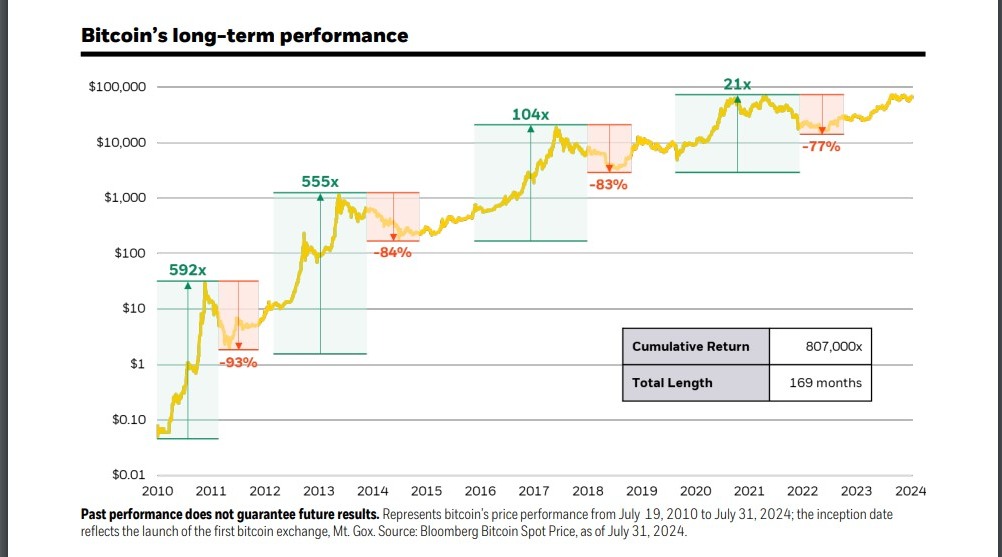
Source: Bloomberg Bitcoin Spot Price
Differing Directions on ESG
Through the MiCA Crypto Alliance’s emphasis on climate-related obligations, another strong contrast emerges, and it relates to shifts that have taken place at BlackRock and other US firms. Firstly, it’s notable that BlackRock CEO Larry Fink has become a blockchain convert, publicly promoting the values of Bitcoin and tokenized assets on distributed ledgers.
This month, BlackRock–which now operates the world’s leading spot BTC ETF–published a report that essentially outlined the case for BTC as an investment asset.
But this also comes after BlackRock has publicly moved away from the ESG model–in which the E stands for environmental–with reports last month showing that, for a period of twelve months until the end of June 2024, the firm had supported just 4% of environmental/social shareholder proposals, down from a peak figure of 47% in 2021.
BlackRock's Senior Managing Director Joud Abdel Majeid stated that many such proposals were “overly prescriptive, lacking economic merit or asking companies to address material risks they are already managing.”
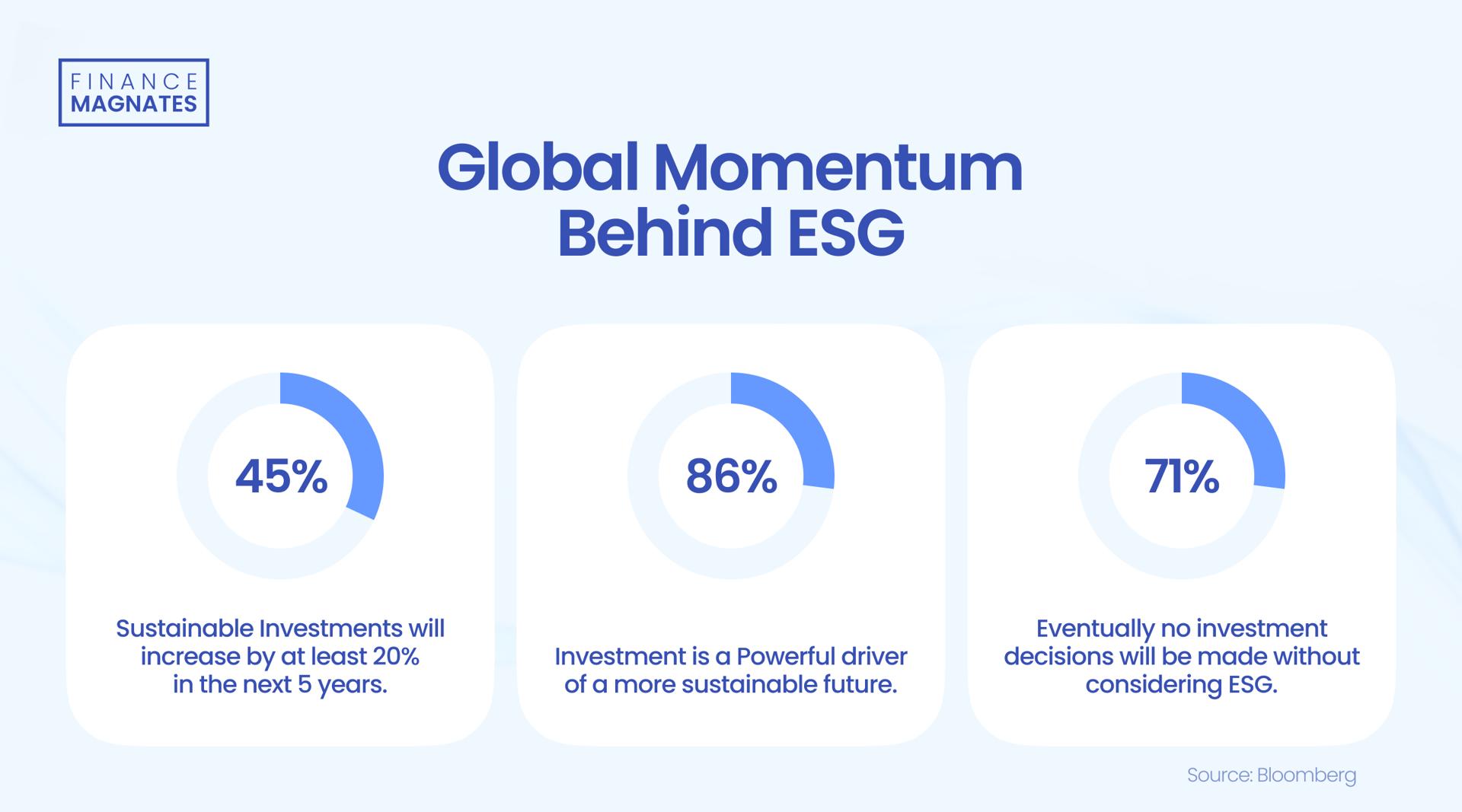
Momentum behind ESG
Additionally, recent data from ISS Corporate showed that median support within firms for environmental shareholder proposals had dropped to just 21% at Russell 3000 companies after this year's annual meetings. For background context, this comes after Larry Fink explained in 2023 that he had stopped using the term ESG as it had become overly associated with radical politics.
Notably, the newest BlackRock Bitcoin report does not mention climate or the environment. By contrast, the MiCA Crypto Alliance website features a video titled ESG and DLT Workshop in Puerto Rico, along with multiple other climate and ESG-related posts.
Long-time followers of crypto discourse will be aware that environmental concerns around Bitcoin have been addressed before and that this isn’t currently a prominent area of discussion. This suggests that such issues are being emphasized in the EU, but this is not especially the case elsewhere.
This, in turn, implies that further regional divergence is possible, especially if the US elections usher in an openly pro-crypto administration in that country. At that point, America–already the global leader when it comes to the tech sector–may provide the crypto industry with a hospitable environment from which to operate.
Ultimately, though, for long-time crypto holders who have been following the blockchain world over multiple bitcoin halving cycles–going back over a decade for the earliest of adopters–this might all seem amusing. After all, there’s an irony in seeing regional, highly centralized bodies puzzle over how to tame a borderless technology built around one core concept: decentralization.
As crypto becomes ever more mainstream and intersects with traditional finance and bureaucracies, cultural clashes are inevitable. After all, bitcoin promised to separate money from the state, while crypto evolved as a means of transacting peer-to-peer, uncensored, permissionless ways on alternative rails.
So, how can these worlds–the orthodox and the blockchain-built alternative–possibly align? That remains to be seen, but recent news of the formation of a new organization called the MiCA Crypto Alliance is an example of differing approaches crossing and perhaps clashing.
Just to recap, MiCA (Markets in Crypto-Assets) regulation is a comprehensive framework of EU crypto rules that appears to indicate an acceptance of the crypto industry within EU countries that will soon have harmonized regulation. It went into force in June 2023, but is being applied through a phased approach, with the expectation that all rules should be in effect by the end of 2024.
The MiCA Crypto Alliance is a new organization established by the DLT Science Foundation (DLT means distributed ledger technology) in partnership with major crypto companies Hedera, Aptos Foundation, and Ripple. The Alliance aims to assist crypto companies (such as exchanges) in complying with MiCA and places a strong emphasis on adherence to environmental and climate-related regulations.
When assessing the MiCA Crypto Alliance and its aims, it’s worth considering regional idiosyncrasies regarding crypto and perhaps industry and technology more broadly, particularly the environmental angle that seems prominent around the MiCA Crypto Alliance.
Regarding crypto, the EU has adopted a regulation-first approach and moved quickly to produce MiCA, which sets a framework but can be further adapted later as required. Meanwhile, in the US, on the other hand, crypto is waging multiple legal battles against an SEC perceived–correctly or not–as hostile, meaning that US crypto headlines are regularly dominated by court battles and legal arguments.
However, whether or not this fraught situation continues in the US may depend on the outcome of the upcoming presidential election, which looks increasingly pivotal for crypto.
It’s to be expected that if Donald Trump wins–given that he has announced several strongly pro-crypto policy positions–the US blockchain industry will receive a major boost and may no longer have to expend resources on regulatory barriers, while in the EU, it’s apparent that navigating MiCA presents new demands for crypto firms.
Source: Bloomberg Bitcoin Spot Price
Differing Directions on ESG
Through the MiCA Crypto Alliance’s emphasis on climate-related obligations, another strong contrast emerges, and it relates to shifts that have taken place at BlackRock and other US firms. Firstly, it’s notable that BlackRock CEO Larry Fink has become a blockchain convert, publicly promoting the values of Bitcoin and tokenized assets on distributed ledgers.
This month, BlackRock–which now operates the world’s leading spot BTC ETF–published a report that essentially outlined the case for BTC as an investment asset.
But this also comes after BlackRock has publicly moved away from the ESG model–in which the E stands for environmental–with reports last month showing that, for a period of twelve months until the end of June 2024, the firm had supported just 4% of environmental/social shareholder proposals, down from a peak figure of 47% in 2021.
BlackRock's Senior Managing Director Joud Abdel Majeid stated that many such proposals were “overly prescriptive, lacking economic merit or asking companies to address material risks they are already managing.”
Momentum behind ESG
Additionally, recent data from ISS Corporate showed that median support within firms for environmental shareholder proposals had dropped to just 21% at Russell 3000 companies after this year's annual meetings. For background context, this comes after Larry Fink explained in 2023 that he had stopped using the term ESG as it had become overly associated with radical politics.
Notably, the newest BlackRock Bitcoin report does not mention climate or the environment. By contrast, the MiCA Crypto Alliance website features a video titled ESG and DLT Workshop in Puerto Rico, along with multiple other climate and ESG-related posts.
Long-time followers of crypto discourse will be aware that environmental concerns around Bitcoin have been addressed before and that this isn’t currently a prominent area of discussion. This suggests that such issues are being emphasized in the EU, but this is not especially the case elsewhere.
This, in turn, implies that further regional divergence is possible, especially if the US elections usher in an openly pro-crypto administration in that country. At that point, America–already the global leader when it comes to the tech sector–may provide the crypto industry with a hospitable environment from which to operate.
Ultimately, though, for long-time crypto holders who have been following the blockchain world over multiple bitcoin halving cycles–going back over a decade for the earliest of adopters–this might all seem amusing. After all, there’s an irony in seeing regional, highly centralized bodies puzzle over how to tame a borderless technology built around one core concept: decentralization.
Sam White is a writer and journalist from the UK who covers cryptocurrencies and web3, with a particular interest in NFTs and the crossover between art and finance. His work, on a wide variety of topics, has appeared on platforms including The Spectator, Vice and Hacker Noon.
In this video, we review @HolaPrimeMarketsOfficial, a multi-asset forex and CFDs broker offering different account types, trading platforms, and flexible trading conditions.
We cover the broker’s overall offering, including account options, trading environment, platforms like MT4 and MT5, and additional services such as managed accounts and fast withdrawals.
Watch the full video to see if Hola Prime Markets fits your trading needs.
📣 Stay up to date with the latest in finance and trading. Follow Finance Magnates for industry news, insights, and global event coverage.
Connect with us:
🔗 LinkedIn: /financemagnates
👍 Facebook: /financemagnates
📸 Instagram: https://www.instagram.com/financemagnates
🐦 X: https://x.com/financemagnates
🎥 TikTok: https://www.tiktok.com/tag/financemagnates
▶️ YouTube: /@financemagnates_official
#HolaPrime #ForexBroker #CFDTrading #FinanceMagnates #Trading #Forex #BrokerReview
In this video, we review @HolaPrimeMarketsOfficial, a multi-asset forex and CFDs broker offering different account types, trading platforms, and flexible trading conditions.
We cover the broker’s overall offering, including account options, trading environment, platforms like MT4 and MT5, and additional services such as managed accounts and fast withdrawals.
Watch the full video to see if Hola Prime Markets fits your trading needs.
📣 Stay up to date with the latest in finance and trading. Follow Finance Magnates for industry news, insights, and global event coverage.
Connect with us:
🔗 LinkedIn: /financemagnates
👍 Facebook: /financemagnates
📸 Instagram: https://www.instagram.com/financemagnates
🐦 X: https://x.com/financemagnates
🎥 TikTok: https://www.tiktok.com/tag/financemagnates
▶️ YouTube: /@financemagnates_official
#HolaPrime #ForexBroker #CFDTrading #FinanceMagnates #Trading #Forex #BrokerReview
Hola Prime Review: What You Need to Know | Full Breakdown by Finance Magnates
Hola Prime Review: What You Need to Know | Full Breakdown by Finance Magnates
In this video, we review @HolaPrime_Global, a proprietary trading firm offering evaluation programs and performance-based payouts in simulated market environments.
We cover how the challenge model works, including account types, profit splits (up to 95%), trading rules, and what it takes to reach a funded account. You’ll also learn about available platforms like MT4, MT5, cTrader, and more, along with insights into payouts, support, and trading conditions.
Watch the full video to see if Hola Prime fits your trading style.
📣 Stay up to date with the latest in finance and trading. Follow Finance Magnates for industry news, insights, and global event coverage.
Connect with us:
🔗 LinkedIn: /financemagnates
👍 Facebook: /financemagnates
📸 Instagram: https://www.instagram.com/financemagnates
🐦 X: https://x.com/financemagnates
🎥 TikTok: https://www.tiktok.com/tag/financemagnates
▶️ YouTube: /@financemagnates_official
#HolaPrime #PropFirm #Trading #FinanceMagnates #Forex #FuturesTrading #TradingReview #PropFirmReview
In this video, we review @HolaPrime_Global, a proprietary trading firm offering evaluation programs and performance-based payouts in simulated market environments.
We cover how the challenge model works, including account types, profit splits (up to 95%), trading rules, and what it takes to reach a funded account. You’ll also learn about available platforms like MT4, MT5, cTrader, and more, along with insights into payouts, support, and trading conditions.
Watch the full video to see if Hola Prime fits your trading style.
📣 Stay up to date with the latest in finance and trading. Follow Finance Magnates for industry news, insights, and global event coverage.
Connect with us:
🔗 LinkedIn: /financemagnates
👍 Facebook: /financemagnates
📸 Instagram: https://www.instagram.com/financemagnates
🐦 X: https://x.com/financemagnates
🎥 TikTok: https://www.tiktok.com/tag/financemagnates
▶️ YouTube: /@financemagnates_official
#HolaPrime #PropFirm #Trading #FinanceMagnates #Forex #FuturesTrading #TradingReview #PropFirmReview
Axi Winner Spotlight 🏆 | Global Most Innovative Broker 2025 #Innovation #Trading #Fintech #Broker
Axi Winner Spotlight 🏆 | Global Most Innovative Broker 2025 #Innovation #Trading #Fintech #Broker
Axi takes the spotlight at the Finance Magnates Awards, winning Global Most Innovative Broker 2025.
Olivia Xenofontos and Ivanna Openko share how the team will feel: proud, motivated, and ready to keep delivering.
They also describe the night as well-organized, focused, and enjoyable for all.
👉 Be part of FM Awards 2026.
Axi takes the spotlight at the Finance Magnates Awards, winning Global Most Innovative Broker 2025.
Olivia Xenofontos and Ivanna Openko share how the team will feel: proud, motivated, and ready to keep delivering.
They also describe the night as well-organized, focused, and enjoyable for all.
👉 Be part of FM Awards 2026.
Recognition that matters.
Built on transparency.
Driven by the industry.
The Finance Magnates Awards 2026.
Nominations are now open.
🔗 https://awards.financemagnates.com/?utm_source=SM&utm_medium=social&utm_campaign=recognition-matters
Recognition that matters.
Built on transparency.
Driven by the industry.
The Finance Magnates Awards 2026.
Nominations are now open.
🔗 https://awards.financemagnates.com/?utm_source=SM&utm_medium=social&utm_campaign=recognition-matters
Tickmill Winner Spotlight | Broker of the Year 2025 (LATAM) 🏆 | Finance Magnates Awards #Trading
Tickmill Winner Spotlight | Broker of the Year 2025 (LATAM) 🏆 | Finance Magnates Awards #Trading
What helped Tickmill stand out this year?
In this Winner Spotlight, Johnny Khalil, Executive Director at Tickmill Europe, shares how listening closely to clients and delivering strong trading conditions made the difference.
A big thank you to the community whose support continues to drive progress every day.
👉 Think your brand has what it takes? Nominate for the 2026 Finance Magnates Awards: https://awards.financemagnates.com/#nominate
What helped Tickmill stand out this year?
In this Winner Spotlight, Johnny Khalil, Executive Director at Tickmill Europe, shares how listening closely to clients and delivering strong trading conditions made the difference.
A big thank you to the community whose support continues to drive progress every day.
👉 Think your brand has what it takes? Nominate for the 2026 Finance Magnates Awards: https://awards.financemagnates.com/#nominate