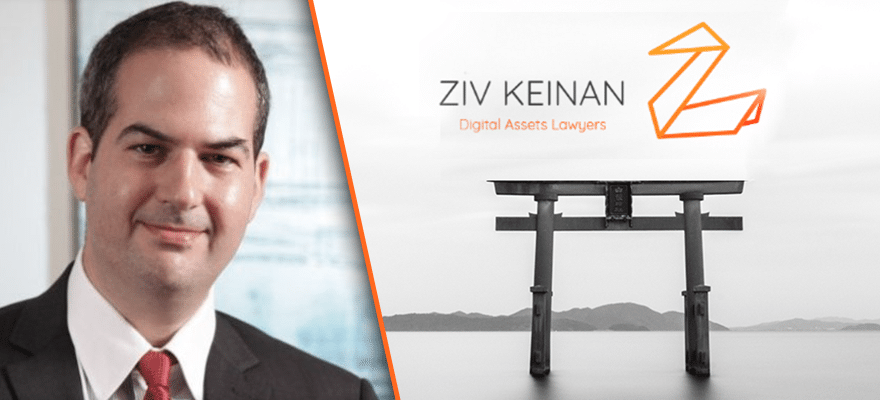
Digital Assets Lawyer Ziv Keinan explains the challenges and opportunities of the STO space.
Various kinds of token sales have been an extremely important part of the rise of cryptocurrency. Initial Coin Offerings (ICOs) were a particularly significant part of the crypto boom that took place at the end of 2017.
However, the unregulated nature of the ICO space has left the practice with a bad reputation. As such, new kinds of token sales have begun to replace ICOs--Initial Exchange Offerings (IEOs) and Security Token Offerings (STOs.)
Recently, Finance Magnates spoke with Adv. Ziv Keinan, the founder of Ziv Keinan Digital Assets Lawyers, about the past, present, and future of the Security Token space.
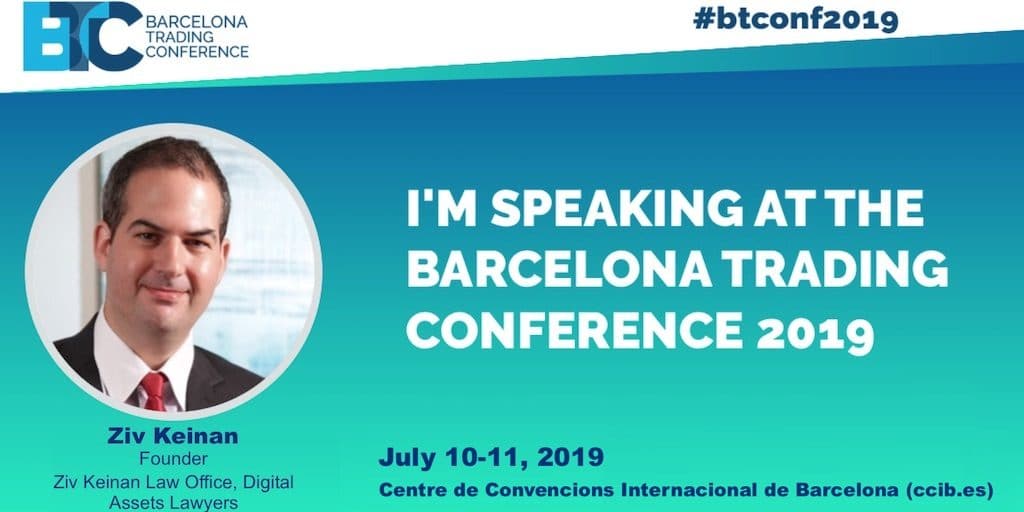
Keinan will host a panel entitled “The Present and Future of Security Tokens” at the upcoming Finance Magnates Barcelona Trading Conference on July 10th and 11th. Click the image to learn more.
Progress is Slow--But It’s Happening
In 2017, “when we started, there was no protocol; there was almost no issuance platform or company that would deal with [launching an STO], and there were no secondary markets. Even for [companies] that said that they were doing an STO, the technology was really not mature.”
“Today, we are in a totally different place. We see big financial institutions starting to take interest in STOs; we see banks doing experiments on STOs, we see international organizations like the World Bank examining the technology.”
“So, definitely, we’ve matured,” he said. Now, “there are a lot of companies that provide issuance platform services, and there are also some secondary markets that have emerged,” although they are “not fully active.”
“Of course, the US market is the biggest market - everybody’s looking to see how the US market treats STOs. And we need to understand that after the 2008 financial crisis, the Americans are very cautious about new financial instruments.
Keinan said that this was totally understandable - “[but] on the other hand, in order for the technology to gain traction, the regulators in the US will need to allow more secondary market-trading, and federal laws that would allow the trading of securities between states, and the trading of tokens between states inside and outside of the US.
US regulators will also likely need to amend the definition of what an accredited investor is, Keinan said, “which is something that they are already working on.”
In the meantime, “I believe that we will see more STOs coming from the EU, as well as secondary markets and new technology - just because in terms of regulation, [the EU] is a little bit more open...it’s just a matter of time.”
Keinan also mentioned a few projects that he sees coming out of the EU at this present moment - ”there’s a few big real-estate tokenization projects, one that I’m involved in, others that have been done by other companies in this space, some still in ‘stealth mode.’”
Still, progress is slow - but it is happening. “The STO space suffered just as the whole crypto space did from the crypto winter. So, now that we’re starting to see the little flowers of the crypto spring emerging,” the STO space is starting to make a recovery, too.
Security Tokens Have a Role To Play in VC Funds, Across Many Industries
“It allows limited partners within the VC to have greater freedom to sell the limited partnership rights to the other members of the VC (or of the fund - it doesn’t have to be a venture capital fund), or perhaps in the future also outside of the fund, and also to the fund itself.”
So, “if you own a traditional fund, you would be locked in for a period of five to ten years. But with a tokenized fund, you can sell your shares back to the fund, or you can sell it within the other limited partners. So fund formation is a very interesting use case.”
“And of course, startups want to raise money,” he said, referring to the fact that STOs have slowly been gaining popularity as a possible replacement for ICOs, IEOs, and similar tokenized fundraising models.
But it hasn’t been easy so far - ”the STO space is still a very young space, and startups are having difficulties raising money through STOs. But I believe that in the future when STOs are mature, they will be the main way to raise money for startups.”
“I was never a big believer in ICOs, and I don’t really see the difference between ICOs and IEOs,” he added. “Beyond the regulatory risk that you are taking with [holding] an ICO or IEO, I really don’t understand the business model behind it, and I wouldn’t myself invest in any one of those vehicles. I think the utility token model hasn’t really worked.”
“As a lawyer, I had an opportunity to work with a project that doesn’t use a native token, but uses third-party tokens like Ether [instead]. Those projects that don’t create native tokens - I think they will be the future of finance,” he said. “This allows you not to raise money [without] a native token.”
“I think the only way that the industry will mature is through compliant regulatory issuance of securities that will turn into non-securities over time, or through [traditional] funding, or through STOs.”
Where in the World…?
At the moment, the world is a patchwork of regulatory jurisdictions. Without a strong global fabric that connects crypto regulations across national borders, crypto regulations can vary heavily from country to country.
So for companies that are hoping to launch STOs or have an STO-based business model, wherein the world is the best place to establish themselves? “This is a question that always comes up,” Keinan said.
“As for the projects that I’ve been involved with in the STO space - each one had [its own] jurisdiction,” he continued.
He explained that the ideal regulatory environment for an STO is not the same as an ideal regulatory environment for an ICO. “When you’re doing an ICO, you’re looking for some remote place where you can hide,” and stay out of the regulator’s crosshairs.
How to become a superhero using Blockchain technology/ Adv. Ziv Keinan https://t.co/DgWEdpHrv3
“With an STO, it doesn’t work like that. The considerations are different.”
“First of all, we look at tax. We want to maximize tax savings. So, we’re looking at where the investors are coming from - if they are mostly from the states, then maybe just doing a simple LLC would be ok. If they are from other places - if they are mixed - then you might choose the Cayman Islands.”
Another thing that needs to be taken into consideration is where the company can open a bank account, “because there are still many jurisdictions [in which banks] would not accept money that is affiliated with crypto” in any way.
“So for example, there’s been some advancement with banks in Switzerland. Not that it’s easy - but they’re a bit more open than they were last year with bank accounts for crypto-related companies.”
“But you really have to examine [these things] on a case-to-case basis, because there’s no rationality to do a Cayman Island-based company for a purely US fund, for example.
This is an excerpt. To hear Finance Magnates’ full interview with Ziv Keinan, click here. To learn more about the Barcelona Trading Conferece where Ziv will host a panel on Security Tokens, click here.
Various kinds of token sales have been an extremely important part of the rise of cryptocurrency. Initial Coin Offerings (ICOs) were a particularly significant part of the crypto boom that took place at the end of 2017.
However, the unregulated nature of the ICO space has left the practice with a bad reputation. As such, new kinds of token sales have begun to replace ICOs--Initial Exchange Offerings (IEOs) and Security Token Offerings (STOs.)
Recently, Finance Magnates spoke with Adv. Ziv Keinan, the founder of Ziv Keinan Digital Assets Lawyers, about the past, present, and future of the Security Token space.
Keinan will host a panel entitled “The Present and Future of Security Tokens” at the upcoming Finance Magnates Barcelona Trading Conference on July 10th and 11th. Click the image to learn more.
Progress is Slow--But It’s Happening
In 2017, “when we started, there was no protocol; there was almost no issuance platform or company that would deal with [launching an STO], and there were no secondary markets. Even for [companies] that said that they were doing an STO, the technology was really not mature.”
“Today, we are in a totally different place. We see big financial institutions starting to take interest in STOs; we see banks doing experiments on STOs, we see international organizations like the World Bank examining the technology.”
“So, definitely, we’ve matured,” he said. Now, “there are a lot of companies that provide issuance platform services, and there are also some secondary markets that have emerged,” although they are “not fully active.”
“Of course, the US market is the biggest market - everybody’s looking to see how the US market treats STOs. And we need to understand that after the 2008 financial crisis, the Americans are very cautious about new financial instruments.
Keinan said that this was totally understandable - “[but] on the other hand, in order for the technology to gain traction, the regulators in the US will need to allow more secondary market-trading, and federal laws that would allow the trading of securities between states, and the trading of tokens between states inside and outside of the US.
US regulators will also likely need to amend the definition of what an accredited investor is, Keinan said, “which is something that they are already working on.”
In the meantime, “I believe that we will see more STOs coming from the EU, as well as secondary markets and new technology - just because in terms of regulation, [the EU] is a little bit more open...it’s just a matter of time.”
Keinan also mentioned a few projects that he sees coming out of the EU at this present moment - ”there’s a few big real-estate tokenization projects, one that I’m involved in, others that have been done by other companies in this space, some still in ‘stealth mode.’”
Still, progress is slow - but it is happening. “The STO space suffered just as the whole crypto space did from the crypto winter. So, now that we’re starting to see the little flowers of the crypto spring emerging,” the STO space is starting to make a recovery, too.
Security Tokens Have a Role To Play in VC Funds, Across Many Industries
“It allows limited partners within the VC to have greater freedom to sell the limited partnership rights to the other members of the VC (or of the fund - it doesn’t have to be a venture capital fund), or perhaps in the future also outside of the fund, and also to the fund itself.”
So, “if you own a traditional fund, you would be locked in for a period of five to ten years. But with a tokenized fund, you can sell your shares back to the fund, or you can sell it within the other limited partners. So fund formation is a very interesting use case.”
“And of course, startups want to raise money,” he said, referring to the fact that STOs have slowly been gaining popularity as a possible replacement for ICOs, IEOs, and similar tokenized fundraising models.
But it hasn’t been easy so far - ”the STO space is still a very young space, and startups are having difficulties raising money through STOs. But I believe that in the future when STOs are mature, they will be the main way to raise money for startups.”
“I was never a big believer in ICOs, and I don’t really see the difference between ICOs and IEOs,” he added. “Beyond the regulatory risk that you are taking with [holding] an ICO or IEO, I really don’t understand the business model behind it, and I wouldn’t myself invest in any one of those vehicles. I think the utility token model hasn’t really worked.”
“As a lawyer, I had an opportunity to work with a project that doesn’t use a native token, but uses third-party tokens like Ether [instead]. Those projects that don’t create native tokens - I think they will be the future of finance,” he said. “This allows you not to raise money [without] a native token.”
“I think the only way that the industry will mature is through compliant regulatory issuance of securities that will turn into non-securities over time, or through [traditional] funding, or through STOs.”
Where in the World…?
At the moment, the world is a patchwork of regulatory jurisdictions. Without a strong global fabric that connects crypto regulations across national borders, crypto regulations can vary heavily from country to country.
So for companies that are hoping to launch STOs or have an STO-based business model, wherein the world is the best place to establish themselves? “This is a question that always comes up,” Keinan said.
“As for the projects that I’ve been involved with in the STO space - each one had [its own] jurisdiction,” he continued.
He explained that the ideal regulatory environment for an STO is not the same as an ideal regulatory environment for an ICO. “When you’re doing an ICO, you’re looking for some remote place where you can hide,” and stay out of the regulator’s crosshairs.
How to become a superhero using Blockchain technology/ Adv. Ziv Keinan https://t.co/DgWEdpHrv3
“With an STO, it doesn’t work like that. The considerations are different.”
“First of all, we look at tax. We want to maximize tax savings. So, we’re looking at where the investors are coming from - if they are mostly from the states, then maybe just doing a simple LLC would be ok. If they are from other places - if they are mixed - then you might choose the Cayman Islands.”
Another thing that needs to be taken into consideration is where the company can open a bank account, “because there are still many jurisdictions [in which banks] would not accept money that is affiliated with crypto” in any way.
“So for example, there’s been some advancement with banks in Switzerland. Not that it’s easy - but they’re a bit more open than they were last year with bank accounts for crypto-related companies.”
“But you really have to examine [these things] on a case-to-case basis, because there’s no rationality to do a Cayman Island-based company for a purely US fund, for example.
This is an excerpt. To hear Finance Magnates’ full interview with Ziv Keinan, click here. To learn more about the Barcelona Trading Conferece where Ziv will host a panel on Security Tokens, click here.
Rachel is a self-taught crypto geek and a passionate writer. She believes in the power that the written word has to educate, connect and empower individuals to make positive and powerful financial choices. She is the Podcast Host and a Cryptocurrency Editor at Finance Magnates.
Crypto Built More Rails, but the Next Battle Is Over How Much Work a Dollar Can Do
Featured Videos
FP Markets Winner Spotlight 🏆 | Global Broker of the Year 2025 #Trading #Broker #Innovation #Shorts
FP Markets Winner Spotlight 🏆 | Global Broker of the Year 2025 #Trading #Broker #Innovation #Shorts
FP Markets Winner Spotlight 🏆 | Global Broker of the Year 2025 #Trading #Broker #Innovation #Shorts
FP Markets Winner Spotlight 🏆 | Global Broker of the Year 2025 #Trading #Broker #Innovation #Shorts
FP Markets takes the spotlight as Global Broker of the Year 2025 at the Finance Magnates Awards.
Martin Stoilov, Head of Client Experience, shares that trust, innovation, and people played a key role in the company’s success, supported by a strong foundation of integrity and client-centricity.
Following this milestone, FP Markets continues to focus on growth, technology investment, and its core values of transparency and excellence.
👉 Be part of FM Awards 2026: https://awards.financemagnates.com/#nominate
FP Markets takes the spotlight as Global Broker of the Year 2025 at the Finance Magnates Awards.
Martin Stoilov, Head of Client Experience, shares that trust, innovation, and people played a key role in the company’s success, supported by a strong foundation of integrity and client-centricity.
Following this milestone, FP Markets continues to focus on growth, technology investment, and its core values of transparency and excellence.
👉 Be part of FM Awards 2026: https://awards.financemagnates.com/#nominate
FP Markets takes the spotlight as Global Broker of the Year 2025 at the Finance Magnates Awards.
Martin Stoilov, Head of Client Experience, shares that trust, innovation, and people played a key role in the company’s success, supported by a strong foundation of integrity and client-centricity.
Following this milestone, FP Markets continues to focus on growth, technology investment, and its core values of transparency and excellence.
👉 Be part of FM Awards 2026: https://awards.financemagnates.com/#nominate
FP Markets takes the spotlight as Global Broker of the Year 2025 at the Finance Magnates Awards.
Martin Stoilov, Head of Client Experience, shares that trust, innovation, and people played a key role in the company’s success, supported by a strong foundation of integrity and client-centricity.
Following this milestone, FP Markets continues to focus on growth, technology investment, and its core values of transparency and excellence.
👉 Be part of FM Awards 2026: https://awards.financemagnates.com/#nominate
In this video, we review @HolaPrimeMarketsOfficial, a multi-asset forex and CFDs broker offering different account types, trading platforms, and flexible trading conditions.
We cover the broker’s overall offering, including account options, trading environment, platforms like MT4 and MT5, and additional services such as managed accounts and fast withdrawals.
Watch the full video to see if Hola Prime Markets fits your trading needs.
📣 Stay up to date with the latest in finance and trading. Follow Finance Magnates for industry news, insights, and global event coverage.
Connect with us:
🔗 LinkedIn: /financemagnates
👍 Facebook: /financemagnates
📸 Instagram: https://www.instagram.com/financemagnates
🐦 X: https://x.com/financemagnates
🎥 TikTok: https://www.tiktok.com/tag/financemagnates
▶️ YouTube: /@financemagnates_official
#HolaPrime #ForexBroker #CFDTrading #FinanceMagnates #Trading #Forex #BrokerReview
In this video, we review @HolaPrimeMarketsOfficial, a multi-asset forex and CFDs broker offering different account types, trading platforms, and flexible trading conditions.
We cover the broker’s overall offering, including account options, trading environment, platforms like MT4 and MT5, and additional services such as managed accounts and fast withdrawals.
Watch the full video to see if Hola Prime Markets fits your trading needs.
📣 Stay up to date with the latest in finance and trading. Follow Finance Magnates for industry news, insights, and global event coverage.
Connect with us:
🔗 LinkedIn: /financemagnates
👍 Facebook: /financemagnates
📸 Instagram: https://www.instagram.com/financemagnates
🐦 X: https://x.com/financemagnates
🎥 TikTok: https://www.tiktok.com/tag/financemagnates
▶️ YouTube: /@financemagnates_official
#HolaPrime #ForexBroker #CFDTrading #FinanceMagnates #Trading #Forex #BrokerReview
In this video, we review @HolaPrimeMarketsOfficial, a multi-asset forex and CFDs broker offering different account types, trading platforms, and flexible trading conditions.
We cover the broker’s overall offering, including account options, trading environment, platforms like MT4 and MT5, and additional services such as managed accounts and fast withdrawals.
Watch the full video to see if Hola Prime Markets fits your trading needs.
📣 Stay up to date with the latest in finance and trading. Follow Finance Magnates for industry news, insights, and global event coverage.
Connect with us:
🔗 LinkedIn: /financemagnates
👍 Facebook: /financemagnates
📸 Instagram: https://www.instagram.com/financemagnates
🐦 X: https://x.com/financemagnates
🎥 TikTok: https://www.tiktok.com/tag/financemagnates
▶️ YouTube: /@financemagnates_official
#HolaPrime #ForexBroker #CFDTrading #FinanceMagnates #Trading #Forex #BrokerReview
In this video, we review @HolaPrimeMarketsOfficial, a multi-asset forex and CFDs broker offering different account types, trading platforms, and flexible trading conditions.
We cover the broker’s overall offering, including account options, trading environment, platforms like MT4 and MT5, and additional services such as managed accounts and fast withdrawals.
Watch the full video to see if Hola Prime Markets fits your trading needs.
📣 Stay up to date with the latest in finance and trading. Follow Finance Magnates for industry news, insights, and global event coverage.
Connect with us:
🔗 LinkedIn: /financemagnates
👍 Facebook: /financemagnates
📸 Instagram: https://www.instagram.com/financemagnates
🐦 X: https://x.com/financemagnates
🎥 TikTok: https://www.tiktok.com/tag/financemagnates
▶️ YouTube: /@financemagnates_official
#HolaPrime #ForexBroker #CFDTrading #FinanceMagnates #Trading #Forex #BrokerReview
In this video, we review @HolaPrimeMarketsOfficial, a multi-asset forex and CFDs broker offering different account types, trading platforms, and flexible trading conditions.
We cover the broker’s overall offering, including account options, trading environment, platforms like MT4 and MT5, and additional services such as managed accounts and fast withdrawals.
Watch the full video to see if Hola Prime Markets fits your trading needs.
📣 Stay up to date with the latest in finance and trading. Follow Finance Magnates for industry news, insights, and global event coverage.
Connect with us:
🔗 LinkedIn: /financemagnates
👍 Facebook: /financemagnates
📸 Instagram: https://www.instagram.com/financemagnates
🐦 X: https://x.com/financemagnates
🎥 TikTok: https://www.tiktok.com/tag/financemagnates
▶️ YouTube: /@financemagnates_official
#HolaPrime #ForexBroker #CFDTrading #FinanceMagnates #Trading #Forex #BrokerReview
In this video, we review @HolaPrimeMarketsOfficial, a multi-asset forex and CFDs broker offering different account types, trading platforms, and flexible trading conditions.
We cover the broker’s overall offering, including account options, trading environment, platforms like MT4 and MT5, and additional services such as managed accounts and fast withdrawals.
Watch the full video to see if Hola Prime Markets fits your trading needs.
📣 Stay up to date with the latest in finance and trading. Follow Finance Magnates for industry news, insights, and global event coverage.
Connect with us:
🔗 LinkedIn: /financemagnates
👍 Facebook: /financemagnates
📸 Instagram: https://www.instagram.com/financemagnates
🐦 X: https://x.com/financemagnates
🎥 TikTok: https://www.tiktok.com/tag/financemagnates
▶️ YouTube: /@financemagnates_official
#HolaPrime #ForexBroker #CFDTrading #FinanceMagnates #Trading #Forex #BrokerReview
Hola Prime Review: What You Need to Know | Full Breakdown by Finance Magnates
Hola Prime Review: What You Need to Know | Full Breakdown by Finance Magnates
Hola Prime Review: What You Need to Know | Full Breakdown by Finance Magnates
Hola Prime Review: What You Need to Know | Full Breakdown by Finance Magnates
Hola Prime Review: What You Need to Know | Full Breakdown by Finance Magnates
Hola Prime Review: What You Need to Know | Full Breakdown by Finance Magnates
In this video, we review @HolaPrime_Global, a proprietary trading firm offering evaluation programs and performance-based payouts in simulated market environments.
We cover how the challenge model works, including account types, profit splits (up to 95%), trading rules, and what it takes to reach a funded account. You’ll also learn about available platforms like MT4, MT5, cTrader, and more, along with insights into payouts, support, and trading conditions.
Watch the full video to see if Hola Prime fits your trading style.
📣 Stay up to date with the latest in finance and trading. Follow Finance Magnates for industry news, insights, and global event coverage.
Connect with us:
🔗 LinkedIn: /financemagnates
👍 Facebook: /financemagnates
📸 Instagram: https://www.instagram.com/financemagnates
🐦 X: https://x.com/financemagnates
🎥 TikTok: https://www.tiktok.com/tag/financemagnates
▶️ YouTube: /@financemagnates_official
#HolaPrime #PropFirm #Trading #FinanceMagnates #Forex #FuturesTrading #TradingReview #PropFirmReview
In this video, we review @HolaPrime_Global, a proprietary trading firm offering evaluation programs and performance-based payouts in simulated market environments.
We cover how the challenge model works, including account types, profit splits (up to 95%), trading rules, and what it takes to reach a funded account. You’ll also learn about available platforms like MT4, MT5, cTrader, and more, along with insights into payouts, support, and trading conditions.
Watch the full video to see if Hola Prime fits your trading style.
📣 Stay up to date with the latest in finance and trading. Follow Finance Magnates for industry news, insights, and global event coverage.
Connect with us:
🔗 LinkedIn: /financemagnates
👍 Facebook: /financemagnates
📸 Instagram: https://www.instagram.com/financemagnates
🐦 X: https://x.com/financemagnates
🎥 TikTok: https://www.tiktok.com/tag/financemagnates
▶️ YouTube: /@financemagnates_official
#HolaPrime #PropFirm #Trading #FinanceMagnates #Forex #FuturesTrading #TradingReview #PropFirmReview
In this video, we review @HolaPrime_Global, a proprietary trading firm offering evaluation programs and performance-based payouts in simulated market environments.
We cover how the challenge model works, including account types, profit splits (up to 95%), trading rules, and what it takes to reach a funded account. You’ll also learn about available platforms like MT4, MT5, cTrader, and more, along with insights into payouts, support, and trading conditions.
Watch the full video to see if Hola Prime fits your trading style.
📣 Stay up to date with the latest in finance and trading. Follow Finance Magnates for industry news, insights, and global event coverage.
Connect with us:
🔗 LinkedIn: /financemagnates
👍 Facebook: /financemagnates
📸 Instagram: https://www.instagram.com/financemagnates
🐦 X: https://x.com/financemagnates
🎥 TikTok: https://www.tiktok.com/tag/financemagnates
▶️ YouTube: /@financemagnates_official
#HolaPrime #PropFirm #Trading #FinanceMagnates #Forex #FuturesTrading #TradingReview #PropFirmReview
In this video, we review @HolaPrime_Global, a proprietary trading firm offering evaluation programs and performance-based payouts in simulated market environments.
We cover how the challenge model works, including account types, profit splits (up to 95%), trading rules, and what it takes to reach a funded account. You’ll also learn about available platforms like MT4, MT5, cTrader, and more, along with insights into payouts, support, and trading conditions.
Watch the full video to see if Hola Prime fits your trading style.
📣 Stay up to date with the latest in finance and trading. Follow Finance Magnates for industry news, insights, and global event coverage.
Connect with us:
🔗 LinkedIn: /financemagnates
👍 Facebook: /financemagnates
📸 Instagram: https://www.instagram.com/financemagnates
🐦 X: https://x.com/financemagnates
🎥 TikTok: https://www.tiktok.com/tag/financemagnates
▶️ YouTube: /@financemagnates_official
#HolaPrime #PropFirm #Trading #FinanceMagnates #Forex #FuturesTrading #TradingReview #PropFirmReview
In this video, we review @HolaPrime_Global, a proprietary trading firm offering evaluation programs and performance-based payouts in simulated market environments.
We cover how the challenge model works, including account types, profit splits (up to 95%), trading rules, and what it takes to reach a funded account. You’ll also learn about available platforms like MT4, MT5, cTrader, and more, along with insights into payouts, support, and trading conditions.
Watch the full video to see if Hola Prime fits your trading style.
📣 Stay up to date with the latest in finance and trading. Follow Finance Magnates for industry news, insights, and global event coverage.
Connect with us:
🔗 LinkedIn: /financemagnates
👍 Facebook: /financemagnates
📸 Instagram: https://www.instagram.com/financemagnates
🐦 X: https://x.com/financemagnates
🎥 TikTok: https://www.tiktok.com/tag/financemagnates
▶️ YouTube: /@financemagnates_official
#HolaPrime #PropFirm #Trading #FinanceMagnates #Forex #FuturesTrading #TradingReview #PropFirmReview
In this video, we review @HolaPrime_Global, a proprietary trading firm offering evaluation programs and performance-based payouts in simulated market environments.
We cover how the challenge model works, including account types, profit splits (up to 95%), trading rules, and what it takes to reach a funded account. You’ll also learn about available platforms like MT4, MT5, cTrader, and more, along with insights into payouts, support, and trading conditions.
Watch the full video to see if Hola Prime fits your trading style.
📣 Stay up to date with the latest in finance and trading. Follow Finance Magnates for industry news, insights, and global event coverage.
Connect with us:
🔗 LinkedIn: /financemagnates
👍 Facebook: /financemagnates
📸 Instagram: https://www.instagram.com/financemagnates
🐦 X: https://x.com/financemagnates
🎥 TikTok: https://www.tiktok.com/tag/financemagnates
▶️ YouTube: /@financemagnates_official
#HolaPrime #PropFirm #Trading #FinanceMagnates #Forex #FuturesTrading #TradingReview #PropFirmReview
Axi Winner Spotlight 🏆 | Global Most Innovative Broker 2025 #Innovation #Trading #Fintech #Broker
Axi Winner Spotlight 🏆 | Global Most Innovative Broker 2025 #Innovation #Trading #Fintech #Broker
Axi Winner Spotlight 🏆 | Global Most Innovative Broker 2025 #Innovation #Trading #Fintech #Broker
Axi Winner Spotlight 🏆 | Global Most Innovative Broker 2025 #Innovation #Trading #Fintech #Broker
Axi Winner Spotlight 🏆 | Global Most Innovative Broker 2025 #Innovation #Trading #Fintech #Broker
Axi Winner Spotlight 🏆 | Global Most Innovative Broker 2025 #Innovation #Trading #Fintech #Broker
Axi takes the spotlight at the Finance Magnates Awards, winning Global Most Innovative Broker 2025.
Olivia Xenofontos and Ivanna Openko share how the team will feel: proud, motivated, and ready to keep delivering.
They also describe the night as well-organized, focused, and enjoyable for all.
👉 Be part of FM Awards 2026.
Axi takes the spotlight at the Finance Magnates Awards, winning Global Most Innovative Broker 2025.
Olivia Xenofontos and Ivanna Openko share how the team will feel: proud, motivated, and ready to keep delivering.
They also describe the night as well-organized, focused, and enjoyable for all.
👉 Be part of FM Awards 2026.
Axi takes the spotlight at the Finance Magnates Awards, winning Global Most Innovative Broker 2025.
Olivia Xenofontos and Ivanna Openko share how the team will feel: proud, motivated, and ready to keep delivering.
They also describe the night as well-organized, focused, and enjoyable for all.
👉 Be part of FM Awards 2026.
Axi takes the spotlight at the Finance Magnates Awards, winning Global Most Innovative Broker 2025.
Olivia Xenofontos and Ivanna Openko share how the team will feel: proud, motivated, and ready to keep delivering.
They also describe the night as well-organized, focused, and enjoyable for all.
👉 Be part of FM Awards 2026.
Axi takes the spotlight at the Finance Magnates Awards, winning Global Most Innovative Broker 2025.
Olivia Xenofontos and Ivanna Openko share how the team will feel: proud, motivated, and ready to keep delivering.
They also describe the night as well-organized, focused, and enjoyable for all.
👉 Be part of FM Awards 2026.
Axi takes the spotlight at the Finance Magnates Awards, winning Global Most Innovative Broker 2025.
Olivia Xenofontos and Ivanna Openko share how the team will feel: proud, motivated, and ready to keep delivering.
They also describe the night as well-organized, focused, and enjoyable for all.
👉 Be part of FM Awards 2026.
Recognition that matters.
Built on transparency.
Driven by the industry.
The Finance Magnates Awards 2026.
Nominations are now open.
🔗 https://awards.financemagnates.com/?utm_source=SM&utm_medium=social&utm_campaign=recognition-matters
Recognition that matters.
Built on transparency.
Driven by the industry.
The Finance Magnates Awards 2026.
Nominations are now open.
🔗 https://awards.financemagnates.com/?utm_source=SM&utm_medium=social&utm_campaign=recognition-matters
Recognition that matters.
Built on transparency.
Driven by the industry.
The Finance Magnates Awards 2026.
Nominations are now open.
🔗 https://awards.financemagnates.com/?utm_source=SM&utm_medium=social&utm_campaign=recognition-matters
Recognition that matters.
Built on transparency.
Driven by the industry.
The Finance Magnates Awards 2026.
Nominations are now open.
🔗 https://awards.financemagnates.com/?utm_source=SM&utm_medium=social&utm_campaign=recognition-matters
Recognition that matters.
Built on transparency.
Driven by the industry.
The Finance Magnates Awards 2026.
Nominations are now open.
🔗 https://awards.financemagnates.com/?utm_source=SM&utm_medium=social&utm_campaign=recognition-matters
Recognition that matters.
Built on transparency.
Driven by the industry.
The Finance Magnates Awards 2026.
Nominations are now open.
🔗 https://awards.financemagnates.com/?utm_source=SM&utm_medium=social&utm_campaign=recognition-matters