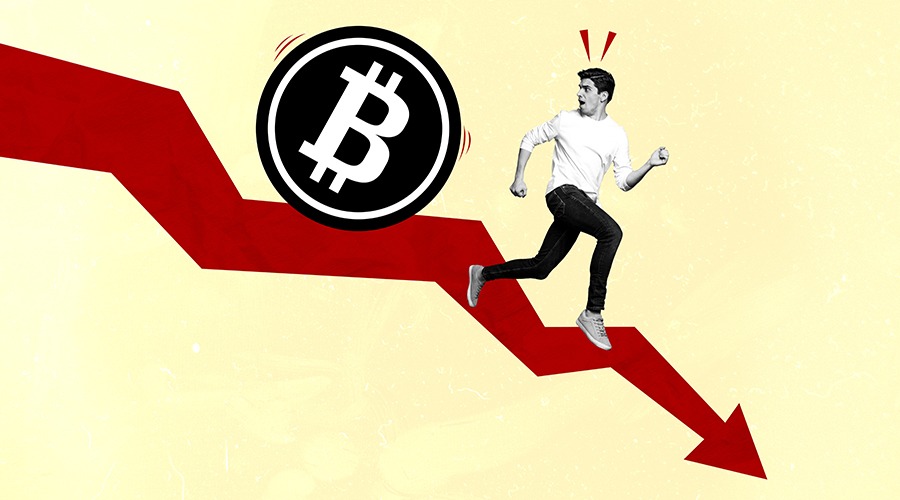
Bitcoin fell by almost 20% last month and US-listed BTC ETFs saw $3B of outflows.
Despite the slump, Finery sees triple-digit growth in OTC trading volumes amid rising institutional adoption.
Why is Bitcoin going down?
Bitcoin
(BTC) tumbled 18% in February, its steepest monthly drop since early 2022. Yet
despite the price slump, market activity remained anything but calm. This
volatility created a trading boom for institutional platform Finery Markets,
which processed a record $1.8 billion in client transactions last month—a 135%
surge from February 2024.
The
contrasting metrics highlight how institutional trading volumes can thrive even
when cryptocurrency prices struggle.
Institutional Crypto
Trading Surges as Finery Markets Reports Record $1.8B Volume
Finery
Markets is specializing in non-custodial cryptocurrency electronic
communication networks (ECN) and SaaS trading solutions for institutions. And
it has reported all-time high trading volumes in the opening months of 2025,
highlighting accelerating institutional engagement with digital asset markets.
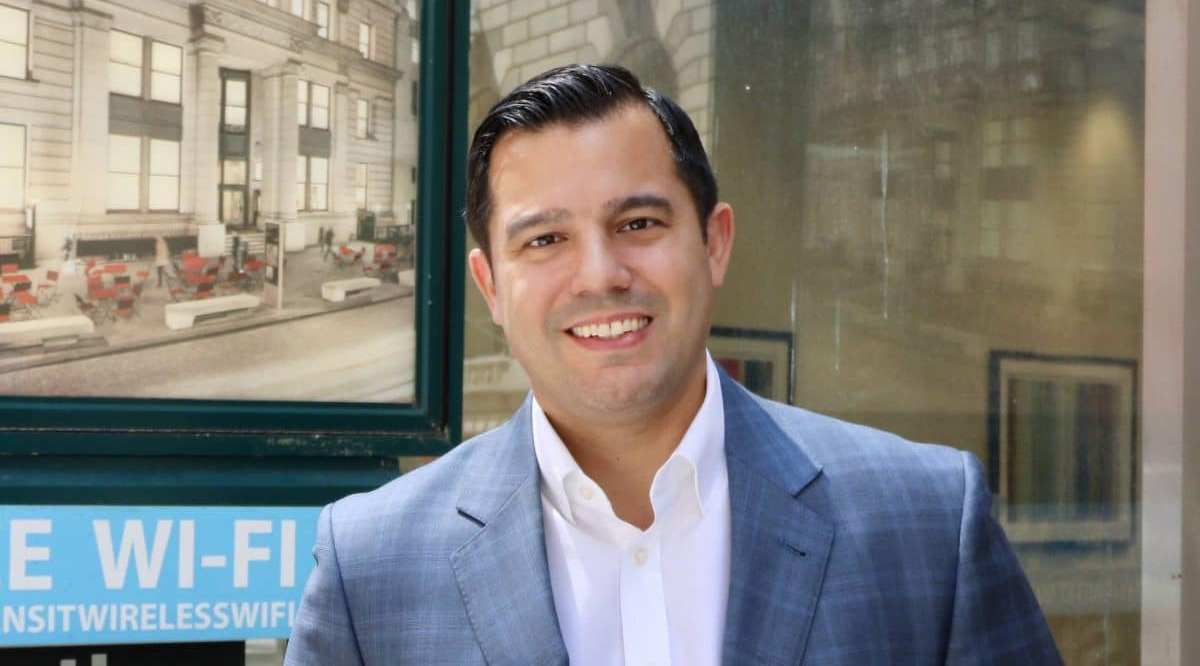
Konstantin Shulga, CEO and Co-Founder of Finery Markets
“The
performance signals that we're right on track to prove our main belief: that
the institutionalization of crypto is inevitable,” said Konstantin Shulga,
CEO of Finery Markets. “Market
participants are increasingly seeking reliable technology and trading
infrastructure to gain exposure to the crypto industry.”
The data
reveals particularly strong growth in stablecoin transactions, which surged
152% year-over-year in February alone. This trend suggests stablecoins are
increasingly serving as a critical bridge between traditional financial systems
and digital asset markets.
Recently,
the company also announced a partnership with Sage Capital Management, which
will become the company’s liquidity provider using the quite new trading
method, including quote streams via the FIX protocol.
Why Is Bitcoin Going Down?
And as
mentioned, record-high volumes are occurring against the backdrop of
significant Bitcoin declines. BTC price has fallen sharply in February and
March 2025, dropping from a peak of $109,000 in January to around $77,000 this
week, as a mix of economic uncertainty and crypto-specific pressures weigh on
the market.
Analysts
point to global trade tensions, sparked
by US President Donald Trump’s imposition of tariffs on Canada, Mexico, and
China, as a key driver, fueling fears of inflation and prompting investors to
pull back from riskier assets like cryptocurrencies. The broader crypto market
has shed nearly half a trillion dollars in value since early February, according
to CoinGecko data.
Adding to
the downturn, disappointment over Trump’s
Strategic Bitcoin Reserve plan—initially hyped as a potential boost for
Bitcoin—has soured sentiment. The reserve, unveiled in early March, will use
existing government-seized Bitcoin rather than new purchases, dashing hopes of
fresh capital inflows.
Meanwhile, US-listed
Bitcoin exchange-traded funds (ETFs) have seen outflows exceeding $3 billion in
February alone, reflecting waning investor confidence. A
$1.5 billion hack at the Bybit exchange last month has also rattled nerves,
amplifying volatility in an already fragile market.
Ethereum,
the second-largest cryptocurrency, has fallen over 50% since the January high to
$1,900, hitting its lowest level since 14 months.
Will Bitcoin Fall to $70,000?
Experts Say: YES
Although
Bitcoin's price is
currently holding above the $80,000 level, which appears to act as
psychological support, it remains below the 200-day EMA, suggesting that bears
have the upper hand. Furthermore, the 50-day EMA is about to cross below the
200-day EMA, forming a long-term sell signal known as a death cross.
Given this
setup, analysts and investors are speculating how low Bitcoin might drop. The
latest predictions suggest that BTC's price could fall to $70,000, around its
November lows. This view is shared and frequently reiterated by Arthur Hayes,
the founder and former CEO of the cryptocurrency exchange BitMex.
“Be
f***ing patient. BTC likely bottoms around $70k. 36% correction from $110k ATH,
very normal for a bull market," Hayes commented bluntly.
Bitcoin
(BTC) tumbled 18% in February, its steepest monthly drop since early 2022. Yet
despite the price slump, market activity remained anything but calm. This
volatility created a trading boom for institutional platform Finery Markets,
which processed a record $1.8 billion in client transactions last month—a 135%
surge from February 2024.
The
contrasting metrics highlight how institutional trading volumes can thrive even
when cryptocurrency prices struggle.
Institutional Crypto
Trading Surges as Finery Markets Reports Record $1.8B Volume
Finery
Markets is specializing in non-custodial cryptocurrency electronic
communication networks (ECN) and SaaS trading solutions for institutions. And
it has reported all-time high trading volumes in the opening months of 2025,
highlighting accelerating institutional engagement with digital asset markets.
Konstantin Shulga, CEO and Co-Founder of Finery Markets
“The
performance signals that we're right on track to prove our main belief: that
the institutionalization of crypto is inevitable,” said Konstantin Shulga,
CEO of Finery Markets. “Market
participants are increasingly seeking reliable technology and trading
infrastructure to gain exposure to the crypto industry.”
The data
reveals particularly strong growth in stablecoin transactions, which surged
152% year-over-year in February alone. This trend suggests stablecoins are
increasingly serving as a critical bridge between traditional financial systems
and digital asset markets.
Recently,
the company also announced a partnership with Sage Capital Management, which
will become the company’s liquidity provider using the quite new trading
method, including quote streams via the FIX protocol.
Why Is Bitcoin Going Down?
And as
mentioned, record-high volumes are occurring against the backdrop of
significant Bitcoin declines. BTC price has fallen sharply in February and
March 2025, dropping from a peak of $109,000 in January to around $77,000 this
week, as a mix of economic uncertainty and crypto-specific pressures weigh on
the market.
Analysts
point to global trade tensions, sparked
by US President Donald Trump’s imposition of tariffs on Canada, Mexico, and
China, as a key driver, fueling fears of inflation and prompting investors to
pull back from riskier assets like cryptocurrencies. The broader crypto market
has shed nearly half a trillion dollars in value since early February, according
to CoinGecko data.
Adding to
the downturn, disappointment over Trump’s
Strategic Bitcoin Reserve plan—initially hyped as a potential boost for
Bitcoin—has soured sentiment. The reserve, unveiled in early March, will use
existing government-seized Bitcoin rather than new purchases, dashing hopes of
fresh capital inflows.
Meanwhile, US-listed
Bitcoin exchange-traded funds (ETFs) have seen outflows exceeding $3 billion in
February alone, reflecting waning investor confidence. A
$1.5 billion hack at the Bybit exchange last month has also rattled nerves,
amplifying volatility in an already fragile market.
Ethereum,
the second-largest cryptocurrency, has fallen over 50% since the January high to
$1,900, hitting its lowest level since 14 months.
Will Bitcoin Fall to $70,000?
Experts Say: YES
Although
Bitcoin's price is
currently holding above the $80,000 level, which appears to act as
psychological support, it remains below the 200-day EMA, suggesting that bears
have the upper hand. Furthermore, the 50-day EMA is about to cross below the
200-day EMA, forming a long-term sell signal known as a death cross.
Given this
setup, analysts and investors are speculating how low Bitcoin might drop. The
latest predictions suggest that BTC's price could fall to $70,000, around its
November lows. This view is shared and frequently reiterated by Arthur Hayes,
the founder and former CEO of the cryptocurrency exchange BitMex.
Damian Chmiel is a Senior Analyst & Editor at Finance Magnates with more than 15 years of experience in the CFD and online trading industry. Active as both a trader and journalist since 2010, he focuses on broker coverage, fintech innovation, and regulatory developments across Europe, the Middle East, and Asia.
His work includes interviews with C-level leaders at major brokerages and fintech platforms, as well as co-authoring Finance Magnates’ quarterly industry benchmarking reports. Damian’s reporting is data-driven, market-aware, and grounded in direct industry engagement. His analysis and commentary have also been cited by external media outlets, including Investing.com, Binance, The Asset, Stockhead, and Dispatch.
Education:
MA in Finance and Accounting, Cracow University of Economics
Kraken Steps Up Speed Race with New Equinix Colocation Service for Crypto Traders
FP Markets Winner Spotlight 🏆 | Global Broker of the Year 2025 #Trading #Broker #Innovation #Shorts
FP Markets Winner Spotlight 🏆 | Global Broker of the Year 2025 #Trading #Broker #Innovation #Shorts
FP Markets takes the spotlight as Global Broker of the Year 2025 at the Finance Magnates Awards.
Martin Stoilov, Head of Client Experience, shares that trust, innovation, and people played a key role in the company’s success, supported by a strong foundation of integrity and client-centricity.
Following this milestone, FP Markets continues to focus on growth, technology investment, and its core values of transparency and excellence.
👉 Be part of FM Awards 2026: https://awards.financemagnates.com/#nominate
FP Markets takes the spotlight as Global Broker of the Year 2025 at the Finance Magnates Awards.
Martin Stoilov, Head of Client Experience, shares that trust, innovation, and people played a key role in the company’s success, supported by a strong foundation of integrity and client-centricity.
Following this milestone, FP Markets continues to focus on growth, technology investment, and its core values of transparency and excellence.
👉 Be part of FM Awards 2026: https://awards.financemagnates.com/#nominate
In this video, we review @HolaPrimeMarketsOfficial, a multi-asset forex and CFDs broker offering different account types, trading platforms, and flexible trading conditions.
We cover the broker’s overall offering, including account options, trading environment, platforms like MT4 and MT5, and additional services such as managed accounts and fast withdrawals.
Watch the full video to see if Hola Prime Markets fits your trading needs.
📣 Stay up to date with the latest in finance and trading. Follow Finance Magnates for industry news, insights, and global event coverage.
Connect with us:
🔗 LinkedIn: /financemagnates
👍 Facebook: /financemagnates
📸 Instagram: https://www.instagram.com/financemagnates
🐦 X: https://x.com/financemagnates
🎥 TikTok: https://www.tiktok.com/tag/financemagnates
▶️ YouTube: /@financemagnates_official
#HolaPrime #ForexBroker #CFDTrading #FinanceMagnates #Trading #Forex #BrokerReview
In this video, we review @HolaPrimeMarketsOfficial, a multi-asset forex and CFDs broker offering different account types, trading platforms, and flexible trading conditions.
We cover the broker’s overall offering, including account options, trading environment, platforms like MT4 and MT5, and additional services such as managed accounts and fast withdrawals.
Watch the full video to see if Hola Prime Markets fits your trading needs.
📣 Stay up to date with the latest in finance and trading. Follow Finance Magnates for industry news, insights, and global event coverage.
Connect with us:
🔗 LinkedIn: /financemagnates
👍 Facebook: /financemagnates
📸 Instagram: https://www.instagram.com/financemagnates
🐦 X: https://x.com/financemagnates
🎥 TikTok: https://www.tiktok.com/tag/financemagnates
▶️ YouTube: /@financemagnates_official
#HolaPrime #ForexBroker #CFDTrading #FinanceMagnates #Trading #Forex #BrokerReview
Hola Prime Review: What You Need to Know | Full Breakdown by Finance Magnates
Hola Prime Review: What You Need to Know | Full Breakdown by Finance Magnates
In this video, we review @HolaPrime_Global, a proprietary trading firm offering evaluation programs and performance-based payouts in simulated market environments.
We cover how the challenge model works, including account types, profit splits (up to 95%), trading rules, and what it takes to reach a funded account. You’ll also learn about available platforms like MT4, MT5, cTrader, and more, along with insights into payouts, support, and trading conditions.
Watch the full video to see if Hola Prime fits your trading style.
📣 Stay up to date with the latest in finance and trading. Follow Finance Magnates for industry news, insights, and global event coverage.
Connect with us:
🔗 LinkedIn: /financemagnates
👍 Facebook: /financemagnates
📸 Instagram: https://www.instagram.com/financemagnates
🐦 X: https://x.com/financemagnates
🎥 TikTok: https://www.tiktok.com/tag/financemagnates
▶️ YouTube: /@financemagnates_official
#HolaPrime #PropFirm #Trading #FinanceMagnates #Forex #FuturesTrading #TradingReview #PropFirmReview
In this video, we review @HolaPrime_Global, a proprietary trading firm offering evaluation programs and performance-based payouts in simulated market environments.
We cover how the challenge model works, including account types, profit splits (up to 95%), trading rules, and what it takes to reach a funded account. You’ll also learn about available platforms like MT4, MT5, cTrader, and more, along with insights into payouts, support, and trading conditions.
Watch the full video to see if Hola Prime fits your trading style.
📣 Stay up to date with the latest in finance and trading. Follow Finance Magnates for industry news, insights, and global event coverage.
Connect with us:
🔗 LinkedIn: /financemagnates
👍 Facebook: /financemagnates
📸 Instagram: https://www.instagram.com/financemagnates
🐦 X: https://x.com/financemagnates
🎥 TikTok: https://www.tiktok.com/tag/financemagnates
▶️ YouTube: /@financemagnates_official
#HolaPrime #PropFirm #Trading #FinanceMagnates #Forex #FuturesTrading #TradingReview #PropFirmReview
Axi Winner Spotlight 🏆 | Global Most Innovative Broker 2025 #Innovation #Trading #Fintech #Broker
Axi Winner Spotlight 🏆 | Global Most Innovative Broker 2025 #Innovation #Trading #Fintech #Broker
Axi takes the spotlight at the Finance Magnates Awards, winning Global Most Innovative Broker 2025.
Olivia Xenofontos and Ivanna Openko share how the team will feel: proud, motivated, and ready to keep delivering.
They also describe the night as well-organized, focused, and enjoyable for all.
👉 Be part of FM Awards 2026.
Axi takes the spotlight at the Finance Magnates Awards, winning Global Most Innovative Broker 2025.
Olivia Xenofontos and Ivanna Openko share how the team will feel: proud, motivated, and ready to keep delivering.
They also describe the night as well-organized, focused, and enjoyable for all.
👉 Be part of FM Awards 2026.
Recognition that matters.
Built on transparency.
Driven by the industry.
The Finance Magnates Awards 2026.
Nominations are now open.
🔗 https://awards.financemagnates.com/?utm_source=SM&utm_medium=social&utm_campaign=recognition-matters
Recognition that matters.
Built on transparency.
Driven by the industry.
The Finance Magnates Awards 2026.
Nominations are now open.
🔗 https://awards.financemagnates.com/?utm_source=SM&utm_medium=social&utm_campaign=recognition-matters