Larger institutions like BlackRock are taking notice of the potential of cryptocurrencies.
Despite growing institutional interest, entry into the crypto space is met with risks.
When institutions larger than the cryptocurrency ecosystem begin to wake up to the potential of crypto, it’s certainly food for thought. Can the ever-evolving world of crypto remain outside of mainstream adoption for much longer?
Larry Fink, the CEO of BlackRock, the largest asset management firm in the world with around $9.4 trillion in AUM, doesn’t appear to pull any punches when it comes to speaking his mind. In 2017, Fink dismissed crypto as an “index of money laundering.” But just three years later the BlackRock CEO admitted that assets like Bitcoin had caught his attention.
“I do believe the role of crypto is it’s digitizing gold in many ways,” Fink said in a recent interview with Fox Business, while also referring to BTC as an “international asset.” Today, BlackRock is gearing up to launch one of the first Bitcoin ETFs, subject to SEC approval, in what promises to be a flagship moment for the cryptocurrency landscape.
The arrival of an exchange-traded fund from the world’s largest asset management firm is about far more than providing more exposure to crypto on Wall Street, it’s an exceptional form of institutional advocacy.
Data already shows that institutions are waking up to this latest shot in the arm for crypto acceptance. According to the PwC report, Rebuilding confidence in crypto, some 46% of surveyed hedge funds confirmed that they intended to deploy more capital into this asset class by the end of 2023, while 37% claimed that they’re waiting for further market maturity before investing.
Sustaining an Institutionally-Focused Ecosystem
One of the biggest risks facing institutions seeking to embrace crypto is that they’re entering a world where many participants champion decentralization, and consciously reject traditional financial processes for more decentralized financial services.
Because decentralization makes it more difficult to regulate the industry through single centralized bodies, some institutional investors may be put off by a perceived lack of security. However, other market commentators believe that the arrival of institutions will help to create an adaptable ecosystem that can suit all players.
“I think we’ll get two versions,” explains Clara Medalie, director of research at crypto market analysts, Kaiko. “I think we’ll still see a continuation of the more Decentralized Finance side which is completely trustless. But we’re also going to see a permissioned version of decentralised finance that will be incorporated by these more institutional actors and this has to do with tokenisation.”
“You can’t really have the fully automated DeFi side when you’re talking about traditional finance because there is the risk component, there’s compliance, there’s regulation, and so I think it will be a combination of both depending on what the actual use cases are.”
Institutional access to these newly hybrid crypto markets will be accelerated by the arrival of Bitcoin ETFs, which will allow institutional investors and traders the opportunity to utilize a regulated and familiar investment vehicle for institutions to access through more traditional brokerage accounts.
This would prevent institutions from having to fully immerse themselves into decentralized exchanges to buy and store their assets directly. By simplifying access to crypto through ETFs, we will invariably see a broader range of institutional arrivals in the cryptocurrency market who would otherwise be cautious or wary of existing infrastructure across the market.
Bitcoin’s Halving Event and The Next Bull Run
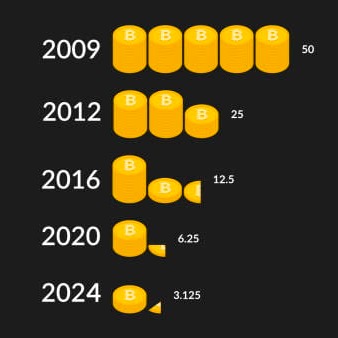
Bitcoin’s pre-programmed halving events have been a catalyst for bull runs ever since its creation.
The term ‘halving event’ refers to an approximate four-year cycle that sees the mining rewards for Bitcoin distributed to its miners halved, which automatically contributes to ramping up the asset’s scarcity.
Bitcoin Halving
With Bitcoin’s 2016 and 2020 halving events culminating in a new all-time high value for the asset in the following year respectively, much has been made for the prospective resumption of the trend in 2024.
Although the cryptocurrency landscape offers very little in the way of recurring trends due to mass market volatility, it’s down in no small part to BTC’s halving cycle that Standard Chartered issued a forecast that Bitcoin would attain a value of $120k by the end of 2024.
Using Bitcoin’s stock-to-order flow chart as a guide, we can see a loose correlation between Bitcoin halving events and price rallies that corroborate Standard Chartered’s forecast. The resumption of this trend would not only be lucrative for institutional participants within the crypto space, but it would also provide a significant boost to the market capitalization of the cryptocurrency market.
Institutions Hold the Key to Their Future
At present, the prevailing cycle surrounding the institutional adoption of crypto is that it’s the institutional pioneers that can drive meaningful change in the industry.
"Are we ready for institutions? Just looking at everything that happened, probably the answer is no," said Chen Arad, co-founder and chief experience officer at crypto risk surveillance firm Solidus Labs. "But the map comes with the territory."
It will only be through institutional adoption and advocacy that the crypto space will become a productive environment for more institutions.
Although there’s still risk throughout the industry, we’re seeing evidence that the crypto ecosystem is becoming safer and more sustainable for all participants.
In the launch of Bitcoin ETFs providing institutions with unprecedented exposure to crypto markets in a regulated environment, we may see a surge in advocacy that converts institutional interest into intent.
When institutions larger than the cryptocurrency ecosystem begin to wake up to the potential of crypto, it’s certainly food for thought. Can the ever-evolving world of crypto remain outside of mainstream adoption for much longer?
Larry Fink, the CEO of BlackRock, the largest asset management firm in the world with around $9.4 trillion in AUM, doesn’t appear to pull any punches when it comes to speaking his mind. In 2017, Fink dismissed crypto as an “index of money laundering.” But just three years later the BlackRock CEO admitted that assets like Bitcoin had caught his attention.
“I do believe the role of crypto is it’s digitizing gold in many ways,” Fink said in a recent interview with Fox Business, while also referring to BTC as an “international asset.” Today, BlackRock is gearing up to launch one of the first Bitcoin ETFs, subject to SEC approval, in what promises to be a flagship moment for the cryptocurrency landscape.
The arrival of an exchange-traded fund from the world’s largest asset management firm is about far more than providing more exposure to crypto on Wall Street, it’s an exceptional form of institutional advocacy.
Data already shows that institutions are waking up to this latest shot in the arm for crypto acceptance. According to the PwC report, Rebuilding confidence in crypto, some 46% of surveyed hedge funds confirmed that they intended to deploy more capital into this asset class by the end of 2023, while 37% claimed that they’re waiting for further market maturity before investing.
Sustaining an Institutionally-Focused Ecosystem
One of the biggest risks facing institutions seeking to embrace crypto is that they’re entering a world where many participants champion decentralization, and consciously reject traditional financial processes for more decentralized financial services.
Because decentralization makes it more difficult to regulate the industry through single centralized bodies, some institutional investors may be put off by a perceived lack of security. However, other market commentators believe that the arrival of institutions will help to create an adaptable ecosystem that can suit all players.
“I think we’ll get two versions,” explains Clara Medalie, director of research at crypto market analysts, Kaiko. “I think we’ll still see a continuation of the more Decentralized Finance side which is completely trustless. But we’re also going to see a permissioned version of decentralised finance that will be incorporated by these more institutional actors and this has to do with tokenisation.”
“You can’t really have the fully automated DeFi side when you’re talking about traditional finance because there is the risk component, there’s compliance, there’s regulation, and so I think it will be a combination of both depending on what the actual use cases are.”
Institutional access to these newly hybrid crypto markets will be accelerated by the arrival of Bitcoin ETFs, which will allow institutional investors and traders the opportunity to utilize a regulated and familiar investment vehicle for institutions to access through more traditional brokerage accounts.
This would prevent institutions from having to fully immerse themselves into decentralized exchanges to buy and store their assets directly. By simplifying access to crypto through ETFs, we will invariably see a broader range of institutional arrivals in the cryptocurrency market who would otherwise be cautious or wary of existing infrastructure across the market.
Bitcoin’s Halving Event and The Next Bull Run
Bitcoin’s pre-programmed halving events have been a catalyst for bull runs ever since its creation.
The term ‘halving event’ refers to an approximate four-year cycle that sees the mining rewards for Bitcoin distributed to its miners halved, which automatically contributes to ramping up the asset’s scarcity.
Bitcoin Halving
With Bitcoin’s 2016 and 2020 halving events culminating in a new all-time high value for the asset in the following year respectively, much has been made for the prospective resumption of the trend in 2024.
Although the cryptocurrency landscape offers very little in the way of recurring trends due to mass market volatility, it’s down in no small part to BTC’s halving cycle that Standard Chartered issued a forecast that Bitcoin would attain a value of $120k by the end of 2024.
Using Bitcoin’s stock-to-order flow chart as a guide, we can see a loose correlation between Bitcoin halving events and price rallies that corroborate Standard Chartered’s forecast. The resumption of this trend would not only be lucrative for institutional participants within the crypto space, but it would also provide a significant boost to the market capitalization of the cryptocurrency market.
Institutions Hold the Key to Their Future
At present, the prevailing cycle surrounding the institutional adoption of crypto is that it’s the institutional pioneers that can drive meaningful change in the industry.
"Are we ready for institutions? Just looking at everything that happened, probably the answer is no," said Chen Arad, co-founder and chief experience officer at crypto risk surveillance firm Solidus Labs. "But the map comes with the territory."
It will only be through institutional adoption and advocacy that the crypto space will become a productive environment for more institutions.
Although there’s still risk throughout the industry, we’re seeing evidence that the crypto ecosystem is becoming safer and more sustainable for all participants.
In the launch of Bitcoin ETFs providing institutions with unprecedented exposure to crypto markets in a regulated environment, we may see a surge in advocacy that converts institutional interest into intent.
Dmytro is an experienced finance, crypto, forex and investing writer based in London. Founder of Solvid, Pridicto and Coinprompter. His work has been published in Nasdaq, Kiplinger, FXStreet, Entrepreneur, VentureBeat, Financial Express, InvestmentWeek, Finextra, and The Diplomat. He recently completed an ebook for Make Use Of on "Introduction to Cryptocurrencies". Dmytro is also a retail investor with open positions in NuBank, Duolingo, Disney, Verizon, HSBC and more.
OKX Turns Infrastructure Partners into Investors at $25 Billion Valuation
Featured Videos
AvaTrade to Acquire Most of FXCM; NAGA Raises $8M
AvaTrade to Acquire Most of FXCM; NAGA Raises $8M
AvaTrade to Acquire Most of FXCM; NAGA Raises $8M
AvaTrade to Acquire Most of FXCM; NAGA Raises $8M
Today’s financial news recap covers AvaTrade agrees to acquire most of FXCM, NAGA secures eight million dollars in new financing, and Wise seeks a tax settlement in the UK.
Finance Magnates Daily Recap brings you the latest news from forex and CFD brokers, fintech, payments, cryptocurrency, digital assets, trading platforms, financial regulation and global markets.
Get the key company news, executive moves, deals, regulatory updates and market developments of the day, in just a few minutes. New episodes published every weekday.
Read more: https://www.financemagnates.com
#FinanceMagnates #ForexNews #FintechNews
Today’s financial news recap covers AvaTrade agrees to acquire most of FXCM, NAGA secures eight million dollars in new financing, and Wise seeks a tax settlement in the UK.
Finance Magnates Daily Recap brings you the latest news from forex and CFD brokers, fintech, payments, cryptocurrency, digital assets, trading platforms, financial regulation and global markets.
Get the key company news, executive moves, deals, regulatory updates and market developments of the day, in just a few minutes. New episodes published every weekday.
Read more: https://www.financemagnates.com
#FinanceMagnates #ForexNews #FintechNews
Today’s financial news recap covers AvaTrade agrees to acquire most of FXCM, NAGA secures eight million dollars in new financing, and Wise seeks a tax settlement in the UK.
Finance Magnates Daily Recap brings you the latest news from forex and CFD brokers, fintech, payments, cryptocurrency, digital assets, trading platforms, financial regulation and global markets.
Get the key company news, executive moves, deals, regulatory updates and market developments of the day, in just a few minutes. New episodes published every weekday.
Read more: https://www.financemagnates.com
#FinanceMagnates #ForexNews #FintechNews
Today’s financial news recap covers AvaTrade agrees to acquire most of FXCM, NAGA secures eight million dollars in new financing, and Wise seeks a tax settlement in the UK.
Finance Magnates Daily Recap brings you the latest news from forex and CFD brokers, fintech, payments, cryptocurrency, digital assets, trading platforms, financial regulation and global markets.
Get the key company news, executive moves, deals, regulatory updates and market developments of the day, in just a few minutes. New episodes published every weekday.
Read more: https://www.financemagnates.com
#FinanceMagnates #ForexNews #FintechNews
XTB Adds Overnight US Stock Trading; Nasdaq Ventures Invests in One Trading
XTB Adds Overnight US Stock Trading; Nasdaq Ventures Invests in One Trading
XTB Adds Overnight US Stock Trading; Nasdaq Ventures Invests in One Trading
XTB Adds Overnight US Stock Trading; Nasdaq Ventures Invests in One Trading
XTB Adds Overnight US Stock Trading; Nasdaq Ventures Invests in One Trading
XTB Adds Overnight US Stock Trading; Nasdaq Ventures Invests in One Trading
Today’s financial news recap covers XTB expands overnight US stock trading, Fortrade reports higher revenue, Nasdaq backs One Trading, and Vest Labs raises 13 million dollars.
Finance Magnates Daily Recap brings you the latest news from forex and CFD brokers, fintech, payments, cryptocurrency, digital assets, trading platforms, financial regulation and global markets.
Get the key company news, executive moves, deals, regulatory updates and market developments of the day, in just a few minutes. New episodes published every weekday.
Read more: https://www.financemagnates.com
#FinanceMagnates #ForexNews #FintechNews
Today’s financial news recap covers XTB expands overnight US stock trading, Fortrade reports higher revenue, Nasdaq backs One Trading, and Vest Labs raises 13 million dollars.
Finance Magnates Daily Recap brings you the latest news from forex and CFD brokers, fintech, payments, cryptocurrency, digital assets, trading platforms, financial regulation and global markets.
Get the key company news, executive moves, deals, regulatory updates and market developments of the day, in just a few minutes. New episodes published every weekday.
Read more: https://www.financemagnates.com
#FinanceMagnates #ForexNews #FintechNews
Today’s financial news recap covers XTB expands overnight US stock trading, Fortrade reports higher revenue, Nasdaq backs One Trading, and Vest Labs raises 13 million dollars.
Finance Magnates Daily Recap brings you the latest news from forex and CFD brokers, fintech, payments, cryptocurrency, digital assets, trading platforms, financial regulation and global markets.
Get the key company news, executive moves, deals, regulatory updates and market developments of the day, in just a few minutes. New episodes published every weekday.
Read more: https://www.financemagnates.com
#FinanceMagnates #ForexNews #FintechNews
Today’s financial news recap covers XTB expands overnight US stock trading, Fortrade reports higher revenue, Nasdaq backs One Trading, and Vest Labs raises 13 million dollars.
Finance Magnates Daily Recap brings you the latest news from forex and CFD brokers, fintech, payments, cryptocurrency, digital assets, trading platforms, financial regulation and global markets.
Get the key company news, executive moves, deals, regulatory updates and market developments of the day, in just a few minutes. New episodes published every weekday.
Read more: https://www.financemagnates.com
#FinanceMagnates #ForexNews #FintechNews
Today’s financial news recap covers XTB expands overnight US stock trading, Fortrade reports higher revenue, Nasdaq backs One Trading, and Vest Labs raises 13 million dollars.
Finance Magnates Daily Recap brings you the latest news from forex and CFD brokers, fintech, payments, cryptocurrency, digital assets, trading platforms, financial regulation and global markets.
Get the key company news, executive moves, deals, regulatory updates and market developments of the day, in just a few minutes. New episodes published every weekday.
Read more: https://www.financemagnates.com
#FinanceMagnates #ForexNews #FintechNews
Today’s financial news recap covers XTB expands overnight US stock trading, Fortrade reports higher revenue, Nasdaq backs One Trading, and Vest Labs raises 13 million dollars.
Finance Magnates Daily Recap brings you the latest news from forex and CFD brokers, fintech, payments, cryptocurrency, digital assets, trading platforms, financial regulation and global markets.
Get the key company news, executive moves, deals, regulatory updates and market developments of the day, in just a few minutes. New episodes published every weekday.
Read more: https://www.financemagnates.com
#FinanceMagnates #ForexNews #FintechNews
CMC Founder Downplays Volatility Hit; Devexperts Names CEO
CMC Founder Downplays Volatility Hit; Devexperts Names CEO
CMC Founder Downplays Volatility Hit; Devexperts Names CEO
CMC Founder Downplays Volatility Hit; Devexperts Names CEO
CMC Founder Downplays Volatility Hit; Devexperts Names CEO
CMC Founder Downplays Volatility Hit; Devexperts Names CEO
Today’s financial news recap covers low volatility pressures brokers, Devexperts names a new CEO, Saxo cuts onboarding time, and OKX reaches a 25 billion dollar valuation.
Finance Magnates Daily Recap brings you the latest news from forex and CFD brokers, fintech, payments, cryptocurrency, digital assets, trading platforms, financial regulation and global markets.
Get the key company news, executive moves, deals, regulatory updates and market developments of the day, in just a few minutes. New episodes published every weekday.
Read more: https://www.financemagnates.com
#FinanceMagnates #ForexNews #FintechNews
Today’s financial news recap covers low volatility pressures brokers, Devexperts names a new CEO, Saxo cuts onboarding time, and OKX reaches a 25 billion dollar valuation.
Finance Magnates Daily Recap brings you the latest news from forex and CFD brokers, fintech, payments, cryptocurrency, digital assets, trading platforms, financial regulation and global markets.
Get the key company news, executive moves, deals, regulatory updates and market developments of the day, in just a few minutes. New episodes published every weekday.
Read more: https://www.financemagnates.com
#FinanceMagnates #ForexNews #FintechNews
Today’s financial news recap covers low volatility pressures brokers, Devexperts names a new CEO, Saxo cuts onboarding time, and OKX reaches a 25 billion dollar valuation.
Finance Magnates Daily Recap brings you the latest news from forex and CFD brokers, fintech, payments, cryptocurrency, digital assets, trading platforms, financial regulation and global markets.
Get the key company news, executive moves, deals, regulatory updates and market developments of the day, in just a few minutes. New episodes published every weekday.
Read more: https://www.financemagnates.com
#FinanceMagnates #ForexNews #FintechNews
Today’s financial news recap covers low volatility pressures brokers, Devexperts names a new CEO, Saxo cuts onboarding time, and OKX reaches a 25 billion dollar valuation.
Finance Magnates Daily Recap brings you the latest news from forex and CFD brokers, fintech, payments, cryptocurrency, digital assets, trading platforms, financial regulation and global markets.
Get the key company news, executive moves, deals, regulatory updates and market developments of the day, in just a few minutes. New episodes published every weekday.
Read more: https://www.financemagnates.com
#FinanceMagnates #ForexNews #FintechNews
Today’s financial news recap covers low volatility pressures brokers, Devexperts names a new CEO, Saxo cuts onboarding time, and OKX reaches a 25 billion dollar valuation.
Finance Magnates Daily Recap brings you the latest news from forex and CFD brokers, fintech, payments, cryptocurrency, digital assets, trading platforms, financial regulation and global markets.
Get the key company news, executive moves, deals, regulatory updates and market developments of the day, in just a few minutes. New episodes published every weekday.
Read more: https://www.financemagnates.com
#FinanceMagnates #ForexNews #FintechNews
Today’s financial news recap covers low volatility pressures brokers, Devexperts names a new CEO, Saxo cuts onboarding time, and OKX reaches a 25 billion dollar valuation.
Finance Magnates Daily Recap brings you the latest news from forex and CFD brokers, fintech, payments, cryptocurrency, digital assets, trading platforms, financial regulation and global markets.
Get the key company news, executive moves, deals, regulatory updates and market developments of the day, in just a few minutes. New episodes published every weekday.
Read more: https://www.financemagnates.com
#FinanceMagnates #ForexNews #FintechNews
Today’s financial news recap covers Trade Nation buys FXCM's UK client book, Trading 212 reports higher revenue, the CFTC's move to allow perpetual index futures.
Finance Magnates Daily Recap brings you the latest news from forex and CFD brokers, fintech, payments, cryptocurrency, digital assets, trading platforms, financial regulation and global markets.
Get the key company news, executive moves, deals, regulatory updates and market developments of the day, in just a few minutes. New episodes published every weekday.
Read more: https://www.financemagnates.com
#FinanceMagnates #ForexNews #FintechNews
Today’s financial news recap covers Trade Nation buys FXCM's UK client book, Trading 212 reports higher revenue, the CFTC's move to allow perpetual index futures.
Finance Magnates Daily Recap brings you the latest news from forex and CFD brokers, fintech, payments, cryptocurrency, digital assets, trading platforms, financial regulation and global markets.
Get the key company news, executive moves, deals, regulatory updates and market developments of the day, in just a few minutes. New episodes published every weekday.
Read more: https://www.financemagnates.com
#FinanceMagnates #ForexNews #FintechNews
Today’s financial news recap covers Trade Nation buys FXCM's UK client book, Trading 212 reports higher revenue, the CFTC's move to allow perpetual index futures.
Finance Magnates Daily Recap brings you the latest news from forex and CFD brokers, fintech, payments, cryptocurrency, digital assets, trading platforms, financial regulation and global markets.
Get the key company news, executive moves, deals, regulatory updates and market developments of the day, in just a few minutes. New episodes published every weekday.
Read more: https://www.financemagnates.com
#FinanceMagnates #ForexNews #FintechNews
Today’s financial news recap covers Trade Nation buys FXCM's UK client book, Trading 212 reports higher revenue, the CFTC's move to allow perpetual index futures.
Finance Magnates Daily Recap brings you the latest news from forex and CFD brokers, fintech, payments, cryptocurrency, digital assets, trading platforms, financial regulation and global markets.
Get the key company news, executive moves, deals, regulatory updates and market developments of the day, in just a few minutes. New episodes published every weekday.
Read more: https://www.financemagnates.com
#FinanceMagnates #ForexNews #FintechNews
Today’s financial news recap covers Trade Nation buys FXCM's UK client book, Trading 212 reports higher revenue, the CFTC's move to allow perpetual index futures.
Finance Magnates Daily Recap brings you the latest news from forex and CFD brokers, fintech, payments, cryptocurrency, digital assets, trading platforms, financial regulation and global markets.
Get the key company news, executive moves, deals, regulatory updates and market developments of the day, in just a few minutes. New episodes published every weekday.
Read more: https://www.financemagnates.com
#FinanceMagnates #ForexNews #FintechNews
Today’s financial news recap covers Trade Nation buys FXCM's UK client book, Trading 212 reports higher revenue, the CFTC's move to allow perpetual index futures.
Finance Magnates Daily Recap brings you the latest news from forex and CFD brokers, fintech, payments, cryptocurrency, digital assets, trading platforms, financial regulation and global markets.
Get the key company news, executive moves, deals, regulatory updates and market developments of the day, in just a few minutes. New episodes published every weekday.
Read more: https://www.financemagnates.com
#FinanceMagnates #ForexNews #FintechNews
Your career isn’t a linear path.
Your career isn’t a linear path.
Your career isn’t a linear path.
Your career isn’t a linear path.
Your career isn’t a linear path.
Your career isn’t a linear path.
Roles change. Career goals change. Sometimes you want a completely new challenge.
But the skills and knowledge you build along the way can stay with you and give you something to build on.
For Jeff Patterson, that continued growth is key to long-term career development.
You bring the skills. FM Academy helps you build the knowledge.
#FMAcademy #FinanceMagnates #FinanceCareers #ProfessionalDevelopment #Fintech
Roles change. Career goals change. Sometimes you want a completely new challenge.
But the skills and knowledge you build along the way can stay with you and give you something to build on.
For Jeff Patterson, that continued growth is key to long-term career development.
You bring the skills. FM Academy helps you build the knowledge.
#FMAcademy #FinanceMagnates #FinanceCareers #ProfessionalDevelopment #Fintech
Roles change. Career goals change. Sometimes you want a completely new challenge.
But the skills and knowledge you build along the way can stay with you and give you something to build on.
For Jeff Patterson, that continued growth is key to long-term career development.
You bring the skills. FM Academy helps you build the knowledge.
#FMAcademy #FinanceMagnates #FinanceCareers #ProfessionalDevelopment #Fintech
Roles change. Career goals change. Sometimes you want a completely new challenge.
But the skills and knowledge you build along the way can stay with you and give you something to build on.
For Jeff Patterson, that continued growth is key to long-term career development.
You bring the skills. FM Academy helps you build the knowledge.
#FMAcademy #FinanceMagnates #FinanceCareers #ProfessionalDevelopment #Fintech
Roles change. Career goals change. Sometimes you want a completely new challenge.
But the skills and knowledge you build along the way can stay with you and give you something to build on.
For Jeff Patterson, that continued growth is key to long-term career development.
You bring the skills. FM Academy helps you build the knowledge.
#FMAcademy #FinanceMagnates #FinanceCareers #ProfessionalDevelopment #Fintech
Roles change. Career goals change. Sometimes you want a completely new challenge.
But the skills and knowledge you build along the way can stay with you and give you something to build on.
For Jeff Patterson, that continued growth is key to long-term career development.
You bring the skills. FM Academy helps you build the knowledge.
#FMAcademy #FinanceMagnates #FinanceCareers #ProfessionalDevelopment #Fintech