>
Gold-i Celebrating 15th Anniversary – Year in Review with CEO Tom Higgins
Disclaimer
Gold-i Celebrating 15th Anniversary – Year in Review with CEO Tom Higgins
Thursday,28/09/2023|06:04GMTby
FM
Disclaimer
Mr. Higgins provides a detailed prospective of Gold-i and why its still an industry leader
Finance Magnates spoke with Gold-i's Founder and CEO, Tom Higgins, one of the most well-known veterans and leaders in the industry today. With the company celebrating its 15-year anniversary this month, Mr. Higgins provides a detailed prospective of the company and why its still an industry leader and innovator in the space.
Gold-i, which celebrates its 15th anniversary this month, has been a pioneer in many areas. What are the industry firsts that you are most proud of?
As a technology provider at the forefront of this industry, we are continually looking at pushing boundaries and opening new opportunities for brokers, helping them to operate more effectively and mitigate risk.
Gold-i is proud of our many industry firsts. We were the first UK-based MT4 bridge provider and MetaQuotes’ first UK partner. In addition, our Visual Edge product was the first fully integrated multi-asset risk management platform, and our Crypto Switch provided the first price aggregation for digital assets.
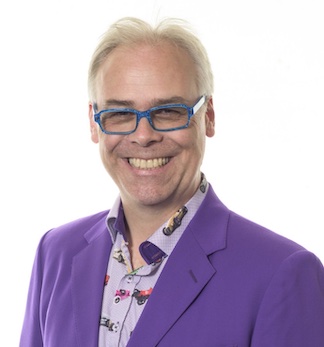
Tom Higgins, Gold-i's Founder and CEO
We were awarded a Queen’s Award for Enterprise: Innovation in 2014 which is the most prestigious business award in the UK. This was particularly significant as Gold-i was the first fintech in the UK to win a Queen’s Award. It also meant that I was invited to an event at Buckingham Palace and met the Queen which was a truly great honour.
How do you make sure that your products are future proof and that brokers are benefiting from the most up-to-date technological developments?
This is an absolute priority for us. We have regular meetings with clients to discuss their future needs and we build these requirements into our development roadmap. During these meetings, we also share our views on industry developments and tell clients what we have in the pipeline. It’s an effective way of ensuring that we develop products which brokers genuinely need.
All our development is done in-house. About 50% of developers’ time is spent on R&D to build our products of the future and we always keep abreast of the latest technological developments.
To future proof existing products, continuous development is crucial. A product is never finished because requirements and market conditions always change. We therefore continually adapt and enhance our products, building new features into our development pipeline in response to client feedback. All our products have evolved significantly since their initial launch and will continue to do so.
How do you stay up to date with the latest trends/requirements from brokers?
We attend a lot of industry conferences and speak at many of them too, and this is a great way to keep up to date with the latest trends from around the world. This also allows us to develop products that brokers know they need – and to come up with ideas for products which they don’t know they need yet!
In terms of trends, brokers generally aren’t focused on AI yet. It’s on their radar, of course, but they don’t yet know how AI will fit in with their business. Their more immediate focus is on risk management. Many are also starting to look again at offering crypto products, given the evolution of the crypto market which now has more of an institutional style delivery of digital assets, including custody separated from execution. Gold-i’s Crypto Switch is ideally placed to help brokers to capitalise on this trend.
This is a great example of one of our products evolving over time. Our most recent development was integrating with Hidden Road, with Gold-i providing fast and robust crypto liquidity aggregation and the ability to drop copy every trade in real-time for their settlement processes.
How have broker requirements changed over the last 15 years?
Requirements have changed a lot over the last 15 years. Initially, there was no requirement for any form of aggregation in retail trading or prime broking. You had extremely high leverage and new brokers were opening at a particularly high rate. That’s changed dramatically, with a reduction in leverage and far fewer brokers setting up.
Spreads were enormous fifteen years ago and the amount that a broker could make on each trade was considerably larger. The prices are now almost at an institutional level of tightness and therefore it is hard for brokers to make a profit unless they focus on having the best liquidity and tight spreads from their Liquidity Providers. Given this change, the requirement for advanced liquidity management systems which, amongst other benefits, protect brokers against rogue traders and latency arbitrage, is more important than ever before.
What trends are you currently seeing in terms of brokers requirements?
Brokers are now under constant pressure to drive down costs and to get the best price from their suppliers. Brokers’ requirements change quickly and therefore they need suppliers with flexible contracts. The last thing a broker wants is to be tied into a contract for years at a time when there’s so much economic uncertainty which impacts their clients. That’s why we offer extremely flexible contracts to meet the commercial drivers of our clients.
What we’re also seeing – which has particularly been driven by the fallout in the crypto market - is that clients are looking for technology partners with significant experience. They want to partner with companies that have been around long enough to have seen and survived significant changes in the market and can deliver incredibly robust, institutional grade solutions backed up by high levels of support. This is really working in our favour as we tick all these boxes.
Where are you seeing most demand for your products and which of your products are proving to be most popular?
We’re seeing biggest demand for our MAM and Liquidity Management products. As you know, we recently launched our enhanced multi-asset liquidity aggregation and distribution platform,
MatrixNET, building on our 15 years’ experience of developing robust technology for this industry, and an in-depth understanding of client requirements.
MatrixNET is a modular, scalable FX and Crypto liquidity management system which is super-fast and extremely flexible. With demand for advanced liquidity aggregation at an all-time high, we believe that Gold-i’s new MatrixNET, ideal for start-ups through to enterprise-level, will be one of our flagship products. We will continue to invest in its development.
Finance Magnates spoke with Gold-i's Founder and CEO, Tom Higgins, one of the most well-known veterans and leaders in the industry today. With the company celebrating its 15-year anniversary this month, Mr. Higgins provides a detailed prospective of the company and why its still an industry leader and innovator in the space.
Gold-i, which celebrates its 15th anniversary this month, has been a pioneer in many areas. What are the industry firsts that you are most proud of?
As a technology provider at the forefront of this industry, we are continually looking at pushing boundaries and opening new opportunities for brokers, helping them to operate more effectively and mitigate risk.
Gold-i is proud of our many industry firsts. We were the first UK-based MT4 bridge provider and MetaQuotes’ first UK partner. In addition, our Visual Edge product was the first fully integrated multi-asset risk management platform, and our Crypto Switch provided the first price aggregation for digital assets.
Tom Higgins, Gold-i's Founder and CEO
We were awarded a Queen’s Award for Enterprise: Innovation in 2014 which is the most prestigious business award in the UK. This was particularly significant as Gold-i was the first fintech in the UK to win a Queen’s Award. It also meant that I was invited to an event at Buckingham Palace and met the Queen which was a truly great honour.
How do you make sure that your products are future proof and that brokers are benefiting from the most up-to-date technological developments?
This is an absolute priority for us. We have regular meetings with clients to discuss their future needs and we build these requirements into our development roadmap. During these meetings, we also share our views on industry developments and tell clients what we have in the pipeline. It’s an effective way of ensuring that we develop products which brokers genuinely need.
All our development is done in-house. About 50% of developers’ time is spent on R&D to build our products of the future and we always keep abreast of the latest technological developments.
To future proof existing products, continuous development is crucial. A product is never finished because requirements and market conditions always change. We therefore continually adapt and enhance our products, building new features into our development pipeline in response to client feedback. All our products have evolved significantly since their initial launch and will continue to do so.
How do you stay up to date with the latest trends/requirements from brokers?
We attend a lot of industry conferences and speak at many of them too, and this is a great way to keep up to date with the latest trends from around the world. This also allows us to develop products that brokers know they need – and to come up with ideas for products which they don’t know they need yet!
In terms of trends, brokers generally aren’t focused on AI yet. It’s on their radar, of course, but they don’t yet know how AI will fit in with their business. Their more immediate focus is on risk management. Many are also starting to look again at offering crypto products, given the evolution of the crypto market which now has more of an institutional style delivery of digital assets, including custody separated from execution. Gold-i’s Crypto Switch is ideally placed to help brokers to capitalise on this trend.
This is a great example of one of our products evolving over time. Our most recent development was integrating with Hidden Road, with Gold-i providing fast and robust crypto liquidity aggregation and the ability to drop copy every trade in real-time for their settlement processes.
How have broker requirements changed over the last 15 years?
Requirements have changed a lot over the last 15 years. Initially, there was no requirement for any form of aggregation in retail trading or prime broking. You had extremely high leverage and new brokers were opening at a particularly high rate. That’s changed dramatically, with a reduction in leverage and far fewer brokers setting up.
Spreads were enormous fifteen years ago and the amount that a broker could make on each trade was considerably larger. The prices are now almost at an institutional level of tightness and therefore it is hard for brokers to make a profit unless they focus on having the best liquidity and tight spreads from their Liquidity Providers. Given this change, the requirement for advanced liquidity management systems which, amongst other benefits, protect brokers against rogue traders and latency arbitrage, is more important than ever before.
What trends are you currently seeing in terms of brokers requirements?
Brokers are now under constant pressure to drive down costs and to get the best price from their suppliers. Brokers’ requirements change quickly and therefore they need suppliers with flexible contracts. The last thing a broker wants is to be tied into a contract for years at a time when there’s so much economic uncertainty which impacts their clients. That’s why we offer extremely flexible contracts to meet the commercial drivers of our clients.
What we’re also seeing – which has particularly been driven by the fallout in the crypto market - is that clients are looking for technology partners with significant experience. They want to partner with companies that have been around long enough to have seen and survived significant changes in the market and can deliver incredibly robust, institutional grade solutions backed up by high levels of support. This is really working in our favour as we tick all these boxes.
Where are you seeing most demand for your products and which of your products are proving to be most popular?
We’re seeing biggest demand for our MAM and Liquidity Management products. As you know, we recently launched our enhanced multi-asset liquidity aggregation and distribution platform,
MatrixNET, building on our 15 years’ experience of developing robust technology for this industry, and an in-depth understanding of client requirements.
MatrixNET is a modular, scalable FX and Crypto liquidity management system which is super-fast and extremely flexible. With demand for advanced liquidity aggregation at an all-time high, we believe that Gold-i’s new MatrixNET, ideal for start-ups through to enterprise-level, will be one of our flagship products. We will continue to invest in its development.
SMX's 1900% Surge Since November Is Not a Momentum Trade; It's Based on Transformative and Deliverable Techology
Featured Videos
Executive Interview | Charlotte Bullock | Chief Product Officer, Bank of London | FMLS:25
In this interview, we sat down with Charlotte Bullock, Head of Product at The Bank of London, previously at SAP and now shaping product at one of the sector’s most ambitious new banking players.
Charlotte reflects on the Summit so far and talks about the culture inside fintech banks today. We look at the pressures that come with scaling, and how firms can hold onto the nimble approach that made them stand out early on.
We also cover the state of payments ahead of her appearance on the payments roundtable: the blockages financial firms face, the areas that still need fixing, and what a realistic solution looks like in 2026.
In this interview, we sat down with Charlotte Bullock, Head of Product at The Bank of London, previously at SAP and now shaping product at one of the sector’s most ambitious new banking players.
Charlotte reflects on the Summit so far and talks about the culture inside fintech banks today. We look at the pressures that come with scaling, and how firms can hold onto the nimble approach that made them stand out early on.
We also cover the state of payments ahead of her appearance on the payments roundtable: the blockages financial firms face, the areas that still need fixing, and what a realistic solution looks like in 2026.
In this interview, we sat down with Charlotte Bullock, Head of Product at The Bank of London, previously at SAP and now shaping product at one of the sector’s most ambitious new banking players.
Charlotte reflects on the Summit so far and talks about the culture inside fintech banks today. We look at the pressures that come with scaling, and how firms can hold onto the nimble approach that made them stand out early on.
We also cover the state of payments ahead of her appearance on the payments roundtable: the blockages financial firms face, the areas that still need fixing, and what a realistic solution looks like in 2026.
In this interview, we sat down with Charlotte Bullock, Head of Product at The Bank of London, previously at SAP and now shaping product at one of the sector’s most ambitious new banking players.
Charlotte reflects on the Summit so far and talks about the culture inside fintech banks today. We look at the pressures that come with scaling, and how firms can hold onto the nimble approach that made them stand out early on.
We also cover the state of payments ahead of her appearance on the payments roundtable: the blockages financial firms face, the areas that still need fixing, and what a realistic solution looks like in 2026.
In this conversation, we sit down with Drew Niv, CSO at ATFX Connect and one of the most influential figures in modern FX.
We speak about market structure, the institutional view on liquidity, and the sharp rise of prop trading, a sector Drew has been commenting on in recent months. Drew explains why he once dismissed prop trading, why his view changed, and what he now thinks the model means for brokers, clients and risk managers.
We explore subscription-fee dependency, the high reneging rate, and the long-term challenge: how brokers can build a more stable and honest version of the model. Drew also talks about the traffic advantage standalone prop firms have built and why brokers may still win in the long run if they take the right approach.
In this conversation, we sit down with Drew Niv, CSO at ATFX Connect and one of the most influential figures in modern FX.
We speak about market structure, the institutional view on liquidity, and the sharp rise of prop trading, a sector Drew has been commenting on in recent months. Drew explains why he once dismissed prop trading, why his view changed, and what he now thinks the model means for brokers, clients and risk managers.
We explore subscription-fee dependency, the high reneging rate, and the long-term challenge: how brokers can build a more stable and honest version of the model. Drew also talks about the traffic advantage standalone prop firms have built and why brokers may still win in the long run if they take the right approach.
In this conversation, we sit down with Drew Niv, CSO at ATFX Connect and one of the most influential figures in modern FX.
We speak about market structure, the institutional view on liquidity, and the sharp rise of prop trading, a sector Drew has been commenting on in recent months. Drew explains why he once dismissed prop trading, why his view changed, and what he now thinks the model means for brokers, clients and risk managers.
We explore subscription-fee dependency, the high reneging rate, and the long-term challenge: how brokers can build a more stable and honest version of the model. Drew also talks about the traffic advantage standalone prop firms have built and why brokers may still win in the long run if they take the right approach.
In this conversation, we sit down with Drew Niv, CSO at ATFX Connect and one of the most influential figures in modern FX.
We speak about market structure, the institutional view on liquidity, and the sharp rise of prop trading, a sector Drew has been commenting on in recent months. Drew explains why he once dismissed prop trading, why his view changed, and what he now thinks the model means for brokers, clients and risk managers.
We explore subscription-fee dependency, the high reneging rate, and the long-term challenge: how brokers can build a more stable and honest version of the model. Drew also talks about the traffic advantage standalone prop firms have built and why brokers may still win in the long run if they take the right approach.
In this conversation, we sit down with Drew Niv, CSO at ATFX Connect and one of the most influential figures in modern FX.
We speak about market structure, the institutional view on liquidity, and the sharp rise of prop trading, a sector Drew has been commenting on in recent months. Drew explains why he once dismissed prop trading, why his view changed, and what he now thinks the model means for brokers, clients and risk managers.
We explore subscription-fee dependency, the high reneging rate, and the long-term challenge: how brokers can build a more stable and honest version of the model. Drew also talks about the traffic advantage standalone prop firms have built and why brokers may still win in the long run if they take the right approach.
In this conversation, we sit down with Drew Niv, CSO at ATFX Connect and one of the most influential figures in modern FX.
We speak about market structure, the institutional view on liquidity, and the sharp rise of prop trading, a sector Drew has been commenting on in recent months. Drew explains why he once dismissed prop trading, why his view changed, and what he now thinks the model means for brokers, clients and risk managers.
We explore subscription-fee dependency, the high reneging rate, and the long-term challenge: how brokers can build a more stable and honest version of the model. Drew also talks about the traffic advantage standalone prop firms have built and why brokers may still win in the long run if they take the right approach.
Executive Interview | Remonda Z. Kirketerp Møller| CEO & Founder Muinmos | FMLS:25
In this interview, Remonda Z. Kirketerp Møller, founder of Muinmos, breaks down the state of AI in regtech and what responsible adoption really looks like for brokers. We talk about rising fragmentation, the pressures around compliance accuracy, and why most firms are still in the early stages of AI maturity.
Ramanda also shares insights on regulator sandboxes, shifting expectations around accountability, and the current reality of MiCA licensing and passporting in Europe.
A concise look at where compliance, onboarding, and AI-driven processes are heading next.
In this interview, Remonda Z. Kirketerp Møller, founder of Muinmos, breaks down the state of AI in regtech and what responsible adoption really looks like for brokers. We talk about rising fragmentation, the pressures around compliance accuracy, and why most firms are still in the early stages of AI maturity.
Ramanda also shares insights on regulator sandboxes, shifting expectations around accountability, and the current reality of MiCA licensing and passporting in Europe.
A concise look at where compliance, onboarding, and AI-driven processes are heading next.
In this interview, Remonda Z. Kirketerp Møller, founder of Muinmos, breaks down the state of AI in regtech and what responsible adoption really looks like for brokers. We talk about rising fragmentation, the pressures around compliance accuracy, and why most firms are still in the early stages of AI maturity.
Ramanda also shares insights on regulator sandboxes, shifting expectations around accountability, and the current reality of MiCA licensing and passporting in Europe.
A concise look at where compliance, onboarding, and AI-driven processes are heading next.
In this interview, Remonda Z. Kirketerp Møller, founder of Muinmos, breaks down the state of AI in regtech and what responsible adoption really looks like for brokers. We talk about rising fragmentation, the pressures around compliance accuracy, and why most firms are still in the early stages of AI maturity.
Ramanda also shares insights on regulator sandboxes, shifting expectations around accountability, and the current reality of MiCA licensing and passporting in Europe.
A concise look at where compliance, onboarding, and AI-driven processes are heading next.
In this interview, Remonda Z. Kirketerp Møller, founder of Muinmos, breaks down the state of AI in regtech and what responsible adoption really looks like for brokers. We talk about rising fragmentation, the pressures around compliance accuracy, and why most firms are still in the early stages of AI maturity.
Ramanda also shares insights on regulator sandboxes, shifting expectations around accountability, and the current reality of MiCA licensing and passporting in Europe.
A concise look at where compliance, onboarding, and AI-driven processes are heading next.
In this interview, Remonda Z. Kirketerp Møller, founder of Muinmos, breaks down the state of AI in regtech and what responsible adoption really looks like for brokers. We talk about rising fragmentation, the pressures around compliance accuracy, and why most firms are still in the early stages of AI maturity.
Ramanda also shares insights on regulator sandboxes, shifting expectations around accountability, and the current reality of MiCA licensing and passporting in Europe.
A concise look at where compliance, onboarding, and AI-driven processes are heading next.
In this conversation, we speak with Aydin Bonabi, CEO and co-founder of Surveill, a firm focused on fraud detection and AI-driven compliance tools for financial institutions.
We start with Aydin’s view of the Summit and the challenges brokers face as fraud tactics grow more complex. He explains how firms can stay ahead through real-time signals, data patterns, and early-stage detection.
We also talk about AI training and why compliance teams often struggle to keep models accurate, fair, and aligned with regulatory expectations. Aydin breaks down what “good” AI training looks like inside a financial environment, including the importance of clean data, domain expertise, and human oversight.
He closes with a clear message: fraud is scaling, and so must the tools that stop it.
In this conversation, we speak with Aydin Bonabi, CEO and co-founder of Surveill, a firm focused on fraud detection and AI-driven compliance tools for financial institutions.
We start with Aydin’s view of the Summit and the challenges brokers face as fraud tactics grow more complex. He explains how firms can stay ahead through real-time signals, data patterns, and early-stage detection.
We also talk about AI training and why compliance teams often struggle to keep models accurate, fair, and aligned with regulatory expectations. Aydin breaks down what “good” AI training looks like inside a financial environment, including the importance of clean data, domain expertise, and human oversight.
He closes with a clear message: fraud is scaling, and so must the tools that stop it.
In this conversation, we speak with Aydin Bonabi, CEO and co-founder of Surveill, a firm focused on fraud detection and AI-driven compliance tools for financial institutions.
We start with Aydin’s view of the Summit and the challenges brokers face as fraud tactics grow more complex. He explains how firms can stay ahead through real-time signals, data patterns, and early-stage detection.
We also talk about AI training and why compliance teams often struggle to keep models accurate, fair, and aligned with regulatory expectations. Aydin breaks down what “good” AI training looks like inside a financial environment, including the importance of clean data, domain expertise, and human oversight.
He closes with a clear message: fraud is scaling, and so must the tools that stop it.
In this conversation, we speak with Aydin Bonabi, CEO and co-founder of Surveill, a firm focused on fraud detection and AI-driven compliance tools for financial institutions.
We start with Aydin’s view of the Summit and the challenges brokers face as fraud tactics grow more complex. He explains how firms can stay ahead through real-time signals, data patterns, and early-stage detection.
We also talk about AI training and why compliance teams often struggle to keep models accurate, fair, and aligned with regulatory expectations. Aydin breaks down what “good” AI training looks like inside a financial environment, including the importance of clean data, domain expertise, and human oversight.
He closes with a clear message: fraud is scaling, and so must the tools that stop it.
In this conversation, we speak with Aydin Bonabi, CEO and co-founder of Surveill, a firm focused on fraud detection and AI-driven compliance tools for financial institutions.
We start with Aydin’s view of the Summit and the challenges brokers face as fraud tactics grow more complex. He explains how firms can stay ahead through real-time signals, data patterns, and early-stage detection.
We also talk about AI training and why compliance teams often struggle to keep models accurate, fair, and aligned with regulatory expectations. Aydin breaks down what “good” AI training looks like inside a financial environment, including the importance of clean data, domain expertise, and human oversight.
He closes with a clear message: fraud is scaling, and so must the tools that stop it.
In this conversation, we speak with Aydin Bonabi, CEO and co-founder of Surveill, a firm focused on fraud detection and AI-driven compliance tools for financial institutions.
We start with Aydin’s view of the Summit and the challenges brokers face as fraud tactics grow more complex. He explains how firms can stay ahead through real-time signals, data patterns, and early-stage detection.
We also talk about AI training and why compliance teams often struggle to keep models accurate, fair, and aligned with regulatory expectations. Aydin breaks down what “good” AI training looks like inside a financial environment, including the importance of clean data, domain expertise, and human oversight.
He closes with a clear message: fraud is scaling, and so must the tools that stop it.
Exness expands its presence in Africa: Inside our interview with Paul Margarites in Cape Town
Finance Magnates met with Paul Margarites, Exness regional commercial director for Sub-Saharan Africa, during a visit to the firm’s office opening in Cape Town. In this talk, led by Andrea Badiola Mateos, Co-CEO at Finance Magnates, Paul shares views on the South African trading space, local user behavior, mobile trends, regulation, team growth, and how Exness plans to grow in more markets across the region. @Exness
Read the article at: https://www.financemagnates.com/thought-leadership/exness-expands-its-presence-in-africa-inside-our-interview-with-paul-margarites/
#exness #financemagnates #exnesstrading #CFDtrading #tradeonline #africanews #capetown
Finance Magnates met with Paul Margarites, Exness regional commercial director for Sub-Saharan Africa, during a visit to the firm’s office opening in Cape Town. In this talk, led by Andrea Badiola Mateos, Co-CEO at Finance Magnates, Paul shares views on the South African trading space, local user behavior, mobile trends, regulation, team growth, and how Exness plans to grow in more markets across the region. @Exness
Read the article at: https://www.financemagnates.com/thought-leadership/exness-expands-its-presence-in-africa-inside-our-interview-with-paul-margarites/
#exness #financemagnates #exnesstrading #CFDtrading #tradeonline #africanews #capetown
Finance Magnates met with Paul Margarites, Exness regional commercial director for Sub-Saharan Africa, during a visit to the firm’s office opening in Cape Town. In this talk, led by Andrea Badiola Mateos, Co-CEO at Finance Magnates, Paul shares views on the South African trading space, local user behavior, mobile trends, regulation, team growth, and how Exness plans to grow in more markets across the region. @Exness
Read the article at: https://www.financemagnates.com/thought-leadership/exness-expands-its-presence-in-africa-inside-our-interview-with-paul-margarites/
#exness #financemagnates #exnesstrading #CFDtrading #tradeonline #africanews #capetown
Finance Magnates met with Paul Margarites, Exness regional commercial director for Sub-Saharan Africa, during a visit to the firm’s office opening in Cape Town. In this talk, led by Andrea Badiola Mateos, Co-CEO at Finance Magnates, Paul shares views on the South African trading space, local user behavior, mobile trends, regulation, team growth, and how Exness plans to grow in more markets across the region. @Exness
Read the article at: https://www.financemagnates.com/thought-leadership/exness-expands-its-presence-in-africa-inside-our-interview-with-paul-margarites/
#exness #financemagnates #exnesstrading #CFDtrading #tradeonline #africanews #capetown
Finance Magnates met with Paul Margarites, Exness regional commercial director for Sub-Saharan Africa, during a visit to the firm’s office opening in Cape Town. In this talk, led by Andrea Badiola Mateos, Co-CEO at Finance Magnates, Paul shares views on the South African trading space, local user behavior, mobile trends, regulation, team growth, and how Exness plans to grow in more markets across the region. @Exness
Read the article at: https://www.financemagnates.com/thought-leadership/exness-expands-its-presence-in-africa-inside-our-interview-with-paul-margarites/
#exness #financemagnates #exnesstrading #CFDtrading #tradeonline #africanews #capetown
Finance Magnates met with Paul Margarites, Exness regional commercial director for Sub-Saharan Africa, during a visit to the firm’s office opening in Cape Town. In this talk, led by Andrea Badiola Mateos, Co-CEO at Finance Magnates, Paul shares views on the South African trading space, local user behavior, mobile trends, regulation, team growth, and how Exness plans to grow in more markets across the region. @Exness
Read the article at: https://www.financemagnates.com/thought-leadership/exness-expands-its-presence-in-africa-inside-our-interview-with-paul-margarites/
#exness #financemagnates #exnesstrading #CFDtrading #tradeonline #africanews #capetown