“We ultimately have to meet people where they are in terms of their tolerance for usability, for risk, for trust, user experience.”
A moment from the XRP Ledger APEX 2024 venue
On the ground for XRP Ledger Apex 2024, we caught up with
Jazzi Cooper, Lead Product Manager at Ripple X and a major driving force behind its ambitious mission. In an
exclusive interview, Jazzi shared insights into Ripple X's role in reshaping
the financial landscape and paving the way for a future powered by blockchain
technology.
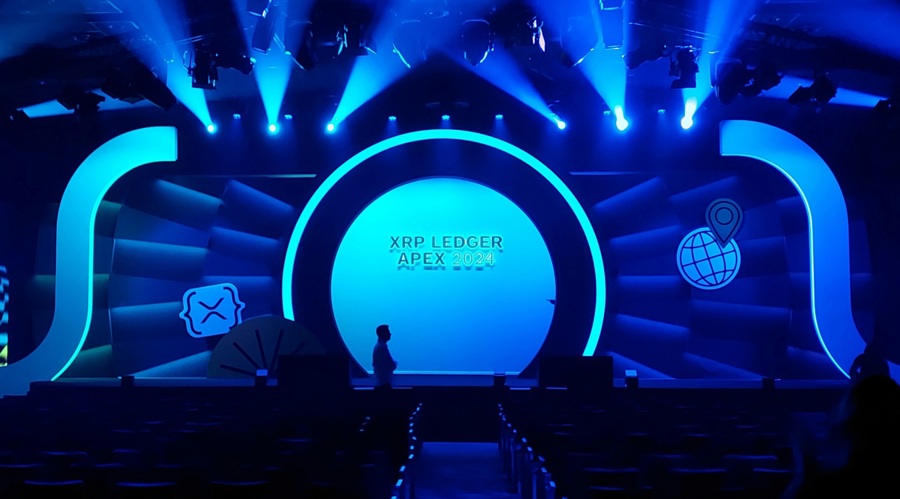
XRP Ledger Apex 2024
Why Traditional Finance Needs a Disruption
"Traditional finance rails today, as we know, are
insufficient. Payments take multiple days if not weeks (...) and settlement is slow," Jazzi remarked,
setting the stage for a discussion on the urgent need for disruptive solutions
in the financial sector.

Jazzi Cooper, Lead Product Manager at Ripple X
The bold promise of blockchain technology lies in its
potential to revolutionize financial systems, a vision embodied by Ripple X and
its dedication to the XRP Ledger. As traditional financial infrastructures
strain under the weight of inefficiencies, Ripple X champions a future where
transactions are swift, transparent, and decentralized. This ambition is not
merely a theoretical exercise but a concerted effort to redefine how value is
transferred and recorded.
One of the main drivers for this charge is Jasmine Cooper,
affectionately known as Jazzi, who heads the Institutional DeFi Products group.
Her team’s mission is to cultivate a suite of products that capitalize on the
unique strengths of the XRP Ledger, thus offering a robust alternative to the
entrenched financial systems that dominate today's markets.
On Redefining Value Transfer
"The XRP Ledger is purpose-built for value transfer.
We think it's a very ideal blockchain environment for the issuance, the
movement, the trading of tokens," Jasmine emphasizes, underscoring the
platform's suitability for disrupting traditional finance.
Central to Ripple X's strategy are three key product
verticals: tokenization, financial protocols, and infrastructure. Tokenization
involves the creation of digital tokens that represent real-world assets,
offering a new avenue for asset management and investment. Financial protocols
cover on-chain trading and lending, leveraging blockchain’s transparency and
efficiency. The infrastructure vertical focuses on building the essential
components, such as oracles and cross-chain bridges, which support the seamless
operation of these systems.
The CEO of #Ripple, Brad Garlinghouse, has revealed the name of their new stablecoin at the #XRPLApex 2024 event. The stablecoin will be called "Real USD" and is represented by the ticker symbol $RLUSD. pic.twitter.com/RdKDsoJw3z
"Most of fintech today, all of your neobanks, all of
your digital wealth advisors, these have moved a little bit forward by offering
nice UIs... But they're still sitting on the same old rails.”
As a stark contrast, one of the most exciting developments at Ripple X is the
introduction of multipurpose tokens, a new standard designed for the
tokenization of real-world assets.
"We've introduced a new token standard called
multipurpose tokens that's purpose-built for tokenization of real-world
assets," explains Jasmine, shedding light on Ripple X's commitment to
innovation.
This innovation allows metadata to be
directly attached to the blockchain asset, ensuring a higher degree of
reliability and utility. Such advancements pave the way for more sophisticated
use cases, such as bond and equity tokenization, and open up new possibilities
for asset management and investment.
Accessible Blockchain for All: User-Centric Design & Financial Inclusion
“We ultimately have to meet people where they are in terms
of their tolerance for usability, for risk, for trust, user experience that they
demand across the board," Jazzi added.
This principle guides
Ripple X’s development efforts. Instead of imposing complex, crypto-native
solutions that might alienate everyday users, Ripple X aims to meet users where
they are, providing intuitive and accessible products that leverage
blockchain’s advantages without overwhelming complexity, thus emphasizing the
importance of user-centric design.
Financial inclusion is another cornerstone of Ripple X’s
vision. By democratizing access to financial services, blockchain
technology can empower individuals in regions where traditional banking
infrastructure is inadequate or nonexistent. Decentralized lending protocols,
for example, can offer capital to those who lack access to conventional
financial institutions, thus fostering economic opportunities and growth in
underserved communities.
Looking ahead, Ripple X is poised to make significant
strides in the realm of real-world asset tokenization. Upcoming announcements
and projects promise to further integrate blockchain technology into various
sectors, enhancing the liquidity and utility of digital assets. Additionally,
the EVM side chain initiative aims to bridge Ethereum’s extensive developer
community with Ripple’s robust infrastructure, creating synergies that could
drive further innovation and adoption.
Wrapping up
In the face of skepticism and the noise surrounding
cryptocurrencies, Ripple X’s commitment to practical, impactful solutions
stands out. By focusing on real-world problems and developing technology that
enhances user experiences, Ripple X is not only pushing the boundaries of what
blockchain can achieve but also ensuring that these advancements are accessible
and beneficial to a broad audience. The future of finance, as envisioned by
Ripple X, is one where blockchain technology seamlessly integrates into our
daily lives, enhancing efficiency, transparency, and inclusion in ways that
traditional systems have long struggled to deliver.
On the ground for XRP Ledger Apex 2024, we caught up with
Jazzi Cooper, Lead Product Manager at Ripple X and a major driving force behind its ambitious mission. In an
exclusive interview, Jazzi shared insights into Ripple X's role in reshaping
the financial landscape and paving the way for a future powered by blockchain
technology.
XRP Ledger Apex 2024
Why Traditional Finance Needs a Disruption
"Traditional finance rails today, as we know, are
insufficient. Payments take multiple days if not weeks (...) and settlement is slow," Jazzi remarked,
setting the stage for a discussion on the urgent need for disruptive solutions
in the financial sector.
Jazzi Cooper, Lead Product Manager at Ripple X
The bold promise of blockchain technology lies in its
potential to revolutionize financial systems, a vision embodied by Ripple X and
its dedication to the XRP Ledger. As traditional financial infrastructures
strain under the weight of inefficiencies, Ripple X champions a future where
transactions are swift, transparent, and decentralized. This ambition is not
merely a theoretical exercise but a concerted effort to redefine how value is
transferred and recorded.
One of the main drivers for this charge is Jasmine Cooper,
affectionately known as Jazzi, who heads the Institutional DeFi Products group.
Her team’s mission is to cultivate a suite of products that capitalize on the
unique strengths of the XRP Ledger, thus offering a robust alternative to the
entrenched financial systems that dominate today's markets.
On Redefining Value Transfer
"The XRP Ledger is purpose-built for value transfer.
We think it's a very ideal blockchain environment for the issuance, the
movement, the trading of tokens," Jasmine emphasizes, underscoring the
platform's suitability for disrupting traditional finance.
Central to Ripple X's strategy are three key product
verticals: tokenization, financial protocols, and infrastructure. Tokenization
involves the creation of digital tokens that represent real-world assets,
offering a new avenue for asset management and investment. Financial protocols
cover on-chain trading and lending, leveraging blockchain’s transparency and
efficiency. The infrastructure vertical focuses on building the essential
components, such as oracles and cross-chain bridges, which support the seamless
operation of these systems.
The CEO of #Ripple, Brad Garlinghouse, has revealed the name of their new stablecoin at the #XRPLApex 2024 event. The stablecoin will be called "Real USD" and is represented by the ticker symbol $RLUSD. pic.twitter.com/RdKDsoJw3z
"Most of fintech today, all of your neobanks, all of
your digital wealth advisors, these have moved a little bit forward by offering
nice UIs... But they're still sitting on the same old rails.”
As a stark contrast, one of the most exciting developments at Ripple X is the
introduction of multipurpose tokens, a new standard designed for the
tokenization of real-world assets.
"We've introduced a new token standard called
multipurpose tokens that's purpose-built for tokenization of real-world
assets," explains Jasmine, shedding light on Ripple X's commitment to
innovation.
This innovation allows metadata to be
directly attached to the blockchain asset, ensuring a higher degree of
reliability and utility. Such advancements pave the way for more sophisticated
use cases, such as bond and equity tokenization, and open up new possibilities
for asset management and investment.
Accessible Blockchain for All: User-Centric Design & Financial Inclusion
“We ultimately have to meet people where they are in terms
of their tolerance for usability, for risk, for trust, user experience that they
demand across the board," Jazzi added.
This principle guides
Ripple X’s development efforts. Instead of imposing complex, crypto-native
solutions that might alienate everyday users, Ripple X aims to meet users where
they are, providing intuitive and accessible products that leverage
blockchain’s advantages without overwhelming complexity, thus emphasizing the
importance of user-centric design.
Financial inclusion is another cornerstone of Ripple X’s
vision. By democratizing access to financial services, blockchain
technology can empower individuals in regions where traditional banking
infrastructure is inadequate or nonexistent. Decentralized lending protocols,
for example, can offer capital to those who lack access to conventional
financial institutions, thus fostering economic opportunities and growth in
underserved communities.
Looking ahead, Ripple X is poised to make significant
strides in the realm of real-world asset tokenization. Upcoming announcements
and projects promise to further integrate blockchain technology into various
sectors, enhancing the liquidity and utility of digital assets. Additionally,
the EVM side chain initiative aims to bridge Ethereum’s extensive developer
community with Ripple’s robust infrastructure, creating synergies that could
drive further innovation and adoption.
Wrapping up
In the face of skepticism and the noise surrounding
cryptocurrencies, Ripple X’s commitment to practical, impactful solutions
stands out. By focusing on real-world problems and developing technology that
enhances user experiences, Ripple X is not only pushing the boundaries of what
blockchain can achieve but also ensuring that these advancements are accessible
and beneficial to a broad audience. The future of finance, as envisioned by
Ripple X, is one where blockchain technology seamlessly integrates into our
daily lives, enhancing efficiency, transparency, and inclusion in ways that
traditional systems have long struggled to deliver.
In this conversation, we sit down with Drew Niv, CSO at ATFX Connect and one of the most influential figures in modern FX.
We speak about market structure, the institutional view on liquidity, and the sharp rise of prop trading, a sector Drew has been commenting on in recent months. Drew explains why he once dismissed prop trading, why his view changed, and what he now thinks the model means for brokers, clients and risk managers.
We explore subscription-fee dependency, the high reneging rate, and the long-term challenge: how brokers can build a more stable and honest version of the model. Drew also talks about the traffic advantage standalone prop firms have built and why brokers may still win in the long run if they take the right approach.
In this conversation, we sit down with Drew Niv, CSO at ATFX Connect and one of the most influential figures in modern FX.
We speak about market structure, the institutional view on liquidity, and the sharp rise of prop trading, a sector Drew has been commenting on in recent months. Drew explains why he once dismissed prop trading, why his view changed, and what he now thinks the model means for brokers, clients and risk managers.
We explore subscription-fee dependency, the high reneging rate, and the long-term challenge: how brokers can build a more stable and honest version of the model. Drew also talks about the traffic advantage standalone prop firms have built and why brokers may still win in the long run if they take the right approach.
In this conversation, we sit down with Drew Niv, CSO at ATFX Connect and one of the most influential figures in modern FX.
We speak about market structure, the institutional view on liquidity, and the sharp rise of prop trading, a sector Drew has been commenting on in recent months. Drew explains why he once dismissed prop trading, why his view changed, and what he now thinks the model means for brokers, clients and risk managers.
We explore subscription-fee dependency, the high reneging rate, and the long-term challenge: how brokers can build a more stable and honest version of the model. Drew also talks about the traffic advantage standalone prop firms have built and why brokers may still win in the long run if they take the right approach.
In this conversation, we sit down with Drew Niv, CSO at ATFX Connect and one of the most influential figures in modern FX.
We speak about market structure, the institutional view on liquidity, and the sharp rise of prop trading, a sector Drew has been commenting on in recent months. Drew explains why he once dismissed prop trading, why his view changed, and what he now thinks the model means for brokers, clients and risk managers.
We explore subscription-fee dependency, the high reneging rate, and the long-term challenge: how brokers can build a more stable and honest version of the model. Drew also talks about the traffic advantage standalone prop firms have built and why brokers may still win in the long run if they take the right approach.
Executive Interview | Remonda Z. Kirketerp Møller| CEO & Founder Muinmos | FMLS:25
In this interview, Remonda Z. Kirketerp Møller, founder of Muinmos, breaks down the state of AI in regtech and what responsible adoption really looks like for brokers. We talk about rising fragmentation, the pressures around compliance accuracy, and why most firms are still in the early stages of AI maturity.
Ramanda also shares insights on regulator sandboxes, shifting expectations around accountability, and the current reality of MiCA licensing and passporting in Europe.
A concise look at where compliance, onboarding, and AI-driven processes are heading next.
In this interview, Remonda Z. Kirketerp Møller, founder of Muinmos, breaks down the state of AI in regtech and what responsible adoption really looks like for brokers. We talk about rising fragmentation, the pressures around compliance accuracy, and why most firms are still in the early stages of AI maturity.
Ramanda also shares insights on regulator sandboxes, shifting expectations around accountability, and the current reality of MiCA licensing and passporting in Europe.
A concise look at where compliance, onboarding, and AI-driven processes are heading next.
In this interview, Remonda Z. Kirketerp Møller, founder of Muinmos, breaks down the state of AI in regtech and what responsible adoption really looks like for brokers. We talk about rising fragmentation, the pressures around compliance accuracy, and why most firms are still in the early stages of AI maturity.
Ramanda also shares insights on regulator sandboxes, shifting expectations around accountability, and the current reality of MiCA licensing and passporting in Europe.
A concise look at where compliance, onboarding, and AI-driven processes are heading next.
In this interview, Remonda Z. Kirketerp Møller, founder of Muinmos, breaks down the state of AI in regtech and what responsible adoption really looks like for brokers. We talk about rising fragmentation, the pressures around compliance accuracy, and why most firms are still in the early stages of AI maturity.
Ramanda also shares insights on regulator sandboxes, shifting expectations around accountability, and the current reality of MiCA licensing and passporting in Europe.
A concise look at where compliance, onboarding, and AI-driven processes are heading next.
In this interview, Remonda Z. Kirketerp Møller, founder of Muinmos, breaks down the state of AI in regtech and what responsible adoption really looks like for brokers. We talk about rising fragmentation, the pressures around compliance accuracy, and why most firms are still in the early stages of AI maturity.
Ramanda also shares insights on regulator sandboxes, shifting expectations around accountability, and the current reality of MiCA licensing and passporting in Europe.
A concise look at where compliance, onboarding, and AI-driven processes are heading next.
In this interview, Remonda Z. Kirketerp Møller, founder of Muinmos, breaks down the state of AI in regtech and what responsible adoption really looks like for brokers. We talk about rising fragmentation, the pressures around compliance accuracy, and why most firms are still in the early stages of AI maturity.
Ramanda also shares insights on regulator sandboxes, shifting expectations around accountability, and the current reality of MiCA licensing and passporting in Europe.
A concise look at where compliance, onboarding, and AI-driven processes are heading next.
In this conversation, we speak with Aydin Bonabi, CEO and co-founder of Surveill, a firm focused on fraud detection and AI-driven compliance tools for financial institutions.
We start with Aydin’s view of the Summit and the challenges brokers face as fraud tactics grow more complex. He explains how firms can stay ahead through real-time signals, data patterns, and early-stage detection.
We also talk about AI training and why compliance teams often struggle to keep models accurate, fair, and aligned with regulatory expectations. Aydin breaks down what “good” AI training looks like inside a financial environment, including the importance of clean data, domain expertise, and human oversight.
He closes with a clear message: fraud is scaling, and so must the tools that stop it.
In this conversation, we speak with Aydin Bonabi, CEO and co-founder of Surveill, a firm focused on fraud detection and AI-driven compliance tools for financial institutions.
We start with Aydin’s view of the Summit and the challenges brokers face as fraud tactics grow more complex. He explains how firms can stay ahead through real-time signals, data patterns, and early-stage detection.
We also talk about AI training and why compliance teams often struggle to keep models accurate, fair, and aligned with regulatory expectations. Aydin breaks down what “good” AI training looks like inside a financial environment, including the importance of clean data, domain expertise, and human oversight.
He closes with a clear message: fraud is scaling, and so must the tools that stop it.
In this conversation, we speak with Aydin Bonabi, CEO and co-founder of Surveill, a firm focused on fraud detection and AI-driven compliance tools for financial institutions.
We start with Aydin’s view of the Summit and the challenges brokers face as fraud tactics grow more complex. He explains how firms can stay ahead through real-time signals, data patterns, and early-stage detection.
We also talk about AI training and why compliance teams often struggle to keep models accurate, fair, and aligned with regulatory expectations. Aydin breaks down what “good” AI training looks like inside a financial environment, including the importance of clean data, domain expertise, and human oversight.
He closes with a clear message: fraud is scaling, and so must the tools that stop it.
In this conversation, we speak with Aydin Bonabi, CEO and co-founder of Surveill, a firm focused on fraud detection and AI-driven compliance tools for financial institutions.
We start with Aydin’s view of the Summit and the challenges brokers face as fraud tactics grow more complex. He explains how firms can stay ahead through real-time signals, data patterns, and early-stage detection.
We also talk about AI training and why compliance teams often struggle to keep models accurate, fair, and aligned with regulatory expectations. Aydin breaks down what “good” AI training looks like inside a financial environment, including the importance of clean data, domain expertise, and human oversight.
He closes with a clear message: fraud is scaling, and so must the tools that stop it.
In this conversation, we speak with Aydin Bonabi, CEO and co-founder of Surveill, a firm focused on fraud detection and AI-driven compliance tools for financial institutions.
We start with Aydin’s view of the Summit and the challenges brokers face as fraud tactics grow more complex. He explains how firms can stay ahead through real-time signals, data patterns, and early-stage detection.
We also talk about AI training and why compliance teams often struggle to keep models accurate, fair, and aligned with regulatory expectations. Aydin breaks down what “good” AI training looks like inside a financial environment, including the importance of clean data, domain expertise, and human oversight.
He closes with a clear message: fraud is scaling, and so must the tools that stop it.
In this conversation, we speak with Aydin Bonabi, CEO and co-founder of Surveill, a firm focused on fraud detection and AI-driven compliance tools for financial institutions.
We start with Aydin’s view of the Summit and the challenges brokers face as fraud tactics grow more complex. He explains how firms can stay ahead through real-time signals, data patterns, and early-stage detection.
We also talk about AI training and why compliance teams often struggle to keep models accurate, fair, and aligned with regulatory expectations. Aydin breaks down what “good” AI training looks like inside a financial environment, including the importance of clean data, domain expertise, and human oversight.
He closes with a clear message: fraud is scaling, and so must the tools that stop it.
Exness expands its presence in Africa: Inside our interview with Paul Margarites in Cape Town
Finance Magnates met with Paul Margarites, Exness regional commercial director for Sub-Saharan Africa, during a visit to the firm’s office opening in Cape Town. In this talk, led by Andrea Badiola Mateos, Co-CEO at Finance Magnates, Paul shares views on the South African trading space, local user behavior, mobile trends, regulation, team growth, and how Exness plans to grow in more markets across the region. @Exness
Read the article at: https://www.financemagnates.com/thought-leadership/exness-expands-its-presence-in-africa-inside-our-interview-with-paul-margarites/
#exness #financemagnates #exnesstrading #CFDtrading #tradeonline #africanews #capetown
Finance Magnates met with Paul Margarites, Exness regional commercial director for Sub-Saharan Africa, during a visit to the firm’s office opening in Cape Town. In this talk, led by Andrea Badiola Mateos, Co-CEO at Finance Magnates, Paul shares views on the South African trading space, local user behavior, mobile trends, regulation, team growth, and how Exness plans to grow in more markets across the region. @Exness
Read the article at: https://www.financemagnates.com/thought-leadership/exness-expands-its-presence-in-africa-inside-our-interview-with-paul-margarites/
#exness #financemagnates #exnesstrading #CFDtrading #tradeonline #africanews #capetown
Finance Magnates met with Paul Margarites, Exness regional commercial director for Sub-Saharan Africa, during a visit to the firm’s office opening in Cape Town. In this talk, led by Andrea Badiola Mateos, Co-CEO at Finance Magnates, Paul shares views on the South African trading space, local user behavior, mobile trends, regulation, team growth, and how Exness plans to grow in more markets across the region. @Exness
Read the article at: https://www.financemagnates.com/thought-leadership/exness-expands-its-presence-in-africa-inside-our-interview-with-paul-margarites/
#exness #financemagnates #exnesstrading #CFDtrading #tradeonline #africanews #capetown
Finance Magnates met with Paul Margarites, Exness regional commercial director for Sub-Saharan Africa, during a visit to the firm’s office opening in Cape Town. In this talk, led by Andrea Badiola Mateos, Co-CEO at Finance Magnates, Paul shares views on the South African trading space, local user behavior, mobile trends, regulation, team growth, and how Exness plans to grow in more markets across the region. @Exness
Read the article at: https://www.financemagnates.com/thought-leadership/exness-expands-its-presence-in-africa-inside-our-interview-with-paul-margarites/
#exness #financemagnates #exnesstrading #CFDtrading #tradeonline #africanews #capetown
Finance Magnates met with Paul Margarites, Exness regional commercial director for Sub-Saharan Africa, during a visit to the firm’s office opening in Cape Town. In this talk, led by Andrea Badiola Mateos, Co-CEO at Finance Magnates, Paul shares views on the South African trading space, local user behavior, mobile trends, regulation, team growth, and how Exness plans to grow in more markets across the region. @Exness
Read the article at: https://www.financemagnates.com/thought-leadership/exness-expands-its-presence-in-africa-inside-our-interview-with-paul-margarites/
#exness #financemagnates #exnesstrading #CFDtrading #tradeonline #africanews #capetown
Finance Magnates met with Paul Margarites, Exness regional commercial director for Sub-Saharan Africa, during a visit to the firm’s office opening in Cape Town. In this talk, led by Andrea Badiola Mateos, Co-CEO at Finance Magnates, Paul shares views on the South African trading space, local user behavior, mobile trends, regulation, team growth, and how Exness plans to grow in more markets across the region. @Exness
Read the article at: https://www.financemagnates.com/thought-leadership/exness-expands-its-presence-in-africa-inside-our-interview-with-paul-margarites/
#exness #financemagnates #exnesstrading #CFDtrading #tradeonline #africanews #capetown
Executive Interview | Jas Shah | FMLS:25
Interview with Jas Shah
Builder | Adviser | Fintech Writer | Product Strategist
In this episode, Jonathan Fine sat down with Jas Shah, one of the most thoughtful voices in global fintech. Known for his work across advisory, product, stablecoins, and his widely read writing, Jas brings a rare combination of industry insight and plain-spoken clarity.
We talk about his first impression of the Summit, the projects that keep him busy today, and how they connect to the stablecoin panel he joined. Jas shares his view on the link between fintech, wealthtech and retail brokers, especially as firms like Revolut, eToro and Trading212 blur long-standing lines in the market.
We also explore what stablecoin adoption might look like for retail investment platforms, including a few product and UX angles that are not obvious at first glance.
To close, Jas explains how he thinks about writing, and how he approaches “shipping” pieces that spark debate across the industry.
Interview with Jas Shah
Builder | Adviser | Fintech Writer | Product Strategist
In this episode, Jonathan Fine sat down with Jas Shah, one of the most thoughtful voices in global fintech. Known for his work across advisory, product, stablecoins, and his widely read writing, Jas brings a rare combination of industry insight and plain-spoken clarity.
We talk about his first impression of the Summit, the projects that keep him busy today, and how they connect to the stablecoin panel he joined. Jas shares his view on the link between fintech, wealthtech and retail brokers, especially as firms like Revolut, eToro and Trading212 blur long-standing lines in the market.
We also explore what stablecoin adoption might look like for retail investment platforms, including a few product and UX angles that are not obvious at first glance.
To close, Jas explains how he thinks about writing, and how he approaches “shipping” pieces that spark debate across the industry.
Interview with Jas Shah
Builder | Adviser | Fintech Writer | Product Strategist
In this episode, Jonathan Fine sat down with Jas Shah, one of the most thoughtful voices in global fintech. Known for his work across advisory, product, stablecoins, and his widely read writing, Jas brings a rare combination of industry insight and plain-spoken clarity.
We talk about his first impression of the Summit, the projects that keep him busy today, and how they connect to the stablecoin panel he joined. Jas shares his view on the link between fintech, wealthtech and retail brokers, especially as firms like Revolut, eToro and Trading212 blur long-standing lines in the market.
We also explore what stablecoin adoption might look like for retail investment platforms, including a few product and UX angles that are not obvious at first glance.
To close, Jas explains how he thinks about writing, and how he approaches “shipping” pieces that spark debate across the industry.
Interview with Jas Shah
Builder | Adviser | Fintech Writer | Product Strategist
In this episode, Jonathan Fine sat down with Jas Shah, one of the most thoughtful voices in global fintech. Known for his work across advisory, product, stablecoins, and his widely read writing, Jas brings a rare combination of industry insight and plain-spoken clarity.
We talk about his first impression of the Summit, the projects that keep him busy today, and how they connect to the stablecoin panel he joined. Jas shares his view on the link between fintech, wealthtech and retail brokers, especially as firms like Revolut, eToro and Trading212 blur long-standing lines in the market.
We also explore what stablecoin adoption might look like for retail investment platforms, including a few product and UX angles that are not obvious at first glance.
To close, Jas explains how he thinks about writing, and how he approaches “shipping” pieces that spark debate across the industry.
Interview with Jas Shah
Builder | Adviser | Fintech Writer | Product Strategist
In this episode, Jonathan Fine sat down with Jas Shah, one of the most thoughtful voices in global fintech. Known for his work across advisory, product, stablecoins, and his widely read writing, Jas brings a rare combination of industry insight and plain-spoken clarity.
We talk about his first impression of the Summit, the projects that keep him busy today, and how they connect to the stablecoin panel he joined. Jas shares his view on the link between fintech, wealthtech and retail brokers, especially as firms like Revolut, eToro and Trading212 blur long-standing lines in the market.
We also explore what stablecoin adoption might look like for retail investment platforms, including a few product and UX angles that are not obvious at first glance.
To close, Jas explains how he thinks about writing, and how he approaches “shipping” pieces that spark debate across the industry.
Interview with Jas Shah
Builder | Adviser | Fintech Writer | Product Strategist
In this episode, Jonathan Fine sat down with Jas Shah, one of the most thoughtful voices in global fintech. Known for his work across advisory, product, stablecoins, and his widely read writing, Jas brings a rare combination of industry insight and plain-spoken clarity.
We talk about his first impression of the Summit, the projects that keep him busy today, and how they connect to the stablecoin panel he joined. Jas shares his view on the link between fintech, wealthtech and retail brokers, especially as firms like Revolut, eToro and Trading212 blur long-standing lines in the market.
We also explore what stablecoin adoption might look like for retail investment platforms, including a few product and UX angles that are not obvious at first glance.
To close, Jas explains how he thinks about writing, and how he approaches “shipping” pieces that spark debate across the industry.