At that time, Switzerland was experiencing large inflows of foreign capital as the neighbouring euro zone was in the midst of a crisis. The Swiss franc was sharply appreciating (a headache for an export-oriented nation) and the economy was at risk of entering a deflationary spiral.
The decision was therefore taken by the SNB in September 2011 to devalue their currency by setting a minimum EUR/CHF exchange rate of CHF 1.20; determining to “buy foreign currency in unlimited quantities” to prevent the franc from becoming more expensive.
For many pro-market theorists, this is arguably the moment of original sin
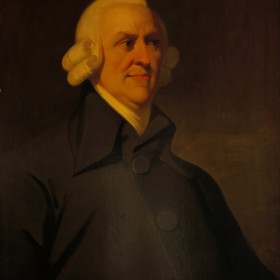
Adam Smith
For many pro-market theorists, this is arguably the moment of original sin, as for them interventions, such as currency fixing, ignore the inherent efficiency and indeed morality of markets. Smith’s famous ‘invisible hand’ captures this ethos, in which producers and consumers respond, serve and, thus, benefit one another in a free market (albeit out of their own self-interest).
Limiting intervention from public bodies also prevents what John Stuart Mill describes as the ‘tyranny of the majority’; scenarios in which decisions made by agencies that represent the interests of the majority may actually oppress certain individuals or minority groups. Letting the market reign is therefore the right thing to do.
We can also ask whether the intended ends of currency fixing justify the means. Taking such a consequentialist ethical stance, Chloe Sevil recently reported that “empirical analysis of the effects of currency intervention demonstrates that often, the intended aims of currency intervention are not achieved.”
Thus, the ends themselves tend not to be morally justifiable; they are susceptible to failure, they may risk producing unintended consequences and, indeed, they may be malicious unto themselves. (Although in the Swiss case, the end result of currency manipulation wasn’t all that bad; employment and growth was high throughout the period).
Finally, the moral hazard of currency fixing is best articulated by considering the consequences that stem from a third party, such as the SNB, underwriting risk.
As Paul McCulley explains, this “allows investors to indulge in more risk-seeking behaviour and releases them from thorough due diligence…In the fullness of time, the currency will go down, but as long as the currency is fixed, the central bank is eliminating exchange rate risk and thus injecting moral hazard into the system.”
Black Thursday
As markets have become accustomed to forward guidance from central banks, the abrupt decision by the SNB to move away from their long-standing policy shocked many.
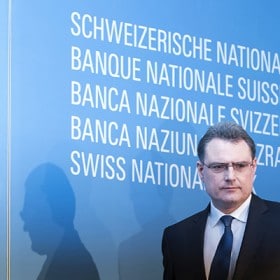
Swiss National Bank, President, Thomas Jordan
And then, on January 15, the SNB (acting on politico-economic pressures rather than explicitly ethical ones) finally removed the cap. All hell broke loose. The resultant sharp appreciation of the currency (the EUR/CHF rate now hovers around 1.05) and slump in Swiss stock values have affected the entire forex market - from the STP brokers that became exposed to client losses from negative balances sustained by customers short the Swiss franc to the clients themselves, many of them getting wiped out and facing losses well above their deposit amounts.
Moreover, Swiss export earnings, which make up a hefty chunk of the economy, have taken a hit, and Ski holidays to the Swiss Alps are a lot less attractive for price-conscious consumers.
But perhaps most importantly, the credibility of the SNB was jeopardised. In an era in which markets have become accustomed to forward guidance from central banks, the abrupt decision by the SNB to move away from their long-standing policy shocked many; as witnessed by the volatile market activity and scathing comments by many in the banking fraternity immediately following the announcement. Even Christine Lagarde, Managing Director of the International Monetary Fund, was taken off guard, finding it “a bit surprising that [the Swiss] did not contact me."
Ethical Enigmas
From an ethical point of view, such unexpected, unilateral action taken to maximise self-interest is morally questionable. “According to Kantian ethics, a moral agent has a duty to uphold moral principles, which includes the virtue of honesty," says Sevil. "Furthermore, what is now stopping other central banks from pursuing what they feel is in their own countries’ legitimate self-interest? The consequent currency war is not a pretty thought."
Yet ethical principles rarely provide black or white explanations. Indeed, Mohamed El-Erian, chief economic adviser to Allianz and IMF alumnus, stated in the Financial Times that exits from currency pegs cannot be pre-signalled for fear that may cause a major run on one of the affected currencies. Other explanations suggest that the SNB’s lack of forward guidance sought to prevent leaks, avoid resistance from exporters and some politicians, precede the impending announcement by the ECB to start a programme of quantitative easing or was simply arrogant.
Is it justified to place morality before ability in central bank policy, particularly given the far-reaching consequences at stake?
There is an apparent disparity here between the actions of the morally virtuous person and those of the technically competent one. This leads to the question of whether it is justified to place morality before ability in central bank policy, particularly given the far-reaching consequences at stake.
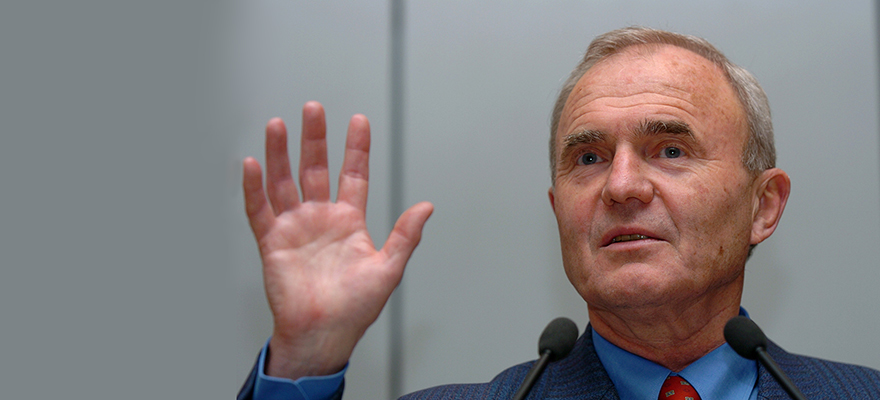
As Otmar Issing, former chief economist at the ECB, writes, this is “an irreconcilable contradiction since the highly virtuous people chosen will be absolutely unable to reconcile their moral principles with their responsibility for actions whose consequences they, as people unacquainted with the discipline concerned, can in no way foresee.” Accordingly, objective rules, economic literacy and personal integrity are not sufficient individually. Technical competence and moral virtue must pull in the same direction, which is achieved through codes of ethics, a clear and limited mandate and accountability to the public.
From this more nuanced point of view, it is hard to accuse the SNB of unethical behaviour. According to Reuters, SNB Chairman, Thomas Jordan, told a news conference in March, "We would rather have lost our reputation if we had closed our eyes to reality. That is where the central bank would have lost its credibility…It is important to see that the damage would have been much greater had the central bank not had the courage to take this decision." Such a comment appears both technically competent and morally virtuous.
When central banks try to manipulate exchange rates, it almost always ends in tears
Finally, did not the decision to uncap the franc put an end to the morally questionable policy of currency fixing? The moral conundrum that the SNB seems to be facing is what policy status is more ethically reproachable? Indeed, is stepping back from morally questionable interventionist policies considered intervention?
As one article in The Economist at the time concluded, “The SNB should not be lambasted for removing the cap. Rather, it should be criticised for adopting it in the first place. When central banks try to manipulate exchange rates, it almost always ends in tears.”
At that time, Switzerland was experiencing large inflows of foreign capital as the neighbouring euro zone was in the midst of a crisis. The Swiss franc was sharply appreciating (a headache for an export-oriented nation) and the economy was at risk of entering a deflationary spiral.
The decision was therefore taken by the SNB in September 2011 to devalue their currency by setting a minimum EUR/CHF exchange rate of CHF 1.20; determining to “buy foreign currency in unlimited quantities” to prevent the franc from becoming more expensive.
For many pro-market theorists, this is arguably the moment of original sin
Adam Smith
For many pro-market theorists, this is arguably the moment of original sin, as for them interventions, such as currency fixing, ignore the inherent efficiency and indeed morality of markets. Smith’s famous ‘invisible hand’ captures this ethos, in which producers and consumers respond, serve and, thus, benefit one another in a free market (albeit out of their own self-interest).
Limiting intervention from public bodies also prevents what John Stuart Mill describes as the ‘tyranny of the majority’; scenarios in which decisions made by agencies that represent the interests of the majority may actually oppress certain individuals or minority groups. Letting the market reign is therefore the right thing to do.
We can also ask whether the intended ends of currency fixing justify the means. Taking such a consequentialist ethical stance, Chloe Sevil recently reported that “empirical analysis of the effects of currency intervention demonstrates that often, the intended aims of currency intervention are not achieved.”
Thus, the ends themselves tend not to be morally justifiable; they are susceptible to failure, they may risk producing unintended consequences and, indeed, they may be malicious unto themselves. (Although in the Swiss case, the end result of currency manipulation wasn’t all that bad; employment and growth was high throughout the period).
Finally, the moral hazard of currency fixing is best articulated by considering the consequences that stem from a third party, such as the SNB, underwriting risk.
As Paul McCulley explains, this “allows investors to indulge in more risk-seeking behaviour and releases them from thorough due diligence…In the fullness of time, the currency will go down, but as long as the currency is fixed, the central bank is eliminating exchange rate risk and thus injecting moral hazard into the system.”
Black Thursday
As markets have become accustomed to forward guidance from central banks, the abrupt decision by the SNB to move away from their long-standing policy shocked many.
Swiss National Bank, President, Thomas Jordan
And then, on January 15, the SNB (acting on politico-economic pressures rather than explicitly ethical ones) finally removed the cap. All hell broke loose. The resultant sharp appreciation of the currency (the EUR/CHF rate now hovers around 1.05) and slump in Swiss stock values have affected the entire forex market - from the STP brokers that became exposed to client losses from negative balances sustained by customers short the Swiss franc to the clients themselves, many of them getting wiped out and facing losses well above their deposit amounts.
Moreover, Swiss export earnings, which make up a hefty chunk of the economy, have taken a hit, and Ski holidays to the Swiss Alps are a lot less attractive for price-conscious consumers.
But perhaps most importantly, the credibility of the SNB was jeopardised. In an era in which markets have become accustomed to forward guidance from central banks, the abrupt decision by the SNB to move away from their long-standing policy shocked many; as witnessed by the volatile market activity and scathing comments by many in the banking fraternity immediately following the announcement. Even Christine Lagarde, Managing Director of the International Monetary Fund, was taken off guard, finding it “a bit surprising that [the Swiss] did not contact me."
Ethical Enigmas
From an ethical point of view, such unexpected, unilateral action taken to maximise self-interest is morally questionable. “According to Kantian ethics, a moral agent has a duty to uphold moral principles, which includes the virtue of honesty," says Sevil. "Furthermore, what is now stopping other central banks from pursuing what they feel is in their own countries’ legitimate self-interest? The consequent currency war is not a pretty thought."
Yet ethical principles rarely provide black or white explanations. Indeed, Mohamed El-Erian, chief economic adviser to Allianz and IMF alumnus, stated in the Financial Times that exits from currency pegs cannot be pre-signalled for fear that may cause a major run on one of the affected currencies. Other explanations suggest that the SNB’s lack of forward guidance sought to prevent leaks, avoid resistance from exporters and some politicians, precede the impending announcement by the ECB to start a programme of quantitative easing or was simply arrogant.
Is it justified to place morality before ability in central bank policy, particularly given the far-reaching consequences at stake?
There is an apparent disparity here between the actions of the morally virtuous person and those of the technically competent one. This leads to the question of whether it is justified to place morality before ability in central bank policy, particularly given the far-reaching consequences at stake.
As Otmar Issing, former chief economist at the ECB, writes, this is “an irreconcilable contradiction since the highly virtuous people chosen will be absolutely unable to reconcile their moral principles with their responsibility for actions whose consequences they, as people unacquainted with the discipline concerned, can in no way foresee.” Accordingly, objective rules, economic literacy and personal integrity are not sufficient individually. Technical competence and moral virtue must pull in the same direction, which is achieved through codes of ethics, a clear and limited mandate and accountability to the public.
From this more nuanced point of view, it is hard to accuse the SNB of unethical behaviour. According to Reuters, SNB Chairman, Thomas Jordan, told a news conference in March, "We would rather have lost our reputation if we had closed our eyes to reality. That is where the central bank would have lost its credibility…It is important to see that the damage would have been much greater had the central bank not had the courage to take this decision." Such a comment appears both technically competent and morally virtuous.
When central banks try to manipulate exchange rates, it almost always ends in tears
Finally, did not the decision to uncap the franc put an end to the morally questionable policy of currency fixing? The moral conundrum that the SNB seems to be facing is what policy status is more ethically reproachable? Indeed, is stepping back from morally questionable interventionist policies considered intervention?
As one article in The Economist at the time concluded, “The SNB should not be lambasted for removing the cap. Rather, it should be criticised for adopting it in the first place. When central banks try to manipulate exchange rates, it almost always ends in tears.”
In this conversation, we sit down with Drew Niv, CSO at ATFX Connect and one of the most influential figures in modern FX.
We speak about market structure, the institutional view on liquidity, and the sharp rise of prop trading, a sector Drew has been commenting on in recent months. Drew explains why he once dismissed prop trading, why his view changed, and what he now thinks the model means for brokers, clients and risk managers.
We explore subscription-fee dependency, the high reneging rate, and the long-term challenge: how brokers can build a more stable and honest version of the model. Drew also talks about the traffic advantage standalone prop firms have built and why brokers may still win in the long run if they take the right approach.
In this conversation, we sit down with Drew Niv, CSO at ATFX Connect and one of the most influential figures in modern FX.
We speak about market structure, the institutional view on liquidity, and the sharp rise of prop trading, a sector Drew has been commenting on in recent months. Drew explains why he once dismissed prop trading, why his view changed, and what he now thinks the model means for brokers, clients and risk managers.
We explore subscription-fee dependency, the high reneging rate, and the long-term challenge: how brokers can build a more stable and honest version of the model. Drew also talks about the traffic advantage standalone prop firms have built and why brokers may still win in the long run if they take the right approach.
In this conversation, we sit down with Drew Niv, CSO at ATFX Connect and one of the most influential figures in modern FX.
We speak about market structure, the institutional view on liquidity, and the sharp rise of prop trading, a sector Drew has been commenting on in recent months. Drew explains why he once dismissed prop trading, why his view changed, and what he now thinks the model means for brokers, clients and risk managers.
We explore subscription-fee dependency, the high reneging rate, and the long-term challenge: how brokers can build a more stable and honest version of the model. Drew also talks about the traffic advantage standalone prop firms have built and why brokers may still win in the long run if they take the right approach.
In this conversation, we sit down with Drew Niv, CSO at ATFX Connect and one of the most influential figures in modern FX.
We speak about market structure, the institutional view on liquidity, and the sharp rise of prop trading, a sector Drew has been commenting on in recent months. Drew explains why he once dismissed prop trading, why his view changed, and what he now thinks the model means for brokers, clients and risk managers.
We explore subscription-fee dependency, the high reneging rate, and the long-term challenge: how brokers can build a more stable and honest version of the model. Drew also talks about the traffic advantage standalone prop firms have built and why brokers may still win in the long run if they take the right approach.
Executive Interview | Remonda Z. Kirketerp Møller| CEO & Founder Muinmos | FMLS:25
In this interview, Remonda Z. Kirketerp Møller, founder of Muinmos, breaks down the state of AI in regtech and what responsible adoption really looks like for brokers. We talk about rising fragmentation, the pressures around compliance accuracy, and why most firms are still in the early stages of AI maturity.
Ramanda also shares insights on regulator sandboxes, shifting expectations around accountability, and the current reality of MiCA licensing and passporting in Europe.
A concise look at where compliance, onboarding, and AI-driven processes are heading next.
In this interview, Remonda Z. Kirketerp Møller, founder of Muinmos, breaks down the state of AI in regtech and what responsible adoption really looks like for brokers. We talk about rising fragmentation, the pressures around compliance accuracy, and why most firms are still in the early stages of AI maturity.
Ramanda also shares insights on regulator sandboxes, shifting expectations around accountability, and the current reality of MiCA licensing and passporting in Europe.
A concise look at where compliance, onboarding, and AI-driven processes are heading next.
In this interview, Remonda Z. Kirketerp Møller, founder of Muinmos, breaks down the state of AI in regtech and what responsible adoption really looks like for brokers. We talk about rising fragmentation, the pressures around compliance accuracy, and why most firms are still in the early stages of AI maturity.
Ramanda also shares insights on regulator sandboxes, shifting expectations around accountability, and the current reality of MiCA licensing and passporting in Europe.
A concise look at where compliance, onboarding, and AI-driven processes are heading next.
In this interview, Remonda Z. Kirketerp Møller, founder of Muinmos, breaks down the state of AI in regtech and what responsible adoption really looks like for brokers. We talk about rising fragmentation, the pressures around compliance accuracy, and why most firms are still in the early stages of AI maturity.
Ramanda also shares insights on regulator sandboxes, shifting expectations around accountability, and the current reality of MiCA licensing and passporting in Europe.
A concise look at where compliance, onboarding, and AI-driven processes are heading next.
In this interview, Remonda Z. Kirketerp Møller, founder of Muinmos, breaks down the state of AI in regtech and what responsible adoption really looks like for brokers. We talk about rising fragmentation, the pressures around compliance accuracy, and why most firms are still in the early stages of AI maturity.
Ramanda also shares insights on regulator sandboxes, shifting expectations around accountability, and the current reality of MiCA licensing and passporting in Europe.
A concise look at where compliance, onboarding, and AI-driven processes are heading next.
In this interview, Remonda Z. Kirketerp Møller, founder of Muinmos, breaks down the state of AI in regtech and what responsible adoption really looks like for brokers. We talk about rising fragmentation, the pressures around compliance accuracy, and why most firms are still in the early stages of AI maturity.
Ramanda also shares insights on regulator sandboxes, shifting expectations around accountability, and the current reality of MiCA licensing and passporting in Europe.
A concise look at where compliance, onboarding, and AI-driven processes are heading next.
In this conversation, we speak with Aydin Bonabi, CEO and co-founder of Surveill, a firm focused on fraud detection and AI-driven compliance tools for financial institutions.
We start with Aydin’s view of the Summit and the challenges brokers face as fraud tactics grow more complex. He explains how firms can stay ahead through real-time signals, data patterns, and early-stage detection.
We also talk about AI training and why compliance teams often struggle to keep models accurate, fair, and aligned with regulatory expectations. Aydin breaks down what “good” AI training looks like inside a financial environment, including the importance of clean data, domain expertise, and human oversight.
He closes with a clear message: fraud is scaling, and so must the tools that stop it.
In this conversation, we speak with Aydin Bonabi, CEO and co-founder of Surveill, a firm focused on fraud detection and AI-driven compliance tools for financial institutions.
We start with Aydin’s view of the Summit and the challenges brokers face as fraud tactics grow more complex. He explains how firms can stay ahead through real-time signals, data patterns, and early-stage detection.
We also talk about AI training and why compliance teams often struggle to keep models accurate, fair, and aligned with regulatory expectations. Aydin breaks down what “good” AI training looks like inside a financial environment, including the importance of clean data, domain expertise, and human oversight.
He closes with a clear message: fraud is scaling, and so must the tools that stop it.
In this conversation, we speak with Aydin Bonabi, CEO and co-founder of Surveill, a firm focused on fraud detection and AI-driven compliance tools for financial institutions.
We start with Aydin’s view of the Summit and the challenges brokers face as fraud tactics grow more complex. He explains how firms can stay ahead through real-time signals, data patterns, and early-stage detection.
We also talk about AI training and why compliance teams often struggle to keep models accurate, fair, and aligned with regulatory expectations. Aydin breaks down what “good” AI training looks like inside a financial environment, including the importance of clean data, domain expertise, and human oversight.
He closes with a clear message: fraud is scaling, and so must the tools that stop it.
In this conversation, we speak with Aydin Bonabi, CEO and co-founder of Surveill, a firm focused on fraud detection and AI-driven compliance tools for financial institutions.
We start with Aydin’s view of the Summit and the challenges brokers face as fraud tactics grow more complex. He explains how firms can stay ahead through real-time signals, data patterns, and early-stage detection.
We also talk about AI training and why compliance teams often struggle to keep models accurate, fair, and aligned with regulatory expectations. Aydin breaks down what “good” AI training looks like inside a financial environment, including the importance of clean data, domain expertise, and human oversight.
He closes with a clear message: fraud is scaling, and so must the tools that stop it.
In this conversation, we speak with Aydin Bonabi, CEO and co-founder of Surveill, a firm focused on fraud detection and AI-driven compliance tools for financial institutions.
We start with Aydin’s view of the Summit and the challenges brokers face as fraud tactics grow more complex. He explains how firms can stay ahead through real-time signals, data patterns, and early-stage detection.
We also talk about AI training and why compliance teams often struggle to keep models accurate, fair, and aligned with regulatory expectations. Aydin breaks down what “good” AI training looks like inside a financial environment, including the importance of clean data, domain expertise, and human oversight.
He closes with a clear message: fraud is scaling, and so must the tools that stop it.
In this conversation, we speak with Aydin Bonabi, CEO and co-founder of Surveill, a firm focused on fraud detection and AI-driven compliance tools for financial institutions.
We start with Aydin’s view of the Summit and the challenges brokers face as fraud tactics grow more complex. He explains how firms can stay ahead through real-time signals, data patterns, and early-stage detection.
We also talk about AI training and why compliance teams often struggle to keep models accurate, fair, and aligned with regulatory expectations. Aydin breaks down what “good” AI training looks like inside a financial environment, including the importance of clean data, domain expertise, and human oversight.
He closes with a clear message: fraud is scaling, and so must the tools that stop it.
Exness expands its presence in Africa: Inside our interview with Paul Margarites in Cape Town
Finance Magnates met with Paul Margarites, Exness regional commercial director for Sub-Saharan Africa, during a visit to the firm’s office opening in Cape Town. In this talk, led by Andrea Badiola Mateos, Co-CEO at Finance Magnates, Paul shares views on the South African trading space, local user behavior, mobile trends, regulation, team growth, and how Exness plans to grow in more markets across the region. @Exness
Read the article at: https://www.financemagnates.com/thought-leadership/exness-expands-its-presence-in-africa-inside-our-interview-with-paul-margarites/
#exness #financemagnates #exnesstrading #CFDtrading #tradeonline #africanews #capetown
Finance Magnates met with Paul Margarites, Exness regional commercial director for Sub-Saharan Africa, during a visit to the firm’s office opening in Cape Town. In this talk, led by Andrea Badiola Mateos, Co-CEO at Finance Magnates, Paul shares views on the South African trading space, local user behavior, mobile trends, regulation, team growth, and how Exness plans to grow in more markets across the region. @Exness
Read the article at: https://www.financemagnates.com/thought-leadership/exness-expands-its-presence-in-africa-inside-our-interview-with-paul-margarites/
#exness #financemagnates #exnesstrading #CFDtrading #tradeonline #africanews #capetown
Finance Magnates met with Paul Margarites, Exness regional commercial director for Sub-Saharan Africa, during a visit to the firm’s office opening in Cape Town. In this talk, led by Andrea Badiola Mateos, Co-CEO at Finance Magnates, Paul shares views on the South African trading space, local user behavior, mobile trends, regulation, team growth, and how Exness plans to grow in more markets across the region. @Exness
Read the article at: https://www.financemagnates.com/thought-leadership/exness-expands-its-presence-in-africa-inside-our-interview-with-paul-margarites/
#exness #financemagnates #exnesstrading #CFDtrading #tradeonline #africanews #capetown
Finance Magnates met with Paul Margarites, Exness regional commercial director for Sub-Saharan Africa, during a visit to the firm’s office opening in Cape Town. In this talk, led by Andrea Badiola Mateos, Co-CEO at Finance Magnates, Paul shares views on the South African trading space, local user behavior, mobile trends, regulation, team growth, and how Exness plans to grow in more markets across the region. @Exness
Read the article at: https://www.financemagnates.com/thought-leadership/exness-expands-its-presence-in-africa-inside-our-interview-with-paul-margarites/
#exness #financemagnates #exnesstrading #CFDtrading #tradeonline #africanews #capetown
Finance Magnates met with Paul Margarites, Exness regional commercial director for Sub-Saharan Africa, during a visit to the firm’s office opening in Cape Town. In this talk, led by Andrea Badiola Mateos, Co-CEO at Finance Magnates, Paul shares views on the South African trading space, local user behavior, mobile trends, regulation, team growth, and how Exness plans to grow in more markets across the region. @Exness
Read the article at: https://www.financemagnates.com/thought-leadership/exness-expands-its-presence-in-africa-inside-our-interview-with-paul-margarites/
#exness #financemagnates #exnesstrading #CFDtrading #tradeonline #africanews #capetown
Finance Magnates met with Paul Margarites, Exness regional commercial director for Sub-Saharan Africa, during a visit to the firm’s office opening in Cape Town. In this talk, led by Andrea Badiola Mateos, Co-CEO at Finance Magnates, Paul shares views on the South African trading space, local user behavior, mobile trends, regulation, team growth, and how Exness plans to grow in more markets across the region. @Exness
Read the article at: https://www.financemagnates.com/thought-leadership/exness-expands-its-presence-in-africa-inside-our-interview-with-paul-margarites/
#exness #financemagnates #exnesstrading #CFDtrading #tradeonline #africanews #capetown
Executive Interview | Jas Shah | FMLS:25
Interview with Jas Shah
Builder | Adviser | Fintech Writer | Product Strategist
In this episode, Jonathan Fine sat down with Jas Shah, one of the most thoughtful voices in global fintech. Known for his work across advisory, product, stablecoins, and his widely read writing, Jas brings a rare combination of industry insight and plain-spoken clarity.
We talk about his first impression of the Summit, the projects that keep him busy today, and how they connect to the stablecoin panel he joined. Jas shares his view on the link between fintech, wealthtech and retail brokers, especially as firms like Revolut, eToro and Trading212 blur long-standing lines in the market.
We also explore what stablecoin adoption might look like for retail investment platforms, including a few product and UX angles that are not obvious at first glance.
To close, Jas explains how he thinks about writing, and how he approaches “shipping” pieces that spark debate across the industry.
Interview with Jas Shah
Builder | Adviser | Fintech Writer | Product Strategist
In this episode, Jonathan Fine sat down with Jas Shah, one of the most thoughtful voices in global fintech. Known for his work across advisory, product, stablecoins, and his widely read writing, Jas brings a rare combination of industry insight and plain-spoken clarity.
We talk about his first impression of the Summit, the projects that keep him busy today, and how they connect to the stablecoin panel he joined. Jas shares his view on the link between fintech, wealthtech and retail brokers, especially as firms like Revolut, eToro and Trading212 blur long-standing lines in the market.
We also explore what stablecoin adoption might look like for retail investment platforms, including a few product and UX angles that are not obvious at first glance.
To close, Jas explains how he thinks about writing, and how he approaches “shipping” pieces that spark debate across the industry.
Interview with Jas Shah
Builder | Adviser | Fintech Writer | Product Strategist
In this episode, Jonathan Fine sat down with Jas Shah, one of the most thoughtful voices in global fintech. Known for his work across advisory, product, stablecoins, and his widely read writing, Jas brings a rare combination of industry insight and plain-spoken clarity.
We talk about his first impression of the Summit, the projects that keep him busy today, and how they connect to the stablecoin panel he joined. Jas shares his view on the link between fintech, wealthtech and retail brokers, especially as firms like Revolut, eToro and Trading212 blur long-standing lines in the market.
We also explore what stablecoin adoption might look like for retail investment platforms, including a few product and UX angles that are not obvious at first glance.
To close, Jas explains how he thinks about writing, and how he approaches “shipping” pieces that spark debate across the industry.
Interview with Jas Shah
Builder | Adviser | Fintech Writer | Product Strategist
In this episode, Jonathan Fine sat down with Jas Shah, one of the most thoughtful voices in global fintech. Known for his work across advisory, product, stablecoins, and his widely read writing, Jas brings a rare combination of industry insight and plain-spoken clarity.
We talk about his first impression of the Summit, the projects that keep him busy today, and how they connect to the stablecoin panel he joined. Jas shares his view on the link between fintech, wealthtech and retail brokers, especially as firms like Revolut, eToro and Trading212 blur long-standing lines in the market.
We also explore what stablecoin adoption might look like for retail investment platforms, including a few product and UX angles that are not obvious at first glance.
To close, Jas explains how he thinks about writing, and how he approaches “shipping” pieces that spark debate across the industry.
Interview with Jas Shah
Builder | Adviser | Fintech Writer | Product Strategist
In this episode, Jonathan Fine sat down with Jas Shah, one of the most thoughtful voices in global fintech. Known for his work across advisory, product, stablecoins, and his widely read writing, Jas brings a rare combination of industry insight and plain-spoken clarity.
We talk about his first impression of the Summit, the projects that keep him busy today, and how they connect to the stablecoin panel he joined. Jas shares his view on the link between fintech, wealthtech and retail brokers, especially as firms like Revolut, eToro and Trading212 blur long-standing lines in the market.
We also explore what stablecoin adoption might look like for retail investment platforms, including a few product and UX angles that are not obvious at first glance.
To close, Jas explains how he thinks about writing, and how he approaches “shipping” pieces that spark debate across the industry.
Interview with Jas Shah
Builder | Adviser | Fintech Writer | Product Strategist
In this episode, Jonathan Fine sat down with Jas Shah, one of the most thoughtful voices in global fintech. Known for his work across advisory, product, stablecoins, and his widely read writing, Jas brings a rare combination of industry insight and plain-spoken clarity.
We talk about his first impression of the Summit, the projects that keep him busy today, and how they connect to the stablecoin panel he joined. Jas shares his view on the link between fintech, wealthtech and retail brokers, especially as firms like Revolut, eToro and Trading212 blur long-standing lines in the market.
We also explore what stablecoin adoption might look like for retail investment platforms, including a few product and UX angles that are not obvious at first glance.
To close, Jas explains how he thinks about writing, and how he approaches “shipping” pieces that spark debate across the industry.