>
Argentina’s ROFEX Exchange Eyeing International Investors
Tuesday,21/07/2015|18:44GMTby
Andy Traveller
To combat the stagnant state of investment in the country’s financial markets, ROFEX is giving international investors direct market access.
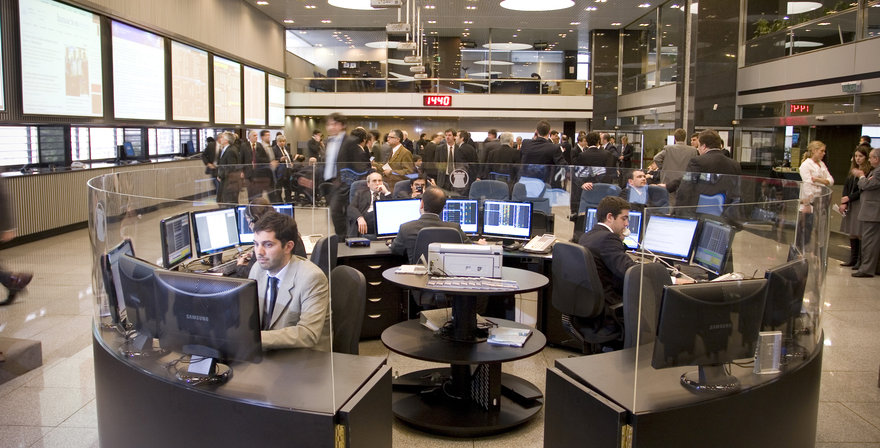
Emerging market investors take note: Argentina’s Rosario Futures Exchange (ROFEX) is eyeing international institutional investors, providing them with direct market access (DMA) to trade derivatives on agricultural, financial and other commodities, as well as stocks, bonds and other securities on its exchange.
Founded in 1909, ROFEX is the primary commodities exchange in Argentina. Starting out life as a futures exchange, it was the first in the world to list agricultural futures without delivery. The company now trades in a range of derivatives, and offers access to stocks and bonds through a cross-listing agreement with MerVal, the Buenos Aires Stock Exchange. It also owns and operates a clearing house and a software development company.
With volumes steadily growing over the past few years, ROFEX now ranks 28th in the world among derivatives exchanges in terms of volumes, according to the Futures Industry Association.
Direct Access from Afar
In 2010, ROFEX launched a DMA platform for domestic brokers. Five years later, it is rolling out the platform, along with associated services, to offshore institutional investors.
We now have a new window for international institutional investors to trade via the DMA platform.
In an exclusive interview with Finance Magnates, Chief Business Officer at ROFEX, Ivan M Dalonso, explained: “We now have a new window for international institutional investors. International investors that would like to trade here can now do so via the DMA platform and a specific account, which is called a special settlement account.”
The platform gives investors not only access to live market data, but allows them to trade directly on the exchange’s central book.
Investors can set up a Special Settlement Account to directly settle operations with the exchange’s Clearing House. To make the financial logistics easier, ROFEX has a US-domiciled bank account for collaterals.
According to the company, benefits of DMA access include:
Visualize the order book of the market's electronic system in real-time.
Allocate their own orders and achieve greater operational autonomy by increasing control over them (confirmation, modification and/or cancellation).
Greater speed, thus increasing efficiency in business operation.
Favour capture of business opportunities, from the analysis of the various products and/or markets conditions.
Reduction in the frequency of operational mistakes (execution mistakes), and other problems related to verbal orders given to the intermediary, since the orders are directly placed on the system by the client.
Possibility to develop trading strategies based on computer programs, also called ATS (Automated Trading Systems) or algorithmic trading.
Since the service became internationally available half a year ago, ROFEX has signed up three US-based hedge funds. Volumes of trades are increasing.
Products and Opportunities
International investors will be able to access and trade in all products offered by the exchange, ranging from FX and commodity futures to equities and bonds.
Given the country’s floundering currency and contracting economy, such opportunities are only for those sophisticated investors with an appetite for risk.
With licences to list CME Soybean and Corn, ROFEX also offers traders interesting spreads between the local contract and the CME contract. Coupled with the fact that agricultural commodities volumes are sizable, opportunities for arbitrage abound.
Mr. Dalonso would particularly welcome algorithmic trading, which he sees as mutually conducive to the market’s low prices, increasing volumes and high levels of volatility.
“We are interested in attracting international investors and sophisticated traders … We think we have a lot of opportunities; we know that the instruments here (in agricultural derivatives, bonds and commodities) are cheap now. Because they are volatile, traders can take advantage of this opportunity.”
Furthermore, ROFEX and the Algorithmic Trader’s Association (ATA) have signed a deal, in which ATA will offer advanced training to members of the exchange to further benefit from the advanced DMA access on offer. ATA is an international professional organisation and resource centre for the discussion of algorithmic trading strategy, methods, software, and technical analysis.
Given the Latin American country’s floundering currency and contracting economy, such opportunities are certainly only for those sophisticated investors with an appetite for risk. According to FT, presidential elections in October are expected to bring in a more market-friendly administration, and investors hope that untangling capital controls will be one of the top priorities for the new government.
Emerging market investors take note: Argentina’s Rosario Futures Exchange (ROFEX) is eyeing international institutional investors, providing them with direct market access (DMA) to trade derivatives on agricultural, financial and other commodities, as well as stocks, bonds and other securities on its exchange.
Founded in 1909, ROFEX is the primary commodities exchange in Argentina. Starting out life as a futures exchange, it was the first in the world to list agricultural futures without delivery. The company now trades in a range of derivatives, and offers access to stocks and bonds through a cross-listing agreement with MerVal, the Buenos Aires Stock Exchange. It also owns and operates a clearing house and a software development company.
With volumes steadily growing over the past few years, ROFEX now ranks 28th in the world among derivatives exchanges in terms of volumes, according to the Futures Industry Association.
Direct Access from Afar
In 2010, ROFEX launched a DMA platform for domestic brokers. Five years later, it is rolling out the platform, along with associated services, to offshore institutional investors.
We now have a new window for international institutional investors to trade via the DMA platform.
In an exclusive interview with Finance Magnates, Chief Business Officer at ROFEX, Ivan M Dalonso, explained: “We now have a new window for international institutional investors. International investors that would like to trade here can now do so via the DMA platform and a specific account, which is called a special settlement account.”
The platform gives investors not only access to live market data, but allows them to trade directly on the exchange’s central book.
Investors can set up a Special Settlement Account to directly settle operations with the exchange’s Clearing House. To make the financial logistics easier, ROFEX has a US-domiciled bank account for collaterals.
According to the company, benefits of DMA access include:
Visualize the order book of the market's electronic system in real-time.
Allocate their own orders and achieve greater operational autonomy by increasing control over them (confirmation, modification and/or cancellation).
Greater speed, thus increasing efficiency in business operation.
Favour capture of business opportunities, from the analysis of the various products and/or markets conditions.
Reduction in the frequency of operational mistakes (execution mistakes), and other problems related to verbal orders given to the intermediary, since the orders are directly placed on the system by the client.
Possibility to develop trading strategies based on computer programs, also called ATS (Automated Trading Systems) or algorithmic trading.
Since the service became internationally available half a year ago, ROFEX has signed up three US-based hedge funds. Volumes of trades are increasing.
Products and Opportunities
International investors will be able to access and trade in all products offered by the exchange, ranging from FX and commodity futures to equities and bonds.
Given the country’s floundering currency and contracting economy, such opportunities are only for those sophisticated investors with an appetite for risk.
With licences to list CME Soybean and Corn, ROFEX also offers traders interesting spreads between the local contract and the CME contract. Coupled with the fact that agricultural commodities volumes are sizable, opportunities for arbitrage abound.
Mr. Dalonso would particularly welcome algorithmic trading, which he sees as mutually conducive to the market’s low prices, increasing volumes and high levels of volatility.
“We are interested in attracting international investors and sophisticated traders … We think we have a lot of opportunities; we know that the instruments here (in agricultural derivatives, bonds and commodities) are cheap now. Because they are volatile, traders can take advantage of this opportunity.”
Furthermore, ROFEX and the Algorithmic Trader’s Association (ATA) have signed a deal, in which ATA will offer advanced training to members of the exchange to further benefit from the advanced DMA access on offer. ATA is an international professional organisation and resource centre for the discussion of algorithmic trading strategy, methods, software, and technical analysis.
Given the Latin American country’s floundering currency and contracting economy, such opportunities are certainly only for those sophisticated investors with an appetite for risk. According to FT, presidential elections in October are expected to bring in a more market-friendly administration, and investors hope that untangling capital controls will be one of the top priorities for the new government.
ASX Faces $150M Capital Charge After Scathing Inquiry Finds Years of Neglect
Featured Videos
Executive Interview | Charlotte Bullock | Chief Product Officer, Bank of London | FMLS:25
In this interview, we sat down with Charlotte Bullock, Head of Product at The Bank of London, previously at SAP and now shaping product at one of the sector’s most ambitious new banking players.
Charlotte reflects on the Summit so far and talks about the culture inside fintech banks today. We look at the pressures that come with scaling, and how firms can hold onto the nimble approach that made them stand out early on.
We also cover the state of payments ahead of her appearance on the payments roundtable: the blockages financial firms face, the areas that still need fixing, and what a realistic solution looks like in 2026.
In this interview, we sat down with Charlotte Bullock, Head of Product at The Bank of London, previously at SAP and now shaping product at one of the sector’s most ambitious new banking players.
Charlotte reflects on the Summit so far and talks about the culture inside fintech banks today. We look at the pressures that come with scaling, and how firms can hold onto the nimble approach that made them stand out early on.
We also cover the state of payments ahead of her appearance on the payments roundtable: the blockages financial firms face, the areas that still need fixing, and what a realistic solution looks like in 2026.
In this interview, we sat down with Charlotte Bullock, Head of Product at The Bank of London, previously at SAP and now shaping product at one of the sector’s most ambitious new banking players.
Charlotte reflects on the Summit so far and talks about the culture inside fintech banks today. We look at the pressures that come with scaling, and how firms can hold onto the nimble approach that made them stand out early on.
We also cover the state of payments ahead of her appearance on the payments roundtable: the blockages financial firms face, the areas that still need fixing, and what a realistic solution looks like in 2026.
In this interview, we sat down with Charlotte Bullock, Head of Product at The Bank of London, previously at SAP and now shaping product at one of the sector’s most ambitious new banking players.
Charlotte reflects on the Summit so far and talks about the culture inside fintech banks today. We look at the pressures that come with scaling, and how firms can hold onto the nimble approach that made them stand out early on.
We also cover the state of payments ahead of her appearance on the payments roundtable: the blockages financial firms face, the areas that still need fixing, and what a realistic solution looks like in 2026.
In this conversation, we sit down with Drew Niv, CSO at ATFX Connect and one of the most influential figures in modern FX.
We speak about market structure, the institutional view on liquidity, and the sharp rise of prop trading, a sector Drew has been commenting on in recent months. Drew explains why he once dismissed prop trading, why his view changed, and what he now thinks the model means for brokers, clients and risk managers.
We explore subscription-fee dependency, the high reneging rate, and the long-term challenge: how brokers can build a more stable and honest version of the model. Drew also talks about the traffic advantage standalone prop firms have built and why brokers may still win in the long run if they take the right approach.
In this conversation, we sit down with Drew Niv, CSO at ATFX Connect and one of the most influential figures in modern FX.
We speak about market structure, the institutional view on liquidity, and the sharp rise of prop trading, a sector Drew has been commenting on in recent months. Drew explains why he once dismissed prop trading, why his view changed, and what he now thinks the model means for brokers, clients and risk managers.
We explore subscription-fee dependency, the high reneging rate, and the long-term challenge: how brokers can build a more stable and honest version of the model. Drew also talks about the traffic advantage standalone prop firms have built and why brokers may still win in the long run if they take the right approach.
In this conversation, we sit down with Drew Niv, CSO at ATFX Connect and one of the most influential figures in modern FX.
We speak about market structure, the institutional view on liquidity, and the sharp rise of prop trading, a sector Drew has been commenting on in recent months. Drew explains why he once dismissed prop trading, why his view changed, and what he now thinks the model means for brokers, clients and risk managers.
We explore subscription-fee dependency, the high reneging rate, and the long-term challenge: how brokers can build a more stable and honest version of the model. Drew also talks about the traffic advantage standalone prop firms have built and why brokers may still win in the long run if they take the right approach.
In this conversation, we sit down with Drew Niv, CSO at ATFX Connect and one of the most influential figures in modern FX.
We speak about market structure, the institutional view on liquidity, and the sharp rise of prop trading, a sector Drew has been commenting on in recent months. Drew explains why he once dismissed prop trading, why his view changed, and what he now thinks the model means for brokers, clients and risk managers.
We explore subscription-fee dependency, the high reneging rate, and the long-term challenge: how brokers can build a more stable and honest version of the model. Drew also talks about the traffic advantage standalone prop firms have built and why brokers may still win in the long run if they take the right approach.
In this conversation, we sit down with Drew Niv, CSO at ATFX Connect and one of the most influential figures in modern FX.
We speak about market structure, the institutional view on liquidity, and the sharp rise of prop trading, a sector Drew has been commenting on in recent months. Drew explains why he once dismissed prop trading, why his view changed, and what he now thinks the model means for brokers, clients and risk managers.
We explore subscription-fee dependency, the high reneging rate, and the long-term challenge: how brokers can build a more stable and honest version of the model. Drew also talks about the traffic advantage standalone prop firms have built and why brokers may still win in the long run if they take the right approach.
In this conversation, we sit down with Drew Niv, CSO at ATFX Connect and one of the most influential figures in modern FX.
We speak about market structure, the institutional view on liquidity, and the sharp rise of prop trading, a sector Drew has been commenting on in recent months. Drew explains why he once dismissed prop trading, why his view changed, and what he now thinks the model means for brokers, clients and risk managers.
We explore subscription-fee dependency, the high reneging rate, and the long-term challenge: how brokers can build a more stable and honest version of the model. Drew also talks about the traffic advantage standalone prop firms have built and why brokers may still win in the long run if they take the right approach.
Executive Interview | Remonda Z. Kirketerp Møller| CEO & Founder Muinmos | FMLS:25
In this interview, Remonda Z. Kirketerp Møller, founder of Muinmos, breaks down the state of AI in regtech and what responsible adoption really looks like for brokers. We talk about rising fragmentation, the pressures around compliance accuracy, and why most firms are still in the early stages of AI maturity.
Ramanda also shares insights on regulator sandboxes, shifting expectations around accountability, and the current reality of MiCA licensing and passporting in Europe.
A concise look at where compliance, onboarding, and AI-driven processes are heading next.
In this interview, Remonda Z. Kirketerp Møller, founder of Muinmos, breaks down the state of AI in regtech and what responsible adoption really looks like for brokers. We talk about rising fragmentation, the pressures around compliance accuracy, and why most firms are still in the early stages of AI maturity.
Ramanda also shares insights on regulator sandboxes, shifting expectations around accountability, and the current reality of MiCA licensing and passporting in Europe.
A concise look at where compliance, onboarding, and AI-driven processes are heading next.
In this interview, Remonda Z. Kirketerp Møller, founder of Muinmos, breaks down the state of AI in regtech and what responsible adoption really looks like for brokers. We talk about rising fragmentation, the pressures around compliance accuracy, and why most firms are still in the early stages of AI maturity.
Ramanda also shares insights on regulator sandboxes, shifting expectations around accountability, and the current reality of MiCA licensing and passporting in Europe.
A concise look at where compliance, onboarding, and AI-driven processes are heading next.
In this interview, Remonda Z. Kirketerp Møller, founder of Muinmos, breaks down the state of AI in regtech and what responsible adoption really looks like for brokers. We talk about rising fragmentation, the pressures around compliance accuracy, and why most firms are still in the early stages of AI maturity.
Ramanda also shares insights on regulator sandboxes, shifting expectations around accountability, and the current reality of MiCA licensing and passporting in Europe.
A concise look at where compliance, onboarding, and AI-driven processes are heading next.
In this interview, Remonda Z. Kirketerp Møller, founder of Muinmos, breaks down the state of AI in regtech and what responsible adoption really looks like for brokers. We talk about rising fragmentation, the pressures around compliance accuracy, and why most firms are still in the early stages of AI maturity.
Ramanda also shares insights on regulator sandboxes, shifting expectations around accountability, and the current reality of MiCA licensing and passporting in Europe.
A concise look at where compliance, onboarding, and AI-driven processes are heading next.
In this interview, Remonda Z. Kirketerp Møller, founder of Muinmos, breaks down the state of AI in regtech and what responsible adoption really looks like for brokers. We talk about rising fragmentation, the pressures around compliance accuracy, and why most firms are still in the early stages of AI maturity.
Ramanda also shares insights on regulator sandboxes, shifting expectations around accountability, and the current reality of MiCA licensing and passporting in Europe.
A concise look at where compliance, onboarding, and AI-driven processes are heading next.
In this conversation, we speak with Aydin Bonabi, CEO and co-founder of Surveill, a firm focused on fraud detection and AI-driven compliance tools for financial institutions.
We start with Aydin’s view of the Summit and the challenges brokers face as fraud tactics grow more complex. He explains how firms can stay ahead through real-time signals, data patterns, and early-stage detection.
We also talk about AI training and why compliance teams often struggle to keep models accurate, fair, and aligned with regulatory expectations. Aydin breaks down what “good” AI training looks like inside a financial environment, including the importance of clean data, domain expertise, and human oversight.
He closes with a clear message: fraud is scaling, and so must the tools that stop it.
In this conversation, we speak with Aydin Bonabi, CEO and co-founder of Surveill, a firm focused on fraud detection and AI-driven compliance tools for financial institutions.
We start with Aydin’s view of the Summit and the challenges brokers face as fraud tactics grow more complex. He explains how firms can stay ahead through real-time signals, data patterns, and early-stage detection.
We also talk about AI training and why compliance teams often struggle to keep models accurate, fair, and aligned with regulatory expectations. Aydin breaks down what “good” AI training looks like inside a financial environment, including the importance of clean data, domain expertise, and human oversight.
He closes with a clear message: fraud is scaling, and so must the tools that stop it.
In this conversation, we speak with Aydin Bonabi, CEO and co-founder of Surveill, a firm focused on fraud detection and AI-driven compliance tools for financial institutions.
We start with Aydin’s view of the Summit and the challenges brokers face as fraud tactics grow more complex. He explains how firms can stay ahead through real-time signals, data patterns, and early-stage detection.
We also talk about AI training and why compliance teams often struggle to keep models accurate, fair, and aligned with regulatory expectations. Aydin breaks down what “good” AI training looks like inside a financial environment, including the importance of clean data, domain expertise, and human oversight.
He closes with a clear message: fraud is scaling, and so must the tools that stop it.
In this conversation, we speak with Aydin Bonabi, CEO and co-founder of Surveill, a firm focused on fraud detection and AI-driven compliance tools for financial institutions.
We start with Aydin’s view of the Summit and the challenges brokers face as fraud tactics grow more complex. He explains how firms can stay ahead through real-time signals, data patterns, and early-stage detection.
We also talk about AI training and why compliance teams often struggle to keep models accurate, fair, and aligned with regulatory expectations. Aydin breaks down what “good” AI training looks like inside a financial environment, including the importance of clean data, domain expertise, and human oversight.
He closes with a clear message: fraud is scaling, and so must the tools that stop it.
In this conversation, we speak with Aydin Bonabi, CEO and co-founder of Surveill, a firm focused on fraud detection and AI-driven compliance tools for financial institutions.
We start with Aydin’s view of the Summit and the challenges brokers face as fraud tactics grow more complex. He explains how firms can stay ahead through real-time signals, data patterns, and early-stage detection.
We also talk about AI training and why compliance teams often struggle to keep models accurate, fair, and aligned with regulatory expectations. Aydin breaks down what “good” AI training looks like inside a financial environment, including the importance of clean data, domain expertise, and human oversight.
He closes with a clear message: fraud is scaling, and so must the tools that stop it.
In this conversation, we speak with Aydin Bonabi, CEO and co-founder of Surveill, a firm focused on fraud detection and AI-driven compliance tools for financial institutions.
We start with Aydin’s view of the Summit and the challenges brokers face as fraud tactics grow more complex. He explains how firms can stay ahead through real-time signals, data patterns, and early-stage detection.
We also talk about AI training and why compliance teams often struggle to keep models accurate, fair, and aligned with regulatory expectations. Aydin breaks down what “good” AI training looks like inside a financial environment, including the importance of clean data, domain expertise, and human oversight.
He closes with a clear message: fraud is scaling, and so must the tools that stop it.
Exness expands its presence in Africa: Inside our interview with Paul Margarites in Cape Town
Finance Magnates met with Paul Margarites, Exness regional commercial director for Sub-Saharan Africa, during a visit to the firm’s office opening in Cape Town. In this talk, led by Andrea Badiola Mateos, Co-CEO at Finance Magnates, Paul shares views on the South African trading space, local user behavior, mobile trends, regulation, team growth, and how Exness plans to grow in more markets across the region. @Exness
Read the article at: https://www.financemagnates.com/thought-leadership/exness-expands-its-presence-in-africa-inside-our-interview-with-paul-margarites/
#exness #financemagnates #exnesstrading #CFDtrading #tradeonline #africanews #capetown
Finance Magnates met with Paul Margarites, Exness regional commercial director for Sub-Saharan Africa, during a visit to the firm’s office opening in Cape Town. In this talk, led by Andrea Badiola Mateos, Co-CEO at Finance Magnates, Paul shares views on the South African trading space, local user behavior, mobile trends, regulation, team growth, and how Exness plans to grow in more markets across the region. @Exness
Read the article at: https://www.financemagnates.com/thought-leadership/exness-expands-its-presence-in-africa-inside-our-interview-with-paul-margarites/
#exness #financemagnates #exnesstrading #CFDtrading #tradeonline #africanews #capetown
Finance Magnates met with Paul Margarites, Exness regional commercial director for Sub-Saharan Africa, during a visit to the firm’s office opening in Cape Town. In this talk, led by Andrea Badiola Mateos, Co-CEO at Finance Magnates, Paul shares views on the South African trading space, local user behavior, mobile trends, regulation, team growth, and how Exness plans to grow in more markets across the region. @Exness
Read the article at: https://www.financemagnates.com/thought-leadership/exness-expands-its-presence-in-africa-inside-our-interview-with-paul-margarites/
#exness #financemagnates #exnesstrading #CFDtrading #tradeonline #africanews #capetown
Finance Magnates met with Paul Margarites, Exness regional commercial director for Sub-Saharan Africa, during a visit to the firm’s office opening in Cape Town. In this talk, led by Andrea Badiola Mateos, Co-CEO at Finance Magnates, Paul shares views on the South African trading space, local user behavior, mobile trends, regulation, team growth, and how Exness plans to grow in more markets across the region. @Exness
Read the article at: https://www.financemagnates.com/thought-leadership/exness-expands-its-presence-in-africa-inside-our-interview-with-paul-margarites/
#exness #financemagnates #exnesstrading #CFDtrading #tradeonline #africanews #capetown
Finance Magnates met with Paul Margarites, Exness regional commercial director for Sub-Saharan Africa, during a visit to the firm’s office opening in Cape Town. In this talk, led by Andrea Badiola Mateos, Co-CEO at Finance Magnates, Paul shares views on the South African trading space, local user behavior, mobile trends, regulation, team growth, and how Exness plans to grow in more markets across the region. @Exness
Read the article at: https://www.financemagnates.com/thought-leadership/exness-expands-its-presence-in-africa-inside-our-interview-with-paul-margarites/
#exness #financemagnates #exnesstrading #CFDtrading #tradeonline #africanews #capetown
Finance Magnates met with Paul Margarites, Exness regional commercial director for Sub-Saharan Africa, during a visit to the firm’s office opening in Cape Town. In this talk, led by Andrea Badiola Mateos, Co-CEO at Finance Magnates, Paul shares views on the South African trading space, local user behavior, mobile trends, regulation, team growth, and how Exness plans to grow in more markets across the region. @Exness
Read the article at: https://www.financemagnates.com/thought-leadership/exness-expands-its-presence-in-africa-inside-our-interview-with-paul-margarites/
#exness #financemagnates #exnesstrading #CFDtrading #tradeonline #africanews #capetown