>
Why Continuity of Monetary Policy Normalization is Indispensable
Why Continuity of Monetary Policy Normalization is Indispensable
Sunday,24/01/2016|12:02GMTby
Vassil Nikolov
Mr. Kaplan of the Fed warns of the potential distortions that may be realized in the economy if the interest rates remained low for an extended period.
(Photo: Bloomberg)
The incumbent President of the Federal Reserve Bank of Dallas, Robert Kaplan, reiterated the importance of raising short-term interest rates continually by the central bank. He warned of the potential distortions that may be realized in the economy if the interest rates remained low for an extended period.
According to the remarks prepared for delivery on Monday in Dallas, Mr. Kaplan said that further delay in normalization will trigger the risk of excessive accommodation.
Mr. Kaplan added that from his experience, economic imbalances could be easily recognized in
hindsight. The former professor at Harvard Business School and Vice Chairman of the Goldman Sachs Group also said that costs of loose monetary policy can be realized through distortions in hiring decisions, inventory, and investment.
In his remarks, Mr. Kaplan predicted intense risks internationally to the United States economy including weaker economic growth in China and that may lower the prices of commodities thus creating unprecedented headwinds for the US GDP and that of other economies.
The celebrated economist who does not vote in the Federal Open Market Committee for setting rates said that he supports the central bank’s decision to raise the short-term interest rate as a benchmark.
The man who resumed office in September expounded on his previous remarks in public on his thoughts on the Phillips curve, a concept that proposes that as unemployment falls, the slack in an economy diminishes. This slack is a principal precursor to trends of higher inflation. However, he expressed doubts concerning short-term trade-off between unemployment and inflation.
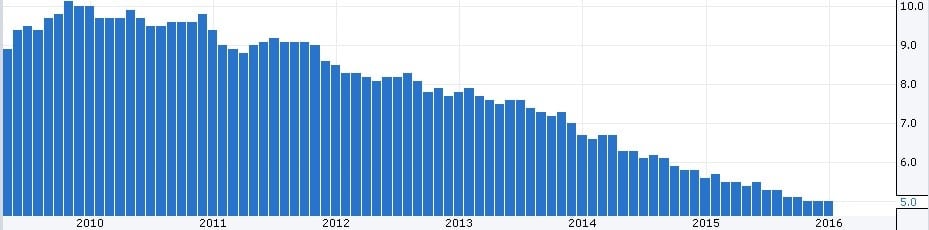
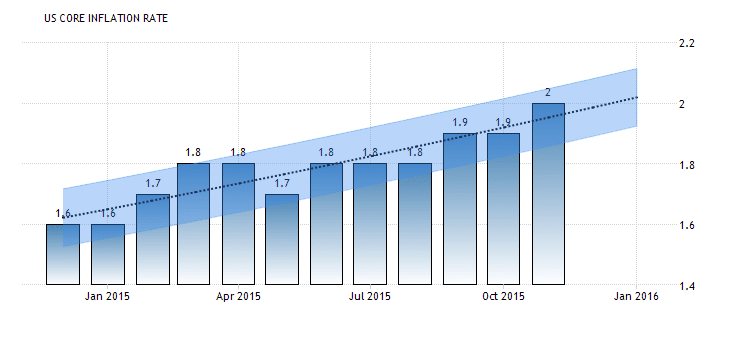
He said that in the current recovery period, the country is moving towards increasingly lower rates of unemployment although an increase in headline inflation has not been experienced. In December, the unemployment rate in the US was 5%, but the rate of inflation has stayed below the 2% mark set by the Federal Reserve for the last 3.5 years.
U.S. Unemployment claims till December.
Mr. Kaplan said that even though inflation may be caused by transitory factors, some fundamental issues could also be at play.
Mr. Kaplan predicted intense risks internationally to the United States economy
The factors were affecting economic conditions; he added, include aging populations and digital disruptions that are likely to significantly affect the country’s participation rates in the labor force. Mr. Kaplan noted that the high ratios of debt to GDP in Japan, China, and the US were possible hindrances to the growth of these economies.
He also said that he expects the country’s inflation rates to increase beyond the 2% target set by the central bank by the fall of 2017 coupled with a decrease in the rate of unemployment. However, the minutes released from the Federal Reserve’s policy meeting in December indicate that some officials were pessimistic that the rate of inflation will remain below 2%.
The incumbent President of the Federal Reserve Bank of Dallas, Robert Kaplan, reiterated the importance of raising short-term interest rates continually by the central bank. He warned of the potential distortions that may be realized in the economy if the interest rates remained low for an extended period.
According to the remarks prepared for delivery on Monday in Dallas, Mr. Kaplan said that further delay in normalization will trigger the risk of excessive accommodation.
Mr. Kaplan added that from his experience, economic imbalances could be easily recognized in
hindsight. The former professor at Harvard Business School and Vice Chairman of the Goldman Sachs Group also said that costs of loose monetary policy can be realized through distortions in hiring decisions, inventory, and investment.
In his remarks, Mr. Kaplan predicted intense risks internationally to the United States economy including weaker economic growth in China and that may lower the prices of commodities thus creating unprecedented headwinds for the US GDP and that of other economies.
The celebrated economist who does not vote in the Federal Open Market Committee for setting rates said that he supports the central bank’s decision to raise the short-term interest rate as a benchmark.
The man who resumed office in September expounded on his previous remarks in public on his thoughts on the Phillips curve, a concept that proposes that as unemployment falls, the slack in an economy diminishes. This slack is a principal precursor to trends of higher inflation. However, he expressed doubts concerning short-term trade-off between unemployment and inflation.
He said that in the current recovery period, the country is moving towards increasingly lower rates of unemployment although an increase in headline inflation has not been experienced. In December, the unemployment rate in the US was 5%, but the rate of inflation has stayed below the 2% mark set by the Federal Reserve for the last 3.5 years.
U.S. Unemployment claims till December.
Mr. Kaplan said that even though inflation may be caused by transitory factors, some fundamental issues could also be at play.
Mr. Kaplan predicted intense risks internationally to the United States economy
The factors were affecting economic conditions; he added, include aging populations and digital disruptions that are likely to significantly affect the country’s participation rates in the labor force. Mr. Kaplan noted that the high ratios of debt to GDP in Japan, China, and the US were possible hindrances to the growth of these economies.
He also said that he expects the country’s inflation rates to increase beyond the 2% target set by the central bank by the fall of 2017 coupled with a decrease in the rate of unemployment. However, the minutes released from the Federal Reserve’s policy meeting in December indicate that some officials were pessimistic that the rate of inflation will remain below 2%.
Today's Monday, the 27th of July 2026, and these are our main stories: iFOREX reports stronger client growth despite currency headwinds, BlackBull's New Zealand business expands, and the FCA highlights Consumer Duty good practice.
Today's Monday, the 27th of July 2026, and these are our main stories: iFOREX reports stronger client growth despite currency headwinds, BlackBull's New Zealand business expands, and the FCA highlights Consumer Duty good practice.
Today's Monday, the 27th of July 2026, and these are our main stories: iFOREX reports stronger client growth despite currency headwinds, BlackBull's New Zealand business expands, and the FCA highlights Consumer Duty good practice.
Today's Monday, the 27th of July 2026, and these are our main stories: iFOREX reports stronger client growth despite currency headwinds, BlackBull's New Zealand business expands, and the FCA highlights Consumer Duty good practice.
Today's Friday, the 24th of July 2026, and these are our main stories: the FCA finds major gaps in anti-money laundering controls at alternative asset managers, Wise shares tumble after a US banking licence setback, and Google's EU fines could benefit fintech apps.
Today's Friday, the 24th of July 2026, and these are our main stories: the FCA finds major gaps in anti-money laundering controls at alternative asset managers, Wise shares tumble after a US banking licence setback, and Google's EU fines could benefit fintech apps.
Today's Friday, the 24th of July 2026, and these are our main stories: the FCA finds major gaps in anti-money laundering controls at alternative asset managers, Wise shares tumble after a US banking licence setback, and Google's EU fines could benefit fintech apps.
Today's Friday, the 24th of July 2026, and these are our main stories: the FCA finds major gaps in anti-money laundering controls at alternative asset managers, Wise shares tumble after a US banking licence setback, and Google's EU fines could benefit fintech apps.
Today's Friday, the 24th of July 2026, and these are our main stories: the FCA finds major gaps in anti-money laundering controls at alternative asset managers, Wise shares tumble after a US banking licence setback, and Google's EU fines could benefit fintech apps.
Today's Friday, the 24th of July 2026, and these are our main stories: the FCA finds major gaps in anti-money laundering controls at alternative asset managers, Wise shares tumble after a US banking licence setback, and Google's EU fines could benefit fintech apps.
FM Daily Brief – 23 July 2026
FM Daily Brief – 23 July 2026
FM Daily Brief – 23 July 2026
FM Daily Brief – 23 July 2026
FM Daily Brief – 23 July 2026
FM Daily Brief – 23 July 2026
Today's Thursday, the 23rd of July 2026, and these are our main stories: BitMEX announces it will shut down its crypto trading platform, the Financial Commission launches a certification programme for prop firms, and the SEC settles a records lawsuit with Coinbase.
Today's Thursday, the 23rd of July 2026, and these are our main stories: BitMEX announces it will shut down its crypto trading platform, the Financial Commission launches a certification programme for prop firms, and the SEC settles a records lawsuit with Coinbase.
Today's Thursday, the 23rd of July 2026, and these are our main stories: BitMEX announces it will shut down its crypto trading platform, the Financial Commission launches a certification programme for prop firms, and the SEC settles a records lawsuit with Coinbase.
Today's Thursday, the 23rd of July 2026, and these are our main stories: BitMEX announces it will shut down its crypto trading platform, the Financial Commission launches a certification programme for prop firms, and the SEC settles a records lawsuit with Coinbase.
Today's Thursday, the 23rd of July 2026, and these are our main stories: BitMEX announces it will shut down its crypto trading platform, the Financial Commission launches a certification programme for prop firms, and the SEC settles a records lawsuit with Coinbase.
Today's Thursday, the 23rd of July 2026, and these are our main stories: BitMEX announces it will shut down its crypto trading platform, the Financial Commission launches a certification programme for prop firms, and the SEC settles a records lawsuit with Coinbase.
FM Daily Brief – 22 July 2026
FM Daily Brief – 22 July 2026
FM Daily Brief – 22 July 2026
FM Daily Brief – 22 July 2026
FM Daily Brief – 22 July 2026
FM Daily Brief – 22 July 2026
Today's Wednesday, the 22nd of July 2026, and these are our main stories: retail CFD broker trading volumes ease in the second quarter, Interactive Brokers posts strong quarterly results, and tastytrade faces a Finra fine.
Today's Wednesday, the 22nd of July 2026, and these are our main stories: retail CFD broker trading volumes ease in the second quarter, Interactive Brokers posts strong quarterly results, and tastytrade faces a Finra fine.
Today's Wednesday, the 22nd of July 2026, and these are our main stories: retail CFD broker trading volumes ease in the second quarter, Interactive Brokers posts strong quarterly results, and tastytrade faces a Finra fine.
Today's Wednesday, the 22nd of July 2026, and these are our main stories: retail CFD broker trading volumes ease in the second quarter, Interactive Brokers posts strong quarterly results, and tastytrade faces a Finra fine.
Today's Wednesday, the 22nd of July 2026, and these are our main stories: retail CFD broker trading volumes ease in the second quarter, Interactive Brokers posts strong quarterly results, and tastytrade faces a Finra fine.
Today's Wednesday, the 22nd of July 2026, and these are our main stories: retail CFD broker trading volumes ease in the second quarter, Interactive Brokers posts strong quarterly results, and tastytrade faces a Finra fine.
FM Daily Brief – 21 July 2026
FM Daily Brief – 21 July 2026
FM Daily Brief – 21 July 2026
FM Daily Brief – 21 July 2026
FM Daily Brief – 21 July 2026
FM Daily Brief – 21 July 2026
Today's Tuesday, the 21st of July 2026, and these are our main stories: has BDSwiss’s offshore been shuttered? Esma reports strong growth in cross border retail investing across Europe, and the London Stock Exchange plans overnight trading.
Today's Tuesday, the 21st of July 2026, and these are our main stories: has BDSwiss’s offshore been shuttered? Esma reports strong growth in cross border retail investing across Europe, and the London Stock Exchange plans overnight trading.
Today's Tuesday, the 21st of July 2026, and these are our main stories: has BDSwiss’s offshore been shuttered? Esma reports strong growth in cross border retail investing across Europe, and the London Stock Exchange plans overnight trading.
Today's Tuesday, the 21st of July 2026, and these are our main stories: has BDSwiss’s offshore been shuttered? Esma reports strong growth in cross border retail investing across Europe, and the London Stock Exchange plans overnight trading.
Today's Tuesday, the 21st of July 2026, and these are our main stories: has BDSwiss’s offshore been shuttered? Esma reports strong growth in cross border retail investing across Europe, and the London Stock Exchange plans overnight trading.
Today's Tuesday, the 21st of July 2026, and these are our main stories: has BDSwiss’s offshore been shuttered? Esma reports strong growth in cross border retail investing across Europe, and the London Stock Exchange plans overnight trading.