>
Don’t Be Duped By the Stocks of Australian Banks
Don’t Be Duped By the Stocks of Australian Banks
Wednesday,20/01/2016|21:34GMTby
Vassil Nikolov
Another in-depth analysis by Vassil Nikolov, this time focused on Australia and its big four banks.
Finance Magnates
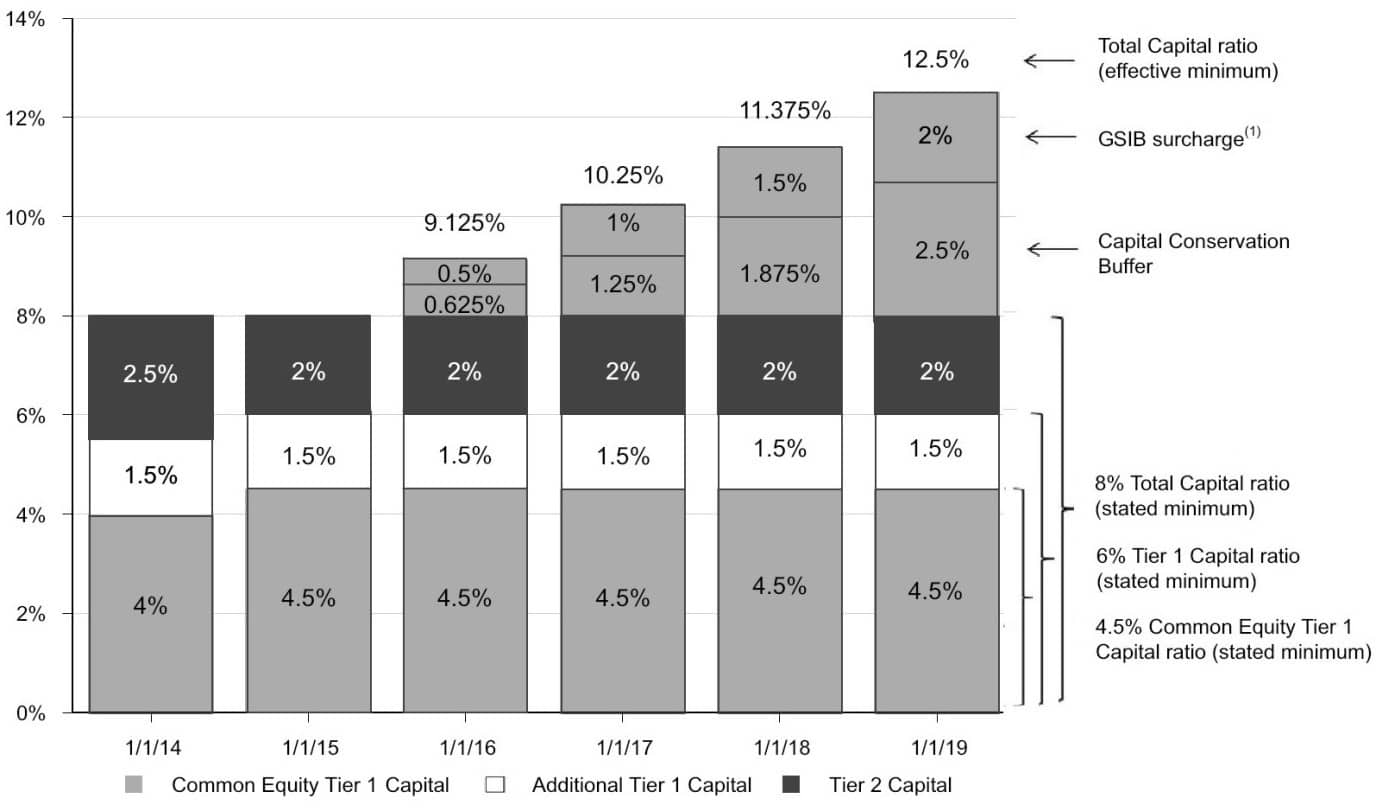
All the big four banks in Australia are down by 9% this year, but the introduction of stricter capital rules is likely to lower the price of their shares.
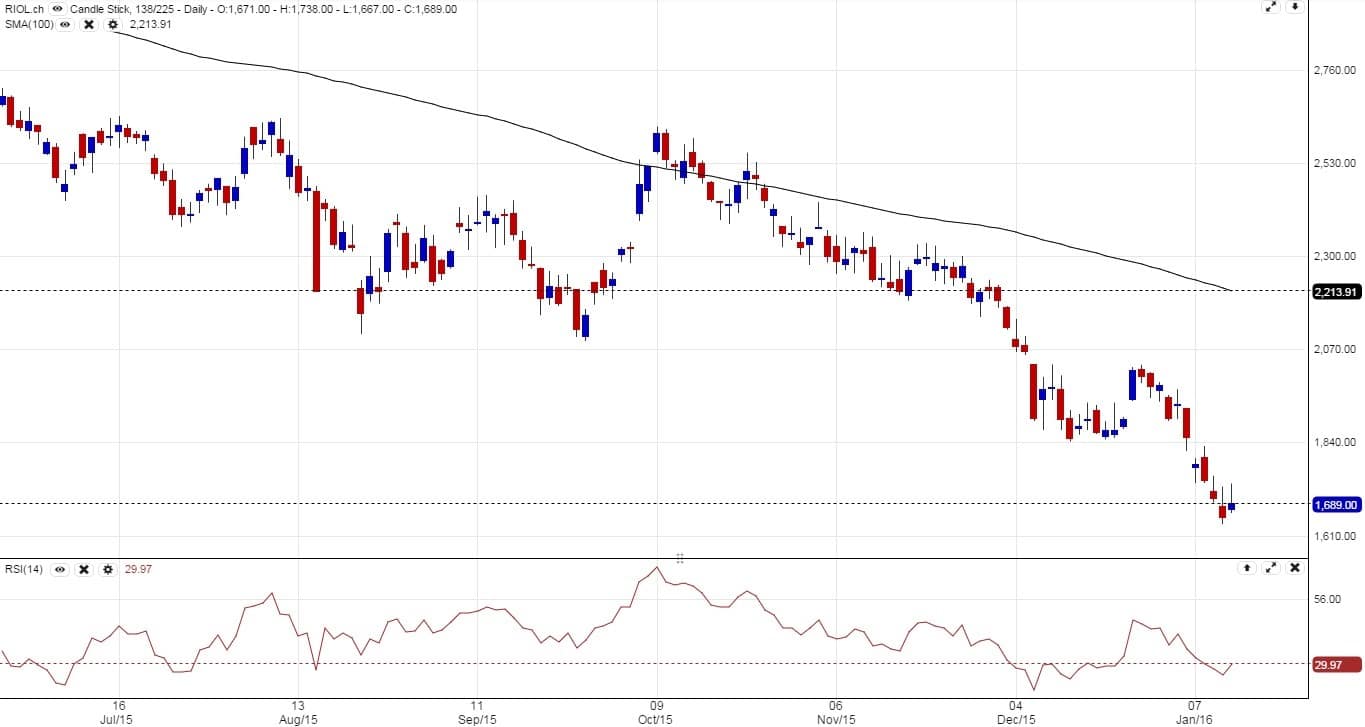
Many Australian stocks are undergoing the worst start to the new year as some investors dump mining giants Rio Tinto and BHP Billiton and the big four banks amidst concerns that China’s economy is weakening.
On Tuesday, the S&P/ASX200 Index soared to its eighth straight consecutive decline, lowering the benchmark to 7% since the commencement of the year and lingering close to a 2.5% low.
Although miners like Rio Tinto (RIO.AU) and (BHP.AU) have been under constant pressure since early 2011, selloffs in the stocks of the big four indicate an innumerable reversal of the fortunes of lenders that was brought about by investors who had a deep quest for high yields. From its high in March 2015, the S&P/ASX200 Index is down by a quarter.
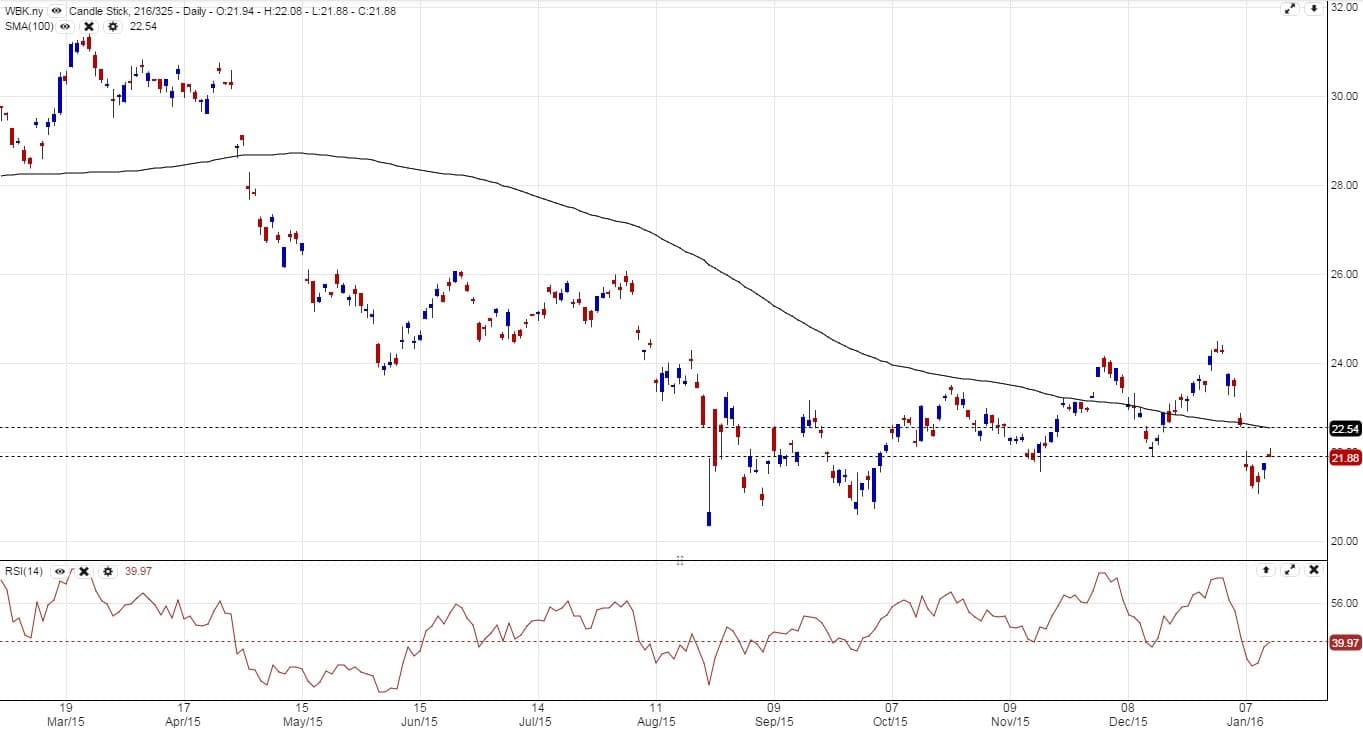
The big four which include Westpac (WBC.AU), National Australia Bank (NAB.AU), Commonwealth Bank of Australia (CBA.AU), and ANZ (ANZ.AU) make up for 30% of the total stock market in Australia.
Their 9% decline in stock trading indicates that the Australian stock market is losing. Even though the declines experienced recently have resulted in historic low valuations of 11 times compared to the big fours’ earnings of the last 12 months, the decline is expected to persist. Brian Johnson, the CSLA head of research for Australian banks, predicts more headwinds that may buffet the big four banks.
The stocks of Aussie banks were of great interest to buyers in the recent past, but they no longer remain attractive to the funds denominated in US dollars as they were initial. A stronger Australian dollar combined with the juicy 5% plus yields in dividends that was offered by Australia’s big four banks made the stocks a perfect no-brainer for the chasers of yields faced with absolute zero interest rates in the United States, but these conditions no longer hold.
The strong trading revenues and write-backs of losses from loans, which are quite volatile, have enabled Australian banks to record higher earnings that they normally should.
CSLA’s Johnson Brian also adds that at the same time, banks in the United States that enjoy lower valuations than Australian banks and provide their investors with more reasonable yields in dividends are now in better shape and face lower risks.
There is an additional risk that all the big four Aussie banks may no longer be in a position to pay generous dividends. Johnson Brian, who expects a 10% decline in the big four’s sustainable payout ratios, says that the sustainable dividend payout ratios for banks are not linear, hence, the sustainable payout rate would fall should capital intensity rise and earnings fall. The analyst, who has a scrawny rating in this sector, adds that Australian banks have never faced a challenge in the growth of earnings.
The strong trading revenues and write-backs of losses from loans, which are quite volatile, have enabled Australian banks to record higher earnings that they normally should. Johnson says that Westpac, for instance, could have recorded a total of 23 basis points associated with losses from loans instead of 13 basis points without the inclusion of write-backs in 2015. The difference is a pointer to the fact the bank’s earnings were 8% higher.
Despite that, the nonrecurring nature of write-backs means that losses will eventually have to rise thus dealing a massive blow to the profits. Meanwhile, the fears of a bubble in housing and weaker Chinese manufacturing capacity on the demand commodities such as iron ore may dwindle the earnings of Australian bank earnings.
All the big four banks in Australia are down by 9% this year, but the introduction of stricter capital rules is likely to lower the price of their shares.
Many Australian stocks are undergoing the worst start to the new year as some investors dump mining giants Rio Tinto and BHP Billiton and the big four banks amidst concerns that China’s economy is weakening.
On Tuesday, the S&P/ASX200 Index soared to its eighth straight consecutive decline, lowering the benchmark to 7% since the commencement of the year and lingering close to a 2.5% low.
Although miners like Rio Tinto (RIO.AU) and (BHP.AU) have been under constant pressure since early 2011, selloffs in the stocks of the big four indicate an innumerable reversal of the fortunes of lenders that was brought about by investors who had a deep quest for high yields. From its high in March 2015, the S&P/ASX200 Index is down by a quarter.
The big four which include Westpac (WBC.AU), National Australia Bank (NAB.AU), Commonwealth Bank of Australia (CBA.AU), and ANZ (ANZ.AU) make up for 30% of the total stock market in Australia.
Their 9% decline in stock trading indicates that the Australian stock market is losing. Even though the declines experienced recently have resulted in historic low valuations of 11 times compared to the big fours’ earnings of the last 12 months, the decline is expected to persist. Brian Johnson, the CSLA head of research for Australian banks, predicts more headwinds that may buffet the big four banks.
The stocks of Aussie banks were of great interest to buyers in the recent past, but they no longer remain attractive to the funds denominated in US dollars as they were initial. A stronger Australian dollar combined with the juicy 5% plus yields in dividends that was offered by Australia’s big four banks made the stocks a perfect no-brainer for the chasers of yields faced with absolute zero interest rates in the United States, but these conditions no longer hold.
The strong trading revenues and write-backs of losses from loans, which are quite volatile, have enabled Australian banks to record higher earnings that they normally should.
CSLA’s Johnson Brian also adds that at the same time, banks in the United States that enjoy lower valuations than Australian banks and provide their investors with more reasonable yields in dividends are now in better shape and face lower risks.
There is an additional risk that all the big four Aussie banks may no longer be in a position to pay generous dividends. Johnson Brian, who expects a 10% decline in the big four’s sustainable payout ratios, says that the sustainable dividend payout ratios for banks are not linear, hence, the sustainable payout rate would fall should capital intensity rise and earnings fall. The analyst, who has a scrawny rating in this sector, adds that Australian banks have never faced a challenge in the growth of earnings.
The strong trading revenues and write-backs of losses from loans, which are quite volatile, have enabled Australian banks to record higher earnings that they normally should. Johnson says that Westpac, for instance, could have recorded a total of 23 basis points associated with losses from loans instead of 13 basis points without the inclusion of write-backs in 2015. The difference is a pointer to the fact the bank’s earnings were 8% higher.
Despite that, the nonrecurring nature of write-backs means that losses will eventually have to rise thus dealing a massive blow to the profits. Meanwhile, the fears of a bubble in housing and weaker Chinese manufacturing capacity on the demand commodities such as iron ore may dwindle the earnings of Australian bank earnings.
Today's Monday, the 27th of July 2026, and these are our main stories: iFOREX reports stronger client growth despite currency headwinds, BlackBull's New Zealand business expands, and the FCA highlights Consumer Duty good practice.
Today's Monday, the 27th of July 2026, and these are our main stories: iFOREX reports stronger client growth despite currency headwinds, BlackBull's New Zealand business expands, and the FCA highlights Consumer Duty good practice.
Today's Monday, the 27th of July 2026, and these are our main stories: iFOREX reports stronger client growth despite currency headwinds, BlackBull's New Zealand business expands, and the FCA highlights Consumer Duty good practice.
Today's Monday, the 27th of July 2026, and these are our main stories: iFOREX reports stronger client growth despite currency headwinds, BlackBull's New Zealand business expands, and the FCA highlights Consumer Duty good practice.
Today's Friday, the 24th of July 2026, and these are our main stories: the FCA finds major gaps in anti-money laundering controls at alternative asset managers, Wise shares tumble after a US banking licence setback, and Google's EU fines could benefit fintech apps.
Today's Friday, the 24th of July 2026, and these are our main stories: the FCA finds major gaps in anti-money laundering controls at alternative asset managers, Wise shares tumble after a US banking licence setback, and Google's EU fines could benefit fintech apps.
Today's Friday, the 24th of July 2026, and these are our main stories: the FCA finds major gaps in anti-money laundering controls at alternative asset managers, Wise shares tumble after a US banking licence setback, and Google's EU fines could benefit fintech apps.
Today's Friday, the 24th of July 2026, and these are our main stories: the FCA finds major gaps in anti-money laundering controls at alternative asset managers, Wise shares tumble after a US banking licence setback, and Google's EU fines could benefit fintech apps.
Today's Friday, the 24th of July 2026, and these are our main stories: the FCA finds major gaps in anti-money laundering controls at alternative asset managers, Wise shares tumble after a US banking licence setback, and Google's EU fines could benefit fintech apps.
Today's Friday, the 24th of July 2026, and these are our main stories: the FCA finds major gaps in anti-money laundering controls at alternative asset managers, Wise shares tumble after a US banking licence setback, and Google's EU fines could benefit fintech apps.
FM Daily Brief – 23 July 2026
FM Daily Brief – 23 July 2026
FM Daily Brief – 23 July 2026
FM Daily Brief – 23 July 2026
FM Daily Brief – 23 July 2026
FM Daily Brief – 23 July 2026
Today's Thursday, the 23rd of July 2026, and these are our main stories: BitMEX announces it will shut down its crypto trading platform, the Financial Commission launches a certification programme for prop firms, and the SEC settles a records lawsuit with Coinbase.
Today's Thursday, the 23rd of July 2026, and these are our main stories: BitMEX announces it will shut down its crypto trading platform, the Financial Commission launches a certification programme for prop firms, and the SEC settles a records lawsuit with Coinbase.
Today's Thursday, the 23rd of July 2026, and these are our main stories: BitMEX announces it will shut down its crypto trading platform, the Financial Commission launches a certification programme for prop firms, and the SEC settles a records lawsuit with Coinbase.
Today's Thursday, the 23rd of July 2026, and these are our main stories: BitMEX announces it will shut down its crypto trading platform, the Financial Commission launches a certification programme for prop firms, and the SEC settles a records lawsuit with Coinbase.
Today's Thursday, the 23rd of July 2026, and these are our main stories: BitMEX announces it will shut down its crypto trading platform, the Financial Commission launches a certification programme for prop firms, and the SEC settles a records lawsuit with Coinbase.
Today's Thursday, the 23rd of July 2026, and these are our main stories: BitMEX announces it will shut down its crypto trading platform, the Financial Commission launches a certification programme for prop firms, and the SEC settles a records lawsuit with Coinbase.
FM Daily Brief – 22 July 2026
FM Daily Brief – 22 July 2026
FM Daily Brief – 22 July 2026
FM Daily Brief – 22 July 2026
FM Daily Brief – 22 July 2026
FM Daily Brief – 22 July 2026
Today's Wednesday, the 22nd of July 2026, and these are our main stories: retail CFD broker trading volumes ease in the second quarter, Interactive Brokers posts strong quarterly results, and tastytrade faces a Finra fine.
Today's Wednesday, the 22nd of July 2026, and these are our main stories: retail CFD broker trading volumes ease in the second quarter, Interactive Brokers posts strong quarterly results, and tastytrade faces a Finra fine.
Today's Wednesday, the 22nd of July 2026, and these are our main stories: retail CFD broker trading volumes ease in the second quarter, Interactive Brokers posts strong quarterly results, and tastytrade faces a Finra fine.
Today's Wednesday, the 22nd of July 2026, and these are our main stories: retail CFD broker trading volumes ease in the second quarter, Interactive Brokers posts strong quarterly results, and tastytrade faces a Finra fine.
Today's Wednesday, the 22nd of July 2026, and these are our main stories: retail CFD broker trading volumes ease in the second quarter, Interactive Brokers posts strong quarterly results, and tastytrade faces a Finra fine.
Today's Wednesday, the 22nd of July 2026, and these are our main stories: retail CFD broker trading volumes ease in the second quarter, Interactive Brokers posts strong quarterly results, and tastytrade faces a Finra fine.
FM Daily Brief – 21 July 2026
FM Daily Brief – 21 July 2026
FM Daily Brief – 21 July 2026
FM Daily Brief – 21 July 2026
FM Daily Brief – 21 July 2026
FM Daily Brief – 21 July 2026
Today's Tuesday, the 21st of July 2026, and these are our main stories: has BDSwiss’s offshore been shuttered? Esma reports strong growth in cross border retail investing across Europe, and the London Stock Exchange plans overnight trading.
Today's Tuesday, the 21st of July 2026, and these are our main stories: has BDSwiss’s offshore been shuttered? Esma reports strong growth in cross border retail investing across Europe, and the London Stock Exchange plans overnight trading.
Today's Tuesday, the 21st of July 2026, and these are our main stories: has BDSwiss’s offshore been shuttered? Esma reports strong growth in cross border retail investing across Europe, and the London Stock Exchange plans overnight trading.
Today's Tuesday, the 21st of July 2026, and these are our main stories: has BDSwiss’s offshore been shuttered? Esma reports strong growth in cross border retail investing across Europe, and the London Stock Exchange plans overnight trading.
Today's Tuesday, the 21st of July 2026, and these are our main stories: has BDSwiss’s offshore been shuttered? Esma reports strong growth in cross border retail investing across Europe, and the London Stock Exchange plans overnight trading.
Today's Tuesday, the 21st of July 2026, and these are our main stories: has BDSwiss’s offshore been shuttered? Esma reports strong growth in cross border retail investing across Europe, and the London Stock Exchange plans overnight trading.