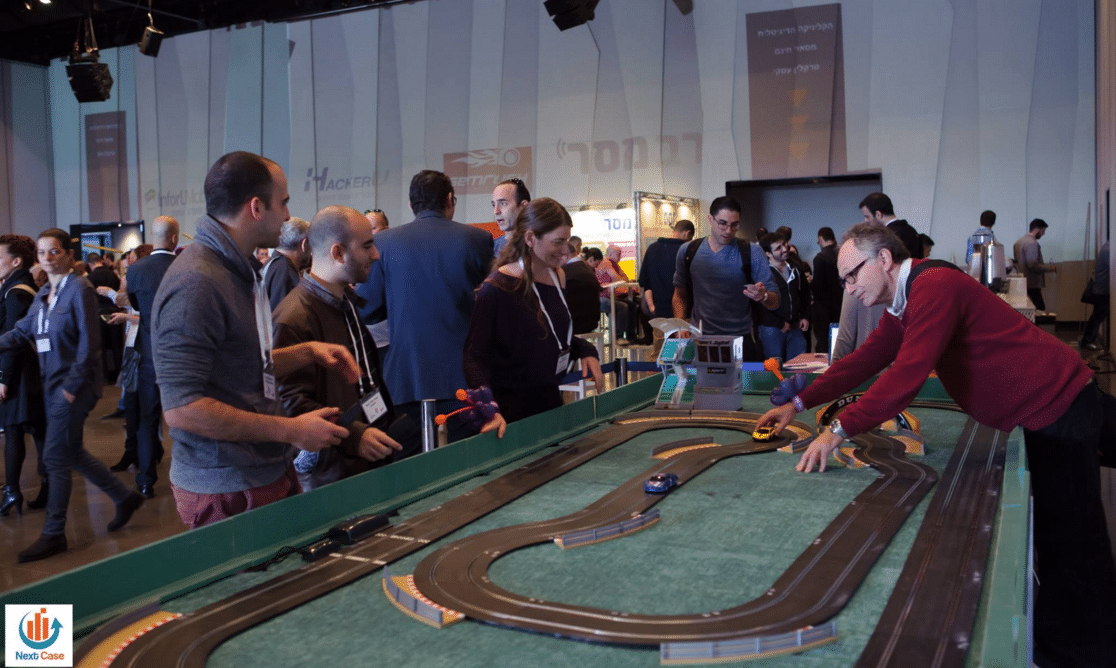
Impressive attendance and hands on sessions make the event worthy of its fame. Better networking opportunities though will take Next Case to the next level.
I was initiated into the world of publishing in 2006, when daily papers were just that, print products reluctantly experimenting with the digital world. Junior news editors like myself had little interest in, or understanding of, what’s going on under the hood. We had no idea how it works, the machinery that matches our content and ads with users (we used to call them readers).
Coming from this background, as an event aiming to gather SEO experts and digital marketers and spotlight their case studies, Next Case 2015 (NextCase.co.il) presented me with a great opportunity to catch up. I'm glad I am finally able to put my thoughts down on paper (that paper again) and share them.
The venue
The conference was held at LAGO in Rishon Lezion, a short drive from Tel Aviv. While not enjoying the vanity of sleeker venues in Tel Aviv and Jaffa, it is fairly convenient in terms of parking and transportation (a train ride means you have to take a cab though), and event organizers for the business industry should take it into account.
The premises include various rooms and halls and one huge open lounge. The exhibition was neat and well organized, albeit without any big surprises at the booths (SEMRush and ActiveTrail were the only two exhibitors offering real time demos if I'm not mistaken). All in all, orienting yourself and going back and forth was easy, and at such events this is what counts.
The content
Everybody in marketing knows that content is king. But the event organizer, industry mainstay Pavel Israelsky (who also runs a popular blog and is involved in a few other companies), seems to take things very seriously when it comes to his own show.
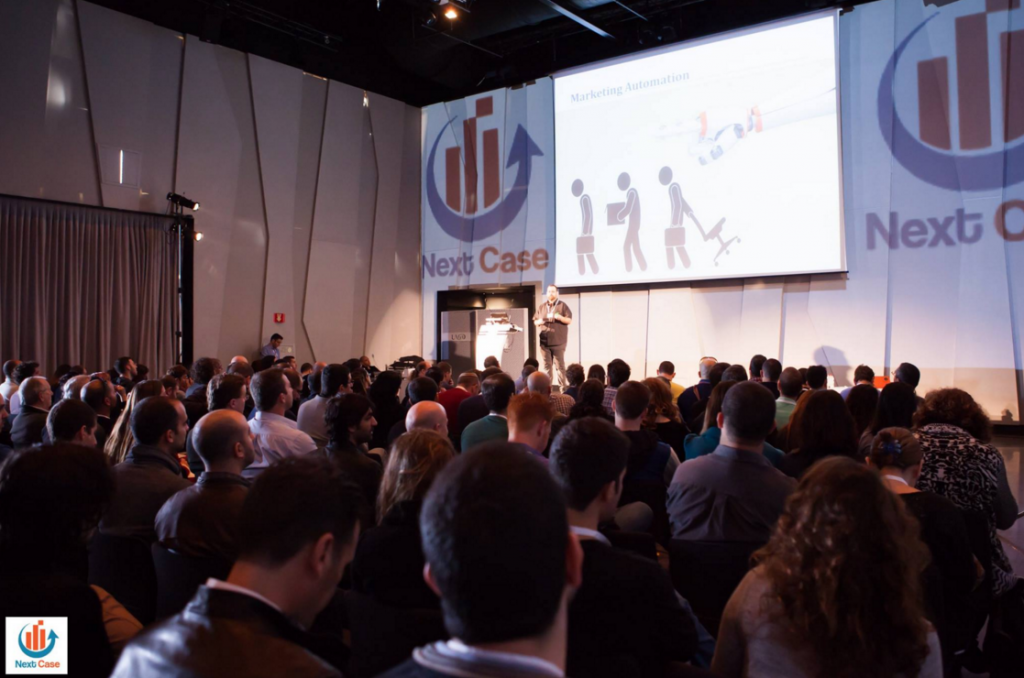
Two parallel speaker halls offered two separate content streams: one aimed to provide an inside look into the nitty-gritty of the operations of digital marketers, while the other was more inspirational, held by marketing managers and business owners who have shared their success stories.
The latter seemed to garner greater interest. The 500-seat hall was jam-packed for the better part of the day, whereas the marketers' room saw some half-empty sessions. One way or another this segmentation makes sense, as it provides takeaways for both entrants and seasoned marketers.
Hots and Nots in 2016
So what was it all about? Amit Lavi, CEO of MarketingEnvy who moderated the "technicians" stream, started off by ruling out what 2016 is NOT going to be about: virtual reality and the Internet of Things (IoT). These two buzzwords still need time to grow relevant in marketing, and it's not about to happen soon.
Amit Lavi, Marketing Envy CEO. Credit: Next Case
More relevant is boosting existing channels, like integration and adaptation of video content into mobile platforms, or maximizing your relationships with top influencers. The battle betweenSnapchat and Facebookexemplifies the relevance of the former, emerging startups like Comune.it the latter.
The concept of concrete and down-to-earth case studies was well kept, and all the sessions I attended were very data-driven and to the point.
Dana Epstein-Satmary, Director of the Digital Department at Tnuva, described how a PR disaster was turned into a brand enhancing opportunity.
The firm was faced with a devastating TV segment showing employees abusing animals in the firm's slaughterhouse, a sensitive issue in itself in Israel’s vegan-friendly public sentiment (the very session itself was interrupted by a fierce pundit).
This forced Epstein-Satmary to re-evaluate the brand’s core values. A mixed strategy of staying below the TV radar initially, while launching a proactive campaign – exclusively on digital and across various platforms, including massive publication of unique content and recipes and even home visits by the firm’s presenter – has managed to turn the brand’s fate.
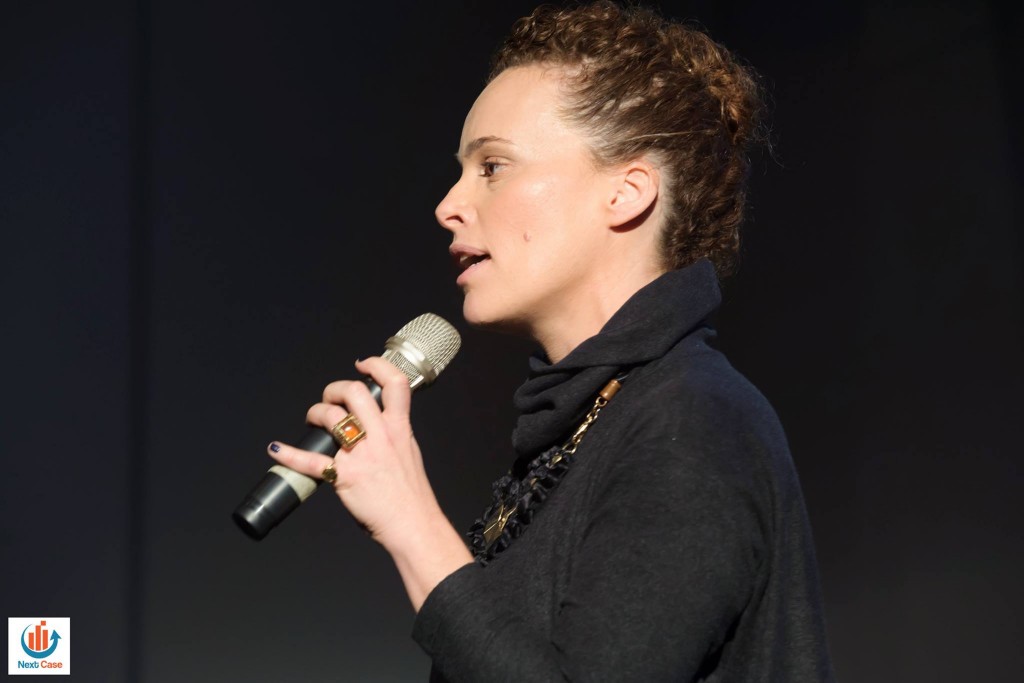
Dana Epstein-Satmary, Director at Tnuva's Digital Department. Credit: Next Case
Various sessions bore similar spirit. While being deft and inspirational, some of these sessions were too specific to draw applicable conclusions from. The organizers would do well to include in next year’s agenda a case study of a colossal failure. Hard pitch for speakers, but surely an interesting one to make which attendees could benefit from.
Back to the marketers' stream, one session that stood out for me was Olga Andrienko’s social media case study. Managing my own firm’s social media channels lately, I can say it gave a great peek into the operations at SEMrush and provided effective takeaways (expect a debut #FMChat in February).
Social media as a strategy may be dead, but in order to make your channels deliver you must work hard with your audiences in mind. Tweeting when they are awake is the easy part; providing them every time anew with real value to build an active community around is where the real challenge lies. Tools like Tweetonomy and IQRival may help you get there, but only as part of a clearly defined approach.
Take a number
Lastly, a different kind of content session was a “clinique” (sounds better in Hebrew), or rather a lab offering business owners a free 'diagnosis' of their website, by three experts (disclosure: one of these experts wasEliav Lankri, our own SEO specialist [don't you remove the rel="nofollow" Eliavos]).
This is a great idea providing real value for money for attendees. However, it wasn’t much attended, which shows that only very few of the eventgoers were novice website operators. When not bored by other people’s problems, some of those who did attend the clinique dubbed it a lifesaver. All things considered it seemed like an event within an event, and limited and cheaper tickets could serve the concept better.
Bottom line
The event’s highly detailed website boasts a Tachless conference, where the “marketing secrets of the leading companies are revealed”. After spending the day at the event it seems that it lived up to this promise, providing a one-stop-shop for everything digital marketing. By creating better means for attendees to network, onboarding funkier exhibitors and providing more opportunities for global attendees, the organizers can take Next Case's assets to the next level.
I was initiated into the world of publishing in 2006, when daily papers were just that, print products reluctantly experimenting with the digital world. Junior news editors like myself had little interest in, or understanding of, what’s going on under the hood. We had no idea how it works, the machinery that matches our content and ads with users (we used to call them readers).
Coming from this background, as an event aiming to gather SEO experts and digital marketers and spotlight their case studies, Next Case 2015 (NextCase.co.il) presented me with a great opportunity to catch up. I'm glad I am finally able to put my thoughts down on paper (that paper again) and share them.
The venue
The conference was held at LAGO in Rishon Lezion, a short drive from Tel Aviv. While not enjoying the vanity of sleeker venues in Tel Aviv and Jaffa, it is fairly convenient in terms of parking and transportation (a train ride means you have to take a cab though), and event organizers for the business industry should take it into account.
The premises include various rooms and halls and one huge open lounge. The exhibition was neat and well organized, albeit without any big surprises at the booths (SEMRush and ActiveTrail were the only two exhibitors offering real time demos if I'm not mistaken). All in all, orienting yourself and going back and forth was easy, and at such events this is what counts.
The content
Everybody in marketing knows that content is king. But the event organizer, industry mainstay Pavel Israelsky (who also runs a popular blog and is involved in a few other companies), seems to take things very seriously when it comes to his own show.
Two parallel speaker halls offered two separate content streams: one aimed to provide an inside look into the nitty-gritty of the operations of digital marketers, while the other was more inspirational, held by marketing managers and business owners who have shared their success stories.
The latter seemed to garner greater interest. The 500-seat hall was jam-packed for the better part of the day, whereas the marketers' room saw some half-empty sessions. One way or another this segmentation makes sense, as it provides takeaways for both entrants and seasoned marketers.
Hots and Nots in 2016
So what was it all about? Amit Lavi, CEO of MarketingEnvy who moderated the "technicians" stream, started off by ruling out what 2016 is NOT going to be about: virtual reality and the Internet of Things (IoT). These two buzzwords still need time to grow relevant in marketing, and it's not about to happen soon.
Amit Lavi, Marketing Envy CEO. Credit: Next Case
More relevant is boosting existing channels, like integration and adaptation of video content into mobile platforms, or maximizing your relationships with top influencers. The battle betweenSnapchat and Facebookexemplifies the relevance of the former, emerging startups like Comune.it the latter.
The concept of concrete and down-to-earth case studies was well kept, and all the sessions I attended were very data-driven and to the point.
Dana Epstein-Satmary, Director of the Digital Department at Tnuva, described how a PR disaster was turned into a brand enhancing opportunity.
The firm was faced with a devastating TV segment showing employees abusing animals in the firm's slaughterhouse, a sensitive issue in itself in Israel’s vegan-friendly public sentiment (the very session itself was interrupted by a fierce pundit).
This forced Epstein-Satmary to re-evaluate the brand’s core values. A mixed strategy of staying below the TV radar initially, while launching a proactive campaign – exclusively on digital and across various platforms, including massive publication of unique content and recipes and even home visits by the firm’s presenter – has managed to turn the brand’s fate.
Dana Epstein-Satmary, Director at Tnuva's Digital Department. Credit: Next Case
Various sessions bore similar spirit. While being deft and inspirational, some of these sessions were too specific to draw applicable conclusions from. The organizers would do well to include in next year’s agenda a case study of a colossal failure. Hard pitch for speakers, but surely an interesting one to make which attendees could benefit from.
Back to the marketers' stream, one session that stood out for me was Olga Andrienko’s social media case study. Managing my own firm’s social media channels lately, I can say it gave a great peek into the operations at SEMrush and provided effective takeaways (expect a debut #FMChat in February).
Social media as a strategy may be dead, but in order to make your channels deliver you must work hard with your audiences in mind. Tweeting when they are awake is the easy part; providing them every time anew with real value to build an active community around is where the real challenge lies. Tools like Tweetonomy and IQRival may help you get there, but only as part of a clearly defined approach.
Take a number
Lastly, a different kind of content session was a “clinique” (sounds better in Hebrew), or rather a lab offering business owners a free 'diagnosis' of their website, by three experts (disclosure: one of these experts wasEliav Lankri, our own SEO specialist [don't you remove the rel="nofollow" Eliavos]).
This is a great idea providing real value for money for attendees. However, it wasn’t much attended, which shows that only very few of the eventgoers were novice website operators. When not bored by other people’s problems, some of those who did attend the clinique dubbed it a lifesaver. All things considered it seemed like an event within an event, and limited and cheaper tickets could serve the concept better.
Bottom line
The event’s highly detailed website boasts a Tachless conference, where the “marketing secrets of the leading companies are revealed”. After spending the day at the event it seems that it lived up to this promise, providing a one-stop-shop for everything digital marketing. By creating better means for attendees to network, onboarding funkier exhibitors and providing more opportunities for global attendees, the organizers can take Next Case's assets to the next level.
iFOREX Adds Saudi and South Korean Equity CFDs as IPO Is Delayed
Featured Videos
Executive Interview | Charlotte Bullock | Chief Product Officer, Bank of London | FMLS:25
In this interview, we sat down with Charlotte Bullock, Head of Product at The Bank of London, previously at SAP and now shaping product at one of the sector’s most ambitious new banking players.
Charlotte reflects on the Summit so far and talks about the culture inside fintech banks today. We look at the pressures that come with scaling, and how firms can hold onto the nimble approach that made them stand out early on.
We also cover the state of payments ahead of her appearance on the payments roundtable: the blockages financial firms face, the areas that still need fixing, and what a realistic solution looks like in 2026.
In this interview, we sat down with Charlotte Bullock, Head of Product at The Bank of London, previously at SAP and now shaping product at one of the sector’s most ambitious new banking players.
Charlotte reflects on the Summit so far and talks about the culture inside fintech banks today. We look at the pressures that come with scaling, and how firms can hold onto the nimble approach that made them stand out early on.
We also cover the state of payments ahead of her appearance on the payments roundtable: the blockages financial firms face, the areas that still need fixing, and what a realistic solution looks like in 2026.
In this interview, we sat down with Charlotte Bullock, Head of Product at The Bank of London, previously at SAP and now shaping product at one of the sector’s most ambitious new banking players.
Charlotte reflects on the Summit so far and talks about the culture inside fintech banks today. We look at the pressures that come with scaling, and how firms can hold onto the nimble approach that made them stand out early on.
We also cover the state of payments ahead of her appearance on the payments roundtable: the blockages financial firms face, the areas that still need fixing, and what a realistic solution looks like in 2026.
In this interview, we sat down with Charlotte Bullock, Head of Product at The Bank of London, previously at SAP and now shaping product at one of the sector’s most ambitious new banking players.
Charlotte reflects on the Summit so far and talks about the culture inside fintech banks today. We look at the pressures that come with scaling, and how firms can hold onto the nimble approach that made them stand out early on.
We also cover the state of payments ahead of her appearance on the payments roundtable: the blockages financial firms face, the areas that still need fixing, and what a realistic solution looks like in 2026.
In this conversation, we sit down with Drew Niv, CSO at ATFX Connect and one of the most influential figures in modern FX.
We speak about market structure, the institutional view on liquidity, and the sharp rise of prop trading, a sector Drew has been commenting on in recent months. Drew explains why he once dismissed prop trading, why his view changed, and what he now thinks the model means for brokers, clients and risk managers.
We explore subscription-fee dependency, the high reneging rate, and the long-term challenge: how brokers can build a more stable and honest version of the model. Drew also talks about the traffic advantage standalone prop firms have built and why brokers may still win in the long run if they take the right approach.
In this conversation, we sit down with Drew Niv, CSO at ATFX Connect and one of the most influential figures in modern FX.
We speak about market structure, the institutional view on liquidity, and the sharp rise of prop trading, a sector Drew has been commenting on in recent months. Drew explains why he once dismissed prop trading, why his view changed, and what he now thinks the model means for brokers, clients and risk managers.
We explore subscription-fee dependency, the high reneging rate, and the long-term challenge: how brokers can build a more stable and honest version of the model. Drew also talks about the traffic advantage standalone prop firms have built and why brokers may still win in the long run if they take the right approach.
In this conversation, we sit down with Drew Niv, CSO at ATFX Connect and one of the most influential figures in modern FX.
We speak about market structure, the institutional view on liquidity, and the sharp rise of prop trading, a sector Drew has been commenting on in recent months. Drew explains why he once dismissed prop trading, why his view changed, and what he now thinks the model means for brokers, clients and risk managers.
We explore subscription-fee dependency, the high reneging rate, and the long-term challenge: how brokers can build a more stable and honest version of the model. Drew also talks about the traffic advantage standalone prop firms have built and why brokers may still win in the long run if they take the right approach.
In this conversation, we sit down with Drew Niv, CSO at ATFX Connect and one of the most influential figures in modern FX.
We speak about market structure, the institutional view on liquidity, and the sharp rise of prop trading, a sector Drew has been commenting on in recent months. Drew explains why he once dismissed prop trading, why his view changed, and what he now thinks the model means for brokers, clients and risk managers.
We explore subscription-fee dependency, the high reneging rate, and the long-term challenge: how brokers can build a more stable and honest version of the model. Drew also talks about the traffic advantage standalone prop firms have built and why brokers may still win in the long run if they take the right approach.
In this conversation, we sit down with Drew Niv, CSO at ATFX Connect and one of the most influential figures in modern FX.
We speak about market structure, the institutional view on liquidity, and the sharp rise of prop trading, a sector Drew has been commenting on in recent months. Drew explains why he once dismissed prop trading, why his view changed, and what he now thinks the model means for brokers, clients and risk managers.
We explore subscription-fee dependency, the high reneging rate, and the long-term challenge: how brokers can build a more stable and honest version of the model. Drew also talks about the traffic advantage standalone prop firms have built and why brokers may still win in the long run if they take the right approach.
In this conversation, we sit down with Drew Niv, CSO at ATFX Connect and one of the most influential figures in modern FX.
We speak about market structure, the institutional view on liquidity, and the sharp rise of prop trading, a sector Drew has been commenting on in recent months. Drew explains why he once dismissed prop trading, why his view changed, and what he now thinks the model means for brokers, clients and risk managers.
We explore subscription-fee dependency, the high reneging rate, and the long-term challenge: how brokers can build a more stable and honest version of the model. Drew also talks about the traffic advantage standalone prop firms have built and why brokers may still win in the long run if they take the right approach.
Executive Interview | Remonda Z. Kirketerp Møller| CEO & Founder Muinmos | FMLS:25
In this interview, Remonda Z. Kirketerp Møller, founder of Muinmos, breaks down the state of AI in regtech and what responsible adoption really looks like for brokers. We talk about rising fragmentation, the pressures around compliance accuracy, and why most firms are still in the early stages of AI maturity.
Ramanda also shares insights on regulator sandboxes, shifting expectations around accountability, and the current reality of MiCA licensing and passporting in Europe.
A concise look at where compliance, onboarding, and AI-driven processes are heading next.
In this interview, Remonda Z. Kirketerp Møller, founder of Muinmos, breaks down the state of AI in regtech and what responsible adoption really looks like for brokers. We talk about rising fragmentation, the pressures around compliance accuracy, and why most firms are still in the early stages of AI maturity.
Ramanda also shares insights on regulator sandboxes, shifting expectations around accountability, and the current reality of MiCA licensing and passporting in Europe.
A concise look at where compliance, onboarding, and AI-driven processes are heading next.
In this interview, Remonda Z. Kirketerp Møller, founder of Muinmos, breaks down the state of AI in regtech and what responsible adoption really looks like for brokers. We talk about rising fragmentation, the pressures around compliance accuracy, and why most firms are still in the early stages of AI maturity.
Ramanda also shares insights on regulator sandboxes, shifting expectations around accountability, and the current reality of MiCA licensing and passporting in Europe.
A concise look at where compliance, onboarding, and AI-driven processes are heading next.
In this interview, Remonda Z. Kirketerp Møller, founder of Muinmos, breaks down the state of AI in regtech and what responsible adoption really looks like for brokers. We talk about rising fragmentation, the pressures around compliance accuracy, and why most firms are still in the early stages of AI maturity.
Ramanda also shares insights on regulator sandboxes, shifting expectations around accountability, and the current reality of MiCA licensing and passporting in Europe.
A concise look at where compliance, onboarding, and AI-driven processes are heading next.
In this interview, Remonda Z. Kirketerp Møller, founder of Muinmos, breaks down the state of AI in regtech and what responsible adoption really looks like for brokers. We talk about rising fragmentation, the pressures around compliance accuracy, and why most firms are still in the early stages of AI maturity.
Ramanda also shares insights on regulator sandboxes, shifting expectations around accountability, and the current reality of MiCA licensing and passporting in Europe.
A concise look at where compliance, onboarding, and AI-driven processes are heading next.
In this interview, Remonda Z. Kirketerp Møller, founder of Muinmos, breaks down the state of AI in regtech and what responsible adoption really looks like for brokers. We talk about rising fragmentation, the pressures around compliance accuracy, and why most firms are still in the early stages of AI maturity.
Ramanda also shares insights on regulator sandboxes, shifting expectations around accountability, and the current reality of MiCA licensing and passporting in Europe.
A concise look at where compliance, onboarding, and AI-driven processes are heading next.
In this conversation, we speak with Aydin Bonabi, CEO and co-founder of Surveill, a firm focused on fraud detection and AI-driven compliance tools for financial institutions.
We start with Aydin’s view of the Summit and the challenges brokers face as fraud tactics grow more complex. He explains how firms can stay ahead through real-time signals, data patterns, and early-stage detection.
We also talk about AI training and why compliance teams often struggle to keep models accurate, fair, and aligned with regulatory expectations. Aydin breaks down what “good” AI training looks like inside a financial environment, including the importance of clean data, domain expertise, and human oversight.
He closes with a clear message: fraud is scaling, and so must the tools that stop it.
In this conversation, we speak with Aydin Bonabi, CEO and co-founder of Surveill, a firm focused on fraud detection and AI-driven compliance tools for financial institutions.
We start with Aydin’s view of the Summit and the challenges brokers face as fraud tactics grow more complex. He explains how firms can stay ahead through real-time signals, data patterns, and early-stage detection.
We also talk about AI training and why compliance teams often struggle to keep models accurate, fair, and aligned with regulatory expectations. Aydin breaks down what “good” AI training looks like inside a financial environment, including the importance of clean data, domain expertise, and human oversight.
He closes with a clear message: fraud is scaling, and so must the tools that stop it.
In this conversation, we speak with Aydin Bonabi, CEO and co-founder of Surveill, a firm focused on fraud detection and AI-driven compliance tools for financial institutions.
We start with Aydin’s view of the Summit and the challenges brokers face as fraud tactics grow more complex. He explains how firms can stay ahead through real-time signals, data patterns, and early-stage detection.
We also talk about AI training and why compliance teams often struggle to keep models accurate, fair, and aligned with regulatory expectations. Aydin breaks down what “good” AI training looks like inside a financial environment, including the importance of clean data, domain expertise, and human oversight.
He closes with a clear message: fraud is scaling, and so must the tools that stop it.
In this conversation, we speak with Aydin Bonabi, CEO and co-founder of Surveill, a firm focused on fraud detection and AI-driven compliance tools for financial institutions.
We start with Aydin’s view of the Summit and the challenges brokers face as fraud tactics grow more complex. He explains how firms can stay ahead through real-time signals, data patterns, and early-stage detection.
We also talk about AI training and why compliance teams often struggle to keep models accurate, fair, and aligned with regulatory expectations. Aydin breaks down what “good” AI training looks like inside a financial environment, including the importance of clean data, domain expertise, and human oversight.
He closes with a clear message: fraud is scaling, and so must the tools that stop it.
In this conversation, we speak with Aydin Bonabi, CEO and co-founder of Surveill, a firm focused on fraud detection and AI-driven compliance tools for financial institutions.
We start with Aydin’s view of the Summit and the challenges brokers face as fraud tactics grow more complex. He explains how firms can stay ahead through real-time signals, data patterns, and early-stage detection.
We also talk about AI training and why compliance teams often struggle to keep models accurate, fair, and aligned with regulatory expectations. Aydin breaks down what “good” AI training looks like inside a financial environment, including the importance of clean data, domain expertise, and human oversight.
He closes with a clear message: fraud is scaling, and so must the tools that stop it.
In this conversation, we speak with Aydin Bonabi, CEO and co-founder of Surveill, a firm focused on fraud detection and AI-driven compliance tools for financial institutions.
We start with Aydin’s view of the Summit and the challenges brokers face as fraud tactics grow more complex. He explains how firms can stay ahead through real-time signals, data patterns, and early-stage detection.
We also talk about AI training and why compliance teams often struggle to keep models accurate, fair, and aligned with regulatory expectations. Aydin breaks down what “good” AI training looks like inside a financial environment, including the importance of clean data, domain expertise, and human oversight.
He closes with a clear message: fraud is scaling, and so must the tools that stop it.
Exness expands its presence in Africa: Inside our interview with Paul Margarites in Cape Town
Finance Magnates met with Paul Margarites, Exness regional commercial director for Sub-Saharan Africa, during a visit to the firm’s office opening in Cape Town. In this talk, led by Andrea Badiola Mateos, Co-CEO at Finance Magnates, Paul shares views on the South African trading space, local user behavior, mobile trends, regulation, team growth, and how Exness plans to grow in more markets across the region. @Exness
Read the article at: https://www.financemagnates.com/thought-leadership/exness-expands-its-presence-in-africa-inside-our-interview-with-paul-margarites/
#exness #financemagnates #exnesstrading #CFDtrading #tradeonline #africanews #capetown
Finance Magnates met with Paul Margarites, Exness regional commercial director for Sub-Saharan Africa, during a visit to the firm’s office opening in Cape Town. In this talk, led by Andrea Badiola Mateos, Co-CEO at Finance Magnates, Paul shares views on the South African trading space, local user behavior, mobile trends, regulation, team growth, and how Exness plans to grow in more markets across the region. @Exness
Read the article at: https://www.financemagnates.com/thought-leadership/exness-expands-its-presence-in-africa-inside-our-interview-with-paul-margarites/
#exness #financemagnates #exnesstrading #CFDtrading #tradeonline #africanews #capetown
Finance Magnates met with Paul Margarites, Exness regional commercial director for Sub-Saharan Africa, during a visit to the firm’s office opening in Cape Town. In this talk, led by Andrea Badiola Mateos, Co-CEO at Finance Magnates, Paul shares views on the South African trading space, local user behavior, mobile trends, regulation, team growth, and how Exness plans to grow in more markets across the region. @Exness
Read the article at: https://www.financemagnates.com/thought-leadership/exness-expands-its-presence-in-africa-inside-our-interview-with-paul-margarites/
#exness #financemagnates #exnesstrading #CFDtrading #tradeonline #africanews #capetown
Finance Magnates met with Paul Margarites, Exness regional commercial director for Sub-Saharan Africa, during a visit to the firm’s office opening in Cape Town. In this talk, led by Andrea Badiola Mateos, Co-CEO at Finance Magnates, Paul shares views on the South African trading space, local user behavior, mobile trends, regulation, team growth, and how Exness plans to grow in more markets across the region. @Exness
Read the article at: https://www.financemagnates.com/thought-leadership/exness-expands-its-presence-in-africa-inside-our-interview-with-paul-margarites/
#exness #financemagnates #exnesstrading #CFDtrading #tradeonline #africanews #capetown
Finance Magnates met with Paul Margarites, Exness regional commercial director for Sub-Saharan Africa, during a visit to the firm’s office opening in Cape Town. In this talk, led by Andrea Badiola Mateos, Co-CEO at Finance Magnates, Paul shares views on the South African trading space, local user behavior, mobile trends, regulation, team growth, and how Exness plans to grow in more markets across the region. @Exness
Read the article at: https://www.financemagnates.com/thought-leadership/exness-expands-its-presence-in-africa-inside-our-interview-with-paul-margarites/
#exness #financemagnates #exnesstrading #CFDtrading #tradeonline #africanews #capetown
Finance Magnates met with Paul Margarites, Exness regional commercial director for Sub-Saharan Africa, during a visit to the firm’s office opening in Cape Town. In this talk, led by Andrea Badiola Mateos, Co-CEO at Finance Magnates, Paul shares views on the South African trading space, local user behavior, mobile trends, regulation, team growth, and how Exness plans to grow in more markets across the region. @Exness
Read the article at: https://www.financemagnates.com/thought-leadership/exness-expands-its-presence-in-africa-inside-our-interview-with-paul-margarites/
#exness #financemagnates #exnesstrading #CFDtrading #tradeonline #africanews #capetown