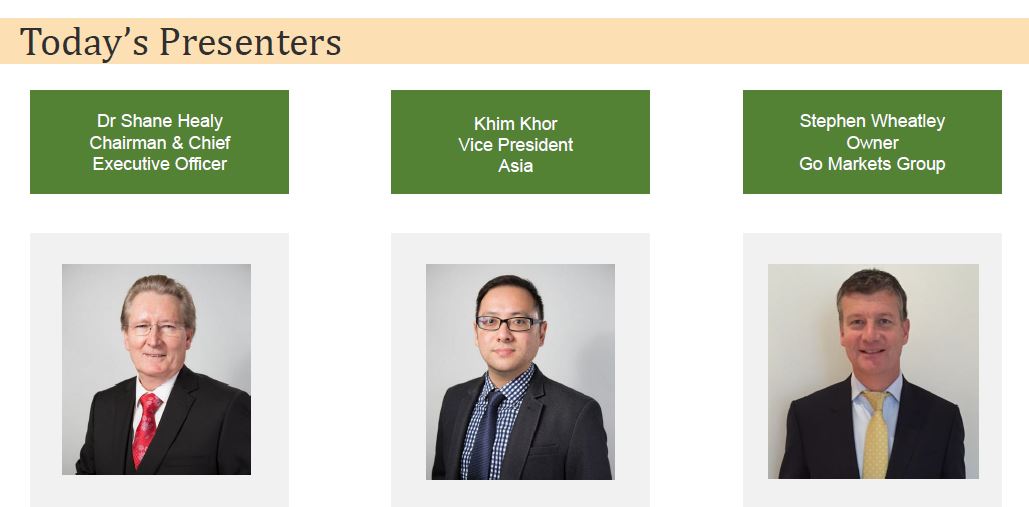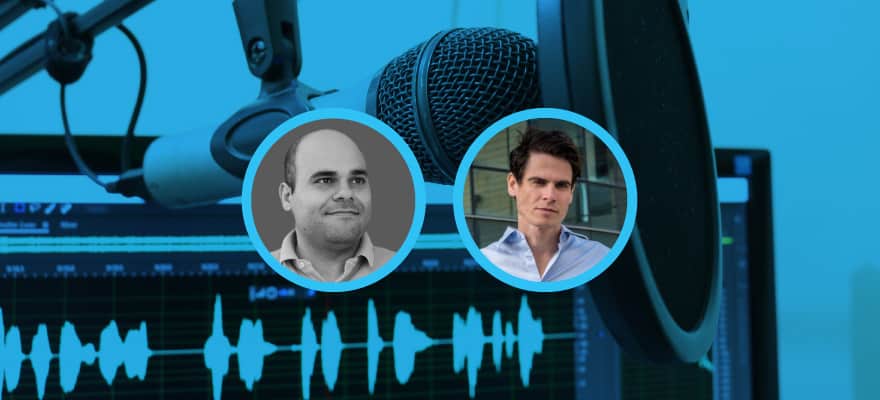
Stephen B. Wheatley, who was allegedly involved in a pump and dump scheme in the US, appeared in Go Markets Group's presentation to investors. The proposal to list on the NSX "may be abandoned", but the group "does not expect the brand to be affected".
Last month we exclusively reported that Stephen Wheatley, owner and director of the now suspended binary options provider City Odds Capital, was named by the U.S SEC in facilitating the illegal stock offering of a company capitalizing on Bob Marley’s fame to sell coffee. Now we can reveal that new evidence has uncovered that Wheatley is also tied with Go Markets.
In the case of Marley Coffee, the SEC alleges that Shane Whittle, the company’s former CEO and director, orchestrated a 'pump and dump' scheme with other conspirators. It is alleged that in order to boost the stock price, they set up a sham financing arrangement designed to create the false appearance of legitimate third-party interest and investment in the company which raised millions of dollars through the sale of restricted common stock in 2011.
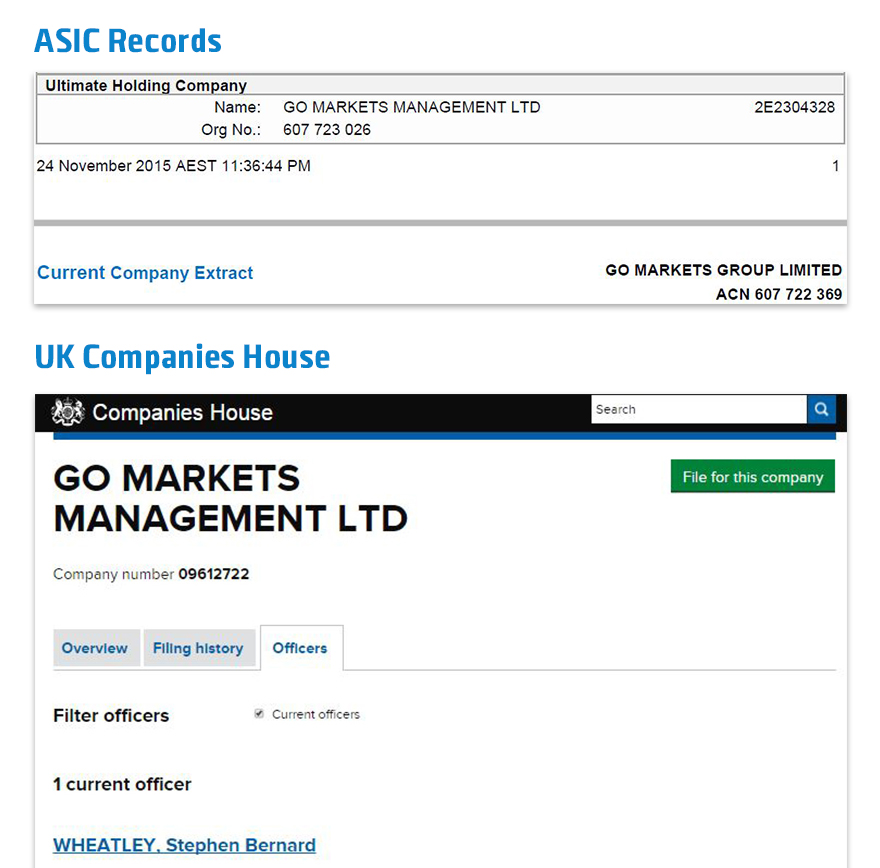
According to ASIC records, Go Markets Group's ultimate shareholder is a UK entity called Go Markets Management LTD. The latter's listing on the UK Company House shows that Wheatley is a director and a shareholder of the British entity.
All the Business Details
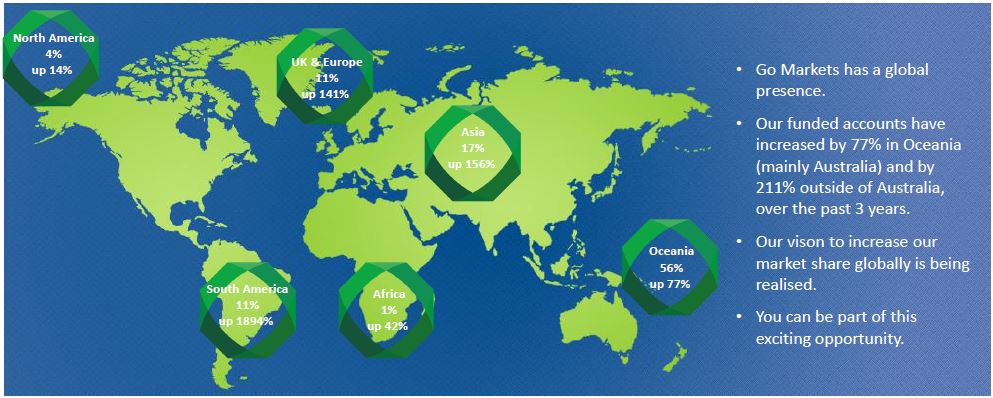
According to the presentation to potential investors in the firm, Go Markets Group boasts of having over 14,000 approved client accounts, 200% increase from 2015. It also has over 200 introducing broker (IB) relationships. As of 31st August 2015 its income received from hedged trading represents 38% of total revenue, whereas unhedged trading income represents 61% of its total revenue.
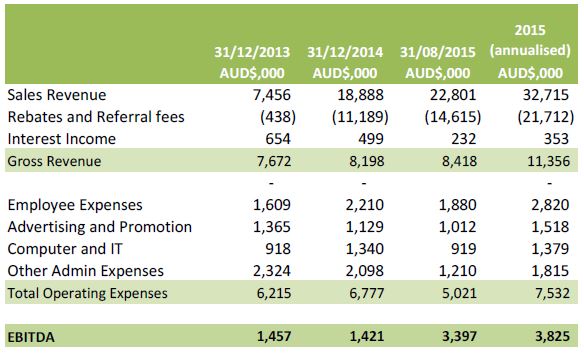
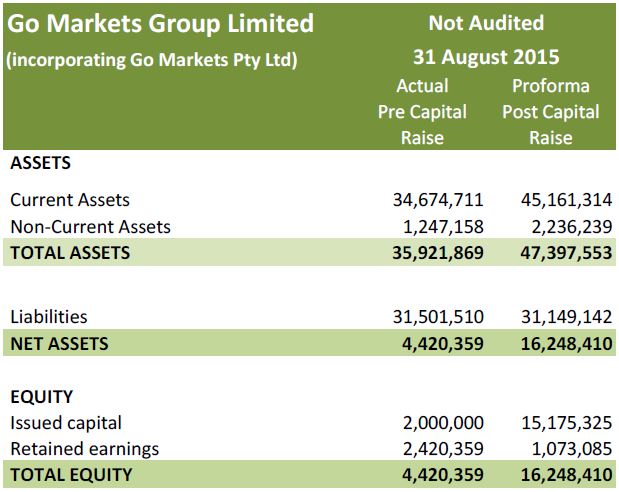
The presentation also contained the brokerage’s unaudited financial results, annualised as of September. The firm expects revenues of over AUD32 million in 2015 and an EBIDTA of over AUD3.8 million (in USD terms over $23 million and $2.7 million respectively). Based on these figures we estimate the firm to be among the top fifty largest brokers in the world, although still smaller than rival firms such as FXPrimus and Pepperstone.
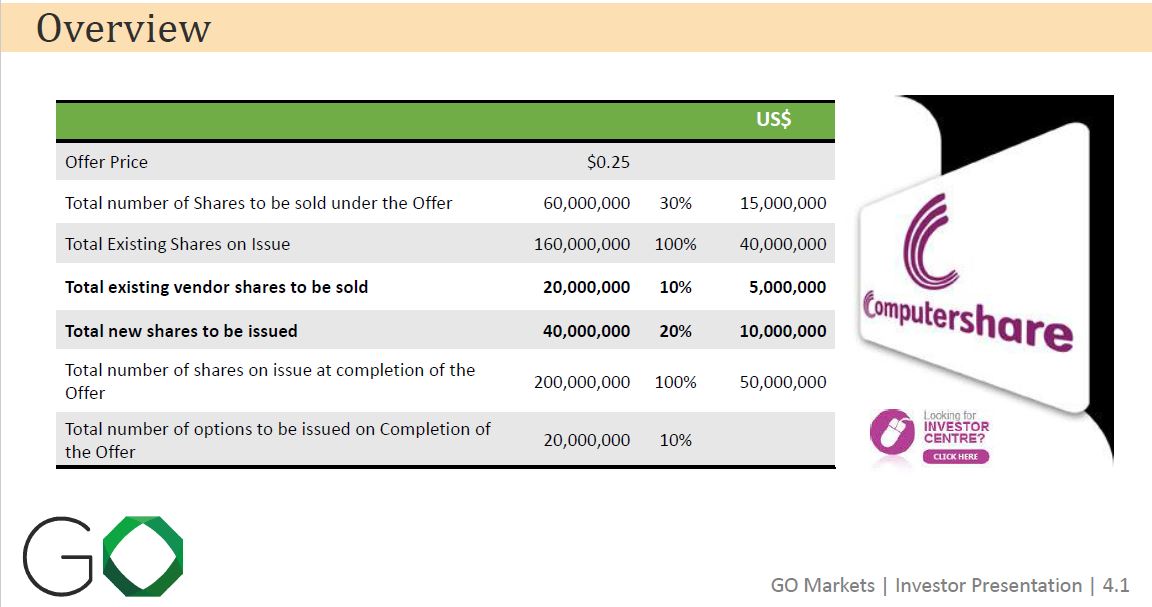
Displaying an impressive growth rate, the group is looking to raise $15 million through the issuance of 40 million new shares, and the sale of 20 million existing shares, at a price of $0.25.
Go Markets Pty Ltd Financial Performance
Hit by Citi with SNB Bomb
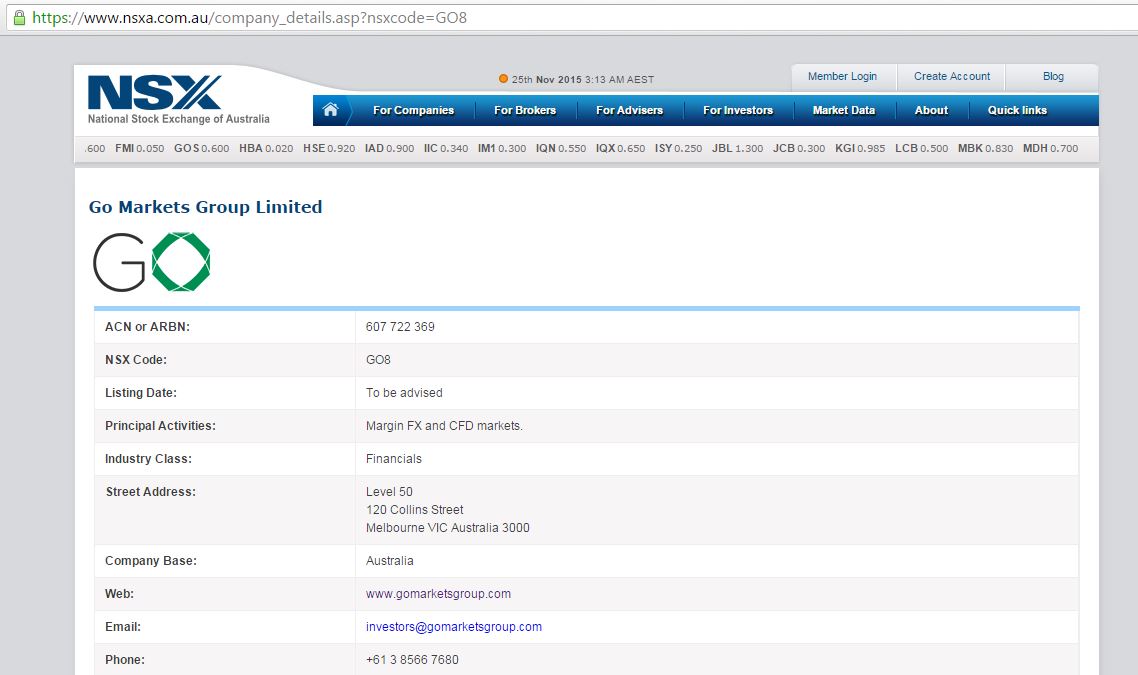
Interestingly, the information on the NSX website reveals that a claim has been made against Go Markets Pty Ltd by Citibank in February 2015. Citibank alleges that during the events of Black Thursday in January, Go Markets Pty Ltd breached its agreement, and demands $1,713,153 for FX trading losses.
Go Markets Pty Ltd denies the allegations and says that Citibank caused or materially contributed to its own losses. Citibank’s London lawyers have in kind refuted Go Markets Pty Ltd stance and have asserted that Citibank’s Standard Terms and Conditions enable it to avoid such a duty and liability.
The company knows that Citibank has a number of such claims and some are being defended or are in the process of negotiation. Go Markets Pty Ltd believes that Citibank will not wish to proceed with all of these claims and proceedings for commercial reasons and because there are some risks for it involved. The matter is still open.
Business Structure and Global Reach
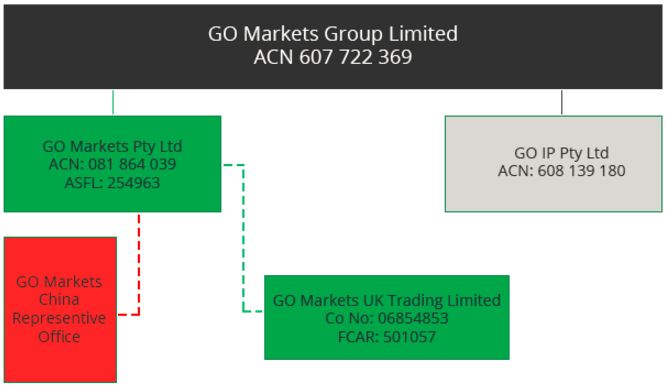
Go Markets Group Business Structure (from the firm's presentation)
The Australian group established a connection with the FCA-regulated Go Markets UK soon after the SNB crisis that gave a fatal blow to a number of UK based brokers in January. It states: “In February 2015 we formed an alliance with Go Markets UK Trading Limited, located in London.” However, Robert Berkeley, the owner of Go Markets UK, explained to Finance Magnates that the relationship between the firms is purely a white label agreement.
Comments
Finance Magnates reached out to representatives of Stephen Wheatley and the numerous Go Markets entities. Wheatley's US-based lawyer declined to comment as the matter is ongoing. As stated above the Go Markets UK CEO explained that the relationship between the firms is purely a white label agreement.
The Australian Go Markets Pty Ltd's lawyers provided a detailed response. They distance the firm from the British Wheatley saying: "Please take careful note that Go Markets is an Australian company with an Australian director, Australian management and Australian staff. The management of our client is conducted strictly in accordance with the Corporations Act 2001 and its Australian Financial Services Licence (AFSL). We are instructed that all decisions as to the management and running of Go Markets are made in Australia and not overseas."
They also initially pointed out that while Wheatley has been charged by the SEC with offences relating to a “pump and dump” share scheme, "two things arise from the charges: Wheatley has not been found guilty of any charges and has not been convicted of any offence; and it is certainly not asserted by the SEC that Wheatley was the promoter of the scheme and the extent of his part in it is presently unclear."
They later added that the SEC case is civil and not criminal: "We note that Wheatley is not, to the best of our knowledge, facing criminal charges. The case is clearly of a civil nature and is not a criminal prosecution. In the Complaint, the SEC seeks injunctions and other civil remedies against the defendants. On that basis, any assertion which implies that Wheatley has been charged with criminal offences would be false. The SEC press release of 17 November 2015, where, in many places it refers to “charges”, is misleading. In fact, that press release is based upon the US District Court civil Complaint seeking civil remedies."
As for the promotion of the IPO they say: "The proposal to list on the NSX is currently under review and may be abandoned. Clearly, although Go Markets had no reason to know or suspect that charges were imminent or of the basis for them, the use of Wheatley in the material surrounding listing was extremely regrettable.
Nevertheless, Go Markets does not expect its brand to be affected unless there is some spurious attempt to link it with Wheatley’s criminal charges and draw some unfounded implication or speculation that Go Markets was to be involved in an attempt to defraud consumers or investors."
An ASIC spokesperson commented to Finance Magnates that while ASIC is aware of the US charges, "Stephen Weatley is not a director of Go Markets Pty Ltd, and has never been recorded as a director. It is correct that: Go Markets Group Limited is listed as a shareholder in Go Markets Pty Ltd; and UK-registered Go Markets Management LTD is listed as the ultimate holding company of Go Markets Group Limited." However, "ASIC does not have information about shareholders in Go Markets Group Limited as it is a public company and public companies are not required to lodge shareholder information with ASIC."
Last month we exclusively reported that Stephen Wheatley, owner and director of the now suspended binary options provider City Odds Capital, was named by the U.S SEC in facilitating the illegal stock offering of a company capitalizing on Bob Marley’s fame to sell coffee. Now we can reveal that new evidence has uncovered that Wheatley is also tied with Go Markets.
In the case of Marley Coffee, the SEC alleges that Shane Whittle, the company’s former CEO and director, orchestrated a 'pump and dump' scheme with other conspirators. It is alleged that in order to boost the stock price, they set up a sham financing arrangement designed to create the false appearance of legitimate third-party interest and investment in the company which raised millions of dollars through the sale of restricted common stock in 2011.
According to ASIC records, Go Markets Group's ultimate shareholder is a UK entity called Go Markets Management LTD. The latter's listing on the UK Company House shows that Wheatley is a director and a shareholder of the British entity.
All the Business Details
According to the presentation to potential investors in the firm, Go Markets Group boasts of having over 14,000 approved client accounts, 200% increase from 2015. It also has over 200 introducing broker (IB) relationships. As of 31st August 2015 its income received from hedged trading represents 38% of total revenue, whereas unhedged trading income represents 61% of its total revenue.
The presentation also contained the brokerage’s unaudited financial results, annualised as of September. The firm expects revenues of over AUD32 million in 2015 and an EBIDTA of over AUD3.8 million (in USD terms over $23 million and $2.7 million respectively). Based on these figures we estimate the firm to be among the top fifty largest brokers in the world, although still smaller than rival firms such as FXPrimus and Pepperstone.
Displaying an impressive growth rate, the group is looking to raise $15 million through the issuance of 40 million new shares, and the sale of 20 million existing shares, at a price of $0.25.
Go Markets Pty Ltd Financial Performance
Hit by Citi with SNB Bomb
Interestingly, the information on the NSX website reveals that a claim has been made against Go Markets Pty Ltd by Citibank in February 2015. Citibank alleges that during the events of Black Thursday in January, Go Markets Pty Ltd breached its agreement, and demands $1,713,153 for FX trading losses.
Go Markets Pty Ltd denies the allegations and says that Citibank caused or materially contributed to its own losses. Citibank’s London lawyers have in kind refuted Go Markets Pty Ltd stance and have asserted that Citibank’s Standard Terms and Conditions enable it to avoid such a duty and liability.
The company knows that Citibank has a number of such claims and some are being defended or are in the process of negotiation. Go Markets Pty Ltd believes that Citibank will not wish to proceed with all of these claims and proceedings for commercial reasons and because there are some risks for it involved. The matter is still open.
Business Structure and Global Reach
Go Markets Group Business Structure (from the firm's presentation)
The Australian group established a connection with the FCA-regulated Go Markets UK soon after the SNB crisis that gave a fatal blow to a number of UK based brokers in January. It states: “In February 2015 we formed an alliance with Go Markets UK Trading Limited, located in London.” However, Robert Berkeley, the owner of Go Markets UK, explained to Finance Magnates that the relationship between the firms is purely a white label agreement.
Comments
Finance Magnates reached out to representatives of Stephen Wheatley and the numerous Go Markets entities. Wheatley's US-based lawyer declined to comment as the matter is ongoing. As stated above the Go Markets UK CEO explained that the relationship between the firms is purely a white label agreement.
The Australian Go Markets Pty Ltd's lawyers provided a detailed response. They distance the firm from the British Wheatley saying: "Please take careful note that Go Markets is an Australian company with an Australian director, Australian management and Australian staff. The management of our client is conducted strictly in accordance with the Corporations Act 2001 and its Australian Financial Services Licence (AFSL). We are instructed that all decisions as to the management and running of Go Markets are made in Australia and not overseas."
They also initially pointed out that while Wheatley has been charged by the SEC with offences relating to a “pump and dump” share scheme, "two things arise from the charges: Wheatley has not been found guilty of any charges and has not been convicted of any offence; and it is certainly not asserted by the SEC that Wheatley was the promoter of the scheme and the extent of his part in it is presently unclear."
They later added that the SEC case is civil and not criminal: "We note that Wheatley is not, to the best of our knowledge, facing criminal charges. The case is clearly of a civil nature and is not a criminal prosecution. In the Complaint, the SEC seeks injunctions and other civil remedies against the defendants. On that basis, any assertion which implies that Wheatley has been charged with criminal offences would be false. The SEC press release of 17 November 2015, where, in many places it refers to “charges”, is misleading. In fact, that press release is based upon the US District Court civil Complaint seeking civil remedies."
As for the promotion of the IPO they say: "The proposal to list on the NSX is currently under review and may be abandoned. Clearly, although Go Markets had no reason to know or suspect that charges were imminent or of the basis for them, the use of Wheatley in the material surrounding listing was extremely regrettable.
Nevertheless, Go Markets does not expect its brand to be affected unless there is some spurious attempt to link it with Wheatley’s criminal charges and draw some unfounded implication or speculation that Go Markets was to be involved in an attempt to defraud consumers or investors."
An ASIC spokesperson commented to Finance Magnates that while ASIC is aware of the US charges, "Stephen Weatley is not a director of Go Markets Pty Ltd, and has never been recorded as a director. It is correct that: Go Markets Group Limited is listed as a shareholder in Go Markets Pty Ltd; and UK-registered Go Markets Management LTD is listed as the ultimate holding company of Go Markets Group Limited." However, "ASIC does not have information about shareholders in Go Markets Group Limited as it is a public company and public companies are not required to lodge shareholder information with ASIC."
iFOREX Adds Saudi and South Korean Equity CFDs as IPO Is Delayed
Featured Videos
Executive Interview | Charlotte Bullock | Chief Product Officer, Bank of London | FMLS:25
In this interview, we sat down with Charlotte Bullock, Head of Product at The Bank of London, previously at SAP and now shaping product at one of the sector’s most ambitious new banking players.
Charlotte reflects on the Summit so far and talks about the culture inside fintech banks today. We look at the pressures that come with scaling, and how firms can hold onto the nimble approach that made them stand out early on.
We also cover the state of payments ahead of her appearance on the payments roundtable: the blockages financial firms face, the areas that still need fixing, and what a realistic solution looks like in 2026.
In this interview, we sat down with Charlotte Bullock, Head of Product at The Bank of London, previously at SAP and now shaping product at one of the sector’s most ambitious new banking players.
Charlotte reflects on the Summit so far and talks about the culture inside fintech banks today. We look at the pressures that come with scaling, and how firms can hold onto the nimble approach that made them stand out early on.
We also cover the state of payments ahead of her appearance on the payments roundtable: the blockages financial firms face, the areas that still need fixing, and what a realistic solution looks like in 2026.
In this interview, we sat down with Charlotte Bullock, Head of Product at The Bank of London, previously at SAP and now shaping product at one of the sector’s most ambitious new banking players.
Charlotte reflects on the Summit so far and talks about the culture inside fintech banks today. We look at the pressures that come with scaling, and how firms can hold onto the nimble approach that made them stand out early on.
We also cover the state of payments ahead of her appearance on the payments roundtable: the blockages financial firms face, the areas that still need fixing, and what a realistic solution looks like in 2026.
In this interview, we sat down with Charlotte Bullock, Head of Product at The Bank of London, previously at SAP and now shaping product at one of the sector’s most ambitious new banking players.
Charlotte reflects on the Summit so far and talks about the culture inside fintech banks today. We look at the pressures that come with scaling, and how firms can hold onto the nimble approach that made them stand out early on.
We also cover the state of payments ahead of her appearance on the payments roundtable: the blockages financial firms face, the areas that still need fixing, and what a realistic solution looks like in 2026.
In this conversation, we sit down with Drew Niv, CSO at ATFX Connect and one of the most influential figures in modern FX.
We speak about market structure, the institutional view on liquidity, and the sharp rise of prop trading, a sector Drew has been commenting on in recent months. Drew explains why he once dismissed prop trading, why his view changed, and what he now thinks the model means for brokers, clients and risk managers.
We explore subscription-fee dependency, the high reneging rate, and the long-term challenge: how brokers can build a more stable and honest version of the model. Drew also talks about the traffic advantage standalone prop firms have built and why brokers may still win in the long run if they take the right approach.
In this conversation, we sit down with Drew Niv, CSO at ATFX Connect and one of the most influential figures in modern FX.
We speak about market structure, the institutional view on liquidity, and the sharp rise of prop trading, a sector Drew has been commenting on in recent months. Drew explains why he once dismissed prop trading, why his view changed, and what he now thinks the model means for brokers, clients and risk managers.
We explore subscription-fee dependency, the high reneging rate, and the long-term challenge: how brokers can build a more stable and honest version of the model. Drew also talks about the traffic advantage standalone prop firms have built and why brokers may still win in the long run if they take the right approach.
In this conversation, we sit down with Drew Niv, CSO at ATFX Connect and one of the most influential figures in modern FX.
We speak about market structure, the institutional view on liquidity, and the sharp rise of prop trading, a sector Drew has been commenting on in recent months. Drew explains why he once dismissed prop trading, why his view changed, and what he now thinks the model means for brokers, clients and risk managers.
We explore subscription-fee dependency, the high reneging rate, and the long-term challenge: how brokers can build a more stable and honest version of the model. Drew also talks about the traffic advantage standalone prop firms have built and why brokers may still win in the long run if they take the right approach.
In this conversation, we sit down with Drew Niv, CSO at ATFX Connect and one of the most influential figures in modern FX.
We speak about market structure, the institutional view on liquidity, and the sharp rise of prop trading, a sector Drew has been commenting on in recent months. Drew explains why he once dismissed prop trading, why his view changed, and what he now thinks the model means for brokers, clients and risk managers.
We explore subscription-fee dependency, the high reneging rate, and the long-term challenge: how brokers can build a more stable and honest version of the model. Drew also talks about the traffic advantage standalone prop firms have built and why brokers may still win in the long run if they take the right approach.
In this conversation, we sit down with Drew Niv, CSO at ATFX Connect and one of the most influential figures in modern FX.
We speak about market structure, the institutional view on liquidity, and the sharp rise of prop trading, a sector Drew has been commenting on in recent months. Drew explains why he once dismissed prop trading, why his view changed, and what he now thinks the model means for brokers, clients and risk managers.
We explore subscription-fee dependency, the high reneging rate, and the long-term challenge: how brokers can build a more stable and honest version of the model. Drew also talks about the traffic advantage standalone prop firms have built and why brokers may still win in the long run if they take the right approach.
In this conversation, we sit down with Drew Niv, CSO at ATFX Connect and one of the most influential figures in modern FX.
We speak about market structure, the institutional view on liquidity, and the sharp rise of prop trading, a sector Drew has been commenting on in recent months. Drew explains why he once dismissed prop trading, why his view changed, and what he now thinks the model means for brokers, clients and risk managers.
We explore subscription-fee dependency, the high reneging rate, and the long-term challenge: how brokers can build a more stable and honest version of the model. Drew also talks about the traffic advantage standalone prop firms have built and why brokers may still win in the long run if they take the right approach.
Executive Interview | Remonda Z. Kirketerp Møller| CEO & Founder Muinmos | FMLS:25
In this interview, Remonda Z. Kirketerp Møller, founder of Muinmos, breaks down the state of AI in regtech and what responsible adoption really looks like for brokers. We talk about rising fragmentation, the pressures around compliance accuracy, and why most firms are still in the early stages of AI maturity.
Ramanda also shares insights on regulator sandboxes, shifting expectations around accountability, and the current reality of MiCA licensing and passporting in Europe.
A concise look at where compliance, onboarding, and AI-driven processes are heading next.
In this interview, Remonda Z. Kirketerp Møller, founder of Muinmos, breaks down the state of AI in regtech and what responsible adoption really looks like for brokers. We talk about rising fragmentation, the pressures around compliance accuracy, and why most firms are still in the early stages of AI maturity.
Ramanda also shares insights on regulator sandboxes, shifting expectations around accountability, and the current reality of MiCA licensing and passporting in Europe.
A concise look at where compliance, onboarding, and AI-driven processes are heading next.
In this interview, Remonda Z. Kirketerp Møller, founder of Muinmos, breaks down the state of AI in regtech and what responsible adoption really looks like for brokers. We talk about rising fragmentation, the pressures around compliance accuracy, and why most firms are still in the early stages of AI maturity.
Ramanda also shares insights on regulator sandboxes, shifting expectations around accountability, and the current reality of MiCA licensing and passporting in Europe.
A concise look at where compliance, onboarding, and AI-driven processes are heading next.
In this interview, Remonda Z. Kirketerp Møller, founder of Muinmos, breaks down the state of AI in regtech and what responsible adoption really looks like for brokers. We talk about rising fragmentation, the pressures around compliance accuracy, and why most firms are still in the early stages of AI maturity.
Ramanda also shares insights on regulator sandboxes, shifting expectations around accountability, and the current reality of MiCA licensing and passporting in Europe.
A concise look at where compliance, onboarding, and AI-driven processes are heading next.
In this interview, Remonda Z. Kirketerp Møller, founder of Muinmos, breaks down the state of AI in regtech and what responsible adoption really looks like for brokers. We talk about rising fragmentation, the pressures around compliance accuracy, and why most firms are still in the early stages of AI maturity.
Ramanda also shares insights on regulator sandboxes, shifting expectations around accountability, and the current reality of MiCA licensing and passporting in Europe.
A concise look at where compliance, onboarding, and AI-driven processes are heading next.
In this interview, Remonda Z. Kirketerp Møller, founder of Muinmos, breaks down the state of AI in regtech and what responsible adoption really looks like for brokers. We talk about rising fragmentation, the pressures around compliance accuracy, and why most firms are still in the early stages of AI maturity.
Ramanda also shares insights on regulator sandboxes, shifting expectations around accountability, and the current reality of MiCA licensing and passporting in Europe.
A concise look at where compliance, onboarding, and AI-driven processes are heading next.
In this conversation, we speak with Aydin Bonabi, CEO and co-founder of Surveill, a firm focused on fraud detection and AI-driven compliance tools for financial institutions.
We start with Aydin’s view of the Summit and the challenges brokers face as fraud tactics grow more complex. He explains how firms can stay ahead through real-time signals, data patterns, and early-stage detection.
We also talk about AI training and why compliance teams often struggle to keep models accurate, fair, and aligned with regulatory expectations. Aydin breaks down what “good” AI training looks like inside a financial environment, including the importance of clean data, domain expertise, and human oversight.
He closes with a clear message: fraud is scaling, and so must the tools that stop it.
In this conversation, we speak with Aydin Bonabi, CEO and co-founder of Surveill, a firm focused on fraud detection and AI-driven compliance tools for financial institutions.
We start with Aydin’s view of the Summit and the challenges brokers face as fraud tactics grow more complex. He explains how firms can stay ahead through real-time signals, data patterns, and early-stage detection.
We also talk about AI training and why compliance teams often struggle to keep models accurate, fair, and aligned with regulatory expectations. Aydin breaks down what “good” AI training looks like inside a financial environment, including the importance of clean data, domain expertise, and human oversight.
He closes with a clear message: fraud is scaling, and so must the tools that stop it.
In this conversation, we speak with Aydin Bonabi, CEO and co-founder of Surveill, a firm focused on fraud detection and AI-driven compliance tools for financial institutions.
We start with Aydin’s view of the Summit and the challenges brokers face as fraud tactics grow more complex. He explains how firms can stay ahead through real-time signals, data patterns, and early-stage detection.
We also talk about AI training and why compliance teams often struggle to keep models accurate, fair, and aligned with regulatory expectations. Aydin breaks down what “good” AI training looks like inside a financial environment, including the importance of clean data, domain expertise, and human oversight.
He closes with a clear message: fraud is scaling, and so must the tools that stop it.
In this conversation, we speak with Aydin Bonabi, CEO and co-founder of Surveill, a firm focused on fraud detection and AI-driven compliance tools for financial institutions.
We start with Aydin’s view of the Summit and the challenges brokers face as fraud tactics grow more complex. He explains how firms can stay ahead through real-time signals, data patterns, and early-stage detection.
We also talk about AI training and why compliance teams often struggle to keep models accurate, fair, and aligned with regulatory expectations. Aydin breaks down what “good” AI training looks like inside a financial environment, including the importance of clean data, domain expertise, and human oversight.
He closes with a clear message: fraud is scaling, and so must the tools that stop it.
In this conversation, we speak with Aydin Bonabi, CEO and co-founder of Surveill, a firm focused on fraud detection and AI-driven compliance tools for financial institutions.
We start with Aydin’s view of the Summit and the challenges brokers face as fraud tactics grow more complex. He explains how firms can stay ahead through real-time signals, data patterns, and early-stage detection.
We also talk about AI training and why compliance teams often struggle to keep models accurate, fair, and aligned with regulatory expectations. Aydin breaks down what “good” AI training looks like inside a financial environment, including the importance of clean data, domain expertise, and human oversight.
He closes with a clear message: fraud is scaling, and so must the tools that stop it.
In this conversation, we speak with Aydin Bonabi, CEO and co-founder of Surveill, a firm focused on fraud detection and AI-driven compliance tools for financial institutions.
We start with Aydin’s view of the Summit and the challenges brokers face as fraud tactics grow more complex. He explains how firms can stay ahead through real-time signals, data patterns, and early-stage detection.
We also talk about AI training and why compliance teams often struggle to keep models accurate, fair, and aligned with regulatory expectations. Aydin breaks down what “good” AI training looks like inside a financial environment, including the importance of clean data, domain expertise, and human oversight.
He closes with a clear message: fraud is scaling, and so must the tools that stop it.
Exness expands its presence in Africa: Inside our interview with Paul Margarites in Cape Town
Finance Magnates met with Paul Margarites, Exness regional commercial director for Sub-Saharan Africa, during a visit to the firm’s office opening in Cape Town. In this talk, led by Andrea Badiola Mateos, Co-CEO at Finance Magnates, Paul shares views on the South African trading space, local user behavior, mobile trends, regulation, team growth, and how Exness plans to grow in more markets across the region. @Exness
Read the article at: https://www.financemagnates.com/thought-leadership/exness-expands-its-presence-in-africa-inside-our-interview-with-paul-margarites/
#exness #financemagnates #exnesstrading #CFDtrading #tradeonline #africanews #capetown
Finance Magnates met with Paul Margarites, Exness regional commercial director for Sub-Saharan Africa, during a visit to the firm’s office opening in Cape Town. In this talk, led by Andrea Badiola Mateos, Co-CEO at Finance Magnates, Paul shares views on the South African trading space, local user behavior, mobile trends, regulation, team growth, and how Exness plans to grow in more markets across the region. @Exness
Read the article at: https://www.financemagnates.com/thought-leadership/exness-expands-its-presence-in-africa-inside-our-interview-with-paul-margarites/
#exness #financemagnates #exnesstrading #CFDtrading #tradeonline #africanews #capetown
Finance Magnates met with Paul Margarites, Exness regional commercial director for Sub-Saharan Africa, during a visit to the firm’s office opening in Cape Town. In this talk, led by Andrea Badiola Mateos, Co-CEO at Finance Magnates, Paul shares views on the South African trading space, local user behavior, mobile trends, regulation, team growth, and how Exness plans to grow in more markets across the region. @Exness
Read the article at: https://www.financemagnates.com/thought-leadership/exness-expands-its-presence-in-africa-inside-our-interview-with-paul-margarites/
#exness #financemagnates #exnesstrading #CFDtrading #tradeonline #africanews #capetown
Finance Magnates met with Paul Margarites, Exness regional commercial director for Sub-Saharan Africa, during a visit to the firm’s office opening in Cape Town. In this talk, led by Andrea Badiola Mateos, Co-CEO at Finance Magnates, Paul shares views on the South African trading space, local user behavior, mobile trends, regulation, team growth, and how Exness plans to grow in more markets across the region. @Exness
Read the article at: https://www.financemagnates.com/thought-leadership/exness-expands-its-presence-in-africa-inside-our-interview-with-paul-margarites/
#exness #financemagnates #exnesstrading #CFDtrading #tradeonline #africanews #capetown
Finance Magnates met with Paul Margarites, Exness regional commercial director for Sub-Saharan Africa, during a visit to the firm’s office opening in Cape Town. In this talk, led by Andrea Badiola Mateos, Co-CEO at Finance Magnates, Paul shares views on the South African trading space, local user behavior, mobile trends, regulation, team growth, and how Exness plans to grow in more markets across the region. @Exness
Read the article at: https://www.financemagnates.com/thought-leadership/exness-expands-its-presence-in-africa-inside-our-interview-with-paul-margarites/
#exness #financemagnates #exnesstrading #CFDtrading #tradeonline #africanews #capetown
Finance Magnates met with Paul Margarites, Exness regional commercial director for Sub-Saharan Africa, during a visit to the firm’s office opening in Cape Town. In this talk, led by Andrea Badiola Mateos, Co-CEO at Finance Magnates, Paul shares views on the South African trading space, local user behavior, mobile trends, regulation, team growth, and how Exness plans to grow in more markets across the region. @Exness
Read the article at: https://www.financemagnates.com/thought-leadership/exness-expands-its-presence-in-africa-inside-our-interview-with-paul-margarites/
#exness #financemagnates #exnesstrading #CFDtrading #tradeonline #africanews #capetown