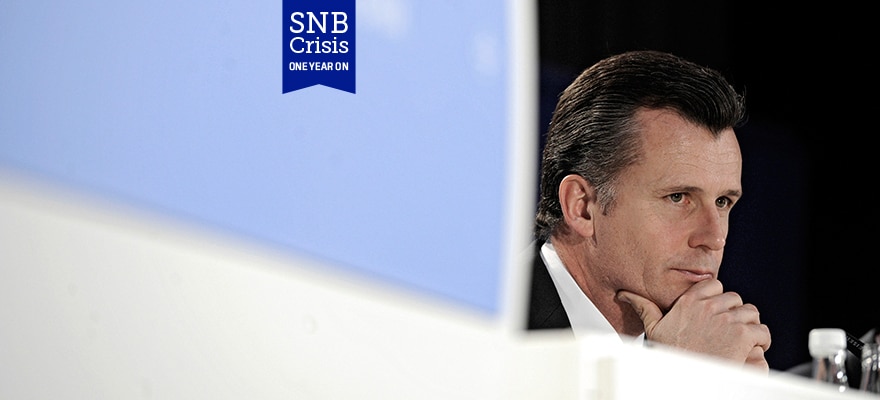
The forex industry appears to be the latest example of an online industry that saw the benefits of increased product awareness produced from negative news.
(Photo: Bloomberg)
Having entered the US Presidential race with no political background, Donald Trump’s leading position in GOP polls has been a surprise to many. More surprising has been the rise in polls following seemingly negative headlines after strange comments from Trump.
Examples include his attack on John McCain by stating “I like people who weren’t captured” and questioning whether McCain should be viewed as a war hero. Trump also has voiced several comments that can be viewed as condescending towards women, including words towards Presidential Rival Carly Fiorina and Rosie O’Donnell. The personal attacks are in addition to his general ideas such as putting up a wall with Mexico and banning Muslims from travelling to the US which upset large segments of the US population.
Despite these happenings, Trump has experienced positive momentum in his campaign as it nears the Iowa Caucus later this month, the election’s first state primary
Despite these happenings, Trump has experienced positive momentum in his campaign as it nears the Iowa Caucus later this month, the election’s first state primary. Among the explanations for this phenomenon being provided by statisticians is that early polls tend to favor better known candidates. As such, from the time he entered the race, Donald Trump has benefited from his celebrity status which has only gotten stronger as he dominates headlines, both positively and negatively.
At the time, headlines were dominated by customer losses, with many receiving notices of owing their brokers thousands of dollars due to negative account balances. On the company side, many brokers and banks alike reported multi-million dollar losses as a result of the volatility and negative customer balances that were deemed unrecoverable.
Among them, FXCM required $300 million emergency financing from outside investors to remain solvent while Saxo Bank and Interactive Brokers reported potential unrecovered losses of above $100 million. Other public firms such as IG Group and Swissquote reported losses in the tens of millions of dollars. In addition, succumbing to client losses, Alpari UK and several smaller brokers went out of business.
By May 2015’s iFX Expo, many brokers, including those that suffered losses, revealed to Finance Magnates that new account openings were back to their highest levels
Nonetheless, after what seemed like endless 24/7 news of the risks of forex trading and client and company losses, the negative atmosphere quickly dissipated. By May 2015’s iFX Expo, many brokers, including those that suffered losses, revealed to Finance Magnates that new account openings were back to their highest levels after dipping in February 2015.
In addition, after 2014 had been a weak year for new product releases, the conference featured the entrance of new technology providers as well as product releases from incumbents. This continued during November’s Finance Magnates London Summit which also saw lots of interest from participants to learn about new products and marketing solutions.
Even FXCM, which has become the ‘poster boy’ for the crisis and the near death experience that followed, has seen their volumes and account numbers stabilize and then grow.
It’s all about awareness
Speaking to industry professionals, the overall consensus is that, like Donald Trump’s advancements in the polls following negative headlines, the forex industry benefited from increased public awareness. For many existing traders, the Swiss franc’s move proved that volatility exists in forex, and meant it was worth their time to investigate its potential.
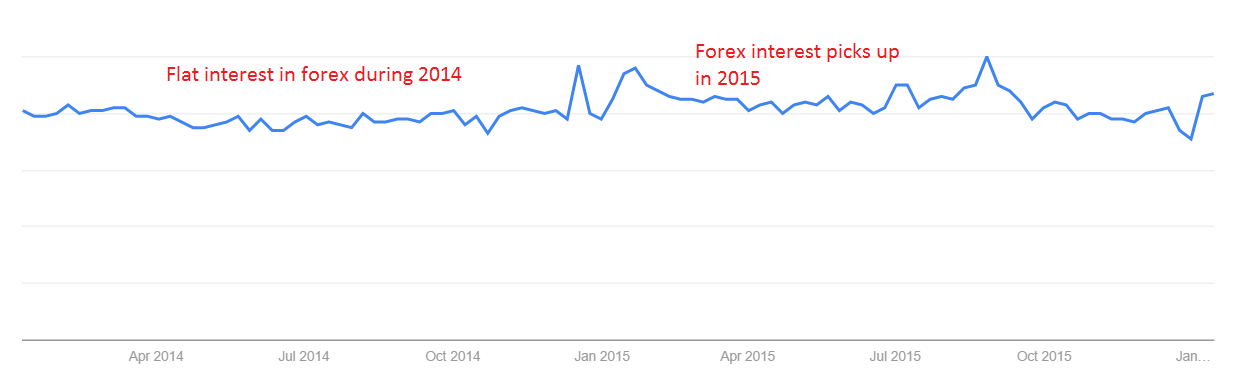
Google Trends Interest in 'Forex' (2014 to present)
Among non-investors, news from the SNB crisis led the general public to have slightly more knowledge that there is such a thing as forex trading. As a result, online advertisements marketing leverage, low spreads, 24/7 trading and access to the world’s most liquid market became slightly more understandable. This in turn had the effect of increasing banner click through rates as well as leading to more online searches about the subject.
This correlation between negative headlines and positive account growth in the forex industry is far from the first time this has occurred for online businesses
This correlation between negative headlines and positive account growth in the forex industry is far from the first time this has occurred for online businesses. In 2014, the Tinder App was at the center of attention, having led to a harassment legal suit, while Uber has been flagged negatively for both driver and company behavior. But, in both cases, the negativity had little to no lasting effects and helped raise product awareness.
Having entered the US Presidential race with no political background, Donald Trump’s leading position in GOP polls has been a surprise to many. More surprising has been the rise in polls following seemingly negative headlines after strange comments from Trump.
Examples include his attack on John McCain by stating “I like people who weren’t captured” and questioning whether McCain should be viewed as a war hero. Trump also has voiced several comments that can be viewed as condescending towards women, including words towards Presidential Rival Carly Fiorina and Rosie O’Donnell. The personal attacks are in addition to his general ideas such as putting up a wall with Mexico and banning Muslims from travelling to the US which upset large segments of the US population.
Despite these happenings, Trump has experienced positive momentum in his campaign as it nears the Iowa Caucus later this month, the election’s first state primary
Despite these happenings, Trump has experienced positive momentum in his campaign as it nears the Iowa Caucus later this month, the election’s first state primary. Among the explanations for this phenomenon being provided by statisticians is that early polls tend to favor better known candidates. As such, from the time he entered the race, Donald Trump has benefited from his celebrity status which has only gotten stronger as he dominates headlines, both positively and negatively.
At the time, headlines were dominated by customer losses, with many receiving notices of owing their brokers thousands of dollars due to negative account balances. On the company side, many brokers and banks alike reported multi-million dollar losses as a result of the volatility and negative customer balances that were deemed unrecoverable.
Among them, FXCM required $300 million emergency financing from outside investors to remain solvent while Saxo Bank and Interactive Brokers reported potential unrecovered losses of above $100 million. Other public firms such as IG Group and Swissquote reported losses in the tens of millions of dollars. In addition, succumbing to client losses, Alpari UK and several smaller brokers went out of business.
By May 2015’s iFX Expo, many brokers, including those that suffered losses, revealed to Finance Magnates that new account openings were back to their highest levels
Nonetheless, after what seemed like endless 24/7 news of the risks of forex trading and client and company losses, the negative atmosphere quickly dissipated. By May 2015’s iFX Expo, many brokers, including those that suffered losses, revealed to Finance Magnates that new account openings were back to their highest levels after dipping in February 2015.
In addition, after 2014 had been a weak year for new product releases, the conference featured the entrance of new technology providers as well as product releases from incumbents. This continued during November’s Finance Magnates London Summit which also saw lots of interest from participants to learn about new products and marketing solutions.
Even FXCM, which has become the ‘poster boy’ for the crisis and the near death experience that followed, has seen their volumes and account numbers stabilize and then grow.
It’s all about awareness
Speaking to industry professionals, the overall consensus is that, like Donald Trump’s advancements in the polls following negative headlines, the forex industry benefited from increased public awareness. For many existing traders, the Swiss franc’s move proved that volatility exists in forex, and meant it was worth their time to investigate its potential.
Google Trends Interest in 'Forex' (2014 to present)
Among non-investors, news from the SNB crisis led the general public to have slightly more knowledge that there is such a thing as forex trading. As a result, online advertisements marketing leverage, low spreads, 24/7 trading and access to the world’s most liquid market became slightly more understandable. This in turn had the effect of increasing banner click through rates as well as leading to more online searches about the subject.
This correlation between negative headlines and positive account growth in the forex industry is far from the first time this has occurred for online businesses
This correlation between negative headlines and positive account growth in the forex industry is far from the first time this has occurred for online businesses. In 2014, the Tinder App was at the center of attention, having led to a harassment legal suit, while Uber has been flagged negatively for both driver and company behavior. But, in both cases, the negativity had little to no lasting effects and helped raise product awareness.
Retail Trading & Prop Firms in 2025: Five Defining Trends - And One Prediction for 2026
Featured Videos
Executive Interview | Charlotte Bullock | Chief Product Officer, Bank of London | FMLS:25
In this interview, we sat down with Charlotte Bullock, Head of Product at The Bank of London, previously at SAP and now shaping product at one of the sector’s most ambitious new banking players.
Charlotte reflects on the Summit so far and talks about the culture inside fintech banks today. We look at the pressures that come with scaling, and how firms can hold onto the nimble approach that made them stand out early on.
We also cover the state of payments ahead of her appearance on the payments roundtable: the blockages financial firms face, the areas that still need fixing, and what a realistic solution looks like in 2026.
In this interview, we sat down with Charlotte Bullock, Head of Product at The Bank of London, previously at SAP and now shaping product at one of the sector’s most ambitious new banking players.
Charlotte reflects on the Summit so far and talks about the culture inside fintech banks today. We look at the pressures that come with scaling, and how firms can hold onto the nimble approach that made them stand out early on.
We also cover the state of payments ahead of her appearance on the payments roundtable: the blockages financial firms face, the areas that still need fixing, and what a realistic solution looks like in 2026.
In this interview, we sat down with Charlotte Bullock, Head of Product at The Bank of London, previously at SAP and now shaping product at one of the sector’s most ambitious new banking players.
Charlotte reflects on the Summit so far and talks about the culture inside fintech banks today. We look at the pressures that come with scaling, and how firms can hold onto the nimble approach that made them stand out early on.
We also cover the state of payments ahead of her appearance on the payments roundtable: the blockages financial firms face, the areas that still need fixing, and what a realistic solution looks like in 2026.
In this interview, we sat down with Charlotte Bullock, Head of Product at The Bank of London, previously at SAP and now shaping product at one of the sector’s most ambitious new banking players.
Charlotte reflects on the Summit so far and talks about the culture inside fintech banks today. We look at the pressures that come with scaling, and how firms can hold onto the nimble approach that made them stand out early on.
We also cover the state of payments ahead of her appearance on the payments roundtable: the blockages financial firms face, the areas that still need fixing, and what a realistic solution looks like in 2026.
In this conversation, we sit down with Drew Niv, CSO at ATFX Connect and one of the most influential figures in modern FX.
We speak about market structure, the institutional view on liquidity, and the sharp rise of prop trading, a sector Drew has been commenting on in recent months. Drew explains why he once dismissed prop trading, why his view changed, and what he now thinks the model means for brokers, clients and risk managers.
We explore subscription-fee dependency, the high reneging rate, and the long-term challenge: how brokers can build a more stable and honest version of the model. Drew also talks about the traffic advantage standalone prop firms have built and why brokers may still win in the long run if they take the right approach.
In this conversation, we sit down with Drew Niv, CSO at ATFX Connect and one of the most influential figures in modern FX.
We speak about market structure, the institutional view on liquidity, and the sharp rise of prop trading, a sector Drew has been commenting on in recent months. Drew explains why he once dismissed prop trading, why his view changed, and what he now thinks the model means for brokers, clients and risk managers.
We explore subscription-fee dependency, the high reneging rate, and the long-term challenge: how brokers can build a more stable and honest version of the model. Drew also talks about the traffic advantage standalone prop firms have built and why brokers may still win in the long run if they take the right approach.
In this conversation, we sit down with Drew Niv, CSO at ATFX Connect and one of the most influential figures in modern FX.
We speak about market structure, the institutional view on liquidity, and the sharp rise of prop trading, a sector Drew has been commenting on in recent months. Drew explains why he once dismissed prop trading, why his view changed, and what he now thinks the model means for brokers, clients and risk managers.
We explore subscription-fee dependency, the high reneging rate, and the long-term challenge: how brokers can build a more stable and honest version of the model. Drew also talks about the traffic advantage standalone prop firms have built and why brokers may still win in the long run if they take the right approach.
In this conversation, we sit down with Drew Niv, CSO at ATFX Connect and one of the most influential figures in modern FX.
We speak about market structure, the institutional view on liquidity, and the sharp rise of prop trading, a sector Drew has been commenting on in recent months. Drew explains why he once dismissed prop trading, why his view changed, and what he now thinks the model means for brokers, clients and risk managers.
We explore subscription-fee dependency, the high reneging rate, and the long-term challenge: how brokers can build a more stable and honest version of the model. Drew also talks about the traffic advantage standalone prop firms have built and why brokers may still win in the long run if they take the right approach.
In this conversation, we sit down with Drew Niv, CSO at ATFX Connect and one of the most influential figures in modern FX.
We speak about market structure, the institutional view on liquidity, and the sharp rise of prop trading, a sector Drew has been commenting on in recent months. Drew explains why he once dismissed prop trading, why his view changed, and what he now thinks the model means for brokers, clients and risk managers.
We explore subscription-fee dependency, the high reneging rate, and the long-term challenge: how brokers can build a more stable and honest version of the model. Drew also talks about the traffic advantage standalone prop firms have built and why brokers may still win in the long run if they take the right approach.
In this conversation, we sit down with Drew Niv, CSO at ATFX Connect and one of the most influential figures in modern FX.
We speak about market structure, the institutional view on liquidity, and the sharp rise of prop trading, a sector Drew has been commenting on in recent months. Drew explains why he once dismissed prop trading, why his view changed, and what he now thinks the model means for brokers, clients and risk managers.
We explore subscription-fee dependency, the high reneging rate, and the long-term challenge: how brokers can build a more stable and honest version of the model. Drew also talks about the traffic advantage standalone prop firms have built and why brokers may still win in the long run if they take the right approach.
Executive Interview | Remonda Z. Kirketerp Møller| CEO & Founder Muinmos | FMLS:25
In this interview, Remonda Z. Kirketerp Møller, founder of Muinmos, breaks down the state of AI in regtech and what responsible adoption really looks like for brokers. We talk about rising fragmentation, the pressures around compliance accuracy, and why most firms are still in the early stages of AI maturity.
Ramanda also shares insights on regulator sandboxes, shifting expectations around accountability, and the current reality of MiCA licensing and passporting in Europe.
A concise look at where compliance, onboarding, and AI-driven processes are heading next.
In this interview, Remonda Z. Kirketerp Møller, founder of Muinmos, breaks down the state of AI in regtech and what responsible adoption really looks like for brokers. We talk about rising fragmentation, the pressures around compliance accuracy, and why most firms are still in the early stages of AI maturity.
Ramanda also shares insights on regulator sandboxes, shifting expectations around accountability, and the current reality of MiCA licensing and passporting in Europe.
A concise look at where compliance, onboarding, and AI-driven processes are heading next.
In this interview, Remonda Z. Kirketerp Møller, founder of Muinmos, breaks down the state of AI in regtech and what responsible adoption really looks like for brokers. We talk about rising fragmentation, the pressures around compliance accuracy, and why most firms are still in the early stages of AI maturity.
Ramanda also shares insights on regulator sandboxes, shifting expectations around accountability, and the current reality of MiCA licensing and passporting in Europe.
A concise look at where compliance, onboarding, and AI-driven processes are heading next.
In this interview, Remonda Z. Kirketerp Møller, founder of Muinmos, breaks down the state of AI in regtech and what responsible adoption really looks like for brokers. We talk about rising fragmentation, the pressures around compliance accuracy, and why most firms are still in the early stages of AI maturity.
Ramanda also shares insights on regulator sandboxes, shifting expectations around accountability, and the current reality of MiCA licensing and passporting in Europe.
A concise look at where compliance, onboarding, and AI-driven processes are heading next.
In this interview, Remonda Z. Kirketerp Møller, founder of Muinmos, breaks down the state of AI in regtech and what responsible adoption really looks like for brokers. We talk about rising fragmentation, the pressures around compliance accuracy, and why most firms are still in the early stages of AI maturity.
Ramanda also shares insights on regulator sandboxes, shifting expectations around accountability, and the current reality of MiCA licensing and passporting in Europe.
A concise look at where compliance, onboarding, and AI-driven processes are heading next.
In this interview, Remonda Z. Kirketerp Møller, founder of Muinmos, breaks down the state of AI in regtech and what responsible adoption really looks like for brokers. We talk about rising fragmentation, the pressures around compliance accuracy, and why most firms are still in the early stages of AI maturity.
Ramanda also shares insights on regulator sandboxes, shifting expectations around accountability, and the current reality of MiCA licensing and passporting in Europe.
A concise look at where compliance, onboarding, and AI-driven processes are heading next.
In this conversation, we speak with Aydin Bonabi, CEO and co-founder of Surveill, a firm focused on fraud detection and AI-driven compliance tools for financial institutions.
We start with Aydin’s view of the Summit and the challenges brokers face as fraud tactics grow more complex. He explains how firms can stay ahead through real-time signals, data patterns, and early-stage detection.
We also talk about AI training and why compliance teams often struggle to keep models accurate, fair, and aligned with regulatory expectations. Aydin breaks down what “good” AI training looks like inside a financial environment, including the importance of clean data, domain expertise, and human oversight.
He closes with a clear message: fraud is scaling, and so must the tools that stop it.
In this conversation, we speak with Aydin Bonabi, CEO and co-founder of Surveill, a firm focused on fraud detection and AI-driven compliance tools for financial institutions.
We start with Aydin’s view of the Summit and the challenges brokers face as fraud tactics grow more complex. He explains how firms can stay ahead through real-time signals, data patterns, and early-stage detection.
We also talk about AI training and why compliance teams often struggle to keep models accurate, fair, and aligned with regulatory expectations. Aydin breaks down what “good” AI training looks like inside a financial environment, including the importance of clean data, domain expertise, and human oversight.
He closes with a clear message: fraud is scaling, and so must the tools that stop it.
In this conversation, we speak with Aydin Bonabi, CEO and co-founder of Surveill, a firm focused on fraud detection and AI-driven compliance tools for financial institutions.
We start with Aydin’s view of the Summit and the challenges brokers face as fraud tactics grow more complex. He explains how firms can stay ahead through real-time signals, data patterns, and early-stage detection.
We also talk about AI training and why compliance teams often struggle to keep models accurate, fair, and aligned with regulatory expectations. Aydin breaks down what “good” AI training looks like inside a financial environment, including the importance of clean data, domain expertise, and human oversight.
He closes with a clear message: fraud is scaling, and so must the tools that stop it.
In this conversation, we speak with Aydin Bonabi, CEO and co-founder of Surveill, a firm focused on fraud detection and AI-driven compliance tools for financial institutions.
We start with Aydin’s view of the Summit and the challenges brokers face as fraud tactics grow more complex. He explains how firms can stay ahead through real-time signals, data patterns, and early-stage detection.
We also talk about AI training and why compliance teams often struggle to keep models accurate, fair, and aligned with regulatory expectations. Aydin breaks down what “good” AI training looks like inside a financial environment, including the importance of clean data, domain expertise, and human oversight.
He closes with a clear message: fraud is scaling, and so must the tools that stop it.
In this conversation, we speak with Aydin Bonabi, CEO and co-founder of Surveill, a firm focused on fraud detection and AI-driven compliance tools for financial institutions.
We start with Aydin’s view of the Summit and the challenges brokers face as fraud tactics grow more complex. He explains how firms can stay ahead through real-time signals, data patterns, and early-stage detection.
We also talk about AI training and why compliance teams often struggle to keep models accurate, fair, and aligned with regulatory expectations. Aydin breaks down what “good” AI training looks like inside a financial environment, including the importance of clean data, domain expertise, and human oversight.
He closes with a clear message: fraud is scaling, and so must the tools that stop it.
In this conversation, we speak with Aydin Bonabi, CEO and co-founder of Surveill, a firm focused on fraud detection and AI-driven compliance tools for financial institutions.
We start with Aydin’s view of the Summit and the challenges brokers face as fraud tactics grow more complex. He explains how firms can stay ahead through real-time signals, data patterns, and early-stage detection.
We also talk about AI training and why compliance teams often struggle to keep models accurate, fair, and aligned with regulatory expectations. Aydin breaks down what “good” AI training looks like inside a financial environment, including the importance of clean data, domain expertise, and human oversight.
He closes with a clear message: fraud is scaling, and so must the tools that stop it.
Exness expands its presence in Africa: Inside our interview with Paul Margarites in Cape Town
Finance Magnates met with Paul Margarites, Exness regional commercial director for Sub-Saharan Africa, during a visit to the firm’s office opening in Cape Town. In this talk, led by Andrea Badiola Mateos, Co-CEO at Finance Magnates, Paul shares views on the South African trading space, local user behavior, mobile trends, regulation, team growth, and how Exness plans to grow in more markets across the region. @Exness
Read the article at: https://www.financemagnates.com/thought-leadership/exness-expands-its-presence-in-africa-inside-our-interview-with-paul-margarites/
#exness #financemagnates #exnesstrading #CFDtrading #tradeonline #africanews #capetown
Finance Magnates met with Paul Margarites, Exness regional commercial director for Sub-Saharan Africa, during a visit to the firm’s office opening in Cape Town. In this talk, led by Andrea Badiola Mateos, Co-CEO at Finance Magnates, Paul shares views on the South African trading space, local user behavior, mobile trends, regulation, team growth, and how Exness plans to grow in more markets across the region. @Exness
Read the article at: https://www.financemagnates.com/thought-leadership/exness-expands-its-presence-in-africa-inside-our-interview-with-paul-margarites/
#exness #financemagnates #exnesstrading #CFDtrading #tradeonline #africanews #capetown
Finance Magnates met with Paul Margarites, Exness regional commercial director for Sub-Saharan Africa, during a visit to the firm’s office opening in Cape Town. In this talk, led by Andrea Badiola Mateos, Co-CEO at Finance Magnates, Paul shares views on the South African trading space, local user behavior, mobile trends, regulation, team growth, and how Exness plans to grow in more markets across the region. @Exness
Read the article at: https://www.financemagnates.com/thought-leadership/exness-expands-its-presence-in-africa-inside-our-interview-with-paul-margarites/
#exness #financemagnates #exnesstrading #CFDtrading #tradeonline #africanews #capetown
Finance Magnates met with Paul Margarites, Exness regional commercial director for Sub-Saharan Africa, during a visit to the firm’s office opening in Cape Town. In this talk, led by Andrea Badiola Mateos, Co-CEO at Finance Magnates, Paul shares views on the South African trading space, local user behavior, mobile trends, regulation, team growth, and how Exness plans to grow in more markets across the region. @Exness
Read the article at: https://www.financemagnates.com/thought-leadership/exness-expands-its-presence-in-africa-inside-our-interview-with-paul-margarites/
#exness #financemagnates #exnesstrading #CFDtrading #tradeonline #africanews #capetown
Finance Magnates met with Paul Margarites, Exness regional commercial director for Sub-Saharan Africa, during a visit to the firm’s office opening in Cape Town. In this talk, led by Andrea Badiola Mateos, Co-CEO at Finance Magnates, Paul shares views on the South African trading space, local user behavior, mobile trends, regulation, team growth, and how Exness plans to grow in more markets across the region. @Exness
Read the article at: https://www.financemagnates.com/thought-leadership/exness-expands-its-presence-in-africa-inside-our-interview-with-paul-margarites/
#exness #financemagnates #exnesstrading #CFDtrading #tradeonline #africanews #capetown
Finance Magnates met with Paul Margarites, Exness regional commercial director for Sub-Saharan Africa, during a visit to the firm’s office opening in Cape Town. In this talk, led by Andrea Badiola Mateos, Co-CEO at Finance Magnates, Paul shares views on the South African trading space, local user behavior, mobile trends, regulation, team growth, and how Exness plans to grow in more markets across the region. @Exness
Read the article at: https://www.financemagnates.com/thought-leadership/exness-expands-its-presence-in-africa-inside-our-interview-with-paul-margarites/
#exness #financemagnates #exnesstrading #CFDtrading #tradeonline #africanews #capetown