
As Symphony emerges from private beta to public, will the Wall Street backed platform meet expectations of disrupting the terminal sector.
Launching publicly last week is secure messaging platform, Symphony. Previously in private beta with 30,000 users, the firm’s enterprise edition is earning the distinction of a being referred to a ‘Bloomberg killer’ as it battles against the financial giant’s Terminal business. But can Symphony really be a Bloomberg killer, and what are the ramifications to the rest of the fintech market?
Why everyone wants to kill Kenny Bloomberg?
The first question is what’s so special about Bloomberg that every now and then we hear about a ‘mythical’ Bloomberg killer arriving to dethrone the giant. The short answer is $$$ and lots of it. At an estimated 300,000 Bloomberg Terminal users that are paying $20,000 a year for the product, it is a $6 billion market that fintech firms are aiming to disrupt. And, it’s not just Bloomberg, taking into account 200,000 Reuters Terminal users, and the market for financial terminals calculates to about $10 billion in yearly costs absorbed by financial firms that include the largest banks, brokers, asset managers, hedge funds and professional traders.
What do you get for $20,000?

The truth is that Bloomberg has done a great job of adding lots of features and tools to their Terminal to entice users to remain on the platform. At its core, the Bloomberg Terminal provides real time headlines, news, data on nearly every asset type and global market, company financial data, and analysis tools.
Most notable among the Terminal’s free features, is its messaging platform. The system connects all Terminal users and has become the social network for Wall Street where they can share trading ideas, receive advice, create private groups and in the case of the FX Fix rigging scandal, collaborate to manipulate the market. Allowing users to message each both in and out of their company, the messaging platform’s hold as the social network of Wall Street has led it to become so popular that there are plenty of users that primary only use the Terminal for messaging.
$20,000 just for messaging?
In an era where messaging platforms and social networks are a multi-billion dollar market, with products like Facebook, Twitter, SnapChat and WhatsApp garnering massive valuations, Bloomberg is unique in that it actually charges for services that are nearly always free. The value though isn’t with Bloomberg’s messaging platform, as much as for exclusivity of its network. As long as banks and buy-side funds believe they are recouping their $20,000 a year investment by having the Terminal, they will continue to avail it for their employees.
Why do we care about Symphony?
With that in mind, simply marketing to Wall Street a messaging platform isn’t enough to dethrone Bloomberg. Yes, Symphony has created a product that they believe will satisfy the needs of financial clients such as focusing on security and compliance. The product is also priced at $30 a month which at $360 a year compares to Bloomberg’s $20,000. However, without the network of important users, Symphony isn’t much different from any other free or low cost solutions like Skype or Slack.
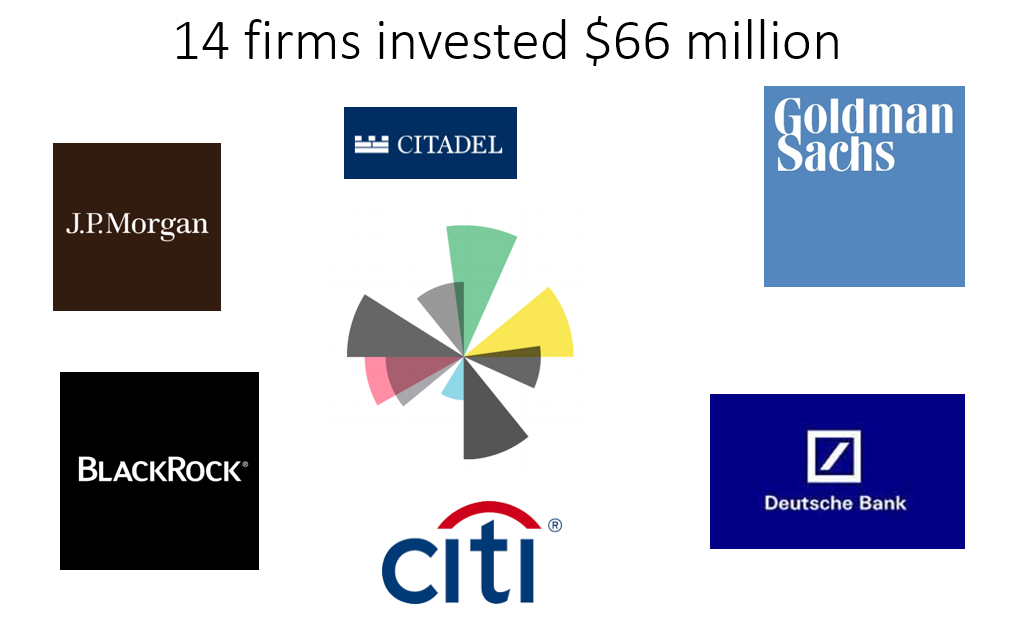
The reason why people believe ‘this time it’s different’ is that Symphony is backed by Wall Street itself. In October 2014, a consortium of investment banks and buy-side firms led by Goldman Sachs invested $66 million in Symphony (previously named Perzo). Included in the deal are a who’s who of global financial firms including Citi, Citadel, Deutsche Bank, JPMorgan, Morgan Stanley, BlackRock and UBS. As a result, Symphony isn’t just coming to market being targeted at financial firms, but those very same firms are the stakeholders to promote its use and to create a viable Bloomberg Terminal messaging network.
RGE vs NRGE
The question remains whether people will actually leave the Terminal? In this regard, the final answer is expected to come down to economics. If the Symphony network becomes established enough where minimal Terminal users are getting 95% of what they need from the messaging platform, then the $360 vs $20,000 equation becomes a compelling one for companies to decrease their Bloomberg users.
Specifically, it can be expected that the decision of whether to get rid of the Terminal for employees is whether they are RGEs or NRGEs. The Sesame Street Wall Street letters of the day equate to; RGE – Revenue Generating Employees versus NRGEs – Non-Revenue Generating Employees.
Overall, the Bloomberg killer question will come down to money. For big swingers such as traders and key analysts that use many features of the Terminal and rely on the messaging platform for their trades, the use cases are expected to continue to justify the costs. But, for NRGEs that simply have basic needs of the Terminal but use the messaging platform, a lower cost alternative like Symphony becomes a compelling case for financial firms.
Unbundling finance – where things become interesting
While financial firms may find Symphony to be a lower cost alternative for their employees, the reality is that the Bloomberg Terminal offers many other non-messaging features that will have to be replaced. For the rest of the fintech sector, the unbundling of the Terminal creates an opportunity for providers of niche services.
In regards to Symphony itself, the firm has been reported to be experimenting with a market data solution that users only pay for searched queries and requested information. Such a solution would be similar to that of SuperDerivatives which markets customized data services.
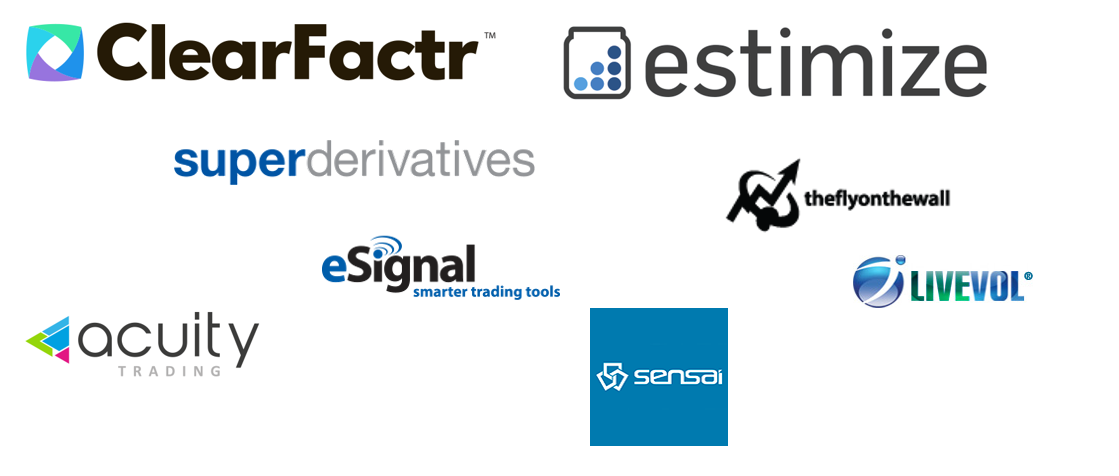
Other unbundling opportunities are in real time news and sentiment analysis sector, where many startups have been creating products to alert traders of upcoming moves in the market. Other niches are for illiquid assets, where a number of new firms are providing solutions to value and analyze securities where price discovery is minimal.
Overall, it remains to be seen whether Symphony’s messaging platform becomes a real alternative to Bloomberg’s. But, if it can, then more than being a Bloomberg killer, it has the ability to usher in a new wave of unbundling the financial market data market, and putting $10 billion of the sector up for grabs.
Fintech Spotlight is a new column on Finance Magnates devoted to reviewing innovative financial technology companies and sector trends.
Launching publicly last week is secure messaging platform, Symphony. Previously in private beta with 30,000 users, the firm’s enterprise edition is earning the distinction of a being referred to a ‘Bloomberg killer’ as it battles against the financial giant’s Terminal business. But can Symphony really be a Bloomberg killer, and what are the ramifications to the rest of the fintech market?
Why everyone wants to kill Kenny Bloomberg?
The first question is what’s so special about Bloomberg that every now and then we hear about a ‘mythical’ Bloomberg killer arriving to dethrone the giant. The short answer is $$$ and lots of it. At an estimated 300,000 Bloomberg Terminal users that are paying $20,000 a year for the product, it is a $6 billion market that fintech firms are aiming to disrupt. And, it’s not just Bloomberg, taking into account 200,000 Reuters Terminal users, and the market for financial terminals calculates to about $10 billion in yearly costs absorbed by financial firms that include the largest banks, brokers, asset managers, hedge funds and professional traders.
What do you get for $20,000?
The truth is that Bloomberg has done a great job of adding lots of features and tools to their Terminal to entice users to remain on the platform. At its core, the Bloomberg Terminal provides real time headlines, news, data on nearly every asset type and global market, company financial data, and analysis tools.
Most notable among the Terminal’s free features, is its messaging platform. The system connects all Terminal users and has become the social network for Wall Street where they can share trading ideas, receive advice, create private groups and in the case of the FX Fix rigging scandal, collaborate to manipulate the market. Allowing users to message each both in and out of their company, the messaging platform’s hold as the social network of Wall Street has led it to become so popular that there are plenty of users that primary only use the Terminal for messaging.
$20,000 just for messaging?
In an era where messaging platforms and social networks are a multi-billion dollar market, with products like Facebook, Twitter, SnapChat and WhatsApp garnering massive valuations, Bloomberg is unique in that it actually charges for services that are nearly always free. The value though isn’t with Bloomberg’s messaging platform, as much as for exclusivity of its network. As long as banks and buy-side funds believe they are recouping their $20,000 a year investment by having the Terminal, they will continue to avail it for their employees.
Why do we care about Symphony?
With that in mind, simply marketing to Wall Street a messaging platform isn’t enough to dethrone Bloomberg. Yes, Symphony has created a product that they believe will satisfy the needs of financial clients such as focusing on security and compliance. The product is also priced at $30 a month which at $360 a year compares to Bloomberg’s $20,000. However, without the network of important users, Symphony isn’t much different from any other free or low cost solutions like Skype or Slack.
The reason why people believe ‘this time it’s different’ is that Symphony is backed by Wall Street itself. In October 2014, a consortium of investment banks and buy-side firms led by Goldman Sachs invested $66 million in Symphony (previously named Perzo). Included in the deal are a who’s who of global financial firms including Citi, Citadel, Deutsche Bank, JPMorgan, Morgan Stanley, BlackRock and UBS. As a result, Symphony isn’t just coming to market being targeted at financial firms, but those very same firms are the stakeholders to promote its use and to create a viable Bloomberg Terminal messaging network.
RGE vs NRGE
The question remains whether people will actually leave the Terminal? In this regard, the final answer is expected to come down to economics. If the Symphony network becomes established enough where minimal Terminal users are getting 95% of what they need from the messaging platform, then the $360 vs $20,000 equation becomes a compelling one for companies to decrease their Bloomberg users.
Specifically, it can be expected that the decision of whether to get rid of the Terminal for employees is whether they are RGEs or NRGEs. The Sesame Street Wall Street letters of the day equate to; RGE – Revenue Generating Employees versus NRGEs – Non-Revenue Generating Employees.
Overall, the Bloomberg killer question will come down to money. For big swingers such as traders and key analysts that use many features of the Terminal and rely on the messaging platform for their trades, the use cases are expected to continue to justify the costs. But, for NRGEs that simply have basic needs of the Terminal but use the messaging platform, a lower cost alternative like Symphony becomes a compelling case for financial firms.
Unbundling finance – where things become interesting
While financial firms may find Symphony to be a lower cost alternative for their employees, the reality is that the Bloomberg Terminal offers many other non-messaging features that will have to be replaced. For the rest of the fintech sector, the unbundling of the Terminal creates an opportunity for providers of niche services.
In regards to Symphony itself, the firm has been reported to be experimenting with a market data solution that users only pay for searched queries and requested information. Such a solution would be similar to that of SuperDerivatives which markets customized data services.
Other unbundling opportunities are in real time news and sentiment analysis sector, where many startups have been creating products to alert traders of upcoming moves in the market. Other niches are for illiquid assets, where a number of new firms are providing solutions to value and analyze securities where price discovery is minimal.
Overall, it remains to be seen whether Symphony’s messaging platform becomes a real alternative to Bloomberg’s. But, if it can, then more than being a Bloomberg killer, it has the ability to usher in a new wave of unbundling the financial market data market, and putting $10 billion of the sector up for grabs.
Fintech Spotlight is a new column on Finance Magnates devoted to reviewing innovative financial technology companies and sector trends.
Visa Brings Stablecoins to Main Street Banking With U.S. Rollout
Featured Videos
Executive Interview | Charlotte Bullock | Chief Product Officer, Bank of London | FMLS:25
In this interview, we sat down with Charlotte Bullock, Head of Product at The Bank of London, previously at SAP and now shaping product at one of the sector’s most ambitious new banking players.
Charlotte reflects on the Summit so far and talks about the culture inside fintech banks today. We look at the pressures that come with scaling, and how firms can hold onto the nimble approach that made them stand out early on.
We also cover the state of payments ahead of her appearance on the payments roundtable: the blockages financial firms face, the areas that still need fixing, and what a realistic solution looks like in 2026.
In this interview, we sat down with Charlotte Bullock, Head of Product at The Bank of London, previously at SAP and now shaping product at one of the sector’s most ambitious new banking players.
Charlotte reflects on the Summit so far and talks about the culture inside fintech banks today. We look at the pressures that come with scaling, and how firms can hold onto the nimble approach that made them stand out early on.
We also cover the state of payments ahead of her appearance on the payments roundtable: the blockages financial firms face, the areas that still need fixing, and what a realistic solution looks like in 2026.
In this interview, we sat down with Charlotte Bullock, Head of Product at The Bank of London, previously at SAP and now shaping product at one of the sector’s most ambitious new banking players.
Charlotte reflects on the Summit so far and talks about the culture inside fintech banks today. We look at the pressures that come with scaling, and how firms can hold onto the nimble approach that made them stand out early on.
We also cover the state of payments ahead of her appearance on the payments roundtable: the blockages financial firms face, the areas that still need fixing, and what a realistic solution looks like in 2026.
In this interview, we sat down with Charlotte Bullock, Head of Product at The Bank of London, previously at SAP and now shaping product at one of the sector’s most ambitious new banking players.
Charlotte reflects on the Summit so far and talks about the culture inside fintech banks today. We look at the pressures that come with scaling, and how firms can hold onto the nimble approach that made them stand out early on.
We also cover the state of payments ahead of her appearance on the payments roundtable: the blockages financial firms face, the areas that still need fixing, and what a realistic solution looks like in 2026.
In this conversation, we sit down with Drew Niv, CSO at ATFX Connect and one of the most influential figures in modern FX.
We speak about market structure, the institutional view on liquidity, and the sharp rise of prop trading, a sector Drew has been commenting on in recent months. Drew explains why he once dismissed prop trading, why his view changed, and what he now thinks the model means for brokers, clients and risk managers.
We explore subscription-fee dependency, the high reneging rate, and the long-term challenge: how brokers can build a more stable and honest version of the model. Drew also talks about the traffic advantage standalone prop firms have built and why brokers may still win in the long run if they take the right approach.
In this conversation, we sit down with Drew Niv, CSO at ATFX Connect and one of the most influential figures in modern FX.
We speak about market structure, the institutional view on liquidity, and the sharp rise of prop trading, a sector Drew has been commenting on in recent months. Drew explains why he once dismissed prop trading, why his view changed, and what he now thinks the model means for brokers, clients and risk managers.
We explore subscription-fee dependency, the high reneging rate, and the long-term challenge: how brokers can build a more stable and honest version of the model. Drew also talks about the traffic advantage standalone prop firms have built and why brokers may still win in the long run if they take the right approach.
In this conversation, we sit down with Drew Niv, CSO at ATFX Connect and one of the most influential figures in modern FX.
We speak about market structure, the institutional view on liquidity, and the sharp rise of prop trading, a sector Drew has been commenting on in recent months. Drew explains why he once dismissed prop trading, why his view changed, and what he now thinks the model means for brokers, clients and risk managers.
We explore subscription-fee dependency, the high reneging rate, and the long-term challenge: how brokers can build a more stable and honest version of the model. Drew also talks about the traffic advantage standalone prop firms have built and why brokers may still win in the long run if they take the right approach.
In this conversation, we sit down with Drew Niv, CSO at ATFX Connect and one of the most influential figures in modern FX.
We speak about market structure, the institutional view on liquidity, and the sharp rise of prop trading, a sector Drew has been commenting on in recent months. Drew explains why he once dismissed prop trading, why his view changed, and what he now thinks the model means for brokers, clients and risk managers.
We explore subscription-fee dependency, the high reneging rate, and the long-term challenge: how brokers can build a more stable and honest version of the model. Drew also talks about the traffic advantage standalone prop firms have built and why brokers may still win in the long run if they take the right approach.
In this conversation, we sit down with Drew Niv, CSO at ATFX Connect and one of the most influential figures in modern FX.
We speak about market structure, the institutional view on liquidity, and the sharp rise of prop trading, a sector Drew has been commenting on in recent months. Drew explains why he once dismissed prop trading, why his view changed, and what he now thinks the model means for brokers, clients and risk managers.
We explore subscription-fee dependency, the high reneging rate, and the long-term challenge: how brokers can build a more stable and honest version of the model. Drew also talks about the traffic advantage standalone prop firms have built and why brokers may still win in the long run if they take the right approach.
In this conversation, we sit down with Drew Niv, CSO at ATFX Connect and one of the most influential figures in modern FX.
We speak about market structure, the institutional view on liquidity, and the sharp rise of prop trading, a sector Drew has been commenting on in recent months. Drew explains why he once dismissed prop trading, why his view changed, and what he now thinks the model means for brokers, clients and risk managers.
We explore subscription-fee dependency, the high reneging rate, and the long-term challenge: how brokers can build a more stable and honest version of the model. Drew also talks about the traffic advantage standalone prop firms have built and why brokers may still win in the long run if they take the right approach.
Executive Interview | Remonda Z. Kirketerp Møller| CEO & Founder Muinmos | FMLS:25
In this interview, Remonda Z. Kirketerp Møller, founder of Muinmos, breaks down the state of AI in regtech and what responsible adoption really looks like for brokers. We talk about rising fragmentation, the pressures around compliance accuracy, and why most firms are still in the early stages of AI maturity.
Ramanda also shares insights on regulator sandboxes, shifting expectations around accountability, and the current reality of MiCA licensing and passporting in Europe.
A concise look at where compliance, onboarding, and AI-driven processes are heading next.
In this interview, Remonda Z. Kirketerp Møller, founder of Muinmos, breaks down the state of AI in regtech and what responsible adoption really looks like for brokers. We talk about rising fragmentation, the pressures around compliance accuracy, and why most firms are still in the early stages of AI maturity.
Ramanda also shares insights on regulator sandboxes, shifting expectations around accountability, and the current reality of MiCA licensing and passporting in Europe.
A concise look at where compliance, onboarding, and AI-driven processes are heading next.
In this interview, Remonda Z. Kirketerp Møller, founder of Muinmos, breaks down the state of AI in regtech and what responsible adoption really looks like for brokers. We talk about rising fragmentation, the pressures around compliance accuracy, and why most firms are still in the early stages of AI maturity.
Ramanda also shares insights on regulator sandboxes, shifting expectations around accountability, and the current reality of MiCA licensing and passporting in Europe.
A concise look at where compliance, onboarding, and AI-driven processes are heading next.
In this interview, Remonda Z. Kirketerp Møller, founder of Muinmos, breaks down the state of AI in regtech and what responsible adoption really looks like for brokers. We talk about rising fragmentation, the pressures around compliance accuracy, and why most firms are still in the early stages of AI maturity.
Ramanda also shares insights on regulator sandboxes, shifting expectations around accountability, and the current reality of MiCA licensing and passporting in Europe.
A concise look at where compliance, onboarding, and AI-driven processes are heading next.
In this interview, Remonda Z. Kirketerp Møller, founder of Muinmos, breaks down the state of AI in regtech and what responsible adoption really looks like for brokers. We talk about rising fragmentation, the pressures around compliance accuracy, and why most firms are still in the early stages of AI maturity.
Ramanda also shares insights on regulator sandboxes, shifting expectations around accountability, and the current reality of MiCA licensing and passporting in Europe.
A concise look at where compliance, onboarding, and AI-driven processes are heading next.
In this interview, Remonda Z. Kirketerp Møller, founder of Muinmos, breaks down the state of AI in regtech and what responsible adoption really looks like for brokers. We talk about rising fragmentation, the pressures around compliance accuracy, and why most firms are still in the early stages of AI maturity.
Ramanda also shares insights on regulator sandboxes, shifting expectations around accountability, and the current reality of MiCA licensing and passporting in Europe.
A concise look at where compliance, onboarding, and AI-driven processes are heading next.
In this conversation, we speak with Aydin Bonabi, CEO and co-founder of Surveill, a firm focused on fraud detection and AI-driven compliance tools for financial institutions.
We start with Aydin’s view of the Summit and the challenges brokers face as fraud tactics grow more complex. He explains how firms can stay ahead through real-time signals, data patterns, and early-stage detection.
We also talk about AI training and why compliance teams often struggle to keep models accurate, fair, and aligned with regulatory expectations. Aydin breaks down what “good” AI training looks like inside a financial environment, including the importance of clean data, domain expertise, and human oversight.
He closes with a clear message: fraud is scaling, and so must the tools that stop it.
In this conversation, we speak with Aydin Bonabi, CEO and co-founder of Surveill, a firm focused on fraud detection and AI-driven compliance tools for financial institutions.
We start with Aydin’s view of the Summit and the challenges brokers face as fraud tactics grow more complex. He explains how firms can stay ahead through real-time signals, data patterns, and early-stage detection.
We also talk about AI training and why compliance teams often struggle to keep models accurate, fair, and aligned with regulatory expectations. Aydin breaks down what “good” AI training looks like inside a financial environment, including the importance of clean data, domain expertise, and human oversight.
He closes with a clear message: fraud is scaling, and so must the tools that stop it.
In this conversation, we speak with Aydin Bonabi, CEO and co-founder of Surveill, a firm focused on fraud detection and AI-driven compliance tools for financial institutions.
We start with Aydin’s view of the Summit and the challenges brokers face as fraud tactics grow more complex. He explains how firms can stay ahead through real-time signals, data patterns, and early-stage detection.
We also talk about AI training and why compliance teams often struggle to keep models accurate, fair, and aligned with regulatory expectations. Aydin breaks down what “good” AI training looks like inside a financial environment, including the importance of clean data, domain expertise, and human oversight.
He closes with a clear message: fraud is scaling, and so must the tools that stop it.
In this conversation, we speak with Aydin Bonabi, CEO and co-founder of Surveill, a firm focused on fraud detection and AI-driven compliance tools for financial institutions.
We start with Aydin’s view of the Summit and the challenges brokers face as fraud tactics grow more complex. He explains how firms can stay ahead through real-time signals, data patterns, and early-stage detection.
We also talk about AI training and why compliance teams often struggle to keep models accurate, fair, and aligned with regulatory expectations. Aydin breaks down what “good” AI training looks like inside a financial environment, including the importance of clean data, domain expertise, and human oversight.
He closes with a clear message: fraud is scaling, and so must the tools that stop it.
In this conversation, we speak with Aydin Bonabi, CEO and co-founder of Surveill, a firm focused on fraud detection and AI-driven compliance tools for financial institutions.
We start with Aydin’s view of the Summit and the challenges brokers face as fraud tactics grow more complex. He explains how firms can stay ahead through real-time signals, data patterns, and early-stage detection.
We also talk about AI training and why compliance teams often struggle to keep models accurate, fair, and aligned with regulatory expectations. Aydin breaks down what “good” AI training looks like inside a financial environment, including the importance of clean data, domain expertise, and human oversight.
He closes with a clear message: fraud is scaling, and so must the tools that stop it.
In this conversation, we speak with Aydin Bonabi, CEO and co-founder of Surveill, a firm focused on fraud detection and AI-driven compliance tools for financial institutions.
We start with Aydin’s view of the Summit and the challenges brokers face as fraud tactics grow more complex. He explains how firms can stay ahead through real-time signals, data patterns, and early-stage detection.
We also talk about AI training and why compliance teams often struggle to keep models accurate, fair, and aligned with regulatory expectations. Aydin breaks down what “good” AI training looks like inside a financial environment, including the importance of clean data, domain expertise, and human oversight.
He closes with a clear message: fraud is scaling, and so must the tools that stop it.
Exness expands its presence in Africa: Inside our interview with Paul Margarites in Cape Town
Finance Magnates met with Paul Margarites, Exness regional commercial director for Sub-Saharan Africa, during a visit to the firm’s office opening in Cape Town. In this talk, led by Andrea Badiola Mateos, Co-CEO at Finance Magnates, Paul shares views on the South African trading space, local user behavior, mobile trends, regulation, team growth, and how Exness plans to grow in more markets across the region. @Exness
Read the article at: https://www.financemagnates.com/thought-leadership/exness-expands-its-presence-in-africa-inside-our-interview-with-paul-margarites/
#exness #financemagnates #exnesstrading #CFDtrading #tradeonline #africanews #capetown
Finance Magnates met with Paul Margarites, Exness regional commercial director for Sub-Saharan Africa, during a visit to the firm’s office opening in Cape Town. In this talk, led by Andrea Badiola Mateos, Co-CEO at Finance Magnates, Paul shares views on the South African trading space, local user behavior, mobile trends, regulation, team growth, and how Exness plans to grow in more markets across the region. @Exness
Read the article at: https://www.financemagnates.com/thought-leadership/exness-expands-its-presence-in-africa-inside-our-interview-with-paul-margarites/
#exness #financemagnates #exnesstrading #CFDtrading #tradeonline #africanews #capetown
Finance Magnates met with Paul Margarites, Exness regional commercial director for Sub-Saharan Africa, during a visit to the firm’s office opening in Cape Town. In this talk, led by Andrea Badiola Mateos, Co-CEO at Finance Magnates, Paul shares views on the South African trading space, local user behavior, mobile trends, regulation, team growth, and how Exness plans to grow in more markets across the region. @Exness
Read the article at: https://www.financemagnates.com/thought-leadership/exness-expands-its-presence-in-africa-inside-our-interview-with-paul-margarites/
#exness #financemagnates #exnesstrading #CFDtrading #tradeonline #africanews #capetown
Finance Magnates met with Paul Margarites, Exness regional commercial director for Sub-Saharan Africa, during a visit to the firm’s office opening in Cape Town. In this talk, led by Andrea Badiola Mateos, Co-CEO at Finance Magnates, Paul shares views on the South African trading space, local user behavior, mobile trends, regulation, team growth, and how Exness plans to grow in more markets across the region. @Exness
Read the article at: https://www.financemagnates.com/thought-leadership/exness-expands-its-presence-in-africa-inside-our-interview-with-paul-margarites/
#exness #financemagnates #exnesstrading #CFDtrading #tradeonline #africanews #capetown
Finance Magnates met with Paul Margarites, Exness regional commercial director for Sub-Saharan Africa, during a visit to the firm’s office opening in Cape Town. In this talk, led by Andrea Badiola Mateos, Co-CEO at Finance Magnates, Paul shares views on the South African trading space, local user behavior, mobile trends, regulation, team growth, and how Exness plans to grow in more markets across the region. @Exness
Read the article at: https://www.financemagnates.com/thought-leadership/exness-expands-its-presence-in-africa-inside-our-interview-with-paul-margarites/
#exness #financemagnates #exnesstrading #CFDtrading #tradeonline #africanews #capetown
Finance Magnates met with Paul Margarites, Exness regional commercial director for Sub-Saharan Africa, during a visit to the firm’s office opening in Cape Town. In this talk, led by Andrea Badiola Mateos, Co-CEO at Finance Magnates, Paul shares views on the South African trading space, local user behavior, mobile trends, regulation, team growth, and how Exness plans to grow in more markets across the region. @Exness
Read the article at: https://www.financemagnates.com/thought-leadership/exness-expands-its-presence-in-africa-inside-our-interview-with-paul-margarites/
#exness #financemagnates #exnesstrading #CFDtrading #tradeonline #africanews #capetown