Asia has the highest number of smartphone and bitcoin users, which offers a great opportunity for blockchain-based solutions.
Bloomberg
Arai Ezzra is the founder of DinarDirham, a global fintech company from Southeast Asia, with offices in Hong Kong, Kuala Lumpur and soon in Dubai. It provides online and physical gold, forex and metal investment solutions.
At the upcoming iFX EXPO Asia 2017 Ezzra will be taking part in a panel discussing the Asian financial market ecosystem, which will discuss the hottest assets and trends that are attracting Asian investors and entrepreneurs.
In order to learn about blockchain technology, the gold trading markets of Asia and to gain a glimpse into the type of discussion that the iFX EXPO Asia 2017 offers, we asked Arai Ezzra about his area of expertise.
How did you first get involved in the blockchain industry and what makes the technology so promising in your eyes?
I first got into blockchain in 2013. It was still new back then, and nobody was developing systems using blockchain. However, I myself had been involved in the financial industry since 2009 as an MT4 system developer for a number of regulated brokers in Asia. I applied my experience of creating products and solutions for several problems in the financial industry by using blockchain technology, especially for those related to trading system and tools.
Blockchain has the potential to substitute the conventional database system that has been used up until now. It is a revolution in the financial industry. The emergence of the blockchain is just like the internet. When the internet was initially introduced in the 1990s, people responded negatively. Back then, most of them couldn't accept the internet. But now, people cannot live without the internet.
In our case, the blockchain is a phenomenon which is bigger than the internet. The internet is all about information, while blockchain is about assets and assets are what really make the world evolve. The blockchain is a tamper-proof, distributed electronic ledger that exists across a decentralized network.
What can you tell us about the blockchain start-up ecosystem in Southeast Asia?
There is currently much support and involvement from the private sector, banks, financial institutions and the government of Singapore regarding blockchain technology. There are also a number of blockchain-based start-up companies which were built to disrupt some established companies. Some of them are Coins.ph, Attores, Otonomos and Digix which are among the main players in the blockchain industry of Southeast Asia. The Southeast Asian region has among the highest number of smartphone and bitcoin users, which offers a great opportunity for parties to produce blockchain-based solutions.
What is the current situation and use cases for blockchain in the physical gold industry?
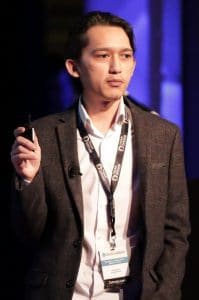
Arai Ezzra, Founder, DinarDirham
Gold storage and investment are popular in Southeast Asia. People especially from China, India and Indonesia really love to own and invest in gold. They have bought physical gold in the conventional way. In the year 2000 several alternative instruments for physical gold trading and investments were introduced. They included the digital gold paper contract, ETF and gold savings accounts at the banks.
The only limitation with conventional digital gold storage is that the owner is not able to use his gold to make payments (micropayment). Digital gold could not be readily transferred into other forms of asset. However, with blockchain technology, the gold storage system and process can be enhanced and owners will be able to simply transfer their gold to other parties or use it to make payments.
What is the future of physical gold trading? How can it be simplified using blockchain technology?
Blockchain is a powerful data structure that promises to revolutionize the way people conduct business around the world, and disrupt how financial transactions take place. One small example of this claim is the ability of the blockchain to allow people to buy, sell and trade gold. In many cases, people do not have access to gold exchanges via other venues. Whether it is via coloured coins, smart contracts or the exchange of cryptocurrency for gold, it has never been easier to trade gold in such a secure and frictionless manner.
What is your prediction for blockchain in Asia in 2017?
2017 is the year of blockchain technology implementation. There will be an increasing number of start-up companies that utilise blockchain technology especially in Southeast Asia where smartphones are more common than banks. Smartphone users in Southeast Asia number over 280 million - this is bigger than the number of users in the USA. Therefore, SEA has the potential to develop along with the rest of the world, which is mostly shifting from fiat to digital.
Unlocking Asia
Held on February 21-23 at the Hong Kong Convention & Exhibition Centre, iFX EXPO Asia 2017 will be an amazing networking and learning experience, with over 80 exhibitors and 2,500 attendees. Panels will cover topics such as FX in China, regulations, technology, marketing, commodities trading in Asia, and of course our signature CEO roundtable.
This year’s agenda is tailored to the needs of the region’s many industry participants, as well as of international brands seeking a deeper, firsthand understanding of the Asian market. Attended by leading global leaders of the biggest trading firms, the extensive event promises to fill you in on the latest regional developments in the Asia Pacific market. To see all the panel speakers click here.
Arai Ezzra is the founder of DinarDirham, a global fintech company from Southeast Asia, with offices in Hong Kong, Kuala Lumpur and soon in Dubai. It provides online and physical gold, forex and metal investment solutions.
At the upcoming iFX EXPO Asia 2017 Ezzra will be taking part in a panel discussing the Asian financial market ecosystem, which will discuss the hottest assets and trends that are attracting Asian investors and entrepreneurs.
In order to learn about blockchain technology, the gold trading markets of Asia and to gain a glimpse into the type of discussion that the iFX EXPO Asia 2017 offers, we asked Arai Ezzra about his area of expertise.
How did you first get involved in the blockchain industry and what makes the technology so promising in your eyes?
I first got into blockchain in 2013. It was still new back then, and nobody was developing systems using blockchain. However, I myself had been involved in the financial industry since 2009 as an MT4 system developer for a number of regulated brokers in Asia. I applied my experience of creating products and solutions for several problems in the financial industry by using blockchain technology, especially for those related to trading system and tools.
Blockchain has the potential to substitute the conventional database system that has been used up until now. It is a revolution in the financial industry. The emergence of the blockchain is just like the internet. When the internet was initially introduced in the 1990s, people responded negatively. Back then, most of them couldn't accept the internet. But now, people cannot live without the internet.
In our case, the blockchain is a phenomenon which is bigger than the internet. The internet is all about information, while blockchain is about assets and assets are what really make the world evolve. The blockchain is a tamper-proof, distributed electronic ledger that exists across a decentralized network.
What can you tell us about the blockchain start-up ecosystem in Southeast Asia?
There is currently much support and involvement from the private sector, banks, financial institutions and the government of Singapore regarding blockchain technology. There are also a number of blockchain-based start-up companies which were built to disrupt some established companies. Some of them are Coins.ph, Attores, Otonomos and Digix which are among the main players in the blockchain industry of Southeast Asia. The Southeast Asian region has among the highest number of smartphone and bitcoin users, which offers a great opportunity for parties to produce blockchain-based solutions.
What is the current situation and use cases for blockchain in the physical gold industry?
Arai Ezzra, Founder, DinarDirham
Gold storage and investment are popular in Southeast Asia. People especially from China, India and Indonesia really love to own and invest in gold. They have bought physical gold in the conventional way. In the year 2000 several alternative instruments for physical gold trading and investments were introduced. They included the digital gold paper contract, ETF and gold savings accounts at the banks.
The only limitation with conventional digital gold storage is that the owner is not able to use his gold to make payments (micropayment). Digital gold could not be readily transferred into other forms of asset. However, with blockchain technology, the gold storage system and process can be enhanced and owners will be able to simply transfer their gold to other parties or use it to make payments.
What is the future of physical gold trading? How can it be simplified using blockchain technology?
Blockchain is a powerful data structure that promises to revolutionize the way people conduct business around the world, and disrupt how financial transactions take place. One small example of this claim is the ability of the blockchain to allow people to buy, sell and trade gold. In many cases, people do not have access to gold exchanges via other venues. Whether it is via coloured coins, smart contracts or the exchange of cryptocurrency for gold, it has never been easier to trade gold in such a secure and frictionless manner.
What is your prediction for blockchain in Asia in 2017?
2017 is the year of blockchain technology implementation. There will be an increasing number of start-up companies that utilise blockchain technology especially in Southeast Asia where smartphones are more common than banks. Smartphone users in Southeast Asia number over 280 million - this is bigger than the number of users in the USA. Therefore, SEA has the potential to develop along with the rest of the world, which is mostly shifting from fiat to digital.
Unlocking Asia
Held on February 21-23 at the Hong Kong Convention & Exhibition Centre, iFX EXPO Asia 2017 will be an amazing networking and learning experience, with over 80 exhibitors and 2,500 attendees. Panels will cover topics such as FX in China, regulations, technology, marketing, commodities trading in Asia, and of course our signature CEO roundtable.
This year’s agenda is tailored to the needs of the region’s many industry participants, as well as of international brands seeking a deeper, firsthand understanding of the Asian market. Attended by leading global leaders of the biggest trading firms, the extensive event promises to fill you in on the latest regional developments in the Asia Pacific market. To see all the panel speakers click here.
Crypto Industry in 2025: Five Defining Trends – And One Prediction for 2026
Featured Videos
Executive Interview | Charlotte Bullock | Chief Product Officer, Bank of London | FMLS:25
In this interview, we sat down with Charlotte Bullock, Head of Product at The Bank of London, previously at SAP and now shaping product at one of the sector’s most ambitious new banking players.
Charlotte reflects on the Summit so far and talks about the culture inside fintech banks today. We look at the pressures that come with scaling, and how firms can hold onto the nimble approach that made them stand out early on.
We also cover the state of payments ahead of her appearance on the payments roundtable: the blockages financial firms face, the areas that still need fixing, and what a realistic solution looks like in 2026.
In this interview, we sat down with Charlotte Bullock, Head of Product at The Bank of London, previously at SAP and now shaping product at one of the sector’s most ambitious new banking players.
Charlotte reflects on the Summit so far and talks about the culture inside fintech banks today. We look at the pressures that come with scaling, and how firms can hold onto the nimble approach that made them stand out early on.
We also cover the state of payments ahead of her appearance on the payments roundtable: the blockages financial firms face, the areas that still need fixing, and what a realistic solution looks like in 2026.
In this interview, we sat down with Charlotte Bullock, Head of Product at The Bank of London, previously at SAP and now shaping product at one of the sector’s most ambitious new banking players.
Charlotte reflects on the Summit so far and talks about the culture inside fintech banks today. We look at the pressures that come with scaling, and how firms can hold onto the nimble approach that made them stand out early on.
We also cover the state of payments ahead of her appearance on the payments roundtable: the blockages financial firms face, the areas that still need fixing, and what a realistic solution looks like in 2026.
In this interview, we sat down with Charlotte Bullock, Head of Product at The Bank of London, previously at SAP and now shaping product at one of the sector’s most ambitious new banking players.
Charlotte reflects on the Summit so far and talks about the culture inside fintech banks today. We look at the pressures that come with scaling, and how firms can hold onto the nimble approach that made them stand out early on.
We also cover the state of payments ahead of her appearance on the payments roundtable: the blockages financial firms face, the areas that still need fixing, and what a realistic solution looks like in 2026.
In this conversation, we sit down with Drew Niv, CSO at ATFX Connect and one of the most influential figures in modern FX.
We speak about market structure, the institutional view on liquidity, and the sharp rise of prop trading, a sector Drew has been commenting on in recent months. Drew explains why he once dismissed prop trading, why his view changed, and what he now thinks the model means for brokers, clients and risk managers.
We explore subscription-fee dependency, the high reneging rate, and the long-term challenge: how brokers can build a more stable and honest version of the model. Drew also talks about the traffic advantage standalone prop firms have built and why brokers may still win in the long run if they take the right approach.
In this conversation, we sit down with Drew Niv, CSO at ATFX Connect and one of the most influential figures in modern FX.
We speak about market structure, the institutional view on liquidity, and the sharp rise of prop trading, a sector Drew has been commenting on in recent months. Drew explains why he once dismissed prop trading, why his view changed, and what he now thinks the model means for brokers, clients and risk managers.
We explore subscription-fee dependency, the high reneging rate, and the long-term challenge: how brokers can build a more stable and honest version of the model. Drew also talks about the traffic advantage standalone prop firms have built and why brokers may still win in the long run if they take the right approach.
In this conversation, we sit down with Drew Niv, CSO at ATFX Connect and one of the most influential figures in modern FX.
We speak about market structure, the institutional view on liquidity, and the sharp rise of prop trading, a sector Drew has been commenting on in recent months. Drew explains why he once dismissed prop trading, why his view changed, and what he now thinks the model means for brokers, clients and risk managers.
We explore subscription-fee dependency, the high reneging rate, and the long-term challenge: how brokers can build a more stable and honest version of the model. Drew also talks about the traffic advantage standalone prop firms have built and why brokers may still win in the long run if they take the right approach.
In this conversation, we sit down with Drew Niv, CSO at ATFX Connect and one of the most influential figures in modern FX.
We speak about market structure, the institutional view on liquidity, and the sharp rise of prop trading, a sector Drew has been commenting on in recent months. Drew explains why he once dismissed prop trading, why his view changed, and what he now thinks the model means for brokers, clients and risk managers.
We explore subscription-fee dependency, the high reneging rate, and the long-term challenge: how brokers can build a more stable and honest version of the model. Drew also talks about the traffic advantage standalone prop firms have built and why brokers may still win in the long run if they take the right approach.
In this conversation, we sit down with Drew Niv, CSO at ATFX Connect and one of the most influential figures in modern FX.
We speak about market structure, the institutional view on liquidity, and the sharp rise of prop trading, a sector Drew has been commenting on in recent months. Drew explains why he once dismissed prop trading, why his view changed, and what he now thinks the model means for brokers, clients and risk managers.
We explore subscription-fee dependency, the high reneging rate, and the long-term challenge: how brokers can build a more stable and honest version of the model. Drew also talks about the traffic advantage standalone prop firms have built and why brokers may still win in the long run if they take the right approach.
In this conversation, we sit down with Drew Niv, CSO at ATFX Connect and one of the most influential figures in modern FX.
We speak about market structure, the institutional view on liquidity, and the sharp rise of prop trading, a sector Drew has been commenting on in recent months. Drew explains why he once dismissed prop trading, why his view changed, and what he now thinks the model means for brokers, clients and risk managers.
We explore subscription-fee dependency, the high reneging rate, and the long-term challenge: how brokers can build a more stable and honest version of the model. Drew also talks about the traffic advantage standalone prop firms have built and why brokers may still win in the long run if they take the right approach.
Executive Interview | Remonda Z. Kirketerp Møller| CEO & Founder Muinmos | FMLS:25
In this interview, Remonda Z. Kirketerp Møller, founder of Muinmos, breaks down the state of AI in regtech and what responsible adoption really looks like for brokers. We talk about rising fragmentation, the pressures around compliance accuracy, and why most firms are still in the early stages of AI maturity.
Ramanda also shares insights on regulator sandboxes, shifting expectations around accountability, and the current reality of MiCA licensing and passporting in Europe.
A concise look at where compliance, onboarding, and AI-driven processes are heading next.
In this interview, Remonda Z. Kirketerp Møller, founder of Muinmos, breaks down the state of AI in regtech and what responsible adoption really looks like for brokers. We talk about rising fragmentation, the pressures around compliance accuracy, and why most firms are still in the early stages of AI maturity.
Ramanda also shares insights on regulator sandboxes, shifting expectations around accountability, and the current reality of MiCA licensing and passporting in Europe.
A concise look at where compliance, onboarding, and AI-driven processes are heading next.
In this interview, Remonda Z. Kirketerp Møller, founder of Muinmos, breaks down the state of AI in regtech and what responsible adoption really looks like for brokers. We talk about rising fragmentation, the pressures around compliance accuracy, and why most firms are still in the early stages of AI maturity.
Ramanda also shares insights on regulator sandboxes, shifting expectations around accountability, and the current reality of MiCA licensing and passporting in Europe.
A concise look at where compliance, onboarding, and AI-driven processes are heading next.
In this interview, Remonda Z. Kirketerp Møller, founder of Muinmos, breaks down the state of AI in regtech and what responsible adoption really looks like for brokers. We talk about rising fragmentation, the pressures around compliance accuracy, and why most firms are still in the early stages of AI maturity.
Ramanda also shares insights on regulator sandboxes, shifting expectations around accountability, and the current reality of MiCA licensing and passporting in Europe.
A concise look at where compliance, onboarding, and AI-driven processes are heading next.
In this interview, Remonda Z. Kirketerp Møller, founder of Muinmos, breaks down the state of AI in regtech and what responsible adoption really looks like for brokers. We talk about rising fragmentation, the pressures around compliance accuracy, and why most firms are still in the early stages of AI maturity.
Ramanda also shares insights on regulator sandboxes, shifting expectations around accountability, and the current reality of MiCA licensing and passporting in Europe.
A concise look at where compliance, onboarding, and AI-driven processes are heading next.
In this interview, Remonda Z. Kirketerp Møller, founder of Muinmos, breaks down the state of AI in regtech and what responsible adoption really looks like for brokers. We talk about rising fragmentation, the pressures around compliance accuracy, and why most firms are still in the early stages of AI maturity.
Ramanda also shares insights on regulator sandboxes, shifting expectations around accountability, and the current reality of MiCA licensing and passporting in Europe.
A concise look at where compliance, onboarding, and AI-driven processes are heading next.
In this conversation, we speak with Aydin Bonabi, CEO and co-founder of Surveill, a firm focused on fraud detection and AI-driven compliance tools for financial institutions.
We start with Aydin’s view of the Summit and the challenges brokers face as fraud tactics grow more complex. He explains how firms can stay ahead through real-time signals, data patterns, and early-stage detection.
We also talk about AI training and why compliance teams often struggle to keep models accurate, fair, and aligned with regulatory expectations. Aydin breaks down what “good” AI training looks like inside a financial environment, including the importance of clean data, domain expertise, and human oversight.
He closes with a clear message: fraud is scaling, and so must the tools that stop it.
In this conversation, we speak with Aydin Bonabi, CEO and co-founder of Surveill, a firm focused on fraud detection and AI-driven compliance tools for financial institutions.
We start with Aydin’s view of the Summit and the challenges brokers face as fraud tactics grow more complex. He explains how firms can stay ahead through real-time signals, data patterns, and early-stage detection.
We also talk about AI training and why compliance teams often struggle to keep models accurate, fair, and aligned with regulatory expectations. Aydin breaks down what “good” AI training looks like inside a financial environment, including the importance of clean data, domain expertise, and human oversight.
He closes with a clear message: fraud is scaling, and so must the tools that stop it.
In this conversation, we speak with Aydin Bonabi, CEO and co-founder of Surveill, a firm focused on fraud detection and AI-driven compliance tools for financial institutions.
We start with Aydin’s view of the Summit and the challenges brokers face as fraud tactics grow more complex. He explains how firms can stay ahead through real-time signals, data patterns, and early-stage detection.
We also talk about AI training and why compliance teams often struggle to keep models accurate, fair, and aligned with regulatory expectations. Aydin breaks down what “good” AI training looks like inside a financial environment, including the importance of clean data, domain expertise, and human oversight.
He closes with a clear message: fraud is scaling, and so must the tools that stop it.
In this conversation, we speak with Aydin Bonabi, CEO and co-founder of Surveill, a firm focused on fraud detection and AI-driven compliance tools for financial institutions.
We start with Aydin’s view of the Summit and the challenges brokers face as fraud tactics grow more complex. He explains how firms can stay ahead through real-time signals, data patterns, and early-stage detection.
We also talk about AI training and why compliance teams often struggle to keep models accurate, fair, and aligned with regulatory expectations. Aydin breaks down what “good” AI training looks like inside a financial environment, including the importance of clean data, domain expertise, and human oversight.
He closes with a clear message: fraud is scaling, and so must the tools that stop it.
In this conversation, we speak with Aydin Bonabi, CEO and co-founder of Surveill, a firm focused on fraud detection and AI-driven compliance tools for financial institutions.
We start with Aydin’s view of the Summit and the challenges brokers face as fraud tactics grow more complex. He explains how firms can stay ahead through real-time signals, data patterns, and early-stage detection.
We also talk about AI training and why compliance teams often struggle to keep models accurate, fair, and aligned with regulatory expectations. Aydin breaks down what “good” AI training looks like inside a financial environment, including the importance of clean data, domain expertise, and human oversight.
He closes with a clear message: fraud is scaling, and so must the tools that stop it.
In this conversation, we speak with Aydin Bonabi, CEO and co-founder of Surveill, a firm focused on fraud detection and AI-driven compliance tools for financial institutions.
We start with Aydin’s view of the Summit and the challenges brokers face as fraud tactics grow more complex. He explains how firms can stay ahead through real-time signals, data patterns, and early-stage detection.
We also talk about AI training and why compliance teams often struggle to keep models accurate, fair, and aligned with regulatory expectations. Aydin breaks down what “good” AI training looks like inside a financial environment, including the importance of clean data, domain expertise, and human oversight.
He closes with a clear message: fraud is scaling, and so must the tools that stop it.
Exness expands its presence in Africa: Inside our interview with Paul Margarites in Cape Town
Finance Magnates met with Paul Margarites, Exness regional commercial director for Sub-Saharan Africa, during a visit to the firm’s office opening in Cape Town. In this talk, led by Andrea Badiola Mateos, Co-CEO at Finance Magnates, Paul shares views on the South African trading space, local user behavior, mobile trends, regulation, team growth, and how Exness plans to grow in more markets across the region. @Exness
Read the article at: https://www.financemagnates.com/thought-leadership/exness-expands-its-presence-in-africa-inside-our-interview-with-paul-margarites/
#exness #financemagnates #exnesstrading #CFDtrading #tradeonline #africanews #capetown
Finance Magnates met with Paul Margarites, Exness regional commercial director for Sub-Saharan Africa, during a visit to the firm’s office opening in Cape Town. In this talk, led by Andrea Badiola Mateos, Co-CEO at Finance Magnates, Paul shares views on the South African trading space, local user behavior, mobile trends, regulation, team growth, and how Exness plans to grow in more markets across the region. @Exness
Read the article at: https://www.financemagnates.com/thought-leadership/exness-expands-its-presence-in-africa-inside-our-interview-with-paul-margarites/
#exness #financemagnates #exnesstrading #CFDtrading #tradeonline #africanews #capetown
Finance Magnates met with Paul Margarites, Exness regional commercial director for Sub-Saharan Africa, during a visit to the firm’s office opening in Cape Town. In this talk, led by Andrea Badiola Mateos, Co-CEO at Finance Magnates, Paul shares views on the South African trading space, local user behavior, mobile trends, regulation, team growth, and how Exness plans to grow in more markets across the region. @Exness
Read the article at: https://www.financemagnates.com/thought-leadership/exness-expands-its-presence-in-africa-inside-our-interview-with-paul-margarites/
#exness #financemagnates #exnesstrading #CFDtrading #tradeonline #africanews #capetown
Finance Magnates met with Paul Margarites, Exness regional commercial director for Sub-Saharan Africa, during a visit to the firm’s office opening in Cape Town. In this talk, led by Andrea Badiola Mateos, Co-CEO at Finance Magnates, Paul shares views on the South African trading space, local user behavior, mobile trends, regulation, team growth, and how Exness plans to grow in more markets across the region. @Exness
Read the article at: https://www.financemagnates.com/thought-leadership/exness-expands-its-presence-in-africa-inside-our-interview-with-paul-margarites/
#exness #financemagnates #exnesstrading #CFDtrading #tradeonline #africanews #capetown
Finance Magnates met with Paul Margarites, Exness regional commercial director for Sub-Saharan Africa, during a visit to the firm’s office opening in Cape Town. In this talk, led by Andrea Badiola Mateos, Co-CEO at Finance Magnates, Paul shares views on the South African trading space, local user behavior, mobile trends, regulation, team growth, and how Exness plans to grow in more markets across the region. @Exness
Read the article at: https://www.financemagnates.com/thought-leadership/exness-expands-its-presence-in-africa-inside-our-interview-with-paul-margarites/
#exness #financemagnates #exnesstrading #CFDtrading #tradeonline #africanews #capetown
Finance Magnates met with Paul Margarites, Exness regional commercial director for Sub-Saharan Africa, during a visit to the firm’s office opening in Cape Town. In this talk, led by Andrea Badiola Mateos, Co-CEO at Finance Magnates, Paul shares views on the South African trading space, local user behavior, mobile trends, regulation, team growth, and how Exness plans to grow in more markets across the region. @Exness
Read the article at: https://www.financemagnates.com/thought-leadership/exness-expands-its-presence-in-africa-inside-our-interview-with-paul-margarites/
#exness #financemagnates #exnesstrading #CFDtrading #tradeonline #africanews #capetown