Ripple's application came a day after a stablecoin issuer, Circle, made a similar application.
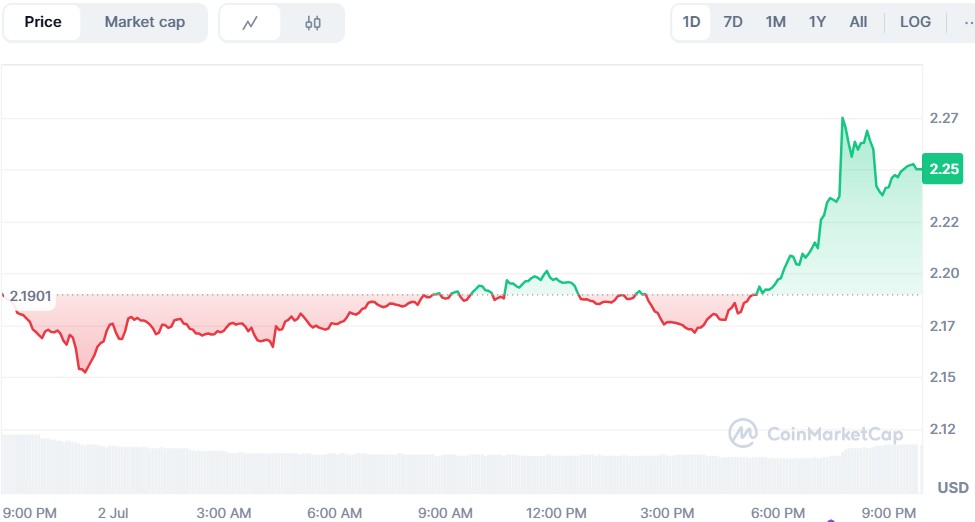
The latest development has pushed the price of XRP to a high of $2.27 on the daily chart.
Ripple has applied for a national trust charter from
the U.S. Office of the Comptroller of the Currency (OCC), a move that would
allow the crypto firm to expand its services across the country under federal
regulation.
The application, confirmed by a company spokesperson,
marks a strategic shift toward deeper regulatory engagement at the national
level.
This above is an advertisement by Utip
“True to our long-standing compliance roots, Ripple is
applying for a national bank charter from the OCC. If approved, we would have
both state (via NYDFS) and federal oversight, a new (and unique!) benchmark for
trust in the stablecoin market,” Brad Garlinghouse, Ripple’s CEO, said.
XRP News: Industry Trend Toward Federal Regulation
The decision aligns Ripple with a growing list of
crypto firms seeking national oversight amid evolving U.S. legislation.
Stablecoin issuer Circle has submitted a similar application in recent months,
highlighting a broader industry trend toward establishing federal licenses to
streamline compliance and service delivery.
Ripple currently offers a $470 million stablecoin,
RLUSD, which is regulated by the New York Department of Financial Services. The
company also provides digital asset custody services. A national banking
license would enable it to consolidate and scale these operations across state
borders, eliminating the need for multiple state-level approvals.
Interestingly, Circle has also applied to establish a national trust bank in the United States, marking its first major regulatory move since going public in an IPO that valued the company at nearly $18 billion. The application was submitted to the Office of the Comptroller of the Currency (OCC), the same regulator approached by Ripple for a similar license.
If approved, the charter would allow Circle to act as a custodian for its own stablecoin reserves and manage digital assets on behalf of institutional clients. The license does not, however, authorize the company to accept traditional cash deposits or extend credit like a conventional bank.
XRP Analysis Market Reacts to Regulatory News
The market responded swiftly to the news, with XRP
rising 5% following the report. The price move underscores investor optimism
around Ripple’s regulatory progress, especially as lawmakers and agencies in
Washington advance discussions on stablecoin and crypto legislation.
XRP Price, Source: CoinMarketCap
Precedent Set by Anchorage Digital
Ripple’s application mirrors the approach taken by
Anchorage Digital, which already holds a federal banking charter and provides
crypto custody services.
As the regulatory landscape continues to shift, more
digital asset firms are expected to seek federal trust charters to gain
long-term legal certainty and better access to traditional financial
infrastructure.
Ripple has not yet disclosed a timeline for the OCC’s
review or approval of its application. However, the move signals a growing
acceptance among crypto companies that integration with federal regulators may
be key to operating at scale in the U.S. financial system.
Ripple has applied for a national trust charter from
the U.S. Office of the Comptroller of the Currency (OCC), a move that would
allow the crypto firm to expand its services across the country under federal
regulation.
The application, confirmed by a company spokesperson,
marks a strategic shift toward deeper regulatory engagement at the national
level.
This above is an advertisement by Utip
“True to our long-standing compliance roots, Ripple is
applying for a national bank charter from the OCC. If approved, we would have
both state (via NYDFS) and federal oversight, a new (and unique!) benchmark for
trust in the stablecoin market,” Brad Garlinghouse, Ripple’s CEO, said.
XRP News: Industry Trend Toward Federal Regulation
The decision aligns Ripple with a growing list of
crypto firms seeking national oversight amid evolving U.S. legislation.
Stablecoin issuer Circle has submitted a similar application in recent months,
highlighting a broader industry trend toward establishing federal licenses to
streamline compliance and service delivery.
Ripple currently offers a $470 million stablecoin,
RLUSD, which is regulated by the New York Department of Financial Services. The
company also provides digital asset custody services. A national banking
license would enable it to consolidate and scale these operations across state
borders, eliminating the need for multiple state-level approvals.
Interestingly, Circle has also applied to establish a national trust bank in the United States, marking its first major regulatory move since going public in an IPO that valued the company at nearly $18 billion. The application was submitted to the Office of the Comptroller of the Currency (OCC), the same regulator approached by Ripple for a similar license.
If approved, the charter would allow Circle to act as a custodian for its own stablecoin reserves and manage digital assets on behalf of institutional clients. The license does not, however, authorize the company to accept traditional cash deposits or extend credit like a conventional bank.
XRP Analysis Market Reacts to Regulatory News
The market responded swiftly to the news, with XRP
rising 5% following the report. The price move underscores investor optimism
around Ripple’s regulatory progress, especially as lawmakers and agencies in
Washington advance discussions on stablecoin and crypto legislation.
XRP Price, Source: CoinMarketCap
Precedent Set by Anchorage Digital
Ripple’s application mirrors the approach taken by
Anchorage Digital, which already holds a federal banking charter and provides
crypto custody services.
As the regulatory landscape continues to shift, more
digital asset firms are expected to seek federal trust charters to gain
long-term legal certainty and better access to traditional financial
infrastructure.
Ripple has not yet disclosed a timeline for the OCC’s
review or approval of its application. However, the move signals a growing
acceptance among crypto companies that integration with federal regulators may
be key to operating at scale in the U.S. financial system.
Jared Kirui is an Editor at Finance Magnates with more than five years of experience in financial journalism. He covers online trading, fintech, payments, and crypto industries with a focus on companies, regulation and compliance, executive moves, trading technology, and market analysis.
His work has been featured in other media outlets, including Benzinga, ZyCrypto, The Distributed, and The Daily Hodl.
Education:
Bachelor of Commerce degree (Finance option), University of Nairobi
Inside the Prediction Markets: $1.6B Institutional Inflow Meets a Federal Crackdown
FP Markets Winner Spotlight 🏆 | Global Broker of the Year 2025 #Trading #Broker #Innovation #Shorts
FP Markets Winner Spotlight 🏆 | Global Broker of the Year 2025 #Trading #Broker #Innovation #Shorts
FP Markets takes the spotlight as Global Broker of the Year 2025 at the Finance Magnates Awards.
Martin Stoilov, Head of Client Experience, shares that trust, innovation, and people played a key role in the company’s success, supported by a strong foundation of integrity and client-centricity.
Following this milestone, FP Markets continues to focus on growth, technology investment, and its core values of transparency and excellence.
👉 Be part of FM Awards 2026: https://awards.financemagnates.com/#nominate
FP Markets takes the spotlight as Global Broker of the Year 2025 at the Finance Magnates Awards.
Martin Stoilov, Head of Client Experience, shares that trust, innovation, and people played a key role in the company’s success, supported by a strong foundation of integrity and client-centricity.
Following this milestone, FP Markets continues to focus on growth, technology investment, and its core values of transparency and excellence.
👉 Be part of FM Awards 2026: https://awards.financemagnates.com/#nominate
In this video, we review @HolaPrimeMarketsOfficial, a multi-asset forex and CFDs broker offering different account types, trading platforms, and flexible trading conditions.
We cover the broker’s overall offering, including account options, trading environment, platforms like MT4 and MT5, and additional services such as managed accounts and fast withdrawals.
Watch the full video to see if Hola Prime Markets fits your trading needs.
📣 Stay up to date with the latest in finance and trading. Follow Finance Magnates for industry news, insights, and global event coverage.
Connect with us:
🔗 LinkedIn: /financemagnates
👍 Facebook: /financemagnates
📸 Instagram: https://www.instagram.com/financemagnates
🐦 X: https://x.com/financemagnates
🎥 TikTok: https://www.tiktok.com/tag/financemagnates
▶️ YouTube: /@financemagnates_official
#HolaPrime #ForexBroker #CFDTrading #FinanceMagnates #Trading #Forex #BrokerReview
In this video, we review @HolaPrimeMarketsOfficial, a multi-asset forex and CFDs broker offering different account types, trading platforms, and flexible trading conditions.
We cover the broker’s overall offering, including account options, trading environment, platforms like MT4 and MT5, and additional services such as managed accounts and fast withdrawals.
Watch the full video to see if Hola Prime Markets fits your trading needs.
📣 Stay up to date with the latest in finance and trading. Follow Finance Magnates for industry news, insights, and global event coverage.
Connect with us:
🔗 LinkedIn: /financemagnates
👍 Facebook: /financemagnates
📸 Instagram: https://www.instagram.com/financemagnates
🐦 X: https://x.com/financemagnates
🎥 TikTok: https://www.tiktok.com/tag/financemagnates
▶️ YouTube: /@financemagnates_official
#HolaPrime #ForexBroker #CFDTrading #FinanceMagnates #Trading #Forex #BrokerReview
Hola Prime Review: What You Need to Know | Full Breakdown by Finance Magnates
Hola Prime Review: What You Need to Know | Full Breakdown by Finance Magnates
In this video, we review @HolaPrime_Global, a proprietary trading firm offering evaluation programs and performance-based payouts in simulated market environments.
We cover how the challenge model works, including account types, profit splits (up to 95%), trading rules, and what it takes to reach a funded account. You’ll also learn about available platforms like MT4, MT5, cTrader, and more, along with insights into payouts, support, and trading conditions.
Watch the full video to see if Hola Prime fits your trading style.
📣 Stay up to date with the latest in finance and trading. Follow Finance Magnates for industry news, insights, and global event coverage.
Connect with us:
🔗 LinkedIn: /financemagnates
👍 Facebook: /financemagnates
📸 Instagram: https://www.instagram.com/financemagnates
🐦 X: https://x.com/financemagnates
🎥 TikTok: https://www.tiktok.com/tag/financemagnates
▶️ YouTube: /@financemagnates_official
#HolaPrime #PropFirm #Trading #FinanceMagnates #Forex #FuturesTrading #TradingReview #PropFirmReview
In this video, we review @HolaPrime_Global, a proprietary trading firm offering evaluation programs and performance-based payouts in simulated market environments.
We cover how the challenge model works, including account types, profit splits (up to 95%), trading rules, and what it takes to reach a funded account. You’ll also learn about available platforms like MT4, MT5, cTrader, and more, along with insights into payouts, support, and trading conditions.
Watch the full video to see if Hola Prime fits your trading style.
📣 Stay up to date with the latest in finance and trading. Follow Finance Magnates for industry news, insights, and global event coverage.
Connect with us:
🔗 LinkedIn: /financemagnates
👍 Facebook: /financemagnates
📸 Instagram: https://www.instagram.com/financemagnates
🐦 X: https://x.com/financemagnates
🎥 TikTok: https://www.tiktok.com/tag/financemagnates
▶️ YouTube: /@financemagnates_official
#HolaPrime #PropFirm #Trading #FinanceMagnates #Forex #FuturesTrading #TradingReview #PropFirmReview
Axi Winner Spotlight 🏆 | Global Most Innovative Broker 2025 #Innovation #Trading #Fintech #Broker
Axi Winner Spotlight 🏆 | Global Most Innovative Broker 2025 #Innovation #Trading #Fintech #Broker
Axi takes the spotlight at the Finance Magnates Awards, winning Global Most Innovative Broker 2025.
Olivia Xenofontos and Ivanna Openko share how the team will feel: proud, motivated, and ready to keep delivering.
They also describe the night as well-organized, focused, and enjoyable for all.
👉 Be part of FM Awards 2026.
Axi takes the spotlight at the Finance Magnates Awards, winning Global Most Innovative Broker 2025.
Olivia Xenofontos and Ivanna Openko share how the team will feel: proud, motivated, and ready to keep delivering.
They also describe the night as well-organized, focused, and enjoyable for all.
👉 Be part of FM Awards 2026.
Recognition that matters.
Built on transparency.
Driven by the industry.
The Finance Magnates Awards 2026.
Nominations are now open.
🔗 https://awards.financemagnates.com/?utm_source=SM&utm_medium=social&utm_campaign=recognition-matters
Recognition that matters.
Built on transparency.
Driven by the industry.
The Finance Magnates Awards 2026.
Nominations are now open.
🔗 https://awards.financemagnates.com/?utm_source=SM&utm_medium=social&utm_campaign=recognition-matters