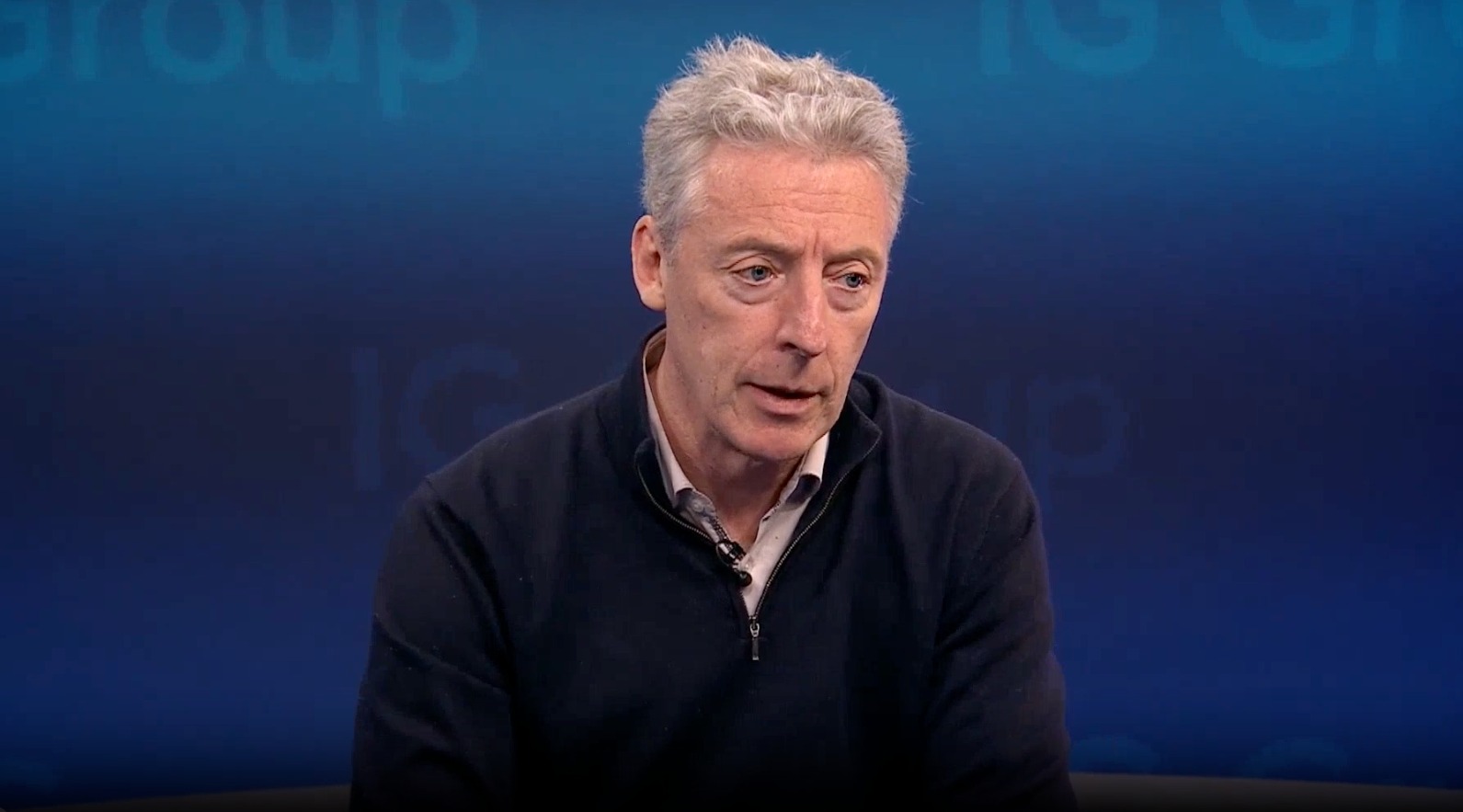
Billionaire investor Jeffrey Gundlach predicts gold will reach $4,000 per ounce amid continued central bank buying.
He also sees a 60% chance of U.S. recession this year, significantly higher than most Wall Street forecasts.
Why is gold price increasing today and what are the newest gold price predictions for 2025?
Let's check why is gold going up today and what are the latest gold price predictions for 2025
Gold has
always held a unique position in the global economy, often seen as a safe-haven
asset during times of uncertainty. As of Monday, March 17, 2025, the precious
metal has been making headlines, recently breaking through the $3,000 per ounce
milestone for the first time.
This
historic rally has sparked curiosity about why gold is going up and what its
price might look like by the end of 2025. Let’s dive into the key factors
driving this surge and explore expert predictions for gold’s future value based
on the latest data.
This above is an advertisement by Utip
Why Gold Price Is
Increasing? $3,000 Reached
Last
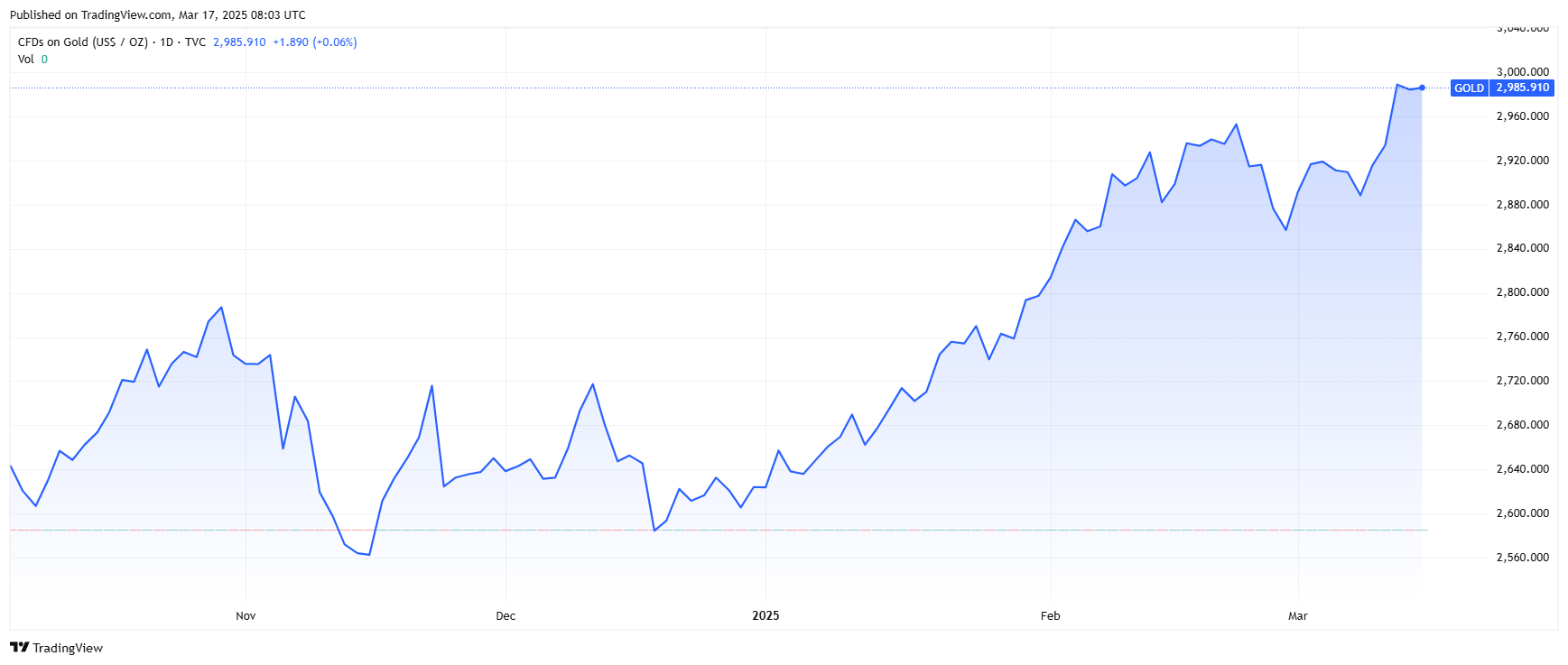
Friday, the price of gold set a new record on global markets, surpassing the
psychological threshold of $3,000. Although this level was not permanently
breached and, as of Monday, an ounce of gold is trading at $2,985, investors
remain optimistic that, given the current geopolitical and economic
uncertainty, gold has plenty of room for further gains.
What is gold price today? Chart of gold. Source: Tradingview.com
“Central
banks worldwide have been stockpiling gold at an unprecedented pace,” the Gold-Silver Ratio analytical team
commented. “Since 2022, following the freezing of Russian assets, emerging
market central banks have ramped up purchases to diversify reserves away from
U.S. Treasuries. In December 2024 alone, demand surged, with institutions
adding significant tonnage to their holdings.”
More
importantly, market experts believe gold is just getting started. They
anticipate its price could climb another 35%, reaching the $4,000 mark.
Gold Price Prediction
2025: Gold to Hit $4,000
Jeffrey
Gundlach, CEO and Chief Investment Officer of DoubleLine Capital, has
forecasted gold prices will reach $4,000 per ounce, extending his bullish
stance on the precious metal that recently crossed the $3,000 milestone for the
first time.
"Gold
continues its bull market that we've been talking about really now for a couple
of years ever since gold was down to $1,800," Gundlach stated during an
investor call this week. "I'd be so bold to say I think gold will make it
to $4,000. I'm not sure that'll happen this year, but I feel like that's the
measured move anticipated by the long consolidation at around $1,800 on
gold."
The
investment manager, often referred to as the "bond king," pointed to
central banks' accelerating gold purchases as a key driver behind the rally,
describing their buying pattern as following a "very sharp, steep
trajectory" that he expects to continue. Gundlach suggested this trend
reflects recognition of gold as a "storehouse of value that's more outside
the financial system, which seems to be in a state of flux."
Gold Price Prediction Table
The stronger
U.S. dollar or fewer rate cuts could pull prices down (e.g., Goldman Sachs
notes a possible dip to $3,060).
Source
Predicted
Gold Price (End of 2025)
Key Notes
Goldman Sachs
$3,100 - $3,300
Base case
at $3,100, with $3,300 possible if geopolitical risks or U.S. debt concerns
rise.
UBS
$3,000
Raised
from $2,850, driven by rate cuts and investor demand.
BullionVault Users
$3,070
Average
from 1,440+ respondents, reflecting private investor optimism.
Coin Price Forecast
$3,286
Aggressive
outlook, with potential to hit $3,873 by end of 2026.
J.P. Morgan
$3,000
Near
$3,000, tempered by possible slowdown in central bank buying.
World Gold Council
$2,900 - $3,100
Range
based on QaurumSM analysis, with modest upside if conditions hold.
Gold
price prediction table, updated March 17th, 2025.
Why Gold Will Go Up?
Beyond his
gold forecast, Gundlach shared insights on broader market trends, noting that
European stocks are beginning to outperform U.S. equities amid the dollar's
downtrend. DoubleLine initiated investments in European markets around 2021, a
position that initially proved challenging but now shows "a lot of
momentum," according to Gundlach.
The fund
manager also addressed the vulnerability of the "Magnificent Seven"
tech stocks that have dominated market gains in recent years. "Every
sector is always vulnerable and we're starting to obviously see that," he
remarked.
On the
economic front, Gundlach assigned a 60% probability of a U.S. recession this
year—a significantly more pessimistic outlook than most Wall Street
institutions, which generally don't anticipate an outright contraction. He also
expressed strong support for Elon Musk's Department of Government Efficiency
initiative aimed at federal spending cuts, stating it's "the only way that
we can try to get our fiscal house in order."
The above
factors are expected to create ideal conditions for capital to flow into
"safe havens." Precious metals are considered one of the most
important among them.
Gold Technical Analysis:
How High Can Gold Go?
When an
asset is at all-time highs, as is the case with gold, predicting future prices
using technical analysis becomes challenging.
However, we
can use indicators that attempt to project future movements, such as
trend-based Fibonacci extensions. Measuring the range of the most recent
uptrend, which began from December lows below $2,600, and the correction at the
end of February, helps estimate gold’s potential direction.
The most
commonly observed target in this scenario is the 161.8% Fibonacci extension,
which is considered a key level for the ongoing uptrend. Based on current
calculations, this level is slightly above $3,400—at the upper end of Goldman
Sachs' forecasts but still well below Gundlach’s projections.
What about
the downside? What happens if the bulls fail to break the $3,000 mark? In that
case, the key support level, in my view, would be $2,955—the February highs.
The next two significant support levels are last month’s lows at $2,855 and the
October peak at $2,791. A drop below this level would make me question whether
buyers still hold the upper hand.
Gold Price, FAQ
How Much Gold Will Be
Worth in 2025?
Jeffrey
Gundlach (DoubleLine Capital) predicts gold could reach $4,000 per ounce,
though he’s unsure if this will occur within 2025. Goldman Sachs forecasts a
range of $3,100 to $3,300, with $3,100 as their base case. UBS predicts $3,000,
recently raised from $2,850.
Is Gold Predicted to Go Up
or Down?
Gold is
predominantly predicted to go up in 2025. Your article highlights a historic
rally, with gold already up 14% in 2025 after a 27% surge in 2024. Key drivers
include: geopolitical and economic uncertainty, central banks’ accelerating
gold purchases and overall market optimism.
What Will Gold Be Worth in
the Next 10 Years?
If
Gundlach’s $4,000 target is reached by late 2025 or 2026, and the bull market
persists, gold could see steady growth driven by inflation, central bank
buying, and economic instability. Coin Price Forecast’s aggressive outlook
suggests $3,873 by 2026, implying a potential trajectory toward $4,500–$5,000
by 2035 if the 5–7% annual growth trend continues.
How Much Will Gold Be
Worth in 2030?
Gold could
reach $4,800–$5,200 by 2030. More conservative estimates (e.g., World Gold
Council’s $3,100 max for 2025) might see gold at $3,700–$4,000 by 2030 if
growth slows.
Gold has
always held a unique position in the global economy, often seen as a safe-haven
asset during times of uncertainty. As of Monday, March 17, 2025, the precious
metal has been making headlines, recently breaking through the $3,000 per ounce
milestone for the first time.
This
historic rally has sparked curiosity about why gold is going up and what its
price might look like by the end of 2025. Let’s dive into the key factors
driving this surge and explore expert predictions for gold’s future value based
on the latest data.
This above is an advertisement by Utip
Why Gold Price Is
Increasing? $3,000 Reached
Last
Friday, the price of gold set a new record on global markets, surpassing the
psychological threshold of $3,000. Although this level was not permanently
breached and, as of Monday, an ounce of gold is trading at $2,985, investors
remain optimistic that, given the current geopolitical and economic
uncertainty, gold has plenty of room for further gains.
What is gold price today? Chart of gold. Source: Tradingview.com
“Central
banks worldwide have been stockpiling gold at an unprecedented pace,” the Gold-Silver Ratio analytical team
commented. “Since 2022, following the freezing of Russian assets, emerging
market central banks have ramped up purchases to diversify reserves away from
U.S. Treasuries. In December 2024 alone, demand surged, with institutions
adding significant tonnage to their holdings.”
More
importantly, market experts believe gold is just getting started. They
anticipate its price could climb another 35%, reaching the $4,000 mark.
Gold Price Prediction
2025: Gold to Hit $4,000
Jeffrey
Gundlach, CEO and Chief Investment Officer of DoubleLine Capital, has
forecasted gold prices will reach $4,000 per ounce, extending his bullish
stance on the precious metal that recently crossed the $3,000 milestone for the
first time.
"Gold
continues its bull market that we've been talking about really now for a couple
of years ever since gold was down to $1,800," Gundlach stated during an
investor call this week. "I'd be so bold to say I think gold will make it
to $4,000. I'm not sure that'll happen this year, but I feel like that's the
measured move anticipated by the long consolidation at around $1,800 on
gold."
The
investment manager, often referred to as the "bond king," pointed to
central banks' accelerating gold purchases as a key driver behind the rally,
describing their buying pattern as following a "very sharp, steep
trajectory" that he expects to continue. Gundlach suggested this trend
reflects recognition of gold as a "storehouse of value that's more outside
the financial system, which seems to be in a state of flux."
Gold Price Prediction Table
The stronger
U.S. dollar or fewer rate cuts could pull prices down (e.g., Goldman Sachs
notes a possible dip to $3,060).
Source
Predicted
Gold Price (End of 2025)
Key Notes
Goldman Sachs
$3,100 - $3,300
Base case
at $3,100, with $3,300 possible if geopolitical risks or U.S. debt concerns
rise.
UBS
$3,000
Raised
from $2,850, driven by rate cuts and investor demand.
BullionVault Users
$3,070
Average
from 1,440+ respondents, reflecting private investor optimism.
Coin Price Forecast
$3,286
Aggressive
outlook, with potential to hit $3,873 by end of 2026.
J.P. Morgan
$3,000
Near
$3,000, tempered by possible slowdown in central bank buying.
World Gold Council
$2,900 - $3,100
Range
based on QaurumSM analysis, with modest upside if conditions hold.
Gold
price prediction table, updated March 17th, 2025.
Why Gold Will Go Up?
Beyond his
gold forecast, Gundlach shared insights on broader market trends, noting that
European stocks are beginning to outperform U.S. equities amid the dollar's
downtrend. DoubleLine initiated investments in European markets around 2021, a
position that initially proved challenging but now shows "a lot of
momentum," according to Gundlach.
The fund
manager also addressed the vulnerability of the "Magnificent Seven"
tech stocks that have dominated market gains in recent years. "Every
sector is always vulnerable and we're starting to obviously see that," he
remarked.
On the
economic front, Gundlach assigned a 60% probability of a U.S. recession this
year—a significantly more pessimistic outlook than most Wall Street
institutions, which generally don't anticipate an outright contraction. He also
expressed strong support for Elon Musk's Department of Government Efficiency
initiative aimed at federal spending cuts, stating it's "the only way that
we can try to get our fiscal house in order."
The above
factors are expected to create ideal conditions for capital to flow into
"safe havens." Precious metals are considered one of the most
important among them.
Gold Technical Analysis:
How High Can Gold Go?
When an
asset is at all-time highs, as is the case with gold, predicting future prices
using technical analysis becomes challenging.
However, we
can use indicators that attempt to project future movements, such as
trend-based Fibonacci extensions. Measuring the range of the most recent
uptrend, which began from December lows below $2,600, and the correction at the
end of February, helps estimate gold’s potential direction.
The most
commonly observed target in this scenario is the 161.8% Fibonacci extension,
which is considered a key level for the ongoing uptrend. Based on current
calculations, this level is slightly above $3,400—at the upper end of Goldman
Sachs' forecasts but still well below Gundlach’s projections.
What about
the downside? What happens if the bulls fail to break the $3,000 mark? In that
case, the key support level, in my view, would be $2,955—the February highs.
The next two significant support levels are last month’s lows at $2,855 and the
October peak at $2,791. A drop below this level would make me question whether
buyers still hold the upper hand.
Gold Price, FAQ
How Much Gold Will Be
Worth in 2025?
Jeffrey
Gundlach (DoubleLine Capital) predicts gold could reach $4,000 per ounce,
though he’s unsure if this will occur within 2025. Goldman Sachs forecasts a
range of $3,100 to $3,300, with $3,100 as their base case. UBS predicts $3,000,
recently raised from $2,850.
Is Gold Predicted to Go Up
or Down?
Gold is
predominantly predicted to go up in 2025. Your article highlights a historic
rally, with gold already up 14% in 2025 after a 27% surge in 2024. Key drivers
include: geopolitical and economic uncertainty, central banks’ accelerating
gold purchases and overall market optimism.
What Will Gold Be Worth in
the Next 10 Years?
If
Gundlach’s $4,000 target is reached by late 2025 or 2026, and the bull market
persists, gold could see steady growth driven by inflation, central bank
buying, and economic instability. Coin Price Forecast’s aggressive outlook
suggests $3,873 by 2026, implying a potential trajectory toward $4,500–$5,000
by 2035 if the 5–7% annual growth trend continues.
How Much Will Gold Be
Worth in 2030?
Gold could
reach $4,800–$5,200 by 2030. More conservative estimates (e.g., World Gold
Council’s $3,100 max for 2025) might see gold at $3,700–$4,000 by 2030 if
growth slows.
Damian Chmiel is a Senior Analyst & Editor at Finance Magnates with more than 15 years of experience in the CFD and online trading industry. Active as both a trader and journalist since 2010, he focuses on broker coverage, fintech innovation, and regulatory developments across Europe, the Middle East, and Asia.
His work includes interviews with C-level leaders at major brokerages and fintech platforms, as well as co-authoring Finance Magnates’ quarterly industry benchmarking reports. Damian’s reporting is data-driven, market-aware, and grounded in direct industry engagement. His analysis and commentary have also been cited by external media outlets, including Investing.com, Binance, The Asset, Stockhead, and Dispatch.
Education:
MA in Finance and Accounting, Cracow University of Economics
Inside the Prediction Markets: $1.6B Institutional Inflow Meets a Federal Crackdown
FP Markets Winner Spotlight 🏆 | Global Broker of the Year 2025 #Trading #Broker #Innovation #Shorts
FP Markets Winner Spotlight 🏆 | Global Broker of the Year 2025 #Trading #Broker #Innovation #Shorts
FP Markets takes the spotlight as Global Broker of the Year 2025 at the Finance Magnates Awards.
Martin Stoilov, Head of Client Experience, shares that trust, innovation, and people played a key role in the company’s success, supported by a strong foundation of integrity and client-centricity.
Following this milestone, FP Markets continues to focus on growth, technology investment, and its core values of transparency and excellence.
👉 Be part of FM Awards 2026: https://awards.financemagnates.com/#nominate
FP Markets takes the spotlight as Global Broker of the Year 2025 at the Finance Magnates Awards.
Martin Stoilov, Head of Client Experience, shares that trust, innovation, and people played a key role in the company’s success, supported by a strong foundation of integrity and client-centricity.
Following this milestone, FP Markets continues to focus on growth, technology investment, and its core values of transparency and excellence.
👉 Be part of FM Awards 2026: https://awards.financemagnates.com/#nominate
In this video, we review @HolaPrimeMarketsOfficial, a multi-asset forex and CFDs broker offering different account types, trading platforms, and flexible trading conditions.
We cover the broker’s overall offering, including account options, trading environment, platforms like MT4 and MT5, and additional services such as managed accounts and fast withdrawals.
Watch the full video to see if Hola Prime Markets fits your trading needs.
📣 Stay up to date with the latest in finance and trading. Follow Finance Magnates for industry news, insights, and global event coverage.
Connect with us:
🔗 LinkedIn: /financemagnates
👍 Facebook: /financemagnates
📸 Instagram: https://www.instagram.com/financemagnates
🐦 X: https://x.com/financemagnates
🎥 TikTok: https://www.tiktok.com/tag/financemagnates
▶️ YouTube: /@financemagnates_official
#HolaPrime #ForexBroker #CFDTrading #FinanceMagnates #Trading #Forex #BrokerReview
In this video, we review @HolaPrimeMarketsOfficial, a multi-asset forex and CFDs broker offering different account types, trading platforms, and flexible trading conditions.
We cover the broker’s overall offering, including account options, trading environment, platforms like MT4 and MT5, and additional services such as managed accounts and fast withdrawals.
Watch the full video to see if Hola Prime Markets fits your trading needs.
📣 Stay up to date with the latest in finance and trading. Follow Finance Magnates for industry news, insights, and global event coverage.
Connect with us:
🔗 LinkedIn: /financemagnates
👍 Facebook: /financemagnates
📸 Instagram: https://www.instagram.com/financemagnates
🐦 X: https://x.com/financemagnates
🎥 TikTok: https://www.tiktok.com/tag/financemagnates
▶️ YouTube: /@financemagnates_official
#HolaPrime #ForexBroker #CFDTrading #FinanceMagnates #Trading #Forex #BrokerReview
Hola Prime Review: What You Need to Know | Full Breakdown by Finance Magnates
Hola Prime Review: What You Need to Know | Full Breakdown by Finance Magnates
In this video, we review @HolaPrime_Global, a proprietary trading firm offering evaluation programs and performance-based payouts in simulated market environments.
We cover how the challenge model works, including account types, profit splits (up to 95%), trading rules, and what it takes to reach a funded account. You’ll also learn about available platforms like MT4, MT5, cTrader, and more, along with insights into payouts, support, and trading conditions.
Watch the full video to see if Hola Prime fits your trading style.
📣 Stay up to date with the latest in finance and trading. Follow Finance Magnates for industry news, insights, and global event coverage.
Connect with us:
🔗 LinkedIn: /financemagnates
👍 Facebook: /financemagnates
📸 Instagram: https://www.instagram.com/financemagnates
🐦 X: https://x.com/financemagnates
🎥 TikTok: https://www.tiktok.com/tag/financemagnates
▶️ YouTube: /@financemagnates_official
#HolaPrime #PropFirm #Trading #FinanceMagnates #Forex #FuturesTrading #TradingReview #PropFirmReview
In this video, we review @HolaPrime_Global, a proprietary trading firm offering evaluation programs and performance-based payouts in simulated market environments.
We cover how the challenge model works, including account types, profit splits (up to 95%), trading rules, and what it takes to reach a funded account. You’ll also learn about available platforms like MT4, MT5, cTrader, and more, along with insights into payouts, support, and trading conditions.
Watch the full video to see if Hola Prime fits your trading style.
📣 Stay up to date with the latest in finance and trading. Follow Finance Magnates for industry news, insights, and global event coverage.
Connect with us:
🔗 LinkedIn: /financemagnates
👍 Facebook: /financemagnates
📸 Instagram: https://www.instagram.com/financemagnates
🐦 X: https://x.com/financemagnates
🎥 TikTok: https://www.tiktok.com/tag/financemagnates
▶️ YouTube: /@financemagnates_official
#HolaPrime #PropFirm #Trading #FinanceMagnates #Forex #FuturesTrading #TradingReview #PropFirmReview
Axi Winner Spotlight 🏆 | Global Most Innovative Broker 2025 #Innovation #Trading #Fintech #Broker
Axi Winner Spotlight 🏆 | Global Most Innovative Broker 2025 #Innovation #Trading #Fintech #Broker
Axi takes the spotlight at the Finance Magnates Awards, winning Global Most Innovative Broker 2025.
Olivia Xenofontos and Ivanna Openko share how the team will feel: proud, motivated, and ready to keep delivering.
They also describe the night as well-organized, focused, and enjoyable for all.
👉 Be part of FM Awards 2026.
Axi takes the spotlight at the Finance Magnates Awards, winning Global Most Innovative Broker 2025.
Olivia Xenofontos and Ivanna Openko share how the team will feel: proud, motivated, and ready to keep delivering.
They also describe the night as well-organized, focused, and enjoyable for all.
👉 Be part of FM Awards 2026.
Recognition that matters.
Built on transparency.
Driven by the industry.
The Finance Magnates Awards 2026.
Nominations are now open.
🔗 https://awards.financemagnates.com/?utm_source=SM&utm_medium=social&utm_campaign=recognition-matters
Recognition that matters.
Built on transparency.
Driven by the industry.
The Finance Magnates Awards 2026.
Nominations are now open.
🔗 https://awards.financemagnates.com/?utm_source=SM&utm_medium=social&utm_campaign=recognition-matters