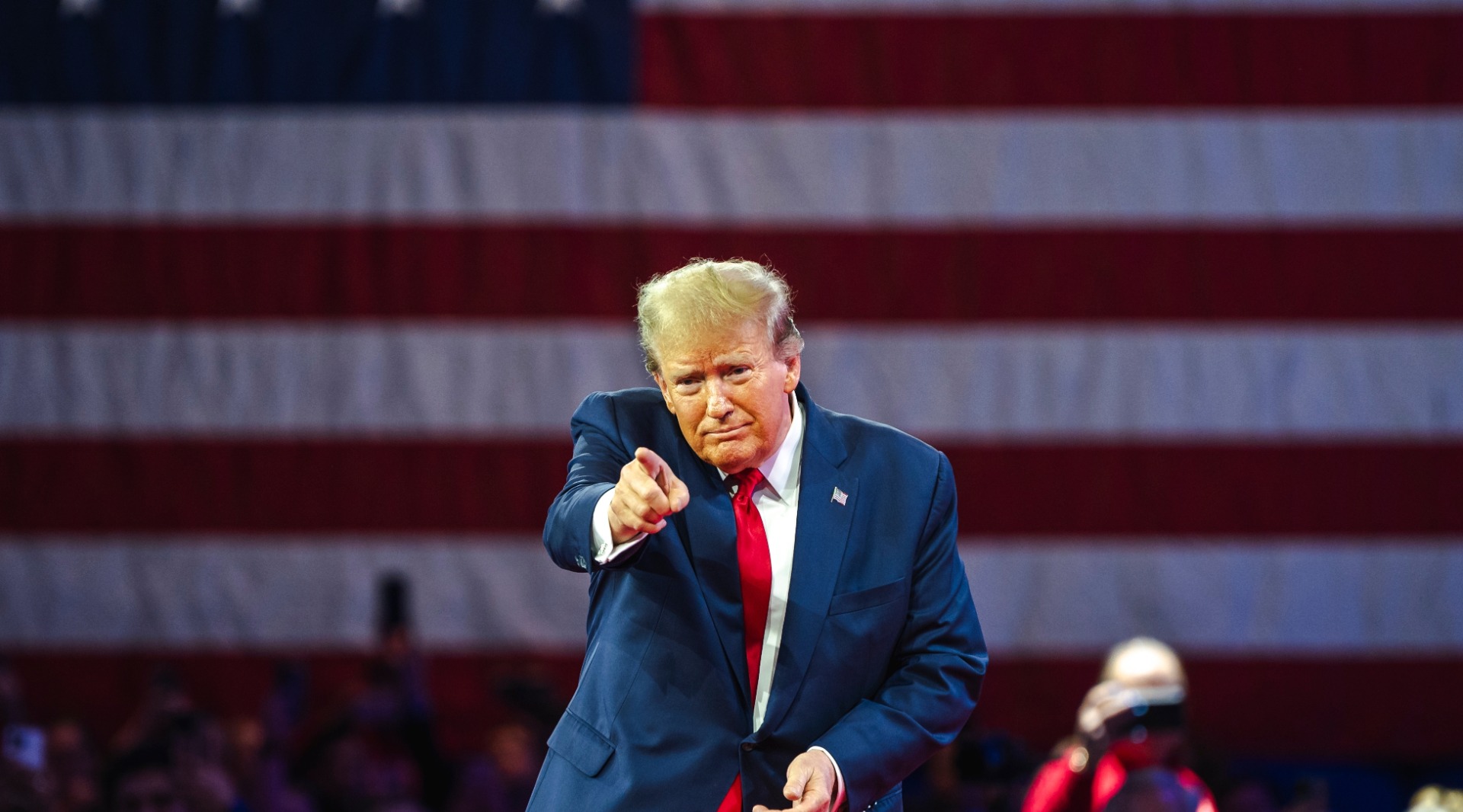
Trump going for 50% tariffs. The EU says, “Hold my wine.”
Tourism from Europe and other affected countries is tanking fast.
US economy is wobbling, with inflation and trade disruptions piling on.
When it comes to Trump’s Tariffs, the EU’s ready to rumble, and
America’s travel industry just got caught in the crossfire.
Trump Swings the Tariff Hammer, Europe Swings Back
Maroš Šefčovič, EU Commissioner for Trade & Economic Security
Just when you thought global trade tensions had simmered down, Donald
Trump decided to relight the fire—with a flamethrower. The
former-turned-current president is threatening a sweeping 50%
tariff on all EU imports. The EU’s trade chief Maros Sefcovic said of the saturation,
“EU-US trade is unmatched and must be guided by mutual respect, not threats. We
stand ready to defend our interests."
Cue the defense. The EU didn’t blink. In fact, it started drafting its
own economic love letter: A proposition that would work out at €95
billion in retaliatory tariffs targeting iconic American goods like
bourbon, cars, and industrial machinery. The goal? Hit where it hurts and send
a clear message—don’t mess with the single market.
For now, a cooling-off period has been brokered. Trump and European
Commission President Ursula von der Leyen shared a “very
nice” phone call (yes, really), and talks will go on until July 9. But the
fuse is lit, and both sides are stockpiling ammunition—political, economic, and
rhetorical.
“No Thanks, America”: Tourists Are Bouncing
Turns out that if you start charging your allies like they’re unwelcome
guests, they’ll return the favor—by simply not coming over. Tourists from
countries targeted by Trump’s tariffs—Germany, Canada, Japan, Mexico—are opting
out of US vacations. They’re not just cancelling road trips; they’re scrapping their
entire itinerary.
According to Trivago
data, bookings from these countries have taken a nosedive, with declines in
the double digits. We’re betting the old travel forums are lighting up with
suggestions like, “Go to Canada instead” and “Florida’s nice, but Spain is
warmer (and less political).” The Reddit wags are no doubt having a blast.
According
to the UK’s Guardian, the US’ National Travel and Tourism Office saw an
11.6% dip in international visitors in March; UK vacationers are also staying at
home, with a 25% year-on-year increase in demand for domestic travel from July
to September.
Tariffs and Tourism Are Only Half the Problem
If you thought this was just about duty hikes and fewer Germans at Disneyland,
think again. The US economy is already showing signs of fatigue. The Federal
Reserve’s latest Beige
Book reads like a doctor’s note for a patient with chronic malaise.
Prices ticked up across the board, with businesses bracing for even
higher input costs thanks to the new tariffs. Suppliers are already firing off
warning shots—price hike notices landing in inboxes like confetti—and most
companies aren’t shy about passing those costs straight to consumers.
Jobs? Holding steady, more or less. The Beige Book notes flat-to-slight
increases in employment, but there’s a clear drop-off in government roles and
in sectors tied to public funding—likely fallout from the Trump
administration’s ongoing cost-cutting spree and federal workforce slim-down.
In a preemptive panic, consumers have been snapping up cars and
fast-moving goods ahead of expected price jumps. But beyond that burst of
buying, overall non-auto spending is down. And with fewer international
tourists wandering U.S. malls and landmarks, the broader spending picture isn’t
looking too rosy.
This isn’t just about BMWs and whiskey. This could reshape trade flows,
investment strategies, and monetary policy for the next 12 months and beyond.
Europe’s Not Backing Down—And Neither Is Trump
Despite the temporary truce, the EU is moving forward with legislative
prep for retaliatory measures. It’s a clear signal: Brussels won’t be
strong-armed. Analysts note that even if tariffs don’t go into effect, the mere
threat is already eroding trust in US-EU relations, shifting trade loyalties,
and triggering contingency planning.
On the American side, Trump appears unbothered. No doubt it’ll be a
“great negotiation,” and he’ll keep pushing for “fairness”.
But this isn’t a reality show. The stakes are real. What began as a
campaign talking point is now weighing down stock indices, reshaping travel
habits, and forcing economists to revisit their 2025 forecasts.
Travel Light, But Pack Your Sanctions
The tariff scuffle is more than a bilateral dispute—it’s a ripple
that’s already disturbing global markets. From tourist bookings to Fed
decisions to supply chain rerouting, the impact is tangible and growing.
Brace yourself. The summer may be long—and not just because of the
heat.
For more stories around the fringes of finance, visit our Trending pages.
When it comes to Trump’s Tariffs, the EU’s ready to rumble, and
America’s travel industry just got caught in the crossfire.
Trump Swings the Tariff Hammer, Europe Swings Back
Maroš Šefčovič, EU Commissioner for Trade & Economic Security
Just when you thought global trade tensions had simmered down, Donald
Trump decided to relight the fire—with a flamethrower. The
former-turned-current president is threatening a sweeping 50%
tariff on all EU imports. The EU’s trade chief Maros Sefcovic said of the saturation,
“EU-US trade is unmatched and must be guided by mutual respect, not threats. We
stand ready to defend our interests."
Cue the defense. The EU didn’t blink. In fact, it started drafting its
own economic love letter: A proposition that would work out at €95
billion in retaliatory tariffs targeting iconic American goods like
bourbon, cars, and industrial machinery. The goal? Hit where it hurts and send
a clear message—don’t mess with the single market.
For now, a cooling-off period has been brokered. Trump and European
Commission President Ursula von der Leyen shared a “very
nice” phone call (yes, really), and talks will go on until July 9. But the
fuse is lit, and both sides are stockpiling ammunition—political, economic, and
rhetorical.
“No Thanks, America”: Tourists Are Bouncing
Turns out that if you start charging your allies like they’re unwelcome
guests, they’ll return the favor—by simply not coming over. Tourists from
countries targeted by Trump’s tariffs—Germany, Canada, Japan, Mexico—are opting
out of US vacations. They’re not just cancelling road trips; they’re scrapping their
entire itinerary.
According to Trivago
data, bookings from these countries have taken a nosedive, with declines in
the double digits. We’re betting the old travel forums are lighting up with
suggestions like, “Go to Canada instead” and “Florida’s nice, but Spain is
warmer (and less political).” The Reddit wags are no doubt having a blast.
According
to the UK’s Guardian, the US’ National Travel and Tourism Office saw an
11.6% dip in international visitors in March; UK vacationers are also staying at
home, with a 25% year-on-year increase in demand for domestic travel from July
to September.
Tariffs and Tourism Are Only Half the Problem
If you thought this was just about duty hikes and fewer Germans at Disneyland,
think again. The US economy is already showing signs of fatigue. The Federal
Reserve’s latest Beige
Book reads like a doctor’s note for a patient with chronic malaise.
Prices ticked up across the board, with businesses bracing for even
higher input costs thanks to the new tariffs. Suppliers are already firing off
warning shots—price hike notices landing in inboxes like confetti—and most
companies aren’t shy about passing those costs straight to consumers.
Jobs? Holding steady, more or less. The Beige Book notes flat-to-slight
increases in employment, but there’s a clear drop-off in government roles and
in sectors tied to public funding—likely fallout from the Trump
administration’s ongoing cost-cutting spree and federal workforce slim-down.
In a preemptive panic, consumers have been snapping up cars and
fast-moving goods ahead of expected price jumps. But beyond that burst of
buying, overall non-auto spending is down. And with fewer international
tourists wandering U.S. malls and landmarks, the broader spending picture isn’t
looking too rosy.
This isn’t just about BMWs and whiskey. This could reshape trade flows,
investment strategies, and monetary policy for the next 12 months and beyond.
Europe’s Not Backing Down—And Neither Is Trump
Despite the temporary truce, the EU is moving forward with legislative
prep for retaliatory measures. It’s a clear signal: Brussels won’t be
strong-armed. Analysts note that even if tariffs don’t go into effect, the mere
threat is already eroding trust in US-EU relations, shifting trade loyalties,
and triggering contingency planning.
On the American side, Trump appears unbothered. No doubt it’ll be a
“great negotiation,” and he’ll keep pushing for “fairness”.
But this isn’t a reality show. The stakes are real. What began as a
campaign talking point is now weighing down stock indices, reshaping travel
habits, and forcing economists to revisit their 2025 forecasts.
Travel Light, But Pack Your Sanctions
The tariff scuffle is more than a bilateral dispute—it’s a ripple
that’s already disturbing global markets. From tourist bookings to Fed
decisions to supply chain rerouting, the impact is tangible and growing.
Brace yourself. The summer may be long—and not just because of the
heat.
For more stories around the fringes of finance, visit our Trending pages.
Louis Parks has lived and worked in and around the Middle East for much of his professional career. He writes about the meeting of the tech and finance worlds.
Inside the Prediction Markets: $1.6B Institutional Inflow Meets a Federal Crackdown
FP Markets Winner Spotlight 🏆 | Global Broker of the Year 2025 #Trading #Broker #Innovation #Shorts
FP Markets Winner Spotlight 🏆 | Global Broker of the Year 2025 #Trading #Broker #Innovation #Shorts
FP Markets takes the spotlight as Global Broker of the Year 2025 at the Finance Magnates Awards.
Martin Stoilov, Head of Client Experience, shares that trust, innovation, and people played a key role in the company’s success, supported by a strong foundation of integrity and client-centricity.
Following this milestone, FP Markets continues to focus on growth, technology investment, and its core values of transparency and excellence.
👉 Be part of FM Awards 2026: https://awards.financemagnates.com/#nominate
FP Markets takes the spotlight as Global Broker of the Year 2025 at the Finance Magnates Awards.
Martin Stoilov, Head of Client Experience, shares that trust, innovation, and people played a key role in the company’s success, supported by a strong foundation of integrity and client-centricity.
Following this milestone, FP Markets continues to focus on growth, technology investment, and its core values of transparency and excellence.
👉 Be part of FM Awards 2026: https://awards.financemagnates.com/#nominate
In this video, we review @HolaPrimeMarketsOfficial, a multi-asset forex and CFDs broker offering different account types, trading platforms, and flexible trading conditions.
We cover the broker’s overall offering, including account options, trading environment, platforms like MT4 and MT5, and additional services such as managed accounts and fast withdrawals.
Watch the full video to see if Hola Prime Markets fits your trading needs.
📣 Stay up to date with the latest in finance and trading. Follow Finance Magnates for industry news, insights, and global event coverage.
Connect with us:
🔗 LinkedIn: /financemagnates
👍 Facebook: /financemagnates
📸 Instagram: https://www.instagram.com/financemagnates
🐦 X: https://x.com/financemagnates
🎥 TikTok: https://www.tiktok.com/tag/financemagnates
▶️ YouTube: /@financemagnates_official
#HolaPrime #ForexBroker #CFDTrading #FinanceMagnates #Trading #Forex #BrokerReview
In this video, we review @HolaPrimeMarketsOfficial, a multi-asset forex and CFDs broker offering different account types, trading platforms, and flexible trading conditions.
We cover the broker’s overall offering, including account options, trading environment, platforms like MT4 and MT5, and additional services such as managed accounts and fast withdrawals.
Watch the full video to see if Hola Prime Markets fits your trading needs.
📣 Stay up to date with the latest in finance and trading. Follow Finance Magnates for industry news, insights, and global event coverage.
Connect with us:
🔗 LinkedIn: /financemagnates
👍 Facebook: /financemagnates
📸 Instagram: https://www.instagram.com/financemagnates
🐦 X: https://x.com/financemagnates
🎥 TikTok: https://www.tiktok.com/tag/financemagnates
▶️ YouTube: /@financemagnates_official
#HolaPrime #ForexBroker #CFDTrading #FinanceMagnates #Trading #Forex #BrokerReview
Hola Prime Review: What You Need to Know | Full Breakdown by Finance Magnates
Hola Prime Review: What You Need to Know | Full Breakdown by Finance Magnates
In this video, we review @HolaPrime_Global, a proprietary trading firm offering evaluation programs and performance-based payouts in simulated market environments.
We cover how the challenge model works, including account types, profit splits (up to 95%), trading rules, and what it takes to reach a funded account. You’ll also learn about available platforms like MT4, MT5, cTrader, and more, along with insights into payouts, support, and trading conditions.
Watch the full video to see if Hola Prime fits your trading style.
📣 Stay up to date with the latest in finance and trading. Follow Finance Magnates for industry news, insights, and global event coverage.
Connect with us:
🔗 LinkedIn: /financemagnates
👍 Facebook: /financemagnates
📸 Instagram: https://www.instagram.com/financemagnates
🐦 X: https://x.com/financemagnates
🎥 TikTok: https://www.tiktok.com/tag/financemagnates
▶️ YouTube: /@financemagnates_official
#HolaPrime #PropFirm #Trading #FinanceMagnates #Forex #FuturesTrading #TradingReview #PropFirmReview
In this video, we review @HolaPrime_Global, a proprietary trading firm offering evaluation programs and performance-based payouts in simulated market environments.
We cover how the challenge model works, including account types, profit splits (up to 95%), trading rules, and what it takes to reach a funded account. You’ll also learn about available platforms like MT4, MT5, cTrader, and more, along with insights into payouts, support, and trading conditions.
Watch the full video to see if Hola Prime fits your trading style.
📣 Stay up to date with the latest in finance and trading. Follow Finance Magnates for industry news, insights, and global event coverage.
Connect with us:
🔗 LinkedIn: /financemagnates
👍 Facebook: /financemagnates
📸 Instagram: https://www.instagram.com/financemagnates
🐦 X: https://x.com/financemagnates
🎥 TikTok: https://www.tiktok.com/tag/financemagnates
▶️ YouTube: /@financemagnates_official
#HolaPrime #PropFirm #Trading #FinanceMagnates #Forex #FuturesTrading #TradingReview #PropFirmReview
Axi Winner Spotlight 🏆 | Global Most Innovative Broker 2025 #Innovation #Trading #Fintech #Broker
Axi Winner Spotlight 🏆 | Global Most Innovative Broker 2025 #Innovation #Trading #Fintech #Broker
Axi takes the spotlight at the Finance Magnates Awards, winning Global Most Innovative Broker 2025.
Olivia Xenofontos and Ivanna Openko share how the team will feel: proud, motivated, and ready to keep delivering.
They also describe the night as well-organized, focused, and enjoyable for all.
👉 Be part of FM Awards 2026.
Axi takes the spotlight at the Finance Magnates Awards, winning Global Most Innovative Broker 2025.
Olivia Xenofontos and Ivanna Openko share how the team will feel: proud, motivated, and ready to keep delivering.
They also describe the night as well-organized, focused, and enjoyable for all.
👉 Be part of FM Awards 2026.
Recognition that matters.
Built on transparency.
Driven by the industry.
The Finance Magnates Awards 2026.
Nominations are now open.
🔗 https://awards.financemagnates.com/?utm_source=SM&utm_medium=social&utm_campaign=recognition-matters
Recognition that matters.
Built on transparency.
Driven by the industry.
The Finance Magnates Awards 2026.
Nominations are now open.
🔗 https://awards.financemagnates.com/?utm_source=SM&utm_medium=social&utm_campaign=recognition-matters