The US CFPB takes on real-time declined transactions.
Proposed rule fights the inflation of junk fees.
The rule centers around non-sufficient funds (NSF) fees.
The CFPB is focusing on non-sufficient funds (NSF) fees.
Junk fees – those unexpected surcharges that appear everywhere – are the
bane of all our lives. But don’t worry, if you’re an American, the CFPB is here
to save the day.
The CFPB Strikes Back
These days, junk fees lurk everywhere, from immediate denials, to fees for payments, or foreign exchange, but have no fear, the Consumer
Financial Protection Bureau (CFPB) is riding to the rescue. The cause?
Real-time declined transactions, a fertile ground for the insertion of sneaky
junk fees. A newly-proposed rule is the CFPB's latest weapon to thwart
financial institutions from profiting off declined swipes, taps, or clicks.
Declined Transactions, Real-time Justice
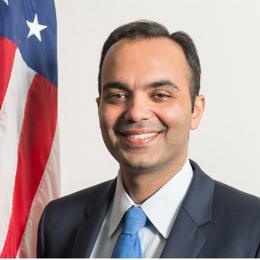
CFPB Director Rohit Chopra (LinkedIn).
The CFPB's proposed rule zeroes in on the archaic practice of charging
non-sufficient funds (NSF) fees for transactions denied at the point of sale.
Think declined debit card purchases or ATM withdrawals. “Over the years, large
banks and their consultants have concocted new junk fees for fake services that
cost almost nothing to deliver,” said CFPB Director Rohit Chopra. “Banks should
be competing to provide better products at lower costs, not innovating to
impose extra fees for no value. The CFPB will continue to rid the market of
junk fees today and prevent new junk fees from emerging in the future.”
Real-time Fair Play
As technology evolves, financial institutions have often gained the
ability to reject transactions instantaneously. The CFPB, playing tech
watchdog, aims to prevent these real-time declines from becoming a cash cow for
banks. Past tech advancements, like the overdraft loophole, led to fee
increases. The CFPB, learning from history, is moving to close loopholes and
protect consumers from emerging fees.
Beyond the Proposed Rule: CFPB's Junk Fee Cleanup
The proposed rule is just one cog in the CFPB's arsenal against junk
fees. In 2022, they initiated a crusade against the fees, resulting in substantial
reductions and forced Bank of America to cough up $100 million for NSF fee
malfeasance.
Junk fees – those unexpected surcharges that appear everywhere – are the
bane of all our lives. But don’t worry, if you’re an American, the CFPB is here
to save the day.
The CFPB Strikes Back
These days, junk fees lurk everywhere, from immediate denials, to fees for payments, or foreign exchange, but have no fear, the Consumer
Financial Protection Bureau (CFPB) is riding to the rescue. The cause?
Real-time declined transactions, a fertile ground for the insertion of sneaky
junk fees. A newly-proposed rule is the CFPB's latest weapon to thwart
financial institutions from profiting off declined swipes, taps, or clicks.
Declined Transactions, Real-time Justice
CFPB Director Rohit Chopra (LinkedIn).
The CFPB's proposed rule zeroes in on the archaic practice of charging
non-sufficient funds (NSF) fees for transactions denied at the point of sale.
Think declined debit card purchases or ATM withdrawals. “Over the years, large
banks and their consultants have concocted new junk fees for fake services that
cost almost nothing to deliver,” said CFPB Director Rohit Chopra. “Banks should
be competing to provide better products at lower costs, not innovating to
impose extra fees for no value. The CFPB will continue to rid the market of
junk fees today and prevent new junk fees from emerging in the future.”
Real-time Fair Play
As technology evolves, financial institutions have often gained the
ability to reject transactions instantaneously. The CFPB, playing tech
watchdog, aims to prevent these real-time declines from becoming a cash cow for
banks. Past tech advancements, like the overdraft loophole, led to fee
increases. The CFPB, learning from history, is moving to close loopholes and
protect consumers from emerging fees.
Beyond the Proposed Rule: CFPB's Junk Fee Cleanup
The proposed rule is just one cog in the CFPB's arsenal against junk
fees. In 2022, they initiated a crusade against the fees, resulting in substantial
reductions and forced Bank of America to cough up $100 million for NSF fee
malfeasance.
Louis Parks has lived and worked in and around the Middle East for much of his professional career. He writes about the meeting of the tech and finance worlds.
Inside the Prediction Markets: $1.6B Institutional Inflow Meets a Federal Crackdown
FP Markets Winner Spotlight 🏆 | Global Broker of the Year 2025 #Trading #Broker #Innovation #Shorts
FP Markets Winner Spotlight 🏆 | Global Broker of the Year 2025 #Trading #Broker #Innovation #Shorts
FP Markets takes the spotlight as Global Broker of the Year 2025 at the Finance Magnates Awards.
Martin Stoilov, Head of Client Experience, shares that trust, innovation, and people played a key role in the company’s success, supported by a strong foundation of integrity and client-centricity.
Following this milestone, FP Markets continues to focus on growth, technology investment, and its core values of transparency and excellence.
👉 Be part of FM Awards 2026: https://awards.financemagnates.com/#nominate
FP Markets takes the spotlight as Global Broker of the Year 2025 at the Finance Magnates Awards.
Martin Stoilov, Head of Client Experience, shares that trust, innovation, and people played a key role in the company’s success, supported by a strong foundation of integrity and client-centricity.
Following this milestone, FP Markets continues to focus on growth, technology investment, and its core values of transparency and excellence.
👉 Be part of FM Awards 2026: https://awards.financemagnates.com/#nominate
In this video, we review @HolaPrimeMarketsOfficial, a multi-asset forex and CFDs broker offering different account types, trading platforms, and flexible trading conditions.
We cover the broker’s overall offering, including account options, trading environment, platforms like MT4 and MT5, and additional services such as managed accounts and fast withdrawals.
Watch the full video to see if Hola Prime Markets fits your trading needs.
📣 Stay up to date with the latest in finance and trading. Follow Finance Magnates for industry news, insights, and global event coverage.
Connect with us:
🔗 LinkedIn: /financemagnates
👍 Facebook: /financemagnates
📸 Instagram: https://www.instagram.com/financemagnates
🐦 X: https://x.com/financemagnates
🎥 TikTok: https://www.tiktok.com/tag/financemagnates
▶️ YouTube: /@financemagnates_official
#HolaPrime #ForexBroker #CFDTrading #FinanceMagnates #Trading #Forex #BrokerReview
In this video, we review @HolaPrimeMarketsOfficial, a multi-asset forex and CFDs broker offering different account types, trading platforms, and flexible trading conditions.
We cover the broker’s overall offering, including account options, trading environment, platforms like MT4 and MT5, and additional services such as managed accounts and fast withdrawals.
Watch the full video to see if Hola Prime Markets fits your trading needs.
📣 Stay up to date with the latest in finance and trading. Follow Finance Magnates for industry news, insights, and global event coverage.
Connect with us:
🔗 LinkedIn: /financemagnates
👍 Facebook: /financemagnates
📸 Instagram: https://www.instagram.com/financemagnates
🐦 X: https://x.com/financemagnates
🎥 TikTok: https://www.tiktok.com/tag/financemagnates
▶️ YouTube: /@financemagnates_official
#HolaPrime #ForexBroker #CFDTrading #FinanceMagnates #Trading #Forex #BrokerReview
Hola Prime Review: What You Need to Know | Full Breakdown by Finance Magnates
Hola Prime Review: What You Need to Know | Full Breakdown by Finance Magnates
In this video, we review @HolaPrime_Global, a proprietary trading firm offering evaluation programs and performance-based payouts in simulated market environments.
We cover how the challenge model works, including account types, profit splits (up to 95%), trading rules, and what it takes to reach a funded account. You’ll also learn about available platforms like MT4, MT5, cTrader, and more, along with insights into payouts, support, and trading conditions.
Watch the full video to see if Hola Prime fits your trading style.
📣 Stay up to date with the latest in finance and trading. Follow Finance Magnates for industry news, insights, and global event coverage.
Connect with us:
🔗 LinkedIn: /financemagnates
👍 Facebook: /financemagnates
📸 Instagram: https://www.instagram.com/financemagnates
🐦 X: https://x.com/financemagnates
🎥 TikTok: https://www.tiktok.com/tag/financemagnates
▶️ YouTube: /@financemagnates_official
#HolaPrime #PropFirm #Trading #FinanceMagnates #Forex #FuturesTrading #TradingReview #PropFirmReview
In this video, we review @HolaPrime_Global, a proprietary trading firm offering evaluation programs and performance-based payouts in simulated market environments.
We cover how the challenge model works, including account types, profit splits (up to 95%), trading rules, and what it takes to reach a funded account. You’ll also learn about available platforms like MT4, MT5, cTrader, and more, along with insights into payouts, support, and trading conditions.
Watch the full video to see if Hola Prime fits your trading style.
📣 Stay up to date with the latest in finance and trading. Follow Finance Magnates for industry news, insights, and global event coverage.
Connect with us:
🔗 LinkedIn: /financemagnates
👍 Facebook: /financemagnates
📸 Instagram: https://www.instagram.com/financemagnates
🐦 X: https://x.com/financemagnates
🎥 TikTok: https://www.tiktok.com/tag/financemagnates
▶️ YouTube: /@financemagnates_official
#HolaPrime #PropFirm #Trading #FinanceMagnates #Forex #FuturesTrading #TradingReview #PropFirmReview
Axi Winner Spotlight 🏆 | Global Most Innovative Broker 2025 #Innovation #Trading #Fintech #Broker
Axi Winner Spotlight 🏆 | Global Most Innovative Broker 2025 #Innovation #Trading #Fintech #Broker
Axi takes the spotlight at the Finance Magnates Awards, winning Global Most Innovative Broker 2025.
Olivia Xenofontos and Ivanna Openko share how the team will feel: proud, motivated, and ready to keep delivering.
They also describe the night as well-organized, focused, and enjoyable for all.
👉 Be part of FM Awards 2026.
Axi takes the spotlight at the Finance Magnates Awards, winning Global Most Innovative Broker 2025.
Olivia Xenofontos and Ivanna Openko share how the team will feel: proud, motivated, and ready to keep delivering.
They also describe the night as well-organized, focused, and enjoyable for all.
👉 Be part of FM Awards 2026.
Recognition that matters.
Built on transparency.
Driven by the industry.
The Finance Magnates Awards 2026.
Nominations are now open.
🔗 https://awards.financemagnates.com/?utm_source=SM&utm_medium=social&utm_campaign=recognition-matters
Recognition that matters.
Built on transparency.
Driven by the industry.
The Finance Magnates Awards 2026.
Nominations are now open.
🔗 https://awards.financemagnates.com/?utm_source=SM&utm_medium=social&utm_campaign=recognition-matters