LVMH’s Q1 profits plunged, missing forecasts amid cooling China demand, US tariffs.
Bernard Arnault drops from world’s richest to 7th richest, as LVMH stock slumps.
Macro headwinds—slowing Chinese demand, trade tensions, strip luxury’s growth veneer.
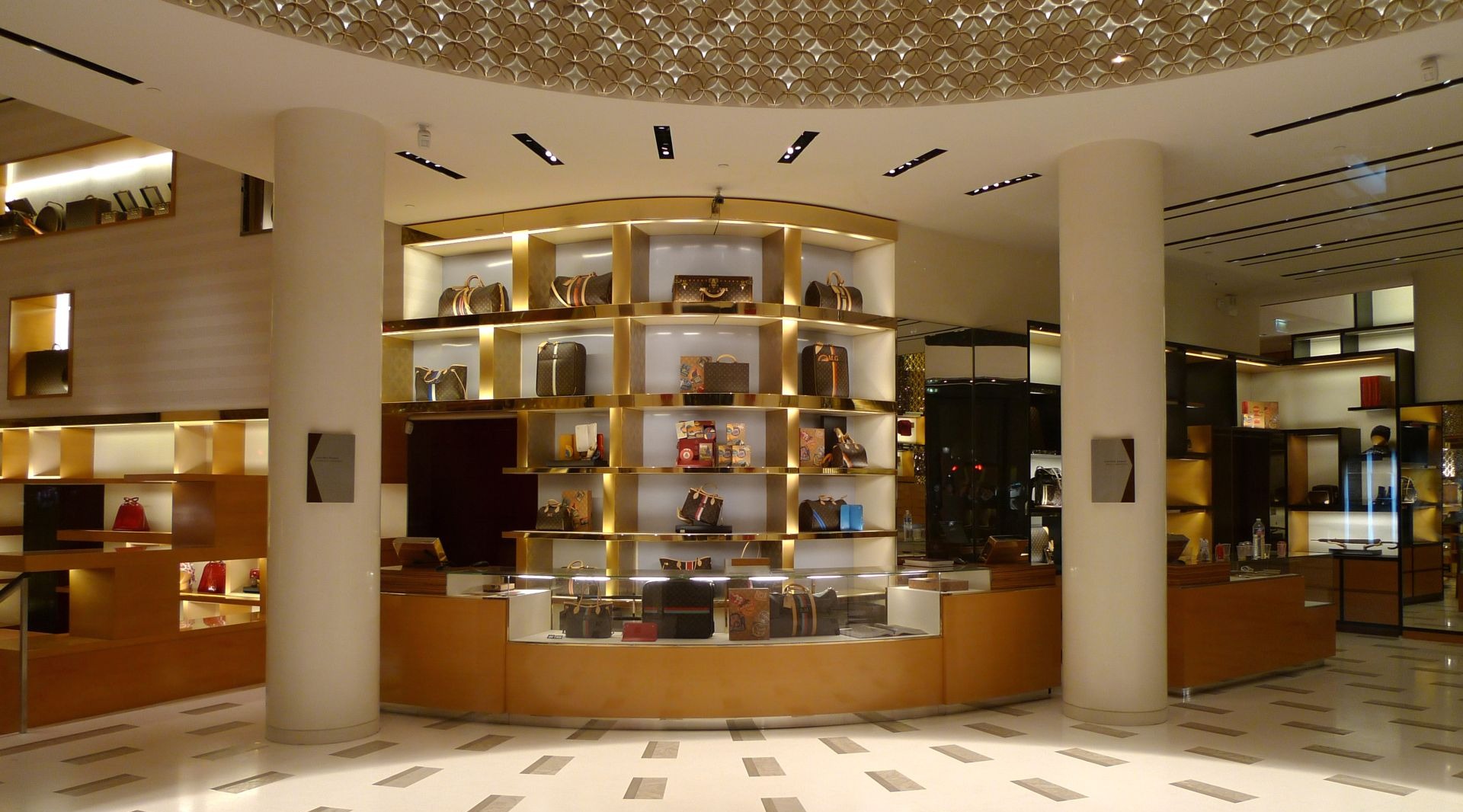
Luxury sales in Chinese markets are in steep decline (J-L Zimmermann, creative commons (Wikipedia).
Just like the little yellow bird warning of impending doom, is LVMH the herald of things to come? LVMH’s profits are in freefall, and even Bernard
Arnault is feeling the sting.
The
Profit Hangover Hits Hard
LVMH, the crown
jewel of luxury, has been the bearer of bad news in recent months: profits fell
17%
year‑over‑year, missing targets by 14% and dragging net income down to €12.55 billion.
Despite sales inching up 1% organically, stumbling performance in Wines &
Spirits and Fashion & Leather erased gains.
Why? A slump in
Chinese spending and looming US tariffs are squeezing margins across the sector.
China:
Hot Market Turns Lukewarm
LVMH’s vast
empire is increasingly reliant on affluent Chinese consumers—but that well has
run drier than expected. The company insiders warn that Asia, especially
China, is experiencing weak demand—Louis Vuitton and Dior included. A
broader data point: China’s
industrial profits dropped sharply year-over-year in May—signaling diminished
domestic finances and curtailed ultra‑luxury spending.
Tariff
Trouble on Two Fronts
Hong Kong
dealmaker dreams and champagne brunches face a new threat: tariffs. US
proposals to tax imports from Europe (10%) and heavy levies on Chinese parcels
are squeezing
both ends of the supply chain. LVMH has started passing those costs to
American shoppers, but pricier LV bags come at a risk: fewer impulse buys,
especially from “aspirational” consumers.
Bernard
Arnault’s Riches Take a Hit
Bernard Arnault, CEO of LVMH, by Jérémy Barande, Creative Commons (Wikipedia).
Bernard Arnault’s
fortune was once the stuff of legend—but the numbers don’t lie. Since topping
the wealth charts in 2023 and 2024, he’s
slid to 7th place as of this June. Bloomberg confirms his holdings have
been clipped by widespread LVMH stock bumps—shares have lost approximately 43.5%
since March 2023, wiping out over $164 billion in market cap.
When
Luxury Isn’t Resilient
Luxury isn’t
supposed to work this way. Historically impervious to cycles, brands like LVMH
are now showing cracks. Analysts
are revising growth expectations for 2025 down to flat or worse—a sector
that had been rebounding seems to be in trouble.
Finance buffs,
take note: when a luxury leviathan like LVMH falters, it’s not just a blip—it
signals macro unease. Cooling Chinese demand, escalating trade risks, and
shifting consumer tastes are combining into a rare profit hangover for the
sector.
Is there a silver
lining? Perhaps cost discipline and creative resets pave the way for renewed
2026 momentum. But for now, this isn’t just a slump—it’s a wake‑up call.
For more stories
around the edge of finance, visit our Trending section.
Just like the little yellow bird warning of impending doom, is LVMH the herald of things to come? LVMH’s profits are in freefall, and even Bernard
Arnault is feeling the sting.
The
Profit Hangover Hits Hard
LVMH, the crown
jewel of luxury, has been the bearer of bad news in recent months: profits fell
17%
year‑over‑year, missing targets by 14% and dragging net income down to €12.55 billion.
Despite sales inching up 1% organically, stumbling performance in Wines &
Spirits and Fashion & Leather erased gains.
Why? A slump in
Chinese spending and looming US tariffs are squeezing margins across the sector.
China:
Hot Market Turns Lukewarm
LVMH’s vast
empire is increasingly reliant on affluent Chinese consumers—but that well has
run drier than expected. The company insiders warn that Asia, especially
China, is experiencing weak demand—Louis Vuitton and Dior included. A
broader data point: China’s
industrial profits dropped sharply year-over-year in May—signaling diminished
domestic finances and curtailed ultra‑luxury spending.
Tariff
Trouble on Two Fronts
Hong Kong
dealmaker dreams and champagne brunches face a new threat: tariffs. US
proposals to tax imports from Europe (10%) and heavy levies on Chinese parcels
are squeezing
both ends of the supply chain. LVMH has started passing those costs to
American shoppers, but pricier LV bags come at a risk: fewer impulse buys,
especially from “aspirational” consumers.
Bernard
Arnault’s Riches Take a Hit
Bernard Arnault, CEO of LVMH, by Jérémy Barande, Creative Commons (Wikipedia).
Bernard Arnault’s
fortune was once the stuff of legend—but the numbers don’t lie. Since topping
the wealth charts in 2023 and 2024, he’s
slid to 7th place as of this June. Bloomberg confirms his holdings have
been clipped by widespread LVMH stock bumps—shares have lost approximately 43.5%
since March 2023, wiping out over $164 billion in market cap.
When
Luxury Isn’t Resilient
Luxury isn’t
supposed to work this way. Historically impervious to cycles, brands like LVMH
are now showing cracks. Analysts
are revising growth expectations for 2025 down to flat or worse—a sector
that had been rebounding seems to be in trouble.
Finance buffs,
take note: when a luxury leviathan like LVMH falters, it’s not just a blip—it
signals macro unease. Cooling Chinese demand, escalating trade risks, and
shifting consumer tastes are combining into a rare profit hangover for the
sector.
Is there a silver
lining? Perhaps cost discipline and creative resets pave the way for renewed
2026 momentum. But for now, this isn’t just a slump—it’s a wake‑up call.
For more stories
around the edge of finance, visit our Trending section.
Louis Parks has lived and worked in and around the Middle East for much of his professional career. He writes about the meeting of the tech and finance worlds.
Inside the Prediction Markets: $1.6B Institutional Inflow Meets a Federal Crackdown
FP Markets Winner Spotlight 🏆 | Global Broker of the Year 2025 #Trading #Broker #Innovation #Shorts
FP Markets Winner Spotlight 🏆 | Global Broker of the Year 2025 #Trading #Broker #Innovation #Shorts
FP Markets takes the spotlight as Global Broker of the Year 2025 at the Finance Magnates Awards.
Martin Stoilov, Head of Client Experience, shares that trust, innovation, and people played a key role in the company’s success, supported by a strong foundation of integrity and client-centricity.
Following this milestone, FP Markets continues to focus on growth, technology investment, and its core values of transparency and excellence.
👉 Be part of FM Awards 2026: https://awards.financemagnates.com/#nominate
FP Markets takes the spotlight as Global Broker of the Year 2025 at the Finance Magnates Awards.
Martin Stoilov, Head of Client Experience, shares that trust, innovation, and people played a key role in the company’s success, supported by a strong foundation of integrity and client-centricity.
Following this milestone, FP Markets continues to focus on growth, technology investment, and its core values of transparency and excellence.
👉 Be part of FM Awards 2026: https://awards.financemagnates.com/#nominate
In this video, we review @HolaPrimeMarketsOfficial, a multi-asset forex and CFDs broker offering different account types, trading platforms, and flexible trading conditions.
We cover the broker’s overall offering, including account options, trading environment, platforms like MT4 and MT5, and additional services such as managed accounts and fast withdrawals.
Watch the full video to see if Hola Prime Markets fits your trading needs.
📣 Stay up to date with the latest in finance and trading. Follow Finance Magnates for industry news, insights, and global event coverage.
Connect with us:
🔗 LinkedIn: /financemagnates
👍 Facebook: /financemagnates
📸 Instagram: https://www.instagram.com/financemagnates
🐦 X: https://x.com/financemagnates
🎥 TikTok: https://www.tiktok.com/tag/financemagnates
▶️ YouTube: /@financemagnates_official
#HolaPrime #ForexBroker #CFDTrading #FinanceMagnates #Trading #Forex #BrokerReview
In this video, we review @HolaPrimeMarketsOfficial, a multi-asset forex and CFDs broker offering different account types, trading platforms, and flexible trading conditions.
We cover the broker’s overall offering, including account options, trading environment, platforms like MT4 and MT5, and additional services such as managed accounts and fast withdrawals.
Watch the full video to see if Hola Prime Markets fits your trading needs.
📣 Stay up to date with the latest in finance and trading. Follow Finance Magnates for industry news, insights, and global event coverage.
Connect with us:
🔗 LinkedIn: /financemagnates
👍 Facebook: /financemagnates
📸 Instagram: https://www.instagram.com/financemagnates
🐦 X: https://x.com/financemagnates
🎥 TikTok: https://www.tiktok.com/tag/financemagnates
▶️ YouTube: /@financemagnates_official
#HolaPrime #ForexBroker #CFDTrading #FinanceMagnates #Trading #Forex #BrokerReview
Hola Prime Review: What You Need to Know | Full Breakdown by Finance Magnates
Hola Prime Review: What You Need to Know | Full Breakdown by Finance Magnates
In this video, we review @HolaPrime_Global, a proprietary trading firm offering evaluation programs and performance-based payouts in simulated market environments.
We cover how the challenge model works, including account types, profit splits (up to 95%), trading rules, and what it takes to reach a funded account. You’ll also learn about available platforms like MT4, MT5, cTrader, and more, along with insights into payouts, support, and trading conditions.
Watch the full video to see if Hola Prime fits your trading style.
📣 Stay up to date with the latest in finance and trading. Follow Finance Magnates for industry news, insights, and global event coverage.
Connect with us:
🔗 LinkedIn: /financemagnates
👍 Facebook: /financemagnates
📸 Instagram: https://www.instagram.com/financemagnates
🐦 X: https://x.com/financemagnates
🎥 TikTok: https://www.tiktok.com/tag/financemagnates
▶️ YouTube: /@financemagnates_official
#HolaPrime #PropFirm #Trading #FinanceMagnates #Forex #FuturesTrading #TradingReview #PropFirmReview
In this video, we review @HolaPrime_Global, a proprietary trading firm offering evaluation programs and performance-based payouts in simulated market environments.
We cover how the challenge model works, including account types, profit splits (up to 95%), trading rules, and what it takes to reach a funded account. You’ll also learn about available platforms like MT4, MT5, cTrader, and more, along with insights into payouts, support, and trading conditions.
Watch the full video to see if Hola Prime fits your trading style.
📣 Stay up to date with the latest in finance and trading. Follow Finance Magnates for industry news, insights, and global event coverage.
Connect with us:
🔗 LinkedIn: /financemagnates
👍 Facebook: /financemagnates
📸 Instagram: https://www.instagram.com/financemagnates
🐦 X: https://x.com/financemagnates
🎥 TikTok: https://www.tiktok.com/tag/financemagnates
▶️ YouTube: /@financemagnates_official
#HolaPrime #PropFirm #Trading #FinanceMagnates #Forex #FuturesTrading #TradingReview #PropFirmReview
Axi Winner Spotlight 🏆 | Global Most Innovative Broker 2025 #Innovation #Trading #Fintech #Broker
Axi Winner Spotlight 🏆 | Global Most Innovative Broker 2025 #Innovation #Trading #Fintech #Broker
Axi takes the spotlight at the Finance Magnates Awards, winning Global Most Innovative Broker 2025.
Olivia Xenofontos and Ivanna Openko share how the team will feel: proud, motivated, and ready to keep delivering.
They also describe the night as well-organized, focused, and enjoyable for all.
👉 Be part of FM Awards 2026.
Axi takes the spotlight at the Finance Magnates Awards, winning Global Most Innovative Broker 2025.
Olivia Xenofontos and Ivanna Openko share how the team will feel: proud, motivated, and ready to keep delivering.
They also describe the night as well-organized, focused, and enjoyable for all.
👉 Be part of FM Awards 2026.
Recognition that matters.
Built on transparency.
Driven by the industry.
The Finance Magnates Awards 2026.
Nominations are now open.
🔗 https://awards.financemagnates.com/?utm_source=SM&utm_medium=social&utm_campaign=recognition-matters
Recognition that matters.
Built on transparency.
Driven by the industry.
The Finance Magnates Awards 2026.
Nominations are now open.
🔗 https://awards.financemagnates.com/?utm_source=SM&utm_medium=social&utm_campaign=recognition-matters