Financial and Business News

Robinhood Invests US$75 Million in OpenAI via Investment Vehicle

Wednesday, 22/04/2026 | 13:46 GMT by Adonis Adoni
  • Robinhood Ventures Fund I offers retail investors exposure to a basket of private technology firms, including Revolut and ElevenLabs.
  • In July 2025, OpenAI clashed with Robinhood over the brokerage's launch of tokenized OpenAI shares in Europe.
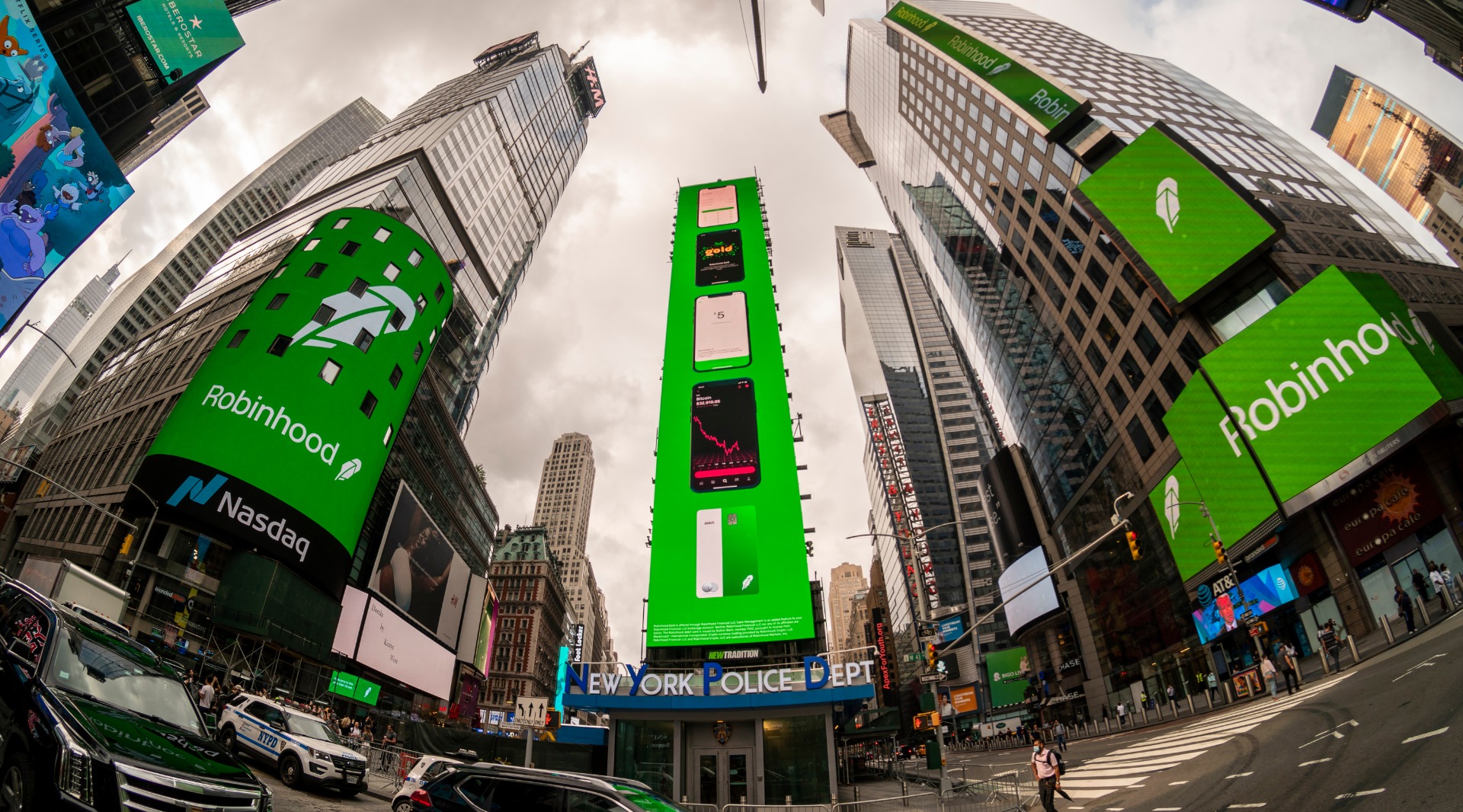
Green-themed Robinhood ads on the tall building
Robinhood's billboards in New York’s Times Square (Photo: rblfmr/Shutterstock)

Robinhood has taken a US$75 million stake in ChatGPT maker OpenAI through its investment vehicle, Robinhood Ventures Fund I (RVI), the retail brokerage said on Wednesday.

The fund, which was listed on the New York Stock Exchange in March, offers retail investors exposure to a basket of private technology firms that used to be the preserve of venture capital investors.

“OpenAI is one of the frontier artificial intelligence companies, and we are incredibly proud to add them to the Fund,” said Sarah Pinto, President of RVI.

Sarah Pinto
Sarah Pinto, President, Robinhood Venture Fund I

Existing holdings include Stripe, Databricks, Revolut and ElevenLabs. The OpenAI position is among the vehicle’s largest to date, which Pinto framed as underscoring its ambition to give retail investors access to firms typically confined to private markets.

Nonetheless, in the context of OpenAI’s recent funding rounds – most recently in March, reportedly valuing the company at US $122bn – the investment is modest.

A Bigger Slice for Retail Investors

The move hints at a thaw in relations. In July 2025, OpenAI publicly rebuked Robinhood over its “stock tokens” in Europe, arguing they did not constitute real equity, lacked approval and implied a partnership that did not exist.

Robinhood’s CEO, Vlad Tenev, defended the tokenised instruments as legitimate derivatives; the platform also offered tokenised exposure to SpaceX.

Nonetheless, the move reflects a growing appetite among retail investors for exposure to private tech companies, especially as artificial intelligence continues to dominate market narratives.

Taking it a step further, Elon Musk announced that the SpaceX listing will include up to 30% IPO allocation to retail investors, an unusually large slice for a cohort that was historically crowded out from early public access.

The move also coincides with a structural shift: technology firms are staying private for longer. By delaying initial public offerings, they can raise successive private rounds, retain tighter control and avoid volatile market debuts.

Robinhood has taken a US$75 million stake in ChatGPT maker OpenAI through its investment vehicle, Robinhood Ventures Fund I (RVI), the retail brokerage said on Wednesday.

The fund, which was listed on the New York Stock Exchange in March, offers retail investors exposure to a basket of private technology firms that used to be the preserve of venture capital investors.

“OpenAI is one of the frontier artificial intelligence companies, and we are incredibly proud to add them to the Fund,” said Sarah Pinto, President of RVI.

Sarah Pinto
Sarah Pinto, President, Robinhood Venture Fund I

Existing holdings include Stripe, Databricks, Revolut and ElevenLabs. The OpenAI position is among the vehicle’s largest to date, which Pinto framed as underscoring its ambition to give retail investors access to firms typically confined to private markets.

Nonetheless, in the context of OpenAI’s recent funding rounds – most recently in March, reportedly valuing the company at US $122bn – the investment is modest.

A Bigger Slice for Retail Investors

The move hints at a thaw in relations. In July 2025, OpenAI publicly rebuked Robinhood over its “stock tokens” in Europe, arguing they did not constitute real equity, lacked approval and implied a partnership that did not exist.

Robinhood’s CEO, Vlad Tenev, defended the tokenised instruments as legitimate derivatives; the platform also offered tokenised exposure to SpaceX.

Nonetheless, the move reflects a growing appetite among retail investors for exposure to private tech companies, especially as artificial intelligence continues to dominate market narratives.

Taking it a step further, Elon Musk announced that the SpaceX listing will include up to 30% IPO allocation to retail investors, an unusually large slice for a cohort that was historically crowded out from early public access.

The move also coincides with a structural shift: technology firms are staying private for longer. By delaying initial public offerings, they can raise successive private rounds, retain tighter control and avoid volatile market debuts.
About the Author: Adonis Adoni
Adonis Adoni
  • 24 Articles
  • 1 Follower
Adonis Adoni is a News Editor at Finance Magnates, with more than six years of experience covering the financial services industry, technology, and their intersection. His work includes C-suite interviews with leading technology and fintech companies across Europe, the US and Asia, exclusive coverage of M&A activity and capital raising, and data-driven industry reporting, with a strong emphasis on engagement and clear storytelling. Areas of Coverage: Online trading industry news Fintech companies Digital assets and crypto markets Regulatory and compliance developments Executive interviews Education: BA in Law – Nottingham Trent University LLM in Health Law – Nottingham Trent University

More from the Author

Trending