Financial and Business News

Oil Traders Turn to Prediction Markets for Signals, Raising Integrity Concerns

Thursday, 02/04/2026 | 10:40 GMT by Tanya Chepkova
  • Prediction market data is entering trading models as an additional signal alongside traditional inputs.
  • Its use raises concerns about insider information, liquidity and how such signals are formed.
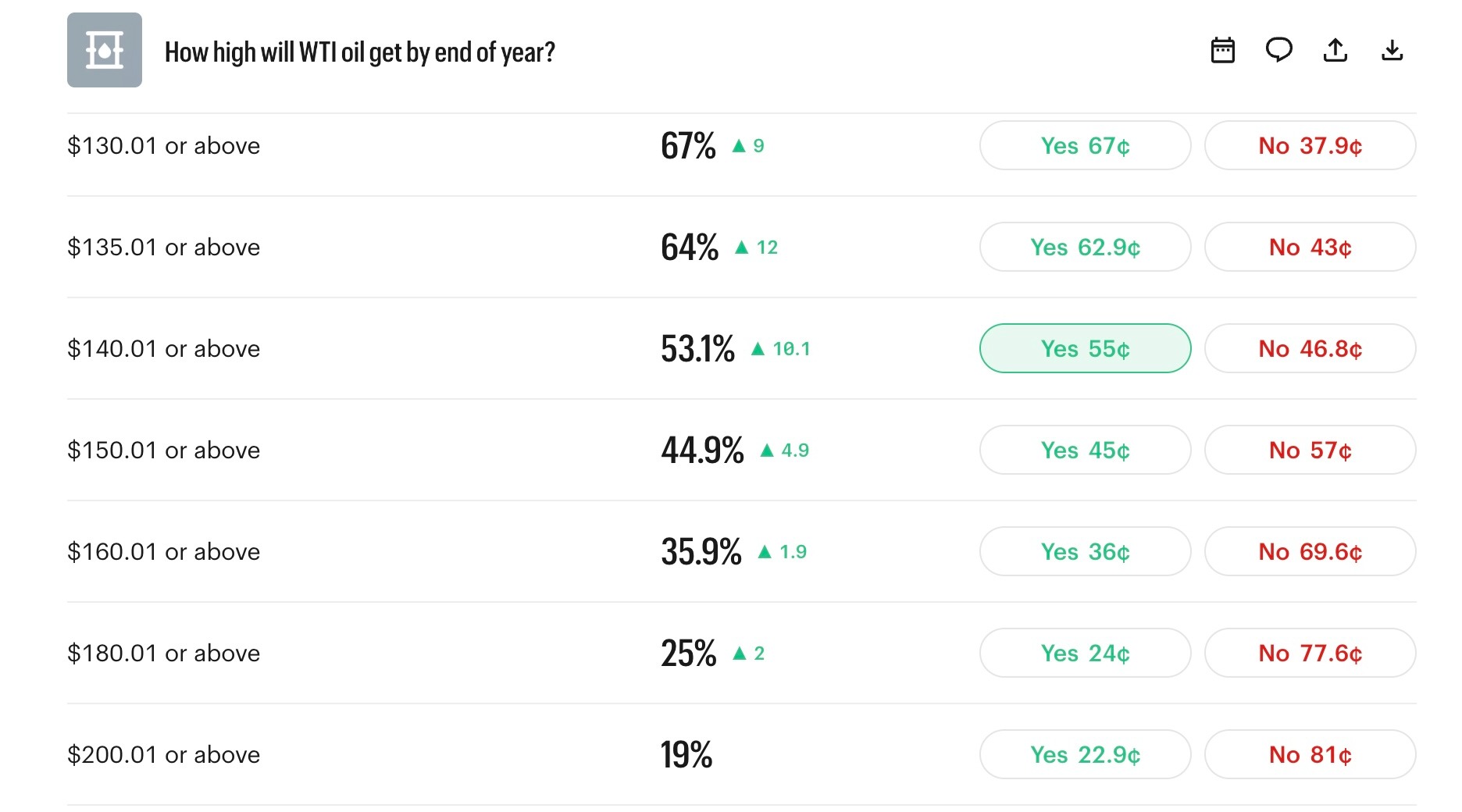
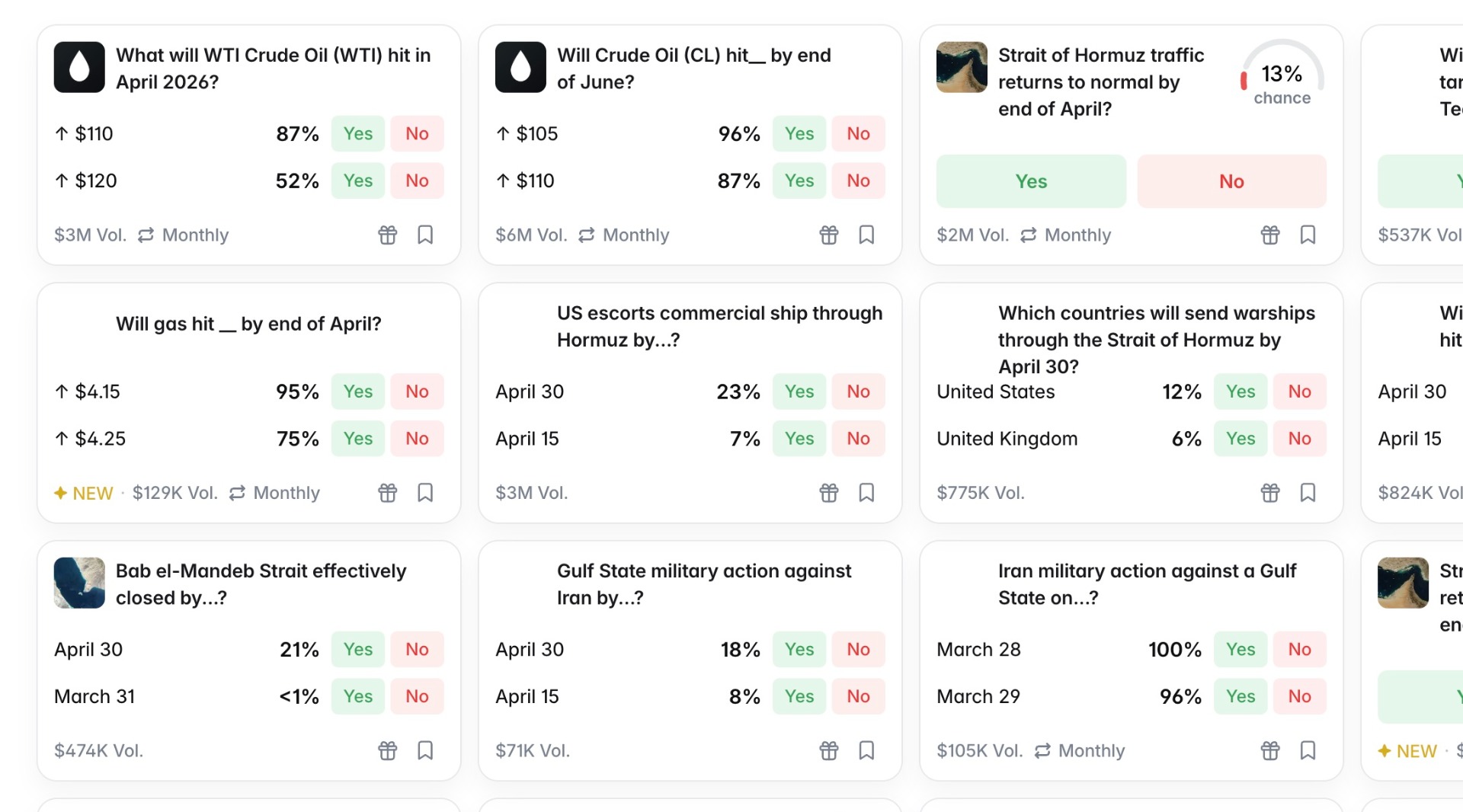
Oil related bets on Polymarket

Energy traders are using data from prediction markets such as Polymarket. They treat it as another signal alongside traditional news and market data. But as these feeds make their way into algorithmic trading models, they are also raising questions about market integrity.

Singapore Summit: Meet the largest APAC brokers you know (and those you still don't!)

β€œBetting markets do have a long history of strong prediction accuracy and since Polymarket is in the ascendancy, traders are indeed increasingly turning to it for market indicators,” Ajay Parmar, head of oil trading at ICIS, told The Guardian.

From Alternative Data to Trading Input

What was once a niche signal is now part of institutional workflows. Some banks and infrastructure providers are already integrating prediction market data into research and trading environments.

Goldman Sachs has begun referencing such data in client analysis, while Intercontinental Exchange (ICE) has launched tools that allow traders to access prediction market signals alongside traditional market indicators.

The speed is key. These platforms can reflect shifts in expectations around geopolitical events before they are fully captured in conventional news flow.

Signals With Constraints

The growing use of prediction market data also raises questions about how these signals should be interpreted. In particular, it raises concerns about market integrity.

One concern is that trading activity on these platforms may reflect uneven access to information. Market participants point to instances where large bets appeared shortly before major announcements, raising the possibility that non-public information could influence pricing.

Another issue is market depth. Liquidity on prediction markets is often concentrated in a limited number of contracts, meaning relatively small trades can shift implied probabilities. If such signals are fed into larger trading systems, they may amplify short-term moves rather than reflect broader consensus.

Together, these factors create the potential for a feedback loop, where market signals influence trading decisions that, in turn, reinforce those signals.

A Signal, Not a Forecast

For brokers and institutional traders, prediction markets are better understood as one input among many rather than a standalone forecasting tool. They provide probability-based signals that can complement scenario analysis, particularly in fast-moving situations where information is incomplete.

At the same time, their reliability depends on participation, liquidity and how markets are structured. As one trader noted, the value lies less in predicting exact price levels and more in gauging how likely certain outcomes are β€” and how that compares with other market signals.

Energy traders are using data from prediction markets such as Polymarket. They treat it as another signal alongside traditional news and market data. But as these feeds make their way into algorithmic trading models, they are also raising questions about market integrity.

Singapore Summit: Meet the largest APAC brokers you know (and those you still don't!)

β€œBetting markets do have a long history of strong prediction accuracy and since Polymarket is in the ascendancy, traders are indeed increasingly turning to it for market indicators,” Ajay Parmar, head of oil trading at ICIS, told The Guardian.

From Alternative Data to Trading Input

What was once a niche signal is now part of institutional workflows. Some banks and infrastructure providers are already integrating prediction market data into research and trading environments.

Goldman Sachs has begun referencing such data in client analysis, while Intercontinental Exchange (ICE) has launched tools that allow traders to access prediction market signals alongside traditional market indicators.

The speed is key. These platforms can reflect shifts in expectations around geopolitical events before they are fully captured in conventional news flow.

Signals With Constraints

The growing use of prediction market data also raises questions about how these signals should be interpreted. In particular, it raises concerns about market integrity.

One concern is that trading activity on these platforms may reflect uneven access to information. Market participants point to instances where large bets appeared shortly before major announcements, raising the possibility that non-public information could influence pricing.

Another issue is market depth. Liquidity on prediction markets is often concentrated in a limited number of contracts, meaning relatively small trades can shift implied probabilities. If such signals are fed into larger trading systems, they may amplify short-term moves rather than reflect broader consensus.

Together, these factors create the potential for a feedback loop, where market signals influence trading decisions that, in turn, reinforce those signals.

A Signal, Not a Forecast

For brokers and institutional traders, prediction markets are better understood as one input among many rather than a standalone forecasting tool. They provide probability-based signals that can complement scenario analysis, particularly in fast-moving situations where information is incomplete.

At the same time, their reliability depends on participation, liquidity and how markets are structured. As one trader noted, the value lies less in predicting exact price levels and more in gauging how likely certain outcomes are β€” and how that compares with other market signals.
About the Author: Tanya Chepkova
Tanya Chepkova
  • 147 Articles
Tanya Chepkova is a News Editor at Finance Magnates with more than 16 years of experience in financial journalism, covering forex, crypto, and digital asset markets. Her work spans daily industry reporting and data-driven, long-form explainers focused on market structure, trading models, and regulatory shifts. Before joining Finance Magnates, she led the editorial team of a cryptocurrency-focused media outlet for six years. Her reporting combines analytical depth with clear storytelling, with particular attention to how structural changes in trading, stablecoin infrastructure, and emerging products such as prediction markets reshape the broader financial ecosystem. She covers global developments and provides additional insight into CIS markets. Areas of Coverage: Crypto and digital asset markets Prediction markets Stablecoins and cross-border payments Industry analysis and long-form explainers

More from the Author

Trending