Wall Street’s betting big on Nvidia posting $43.28B in Q1 revenue—up 66% YoY.
Export bans to China sting, but fresh Middle East deals are plugging revenue gaps fast.
Options traders are expecting volatility and are pricing in post-earnings move of over 6%.
Chipzilla Nvidia is set to announce Q1 earnings—and Wall Street’s already
salivating over a projected 66% revenue jump, thanks to AI mania and some
well-timed Middle East deals.
Nvidia’s Moment of Truth: AI Darling Faces the Numbers
When you’re the king of AI chips, every earnings call is a referendum
on the future of tech. Nvidia, whose GPUs power everything from ChatGPT to
self-driving cars, is about to release its Q1 2025 results—and the financial and
tech worlds are on edge.
Expected to report after the market closes today, the company is
forecast to post a whopping $43.28
billion in revenue, up 66% from last year. That kind of jump would make
even the most jaded trader sit up straighter in their ergonomic chair.
And if Nvidia beats the estimates? Well, buckle up—Wall Street is
already frothing with bullish bets. But if it falls short? Let’s just say even
AI won’t be able to write a happy ending to that stock chart.
Nvidia’s Not-So-Little China Problem
Even the mightiest semiconductors can’t completely dodge geopolitics.
Nvidia’s ascent has been slightly singed by ongoing US
export controls targeting high-performance chips bound for China.
Specifically, the company’s much-hyped H20 chip—designed to meet Washington’s
export restrictions—still isn’t getting a visa into the world’s second-largest
economy.
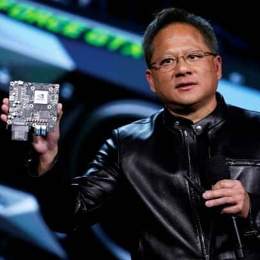
Nvidia CEO Jensen Huang (Reuters).
CEO Jensen Huang hasn’t minced words. He believes the export controls are
destructive, arguing they’re doing more to undercut
US innovation than slow down China’s tech ambitions. He may have a point:
as competitors in China accelerate their own chip development, Nvidia’s forced
to play hopscotch across approved markets.
These limitations have already dented earnings potential and added
uncertainty to future guidance—something analysts will be listening for very
closely on today’s call.
Middle East to the Rescue: Big Deals, Bigger Chips
But where one door closes, another opens—preferably into a data center
in Dubai or Riyadh.
Nvidia’s diplomatic (and economic) pivot to the Middle East is turning
heads. Under a recently softened export regime, the company can now sell up to
500,000 AI chips annually to the UAE, and an additional 18,000 to Saudi Arabia.
That’s not small fry. Those deals alone could add billions to Nvidia’s topline,
particularly as Gulf states position themselves as next-gen AI powerhouses.
The move not only offers a lifeline to Nvidia’s restricted China
revenue but also opens access to petrodollar-backed tech ecosystems hungry for
compute power. In other words: fewer trade headaches, more luxury data centers.
Traders Brace for Post-Earnings Fireworks
Wall Street’s already building a stadium for this earnings gladiator
match. According to Investopedia, options traders are pricing in a stock move
of around 6% following the earnings call—meaning this could be the most volatile
stock event of the week.
And it’s not just retail bros watching. Nvidia has become the de facto
bellwether of the AI trade, and its report will set the tone for everything
from hyperscaler earnings to the next chip IPO.
If Nvidia shows it's successfully sidestepping geopolitical
landmines—analysts will likely double down on those frothy price targets. But
miss the mark, and the stock might finally get the come-down some contrarians
have been whispering about since its parabolic rise began.
Expectations Are Sky-High—Can Nvidia Deliver?
Nvidia is no stranger to overachievement. But the bigger the hype, the
steeper the fall if things go sideways. With record-breaking AI demand,
geopolitical workarounds in place, and a monster quarter projected, today’s
earnings could either cement Nvidia’s legacy or remind us that even titans can
trip.
All eyes are on Santa Clara—and not just because we’re still trying to
get our hands on a 5090.
For more stories around the edge of finance, visit our Trending section.
Chipzilla Nvidia is set to announce Q1 earnings—and Wall Street’s already
salivating over a projected 66% revenue jump, thanks to AI mania and some
well-timed Middle East deals.
Nvidia’s Moment of Truth: AI Darling Faces the Numbers
When you’re the king of AI chips, every earnings call is a referendum
on the future of tech. Nvidia, whose GPUs power everything from ChatGPT to
self-driving cars, is about to release its Q1 2025 results—and the financial and
tech worlds are on edge.
Expected to report after the market closes today, the company is
forecast to post a whopping $43.28
billion in revenue, up 66% from last year. That kind of jump would make
even the most jaded trader sit up straighter in their ergonomic chair.
And if Nvidia beats the estimates? Well, buckle up—Wall Street is
already frothing with bullish bets. But if it falls short? Let’s just say even
AI won’t be able to write a happy ending to that stock chart.
Nvidia’s Not-So-Little China Problem
Even the mightiest semiconductors can’t completely dodge geopolitics.
Nvidia’s ascent has been slightly singed by ongoing US
export controls targeting high-performance chips bound for China.
Specifically, the company’s much-hyped H20 chip—designed to meet Washington’s
export restrictions—still isn’t getting a visa into the world’s second-largest
economy.
Nvidia CEO Jensen Huang (Reuters).
CEO Jensen Huang hasn’t minced words. He believes the export controls are
destructive, arguing they’re doing more to undercut
US innovation than slow down China’s tech ambitions. He may have a point:
as competitors in China accelerate their own chip development, Nvidia’s forced
to play hopscotch across approved markets.
These limitations have already dented earnings potential and added
uncertainty to future guidance—something analysts will be listening for very
closely on today’s call.
Middle East to the Rescue: Big Deals, Bigger Chips
But where one door closes, another opens—preferably into a data center
in Dubai or Riyadh.
Nvidia’s diplomatic (and economic) pivot to the Middle East is turning
heads. Under a recently softened export regime, the company can now sell up to
500,000 AI chips annually to the UAE, and an additional 18,000 to Saudi Arabia.
That’s not small fry. Those deals alone could add billions to Nvidia’s topline,
particularly as Gulf states position themselves as next-gen AI powerhouses.
The move not only offers a lifeline to Nvidia’s restricted China
revenue but also opens access to petrodollar-backed tech ecosystems hungry for
compute power. In other words: fewer trade headaches, more luxury data centers.
Traders Brace for Post-Earnings Fireworks
Wall Street’s already building a stadium for this earnings gladiator
match. According to Investopedia, options traders are pricing in a stock move
of around 6% following the earnings call—meaning this could be the most volatile
stock event of the week.
And it’s not just retail bros watching. Nvidia has become the de facto
bellwether of the AI trade, and its report will set the tone for everything
from hyperscaler earnings to the next chip IPO.
If Nvidia shows it's successfully sidestepping geopolitical
landmines—analysts will likely double down on those frothy price targets. But
miss the mark, and the stock might finally get the come-down some contrarians
have been whispering about since its parabolic rise began.
Expectations Are Sky-High—Can Nvidia Deliver?
Nvidia is no stranger to overachievement. But the bigger the hype, the
steeper the fall if things go sideways. With record-breaking AI demand,
geopolitical workarounds in place, and a monster quarter projected, today’s
earnings could either cement Nvidia’s legacy or remind us that even titans can
trip.
All eyes are on Santa Clara—and not just because we’re still trying to
get our hands on a 5090.
For more stories around the edge of finance, visit our Trending section.
Louis Parks has lived and worked in and around the Middle East for much of his professional career. He writes about the meeting of the tech and finance worlds.
Inside the Prediction Markets: $1.6B Institutional Inflow Meets a Federal Crackdown
FP Markets Winner Spotlight 🏆 | Global Broker of the Year 2025 #Trading #Broker #Innovation #Shorts
FP Markets Winner Spotlight 🏆 | Global Broker of the Year 2025 #Trading #Broker #Innovation #Shorts
FP Markets takes the spotlight as Global Broker of the Year 2025 at the Finance Magnates Awards.
Martin Stoilov, Head of Client Experience, shares that trust, innovation, and people played a key role in the company’s success, supported by a strong foundation of integrity and client-centricity.
Following this milestone, FP Markets continues to focus on growth, technology investment, and its core values of transparency and excellence.
👉 Be part of FM Awards 2026: https://awards.financemagnates.com/#nominate
FP Markets takes the spotlight as Global Broker of the Year 2025 at the Finance Magnates Awards.
Martin Stoilov, Head of Client Experience, shares that trust, innovation, and people played a key role in the company’s success, supported by a strong foundation of integrity and client-centricity.
Following this milestone, FP Markets continues to focus on growth, technology investment, and its core values of transparency and excellence.
👉 Be part of FM Awards 2026: https://awards.financemagnates.com/#nominate
In this video, we review @HolaPrimeMarketsOfficial, a multi-asset forex and CFDs broker offering different account types, trading platforms, and flexible trading conditions.
We cover the broker’s overall offering, including account options, trading environment, platforms like MT4 and MT5, and additional services such as managed accounts and fast withdrawals.
Watch the full video to see if Hola Prime Markets fits your trading needs.
📣 Stay up to date with the latest in finance and trading. Follow Finance Magnates for industry news, insights, and global event coverage.
Connect with us:
🔗 LinkedIn: /financemagnates
👍 Facebook: /financemagnates
📸 Instagram: https://www.instagram.com/financemagnates
🐦 X: https://x.com/financemagnates
🎥 TikTok: https://www.tiktok.com/tag/financemagnates
▶️ YouTube: /@financemagnates_official
#HolaPrime #ForexBroker #CFDTrading #FinanceMagnates #Trading #Forex #BrokerReview
In this video, we review @HolaPrimeMarketsOfficial, a multi-asset forex and CFDs broker offering different account types, trading platforms, and flexible trading conditions.
We cover the broker’s overall offering, including account options, trading environment, platforms like MT4 and MT5, and additional services such as managed accounts and fast withdrawals.
Watch the full video to see if Hola Prime Markets fits your trading needs.
📣 Stay up to date with the latest in finance and trading. Follow Finance Magnates for industry news, insights, and global event coverage.
Connect with us:
🔗 LinkedIn: /financemagnates
👍 Facebook: /financemagnates
📸 Instagram: https://www.instagram.com/financemagnates
🐦 X: https://x.com/financemagnates
🎥 TikTok: https://www.tiktok.com/tag/financemagnates
▶️ YouTube: /@financemagnates_official
#HolaPrime #ForexBroker #CFDTrading #FinanceMagnates #Trading #Forex #BrokerReview
Hola Prime Review: What You Need to Know | Full Breakdown by Finance Magnates
Hola Prime Review: What You Need to Know | Full Breakdown by Finance Magnates
In this video, we review @HolaPrime_Global, a proprietary trading firm offering evaluation programs and performance-based payouts in simulated market environments.
We cover how the challenge model works, including account types, profit splits (up to 95%), trading rules, and what it takes to reach a funded account. You’ll also learn about available platforms like MT4, MT5, cTrader, and more, along with insights into payouts, support, and trading conditions.
Watch the full video to see if Hola Prime fits your trading style.
📣 Stay up to date with the latest in finance and trading. Follow Finance Magnates for industry news, insights, and global event coverage.
Connect with us:
🔗 LinkedIn: /financemagnates
👍 Facebook: /financemagnates
📸 Instagram: https://www.instagram.com/financemagnates
🐦 X: https://x.com/financemagnates
🎥 TikTok: https://www.tiktok.com/tag/financemagnates
▶️ YouTube: /@financemagnates_official
#HolaPrime #PropFirm #Trading #FinanceMagnates #Forex #FuturesTrading #TradingReview #PropFirmReview
In this video, we review @HolaPrime_Global, a proprietary trading firm offering evaluation programs and performance-based payouts in simulated market environments.
We cover how the challenge model works, including account types, profit splits (up to 95%), trading rules, and what it takes to reach a funded account. You’ll also learn about available platforms like MT4, MT5, cTrader, and more, along with insights into payouts, support, and trading conditions.
Watch the full video to see if Hola Prime fits your trading style.
📣 Stay up to date with the latest in finance and trading. Follow Finance Magnates for industry news, insights, and global event coverage.
Connect with us:
🔗 LinkedIn: /financemagnates
👍 Facebook: /financemagnates
📸 Instagram: https://www.instagram.com/financemagnates
🐦 X: https://x.com/financemagnates
🎥 TikTok: https://www.tiktok.com/tag/financemagnates
▶️ YouTube: /@financemagnates_official
#HolaPrime #PropFirm #Trading #FinanceMagnates #Forex #FuturesTrading #TradingReview #PropFirmReview
Axi Winner Spotlight 🏆 | Global Most Innovative Broker 2025 #Innovation #Trading #Fintech #Broker
Axi Winner Spotlight 🏆 | Global Most Innovative Broker 2025 #Innovation #Trading #Fintech #Broker
Axi takes the spotlight at the Finance Magnates Awards, winning Global Most Innovative Broker 2025.
Olivia Xenofontos and Ivanna Openko share how the team will feel: proud, motivated, and ready to keep delivering.
They also describe the night as well-organized, focused, and enjoyable for all.
👉 Be part of FM Awards 2026.
Axi takes the spotlight at the Finance Magnates Awards, winning Global Most Innovative Broker 2025.
Olivia Xenofontos and Ivanna Openko share how the team will feel: proud, motivated, and ready to keep delivering.
They also describe the night as well-organized, focused, and enjoyable for all.
👉 Be part of FM Awards 2026.
Recognition that matters.
Built on transparency.
Driven by the industry.
The Finance Magnates Awards 2026.
Nominations are now open.
🔗 https://awards.financemagnates.com/?utm_source=SM&utm_medium=social&utm_campaign=recognition-matters
Recognition that matters.
Built on transparency.
Driven by the industry.
The Finance Magnates Awards 2026.
Nominations are now open.
🔗 https://awards.financemagnates.com/?utm_source=SM&utm_medium=social&utm_campaign=recognition-matters