Huang popped to Taipei to meet TSMC with six fresh Nvidia chips on the way.
China is souring on Nvidia’s H20. Reports say production is being paused.
Nvidia is talking with the U.S. government about a new, compliant chip for China.
Nvidia is largely seen as a bellweather for the wider AI industry (Nvidia).
Nvidia’s Jensen Huang flies in to Taiwan to thank TSMC, line up
next-gen parts, and juggle China H20 AI chip headaches.
A Thank-You Tour with a To-Do List
Jensen Huang landed in Taipei and promptly headed for Taiwan
Semiconductor Manufacturing Co. (TSMC).
The reason sounded simple enough. He came to “thank all of the people for
working hard for me,” and to talk about what is coming next. Huang called
TSMC “one of the greatest companies in the history of humanity,” which, given
Nvidia’s current market cap and backlog, reads like equal parts praise and
survival instinct.
Jensen Huang, CEO of Nvidia (Nvidia).
Huang told reporters he would meet top TSMC executives to discuss
Nvidia’s latest virtual-reality-related chips and new devices such as
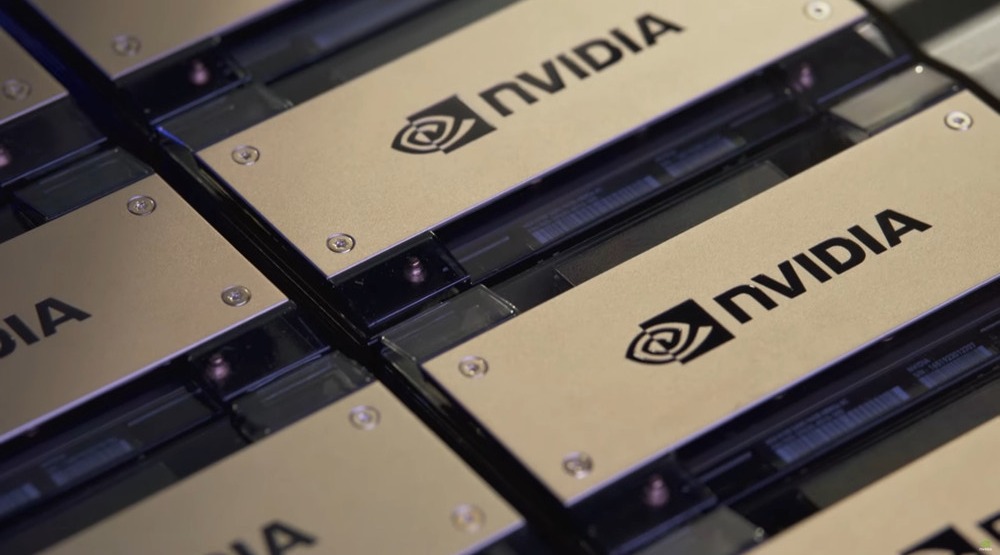
Spectrum-X Phonics switches. He also said Nvidia is working with TSMC on six
new chips, including a CPU, a GPU, and NVLink parts used in switch production,
adding: “All of these chips are now in TSMC’s fabs.” That is a tidy way to say
the pipeline is real, and it is already running through Hsinchu.
Translation: Nvidia is not just thanking TSMC for the past year’s heroics.
It is staking its near future on them too.
Meanwhile in China: The H20 Gets the Side-Eye
Even as Huang made nice in Taipei, the China story kept intruding.
Nvidia won U.S. approval to resume H20, their China-targeting artificial intelligence
(AI) chip, sales to China, but Beijing
has raised security concerns about the chip. Huang pushed back, saying
Nvidia has been clear the H20
has no backdoor access. The timing could not be more awkward. If China does
not trust the watered-down chip that was built to fit U.S. rules, the product
is stuck between two governments with very different risk models.
According
to reports, Nvidia told some suppliers to suspend work on the H20 after
Chinese authorities urged firms to stop buying the part. If true, that is not a
gentle tap on the brakes. It is the tech equivalent of pulling the car over to
check the engine light.
Washington Calls: A New China Chip on the Table?
The plan B is already in motion. Huang said Nvidia
is in talks with the U.S. government about a new chip specifically for China.
The logic is obvious. If H20 is trapped in a political crossfire, design
something that clears Washington’s thresholds without tripping Beijing’s
alarms. Huang also argued that shipping H20 to China was beneficial for both
Beijing and Washington and not a security threat, a point that speaks to the
larger Nvidia thesis that commercial AI compute should not be treated as a
Trojan horse.
There is a lesson here about how Nvidia manages geopolitical risk. It
is not just building new silicon. It is stress-testing regulatory paths in
parallel so the business does not crater every time a minister on either side
of the Pacific changes their mind.
Why TSMC Is It
You do not fly to Taipei for a photo op. You fly there because the
factory roadmap is the business. Nvidia’s current mainstream AI chips are
reliant on TMSC’s advanced processes, as will the next platform, Rubin on the
3-nanometer production cycle, will be. The message of this visit is that
Nvidia’s future cadence lives where TSMC’s reticle maps live. Huang’s “one of
the greatest companies” line might sound grand, but it doubles as a reminder
that there is no plan B at this scale.
Huang even squeezed in a note about Nvidia’s Taiwan footprint. The
company is still working with Taipei City on land for a planned “Nvidia
Constellation” headquarters. That is another signal that the production and
engineering center of gravity is not shifting anytime soon.
What to Watch
First, whether the reported H20 pause hardens into a formal stop. If
suppliers keep the lines quiet, channel partners will move on, and China AI
buyers will shift procurement to whatever passes regulatory muster. Second,
whether Nvidia’s talks with Washington produce a new China-bound model quickly
enough to matter. Third, how fast Rubin ramps on TSMC’s 3-nanometer line. That
last one is the clean story amid the noise. If Rubin shows up on time and in
volume, Nvidia’s top line will be insulated even if the China product mix keeps
changing.
In the end, the trip said it all. Thank the foundry. Ship the roadmap.
Argue with two governments at once. Then get back on the plane.
For more stories of tech around the edges of finance and innovation,
visit our Trending pages.
Nvidia’s Jensen Huang flies in to Taiwan to thank TSMC, line up
next-gen parts, and juggle China H20 AI chip headaches.
A Thank-You Tour with a To-Do List
Jensen Huang landed in Taipei and promptly headed for Taiwan
Semiconductor Manufacturing Co. (TSMC).
The reason sounded simple enough. He came to “thank all of the people for
working hard for me,” and to talk about what is coming next. Huang called
TSMC “one of the greatest companies in the history of humanity,” which, given
Nvidia’s current market cap and backlog, reads like equal parts praise and
survival instinct.
Jensen Huang, CEO of Nvidia (Nvidia).
Huang told reporters he would meet top TSMC executives to discuss
Nvidia’s latest virtual-reality-related chips and new devices such as
Spectrum-X Phonics switches. He also said Nvidia is working with TSMC on six
new chips, including a CPU, a GPU, and NVLink parts used in switch production,
adding: “All of these chips are now in TSMC’s fabs.” That is a tidy way to say
the pipeline is real, and it is already running through Hsinchu.
Translation: Nvidia is not just thanking TSMC for the past year’s heroics.
It is staking its near future on them too.
Meanwhile in China: The H20 Gets the Side-Eye
Even as Huang made nice in Taipei, the China story kept intruding.
Nvidia won U.S. approval to resume H20, their China-targeting artificial intelligence
(AI) chip, sales to China, but Beijing
has raised security concerns about the chip. Huang pushed back, saying
Nvidia has been clear the H20
has no backdoor access. The timing could not be more awkward. If China does
not trust the watered-down chip that was built to fit U.S. rules, the product
is stuck between two governments with very different risk models.
According
to reports, Nvidia told some suppliers to suspend work on the H20 after
Chinese authorities urged firms to stop buying the part. If true, that is not a
gentle tap on the brakes. It is the tech equivalent of pulling the car over to
check the engine light.
Washington Calls: A New China Chip on the Table?
The plan B is already in motion. Huang said Nvidia
is in talks with the U.S. government about a new chip specifically for China.
The logic is obvious. If H20 is trapped in a political crossfire, design
something that clears Washington’s thresholds without tripping Beijing’s
alarms. Huang also argued that shipping H20 to China was beneficial for both
Beijing and Washington and not a security threat, a point that speaks to the
larger Nvidia thesis that commercial AI compute should not be treated as a
Trojan horse.
There is a lesson here about how Nvidia manages geopolitical risk. It
is not just building new silicon. It is stress-testing regulatory paths in
parallel so the business does not crater every time a minister on either side
of the Pacific changes their mind.
Why TSMC Is It
You do not fly to Taipei for a photo op. You fly there because the
factory roadmap is the business. Nvidia’s current mainstream AI chips are
reliant on TMSC’s advanced processes, as will the next platform, Rubin on the
3-nanometer production cycle, will be. The message of this visit is that
Nvidia’s future cadence lives where TSMC’s reticle maps live. Huang’s “one of
the greatest companies” line might sound grand, but it doubles as a reminder
that there is no plan B at this scale.
Huang even squeezed in a note about Nvidia’s Taiwan footprint. The
company is still working with Taipei City on land for a planned “Nvidia
Constellation” headquarters. That is another signal that the production and
engineering center of gravity is not shifting anytime soon.
What to Watch
First, whether the reported H20 pause hardens into a formal stop. If
suppliers keep the lines quiet, channel partners will move on, and China AI
buyers will shift procurement to whatever passes regulatory muster. Second,
whether Nvidia’s talks with Washington produce a new China-bound model quickly
enough to matter. Third, how fast Rubin ramps on TSMC’s 3-nanometer line. That
last one is the clean story amid the noise. If Rubin shows up on time and in
volume, Nvidia’s top line will be insulated even if the China product mix keeps
changing.
In the end, the trip said it all. Thank the foundry. Ship the roadmap.
Argue with two governments at once. Then get back on the plane.
For more stories of tech around the edges of finance and innovation,
visit our Trending pages.
Louis Parks has lived and worked in and around the Middle East for much of his professional career. He writes about the meeting of the tech and finance worlds.
In this video, we review @HolaPrimeMarketsOfficial, a multi-asset forex and CFDs broker offering different account types, trading platforms, and flexible trading conditions.
We cover the broker’s overall offering, including account options, trading environment, platforms like MT4 and MT5, and additional services such as managed accounts and fast withdrawals.
Watch the full video to see if Hola Prime Markets fits your trading needs.
📣 Stay up to date with the latest in finance and trading. Follow Finance Magnates for industry news, insights, and global event coverage.
Connect with us:
🔗 LinkedIn: /financemagnates
👍 Facebook: /financemagnates
📸 Instagram: https://www.instagram.com/financemagnates
🐦 X: https://x.com/financemagnates
🎥 TikTok: https://www.tiktok.com/tag/financemagnates
▶️ YouTube: /@financemagnates_official
#HolaPrime #ForexBroker #CFDTrading #FinanceMagnates #Trading #Forex #BrokerReview
In this video, we review @HolaPrimeMarketsOfficial, a multi-asset forex and CFDs broker offering different account types, trading platforms, and flexible trading conditions.
We cover the broker’s overall offering, including account options, trading environment, platforms like MT4 and MT5, and additional services such as managed accounts and fast withdrawals.
Watch the full video to see if Hola Prime Markets fits your trading needs.
📣 Stay up to date with the latest in finance and trading. Follow Finance Magnates for industry news, insights, and global event coverage.
Connect with us:
🔗 LinkedIn: /financemagnates
👍 Facebook: /financemagnates
📸 Instagram: https://www.instagram.com/financemagnates
🐦 X: https://x.com/financemagnates
🎥 TikTok: https://www.tiktok.com/tag/financemagnates
▶️ YouTube: /@financemagnates_official
#HolaPrime #ForexBroker #CFDTrading #FinanceMagnates #Trading #Forex #BrokerReview
Hola Prime Review: What You Need to Know | Full Breakdown by Finance Magnates
Hola Prime Review: What You Need to Know | Full Breakdown by Finance Magnates
In this video, we review @HolaPrime_Global, a proprietary trading firm offering evaluation programs and performance-based payouts in simulated market environments.
We cover how the challenge model works, including account types, profit splits (up to 95%), trading rules, and what it takes to reach a funded account. You’ll also learn about available platforms like MT4, MT5, cTrader, and more, along with insights into payouts, support, and trading conditions.
Watch the full video to see if Hola Prime fits your trading style.
📣 Stay up to date with the latest in finance and trading. Follow Finance Magnates for industry news, insights, and global event coverage.
Connect with us:
🔗 LinkedIn: /financemagnates
👍 Facebook: /financemagnates
📸 Instagram: https://www.instagram.com/financemagnates
🐦 X: https://x.com/financemagnates
🎥 TikTok: https://www.tiktok.com/tag/financemagnates
▶️ YouTube: /@financemagnates_official
#HolaPrime #PropFirm #Trading #FinanceMagnates #Forex #FuturesTrading #TradingReview #PropFirmReview
In this video, we review @HolaPrime_Global, a proprietary trading firm offering evaluation programs and performance-based payouts in simulated market environments.
We cover how the challenge model works, including account types, profit splits (up to 95%), trading rules, and what it takes to reach a funded account. You’ll also learn about available platforms like MT4, MT5, cTrader, and more, along with insights into payouts, support, and trading conditions.
Watch the full video to see if Hola Prime fits your trading style.
📣 Stay up to date with the latest in finance and trading. Follow Finance Magnates for industry news, insights, and global event coverage.
Connect with us:
🔗 LinkedIn: /financemagnates
👍 Facebook: /financemagnates
📸 Instagram: https://www.instagram.com/financemagnates
🐦 X: https://x.com/financemagnates
🎥 TikTok: https://www.tiktok.com/tag/financemagnates
▶️ YouTube: /@financemagnates_official
#HolaPrime #PropFirm #Trading #FinanceMagnates #Forex #FuturesTrading #TradingReview #PropFirmReview
Axi Winner Spotlight 🏆 | Global Most Innovative Broker 2025 #Innovation #Trading #Fintech #Broker
Axi Winner Spotlight 🏆 | Global Most Innovative Broker 2025 #Innovation #Trading #Fintech #Broker
Axi takes the spotlight at the Finance Magnates Awards, winning Global Most Innovative Broker 2025.
Olivia Xenofontos and Ivanna Openko share how the team will feel: proud, motivated, and ready to keep delivering.
They also describe the night as well-organized, focused, and enjoyable for all.
👉 Be part of FM Awards 2026.
Axi takes the spotlight at the Finance Magnates Awards, winning Global Most Innovative Broker 2025.
Olivia Xenofontos and Ivanna Openko share how the team will feel: proud, motivated, and ready to keep delivering.
They also describe the night as well-organized, focused, and enjoyable for all.
👉 Be part of FM Awards 2026.
Recognition that matters.
Built on transparency.
Driven by the industry.
The Finance Magnates Awards 2026.
Nominations are now open.
🔗 https://awards.financemagnates.com/?utm_source=SM&utm_medium=social&utm_campaign=recognition-matters
Recognition that matters.
Built on transparency.
Driven by the industry.
The Finance Magnates Awards 2026.
Nominations are now open.
🔗 https://awards.financemagnates.com/?utm_source=SM&utm_medium=social&utm_campaign=recognition-matters
Tickmill Winner Spotlight | Broker of the Year 2025 (LATAM) 🏆 | Finance Magnates Awards #Trading
Tickmill Winner Spotlight | Broker of the Year 2025 (LATAM) 🏆 | Finance Magnates Awards #Trading
What helped Tickmill stand out this year?
In this Winner Spotlight, Johnny Khalil, Executive Director at Tickmill Europe, shares how listening closely to clients and delivering strong trading conditions made the difference.
A big thank you to the community whose support continues to drive progress every day.
👉 Think your brand has what it takes? Nominate for the 2026 Finance Magnates Awards: https://awards.financemagnates.com/#nominate
What helped Tickmill stand out this year?
In this Winner Spotlight, Johnny Khalil, Executive Director at Tickmill Europe, shares how listening closely to clients and delivering strong trading conditions made the difference.
A big thank you to the community whose support continues to drive progress every day.
👉 Think your brand has what it takes? Nominate for the 2026 Finance Magnates Awards: https://awards.financemagnates.com/#nominate