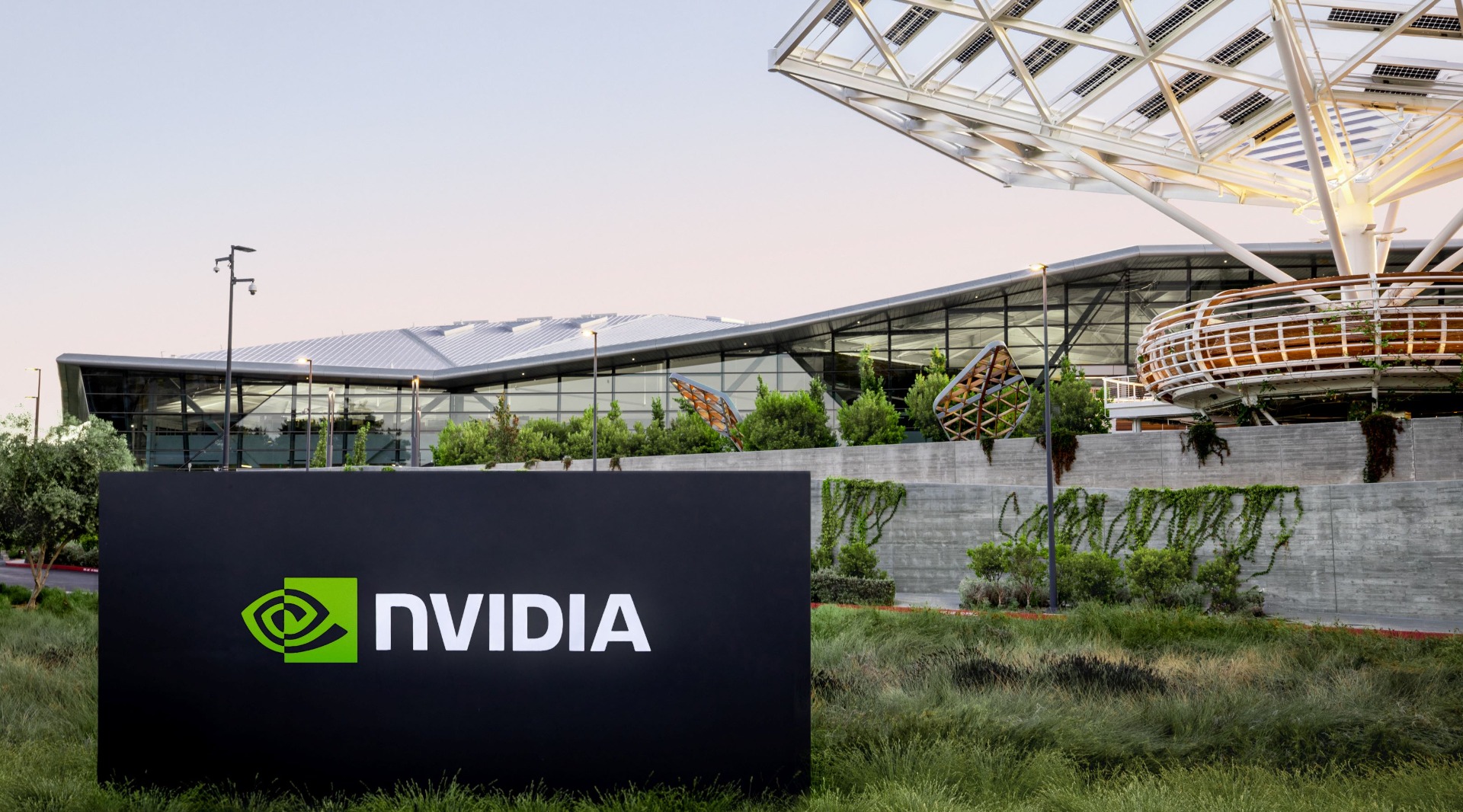
Nvidia expects a $5.5 billion bill due to unsold Nvidia H20 chips bound for China.
The NVDA stock outlook took a hit amid rising U.S.-China chip tensions.
Asian markets and tech futures slid after Nvidia’s bombshell.
NVIDIA stock price goes up after earnings release. New predictions targets $185 per share
Nvidia faces a $5.5 billion hit from Trump’s tariffs, casting a shadow over its
Nvidia H20 rollout in China and spooking the global tech market.
Nvidia’s
$5.5 Billion Hit on H20 AI Chips
Nvidia
just gave Wall Street a rude awakening, announcing it expects to swallow a $5.5
billion charge—blaming the cost squarely on Trump’s enduring tariffs on Chinese
tech. That’s right, NVDA investors: your favorite Artificial Intelligence (AI) juggernaut just got caught
with a warehouse full of high-end semiconductors and nowhere to ship them.
The
cause? Inventory intended for China—particularly the Nvidia H20 chips that were
hyped as the company's bespoke workaround to U.S. export restrictions. The
chips were designed to offer just enough AI capabilities to Chinese companies without
falling foul of U.S. restrictions on AI-related tech being sold to China. Now,
those same chips are stuck in silicon purgatory, and Nvidia’s balance sheet is
taking the hit.
Nvidia
H20: A Custom Chip Meets a Custom Mess
The
Nvidia H20 wasn’t just another GPU—it was a tailored response to Washington's
increasingly complex export regulations. The chip was built to toe the line
between performance and compliance, offering China’s tech giants like Alibaba
and ByteDance
just enough AI power to stay interested without raising U.S. national security
eyebrows.
Unfortunately,
tariffs—many of which are legacy Trump policies reinforced under Biden—mean
even these so-called “export-friendly” chips are stuck in limbo. According to Reuters,
the company had expected the H20 to fuel growth in China this year, but with
customs complications mounting, the chips are essentially glorified
paperweights.
According
to a statement
yesterday from the U.S. Commerce Department, "The
Commerce Department is committed to acting on the President's directive to
safeguard our national and economic security." The company’s shares slid
6% yesterday evening. Nvidia’s rival AMD is also suffering from the fallout, shares
were down 7% following the announcement.
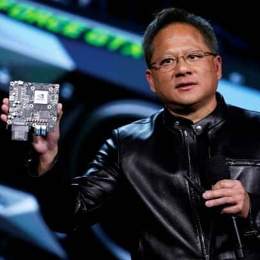
Nvidia CEO Jensen Huang (Reuters).
Just a month ago, Nvidia CEO Jensen Huang seemed to be
unconcerned about tariffs, when he said
to CNBC that, “We’ve got a lot of AI to build ... AI is the foundation, the
operating system of every industry going forward. ... We are enthusiastic about
building in America. Partners are working with us to bring manufacturing here.
In the near term, the impact of tariffs won’t be meaningful.” The CEO was
upbeat and skirted away from the tariff issue during the interview. Times have
changed.
For
NVDA shareholders, this isn’t just a supply chain hiccup—it’s a gut punch.
Market
Panic? When Nvidia Sneezes, Asia Catches a Cold
Nvidia’s
announcement set off a ripple of dread across global markets. Asian stocks and
U.S. futures dipped, with tech investors interpreting the news as a sign that
the U.S.-China chip war is far from over.
Asian
markets stumbled on Wednesday, ending a recent winning streak. The broader
Asia-Pacific index outside Japan declined by 0.9%, while Japan’s Nikkei dipped
0.5%. In China, blue-chip stocks edged down 0.6%, and Hong Kong’s Hang Seng
Index dropped 1.6%. Bucking the trend, Chinese semiconductor firms saw gains,
with Hua Hong Semiconductor climbing 4% and SMIC rising 1%.
For
context: Nvidia is the poster child of AI-fueled optimism. So when NVDA says
it’s down $5.5 billion, the entire sector listens—and shudders. Companies from
TSMC to Samsung could feel the fallout if chip exports remain a political
football.
And
let’s be real—if Nvidia H20, a chip meticulously designed to comply with U.S.
rules, can’t make it to its destination, what hope do other players have?
Trump’s
Trade Legacy Still Haunts Silicon Valley
Credit
where it’s due—this silicon saga starts with Donald Trump. His administration
slapped tariffs on a range of Chinese tech goods in the name of protecting
American interests. Those tariffs are now like that one gym membership you
forgot to cancel—still costing you years later.
Biden’s
White House kept the tariffs in place and even
doubled down in some cases, aiming to cripple China’s access to advanced AI
chips. But now, companies like Nvidia are collateral damage. Even when they
innovate, pivot, and build “compliant” hardware, they still get whacked with a
multi-billion-dollar tab.
The
kicker? Trump is likely thrilled. For him, this is proof the tariffs are
“working.” For NVDA? Not so much. Much of Trump's base will no doubt be over the move. Certainly, Steven Bannon (remember him) and his viewers seem happy.
Where
Does Nvidia Go from Here?
Short-term,
Nvidia says it’s re-evaluating its inventory strategy. Translation: time to
find new buyers for the Nvidia H20 or eat more losses. China, once seen as a
growth engine, is quickly becoming a no-go zone.
NVDA
holders are hoping this is a one-off. If it is, it might just be a temporary
scar on an
otherwise stellar growth story. But if AI chip exports become a no-fly zone
for the foreseeable future, then Nvidia—and by extension, the whole tech
sector—may be entering a far more volatile phase.
In
the meantime, the NVDA stock chart is a rollercoaster, and Wall Street is
clutching its pearls.
For
more news around the edges of finance, visit our Trending and Fintech sections.
Nvidia faces a $5.5 billion hit from Trump’s tariffs, casting a shadow over its
Nvidia H20 rollout in China and spooking the global tech market.
Nvidia’s
$5.5 Billion Hit on H20 AI Chips
Nvidia
just gave Wall Street a rude awakening, announcing it expects to swallow a $5.5
billion charge—blaming the cost squarely on Trump’s enduring tariffs on Chinese
tech. That’s right, NVDA investors: your favorite Artificial Intelligence (AI) juggernaut just got caught
with a warehouse full of high-end semiconductors and nowhere to ship them.
The
cause? Inventory intended for China—particularly the Nvidia H20 chips that were
hyped as the company's bespoke workaround to U.S. export restrictions. The
chips were designed to offer just enough AI capabilities to Chinese companies without
falling foul of U.S. restrictions on AI-related tech being sold to China. Now,
those same chips are stuck in silicon purgatory, and Nvidia’s balance sheet is
taking the hit.
Nvidia
H20: A Custom Chip Meets a Custom Mess
The
Nvidia H20 wasn’t just another GPU—it was a tailored response to Washington's
increasingly complex export regulations. The chip was built to toe the line
between performance and compliance, offering China’s tech giants like Alibaba
and ByteDance
just enough AI power to stay interested without raising U.S. national security
eyebrows.
Unfortunately,
tariffs—many of which are legacy Trump policies reinforced under Biden—mean
even these so-called “export-friendly” chips are stuck in limbo. According to Reuters,
the company had expected the H20 to fuel growth in China this year, but with
customs complications mounting, the chips are essentially glorified
paperweights.
According
to a statement
yesterday from the U.S. Commerce Department, "The
Commerce Department is committed to acting on the President's directive to
safeguard our national and economic security." The company’s shares slid
6% yesterday evening. Nvidia’s rival AMD is also suffering from the fallout, shares
were down 7% following the announcement.
Nvidia CEO Jensen Huang (Reuters).
Just a month ago, Nvidia CEO Jensen Huang seemed to be
unconcerned about tariffs, when he said
to CNBC that, “We’ve got a lot of AI to build ... AI is the foundation, the
operating system of every industry going forward. ... We are enthusiastic about
building in America. Partners are working with us to bring manufacturing here.
In the near term, the impact of tariffs won’t be meaningful.” The CEO was
upbeat and skirted away from the tariff issue during the interview. Times have
changed.
For
NVDA shareholders, this isn’t just a supply chain hiccup—it’s a gut punch.
Market
Panic? When Nvidia Sneezes, Asia Catches a Cold
Nvidia’s
announcement set off a ripple of dread across global markets. Asian stocks and
U.S. futures dipped, with tech investors interpreting the news as a sign that
the U.S.-China chip war is far from over.
Asian
markets stumbled on Wednesday, ending a recent winning streak. The broader
Asia-Pacific index outside Japan declined by 0.9%, while Japan’s Nikkei dipped
0.5%. In China, blue-chip stocks edged down 0.6%, and Hong Kong’s Hang Seng
Index dropped 1.6%. Bucking the trend, Chinese semiconductor firms saw gains,
with Hua Hong Semiconductor climbing 4% and SMIC rising 1%.
For
context: Nvidia is the poster child of AI-fueled optimism. So when NVDA says
it’s down $5.5 billion, the entire sector listens—and shudders. Companies from
TSMC to Samsung could feel the fallout if chip exports remain a political
football.
And
let’s be real—if Nvidia H20, a chip meticulously designed to comply with U.S.
rules, can’t make it to its destination, what hope do other players have?
Trump’s
Trade Legacy Still Haunts Silicon Valley
Credit
where it’s due—this silicon saga starts with Donald Trump. His administration
slapped tariffs on a range of Chinese tech goods in the name of protecting
American interests. Those tariffs are now like that one gym membership you
forgot to cancel—still costing you years later.
Biden’s
White House kept the tariffs in place and even
doubled down in some cases, aiming to cripple China’s access to advanced AI
chips. But now, companies like Nvidia are collateral damage. Even when they
innovate, pivot, and build “compliant” hardware, they still get whacked with a
multi-billion-dollar tab.
The
kicker? Trump is likely thrilled. For him, this is proof the tariffs are
“working.” For NVDA? Not so much. Much of Trump's base will no doubt be over the move. Certainly, Steven Bannon (remember him) and his viewers seem happy.
Where
Does Nvidia Go from Here?
Short-term,
Nvidia says it’s re-evaluating its inventory strategy. Translation: time to
find new buyers for the Nvidia H20 or eat more losses. China, once seen as a
growth engine, is quickly becoming a no-go zone.
NVDA
holders are hoping this is a one-off. If it is, it might just be a temporary
scar on an
otherwise stellar growth story. But if AI chip exports become a no-fly zone
for the foreseeable future, then Nvidia—and by extension, the whole tech
sector—may be entering a far more volatile phase.
In
the meantime, the NVDA stock chart is a rollercoaster, and Wall Street is
clutching its pearls.
For
more news around the edges of finance, visit our Trending and Fintech sections.
Louis Parks has lived and worked in and around the Middle East for much of his professional career. He writes about the meeting of the tech and finance worlds.
Inside the Prediction Markets: $1.6B Institutional Inflow Meets a Federal Crackdown
FP Markets Winner Spotlight 🏆 | Global Broker of the Year 2025 #Trading #Broker #Innovation #Shorts
FP Markets Winner Spotlight 🏆 | Global Broker of the Year 2025 #Trading #Broker #Innovation #Shorts
FP Markets takes the spotlight as Global Broker of the Year 2025 at the Finance Magnates Awards.
Martin Stoilov, Head of Client Experience, shares that trust, innovation, and people played a key role in the company’s success, supported by a strong foundation of integrity and client-centricity.
Following this milestone, FP Markets continues to focus on growth, technology investment, and its core values of transparency and excellence.
👉 Be part of FM Awards 2026: https://awards.financemagnates.com/#nominate
FP Markets takes the spotlight as Global Broker of the Year 2025 at the Finance Magnates Awards.
Martin Stoilov, Head of Client Experience, shares that trust, innovation, and people played a key role in the company’s success, supported by a strong foundation of integrity and client-centricity.
Following this milestone, FP Markets continues to focus on growth, technology investment, and its core values of transparency and excellence.
👉 Be part of FM Awards 2026: https://awards.financemagnates.com/#nominate
In this video, we review @HolaPrimeMarketsOfficial, a multi-asset forex and CFDs broker offering different account types, trading platforms, and flexible trading conditions.
We cover the broker’s overall offering, including account options, trading environment, platforms like MT4 and MT5, and additional services such as managed accounts and fast withdrawals.
Watch the full video to see if Hola Prime Markets fits your trading needs.
📣 Stay up to date with the latest in finance and trading. Follow Finance Magnates for industry news, insights, and global event coverage.
Connect with us:
🔗 LinkedIn: /financemagnates
👍 Facebook: /financemagnates
📸 Instagram: https://www.instagram.com/financemagnates
🐦 X: https://x.com/financemagnates
🎥 TikTok: https://www.tiktok.com/tag/financemagnates
▶️ YouTube: /@financemagnates_official
#HolaPrime #ForexBroker #CFDTrading #FinanceMagnates #Trading #Forex #BrokerReview
In this video, we review @HolaPrimeMarketsOfficial, a multi-asset forex and CFDs broker offering different account types, trading platforms, and flexible trading conditions.
We cover the broker’s overall offering, including account options, trading environment, platforms like MT4 and MT5, and additional services such as managed accounts and fast withdrawals.
Watch the full video to see if Hola Prime Markets fits your trading needs.
📣 Stay up to date with the latest in finance and trading. Follow Finance Magnates for industry news, insights, and global event coverage.
Connect with us:
🔗 LinkedIn: /financemagnates
👍 Facebook: /financemagnates
📸 Instagram: https://www.instagram.com/financemagnates
🐦 X: https://x.com/financemagnates
🎥 TikTok: https://www.tiktok.com/tag/financemagnates
▶️ YouTube: /@financemagnates_official
#HolaPrime #ForexBroker #CFDTrading #FinanceMagnates #Trading #Forex #BrokerReview
Hola Prime Review: What You Need to Know | Full Breakdown by Finance Magnates
Hola Prime Review: What You Need to Know | Full Breakdown by Finance Magnates
In this video, we review @HolaPrime_Global, a proprietary trading firm offering evaluation programs and performance-based payouts in simulated market environments.
We cover how the challenge model works, including account types, profit splits (up to 95%), trading rules, and what it takes to reach a funded account. You’ll also learn about available platforms like MT4, MT5, cTrader, and more, along with insights into payouts, support, and trading conditions.
Watch the full video to see if Hola Prime fits your trading style.
📣 Stay up to date with the latest in finance and trading. Follow Finance Magnates for industry news, insights, and global event coverage.
Connect with us:
🔗 LinkedIn: /financemagnates
👍 Facebook: /financemagnates
📸 Instagram: https://www.instagram.com/financemagnates
🐦 X: https://x.com/financemagnates
🎥 TikTok: https://www.tiktok.com/tag/financemagnates
▶️ YouTube: /@financemagnates_official
#HolaPrime #PropFirm #Trading #FinanceMagnates #Forex #FuturesTrading #TradingReview #PropFirmReview
In this video, we review @HolaPrime_Global, a proprietary trading firm offering evaluation programs and performance-based payouts in simulated market environments.
We cover how the challenge model works, including account types, profit splits (up to 95%), trading rules, and what it takes to reach a funded account. You’ll also learn about available platforms like MT4, MT5, cTrader, and more, along with insights into payouts, support, and trading conditions.
Watch the full video to see if Hola Prime fits your trading style.
📣 Stay up to date with the latest in finance and trading. Follow Finance Magnates for industry news, insights, and global event coverage.
Connect with us:
🔗 LinkedIn: /financemagnates
👍 Facebook: /financemagnates
📸 Instagram: https://www.instagram.com/financemagnates
🐦 X: https://x.com/financemagnates
🎥 TikTok: https://www.tiktok.com/tag/financemagnates
▶️ YouTube: /@financemagnates_official
#HolaPrime #PropFirm #Trading #FinanceMagnates #Forex #FuturesTrading #TradingReview #PropFirmReview
Axi Winner Spotlight 🏆 | Global Most Innovative Broker 2025 #Innovation #Trading #Fintech #Broker
Axi Winner Spotlight 🏆 | Global Most Innovative Broker 2025 #Innovation #Trading #Fintech #Broker
Axi takes the spotlight at the Finance Magnates Awards, winning Global Most Innovative Broker 2025.
Olivia Xenofontos and Ivanna Openko share how the team will feel: proud, motivated, and ready to keep delivering.
They also describe the night as well-organized, focused, and enjoyable for all.
👉 Be part of FM Awards 2026.
Axi takes the spotlight at the Finance Magnates Awards, winning Global Most Innovative Broker 2025.
Olivia Xenofontos and Ivanna Openko share how the team will feel: proud, motivated, and ready to keep delivering.
They also describe the night as well-organized, focused, and enjoyable for all.
👉 Be part of FM Awards 2026.
Recognition that matters.
Built on transparency.
Driven by the industry.
The Finance Magnates Awards 2026.
Nominations are now open.
🔗 https://awards.financemagnates.com/?utm_source=SM&utm_medium=social&utm_campaign=recognition-matters
Recognition that matters.
Built on transparency.
Driven by the industry.
The Finance Magnates Awards 2026.
Nominations are now open.
🔗 https://awards.financemagnates.com/?utm_source=SM&utm_medium=social&utm_campaign=recognition-matters