Nvidia has filed to resume Chinese H20 AI chip exports after U.S. assurances on approvals.
The pause would cost Nvidia a potential $8 billion hit in Q2, the company claimed.
A geopolitical play and a huge win for Nvidia—but no military-grade chips yet.
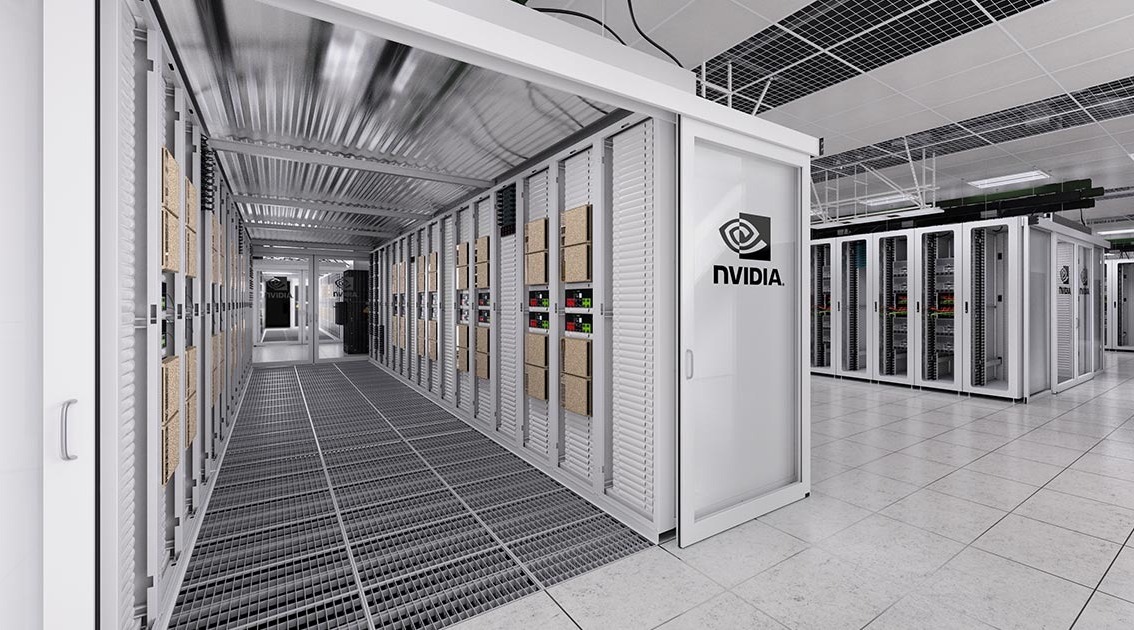
Nvidia data centers and chips are powering the AI industry (Nvidia).
Nvidia gets U.S. approval to ship H20 AI chips to China, reversing export
curbs—huge for AI, stocks, and geopolitics.
A Sudden Reboot in the Chip Wars
Back in April, the U.S. government slammed the brakes on Nvidia’s H20 artificial intelligence (AI) chip exports to China. The fallout wasn’t subtle. Nvidia failed
to meet expectations by about $1.2 billion in Q1, warned
of an $8 billion Q2 hit, and took jaw-dropping $4.5
billion inventory hit. It looked like the AI chip party—at least in
China—was over.
The H20 is part of Nvidia’s China-specific lineup—a slightly “nerfed”
version of its H100 GPU, designed to stay within the boundaries of U.S. export
controls. While it doesn’t have the raw muscle of Nvidia’s flagship chips, it’s
still a formidable piece of hardware, purpose-built for enterprise AI, data
centers, and cloud computing. Think of it as a clever compromise: powerful
enough to meet Chinese demand, but not scary enough to trip Washington’s
security alarms.
With the H20 back in play, Nvidia isn’t just re-entering the China
market—it’s doubling down on a strategy that straddles profit and policy.
Wall Street Loves a Good Plot Twist
Predictably, Nvidia’s share price soared. The company is hovering
around a $4 trillion
market cap, and this China green light adds another growth chapter to
the AI gold rush. For suppliers like Samsung, which
provides memory for the H20 and other Nvidia chips, the news was equally
bullish. Analysts expect surging demand for HBM3 and GDDR7 memory—the key pieces
of tech that enable the latest chips.
Nvidia's market cap at the time of writing (screenshot).
Nvidia’s stock story has been one of dominance, innovation, and just
enough political maneuvering to stay ahead of regulation. With China back in
the revenue column, the company may claw back billions that looked lost just
weeks ago.
The Tightrope Between Politics and Profit
Of course, this isn’t just about hardware. It’s a diplomatic balancing
act with Jensen Huang as its acrobatic lead. Nvidia’s CEO has been walking a
tightrope—meeting with American lawmakers one day and flying to Beijing the
next. His pitch? Letting Nvidia sell to China isn’t a national security
threat—it’s an economic necessity for the U.S. to remain AI-relevant. Indeed,
he’s even telling the U.S. to onshore
much of its tech manufacturing.
Washington doesn’t exactly agree, especially when it comes to “dual-use” concerns—tech that
could power both industry and military. But Huang insists that the H20, like
the newer RTX Pro variant just launched, is designed for civilian applications
like logistics, industrial automation, and cloud services. That might be true
for now—but long-term, the game is bigger than any one chip.
China’s Not Just Waiting Around
While Nvidia’s licenses get rubber-stamped, China isn’t sitting idle. Beijing
is throwing massive resources at developing homegrown AI chip alternatives.
Nvidia may be back in the market today, but the long-term play for China is
tech independence. That means Nvidia’s position—though strong—might not be as
permanent as investors would like.
This return to the Chinese market is undeniably a big win, but it may
also be the start of a much fiercer race, one where geopolitical tensions and
technological supremacy are fully intertwined.
The Takeaway
Nvidia’s resumption of H20 chip sales to China is more than a licensing
update—it’s a turning point. The company is poised to recover billions in lost
revenue, with financial upside extending to memory suppliers like Samsung and
other players in the AI chip ecosystem.
But this is also a story of timing: Nvidia’s presence in China depends
on a fragile balance between regulatory permissions and fast-moving
competition. The U.S. wants to keep cutting-edge AI out of Beijing’s hands,
while Nvidia wants to maintain its global dominance. For now, the two have
found a workaround. But the tension between profit and policy isn’t going
away—it’s just entering a new chapter.
For more stories around the edge of finance and tech, visit our Trending section.
Nvidia gets U.S. approval to ship H20 AI chips to China, reversing export
curbs—huge for AI, stocks, and geopolitics.
A Sudden Reboot in the Chip Wars
Back in April, the U.S. government slammed the brakes on Nvidia’s H20 artificial intelligence (AI) chip exports to China. The fallout wasn’t subtle. Nvidia failed
to meet expectations by about $1.2 billion in Q1, warned
of an $8 billion Q2 hit, and took jaw-dropping $4.5
billion inventory hit. It looked like the AI chip party—at least in
China—was over.
The H20 is part of Nvidia’s China-specific lineup—a slightly “nerfed”
version of its H100 GPU, designed to stay within the boundaries of U.S. export
controls. While it doesn’t have the raw muscle of Nvidia’s flagship chips, it’s
still a formidable piece of hardware, purpose-built for enterprise AI, data
centers, and cloud computing. Think of it as a clever compromise: powerful
enough to meet Chinese demand, but not scary enough to trip Washington’s
security alarms.
With the H20 back in play, Nvidia isn’t just re-entering the China
market—it’s doubling down on a strategy that straddles profit and policy.
Wall Street Loves a Good Plot Twist
Predictably, Nvidia’s share price soared. The company is hovering
around a $4 trillion
market cap, and this China green light adds another growth chapter to
the AI gold rush. For suppliers like Samsung, which
provides memory for the H20 and other Nvidia chips, the news was equally
bullish. Analysts expect surging demand for HBM3 and GDDR7 memory—the key pieces
of tech that enable the latest chips.
Nvidia's market cap at the time of writing (screenshot).
Nvidia’s stock story has been one of dominance, innovation, and just
enough political maneuvering to stay ahead of regulation. With China back in
the revenue column, the company may claw back billions that looked lost just
weeks ago.
The Tightrope Between Politics and Profit
Of course, this isn’t just about hardware. It’s a diplomatic balancing
act with Jensen Huang as its acrobatic lead. Nvidia’s CEO has been walking a
tightrope—meeting with American lawmakers one day and flying to Beijing the
next. His pitch? Letting Nvidia sell to China isn’t a national security
threat—it’s an economic necessity for the U.S. to remain AI-relevant. Indeed,
he’s even telling the U.S. to onshore
much of its tech manufacturing.
Washington doesn’t exactly agree, especially when it comes to “dual-use” concerns—tech that
could power both industry and military. But Huang insists that the H20, like
the newer RTX Pro variant just launched, is designed for civilian applications
like logistics, industrial automation, and cloud services. That might be true
for now—but long-term, the game is bigger than any one chip.
China’s Not Just Waiting Around
While Nvidia’s licenses get rubber-stamped, China isn’t sitting idle. Beijing
is throwing massive resources at developing homegrown AI chip alternatives.
Nvidia may be back in the market today, but the long-term play for China is
tech independence. That means Nvidia’s position—though strong—might not be as
permanent as investors would like.
This return to the Chinese market is undeniably a big win, but it may
also be the start of a much fiercer race, one where geopolitical tensions and
technological supremacy are fully intertwined.
The Takeaway
Nvidia’s resumption of H20 chip sales to China is more than a licensing
update—it’s a turning point. The company is poised to recover billions in lost
revenue, with financial upside extending to memory suppliers like Samsung and
other players in the AI chip ecosystem.
But this is also a story of timing: Nvidia’s presence in China depends
on a fragile balance between regulatory permissions and fast-moving
competition. The U.S. wants to keep cutting-edge AI out of Beijing’s hands,
while Nvidia wants to maintain its global dominance. For now, the two have
found a workaround. But the tension between profit and policy isn’t going
away—it’s just entering a new chapter.
For more stories around the edge of finance and tech, visit our Trending section.
Louis Parks has lived and worked in and around the Middle East for much of his professional career. He writes about the meeting of the tech and finance worlds.
Apple Removes Dorsey’s Bitchat in China Citing "Social Mobilization Rules"
FP Markets Winner Spotlight 🏆 | Global Broker of the Year 2025 #Trading #Broker #Innovation #Shorts
FP Markets Winner Spotlight 🏆 | Global Broker of the Year 2025 #Trading #Broker #Innovation #Shorts
FP Markets takes the spotlight as Global Broker of the Year 2025 at the Finance Magnates Awards.
Martin Stoilov, Head of Client Experience, shares that trust, innovation, and people played a key role in the company’s success, supported by a strong foundation of integrity and client-centricity.
Following this milestone, FP Markets continues to focus on growth, technology investment, and its core values of transparency and excellence.
👉 Be part of FM Awards 2026: https://awards.financemagnates.com/#nominate
FP Markets takes the spotlight as Global Broker of the Year 2025 at the Finance Magnates Awards.
Martin Stoilov, Head of Client Experience, shares that trust, innovation, and people played a key role in the company’s success, supported by a strong foundation of integrity and client-centricity.
Following this milestone, FP Markets continues to focus on growth, technology investment, and its core values of transparency and excellence.
👉 Be part of FM Awards 2026: https://awards.financemagnates.com/#nominate
In this video, we review @HolaPrimeMarketsOfficial, a multi-asset forex and CFDs broker offering different account types, trading platforms, and flexible trading conditions.
We cover the broker’s overall offering, including account options, trading environment, platforms like MT4 and MT5, and additional services such as managed accounts and fast withdrawals.
Watch the full video to see if Hola Prime Markets fits your trading needs.
📣 Stay up to date with the latest in finance and trading. Follow Finance Magnates for industry news, insights, and global event coverage.
Connect with us:
🔗 LinkedIn: /financemagnates
👍 Facebook: /financemagnates
📸 Instagram: https://www.instagram.com/financemagnates
🐦 X: https://x.com/financemagnates
🎥 TikTok: https://www.tiktok.com/tag/financemagnates
▶️ YouTube: /@financemagnates_official
#HolaPrime #ForexBroker #CFDTrading #FinanceMagnates #Trading #Forex #BrokerReview
In this video, we review @HolaPrimeMarketsOfficial, a multi-asset forex and CFDs broker offering different account types, trading platforms, and flexible trading conditions.
We cover the broker’s overall offering, including account options, trading environment, platforms like MT4 and MT5, and additional services such as managed accounts and fast withdrawals.
Watch the full video to see if Hola Prime Markets fits your trading needs.
📣 Stay up to date with the latest in finance and trading. Follow Finance Magnates for industry news, insights, and global event coverage.
Connect with us:
🔗 LinkedIn: /financemagnates
👍 Facebook: /financemagnates
📸 Instagram: https://www.instagram.com/financemagnates
🐦 X: https://x.com/financemagnates
🎥 TikTok: https://www.tiktok.com/tag/financemagnates
▶️ YouTube: /@financemagnates_official
#HolaPrime #ForexBroker #CFDTrading #FinanceMagnates #Trading #Forex #BrokerReview
Hola Prime Review: What You Need to Know | Full Breakdown by Finance Magnates
Hola Prime Review: What You Need to Know | Full Breakdown by Finance Magnates
In this video, we review @HolaPrime_Global, a proprietary trading firm offering evaluation programs and performance-based payouts in simulated market environments.
We cover how the challenge model works, including account types, profit splits (up to 95%), trading rules, and what it takes to reach a funded account. You’ll also learn about available platforms like MT4, MT5, cTrader, and more, along with insights into payouts, support, and trading conditions.
Watch the full video to see if Hola Prime fits your trading style.
📣 Stay up to date with the latest in finance and trading. Follow Finance Magnates for industry news, insights, and global event coverage.
Connect with us:
🔗 LinkedIn: /financemagnates
👍 Facebook: /financemagnates
📸 Instagram: https://www.instagram.com/financemagnates
🐦 X: https://x.com/financemagnates
🎥 TikTok: https://www.tiktok.com/tag/financemagnates
▶️ YouTube: /@financemagnates_official
#HolaPrime #PropFirm #Trading #FinanceMagnates #Forex #FuturesTrading #TradingReview #PropFirmReview
In this video, we review @HolaPrime_Global, a proprietary trading firm offering evaluation programs and performance-based payouts in simulated market environments.
We cover how the challenge model works, including account types, profit splits (up to 95%), trading rules, and what it takes to reach a funded account. You’ll also learn about available platforms like MT4, MT5, cTrader, and more, along with insights into payouts, support, and trading conditions.
Watch the full video to see if Hola Prime fits your trading style.
📣 Stay up to date with the latest in finance and trading. Follow Finance Magnates for industry news, insights, and global event coverage.
Connect with us:
🔗 LinkedIn: /financemagnates
👍 Facebook: /financemagnates
📸 Instagram: https://www.instagram.com/financemagnates
🐦 X: https://x.com/financemagnates
🎥 TikTok: https://www.tiktok.com/tag/financemagnates
▶️ YouTube: /@financemagnates_official
#HolaPrime #PropFirm #Trading #FinanceMagnates #Forex #FuturesTrading #TradingReview #PropFirmReview
Axi Winner Spotlight 🏆 | Global Most Innovative Broker 2025 #Innovation #Trading #Fintech #Broker
Axi Winner Spotlight 🏆 | Global Most Innovative Broker 2025 #Innovation #Trading #Fintech #Broker
Axi takes the spotlight at the Finance Magnates Awards, winning Global Most Innovative Broker 2025.
Olivia Xenofontos and Ivanna Openko share how the team will feel: proud, motivated, and ready to keep delivering.
They also describe the night as well-organized, focused, and enjoyable for all.
👉 Be part of FM Awards 2026.
Axi takes the spotlight at the Finance Magnates Awards, winning Global Most Innovative Broker 2025.
Olivia Xenofontos and Ivanna Openko share how the team will feel: proud, motivated, and ready to keep delivering.
They also describe the night as well-organized, focused, and enjoyable for all.
👉 Be part of FM Awards 2026.
Recognition that matters.
Built on transparency.
Driven by the industry.
The Finance Magnates Awards 2026.
Nominations are now open.
🔗 https://awards.financemagnates.com/?utm_source=SM&utm_medium=social&utm_campaign=recognition-matters
Recognition that matters.
Built on transparency.
Driven by the industry.
The Finance Magnates Awards 2026.
Nominations are now open.
🔗 https://awards.financemagnates.com/?utm_source=SM&utm_medium=social&utm_campaign=recognition-matters