The rebound followed growing rumors that the crash was a coordinated rug pull, which the Mantra team publicly denied.
OM has gained nearly 50% in the past day, trading at $0.86 at the time of publication.
Just one day after a devastating crash wiped out
billions in value, Mantra’s OM token staged a dramatic rebound, surging nearly
50%. However, the rapid recovery has stirred fresh controversy, with industry voices
warning of risks reminiscent of the Terra/LUNA collapse in 2022.
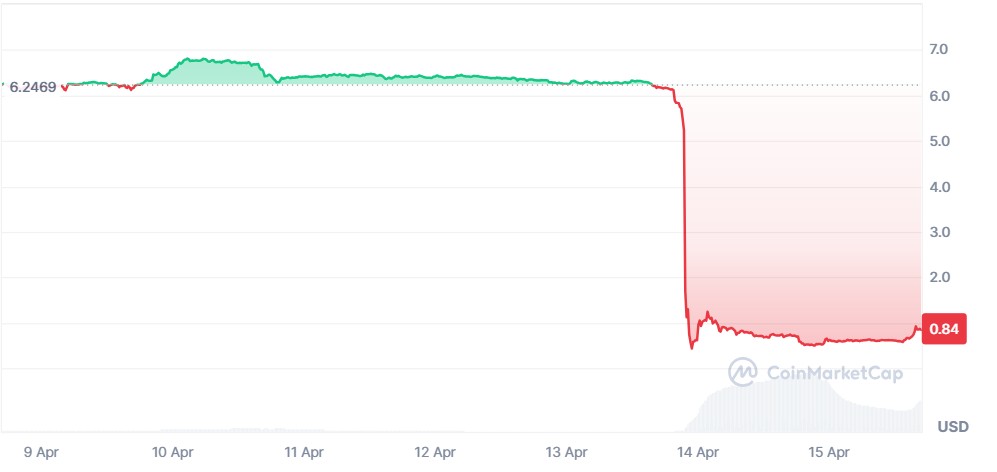
OM’s price plummeted nearly 90% over the weekend,
briefly touching $0.5 before reversing sharply to hit $1.03 on Monday. The
sudden rebound came after the Mantra team addressed growing speculation that
the crash stemmed from a coordinated rug pull.
Mounting Fears and Accusations
In response to mounting accusations, Mantra co-founder
JP Mullin issued a statement assuring investors that the project remained
operational. “We are here and not going anywhere,” Mullin wrote, sharing a
token-holding verification address and noting that the official Telegram group
was still active.
He claimed the crash resulted from “reckless forced
closures initiated by centralized exchanges” rather than any internal
wrongdoing. According to Mullin, these liquidations triggered a cascade effect
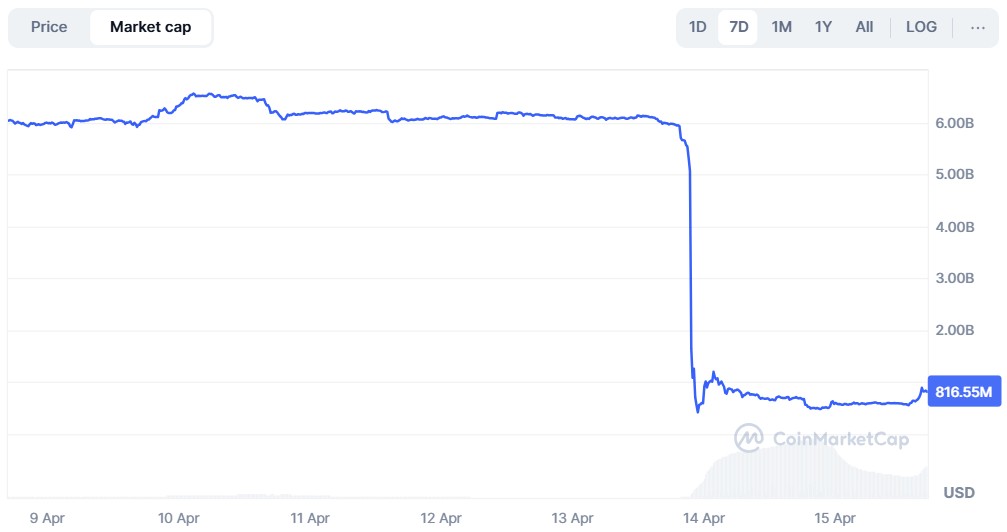
that wiped out over $5 billion in market capitalization and liquidated nearly
$76 million in futures contracts.
Despite the reassurance, critics remained skeptical.
Many online analysts flagged suspicious activity involving large OM transfers
to centralized exchanges just before the sell-off, leading to speculation that
insiders may have orchestrated the event.
Community discussions have increasingly drawn
comparisons to Terra’s LUNA, which collapsed following similar allegations of
market manipulation and structural fragility. While the price recovery may offer temporary relief to
OM holders, it has done little to resolve the deeper questions now surrounding
the project.
Mantra OM Crash wipes out billions of dollars, source: CoinMarketCap
The stunning collapse has reignited fears of insider
trading and market manipulation, as traders accuse centralized exchanges and
market makers of coordinated misconduct.
No Compensation Plan, No Clear Path Forward
On April 13, OM plunged from around $6 to below $0.5,
leaving stunned investors scrambling for answers. Mantra’s team has denied
wrongdoing, but accusations of a pump-and-dump strategy involving insiders and
exchanges continue to gain traction.
Mantra OM's market capitalization dropped from around $6 billion to $400 million
In statements to the community, Mullin argued that
“reckless forced closures” by exchanges sparked the crash. He emphasized that
liquidity on platforms like Binance allowed large holders to offload tokens
quickly, triggering a freefall that decentralized platforms might have
buffered.
Many see the lack of prior communication, combined with the suspicious transfer
activity, as evidence of either insider misconduct or severe structural
failure. As of now, Mantra has not announced any recovery or
compensation plan. OM continues to trade far below its peak, and sentiment
within the community remains grim.
Just one day after a devastating crash wiped out
billions in value, Mantra’s OM token staged a dramatic rebound, surging nearly
50%. However, the rapid recovery has stirred fresh controversy, with industry voices
warning of risks reminiscent of the Terra/LUNA collapse in 2022.
OM’s price plummeted nearly 90% over the weekend,
briefly touching $0.5 before reversing sharply to hit $1.03 on Monday. The
sudden rebound came after the Mantra team addressed growing speculation that
the crash stemmed from a coordinated rug pull.
Mounting Fears and Accusations
In response to mounting accusations, Mantra co-founder
JP Mullin issued a statement assuring investors that the project remained
operational. “We are here and not going anywhere,” Mullin wrote, sharing a
token-holding verification address and noting that the official Telegram group
was still active.
He claimed the crash resulted from “reckless forced
closures initiated by centralized exchanges” rather than any internal
wrongdoing. According to Mullin, these liquidations triggered a cascade effect
that wiped out over $5 billion in market capitalization and liquidated nearly
$76 million in futures contracts.
Despite the reassurance, critics remained skeptical.
Many online analysts flagged suspicious activity involving large OM transfers
to centralized exchanges just before the sell-off, leading to speculation that
insiders may have orchestrated the event.
Community discussions have increasingly drawn
comparisons to Terra’s LUNA, which collapsed following similar allegations of
market manipulation and structural fragility. While the price recovery may offer temporary relief to
OM holders, it has done little to resolve the deeper questions now surrounding
the project.
Mantra OM Crash wipes out billions of dollars, source: CoinMarketCap
The stunning collapse has reignited fears of insider
trading and market manipulation, as traders accuse centralized exchanges and
market makers of coordinated misconduct.
No Compensation Plan, No Clear Path Forward
On April 13, OM plunged from around $6 to below $0.5,
leaving stunned investors scrambling for answers. Mantra’s team has denied
wrongdoing, but accusations of a pump-and-dump strategy involving insiders and
exchanges continue to gain traction.
Mantra OM's market capitalization dropped from around $6 billion to $400 million
In statements to the community, Mullin argued that
“reckless forced closures” by exchanges sparked the crash. He emphasized that
liquidity on platforms like Binance allowed large holders to offload tokens
quickly, triggering a freefall that decentralized platforms might have
buffered.
Many see the lack of prior communication, combined with the suspicious transfer
activity, as evidence of either insider misconduct or severe structural
failure. As of now, Mantra has not announced any recovery or
compensation plan. OM continues to trade far below its peak, and sentiment
within the community remains grim.
Jared Kirui is an Editor at Finance Magnates with more than five years of experience in financial journalism. He covers online trading, fintech, payments, and crypto industries with a focus on companies, regulation and compliance, executive moves, trading technology, and market analysis.
His work has been featured in other media outlets, including Benzinga, ZyCrypto, The Distributed, and The Daily Hodl.
Education:
Bachelor of Commerce degree (Finance option), University of Nairobi
Inside the Prediction Markets: $1.6B Institutional Inflow Meets a Federal Crackdown
FP Markets Winner Spotlight 🏆 | Global Broker of the Year 2025 #Trading #Broker #Innovation #Shorts
FP Markets Winner Spotlight 🏆 | Global Broker of the Year 2025 #Trading #Broker #Innovation #Shorts
FP Markets takes the spotlight as Global Broker of the Year 2025 at the Finance Magnates Awards.
Martin Stoilov, Head of Client Experience, shares that trust, innovation, and people played a key role in the company’s success, supported by a strong foundation of integrity and client-centricity.
Following this milestone, FP Markets continues to focus on growth, technology investment, and its core values of transparency and excellence.
👉 Be part of FM Awards 2026: https://awards.financemagnates.com/#nominate
FP Markets takes the spotlight as Global Broker of the Year 2025 at the Finance Magnates Awards.
Martin Stoilov, Head of Client Experience, shares that trust, innovation, and people played a key role in the company’s success, supported by a strong foundation of integrity and client-centricity.
Following this milestone, FP Markets continues to focus on growth, technology investment, and its core values of transparency and excellence.
👉 Be part of FM Awards 2026: https://awards.financemagnates.com/#nominate
In this video, we review @HolaPrimeMarketsOfficial, a multi-asset forex and CFDs broker offering different account types, trading platforms, and flexible trading conditions.
We cover the broker’s overall offering, including account options, trading environment, platforms like MT4 and MT5, and additional services such as managed accounts and fast withdrawals.
Watch the full video to see if Hola Prime Markets fits your trading needs.
📣 Stay up to date with the latest in finance and trading. Follow Finance Magnates for industry news, insights, and global event coverage.
Connect with us:
🔗 LinkedIn: /financemagnates
👍 Facebook: /financemagnates
📸 Instagram: https://www.instagram.com/financemagnates
🐦 X: https://x.com/financemagnates
🎥 TikTok: https://www.tiktok.com/tag/financemagnates
▶️ YouTube: /@financemagnates_official
#HolaPrime #ForexBroker #CFDTrading #FinanceMagnates #Trading #Forex #BrokerReview
In this video, we review @HolaPrimeMarketsOfficial, a multi-asset forex and CFDs broker offering different account types, trading platforms, and flexible trading conditions.
We cover the broker’s overall offering, including account options, trading environment, platforms like MT4 and MT5, and additional services such as managed accounts and fast withdrawals.
Watch the full video to see if Hola Prime Markets fits your trading needs.
📣 Stay up to date with the latest in finance and trading. Follow Finance Magnates for industry news, insights, and global event coverage.
Connect with us:
🔗 LinkedIn: /financemagnates
👍 Facebook: /financemagnates
📸 Instagram: https://www.instagram.com/financemagnates
🐦 X: https://x.com/financemagnates
🎥 TikTok: https://www.tiktok.com/tag/financemagnates
▶️ YouTube: /@financemagnates_official
#HolaPrime #ForexBroker #CFDTrading #FinanceMagnates #Trading #Forex #BrokerReview
Hola Prime Review: What You Need to Know | Full Breakdown by Finance Magnates
Hola Prime Review: What You Need to Know | Full Breakdown by Finance Magnates
In this video, we review @HolaPrime_Global, a proprietary trading firm offering evaluation programs and performance-based payouts in simulated market environments.
We cover how the challenge model works, including account types, profit splits (up to 95%), trading rules, and what it takes to reach a funded account. You’ll also learn about available platforms like MT4, MT5, cTrader, and more, along with insights into payouts, support, and trading conditions.
Watch the full video to see if Hola Prime fits your trading style.
📣 Stay up to date with the latest in finance and trading. Follow Finance Magnates for industry news, insights, and global event coverage.
Connect with us:
🔗 LinkedIn: /financemagnates
👍 Facebook: /financemagnates
📸 Instagram: https://www.instagram.com/financemagnates
🐦 X: https://x.com/financemagnates
🎥 TikTok: https://www.tiktok.com/tag/financemagnates
▶️ YouTube: /@financemagnates_official
#HolaPrime #PropFirm #Trading #FinanceMagnates #Forex #FuturesTrading #TradingReview #PropFirmReview
In this video, we review @HolaPrime_Global, a proprietary trading firm offering evaluation programs and performance-based payouts in simulated market environments.
We cover how the challenge model works, including account types, profit splits (up to 95%), trading rules, and what it takes to reach a funded account. You’ll also learn about available platforms like MT4, MT5, cTrader, and more, along with insights into payouts, support, and trading conditions.
Watch the full video to see if Hola Prime fits your trading style.
📣 Stay up to date with the latest in finance and trading. Follow Finance Magnates for industry news, insights, and global event coverage.
Connect with us:
🔗 LinkedIn: /financemagnates
👍 Facebook: /financemagnates
📸 Instagram: https://www.instagram.com/financemagnates
🐦 X: https://x.com/financemagnates
🎥 TikTok: https://www.tiktok.com/tag/financemagnates
▶️ YouTube: /@financemagnates_official
#HolaPrime #PropFirm #Trading #FinanceMagnates #Forex #FuturesTrading #TradingReview #PropFirmReview
Axi Winner Spotlight 🏆 | Global Most Innovative Broker 2025 #Innovation #Trading #Fintech #Broker
Axi Winner Spotlight 🏆 | Global Most Innovative Broker 2025 #Innovation #Trading #Fintech #Broker
Axi takes the spotlight at the Finance Magnates Awards, winning Global Most Innovative Broker 2025.
Olivia Xenofontos and Ivanna Openko share how the team will feel: proud, motivated, and ready to keep delivering.
They also describe the night as well-organized, focused, and enjoyable for all.
👉 Be part of FM Awards 2026.
Axi takes the spotlight at the Finance Magnates Awards, winning Global Most Innovative Broker 2025.
Olivia Xenofontos and Ivanna Openko share how the team will feel: proud, motivated, and ready to keep delivering.
They also describe the night as well-organized, focused, and enjoyable for all.
👉 Be part of FM Awards 2026.
Recognition that matters.
Built on transparency.
Driven by the industry.
The Finance Magnates Awards 2026.
Nominations are now open.
🔗 https://awards.financemagnates.com/?utm_source=SM&utm_medium=social&utm_campaign=recognition-matters
Recognition that matters.
Built on transparency.
Driven by the industry.
The Finance Magnates Awards 2026.
Nominations are now open.
🔗 https://awards.financemagnates.com/?utm_source=SM&utm_medium=social&utm_campaign=recognition-matters