US tariffs could pressure foreign creditors, while XRP may enable an efficient payment infrastructure.
Standard Chartered forecasts XRP could reach $12.50 by 2028, with $5.50 by this year-end.
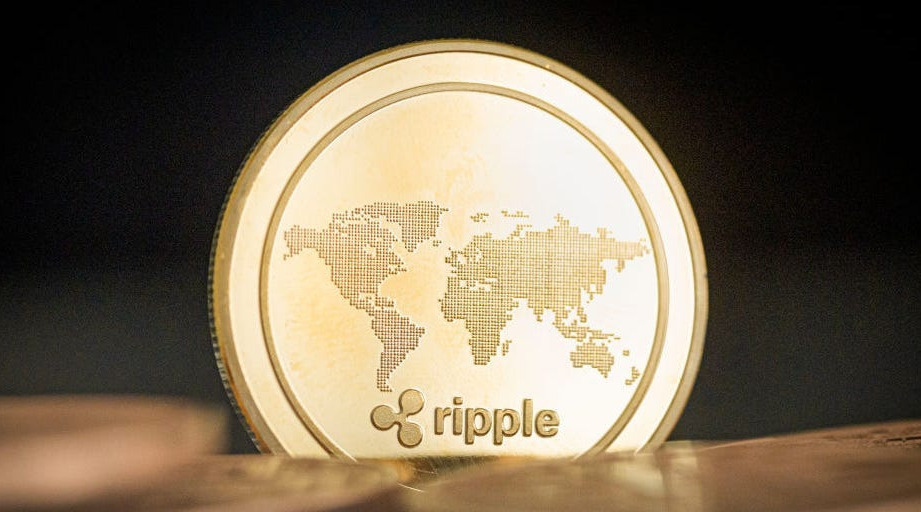
Thomas Trutschel/Photothek via Getty Images
As economic tensions grow worldwide, some market watchers
are pointing to US tariffs and national debt as signs of a broader financial
reset. This theory suggests that XRP, the cryptocurrency developed by Ripple,
could play a role in transforming financial systems during this period of
change.
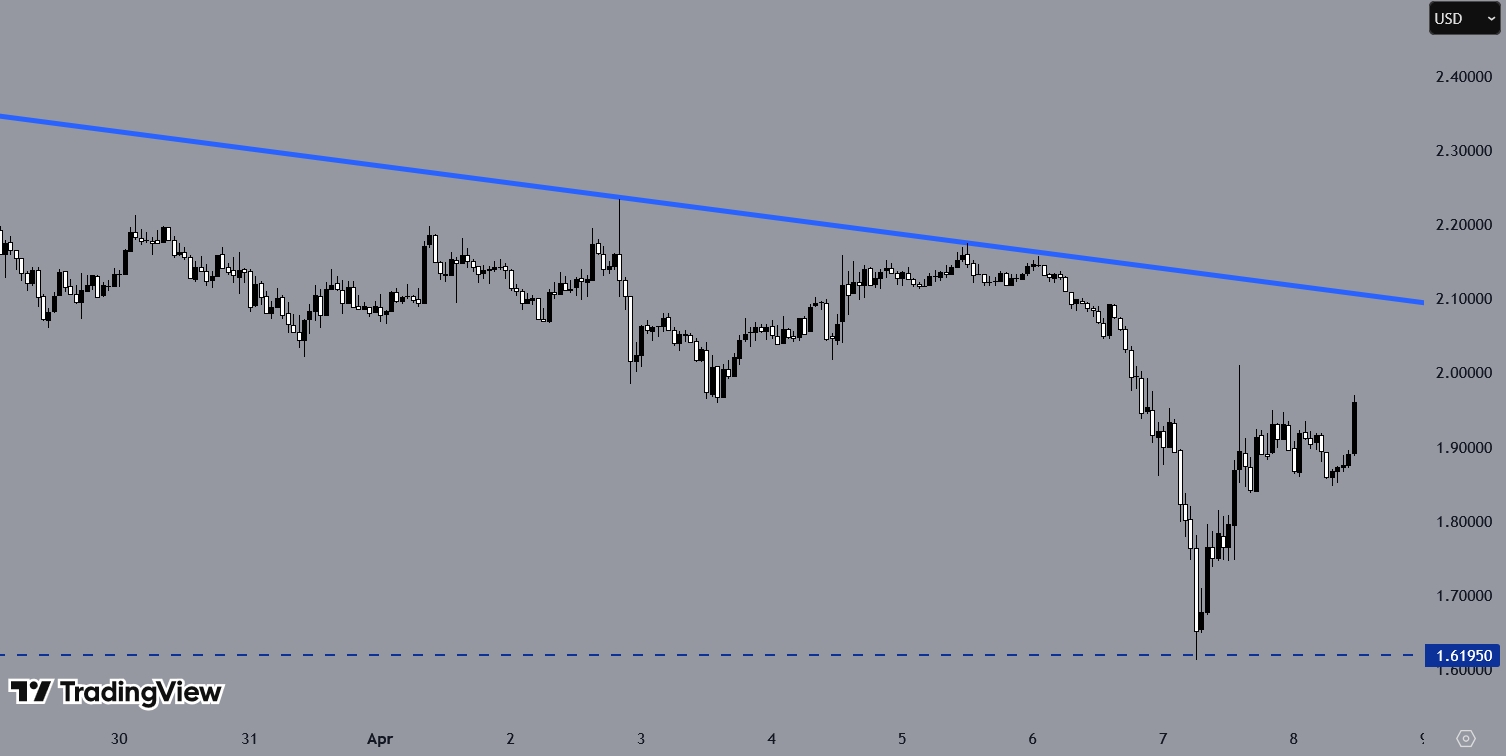
The XRPUSD H1 chart shows that after bouncing off an
intraday support level, the cryptocurrency has been moving upwards. A trendline
is acting as resistance, which buyers may watch for a potential bullish
breakout before adding more long entries to push the price upwards.
Trump’s Tariffs May Reshape Debt Talks
The theory links recent US policies to wider financial
shifts. President Donald Trump’s use of tariffs is seen by some not only as a
response to trade issues but also as a tool to influence large US creditors.
Countries like China, Japan, and members of the European Union hold large
amounts of US Treasury debt. Some analysts believe the tariffs may be used to
gain leverage in talks that could lead to debt restructuring, Coinfomania
reported.
XRPUSD, H1 Chart, Source: TradingView
Standard Chartered Predicts XRP to Reach $12.50 by 2028
Standard Chartered (STAN) initiated coverage of XRP in a
report today (Tuesday), predicting that the cryptocurrency could rise to $12.50
by the end of 2028, with a forecast of $5.50 by the end of this year, $8 by
2026, and $10.40 by the end of 2027. At the time of writing, XRP was trading at
$1.94, nearly 9% higher.
The bank highlighted that XRP saw a sixfold increase after
Donald Trump’s election, driven by expectations that the U.S. Securities and
Exchange Commission (SEC) would drop its appeal against Ripple, and due to the
potential approval of XRP exchange-traded funds (ETFs).
Could XRP Replace SWIFT in the Future?
If debt terms are revised, reset supporters believe global
finance may also shift structurally. In this view, XRP could help build a new
system. Ripple’s On-Demand Liquidity (ODL) uses XRP to move funds across
borders without pre-funded accounts. Over 300 institutions are connected
through this system.
Backers say XRP’s speed, scale, and decentralized setup make
it a possible upgrade over older systems like SWIFT. While major institutions
have not endorsed it, the idea reflects a growing interest in digital assets
during economic uncertainty.
Ripple Acquires Hidden Road for $1.25 Billion
Meanwhile, Ripple
has acquired Hidden Road for $1.25 billion, making it the first crypto
company to operate a global, multi-asset prime broker. Hidden Road provides
services across foreign exchange, digital assets, derivatives, swaps, and fixed
income.
This acquisition aims to support the institutional adoption of
crypto by providing essential infrastructure. Brad Garlinghouse, CEO of Ripple,
stated that the U.S. market is now open following the end of regulatory
uncertainty, and the market is maturing to meet traditional finance needs.
As economic tensions grow worldwide, some market watchers
are pointing to US tariffs and national debt as signs of a broader financial
reset. This theory suggests that XRP, the cryptocurrency developed by Ripple,
could play a role in transforming financial systems during this period of
change.
The XRPUSD H1 chart shows that after bouncing off an
intraday support level, the cryptocurrency has been moving upwards. A trendline
is acting as resistance, which buyers may watch for a potential bullish
breakout before adding more long entries to push the price upwards.
Trump’s Tariffs May Reshape Debt Talks
The theory links recent US policies to wider financial
shifts. President Donald Trump’s use of tariffs is seen by some not only as a
response to trade issues but also as a tool to influence large US creditors.
Countries like China, Japan, and members of the European Union hold large
amounts of US Treasury debt. Some analysts believe the tariffs may be used to
gain leverage in talks that could lead to debt restructuring, Coinfomania
reported.
XRPUSD, H1 Chart, Source: TradingView
Standard Chartered Predicts XRP to Reach $12.50 by 2028
Standard Chartered (STAN) initiated coverage of XRP in a
report today (Tuesday), predicting that the cryptocurrency could rise to $12.50
by the end of 2028, with a forecast of $5.50 by the end of this year, $8 by
2026, and $10.40 by the end of 2027. At the time of writing, XRP was trading at
$1.94, nearly 9% higher.
The bank highlighted that XRP saw a sixfold increase after
Donald Trump’s election, driven by expectations that the U.S. Securities and
Exchange Commission (SEC) would drop its appeal against Ripple, and due to the
potential approval of XRP exchange-traded funds (ETFs).
Could XRP Replace SWIFT in the Future?
If debt terms are revised, reset supporters believe global
finance may also shift structurally. In this view, XRP could help build a new
system. Ripple’s On-Demand Liquidity (ODL) uses XRP to move funds across
borders without pre-funded accounts. Over 300 institutions are connected
through this system.
Backers say XRP’s speed, scale, and decentralized setup make
it a possible upgrade over older systems like SWIFT. While major institutions
have not endorsed it, the idea reflects a growing interest in digital assets
during economic uncertainty.
Ripple Acquires Hidden Road for $1.25 Billion
Meanwhile, Ripple
has acquired Hidden Road for $1.25 billion, making it the first crypto
company to operate a global, multi-asset prime broker. Hidden Road provides
services across foreign exchange, digital assets, derivatives, swaps, and fixed
income.
This acquisition aims to support the institutional adoption of
crypto by providing essential infrastructure. Brad Garlinghouse, CEO of Ripple,
stated that the U.S. market is now open following the end of regulatory
uncertainty, and the market is maturing to meet traditional finance needs.
Tareq is a financial writer with 15 years of experience covering global markets. His work spans technical analysis, forex broker reviews, and market sentiment, with a focus on topics relevant to retail traders. He joined Finance Magnates in 2023.
At Finance Magnates, he serves as News Editor, covering retail forex and CFD brokers, cryptocurrency exchanges, fintech firms, and regulatory developments shaping the trading industry. He holds an Honours degree in Information Technology from Anfell College, London.
Education:
Honours degree Information Technology, Anfell College, London
Inside the Prediction Markets: $1.6B Institutional Inflow Meets a Federal Crackdown
FP Markets Winner Spotlight 🏆 | Global Broker of the Year 2025 #Trading #Broker #Innovation #Shorts
FP Markets Winner Spotlight 🏆 | Global Broker of the Year 2025 #Trading #Broker #Innovation #Shorts
FP Markets takes the spotlight as Global Broker of the Year 2025 at the Finance Magnates Awards.
Martin Stoilov, Head of Client Experience, shares that trust, innovation, and people played a key role in the company’s success, supported by a strong foundation of integrity and client-centricity.
Following this milestone, FP Markets continues to focus on growth, technology investment, and its core values of transparency and excellence.
👉 Be part of FM Awards 2026: https://awards.financemagnates.com/#nominate
FP Markets takes the spotlight as Global Broker of the Year 2025 at the Finance Magnates Awards.
Martin Stoilov, Head of Client Experience, shares that trust, innovation, and people played a key role in the company’s success, supported by a strong foundation of integrity and client-centricity.
Following this milestone, FP Markets continues to focus on growth, technology investment, and its core values of transparency and excellence.
👉 Be part of FM Awards 2026: https://awards.financemagnates.com/#nominate
In this video, we review @HolaPrimeMarketsOfficial, a multi-asset forex and CFDs broker offering different account types, trading platforms, and flexible trading conditions.
We cover the broker’s overall offering, including account options, trading environment, platforms like MT4 and MT5, and additional services such as managed accounts and fast withdrawals.
Watch the full video to see if Hola Prime Markets fits your trading needs.
📣 Stay up to date with the latest in finance and trading. Follow Finance Magnates for industry news, insights, and global event coverage.
Connect with us:
🔗 LinkedIn: /financemagnates
👍 Facebook: /financemagnates
📸 Instagram: https://www.instagram.com/financemagnates
🐦 X: https://x.com/financemagnates
🎥 TikTok: https://www.tiktok.com/tag/financemagnates
▶️ YouTube: /@financemagnates_official
#HolaPrime #ForexBroker #CFDTrading #FinanceMagnates #Trading #Forex #BrokerReview
In this video, we review @HolaPrimeMarketsOfficial, a multi-asset forex and CFDs broker offering different account types, trading platforms, and flexible trading conditions.
We cover the broker’s overall offering, including account options, trading environment, platforms like MT4 and MT5, and additional services such as managed accounts and fast withdrawals.
Watch the full video to see if Hola Prime Markets fits your trading needs.
📣 Stay up to date with the latest in finance and trading. Follow Finance Magnates for industry news, insights, and global event coverage.
Connect with us:
🔗 LinkedIn: /financemagnates
👍 Facebook: /financemagnates
📸 Instagram: https://www.instagram.com/financemagnates
🐦 X: https://x.com/financemagnates
🎥 TikTok: https://www.tiktok.com/tag/financemagnates
▶️ YouTube: /@financemagnates_official
#HolaPrime #ForexBroker #CFDTrading #FinanceMagnates #Trading #Forex #BrokerReview
Hola Prime Review: What You Need to Know | Full Breakdown by Finance Magnates
Hola Prime Review: What You Need to Know | Full Breakdown by Finance Magnates
In this video, we review @HolaPrime_Global, a proprietary trading firm offering evaluation programs and performance-based payouts in simulated market environments.
We cover how the challenge model works, including account types, profit splits (up to 95%), trading rules, and what it takes to reach a funded account. You’ll also learn about available platforms like MT4, MT5, cTrader, and more, along with insights into payouts, support, and trading conditions.
Watch the full video to see if Hola Prime fits your trading style.
📣 Stay up to date with the latest in finance and trading. Follow Finance Magnates for industry news, insights, and global event coverage.
Connect with us:
🔗 LinkedIn: /financemagnates
👍 Facebook: /financemagnates
📸 Instagram: https://www.instagram.com/financemagnates
🐦 X: https://x.com/financemagnates
🎥 TikTok: https://www.tiktok.com/tag/financemagnates
▶️ YouTube: /@financemagnates_official
#HolaPrime #PropFirm #Trading #FinanceMagnates #Forex #FuturesTrading #TradingReview #PropFirmReview
In this video, we review @HolaPrime_Global, a proprietary trading firm offering evaluation programs and performance-based payouts in simulated market environments.
We cover how the challenge model works, including account types, profit splits (up to 95%), trading rules, and what it takes to reach a funded account. You’ll also learn about available platforms like MT4, MT5, cTrader, and more, along with insights into payouts, support, and trading conditions.
Watch the full video to see if Hola Prime fits your trading style.
📣 Stay up to date with the latest in finance and trading. Follow Finance Magnates for industry news, insights, and global event coverage.
Connect with us:
🔗 LinkedIn: /financemagnates
👍 Facebook: /financemagnates
📸 Instagram: https://www.instagram.com/financemagnates
🐦 X: https://x.com/financemagnates
🎥 TikTok: https://www.tiktok.com/tag/financemagnates
▶️ YouTube: /@financemagnates_official
#HolaPrime #PropFirm #Trading #FinanceMagnates #Forex #FuturesTrading #TradingReview #PropFirmReview
Axi Winner Spotlight 🏆 | Global Most Innovative Broker 2025 #Innovation #Trading #Fintech #Broker
Axi Winner Spotlight 🏆 | Global Most Innovative Broker 2025 #Innovation #Trading #Fintech #Broker
Axi takes the spotlight at the Finance Magnates Awards, winning Global Most Innovative Broker 2025.
Olivia Xenofontos and Ivanna Openko share how the team will feel: proud, motivated, and ready to keep delivering.
They also describe the night as well-organized, focused, and enjoyable for all.
👉 Be part of FM Awards 2026.
Axi takes the spotlight at the Finance Magnates Awards, winning Global Most Innovative Broker 2025.
Olivia Xenofontos and Ivanna Openko share how the team will feel: proud, motivated, and ready to keep delivering.
They also describe the night as well-organized, focused, and enjoyable for all.
👉 Be part of FM Awards 2026.
Recognition that matters.
Built on transparency.
Driven by the industry.
The Finance Magnates Awards 2026.
Nominations are now open.
🔗 https://awards.financemagnates.com/?utm_source=SM&utm_medium=social&utm_campaign=recognition-matters
Recognition that matters.
Built on transparency.
Driven by the industry.
The Finance Magnates Awards 2026.
Nominations are now open.
🔗 https://awards.financemagnates.com/?utm_source=SM&utm_medium=social&utm_campaign=recognition-matters