These tariffs, with unpredictable rates, are causing supply chain disruptions, increased costs, and uncertainty for European companies.
Countries like Cambodia, Laos, and Vietnam, major suppliers of goods for European retailers, are reportedly facing some of the highest tariff rates.
A fresh round of US tariffs has sent shockwaves
through global markets, with European retailers taking the brunt of the impact.
Companies like Adidas, Puma, and Pandora have seen their stock prices tumble as
the tariffs target Southeast Asia, where many of these companies manufacture
their goods.
With unpredictable tariff rates, European brands are
now facing supply chain disruptions, higher costs, and uncertain future
prospects. The escalating tariff war between the US and its global trading
partners has put a severe strain on European retailers, CNBC reported.
The Impact of US Tariffs on European Retailers
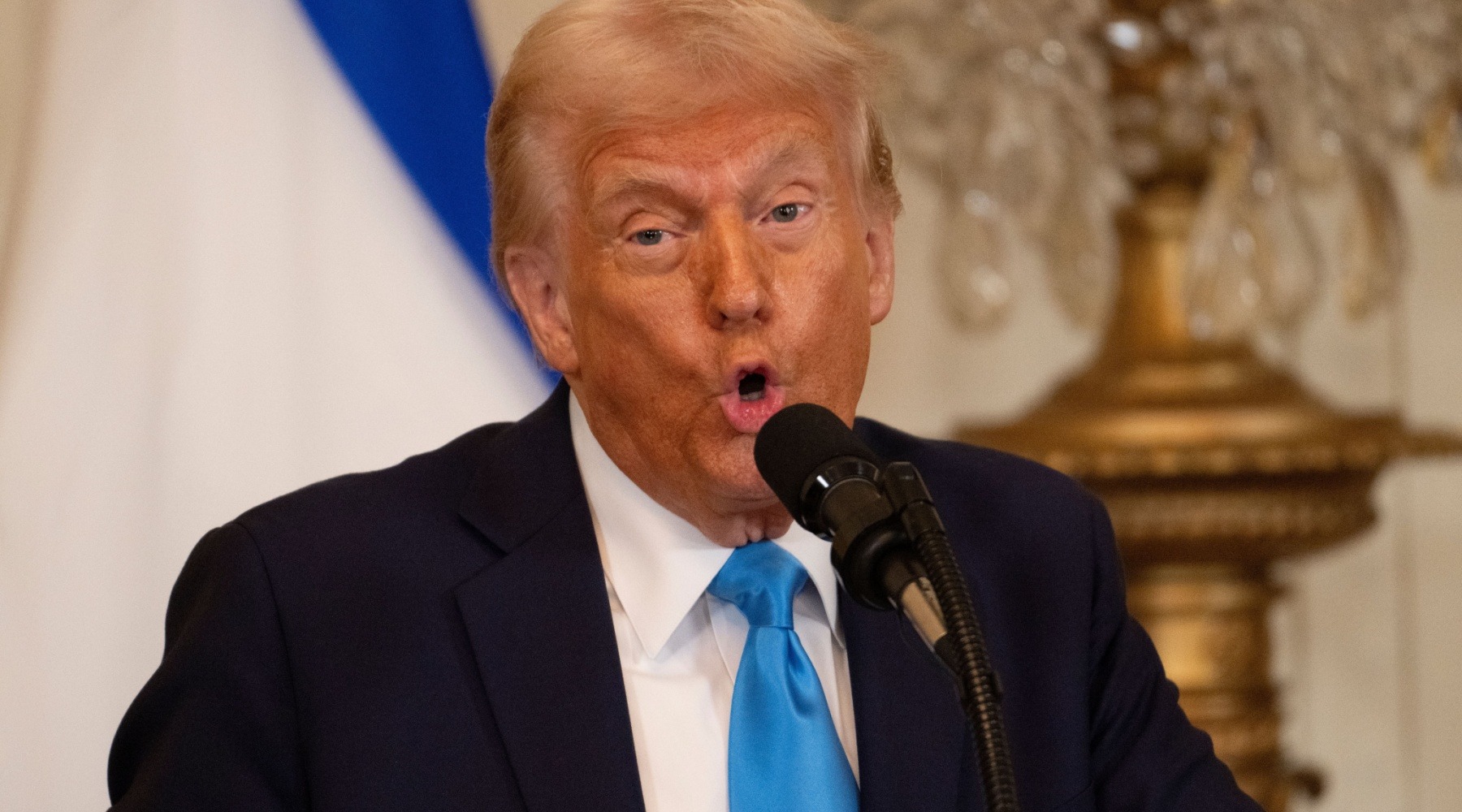
On Wednesday, President Donald Trump rolled out sweeping new tariffs, promising to reshape global trade and fuel US
manufacturing. With a 10% baseline tariff on all imports effective April 5, the
US aims to pressure other nations to reduce trade barriers.
As President Donald Trump rolled out his latest round
of tariffs, the effects were immediate and widespread. European companies that
source much of their production from Southeast Asia found themselves caught in
the crossfire, with some of the highest tariff rates imposed on countries like
Cambodia, Laos, and Vietnam.
These Southeast Asian nations are central to the
production of clothing, footwear, and other goods sold by European retailers.
Major European Brands Hit Hard
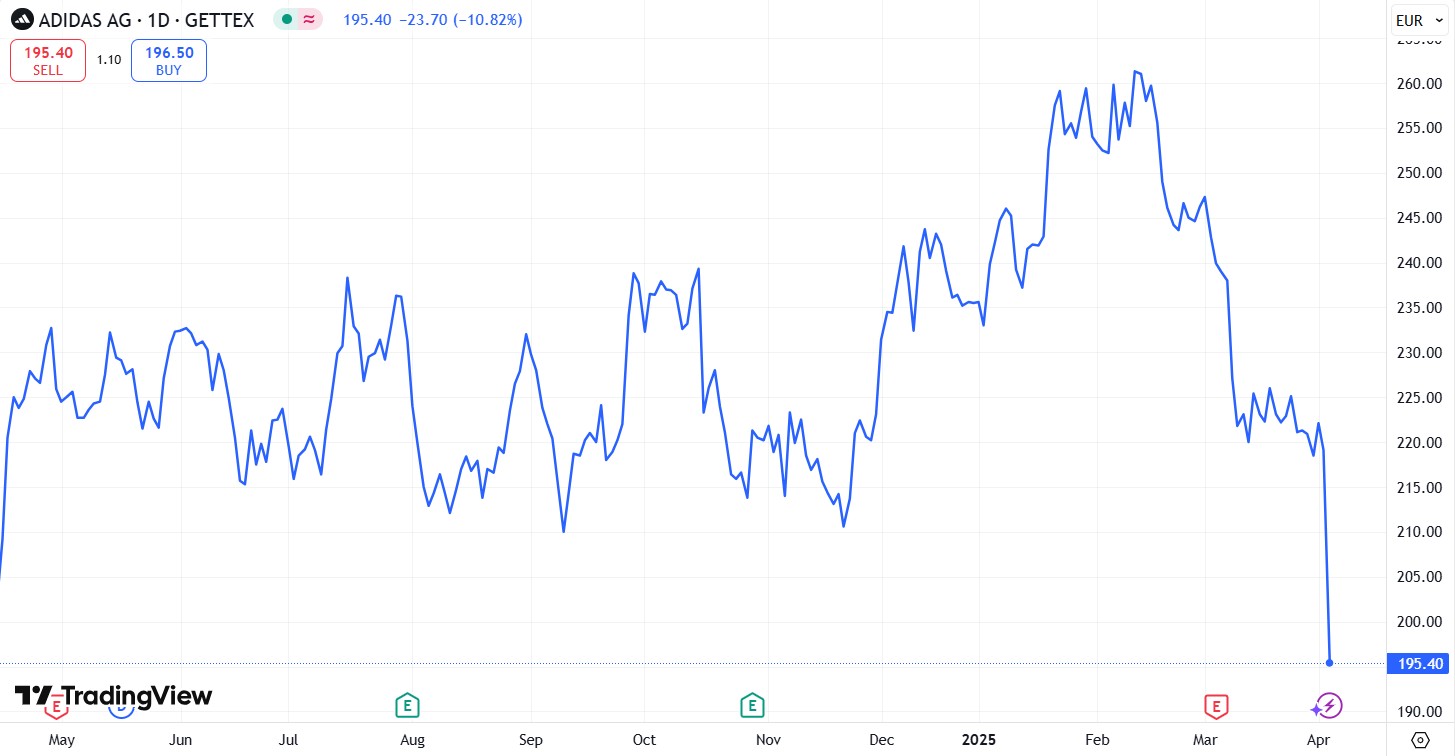
For instance, Adidas, one of Europe’s largest
sportswear companies, saw its stock drop by 10% following the tariff
announcement. Puma, another German giant, suffered a similar fate, losing
nearly 11% of its market value. Pandora, the Danish jewelry maker, wasn’t
spared either, with shares plunging by 11%.
Adidas plunges, Source: TradingView
As these tariffs make it more expensive to import
goods into the US, companies will be forced to either absorb the costs or pass
them on to consumers. Both options have their risks. On one hand, companies may
face squeezed profits and cash flows; on the other, consumers could face higher
prices for their favorite products.
European Stock Markets React
Even before the tariffs were announced, the broader
European stock market took a hit, with the STOXX 600 Index dipping by 1.5%
early this week, according to BNN Bloomberg. Bank stocks were especially
vulnerable, as investors feared that the tariff war could slow global economic
growth.
Wall Street futures also dropped, with a sharp decline
of 3.1%, as traders moved into safer assets like gold and bonds. With the
tariffs expected to stay in place for some time, the outlook for many European
brands remains uncertain. In the US Nasdaq and the S&P 500 also plunged to lows last seen in the last six months.
S&P 500 and Nasdaq 100 futures test 6-month lows. Source: Tradingview.com
European leaders have faulted Trump’s move to impose, hinting at possible countermeasures. In a post by the Guardian, French
President Emannuel Macron, termed the move “brutal and unfounded” adding that
all instruments are on the table.
A fresh round of US tariffs has sent shockwaves
through global markets, with European retailers taking the brunt of the impact.
Companies like Adidas, Puma, and Pandora have seen their stock prices tumble as
the tariffs target Southeast Asia, where many of these companies manufacture
their goods.
With unpredictable tariff rates, European brands are
now facing supply chain disruptions, higher costs, and uncertain future
prospects. The escalating tariff war between the US and its global trading
partners has put a severe strain on European retailers, CNBC reported.
The Impact of US Tariffs on European Retailers
On Wednesday, President Donald Trump rolled out sweeping new tariffs, promising to reshape global trade and fuel US
manufacturing. With a 10% baseline tariff on all imports effective April 5, the
US aims to pressure other nations to reduce trade barriers.
As President Donald Trump rolled out his latest round
of tariffs, the effects were immediate and widespread. European companies that
source much of their production from Southeast Asia found themselves caught in
the crossfire, with some of the highest tariff rates imposed on countries like
Cambodia, Laos, and Vietnam.
These Southeast Asian nations are central to the
production of clothing, footwear, and other goods sold by European retailers.
Major European Brands Hit Hard
For instance, Adidas, one of Europe’s largest
sportswear companies, saw its stock drop by 10% following the tariff
announcement. Puma, another German giant, suffered a similar fate, losing
nearly 11% of its market value. Pandora, the Danish jewelry maker, wasn’t
spared either, with shares plunging by 11%.
Adidas plunges, Source: TradingView
As these tariffs make it more expensive to import
goods into the US, companies will be forced to either absorb the costs or pass
them on to consumers. Both options have their risks. On one hand, companies may
face squeezed profits and cash flows; on the other, consumers could face higher
prices for their favorite products.
European Stock Markets React
Even before the tariffs were announced, the broader
European stock market took a hit, with the STOXX 600 Index dipping by 1.5%
early this week, according to BNN Bloomberg. Bank stocks were especially
vulnerable, as investors feared that the tariff war could slow global economic
growth.
Wall Street futures also dropped, with a sharp decline
of 3.1%, as traders moved into safer assets like gold and bonds. With the
tariffs expected to stay in place for some time, the outlook for many European
brands remains uncertain. In the US Nasdaq and the S&P 500 also plunged to lows last seen in the last six months.
S&P 500 and Nasdaq 100 futures test 6-month lows. Source: Tradingview.com
European leaders have faulted Trump’s move to impose, hinting at possible countermeasures. In a post by the Guardian, French
President Emannuel Macron, termed the move “brutal and unfounded” adding that
all instruments are on the table.
Jared Kirui is an Editor at Finance Magnates with more than five years of experience in financial journalism. He covers online trading, fintech, payments, and crypto industries with a focus on companies, regulation and compliance, executive moves, trading technology, and market analysis.
His work has been featured in other media outlets, including Benzinga, ZyCrypto, The Distributed, and The Daily Hodl.
Education:
Bachelor of Commerce degree (Finance option), University of Nairobi
Inside the Prediction Markets: $1.6B Institutional Inflow Meets a Federal Crackdown
FP Markets Winner Spotlight 🏆 | Global Broker of the Year 2025 #Trading #Broker #Innovation #Shorts
FP Markets Winner Spotlight 🏆 | Global Broker of the Year 2025 #Trading #Broker #Innovation #Shorts
FP Markets takes the spotlight as Global Broker of the Year 2025 at the Finance Magnates Awards.
Martin Stoilov, Head of Client Experience, shares that trust, innovation, and people played a key role in the company’s success, supported by a strong foundation of integrity and client-centricity.
Following this milestone, FP Markets continues to focus on growth, technology investment, and its core values of transparency and excellence.
👉 Be part of FM Awards 2026: https://awards.financemagnates.com/#nominate
FP Markets takes the spotlight as Global Broker of the Year 2025 at the Finance Magnates Awards.
Martin Stoilov, Head of Client Experience, shares that trust, innovation, and people played a key role in the company’s success, supported by a strong foundation of integrity and client-centricity.
Following this milestone, FP Markets continues to focus on growth, technology investment, and its core values of transparency and excellence.
👉 Be part of FM Awards 2026: https://awards.financemagnates.com/#nominate
In this video, we review @HolaPrimeMarketsOfficial, a multi-asset forex and CFDs broker offering different account types, trading platforms, and flexible trading conditions.
We cover the broker’s overall offering, including account options, trading environment, platforms like MT4 and MT5, and additional services such as managed accounts and fast withdrawals.
Watch the full video to see if Hola Prime Markets fits your trading needs.
📣 Stay up to date with the latest in finance and trading. Follow Finance Magnates for industry news, insights, and global event coverage.
Connect with us:
🔗 LinkedIn: /financemagnates
👍 Facebook: /financemagnates
📸 Instagram: https://www.instagram.com/financemagnates
🐦 X: https://x.com/financemagnates
🎥 TikTok: https://www.tiktok.com/tag/financemagnates
▶️ YouTube: /@financemagnates_official
#HolaPrime #ForexBroker #CFDTrading #FinanceMagnates #Trading #Forex #BrokerReview
In this video, we review @HolaPrimeMarketsOfficial, a multi-asset forex and CFDs broker offering different account types, trading platforms, and flexible trading conditions.
We cover the broker’s overall offering, including account options, trading environment, platforms like MT4 and MT5, and additional services such as managed accounts and fast withdrawals.
Watch the full video to see if Hola Prime Markets fits your trading needs.
📣 Stay up to date with the latest in finance and trading. Follow Finance Magnates for industry news, insights, and global event coverage.
Connect with us:
🔗 LinkedIn: /financemagnates
👍 Facebook: /financemagnates
📸 Instagram: https://www.instagram.com/financemagnates
🐦 X: https://x.com/financemagnates
🎥 TikTok: https://www.tiktok.com/tag/financemagnates
▶️ YouTube: /@financemagnates_official
#HolaPrime #ForexBroker #CFDTrading #FinanceMagnates #Trading #Forex #BrokerReview
Hola Prime Review: What You Need to Know | Full Breakdown by Finance Magnates
Hola Prime Review: What You Need to Know | Full Breakdown by Finance Magnates
In this video, we review @HolaPrime_Global, a proprietary trading firm offering evaluation programs and performance-based payouts in simulated market environments.
We cover how the challenge model works, including account types, profit splits (up to 95%), trading rules, and what it takes to reach a funded account. You’ll also learn about available platforms like MT4, MT5, cTrader, and more, along with insights into payouts, support, and trading conditions.
Watch the full video to see if Hola Prime fits your trading style.
📣 Stay up to date with the latest in finance and trading. Follow Finance Magnates for industry news, insights, and global event coverage.
Connect with us:
🔗 LinkedIn: /financemagnates
👍 Facebook: /financemagnates
📸 Instagram: https://www.instagram.com/financemagnates
🐦 X: https://x.com/financemagnates
🎥 TikTok: https://www.tiktok.com/tag/financemagnates
▶️ YouTube: /@financemagnates_official
#HolaPrime #PropFirm #Trading #FinanceMagnates #Forex #FuturesTrading #TradingReview #PropFirmReview
In this video, we review @HolaPrime_Global, a proprietary trading firm offering evaluation programs and performance-based payouts in simulated market environments.
We cover how the challenge model works, including account types, profit splits (up to 95%), trading rules, and what it takes to reach a funded account. You’ll also learn about available platforms like MT4, MT5, cTrader, and more, along with insights into payouts, support, and trading conditions.
Watch the full video to see if Hola Prime fits your trading style.
📣 Stay up to date with the latest in finance and trading. Follow Finance Magnates for industry news, insights, and global event coverage.
Connect with us:
🔗 LinkedIn: /financemagnates
👍 Facebook: /financemagnates
📸 Instagram: https://www.instagram.com/financemagnates
🐦 X: https://x.com/financemagnates
🎥 TikTok: https://www.tiktok.com/tag/financemagnates
▶️ YouTube: /@financemagnates_official
#HolaPrime #PropFirm #Trading #FinanceMagnates #Forex #FuturesTrading #TradingReview #PropFirmReview
Axi Winner Spotlight 🏆 | Global Most Innovative Broker 2025 #Innovation #Trading #Fintech #Broker
Axi Winner Spotlight 🏆 | Global Most Innovative Broker 2025 #Innovation #Trading #Fintech #Broker
Axi takes the spotlight at the Finance Magnates Awards, winning Global Most Innovative Broker 2025.
Olivia Xenofontos and Ivanna Openko share how the team will feel: proud, motivated, and ready to keep delivering.
They also describe the night as well-organized, focused, and enjoyable for all.
👉 Be part of FM Awards 2026.
Axi takes the spotlight at the Finance Magnates Awards, winning Global Most Innovative Broker 2025.
Olivia Xenofontos and Ivanna Openko share how the team will feel: proud, motivated, and ready to keep delivering.
They also describe the night as well-organized, focused, and enjoyable for all.
👉 Be part of FM Awards 2026.
Recognition that matters.
Built on transparency.
Driven by the industry.
The Finance Magnates Awards 2026.
Nominations are now open.
🔗 https://awards.financemagnates.com/?utm_source=SM&utm_medium=social&utm_campaign=recognition-matters
Recognition that matters.
Built on transparency.
Driven by the industry.
The Finance Magnates Awards 2026.
Nominations are now open.
🔗 https://awards.financemagnates.com/?utm_source=SM&utm_medium=social&utm_campaign=recognition-matters