Criminals tricked a victim into entering details on a fake site, leading to theft.
Police say the scam exploited fear and urgency to gain wallet access.
North Wales Police has issued a warning to cryptocurrency
holders after a victim lost £2.1 million in Bitcoin to what the force described
as a “sophisticated” scam.
The warning comes at a time when Bitcoin has been under
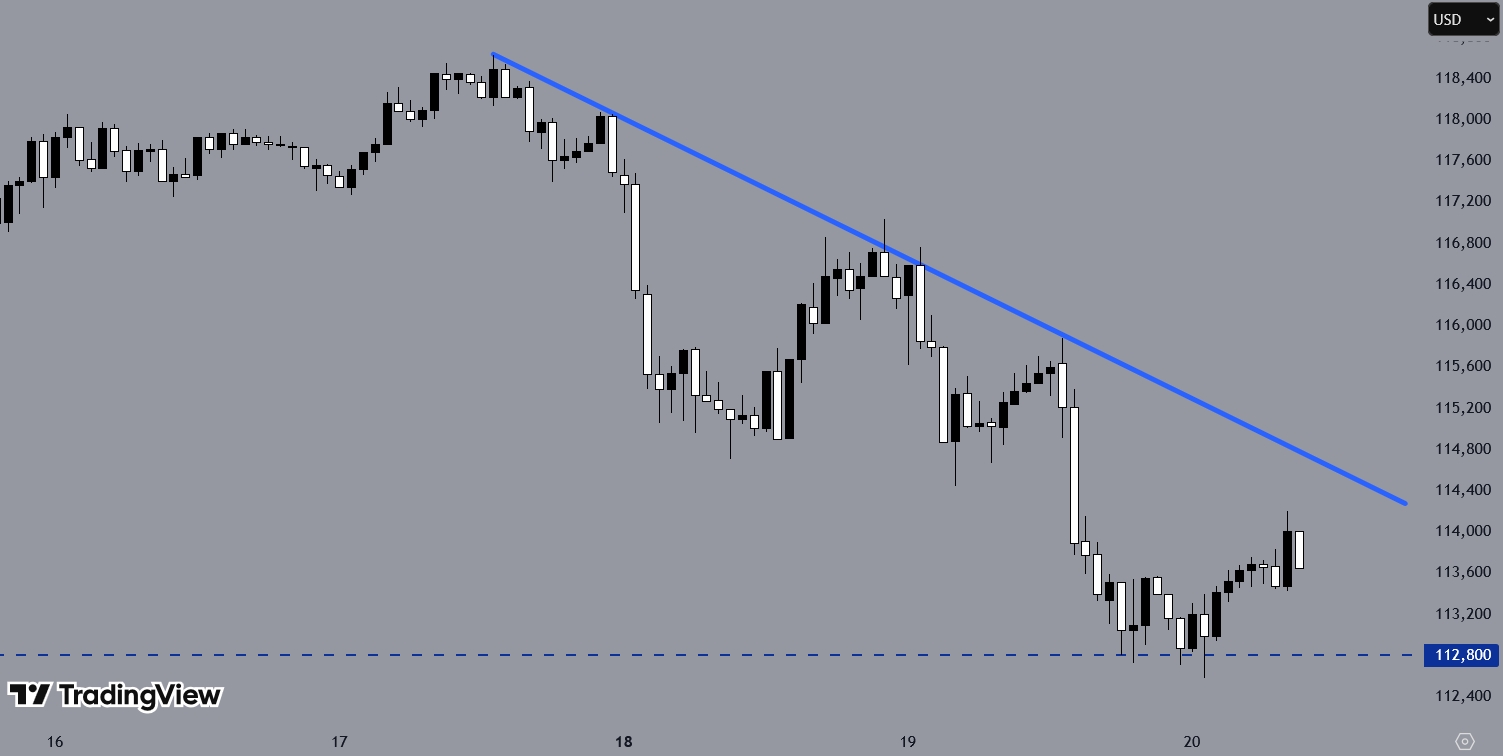
pressure in the market, with BTC/USD trending lower on the H1 chart along a
descending trend line. The price appears to have found horizontal support
around 112,800. A breakout below this level could add to downside momentum,
while a bullish breakout above the trend line may attract intraday buyers.
Bitcoin Stolen via Fake Police Website
According to police, the criminals posed as senior UK
officers and told the victim a false story about a security breach. The victim
was informed that an arrested individual’s phone contained personal
identification documents linked to them.
The scammers urged the victim to “secure their assets” by
logging in through a provided link. The link led to a fake website. Believing
it was genuine, the victim entered their password, as BBC reported.
Police said this allowed the criminals to access the wallet
and steal the Bitcoin within moments.
The force believes the victim may have been identified
through a data breach, making the case highly targeted. Officers described the
scam as an example of social engineering, designed to exploit fear and urgency.
North Wales Police said the theft highlights a disturbing
new trend in which fraudsters use increasingly advanced methods to trick even
careful holders.
The force confirmed it is working to trace the stolen funds
but warned that the case shows how quickly scams can unfold. It has urged the
public to remain cautious, trust their instincts, and follow its published
guidance to reduce the risk of similar attacks.
BTC Faces Volatility Amid Profit-Taking Pressure
Ryan Lee, Chief Analyst at Bitget, expects Bitcoin
to consolidate between $112K and $118K as profit-taking and cautious
sentiment influence the market. Rising leverage in futures increases
volatility, leaving BTC vulnerable to sharp swings.
Lee noted that macro factors, including Federal Reserve
decisions, could affect price direction. Overall, the market balances optimism
for potential rebounds with the risk of further corrections, reflecting both
structural demand and heightened speculative exposure.
North Wales Police has issued a warning to cryptocurrency
holders after a victim lost £2.1 million in Bitcoin to what the force described
as a “sophisticated” scam.
The warning comes at a time when Bitcoin has been under
pressure in the market, with BTC/USD trending lower on the H1 chart along a
descending trend line. The price appears to have found horizontal support
around 112,800. A breakout below this level could add to downside momentum,
while a bullish breakout above the trend line may attract intraday buyers.
Bitcoin Stolen via Fake Police Website
According to police, the criminals posed as senior UK
officers and told the victim a false story about a security breach. The victim
was informed that an arrested individual’s phone contained personal
identification documents linked to them.
The scammers urged the victim to “secure their assets” by
logging in through a provided link. The link led to a fake website. Believing
it was genuine, the victim entered their password, as BBC reported.
Police said this allowed the criminals to access the wallet
and steal the Bitcoin within moments.
The force believes the victim may have been identified
through a data breach, making the case highly targeted. Officers described the
scam as an example of social engineering, designed to exploit fear and urgency.
North Wales Police said the theft highlights a disturbing
new trend in which fraudsters use increasingly advanced methods to trick even
careful holders.
The force confirmed it is working to trace the stolen funds
but warned that the case shows how quickly scams can unfold. It has urged the
public to remain cautious, trust their instincts, and follow its published
guidance to reduce the risk of similar attacks.
BTC Faces Volatility Amid Profit-Taking Pressure
Ryan Lee, Chief Analyst at Bitget, expects Bitcoin
to consolidate between $112K and $118K as profit-taking and cautious
sentiment influence the market. Rising leverage in futures increases
volatility, leaving BTC vulnerable to sharp swings.
Lee noted that macro factors, including Federal Reserve
decisions, could affect price direction. Overall, the market balances optimism
for potential rebounds with the risk of further corrections, reflecting both
structural demand and heightened speculative exposure.
Tareq is a financial writer with 15 years of experience covering global markets. His work spans technical analysis, forex broker reviews, and market sentiment, with a focus on topics relevant to retail traders. He joined Finance Magnates in 2023.
At Finance Magnates, he serves as News Editor, covering retail forex and CFD brokers, cryptocurrency exchanges, fintech firms, and regulatory developments shaping the trading industry. He holds an Honours degree in Information Technology from Anfell College, London.
Education:
Honours degree Information Technology, Anfell College, London
Inside the Prediction Markets: $1.6B Institutional Inflow Meets a Federal Crackdown
FP Markets Winner Spotlight 🏆 | Global Broker of the Year 2025 #Trading #Broker #Innovation #Shorts
FP Markets Winner Spotlight 🏆 | Global Broker of the Year 2025 #Trading #Broker #Innovation #Shorts
FP Markets takes the spotlight as Global Broker of the Year 2025 at the Finance Magnates Awards.
Martin Stoilov, Head of Client Experience, shares that trust, innovation, and people played a key role in the company’s success, supported by a strong foundation of integrity and client-centricity.
Following this milestone, FP Markets continues to focus on growth, technology investment, and its core values of transparency and excellence.
👉 Be part of FM Awards 2026: https://awards.financemagnates.com/#nominate
FP Markets takes the spotlight as Global Broker of the Year 2025 at the Finance Magnates Awards.
Martin Stoilov, Head of Client Experience, shares that trust, innovation, and people played a key role in the company’s success, supported by a strong foundation of integrity and client-centricity.
Following this milestone, FP Markets continues to focus on growth, technology investment, and its core values of transparency and excellence.
👉 Be part of FM Awards 2026: https://awards.financemagnates.com/#nominate
In this video, we review @HolaPrimeMarketsOfficial, a multi-asset forex and CFDs broker offering different account types, trading platforms, and flexible trading conditions.
We cover the broker’s overall offering, including account options, trading environment, platforms like MT4 and MT5, and additional services such as managed accounts and fast withdrawals.
Watch the full video to see if Hola Prime Markets fits your trading needs.
📣 Stay up to date with the latest in finance and trading. Follow Finance Magnates for industry news, insights, and global event coverage.
Connect with us:
🔗 LinkedIn: /financemagnates
👍 Facebook: /financemagnates
📸 Instagram: https://www.instagram.com/financemagnates
🐦 X: https://x.com/financemagnates
🎥 TikTok: https://www.tiktok.com/tag/financemagnates
▶️ YouTube: /@financemagnates_official
#HolaPrime #ForexBroker #CFDTrading #FinanceMagnates #Trading #Forex #BrokerReview
In this video, we review @HolaPrimeMarketsOfficial, a multi-asset forex and CFDs broker offering different account types, trading platforms, and flexible trading conditions.
We cover the broker’s overall offering, including account options, trading environment, platforms like MT4 and MT5, and additional services such as managed accounts and fast withdrawals.
Watch the full video to see if Hola Prime Markets fits your trading needs.
📣 Stay up to date with the latest in finance and trading. Follow Finance Magnates for industry news, insights, and global event coverage.
Connect with us:
🔗 LinkedIn: /financemagnates
👍 Facebook: /financemagnates
📸 Instagram: https://www.instagram.com/financemagnates
🐦 X: https://x.com/financemagnates
🎥 TikTok: https://www.tiktok.com/tag/financemagnates
▶️ YouTube: /@financemagnates_official
#HolaPrime #ForexBroker #CFDTrading #FinanceMagnates #Trading #Forex #BrokerReview
Hola Prime Review: What You Need to Know | Full Breakdown by Finance Magnates
Hola Prime Review: What You Need to Know | Full Breakdown by Finance Magnates
In this video, we review @HolaPrime_Global, a proprietary trading firm offering evaluation programs and performance-based payouts in simulated market environments.
We cover how the challenge model works, including account types, profit splits (up to 95%), trading rules, and what it takes to reach a funded account. You’ll also learn about available platforms like MT4, MT5, cTrader, and more, along with insights into payouts, support, and trading conditions.
Watch the full video to see if Hola Prime fits your trading style.
📣 Stay up to date with the latest in finance and trading. Follow Finance Magnates for industry news, insights, and global event coverage.
Connect with us:
🔗 LinkedIn: /financemagnates
👍 Facebook: /financemagnates
📸 Instagram: https://www.instagram.com/financemagnates
🐦 X: https://x.com/financemagnates
🎥 TikTok: https://www.tiktok.com/tag/financemagnates
▶️ YouTube: /@financemagnates_official
#HolaPrime #PropFirm #Trading #FinanceMagnates #Forex #FuturesTrading #TradingReview #PropFirmReview
In this video, we review @HolaPrime_Global, a proprietary trading firm offering evaluation programs and performance-based payouts in simulated market environments.
We cover how the challenge model works, including account types, profit splits (up to 95%), trading rules, and what it takes to reach a funded account. You’ll also learn about available platforms like MT4, MT5, cTrader, and more, along with insights into payouts, support, and trading conditions.
Watch the full video to see if Hola Prime fits your trading style.
📣 Stay up to date with the latest in finance and trading. Follow Finance Magnates for industry news, insights, and global event coverage.
Connect with us:
🔗 LinkedIn: /financemagnates
👍 Facebook: /financemagnates
📸 Instagram: https://www.instagram.com/financemagnates
🐦 X: https://x.com/financemagnates
🎥 TikTok: https://www.tiktok.com/tag/financemagnates
▶️ YouTube: /@financemagnates_official
#HolaPrime #PropFirm #Trading #FinanceMagnates #Forex #FuturesTrading #TradingReview #PropFirmReview
Axi Winner Spotlight 🏆 | Global Most Innovative Broker 2025 #Innovation #Trading #Fintech #Broker
Axi Winner Spotlight 🏆 | Global Most Innovative Broker 2025 #Innovation #Trading #Fintech #Broker
Axi takes the spotlight at the Finance Magnates Awards, winning Global Most Innovative Broker 2025.
Olivia Xenofontos and Ivanna Openko share how the team will feel: proud, motivated, and ready to keep delivering.
They also describe the night as well-organized, focused, and enjoyable for all.
👉 Be part of FM Awards 2026.
Axi takes the spotlight at the Finance Magnates Awards, winning Global Most Innovative Broker 2025.
Olivia Xenofontos and Ivanna Openko share how the team will feel: proud, motivated, and ready to keep delivering.
They also describe the night as well-organized, focused, and enjoyable for all.
👉 Be part of FM Awards 2026.
Recognition that matters.
Built on transparency.
Driven by the industry.
The Finance Magnates Awards 2026.
Nominations are now open.
🔗 https://awards.financemagnates.com/?utm_source=SM&utm_medium=social&utm_campaign=recognition-matters
Recognition that matters.
Built on transparency.
Driven by the industry.
The Finance Magnates Awards 2026.
Nominations are now open.
🔗 https://awards.financemagnates.com/?utm_source=SM&utm_medium=social&utm_campaign=recognition-matters