The University of Austin is launching a Bitcoin investment
fund as part of its $200 million endowment. The fund, worth over $5 million, is
designed to invest in Bitcoin. Chun Lai, the foundation’s chief investment
officer, stated the university did not want to miss out on Bitcoin's potential.
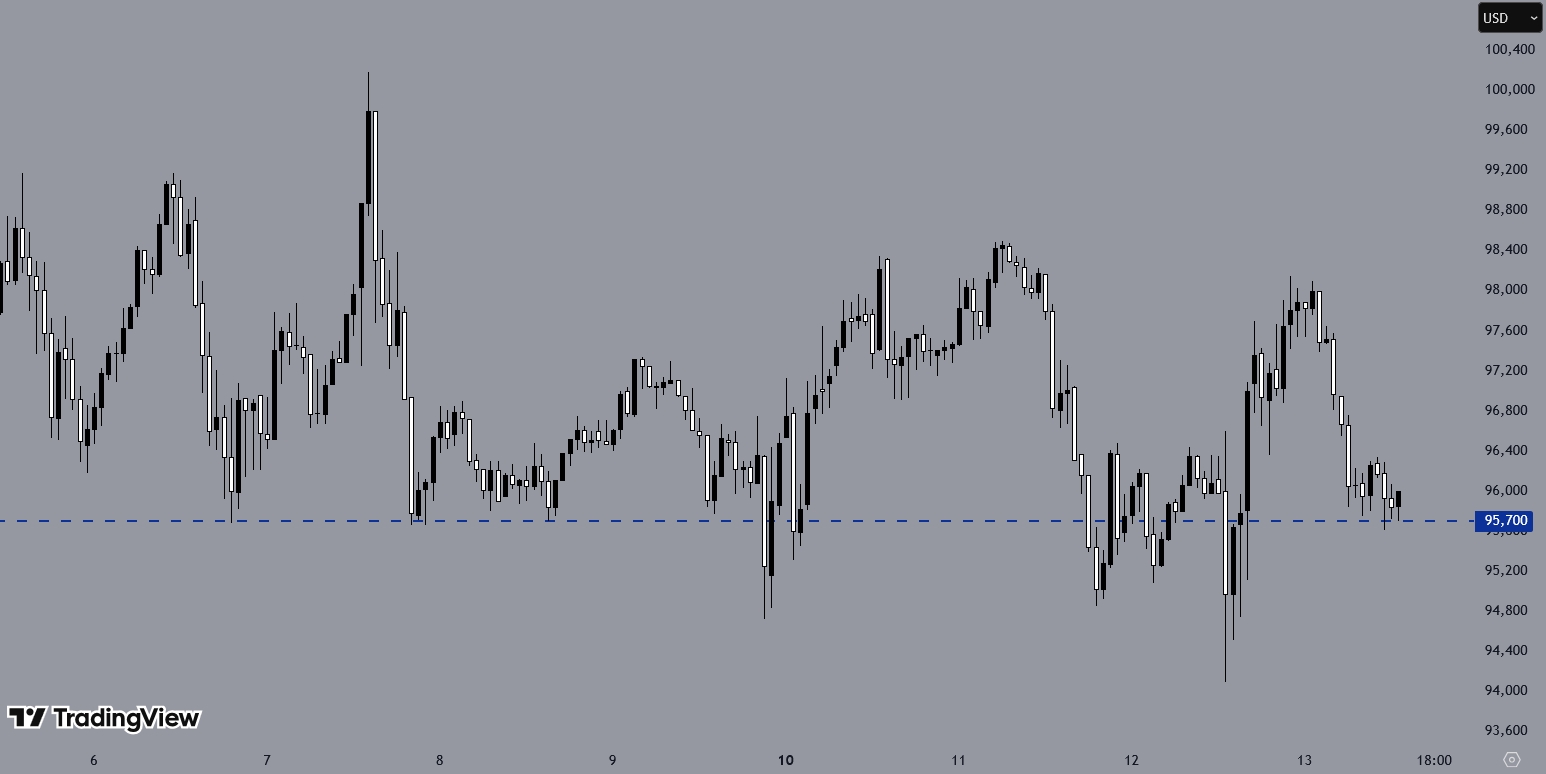
Meanwhile, BTCUSD has been consolidating at 95,700, a key
support level, following a bearish move on the intraday charts.
Bitcoin Adoption by Universities Gains Momentum
This move follows a similar one by Emory University, which
disclosed a $15 million Bitcoin investment in October. Emory became the first US
university endowment to report holdings in Bitcoin ETFs.
Institutional adoption of Bitcoin, including ETFs, could
help raise Bitcoin’s price. Large institutions often control significant
capital, which can influence markets. Continued adoption by such institutions
is necessary for Bitcoin to reach new highs.
The University of Austin plans a minimum five-year holding
strategy. Chad Thevenot, Senior Vice President at the university, compared
Bitcoin’s long-term value to that of stocks or real estate.
BTCUSD Forms Potential Double Bottom Pattern
The BTCUSD H1 chart shows that after rejecting the 98,000
level, the price moved downward. However, the 95,700 level has held as support,
where the price has reacted several times before. The price bounced earlier
today, and another bullish reversal candle could form a Double Bottom, a strong
bullish reversal pattern. In that case, the price may rise.
On the other hand, if the price breaks below 95,700, sellers
may look to short upon breakout confirmation, followed by a bearish reversal
pattern.
In a bullish “hyperbitcoinization” phase, the price could
reach $350,000. A black swan scenario, however, sees Bitcoin peaking at
$500,000. These projections are based on expectations of increased
institutional adoption and the growing acceptance of blockchain in global
finance.
BTCUSD, H1 Chart, Source: TradingView
Younger Generations Prefer Crypto for Pensions
Cryptocurrencies are also gaining popularity among
retirement funds, especially with younger generations. A report from Bitget
Research found that 20% of Gen Z and Alpha are open to receiving pensions in
cryptocurrency.
Additionally, 78% of respondents showed more trust in
alternative retirement savings options over traditional pension funds. These
trends reflect a shift towards decentralized finance and blockchain solutions.
The University of Austin is launching a Bitcoin investment
fund as part of its $200 million endowment. The fund, worth over $5 million, is
designed to invest in Bitcoin. Chun Lai, the foundation’s chief investment
officer, stated the university did not want to miss out on Bitcoin's potential.
Meanwhile, BTCUSD has been consolidating at 95,700, a key
support level, following a bearish move on the intraday charts.
Bitcoin Adoption by Universities Gains Momentum
This move follows a similar one by Emory University, which
disclosed a $15 million Bitcoin investment in October. Emory became the first US
university endowment to report holdings in Bitcoin ETFs.
Institutional adoption of Bitcoin, including ETFs, could
help raise Bitcoin’s price. Large institutions often control significant
capital, which can influence markets. Continued adoption by such institutions
is necessary for Bitcoin to reach new highs.
The University of Austin plans a minimum five-year holding
strategy. Chad Thevenot, Senior Vice President at the university, compared
Bitcoin’s long-term value to that of stocks or real estate.
BTCUSD Forms Potential Double Bottom Pattern
The BTCUSD H1 chart shows that after rejecting the 98,000
level, the price moved downward. However, the 95,700 level has held as support,
where the price has reacted several times before. The price bounced earlier
today, and another bullish reversal candle could form a Double Bottom, a strong
bullish reversal pattern. In that case, the price may rise.
On the other hand, if the price breaks below 95,700, sellers
may look to short upon breakout confirmation, followed by a bearish reversal
pattern.
In a bullish “hyperbitcoinization” phase, the price could
reach $350,000. A black swan scenario, however, sees Bitcoin peaking at
$500,000. These projections are based on expectations of increased
institutional adoption and the growing acceptance of blockchain in global
finance.
BTCUSD, H1 Chart, Source: TradingView
Younger Generations Prefer Crypto for Pensions
Cryptocurrencies are also gaining popularity among
retirement funds, especially with younger generations. A report from Bitget
Research found that 20% of Gen Z and Alpha are open to receiving pensions in
cryptocurrency.
Additionally, 78% of respondents showed more trust in
alternative retirement savings options over traditional pension funds. These
trends reflect a shift towards decentralized finance and blockchain solutions.
Tareq is a financial writer with 15 years of experience covering global markets. His work spans technical analysis, forex broker reviews, and market sentiment, with a focus on topics relevant to retail traders. He joined Finance Magnates in 2023.
At Finance Magnates, he serves as News Editor, covering retail forex and CFD brokers, cryptocurrency exchanges, fintech firms, and regulatory developments shaping the trading industry. He holds an Honours degree in Information Technology from Anfell College, London.
Education:
Honours degree Information Technology, Anfell College, London
Inside the Prediction Markets: $1.6B Institutional Inflow Meets a Federal Crackdown
FP Markets Winner Spotlight 🏆 | Global Broker of the Year 2025 #Trading #Broker #Innovation #Shorts
FP Markets Winner Spotlight 🏆 | Global Broker of the Year 2025 #Trading #Broker #Innovation #Shorts
FP Markets takes the spotlight as Global Broker of the Year 2025 at the Finance Magnates Awards.
Martin Stoilov, Head of Client Experience, shares that trust, innovation, and people played a key role in the company’s success, supported by a strong foundation of integrity and client-centricity.
Following this milestone, FP Markets continues to focus on growth, technology investment, and its core values of transparency and excellence.
👉 Be part of FM Awards 2026: https://awards.financemagnates.com/#nominate
FP Markets takes the spotlight as Global Broker of the Year 2025 at the Finance Magnates Awards.
Martin Stoilov, Head of Client Experience, shares that trust, innovation, and people played a key role in the company’s success, supported by a strong foundation of integrity and client-centricity.
Following this milestone, FP Markets continues to focus on growth, technology investment, and its core values of transparency and excellence.
👉 Be part of FM Awards 2026: https://awards.financemagnates.com/#nominate
In this video, we review @HolaPrimeMarketsOfficial, a multi-asset forex and CFDs broker offering different account types, trading platforms, and flexible trading conditions.
We cover the broker’s overall offering, including account options, trading environment, platforms like MT4 and MT5, and additional services such as managed accounts and fast withdrawals.
Watch the full video to see if Hola Prime Markets fits your trading needs.
📣 Stay up to date with the latest in finance and trading. Follow Finance Magnates for industry news, insights, and global event coverage.
Connect with us:
🔗 LinkedIn: /financemagnates
👍 Facebook: /financemagnates
📸 Instagram: https://www.instagram.com/financemagnates
🐦 X: https://x.com/financemagnates
🎥 TikTok: https://www.tiktok.com/tag/financemagnates
▶️ YouTube: /@financemagnates_official
#HolaPrime #ForexBroker #CFDTrading #FinanceMagnates #Trading #Forex #BrokerReview
In this video, we review @HolaPrimeMarketsOfficial, a multi-asset forex and CFDs broker offering different account types, trading platforms, and flexible trading conditions.
We cover the broker’s overall offering, including account options, trading environment, platforms like MT4 and MT5, and additional services such as managed accounts and fast withdrawals.
Watch the full video to see if Hola Prime Markets fits your trading needs.
📣 Stay up to date with the latest in finance and trading. Follow Finance Magnates for industry news, insights, and global event coverage.
Connect with us:
🔗 LinkedIn: /financemagnates
👍 Facebook: /financemagnates
📸 Instagram: https://www.instagram.com/financemagnates
🐦 X: https://x.com/financemagnates
🎥 TikTok: https://www.tiktok.com/tag/financemagnates
▶️ YouTube: /@financemagnates_official
#HolaPrime #ForexBroker #CFDTrading #FinanceMagnates #Trading #Forex #BrokerReview
Hola Prime Review: What You Need to Know | Full Breakdown by Finance Magnates
Hola Prime Review: What You Need to Know | Full Breakdown by Finance Magnates
In this video, we review @HolaPrime_Global, a proprietary trading firm offering evaluation programs and performance-based payouts in simulated market environments.
We cover how the challenge model works, including account types, profit splits (up to 95%), trading rules, and what it takes to reach a funded account. You’ll also learn about available platforms like MT4, MT5, cTrader, and more, along with insights into payouts, support, and trading conditions.
Watch the full video to see if Hola Prime fits your trading style.
📣 Stay up to date with the latest in finance and trading. Follow Finance Magnates for industry news, insights, and global event coverage.
Connect with us:
🔗 LinkedIn: /financemagnates
👍 Facebook: /financemagnates
📸 Instagram: https://www.instagram.com/financemagnates
🐦 X: https://x.com/financemagnates
🎥 TikTok: https://www.tiktok.com/tag/financemagnates
▶️ YouTube: /@financemagnates_official
#HolaPrime #PropFirm #Trading #FinanceMagnates #Forex #FuturesTrading #TradingReview #PropFirmReview
In this video, we review @HolaPrime_Global, a proprietary trading firm offering evaluation programs and performance-based payouts in simulated market environments.
We cover how the challenge model works, including account types, profit splits (up to 95%), trading rules, and what it takes to reach a funded account. You’ll also learn about available platforms like MT4, MT5, cTrader, and more, along with insights into payouts, support, and trading conditions.
Watch the full video to see if Hola Prime fits your trading style.
📣 Stay up to date with the latest in finance and trading. Follow Finance Magnates for industry news, insights, and global event coverage.
Connect with us:
🔗 LinkedIn: /financemagnates
👍 Facebook: /financemagnates
📸 Instagram: https://www.instagram.com/financemagnates
🐦 X: https://x.com/financemagnates
🎥 TikTok: https://www.tiktok.com/tag/financemagnates
▶️ YouTube: /@financemagnates_official
#HolaPrime #PropFirm #Trading #FinanceMagnates #Forex #FuturesTrading #TradingReview #PropFirmReview
Axi Winner Spotlight 🏆 | Global Most Innovative Broker 2025 #Innovation #Trading #Fintech #Broker
Axi Winner Spotlight 🏆 | Global Most Innovative Broker 2025 #Innovation #Trading #Fintech #Broker
Axi takes the spotlight at the Finance Magnates Awards, winning Global Most Innovative Broker 2025.
Olivia Xenofontos and Ivanna Openko share how the team will feel: proud, motivated, and ready to keep delivering.
They also describe the night as well-organized, focused, and enjoyable for all.
👉 Be part of FM Awards 2026.
Axi takes the spotlight at the Finance Magnates Awards, winning Global Most Innovative Broker 2025.
Olivia Xenofontos and Ivanna Openko share how the team will feel: proud, motivated, and ready to keep delivering.
They also describe the night as well-organized, focused, and enjoyable for all.
👉 Be part of FM Awards 2026.
Recognition that matters.
Built on transparency.
Driven by the industry.
The Finance Magnates Awards 2026.
Nominations are now open.
🔗 https://awards.financemagnates.com/?utm_source=SM&utm_medium=social&utm_campaign=recognition-matters
Recognition that matters.
Built on transparency.
Driven by the industry.
The Finance Magnates Awards 2026.
Nominations are now open.
🔗 https://awards.financemagnates.com/?utm_source=SM&utm_medium=social&utm_campaign=recognition-matters