Bitcoin’s recent price drop is seen as a healthy market
reset, driven by seasonal trends and broader market weakness. Institutional
demand is expected to support the next rally, while U.S. monetary policy could
lead to a “Weimar Lite” decade, marked by currency weakness, rising inequality,
and high asset prices.
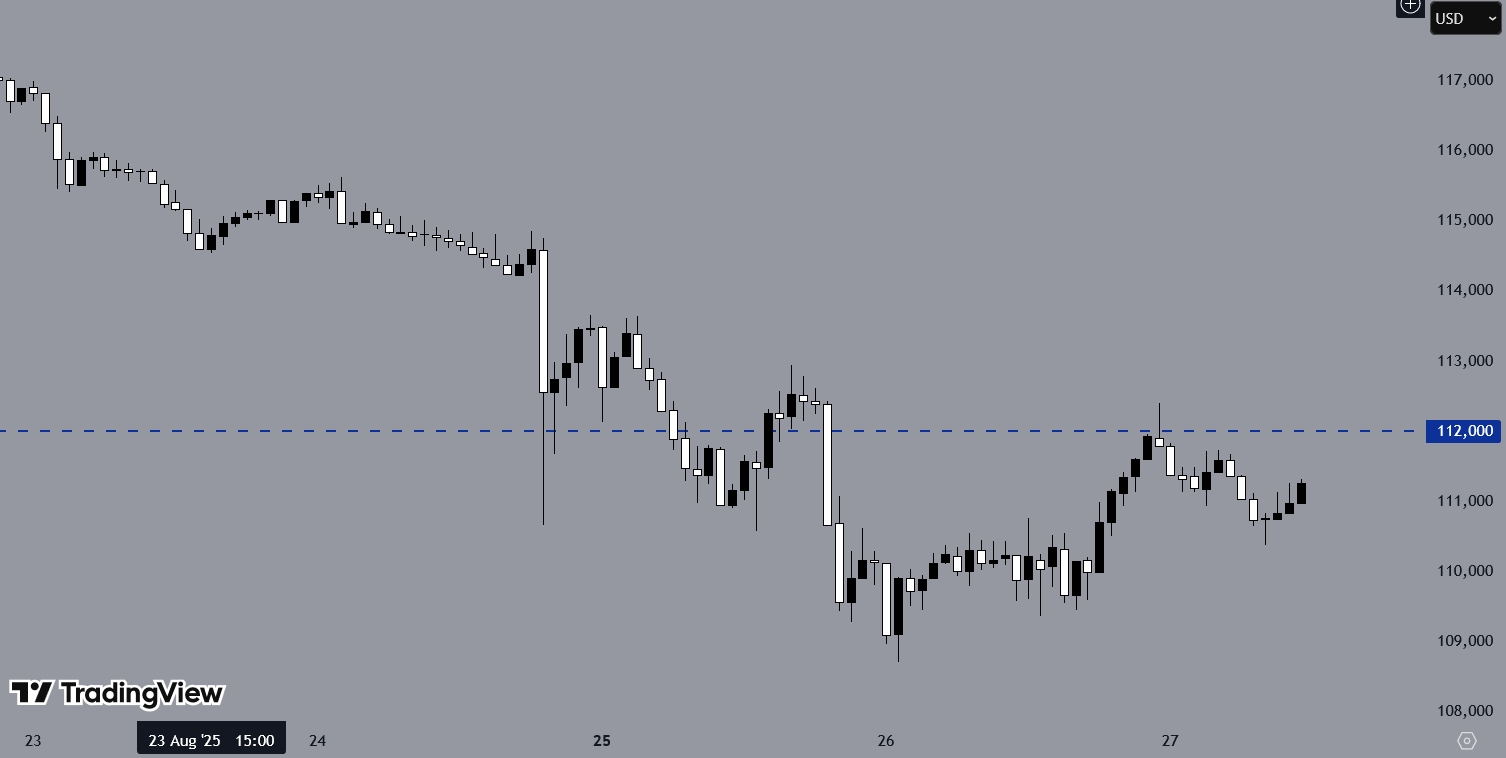
BTCUSD, after showing bearish pressure on the H1 chart,
found intraday support and began moving upward. The 112K level has acted as
resistance, causing a prior rejection. At the time of writing, the
cryptocurrency has established support and is once again approaching the
resistance level. can I use it as the opening
Bitcoin Correction Signals “Weimar Lite” Risks
Financial analyst John Pompiano has outlined his views on
Bitcoin, U.S. monetary policy, and the long-term direction of the economy in a
recent podcast interview. His analysis focused on the current correction in
Bitcoin prices, expectations of Federal Reserve policy shifts, and what he
described as a “Weimar Lite” decade for the United States.
Bitcoin Price Reset
Bitcoin has fallen from its recent highs. Pompiano linked
the decline to two forces. The first is seasonality. September has been the
only month in which Bitcoin has consistently posted negative returns. The
second is weakness across broader markets. The S&P 500 and other risk
assets have also pulled back, which has pressured Bitcoin.
He described the decline as a healthy reset. A constant
upward move, he argued, would fuel leverage and create a sharper downturn
later. This correction, in his view, clears excess leverage and builds a base
for a future rally. He still projects Bitcoin could reach $150,000 in the
current cycle.
BTCUSD, H1 Chart, Source: TradingView
Institutional Buying Ahead
Pompiano expects corporate treasuries to play a key role in
the next phase of Bitcoin’s rise. He said several companies have signaled
intentions to allocate funds to Bitcoin. He believes this could add billions in
new demand and attract broader media coverage.
Federal Reserve Policy
Turning to monetary policy, Pompiano interpreted Federal
Reserve Chair Jerome Powell’s Jackson Hole comments as a sign that rate cuts
will begin in September. He said the central bank is under heavy pressure to
ease policy.
Pompiano disagreed with the Fed’s stated reasoning that the
labor market is weakening. He argued that productivity gains from artificial
intelligence and digital systems are not captured in traditional employment
data. In his view, this makes the economy stronger than official statistics
suggest.
“Weimar Lite” Outlook
For the long term, Pompiano predicted a period he called
“Weimar Lite.” He said rate cuts and continued monetary expansion will weaken
the currency, widen wealth inequality, drive up asset prices, and make housing
less affordable. While not expecting full hyperinflation, he warned of
significant distortions across markets.
Bitcoin as a Hedge
Pompiano framed Bitcoin as a hedge in this scenario. With a
fixed supply, he described it as the asset most responsive to global money
supply growth. He believes this makes Bitcoin a key protection against currency
debasement in the coming decade.
Bitcoin Faces Bearish Pressure, Analysts Warn
Crypto analyst BitcoinHyper outlined a potential bearish
scenario for Bitcoin after a recent 10% drop and a brief rebound from daily
support. Breaches of key weekly and horizontal supports signal a downtrend
across 1-hour, 2-hour, and 4-hour charts.
BitcoinHyper
sees a possible short-term rally to around $119,000, which could trigger a
short squeeze, followed by a deeper correction toward $108,000, while a more
severe scenario could push prices near $18,000. Oversold indicators suggest a
temporary rebound, but the overall trend remains negative, prompting cautious
long positions with tight stop-losses and selling into strength.
Separately, Ryan
Lee, Chief Analyst at Bitget, expects Bitcoin to trade between $112,000 and
$118,000 amid profit-taking and cautious sentiment. He noted that higher
leverage in futures markets may increase volatility, while macroeconomic
factors, including Federal Reserve decisions, could affect price direction. The
market reflects a balance between rebound opportunities and potential further
corrections.
Bitcoin’s recent price drop is seen as a healthy market
reset, driven by seasonal trends and broader market weakness. Institutional
demand is expected to support the next rally, while U.S. monetary policy could
lead to a “Weimar Lite” decade, marked by currency weakness, rising inequality,
and high asset prices.
BTCUSD, after showing bearish pressure on the H1 chart,
found intraday support and began moving upward. The 112K level has acted as
resistance, causing a prior rejection. At the time of writing, the
cryptocurrency has established support and is once again approaching the
resistance level. can I use it as the opening
Bitcoin Correction Signals “Weimar Lite” Risks
Financial analyst John Pompiano has outlined his views on
Bitcoin, U.S. monetary policy, and the long-term direction of the economy in a
recent podcast interview. His analysis focused on the current correction in
Bitcoin prices, expectations of Federal Reserve policy shifts, and what he
described as a “Weimar Lite” decade for the United States.
Bitcoin Price Reset
Bitcoin has fallen from its recent highs. Pompiano linked
the decline to two forces. The first is seasonality. September has been the
only month in which Bitcoin has consistently posted negative returns. The
second is weakness across broader markets. The S&P 500 and other risk
assets have also pulled back, which has pressured Bitcoin.
He described the decline as a healthy reset. A constant
upward move, he argued, would fuel leverage and create a sharper downturn
later. This correction, in his view, clears excess leverage and builds a base
for a future rally. He still projects Bitcoin could reach $150,000 in the
current cycle.
BTCUSD, H1 Chart, Source: TradingView
Institutional Buying Ahead
Pompiano expects corporate treasuries to play a key role in
the next phase of Bitcoin’s rise. He said several companies have signaled
intentions to allocate funds to Bitcoin. He believes this could add billions in
new demand and attract broader media coverage.
Federal Reserve Policy
Turning to monetary policy, Pompiano interpreted Federal
Reserve Chair Jerome Powell’s Jackson Hole comments as a sign that rate cuts
will begin in September. He said the central bank is under heavy pressure to
ease policy.
Pompiano disagreed with the Fed’s stated reasoning that the
labor market is weakening. He argued that productivity gains from artificial
intelligence and digital systems are not captured in traditional employment
data. In his view, this makes the economy stronger than official statistics
suggest.
“Weimar Lite” Outlook
For the long term, Pompiano predicted a period he called
“Weimar Lite.” He said rate cuts and continued monetary expansion will weaken
the currency, widen wealth inequality, drive up asset prices, and make housing
less affordable. While not expecting full hyperinflation, he warned of
significant distortions across markets.
Bitcoin as a Hedge
Pompiano framed Bitcoin as a hedge in this scenario. With a
fixed supply, he described it as the asset most responsive to global money
supply growth. He believes this makes Bitcoin a key protection against currency
debasement in the coming decade.
Bitcoin Faces Bearish Pressure, Analysts Warn
Crypto analyst BitcoinHyper outlined a potential bearish
scenario for Bitcoin after a recent 10% drop and a brief rebound from daily
support. Breaches of key weekly and horizontal supports signal a downtrend
across 1-hour, 2-hour, and 4-hour charts.
BitcoinHyper
sees a possible short-term rally to around $119,000, which could trigger a
short squeeze, followed by a deeper correction toward $108,000, while a more
severe scenario could push prices near $18,000. Oversold indicators suggest a
temporary rebound, but the overall trend remains negative, prompting cautious
long positions with tight stop-losses and selling into strength.
Separately, Ryan
Lee, Chief Analyst at Bitget, expects Bitcoin to trade between $112,000 and
$118,000 amid profit-taking and cautious sentiment. He noted that higher
leverage in futures markets may increase volatility, while macroeconomic
factors, including Federal Reserve decisions, could affect price direction. The
market reflects a balance between rebound opportunities and potential further
corrections.
Tareq is a financial writer with 15 years of experience covering global markets. His work spans technical analysis, forex broker reviews, and market sentiment, with a focus on topics relevant to retail traders. He joined Finance Magnates in 2023.
At Finance Magnates, he serves as News Editor, covering retail forex and CFD brokers, cryptocurrency exchanges, fintech firms, and regulatory developments shaping the trading industry. He holds an Honours degree in Information Technology from Anfell College, London.
Education:
Honours degree Information Technology, Anfell College, London
Inside the Prediction Markets: $1.6B Institutional Inflow Meets a Federal Crackdown
FP Markets Winner Spotlight 🏆 | Global Broker of the Year 2025 #Trading #Broker #Innovation #Shorts
FP Markets Winner Spotlight 🏆 | Global Broker of the Year 2025 #Trading #Broker #Innovation #Shorts
FP Markets takes the spotlight as Global Broker of the Year 2025 at the Finance Magnates Awards.
Martin Stoilov, Head of Client Experience, shares that trust, innovation, and people played a key role in the company’s success, supported by a strong foundation of integrity and client-centricity.
Following this milestone, FP Markets continues to focus on growth, technology investment, and its core values of transparency and excellence.
👉 Be part of FM Awards 2026: https://awards.financemagnates.com/#nominate
FP Markets takes the spotlight as Global Broker of the Year 2025 at the Finance Magnates Awards.
Martin Stoilov, Head of Client Experience, shares that trust, innovation, and people played a key role in the company’s success, supported by a strong foundation of integrity and client-centricity.
Following this milestone, FP Markets continues to focus on growth, technology investment, and its core values of transparency and excellence.
👉 Be part of FM Awards 2026: https://awards.financemagnates.com/#nominate
In this video, we review @HolaPrimeMarketsOfficial, a multi-asset forex and CFDs broker offering different account types, trading platforms, and flexible trading conditions.
We cover the broker’s overall offering, including account options, trading environment, platforms like MT4 and MT5, and additional services such as managed accounts and fast withdrawals.
Watch the full video to see if Hola Prime Markets fits your trading needs.
📣 Stay up to date with the latest in finance and trading. Follow Finance Magnates for industry news, insights, and global event coverage.
Connect with us:
🔗 LinkedIn: /financemagnates
👍 Facebook: /financemagnates
📸 Instagram: https://www.instagram.com/financemagnates
🐦 X: https://x.com/financemagnates
🎥 TikTok: https://www.tiktok.com/tag/financemagnates
▶️ YouTube: /@financemagnates_official
#HolaPrime #ForexBroker #CFDTrading #FinanceMagnates #Trading #Forex #BrokerReview
In this video, we review @HolaPrimeMarketsOfficial, a multi-asset forex and CFDs broker offering different account types, trading platforms, and flexible trading conditions.
We cover the broker’s overall offering, including account options, trading environment, platforms like MT4 and MT5, and additional services such as managed accounts and fast withdrawals.
Watch the full video to see if Hola Prime Markets fits your trading needs.
📣 Stay up to date with the latest in finance and trading. Follow Finance Magnates for industry news, insights, and global event coverage.
Connect with us:
🔗 LinkedIn: /financemagnates
👍 Facebook: /financemagnates
📸 Instagram: https://www.instagram.com/financemagnates
🐦 X: https://x.com/financemagnates
🎥 TikTok: https://www.tiktok.com/tag/financemagnates
▶️ YouTube: /@financemagnates_official
#HolaPrime #ForexBroker #CFDTrading #FinanceMagnates #Trading #Forex #BrokerReview
Hola Prime Review: What You Need to Know | Full Breakdown by Finance Magnates
Hola Prime Review: What You Need to Know | Full Breakdown by Finance Magnates
In this video, we review @HolaPrime_Global, a proprietary trading firm offering evaluation programs and performance-based payouts in simulated market environments.
We cover how the challenge model works, including account types, profit splits (up to 95%), trading rules, and what it takes to reach a funded account. You’ll also learn about available platforms like MT4, MT5, cTrader, and more, along with insights into payouts, support, and trading conditions.
Watch the full video to see if Hola Prime fits your trading style.
📣 Stay up to date with the latest in finance and trading. Follow Finance Magnates for industry news, insights, and global event coverage.
Connect with us:
🔗 LinkedIn: /financemagnates
👍 Facebook: /financemagnates
📸 Instagram: https://www.instagram.com/financemagnates
🐦 X: https://x.com/financemagnates
🎥 TikTok: https://www.tiktok.com/tag/financemagnates
▶️ YouTube: /@financemagnates_official
#HolaPrime #PropFirm #Trading #FinanceMagnates #Forex #FuturesTrading #TradingReview #PropFirmReview
In this video, we review @HolaPrime_Global, a proprietary trading firm offering evaluation programs and performance-based payouts in simulated market environments.
We cover how the challenge model works, including account types, profit splits (up to 95%), trading rules, and what it takes to reach a funded account. You’ll also learn about available platforms like MT4, MT5, cTrader, and more, along with insights into payouts, support, and trading conditions.
Watch the full video to see if Hola Prime fits your trading style.
📣 Stay up to date with the latest in finance and trading. Follow Finance Magnates for industry news, insights, and global event coverage.
Connect with us:
🔗 LinkedIn: /financemagnates
👍 Facebook: /financemagnates
📸 Instagram: https://www.instagram.com/financemagnates
🐦 X: https://x.com/financemagnates
🎥 TikTok: https://www.tiktok.com/tag/financemagnates
▶️ YouTube: /@financemagnates_official
#HolaPrime #PropFirm #Trading #FinanceMagnates #Forex #FuturesTrading #TradingReview #PropFirmReview
Axi Winner Spotlight 🏆 | Global Most Innovative Broker 2025 #Innovation #Trading #Fintech #Broker
Axi Winner Spotlight 🏆 | Global Most Innovative Broker 2025 #Innovation #Trading #Fintech #Broker
Axi takes the spotlight at the Finance Magnates Awards, winning Global Most Innovative Broker 2025.
Olivia Xenofontos and Ivanna Openko share how the team will feel: proud, motivated, and ready to keep delivering.
They also describe the night as well-organized, focused, and enjoyable for all.
👉 Be part of FM Awards 2026.
Axi takes the spotlight at the Finance Magnates Awards, winning Global Most Innovative Broker 2025.
Olivia Xenofontos and Ivanna Openko share how the team will feel: proud, motivated, and ready to keep delivering.
They also describe the night as well-organized, focused, and enjoyable for all.
👉 Be part of FM Awards 2026.
Recognition that matters.
Built on transparency.
Driven by the industry.
The Finance Magnates Awards 2026.
Nominations are now open.
🔗 https://awards.financemagnates.com/?utm_source=SM&utm_medium=social&utm_campaign=recognition-matters
Recognition that matters.
Built on transparency.
Driven by the industry.
The Finance Magnates Awards 2026.
Nominations are now open.
🔗 https://awards.financemagnates.com/?utm_source=SM&utm_medium=social&utm_campaign=recognition-matters