From now on, eurozone corporate bonds will be the crucial barometer that investors need to pay attention to.
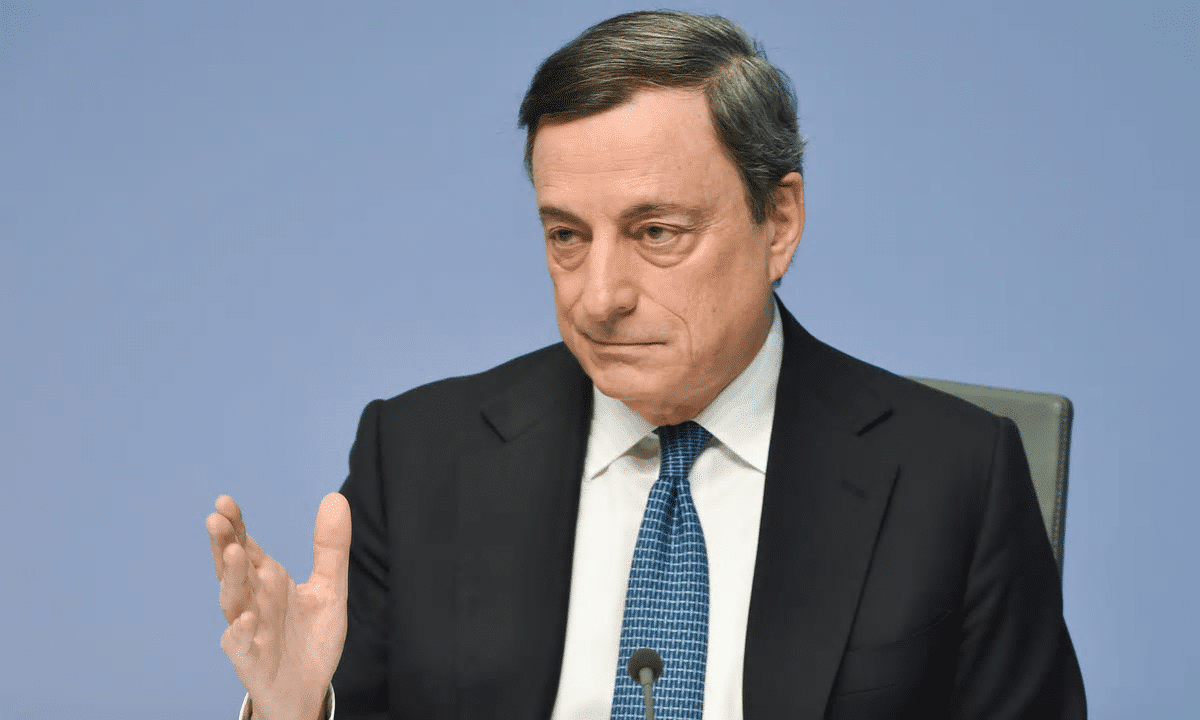
Benno Galliker watched Mario Draghi’s conference on stimulus measures broadcast on TV on Thursday. He had some long stocks, and the market was currently in a rally.
“I don’t know what to do now,” he said, being among 17 people in trading in Luzerner Kantonalbank in Switzerland. “You have to wait.”
At the same time, waiting was sorrowful while what had been the greatest Volatility for the Euro Stoxx 50 Index sharply disintegrated following the ECB decision in the Draghi period. Voices were silenced when Dragi announced that he didn’t expect more reductions of interest rates.
“It’s OK. As we’re still higher it is good,” Galliker said.
In the evening, the Euro Stoxx 50 had lost all its growth, closing 1.5% lower. Banks that had gained more than 7% before, cut their growth to less than 1%. The euro increased by 2%, showing the biggest increase since the rate decision on December 3.
Prior to Thursday, economists expected a reduction in interest rates. What the ECB announced overcame their expectations: the central bank cut all three main rates, enlarged its bond purchase to 80 billion monthly and allowed the buying of corporate debt.
“It was the day with two opposite narratives,” stated Kevin Lilley, who deals with equities at Old Mutual Global Investors. “It’s weird to think that on a day when the ECB decreased the rates and increased QE, the euro strengthened, stocks went down and yields grew.”
The market reaction gives an example of the trend of the latest months: central banks can’t do anything when there’s a need to calm down the markets. The Euro Stoxx 50 changed by more than 5% during the day, its biggest change since August.
“By using non-traditional monetary policies, central banks didn’t stimulate the markets, but added volatility,” wrote in e-mail Michael Shaoul, CEO of Marketfield Asset Management. “Everything now is more complicated than it was 2008 in the U.S. or at the beginning of 2012 in Europe, when the movement to non-traditional policies caused development of long bull markets.”
For Benno Galliker, the matter was that the banks stayed. He purchased some bank shares right after the decision on rates - he was too nervous about the news before it was announced, he said.
“While they’re outperforming, I’m satisfied,” he added. The Euro Stoxx Banks Index closed the day 0.9% up. “Not the best day, but still OK for me.”
Up till this moment, the benchmark for the ECB’s stimulus performance had been the Exchange rate, but now things have changed after the European Central Banks Meeting on Thursday. From now on, eurozone corporate bonds will be the crucial barometer that investors need to pay attention to. ECB’s purchase programme marked the shift of Draghi’s strategy, with the previous strategy focusing on lowering the government bond yield curve, which in turn caused the euro to devalue in order to boost inflation and increase exports. The gap between company debt yields and government bonds will be of vital importance.
For this strategy, there are pitfalls as well, and success largely depends on the companies’ investment appetite. The European Central Bank’s previous strategy to lower the overall cost of borrowing has caused euro bond issuing by companies from the U.S.
Benno Galliker watched Mario Draghi’s conference on stimulus measures broadcast on TV on Thursday. He had some long stocks, and the market was currently in a rally.
“I don’t know what to do now,” he said, being among 17 people in trading in Luzerner Kantonalbank in Switzerland. “You have to wait.”
At the same time, waiting was sorrowful while what had been the greatest Volatility for the Euro Stoxx 50 Index sharply disintegrated following the ECB decision in the Draghi period. Voices were silenced when Dragi announced that he didn’t expect more reductions of interest rates.
“It’s OK. As we’re still higher it is good,” Galliker said.
In the evening, the Euro Stoxx 50 had lost all its growth, closing 1.5% lower. Banks that had gained more than 7% before, cut their growth to less than 1%. The euro increased by 2%, showing the biggest increase since the rate decision on December 3.
Prior to Thursday, economists expected a reduction in interest rates. What the ECB announced overcame their expectations: the central bank cut all three main rates, enlarged its bond purchase to 80 billion monthly and allowed the buying of corporate debt.
“It was the day with two opposite narratives,” stated Kevin Lilley, who deals with equities at Old Mutual Global Investors. “It’s weird to think that on a day when the ECB decreased the rates and increased QE, the euro strengthened, stocks went down and yields grew.”
The market reaction gives an example of the trend of the latest months: central banks can’t do anything when there’s a need to calm down the markets. The Euro Stoxx 50 changed by more than 5% during the day, its biggest change since August.
“By using non-traditional monetary policies, central banks didn’t stimulate the markets, but added volatility,” wrote in e-mail Michael Shaoul, CEO of Marketfield Asset Management. “Everything now is more complicated than it was 2008 in the U.S. or at the beginning of 2012 in Europe, when the movement to non-traditional policies caused development of long bull markets.”
For Benno Galliker, the matter was that the banks stayed. He purchased some bank shares right after the decision on rates - he was too nervous about the news before it was announced, he said.
“While they’re outperforming, I’m satisfied,” he added. The Euro Stoxx Banks Index closed the day 0.9% up. “Not the best day, but still OK for me.”
Up till this moment, the benchmark for the ECB’s stimulus performance had been the Exchange rate, but now things have changed after the European Central Banks Meeting on Thursday. From now on, eurozone corporate bonds will be the crucial barometer that investors need to pay attention to. ECB’s purchase programme marked the shift of Draghi’s strategy, with the previous strategy focusing on lowering the government bond yield curve, which in turn caused the euro to devalue in order to boost inflation and increase exports. The gap between company debt yields and government bonds will be of vital importance.
For this strategy, there are pitfalls as well, and success largely depends on the companies’ investment appetite. The European Central Bank’s previous strategy to lower the overall cost of borrowing has caused euro bond issuing by companies from the U.S.
Clearstream to Settle LCH-Cleared Equity Contracts
FP Markets Winner Spotlight 🏆 | Global Broker of the Year 2025 #Trading #Broker #Innovation #Shorts
FP Markets Winner Spotlight 🏆 | Global Broker of the Year 2025 #Trading #Broker #Innovation #Shorts
FP Markets takes the spotlight as Global Broker of the Year 2025 at the Finance Magnates Awards.
Martin Stoilov, Head of Client Experience, shares that trust, innovation, and people played a key role in the company’s success, supported by a strong foundation of integrity and client-centricity.
Following this milestone, FP Markets continues to focus on growth, technology investment, and its core values of transparency and excellence.
👉 Be part of FM Awards 2026: https://awards.financemagnates.com/#nominate
FP Markets takes the spotlight as Global Broker of the Year 2025 at the Finance Magnates Awards.
Martin Stoilov, Head of Client Experience, shares that trust, innovation, and people played a key role in the company’s success, supported by a strong foundation of integrity and client-centricity.
Following this milestone, FP Markets continues to focus on growth, technology investment, and its core values of transparency and excellence.
👉 Be part of FM Awards 2026: https://awards.financemagnates.com/#nominate
In this video, we review @HolaPrimeMarketsOfficial, a multi-asset forex and CFDs broker offering different account types, trading platforms, and flexible trading conditions.
We cover the broker’s overall offering, including account options, trading environment, platforms like MT4 and MT5, and additional services such as managed accounts and fast withdrawals.
Watch the full video to see if Hola Prime Markets fits your trading needs.
📣 Stay up to date with the latest in finance and trading. Follow Finance Magnates for industry news, insights, and global event coverage.
Connect with us:
🔗 LinkedIn: /financemagnates
👍 Facebook: /financemagnates
📸 Instagram: https://www.instagram.com/financemagnates
🐦 X: https://x.com/financemagnates
🎥 TikTok: https://www.tiktok.com/tag/financemagnates
▶️ YouTube: /@financemagnates_official
#HolaPrime #ForexBroker #CFDTrading #FinanceMagnates #Trading #Forex #BrokerReview
In this video, we review @HolaPrimeMarketsOfficial, a multi-asset forex and CFDs broker offering different account types, trading platforms, and flexible trading conditions.
We cover the broker’s overall offering, including account options, trading environment, platforms like MT4 and MT5, and additional services such as managed accounts and fast withdrawals.
Watch the full video to see if Hola Prime Markets fits your trading needs.
📣 Stay up to date with the latest in finance and trading. Follow Finance Magnates for industry news, insights, and global event coverage.
Connect with us:
🔗 LinkedIn: /financemagnates
👍 Facebook: /financemagnates
📸 Instagram: https://www.instagram.com/financemagnates
🐦 X: https://x.com/financemagnates
🎥 TikTok: https://www.tiktok.com/tag/financemagnates
▶️ YouTube: /@financemagnates_official
#HolaPrime #ForexBroker #CFDTrading #FinanceMagnates #Trading #Forex #BrokerReview
Hola Prime Review: What You Need to Know | Full Breakdown by Finance Magnates
Hola Prime Review: What You Need to Know | Full Breakdown by Finance Magnates
In this video, we review @HolaPrime_Global, a proprietary trading firm offering evaluation programs and performance-based payouts in simulated market environments.
We cover how the challenge model works, including account types, profit splits (up to 95%), trading rules, and what it takes to reach a funded account. You’ll also learn about available platforms like MT4, MT5, cTrader, and more, along with insights into payouts, support, and trading conditions.
Watch the full video to see if Hola Prime fits your trading style.
📣 Stay up to date with the latest in finance and trading. Follow Finance Magnates for industry news, insights, and global event coverage.
Connect with us:
🔗 LinkedIn: /financemagnates
👍 Facebook: /financemagnates
📸 Instagram: https://www.instagram.com/financemagnates
🐦 X: https://x.com/financemagnates
🎥 TikTok: https://www.tiktok.com/tag/financemagnates
▶️ YouTube: /@financemagnates_official
#HolaPrime #PropFirm #Trading #FinanceMagnates #Forex #FuturesTrading #TradingReview #PropFirmReview
In this video, we review @HolaPrime_Global, a proprietary trading firm offering evaluation programs and performance-based payouts in simulated market environments.
We cover how the challenge model works, including account types, profit splits (up to 95%), trading rules, and what it takes to reach a funded account. You’ll also learn about available platforms like MT4, MT5, cTrader, and more, along with insights into payouts, support, and trading conditions.
Watch the full video to see if Hola Prime fits your trading style.
📣 Stay up to date with the latest in finance and trading. Follow Finance Magnates for industry news, insights, and global event coverage.
Connect with us:
🔗 LinkedIn: /financemagnates
👍 Facebook: /financemagnates
📸 Instagram: https://www.instagram.com/financemagnates
🐦 X: https://x.com/financemagnates
🎥 TikTok: https://www.tiktok.com/tag/financemagnates
▶️ YouTube: /@financemagnates_official
#HolaPrime #PropFirm #Trading #FinanceMagnates #Forex #FuturesTrading #TradingReview #PropFirmReview
Axi Winner Spotlight 🏆 | Global Most Innovative Broker 2025 #Innovation #Trading #Fintech #Broker
Axi Winner Spotlight 🏆 | Global Most Innovative Broker 2025 #Innovation #Trading #Fintech #Broker
Axi takes the spotlight at the Finance Magnates Awards, winning Global Most Innovative Broker 2025.
Olivia Xenofontos and Ivanna Openko share how the team will feel: proud, motivated, and ready to keep delivering.
They also describe the night as well-organized, focused, and enjoyable for all.
👉 Be part of FM Awards 2026.
Axi takes the spotlight at the Finance Magnates Awards, winning Global Most Innovative Broker 2025.
Olivia Xenofontos and Ivanna Openko share how the team will feel: proud, motivated, and ready to keep delivering.
They also describe the night as well-organized, focused, and enjoyable for all.
👉 Be part of FM Awards 2026.
Recognition that matters.
Built on transparency.
Driven by the industry.
The Finance Magnates Awards 2026.
Nominations are now open.
🔗 https://awards.financemagnates.com/?utm_source=SM&utm_medium=social&utm_campaign=recognition-matters
Recognition that matters.
Built on transparency.
Driven by the industry.
The Finance Magnates Awards 2026.
Nominations are now open.
🔗 https://awards.financemagnates.com/?utm_source=SM&utm_medium=social&utm_campaign=recognition-matters