
What was once just a niche preoccupation for tech enthusiasts burst on to the scene and grabbed front-page headlines in iconic news sources like The New York Times and The Wall Street Journal, it made featured on late night talk shows, and it accrued a lot of investment from enlivened investors afraid of missing the next big thing.
By the time the year was over, the collective crypto cap had exceeded $800 billion, which represented growth of forty times their value from the start of the year. Very few people honestly saw this coming, and its unprecedented rise made many people concerned that Bitcoin and other digital currencies were a bubble that was poised to pop at any moment.
The bubble never did pop, but it sure has deflated a lot since its high-water mark. However, while cryptocurrencies receive significantly less press than they did just a few months ago, the digital ecosystem that they power is thriving like never before.
Blockchain technology, the extremely competent accounting mechanism behind cryptocurrencies, is receiving considerable praise from industry executives, government leaders, and ambitious entrepreneurs.
Its placement at the top of the tech echelon is leading to an exceedingly practical debate about the best practices for funding blockchain startups. Initial Coins Offerings (ICOs) are receiving much of the most attention and money, but they are marred by obvious shortcomings that make their sustainability dubious.
Meanwhile, Initial Loan Procurement (ILPs) through the Blockhive platform and incubator is emerging as a viable alternative to the ICO model to improve the fundraising process.
Initial Coin Offerings Are Where the Money’s At
According to data compiled by CoinSchedule, there has already been 440 ICOs, and they’ve combined to raise more than $10 billion for their respective projects. Almost three new ICOs launch every day, and they are on pace to surpass $20 billion by the end of the year. They’ve already advanced well beyond the $3.8 billion raised in 2017, a record at the time.
However, their popularity is not without drawbacks. The process is similar to the Initial Public Offering that companies undergo when issuing public stock, but it lacks many of the regulatory restrictions for the process. As a result, there is an alarming number of scams or valueless platforms that siphon off investor dollars and tarnish the industry’s reputation.
In May, The Wall Street Journal conducted an exhaustive study of 1,450 ICOs, and they found “271 with red flags that include plagiarized investor documents, promises of guaranteed returns and missing or fake executive teams.”
ICOs have other ancillary issues including taxation and regulation uncertainty. While companies like ICOHeadStart try to streamline these issues through a single platform system, it doesn’t erase the concerns completely. Even so, with so much enterprise investment from companies like IBM, Microsoft, Mastercard, and JP Morgan Chase, many see the blockchain and its accompanying platforms as the future of computing in the digital age.
Is ILP a good alternative to ICOs?
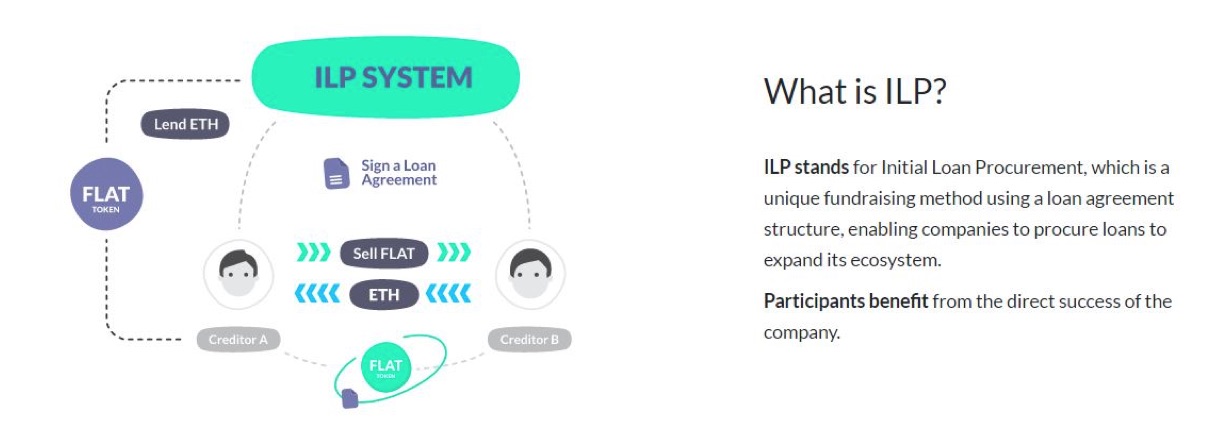
At the same time, ILPs are stepping up to provide a viable alternative fundraising model for new blockchain projects. This process connects blockchain startups with interested investors who provide the project’s funding and earn interest on that loan. For many companies, this arrangement happens right on the blockchain, and its efficacy is enforced by the technology.
For example, Blockhive utilizes the popular Ethereum blockchain to create a loan agreement between a lender and a blockchain startup. With an ILP, investors receive a guaranteed return on their investment. The entire process is managed by smart contracts, so it’s easier and more secure than ICO investment.
Video interview of Hikaru Kusaka, co-Founder of Blockhive
In addition, the incubator model provides critical guidance to startup teams that are flush with great ideas, but they often lack the resources to maximize their platform’s potential. It’s a collaborative process that benefits investors, platforms, and the broad blockchain community.
Blockchain technology is too important to let stagnate because of foolish fundraising models or a cadre of bad actors. By embracing the ILP model, investors are supporting the proliferation of blockchain technology while ensuring that their money is well spent.
In many ways, it’s a unique combination of traditional lending formats that are enabled by next-generation technology. It’s an exciting merger that could help write the next chapter for blockchain technology and the platforms developing alongside it.
Disclaimer: This is a contributed article and does not necessarily and should not be taken as investment advice
What was once just a niche preoccupation for tech enthusiasts burst on to the scene and grabbed front-page headlines in iconic news sources like The New York Times and The Wall Street Journal, it made featured on late night talk shows, and it accrued a lot of investment from enlivened investors afraid of missing the next big thing.
By the time the year was over, the collective crypto cap had exceeded $800 billion, which represented growth of forty times their value from the start of the year. Very few people honestly saw this coming, and its unprecedented rise made many people concerned that Bitcoin and other digital currencies were a bubble that was poised to pop at any moment.
The bubble never did pop, but it sure has deflated a lot since its high-water mark. However, while cryptocurrencies receive significantly less press than they did just a few months ago, the digital ecosystem that they power is thriving like never before.
Blockchain technology, the extremely competent accounting mechanism behind cryptocurrencies, is receiving considerable praise from industry executives, government leaders, and ambitious entrepreneurs.
Its placement at the top of the tech echelon is leading to an exceedingly practical debate about the best practices for funding blockchain startups. Initial Coins Offerings (ICOs) are receiving much of the most attention and money, but they are marred by obvious shortcomings that make their sustainability dubious.
Meanwhile, Initial Loan Procurement (ILPs) through the Blockhive platform and incubator is emerging as a viable alternative to the ICO model to improve the fundraising process.
Initial Coin Offerings Are Where the Money’s At
According to data compiled by CoinSchedule, there has already been 440 ICOs, and they’ve combined to raise more than $10 billion for their respective projects. Almost three new ICOs launch every day, and they are on pace to surpass $20 billion by the end of the year. They’ve already advanced well beyond the $3.8 billion raised in 2017, a record at the time.
However, their popularity is not without drawbacks. The process is similar to the Initial Public Offering that companies undergo when issuing public stock, but it lacks many of the regulatory restrictions for the process. As a result, there is an alarming number of scams or valueless platforms that siphon off investor dollars and tarnish the industry’s reputation.
In May, The Wall Street Journal conducted an exhaustive study of 1,450 ICOs, and they found “271 with red flags that include plagiarized investor documents, promises of guaranteed returns and missing or fake executive teams.”
ICOs have other ancillary issues including taxation and regulation uncertainty. While companies like ICOHeadStart try to streamline these issues through a single platform system, it doesn’t erase the concerns completely. Even so, with so much enterprise investment from companies like IBM, Microsoft, Mastercard, and JP Morgan Chase, many see the blockchain and its accompanying platforms as the future of computing in the digital age.
Is ILP a good alternative to ICOs?
At the same time, ILPs are stepping up to provide a viable alternative fundraising model for new blockchain projects. This process connects blockchain startups with interested investors who provide the project’s funding and earn interest on that loan. For many companies, this arrangement happens right on the blockchain, and its efficacy is enforced by the technology.
For example, Blockhive utilizes the popular Ethereum blockchain to create a loan agreement between a lender and a blockchain startup. With an ILP, investors receive a guaranteed return on their investment. The entire process is managed by smart contracts, so it’s easier and more secure than ICO investment.
Video interview of Hikaru Kusaka, co-Founder of Blockhive
In addition, the incubator model provides critical guidance to startup teams that are flush with great ideas, but they often lack the resources to maximize their platform’s potential. It’s a collaborative process that benefits investors, platforms, and the broad blockchain community.
Blockchain technology is too important to let stagnate because of foolish fundraising models or a cadre of bad actors. By embracing the ILP model, investors are supporting the proliferation of blockchain technology while ensuring that their money is well spent.
In many ways, it’s a unique combination of traditional lending formats that are enabled by next-generation technology. It’s an exciting merger that could help write the next chapter for blockchain technology and the platforms developing alongside it.
Disclaimer: This is a contributed article and does not necessarily and should not be taken as investment advice
SMX's 1900% Surge Since November Is Not a Momentum Trade; It's Based on Transformative and Deliverable Techology
Featured Videos
Executive Interview | Charlotte Bullock | Chief Product Officer, Bank of London | FMLS:25
In this interview, we sat down with Charlotte Bullock, Head of Product at The Bank of London, previously at SAP and now shaping product at one of the sector’s most ambitious new banking players.
Charlotte reflects on the Summit so far and talks about the culture inside fintech banks today. We look at the pressures that come with scaling, and how firms can hold onto the nimble approach that made them stand out early on.
We also cover the state of payments ahead of her appearance on the payments roundtable: the blockages financial firms face, the areas that still need fixing, and what a realistic solution looks like in 2026.
In this interview, we sat down with Charlotte Bullock, Head of Product at The Bank of London, previously at SAP and now shaping product at one of the sector’s most ambitious new banking players.
Charlotte reflects on the Summit so far and talks about the culture inside fintech banks today. We look at the pressures that come with scaling, and how firms can hold onto the nimble approach that made them stand out early on.
We also cover the state of payments ahead of her appearance on the payments roundtable: the blockages financial firms face, the areas that still need fixing, and what a realistic solution looks like in 2026.
In this interview, we sat down with Charlotte Bullock, Head of Product at The Bank of London, previously at SAP and now shaping product at one of the sector’s most ambitious new banking players.
Charlotte reflects on the Summit so far and talks about the culture inside fintech banks today. We look at the pressures that come with scaling, and how firms can hold onto the nimble approach that made them stand out early on.
We also cover the state of payments ahead of her appearance on the payments roundtable: the blockages financial firms face, the areas that still need fixing, and what a realistic solution looks like in 2026.
In this interview, we sat down with Charlotte Bullock, Head of Product at The Bank of London, previously at SAP and now shaping product at one of the sector’s most ambitious new banking players.
Charlotte reflects on the Summit so far and talks about the culture inside fintech banks today. We look at the pressures that come with scaling, and how firms can hold onto the nimble approach that made them stand out early on.
We also cover the state of payments ahead of her appearance on the payments roundtable: the blockages financial firms face, the areas that still need fixing, and what a realistic solution looks like in 2026.
In this conversation, we sit down with Drew Niv, CSO at ATFX Connect and one of the most influential figures in modern FX.
We speak about market structure, the institutional view on liquidity, and the sharp rise of prop trading, a sector Drew has been commenting on in recent months. Drew explains why he once dismissed prop trading, why his view changed, and what he now thinks the model means for brokers, clients and risk managers.
We explore subscription-fee dependency, the high reneging rate, and the long-term challenge: how brokers can build a more stable and honest version of the model. Drew also talks about the traffic advantage standalone prop firms have built and why brokers may still win in the long run if they take the right approach.
In this conversation, we sit down with Drew Niv, CSO at ATFX Connect and one of the most influential figures in modern FX.
We speak about market structure, the institutional view on liquidity, and the sharp rise of prop trading, a sector Drew has been commenting on in recent months. Drew explains why he once dismissed prop trading, why his view changed, and what he now thinks the model means for brokers, clients and risk managers.
We explore subscription-fee dependency, the high reneging rate, and the long-term challenge: how brokers can build a more stable and honest version of the model. Drew also talks about the traffic advantage standalone prop firms have built and why brokers may still win in the long run if they take the right approach.
In this conversation, we sit down with Drew Niv, CSO at ATFX Connect and one of the most influential figures in modern FX.
We speak about market structure, the institutional view on liquidity, and the sharp rise of prop trading, a sector Drew has been commenting on in recent months. Drew explains why he once dismissed prop trading, why his view changed, and what he now thinks the model means for brokers, clients and risk managers.
We explore subscription-fee dependency, the high reneging rate, and the long-term challenge: how brokers can build a more stable and honest version of the model. Drew also talks about the traffic advantage standalone prop firms have built and why brokers may still win in the long run if they take the right approach.
In this conversation, we sit down with Drew Niv, CSO at ATFX Connect and one of the most influential figures in modern FX.
We speak about market structure, the institutional view on liquidity, and the sharp rise of prop trading, a sector Drew has been commenting on in recent months. Drew explains why he once dismissed prop trading, why his view changed, and what he now thinks the model means for brokers, clients and risk managers.
We explore subscription-fee dependency, the high reneging rate, and the long-term challenge: how brokers can build a more stable and honest version of the model. Drew also talks about the traffic advantage standalone prop firms have built and why brokers may still win in the long run if they take the right approach.
In this conversation, we sit down with Drew Niv, CSO at ATFX Connect and one of the most influential figures in modern FX.
We speak about market structure, the institutional view on liquidity, and the sharp rise of prop trading, a sector Drew has been commenting on in recent months. Drew explains why he once dismissed prop trading, why his view changed, and what he now thinks the model means for brokers, clients and risk managers.
We explore subscription-fee dependency, the high reneging rate, and the long-term challenge: how brokers can build a more stable and honest version of the model. Drew also talks about the traffic advantage standalone prop firms have built and why brokers may still win in the long run if they take the right approach.
In this conversation, we sit down with Drew Niv, CSO at ATFX Connect and one of the most influential figures in modern FX.
We speak about market structure, the institutional view on liquidity, and the sharp rise of prop trading, a sector Drew has been commenting on in recent months. Drew explains why he once dismissed prop trading, why his view changed, and what he now thinks the model means for brokers, clients and risk managers.
We explore subscription-fee dependency, the high reneging rate, and the long-term challenge: how brokers can build a more stable and honest version of the model. Drew also talks about the traffic advantage standalone prop firms have built and why brokers may still win in the long run if they take the right approach.
Executive Interview | Remonda Z. Kirketerp Møller| CEO & Founder Muinmos | FMLS:25
In this interview, Remonda Z. Kirketerp Møller, founder of Muinmos, breaks down the state of AI in regtech and what responsible adoption really looks like for brokers. We talk about rising fragmentation, the pressures around compliance accuracy, and why most firms are still in the early stages of AI maturity.
Ramanda also shares insights on regulator sandboxes, shifting expectations around accountability, and the current reality of MiCA licensing and passporting in Europe.
A concise look at where compliance, onboarding, and AI-driven processes are heading next.
In this interview, Remonda Z. Kirketerp Møller, founder of Muinmos, breaks down the state of AI in regtech and what responsible adoption really looks like for brokers. We talk about rising fragmentation, the pressures around compliance accuracy, and why most firms are still in the early stages of AI maturity.
Ramanda also shares insights on regulator sandboxes, shifting expectations around accountability, and the current reality of MiCA licensing and passporting in Europe.
A concise look at where compliance, onboarding, and AI-driven processes are heading next.
In this interview, Remonda Z. Kirketerp Møller, founder of Muinmos, breaks down the state of AI in regtech and what responsible adoption really looks like for brokers. We talk about rising fragmentation, the pressures around compliance accuracy, and why most firms are still in the early stages of AI maturity.
Ramanda also shares insights on regulator sandboxes, shifting expectations around accountability, and the current reality of MiCA licensing and passporting in Europe.
A concise look at where compliance, onboarding, and AI-driven processes are heading next.
In this interview, Remonda Z. Kirketerp Møller, founder of Muinmos, breaks down the state of AI in regtech and what responsible adoption really looks like for brokers. We talk about rising fragmentation, the pressures around compliance accuracy, and why most firms are still in the early stages of AI maturity.
Ramanda also shares insights on regulator sandboxes, shifting expectations around accountability, and the current reality of MiCA licensing and passporting in Europe.
A concise look at where compliance, onboarding, and AI-driven processes are heading next.
In this interview, Remonda Z. Kirketerp Møller, founder of Muinmos, breaks down the state of AI in regtech and what responsible adoption really looks like for brokers. We talk about rising fragmentation, the pressures around compliance accuracy, and why most firms are still in the early stages of AI maturity.
Ramanda also shares insights on regulator sandboxes, shifting expectations around accountability, and the current reality of MiCA licensing and passporting in Europe.
A concise look at where compliance, onboarding, and AI-driven processes are heading next.
In this interview, Remonda Z. Kirketerp Møller, founder of Muinmos, breaks down the state of AI in regtech and what responsible adoption really looks like for brokers. We talk about rising fragmentation, the pressures around compliance accuracy, and why most firms are still in the early stages of AI maturity.
Ramanda also shares insights on regulator sandboxes, shifting expectations around accountability, and the current reality of MiCA licensing and passporting in Europe.
A concise look at where compliance, onboarding, and AI-driven processes are heading next.
In this conversation, we speak with Aydin Bonabi, CEO and co-founder of Surveill, a firm focused on fraud detection and AI-driven compliance tools for financial institutions.
We start with Aydin’s view of the Summit and the challenges brokers face as fraud tactics grow more complex. He explains how firms can stay ahead through real-time signals, data patterns, and early-stage detection.
We also talk about AI training and why compliance teams often struggle to keep models accurate, fair, and aligned with regulatory expectations. Aydin breaks down what “good” AI training looks like inside a financial environment, including the importance of clean data, domain expertise, and human oversight.
He closes with a clear message: fraud is scaling, and so must the tools that stop it.
In this conversation, we speak with Aydin Bonabi, CEO and co-founder of Surveill, a firm focused on fraud detection and AI-driven compliance tools for financial institutions.
We start with Aydin’s view of the Summit and the challenges brokers face as fraud tactics grow more complex. He explains how firms can stay ahead through real-time signals, data patterns, and early-stage detection.
We also talk about AI training and why compliance teams often struggle to keep models accurate, fair, and aligned with regulatory expectations. Aydin breaks down what “good” AI training looks like inside a financial environment, including the importance of clean data, domain expertise, and human oversight.
He closes with a clear message: fraud is scaling, and so must the tools that stop it.
In this conversation, we speak with Aydin Bonabi, CEO and co-founder of Surveill, a firm focused on fraud detection and AI-driven compliance tools for financial institutions.
We start with Aydin’s view of the Summit and the challenges brokers face as fraud tactics grow more complex. He explains how firms can stay ahead through real-time signals, data patterns, and early-stage detection.
We also talk about AI training and why compliance teams often struggle to keep models accurate, fair, and aligned with regulatory expectations. Aydin breaks down what “good” AI training looks like inside a financial environment, including the importance of clean data, domain expertise, and human oversight.
He closes with a clear message: fraud is scaling, and so must the tools that stop it.
In this conversation, we speak with Aydin Bonabi, CEO and co-founder of Surveill, a firm focused on fraud detection and AI-driven compliance tools for financial institutions.
We start with Aydin’s view of the Summit and the challenges brokers face as fraud tactics grow more complex. He explains how firms can stay ahead through real-time signals, data patterns, and early-stage detection.
We also talk about AI training and why compliance teams often struggle to keep models accurate, fair, and aligned with regulatory expectations. Aydin breaks down what “good” AI training looks like inside a financial environment, including the importance of clean data, domain expertise, and human oversight.
He closes with a clear message: fraud is scaling, and so must the tools that stop it.
In this conversation, we speak with Aydin Bonabi, CEO and co-founder of Surveill, a firm focused on fraud detection and AI-driven compliance tools for financial institutions.
We start with Aydin’s view of the Summit and the challenges brokers face as fraud tactics grow more complex. He explains how firms can stay ahead through real-time signals, data patterns, and early-stage detection.
We also talk about AI training and why compliance teams often struggle to keep models accurate, fair, and aligned with regulatory expectations. Aydin breaks down what “good” AI training looks like inside a financial environment, including the importance of clean data, domain expertise, and human oversight.
He closes with a clear message: fraud is scaling, and so must the tools that stop it.
In this conversation, we speak with Aydin Bonabi, CEO and co-founder of Surveill, a firm focused on fraud detection and AI-driven compliance tools for financial institutions.
We start with Aydin’s view of the Summit and the challenges brokers face as fraud tactics grow more complex. He explains how firms can stay ahead through real-time signals, data patterns, and early-stage detection.
We also talk about AI training and why compliance teams often struggle to keep models accurate, fair, and aligned with regulatory expectations. Aydin breaks down what “good” AI training looks like inside a financial environment, including the importance of clean data, domain expertise, and human oversight.
He closes with a clear message: fraud is scaling, and so must the tools that stop it.
Exness expands its presence in Africa: Inside our interview with Paul Margarites in Cape Town
Finance Magnates met with Paul Margarites, Exness regional commercial director for Sub-Saharan Africa, during a visit to the firm’s office opening in Cape Town. In this talk, led by Andrea Badiola Mateos, Co-CEO at Finance Magnates, Paul shares views on the South African trading space, local user behavior, mobile trends, regulation, team growth, and how Exness plans to grow in more markets across the region. @Exness
Read the article at: https://www.financemagnates.com/thought-leadership/exness-expands-its-presence-in-africa-inside-our-interview-with-paul-margarites/
#exness #financemagnates #exnesstrading #CFDtrading #tradeonline #africanews #capetown
Finance Magnates met with Paul Margarites, Exness regional commercial director for Sub-Saharan Africa, during a visit to the firm’s office opening in Cape Town. In this talk, led by Andrea Badiola Mateos, Co-CEO at Finance Magnates, Paul shares views on the South African trading space, local user behavior, mobile trends, regulation, team growth, and how Exness plans to grow in more markets across the region. @Exness
Read the article at: https://www.financemagnates.com/thought-leadership/exness-expands-its-presence-in-africa-inside-our-interview-with-paul-margarites/
#exness #financemagnates #exnesstrading #CFDtrading #tradeonline #africanews #capetown
Finance Magnates met with Paul Margarites, Exness regional commercial director for Sub-Saharan Africa, during a visit to the firm’s office opening in Cape Town. In this talk, led by Andrea Badiola Mateos, Co-CEO at Finance Magnates, Paul shares views on the South African trading space, local user behavior, mobile trends, regulation, team growth, and how Exness plans to grow in more markets across the region. @Exness
Read the article at: https://www.financemagnates.com/thought-leadership/exness-expands-its-presence-in-africa-inside-our-interview-with-paul-margarites/
#exness #financemagnates #exnesstrading #CFDtrading #tradeonline #africanews #capetown
Finance Magnates met with Paul Margarites, Exness regional commercial director for Sub-Saharan Africa, during a visit to the firm’s office opening in Cape Town. In this talk, led by Andrea Badiola Mateos, Co-CEO at Finance Magnates, Paul shares views on the South African trading space, local user behavior, mobile trends, regulation, team growth, and how Exness plans to grow in more markets across the region. @Exness
Read the article at: https://www.financemagnates.com/thought-leadership/exness-expands-its-presence-in-africa-inside-our-interview-with-paul-margarites/
#exness #financemagnates #exnesstrading #CFDtrading #tradeonline #africanews #capetown
Finance Magnates met with Paul Margarites, Exness regional commercial director for Sub-Saharan Africa, during a visit to the firm’s office opening in Cape Town. In this talk, led by Andrea Badiola Mateos, Co-CEO at Finance Magnates, Paul shares views on the South African trading space, local user behavior, mobile trends, regulation, team growth, and how Exness plans to grow in more markets across the region. @Exness
Read the article at: https://www.financemagnates.com/thought-leadership/exness-expands-its-presence-in-africa-inside-our-interview-with-paul-margarites/
#exness #financemagnates #exnesstrading #CFDtrading #tradeonline #africanews #capetown
Finance Magnates met with Paul Margarites, Exness regional commercial director for Sub-Saharan Africa, during a visit to the firm’s office opening in Cape Town. In this talk, led by Andrea Badiola Mateos, Co-CEO at Finance Magnates, Paul shares views on the South African trading space, local user behavior, mobile trends, regulation, team growth, and how Exness plans to grow in more markets across the region. @Exness
Read the article at: https://www.financemagnates.com/thought-leadership/exness-expands-its-presence-in-africa-inside-our-interview-with-paul-margarites/
#exness #financemagnates #exnesstrading #CFDtrading #tradeonline #africanews #capetown