

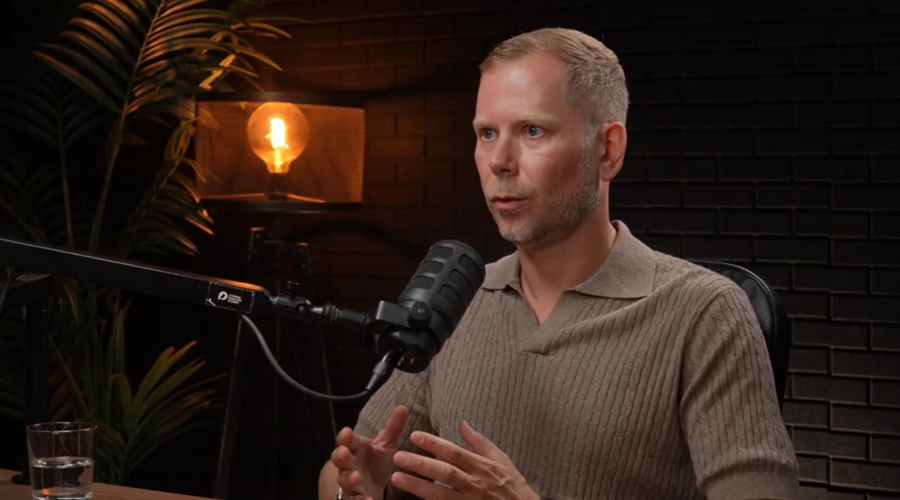
The retail prop trading industry has exploded in recent years, yet it is still operating in a regulatory gray area. As funding challenges become a new frontier, a glaring question remains: who protects the trader when disputes arise? “In hindsight, we should have launched this service many years ago,” says Nikolai Isayev, the COO of the Financial Commission.
The independent body recently released a certificate for prop firms, folding the growing industry into its established dispute resolution mechanism.
Rulings Favour Brokers, But They Don't Bind Traders
Since its founding in 2013, the Financial Commission has built a reputation as a non-governmental mediator for the CFD and FX industry. Today, the organisation has over 40 well-known global brands under its umbrella, utilising an independent panel to adjudicate complex cases.
"For 2025, we processed over 1,500 complaints, with compensation requests in the millions of dollars," Isayev notes. While some complaints fall outside their jurisdiction, such as those involving affiliate commissions, the mechanism is intended to be a safety valve for traders.
Isayev is entirely transparent about the outcomes, stating, "If we take out complaints that are outside of our jurisdiction, the win-loss ratio is about 1:3 in favour of brokers."
- Traders at FP Markets Gain Dispute Coverage Following Financial Commission Approval
- Financial Commission Approves OFinancial.Markets Membership for EDR Access
- Lirunex Steps Up Safeguards with New Membership in Financial Commission
While brokers pay membership fees to the organization, Isayev maintains that the Commission has strict neutrality. The service remains completely free for retail traders, and the rules of engagement are trader-friendly.
"When we issue a decision,” he adds, “it is binding on the broker; it is not binding on the trader.”
Unhappy traders are still free to pursue litigation or escalate matters to financial regulators, where the Commission’s expert decisions, Isayev states, are frequently submitted as evidence.
The Pivot to Prop Trading
Given the rapid rise of prop firms around 2020 and 2021, expanding into this sector seems like a natural evolution. However, the Commission was initially hesitant to step into an arena built on simulated demo environments rather than live market execution.
That stance shifted as the segment matured and traditional broker members began launching their own prop firm arms.
The regulatory future of the industry remains unclear. Because users pay evaluation fees to follow rules and earn potential rewards, some argue the industry aligns more closely with gaming than traditional finance.
Isayev is on the fence: while there is a distinct gaming flavour to prop trading, success still relies fundamentally on legitimate market analysis.
Regardless of whether financial or gaming regulators eventually take the reins, the immediate concern is trader safety.
"There is no structural market risk because there’s no live trading, but at the same time, there's big consumer risk,” says Isayev. One of them is a prop firm going bust, which is more common than the industry would like to admit.
Indeed, one of the best examples is the MetaQuotes saga, where the platform provider launched a major crackdown on firms utilising grey-label MetaTrader licenses via retail brokers. This wave of shutdowns effectively wiped out nearly 13% to 14% of the global prop space.
Isayev argues that the Commission’s new prop certification will protect funded traders by outlining best practices, including challenge settings and payout fairness.
Enforcing Accountability in a Maturing Market
A common skepticism surrounding non-government bodies is their ability to enforce rulings. The Financial Commission tackles this through strict membership control and reputation management.
Isayev argues their primary leverage lies in their industry credibility.
"If they decide not to honour a decision, the first thing that we do is expel the firm from membership," Isayev warns. “When we expel a company, that news travels fast.”
However, what happens if an unscrupulous prop firm decides to leverage the Commission's cachet without any intention of following its rules?
Isayev says they have rigorous due diligence processes at the application stage, routinely rejecting companies with corporate irregularities or ties to bad actors. As for rogue entities that attempt to falsely use the Commission’s badge as a marketing ploy, the organisation swiftly publishes public scam alerts to protect unsuspecting traders.
“We're not in the business of selling you a certificate or a PDF that says you're a member,” Isayev stresses.


