>
US Small Caps: Is the Sell-Off Creating Value or Exposing a Deeper Problem?
Disclaimer
US Small Caps: Is the Sell-Off Creating Value or Exposing a Deeper Problem?
Tuesday,13/10/2026|04:57GMTby
ActivTrades
Disclaimer
US small caps fall amid rising yields, is it value or risk?
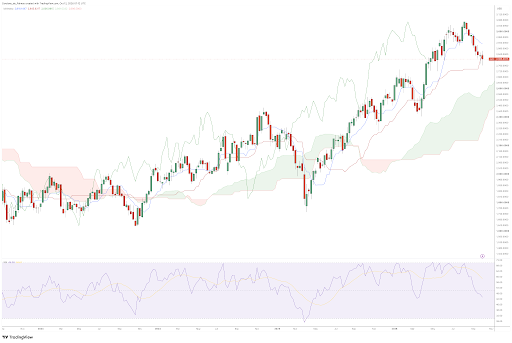
US small-cap stocks are facing a growing challenge as rising Treasury yields increase borrowing costs and threaten corporate profitability. The Russell 2000, which tracks smaller US companies, fell for five consecutive weeks through October 9, losing 5.7% over the period. The decline marked its longest weekly losing streak since May 2022, contrasting with the resilience of large-cap indices, which ended last week higher.
Weekly Russell 2000 Chart - Source: TradingView
The sell-off is raising an important question for investors: have lower share prices created an opportunity to buy undervalued companies, or are they signalling more persistent financial and economic pressures? Although some valuations have become more attractive, the outlook for small caps will depend heavily on borrowing costs, earnings resilience and the direction of inflation.
Why do rising bond yields usually hit small caps harder?
Small-cap companies are generally more sensitive to changes in financing conditions than their larger counterparts. Many have less access to corporate bond markets, rely more heavily on bank lending and have fewer resources to absorb unexpected increases in operating expenses. Companies with floating-rate debt can face higher interest expenses relatively quickly when borrowing costs rise, while those with maturing fixed-rate obligations may have to refinance at less favourable terms.
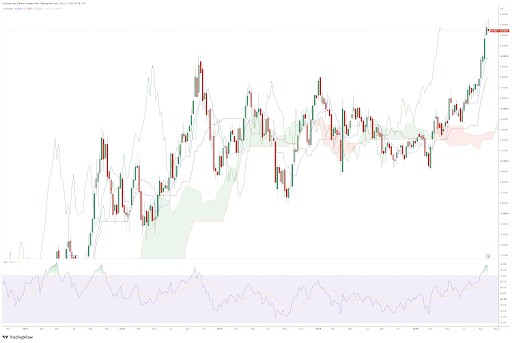
These pressures are becoming more significant as US Treasury yields climb. The 10-year Treasury yield settled at approximately 5.27% on October 9, after reaching a 24-year high earlier in the week. According to reporting by The Wall Street Journal, a growing proportion of small companies’ long-term debt is due to mature over the next 5 years, potentially exposing them to higher refinancing costs.
Weekly US 10Y - Source: TradingView
Additionally, higher fuel and input costs can reduce operating margins, while expensive credit makes it harder for companies to invest, expand production or finance acquisitions. Consumer-facing businesses may also struggle if households reduce discretionary spending in response to persistent inflation and higher borrowing costs.
This combination creates a dual squeeze: companies face pressure on both their revenues and their profitability. Early-stage biotechnology firms are particularly exposed because they often require substantial financing before their products generate meaningful revenue. Meanwhile, consumer discretionary businesses must navigate higher operating expenses alongside potentially weaker demand.
The Federal Reserve’s latest policy decisions add another layer of uncertainty. At its September meeting, the central bank raised interest rates for the first time in 3 years, as policymakers remained concerned about persistent inflation and economic resilience. The meeting minutes also highlighted the influence of geopolitical tensions and higher energy prices on the economic outlook. With energy-market disruptions continuing to complicate the inflation outlook, investors cannot assume that borrowing costs will fall quickly.
Are small-cap valuations finally attractive?
The recent correction has strengthened the argument that US small caps could offer value to investors willing to tolerate higher volatility. According to the October 9 Wall Street Journal report, Bank of America found that small-cap valuations had fallen below historical averages observed during periods when interest rates were between 5% and 7%. The bank suggested that smaller companies could recover if Treasury yields peak soon.
However, historical comparisons need to be interpreted carefully. A lower valuation relative to past periods does not automatically mean that a stock or index is cheap enough to buy. Investors must also consider whether earnings expectations remain realistic and whether companies can deal with their debt under current financing conditions.
According to FactSet data published by Madison Partners, for instance, the Russell 2000 traded at approximately 23.2 times forward earnings on September 25, compared with 19.3 times for the S&P 500. On this particular measure, small caps were not cheaper than large caps.
These figures do not necessarily contradict Bank of America’s historical comparison, as they use different valuation benchmarks. They do, however, demonstrate why investors should avoid treating the recent price decline as sufficient evidence of undervaluation. A high forward earnings multiple can also reflect differences in expected profitability, while weak or negative earnings make conventional price-to-earnings comparisons less informative for some smaller companies.
The distinction between a price correction and a deterioration in fundamentals is therefore critical. If earnings estimates remain stable while share prices fall, valuations may become more attractive. If analysts are simultaneously cutting forecasts because interest expenses and operating costs are rising, some of the apparent discount could prove illusory.
Economic resilience offers support, but risks remain
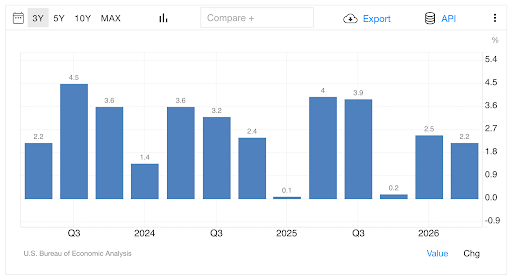
The US economic outlook provides arguments for both sides of the debate. Manufacturing activity continued to expand in September, with the Institute for Supply Management’s manufacturing purchasing managers’ index reaching 54.5. This marked the ninth consecutive month of expansion. The figure suggests that economic activity has not broadly collapsed, offering some support to companies exposed to industrial demand and business investment. During Q2 2026, US economic growth was revised upward by 0.7 percentage points to an annualized rate of 2.2%, building on a similarly upward-revised 2.5% growth rate recorded in Q1.
GDP Growth Rate - Source: TradingEconomics
Nevertheless, continued economic expansion does not guarantee that smaller companies will maintain their margins. Stronger activity can coexist with rising input costs, higher interest expenses and uneven consumer demand. Businesses with pricing power and manageable debt levels may be better placed to withstand these conditions than highly leveraged companies dependent on external financing.
Market performance also suggests that the sell-off should be viewed in context. Despite its five-week decline, the Russell 2000 remained up 13.1% year to date as of October 9. The recent weakness therefore represents a reversal in momentum rather than a complete erasure of the year’s gains.
The correction has also been uneven across the index. Healthcare and consumer discretionary stocks have faced particular pressure, while more than half of Russell 2000 constituents were reportedly trading at least 20% below their 52-week highs. This dispersion matters because an index-level recovery could conceal substantial differences between financially resilient companies and those facing more serious balance-sheet problems.
What could trigger a small-cap recovery?
A sustained improvement in Treasury yields would be one of the clearest potential catalysts. If inflation moderates and investors become more confident that monetary tightening has run its course, financing conditions could become less restrictive. Lower yields would potentially ease refinancing pressures and support equity valuations by reducing the relative attractiveness of fixed-income investments.
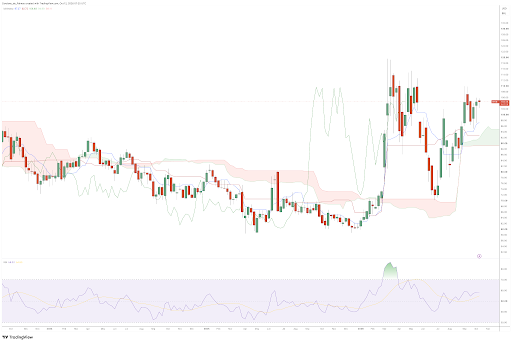
Energy prices are another variable to watch. A sustained decline in oil prices could reduce input costs for some companies and help ease inflation pressures, potentially lowering the risk of further interest-rate increases. However, any relief would need to be assessed alongside underlying demand, since falling energy prices caused by a sharp economic slowdown would not necessarily be positive for equities.
Weekly Brent Chart - Source: TradingView
Investors should also monitor earnings revisions, credit conditions and market breadth. Stabilising profit forecasts would help distinguish a valuation opportunity from a deterioration in fundamentals. Evidence that the Russell 2000 is beginning to outperform the S&P 500, with gains spreading across a broader range of constituents, would provide further confirmation that investor confidence is improving.
The upcoming US inflation report on October 14 will be particularly relevant to expectations for Federal Reserve policy and Treasury yields. The direction of bond markets around that release may help determine whether the latest small-cap correction begins to stabilise or faces renewed pressure.
Bottom Line
The sell-off has created a more compelling entry point for some US small-cap stocks, but it has not established that the broader market is undervalued. Lower prices and historically more attractive valuation measures offer a potential opportunity, yet persistent inflation, expensive refinancing and pressure on corporate margins remain substantial risks.
For investors, the more useful question is not simply whether small caps have fallen far enough, but whether their earnings and balance sheets can withstand the current cost of capital. Companies with manageable debt, durable cash flows and credible growth prospects may be better positioned to benefit if yields eventually stabilise.
Until there is clearer evidence of improving financing conditions and earnings resilience, the Russell 2000’s decline could represent both a valuation opportunity and a warning about the vulnerabilities beneath the US equity market’s headline performance.
Sources: Reuters, The Wall Street Journal, CNBC, AP, Madison Partners, Fed, ISM, Financial Times, Investopedia, Yahoo Finance, TradingEconomics
The information provided does not constitute investment research. The material has not been prepared in accordance with the legal requirements designed to promote the independence of investment research and as such is to be considered to be a marketing communication.
All information has been prepared by ActivTrades (“AT”). The information does not contain a record of AT’s prices, or an offer of or solicitation for a transaction in any financial instrument. No representation or warranty is given as to the accuracy or completeness of this information.
Any material provided does not have regard to the specific investment objective and financial situation of any person who may receive it. Past performance is not a reliable indicator of future performance. AT provides an execution-only service. Consequently, any person acting on the information provided does so at their own risk. Forecasts are not guarantees. Rates may change. Political risk is unpredictable. Central bank actions may vary. Platforms’ tools do not guarantee success.
US small-cap stocks are facing a growing challenge as rising Treasury yields increase borrowing costs and threaten corporate profitability. The Russell 2000, which tracks smaller US companies, fell for five consecutive weeks through October 9, losing 5.7% over the period. The decline marked its longest weekly losing streak since May 2022, contrasting with the resilience of large-cap indices, which ended last week higher.
Weekly Russell 2000 Chart - Source: TradingView
The sell-off is raising an important question for investors: have lower share prices created an opportunity to buy undervalued companies, or are they signalling more persistent financial and economic pressures? Although some valuations have become more attractive, the outlook for small caps will depend heavily on borrowing costs, earnings resilience and the direction of inflation.
Why do rising bond yields usually hit small caps harder?
Small-cap companies are generally more sensitive to changes in financing conditions than their larger counterparts. Many have less access to corporate bond markets, rely more heavily on bank lending and have fewer resources to absorb unexpected increases in operating expenses. Companies with floating-rate debt can face higher interest expenses relatively quickly when borrowing costs rise, while those with maturing fixed-rate obligations may have to refinance at less favourable terms.
These pressures are becoming more significant as US Treasury yields climb. The 10-year Treasury yield settled at approximately 5.27% on October 9, after reaching a 24-year high earlier in the week. According to reporting by The Wall Street Journal, a growing proportion of small companies’ long-term debt is due to mature over the next 5 years, potentially exposing them to higher refinancing costs.
Weekly US 10Y - Source: TradingView
Additionally, higher fuel and input costs can reduce operating margins, while expensive credit makes it harder for companies to invest, expand production or finance acquisitions. Consumer-facing businesses may also struggle if households reduce discretionary spending in response to persistent inflation and higher borrowing costs.
This combination creates a dual squeeze: companies face pressure on both their revenues and their profitability. Early-stage biotechnology firms are particularly exposed because they often require substantial financing before their products generate meaningful revenue. Meanwhile, consumer discretionary businesses must navigate higher operating expenses alongside potentially weaker demand.
The Federal Reserve’s latest policy decisions add another layer of uncertainty. At its September meeting, the central bank raised interest rates for the first time in 3 years, as policymakers remained concerned about persistent inflation and economic resilience. The meeting minutes also highlighted the influence of geopolitical tensions and higher energy prices on the economic outlook. With energy-market disruptions continuing to complicate the inflation outlook, investors cannot assume that borrowing costs will fall quickly.
Are small-cap valuations finally attractive?
The recent correction has strengthened the argument that US small caps could offer value to investors willing to tolerate higher volatility. According to the October 9 Wall Street Journal report, Bank of America found that small-cap valuations had fallen below historical averages observed during periods when interest rates were between 5% and 7%. The bank suggested that smaller companies could recover if Treasury yields peak soon.
However, historical comparisons need to be interpreted carefully. A lower valuation relative to past periods does not automatically mean that a stock or index is cheap enough to buy. Investors must also consider whether earnings expectations remain realistic and whether companies can deal with their debt under current financing conditions.
According to FactSet data published by Madison Partners, for instance, the Russell 2000 traded at approximately 23.2 times forward earnings on September 25, compared with 19.3 times for the S&P 500. On this particular measure, small caps were not cheaper than large caps.
These figures do not necessarily contradict Bank of America’s historical comparison, as they use different valuation benchmarks. They do, however, demonstrate why investors should avoid treating the recent price decline as sufficient evidence of undervaluation. A high forward earnings multiple can also reflect differences in expected profitability, while weak or negative earnings make conventional price-to-earnings comparisons less informative for some smaller companies.
The distinction between a price correction and a deterioration in fundamentals is therefore critical. If earnings estimates remain stable while share prices fall, valuations may become more attractive. If analysts are simultaneously cutting forecasts because interest expenses and operating costs are rising, some of the apparent discount could prove illusory.
Economic resilience offers support, but risks remain
The US economic outlook provides arguments for both sides of the debate. Manufacturing activity continued to expand in September, with the Institute for Supply Management’s manufacturing purchasing managers’ index reaching 54.5. This marked the ninth consecutive month of expansion. The figure suggests that economic activity has not broadly collapsed, offering some support to companies exposed to industrial demand and business investment. During Q2 2026, US economic growth was revised upward by 0.7 percentage points to an annualized rate of 2.2%, building on a similarly upward-revised 2.5% growth rate recorded in Q1.
GDP Growth Rate - Source: TradingEconomics
Nevertheless, continued economic expansion does not guarantee that smaller companies will maintain their margins. Stronger activity can coexist with rising input costs, higher interest expenses and uneven consumer demand. Businesses with pricing power and manageable debt levels may be better placed to withstand these conditions than highly leveraged companies dependent on external financing.
Market performance also suggests that the sell-off should be viewed in context. Despite its five-week decline, the Russell 2000 remained up 13.1% year to date as of October 9. The recent weakness therefore represents a reversal in momentum rather than a complete erasure of the year’s gains.
The correction has also been uneven across the index. Healthcare and consumer discretionary stocks have faced particular pressure, while more than half of Russell 2000 constituents were reportedly trading at least 20% below their 52-week highs. This dispersion matters because an index-level recovery could conceal substantial differences between financially resilient companies and those facing more serious balance-sheet problems.
What could trigger a small-cap recovery?
A sustained improvement in Treasury yields would be one of the clearest potential catalysts. If inflation moderates and investors become more confident that monetary tightening has run its course, financing conditions could become less restrictive. Lower yields would potentially ease refinancing pressures and support equity valuations by reducing the relative attractiveness of fixed-income investments.
Energy prices are another variable to watch. A sustained decline in oil prices could reduce input costs for some companies and help ease inflation pressures, potentially lowering the risk of further interest-rate increases. However, any relief would need to be assessed alongside underlying demand, since falling energy prices caused by a sharp economic slowdown would not necessarily be positive for equities.
Weekly Brent Chart - Source: TradingView
Investors should also monitor earnings revisions, credit conditions and market breadth. Stabilising profit forecasts would help distinguish a valuation opportunity from a deterioration in fundamentals. Evidence that the Russell 2000 is beginning to outperform the S&P 500, with gains spreading across a broader range of constituents, would provide further confirmation that investor confidence is improving.
The upcoming US inflation report on October 14 will be particularly relevant to expectations for Federal Reserve policy and Treasury yields. The direction of bond markets around that release may help determine whether the latest small-cap correction begins to stabilise or faces renewed pressure.
Bottom Line
The sell-off has created a more compelling entry point for some US small-cap stocks, but it has not established that the broader market is undervalued. Lower prices and historically more attractive valuation measures offer a potential opportunity, yet persistent inflation, expensive refinancing and pressure on corporate margins remain substantial risks.
For investors, the more useful question is not simply whether small caps have fallen far enough, but whether their earnings and balance sheets can withstand the current cost of capital. Companies with manageable debt, durable cash flows and credible growth prospects may be better positioned to benefit if yields eventually stabilise.
Until there is clearer evidence of improving financing conditions and earnings resilience, the Russell 2000’s decline could represent both a valuation opportunity and a warning about the vulnerabilities beneath the US equity market’s headline performance.
Sources: Reuters, The Wall Street Journal, CNBC, AP, Madison Partners, Fed, ISM, Financial Times, Investopedia, Yahoo Finance, TradingEconomics
The information provided does not constitute investment research. The material has not been prepared in accordance with the legal requirements designed to promote the independence of investment research and as such is to be considered to be a marketing communication.
All information has been prepared by ActivTrades (“AT”). The information does not contain a record of AT’s prices, or an offer of or solicitation for a transaction in any financial instrument. No representation or warranty is given as to the accuracy or completeness of this information.
Any material provided does not have regard to the specific investment objective and financial situation of any person who may receive it. Past performance is not a reliable indicator of future performance. AT provides an execution-only service. Consequently, any person acting on the information provided does so at their own risk. Forecasts are not guarantees. Rates may change. Political risk is unpredictable. Central bank actions may vary. Platforms’ tools do not guarantee success.
CyprusFintech.org Reaches Key Development Milestones
Featured Videos
FXCM UK Holds $110m in Client Money; IG CEO Questions Prediction Market Volumes
FXCM UK Holds $110m in Client Money; IG CEO Questions Prediction Market Volumes
FXCM UK Holds $110m in Client Money; IG CEO Questions Prediction Market Volumes
FXCM UK Holds $110m in Client Money; IG CEO Questions Prediction Market Volumes
Today’s financial news recap covers FXCM's UK arm holds $110 million in client money ahead of its sale to Trade Nation, Citadel Securities' UK profit falls 38 per cent, and Kraken secures its final Dubai crypto licence.
Finance Magnates Daily Recap brings you the latest news from forex and CFD brokers, fintech, payments, cryptocurrency, digital assets, trading platforms, financial regulation and global markets.
Get the key company news, executive moves, deals, regulatory updates and market developments of the day, in just a few minutes. New episodes published every weekday.
Read more: https://www.financemagnates.com
#FinanceMagnates #ForexNews #FintechNews
Today’s financial news recap covers FXCM's UK arm holds $110 million in client money ahead of its sale to Trade Nation, Citadel Securities' UK profit falls 38 per cent, and Kraken secures its final Dubai crypto licence.
Finance Magnates Daily Recap brings you the latest news from forex and CFD brokers, fintech, payments, cryptocurrency, digital assets, trading platforms, financial regulation and global markets.
Get the key company news, executive moves, deals, regulatory updates and market developments of the day, in just a few minutes. New episodes published every weekday.
Read more: https://www.financemagnates.com
#FinanceMagnates #ForexNews #FintechNews
Today’s financial news recap covers FXCM's UK arm holds $110 million in client money ahead of its sale to Trade Nation, Citadel Securities' UK profit falls 38 per cent, and Kraken secures its final Dubai crypto licence.
Finance Magnates Daily Recap brings you the latest news from forex and CFD brokers, fintech, payments, cryptocurrency, digital assets, trading platforms, financial regulation and global markets.
Get the key company news, executive moves, deals, regulatory updates and market developments of the day, in just a few minutes. New episodes published every weekday.
Read more: https://www.financemagnates.com
#FinanceMagnates #ForexNews #FintechNews
Today’s financial news recap covers FXCM's UK arm holds $110 million in client money ahead of its sale to Trade Nation, Citadel Securities' UK profit falls 38 per cent, and Kraken secures its final Dubai crypto licence.
Finance Magnates Daily Recap brings you the latest news from forex and CFD brokers, fintech, payments, cryptocurrency, digital assets, trading platforms, financial regulation and global markets.
Get the key company news, executive moves, deals, regulatory updates and market developments of the day, in just a few minutes. New episodes published every weekday.
Read more: https://www.financemagnates.com
#FinanceMagnates #ForexNews #FintechNews
Today’s financial news recap covers AvaTrade agrees to acquire most of FXCM, NAGA secures eight million dollars in new financing, and Wise seeks a tax settlement in the UK.
Finance Magnates Daily Recap brings you the latest news from forex and CFD brokers, fintech, payments, cryptocurrency, digital assets, trading platforms, financial regulation and global markets.
Get the key company news, executive moves, deals, regulatory updates and market developments of the day, in just a few minutes. New episodes published every weekday.
Read more: https://www.financemagnates.com
#FinanceMagnates #ForexNews #FintechNews
Today’s financial news recap covers AvaTrade agrees to acquire most of FXCM, NAGA secures eight million dollars in new financing, and Wise seeks a tax settlement in the UK.
Finance Magnates Daily Recap brings you the latest news from forex and CFD brokers, fintech, payments, cryptocurrency, digital assets, trading platforms, financial regulation and global markets.
Get the key company news, executive moves, deals, regulatory updates and market developments of the day, in just a few minutes. New episodes published every weekday.
Read more: https://www.financemagnates.com
#FinanceMagnates #ForexNews #FintechNews
Today’s financial news recap covers AvaTrade agrees to acquire most of FXCM, NAGA secures eight million dollars in new financing, and Wise seeks a tax settlement in the UK.
Finance Magnates Daily Recap brings you the latest news from forex and CFD brokers, fintech, payments, cryptocurrency, digital assets, trading platforms, financial regulation and global markets.
Get the key company news, executive moves, deals, regulatory updates and market developments of the day, in just a few minutes. New episodes published every weekday.
Read more: https://www.financemagnates.com
#FinanceMagnates #ForexNews #FintechNews
Today’s financial news recap covers AvaTrade agrees to acquire most of FXCM, NAGA secures eight million dollars in new financing, and Wise seeks a tax settlement in the UK.
Finance Magnates Daily Recap brings you the latest news from forex and CFD brokers, fintech, payments, cryptocurrency, digital assets, trading platforms, financial regulation and global markets.
Get the key company news, executive moves, deals, regulatory updates and market developments of the day, in just a few minutes. New episodes published every weekday.
Read more: https://www.financemagnates.com
#FinanceMagnates #ForexNews #FintechNews
Today’s financial news recap covers AvaTrade agrees to acquire most of FXCM, NAGA secures eight million dollars in new financing, and Wise seeks a tax settlement in the UK.
Finance Magnates Daily Recap brings you the latest news from forex and CFD brokers, fintech, payments, cryptocurrency, digital assets, trading platforms, financial regulation and global markets.
Get the key company news, executive moves, deals, regulatory updates and market developments of the day, in just a few minutes. New episodes published every weekday.
Read more: https://www.financemagnates.com
#FinanceMagnates #ForexNews #FintechNews
Today’s financial news recap covers AvaTrade agrees to acquire most of FXCM, NAGA secures eight million dollars in new financing, and Wise seeks a tax settlement in the UK.
Finance Magnates Daily Recap brings you the latest news from forex and CFD brokers, fintech, payments, cryptocurrency, digital assets, trading platforms, financial regulation and global markets.
Get the key company news, executive moves, deals, regulatory updates and market developments of the day, in just a few minutes. New episodes published every weekday.
Read more: https://www.financemagnates.com
#FinanceMagnates #ForexNews #FintechNews
XTB Adds Overnight US Stock Trading; Nasdaq Ventures Invests in One Trading
XTB Adds Overnight US Stock Trading; Nasdaq Ventures Invests in One Trading
XTB Adds Overnight US Stock Trading; Nasdaq Ventures Invests in One Trading
XTB Adds Overnight US Stock Trading; Nasdaq Ventures Invests in One Trading
XTB Adds Overnight US Stock Trading; Nasdaq Ventures Invests in One Trading
XTB Adds Overnight US Stock Trading; Nasdaq Ventures Invests in One Trading
Today’s financial news recap covers XTB expands overnight US stock trading, Fortrade reports higher revenue, Nasdaq backs One Trading, and Vest Labs raises 13 million dollars.
Finance Magnates Daily Recap brings you the latest news from forex and CFD brokers, fintech, payments, cryptocurrency, digital assets, trading platforms, financial regulation and global markets.
Get the key company news, executive moves, deals, regulatory updates and market developments of the day, in just a few minutes. New episodes published every weekday.
Read more: https://www.financemagnates.com
#FinanceMagnates #ForexNews #FintechNews
Today’s financial news recap covers XTB expands overnight US stock trading, Fortrade reports higher revenue, Nasdaq backs One Trading, and Vest Labs raises 13 million dollars.
Finance Magnates Daily Recap brings you the latest news from forex and CFD brokers, fintech, payments, cryptocurrency, digital assets, trading platforms, financial regulation and global markets.
Get the key company news, executive moves, deals, regulatory updates and market developments of the day, in just a few minutes. New episodes published every weekday.
Read more: https://www.financemagnates.com
#FinanceMagnates #ForexNews #FintechNews
Today’s financial news recap covers XTB expands overnight US stock trading, Fortrade reports higher revenue, Nasdaq backs One Trading, and Vest Labs raises 13 million dollars.
Finance Magnates Daily Recap brings you the latest news from forex and CFD brokers, fintech, payments, cryptocurrency, digital assets, trading platforms, financial regulation and global markets.
Get the key company news, executive moves, deals, regulatory updates and market developments of the day, in just a few minutes. New episodes published every weekday.
Read more: https://www.financemagnates.com
#FinanceMagnates #ForexNews #FintechNews
Today’s financial news recap covers XTB expands overnight US stock trading, Fortrade reports higher revenue, Nasdaq backs One Trading, and Vest Labs raises 13 million dollars.
Finance Magnates Daily Recap brings you the latest news from forex and CFD brokers, fintech, payments, cryptocurrency, digital assets, trading platforms, financial regulation and global markets.
Get the key company news, executive moves, deals, regulatory updates and market developments of the day, in just a few minutes. New episodes published every weekday.
Read more: https://www.financemagnates.com
#FinanceMagnates #ForexNews #FintechNews
Today’s financial news recap covers XTB expands overnight US stock trading, Fortrade reports higher revenue, Nasdaq backs One Trading, and Vest Labs raises 13 million dollars.
Finance Magnates Daily Recap brings you the latest news from forex and CFD brokers, fintech, payments, cryptocurrency, digital assets, trading platforms, financial regulation and global markets.
Get the key company news, executive moves, deals, regulatory updates and market developments of the day, in just a few minutes. New episodes published every weekday.
Read more: https://www.financemagnates.com
#FinanceMagnates #ForexNews #FintechNews
Today’s financial news recap covers XTB expands overnight US stock trading, Fortrade reports higher revenue, Nasdaq backs One Trading, and Vest Labs raises 13 million dollars.
Finance Magnates Daily Recap brings you the latest news from forex and CFD brokers, fintech, payments, cryptocurrency, digital assets, trading platforms, financial regulation and global markets.
Get the key company news, executive moves, deals, regulatory updates and market developments of the day, in just a few minutes. New episodes published every weekday.
Read more: https://www.financemagnates.com
#FinanceMagnates #ForexNews #FintechNews
CMC Founder Downplays Volatility Hit; Devexperts Names CEO
CMC Founder Downplays Volatility Hit; Devexperts Names CEO
CMC Founder Downplays Volatility Hit; Devexperts Names CEO
CMC Founder Downplays Volatility Hit; Devexperts Names CEO
CMC Founder Downplays Volatility Hit; Devexperts Names CEO
CMC Founder Downplays Volatility Hit; Devexperts Names CEO
Today’s financial news recap covers low volatility pressures brokers, Devexperts names a new CEO, Saxo cuts onboarding time, and OKX reaches a 25 billion dollar valuation.
Finance Magnates Daily Recap brings you the latest news from forex and CFD brokers, fintech, payments, cryptocurrency, digital assets, trading platforms, financial regulation and global markets.
Get the key company news, executive moves, deals, regulatory updates and market developments of the day, in just a few minutes. New episodes published every weekday.
Read more: https://www.financemagnates.com
#FinanceMagnates #ForexNews #FintechNews
Today’s financial news recap covers low volatility pressures brokers, Devexperts names a new CEO, Saxo cuts onboarding time, and OKX reaches a 25 billion dollar valuation.
Finance Magnates Daily Recap brings you the latest news from forex and CFD brokers, fintech, payments, cryptocurrency, digital assets, trading platforms, financial regulation and global markets.
Get the key company news, executive moves, deals, regulatory updates and market developments of the day, in just a few minutes. New episodes published every weekday.
Read more: https://www.financemagnates.com
#FinanceMagnates #ForexNews #FintechNews
Today’s financial news recap covers low volatility pressures brokers, Devexperts names a new CEO, Saxo cuts onboarding time, and OKX reaches a 25 billion dollar valuation.
Finance Magnates Daily Recap brings you the latest news from forex and CFD brokers, fintech, payments, cryptocurrency, digital assets, trading platforms, financial regulation and global markets.
Get the key company news, executive moves, deals, regulatory updates and market developments of the day, in just a few minutes. New episodes published every weekday.
Read more: https://www.financemagnates.com
#FinanceMagnates #ForexNews #FintechNews
Today’s financial news recap covers low volatility pressures brokers, Devexperts names a new CEO, Saxo cuts onboarding time, and OKX reaches a 25 billion dollar valuation.
Finance Magnates Daily Recap brings you the latest news from forex and CFD brokers, fintech, payments, cryptocurrency, digital assets, trading platforms, financial regulation and global markets.
Get the key company news, executive moves, deals, regulatory updates and market developments of the day, in just a few minutes. New episodes published every weekday.
Read more: https://www.financemagnates.com
#FinanceMagnates #ForexNews #FintechNews
Today’s financial news recap covers low volatility pressures brokers, Devexperts names a new CEO, Saxo cuts onboarding time, and OKX reaches a 25 billion dollar valuation.
Finance Magnates Daily Recap brings you the latest news from forex and CFD brokers, fintech, payments, cryptocurrency, digital assets, trading platforms, financial regulation and global markets.
Get the key company news, executive moves, deals, regulatory updates and market developments of the day, in just a few minutes. New episodes published every weekday.
Read more: https://www.financemagnates.com
#FinanceMagnates #ForexNews #FintechNews
Today’s financial news recap covers low volatility pressures brokers, Devexperts names a new CEO, Saxo cuts onboarding time, and OKX reaches a 25 billion dollar valuation.
Finance Magnates Daily Recap brings you the latest news from forex and CFD brokers, fintech, payments, cryptocurrency, digital assets, trading platforms, financial regulation and global markets.
Get the key company news, executive moves, deals, regulatory updates and market developments of the day, in just a few minutes. New episodes published every weekday.
Read more: https://www.financemagnates.com
#FinanceMagnates #ForexNews #FintechNews
Today’s financial news recap covers Trade Nation buys FXCM's UK client book, Trading 212 reports higher revenue, the CFTC's move to allow perpetual index futures.
Finance Magnates Daily Recap brings you the latest news from forex and CFD brokers, fintech, payments, cryptocurrency, digital assets, trading platforms, financial regulation and global markets.
Get the key company news, executive moves, deals, regulatory updates and market developments of the day, in just a few minutes. New episodes published every weekday.
Read more: https://www.financemagnates.com
#FinanceMagnates #ForexNews #FintechNews
Today’s financial news recap covers Trade Nation buys FXCM's UK client book, Trading 212 reports higher revenue, the CFTC's move to allow perpetual index futures.
Finance Magnates Daily Recap brings you the latest news from forex and CFD brokers, fintech, payments, cryptocurrency, digital assets, trading platforms, financial regulation and global markets.
Get the key company news, executive moves, deals, regulatory updates and market developments of the day, in just a few minutes. New episodes published every weekday.
Read more: https://www.financemagnates.com
#FinanceMagnates #ForexNews #FintechNews
Today’s financial news recap covers Trade Nation buys FXCM's UK client book, Trading 212 reports higher revenue, the CFTC's move to allow perpetual index futures.
Finance Magnates Daily Recap brings you the latest news from forex and CFD brokers, fintech, payments, cryptocurrency, digital assets, trading platforms, financial regulation and global markets.
Get the key company news, executive moves, deals, regulatory updates and market developments of the day, in just a few minutes. New episodes published every weekday.
Read more: https://www.financemagnates.com
#FinanceMagnates #ForexNews #FintechNews
Today’s financial news recap covers Trade Nation buys FXCM's UK client book, Trading 212 reports higher revenue, the CFTC's move to allow perpetual index futures.
Finance Magnates Daily Recap brings you the latest news from forex and CFD brokers, fintech, payments, cryptocurrency, digital assets, trading platforms, financial regulation and global markets.
Get the key company news, executive moves, deals, regulatory updates and market developments of the day, in just a few minutes. New episodes published every weekday.
Read more: https://www.financemagnates.com
#FinanceMagnates #ForexNews #FintechNews
Today’s financial news recap covers Trade Nation buys FXCM's UK client book, Trading 212 reports higher revenue, the CFTC's move to allow perpetual index futures.
Finance Magnates Daily Recap brings you the latest news from forex and CFD brokers, fintech, payments, cryptocurrency, digital assets, trading platforms, financial regulation and global markets.
Get the key company news, executive moves, deals, regulatory updates and market developments of the day, in just a few minutes. New episodes published every weekday.
Read more: https://www.financemagnates.com
#FinanceMagnates #ForexNews #FintechNews
Today’s financial news recap covers Trade Nation buys FXCM's UK client book, Trading 212 reports higher revenue, the CFTC's move to allow perpetual index futures.
Finance Magnates Daily Recap brings you the latest news from forex and CFD brokers, fintech, payments, cryptocurrency, digital assets, trading platforms, financial regulation and global markets.
Get the key company news, executive moves, deals, regulatory updates and market developments of the day, in just a few minutes. New episodes published every weekday.
Read more: https://www.financemagnates.com
#FinanceMagnates #ForexNews #FintechNews