Key tips and insights that will take you through the first steps of setting up your own forex shop.
Bloomberg
From a business perspective, the most financially beneficial relationships that we can establish are with other companies or experts in the industry to assist them with their growth and development. The profit margins are considerable for both of the partners in such an enterprise and the benefits that are available by forging such business relationships are considerable.
In this article, I want to discuss how a company is able to build its own brokerage, and how it can benefit from the expertise available by partnering with industry authorities.
The most financially beneficial relationships we can establish are with other companies or experts in the industry.
How to Get Started
Once a company has decided to concentrate on a retail brokerage model, the obstacles can be daunting. Customers can choose from a wide variety of online brokers, and each is firmly concentrating on creating traders who remain loyal to the business.
In addition, the technology that is required to create such a business is complex, and an online brokerage firm in 2016 requires both an impressive interface that allows a customer to benefit enormously from the assets on offer, whilst simultaneously providing the back office staff with a state-of-the-art system that allows increased operational efficiency.
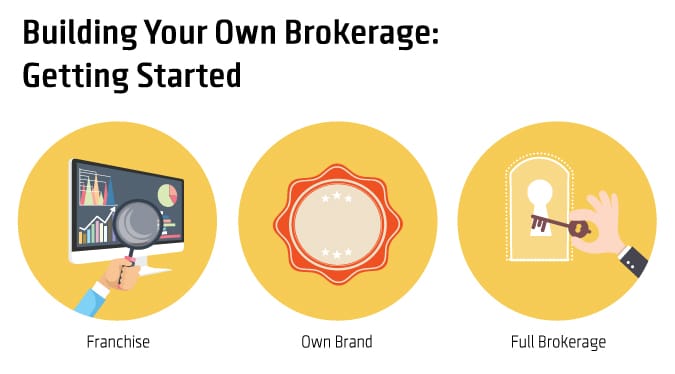
There are a number of models available, each of them with in-built advantages for a client:
l. Franchise
The simplest model available for a new company is to establish a franchise. At my company UFX, we work with many small to medium companies in creating franchises, which allows them to concentrate on building a first-class sales team.
This model allows your company to utilise all of the tools available above, but instead of promoting (in our case) the UFX brand, you could incorporate the brokerage into your existing company’s services.
This option is more expensive than the first, since you are able to utilise all the franchising company’s services under your own company’s banner, without the benefit of brand awareness.
III. Full brokerage
For the experienced brokerage company, an attractive option is available whereby a partnership can be established to utilise the partner company’s technology only, leaving the company to create their own business plans, sales techniques, regulation, compliance, and payment processing.
Whilst recommended only for the experienced brokers, the profit margins are larger, and the brokerage is fully independent.
To get a brokerage business off the ground, there are essential tools that are must-haves to attract new business.
Essential Tools
In order to get the brokerage business off the ground, there are certain essential tools and requirements that are must-haves in order to both attract new business, and more importantly, ensure that customers remain loyal to the business. Regulation is something that all customers are looking for from an online brokerage, and a crucial step in ensuring a successful business.
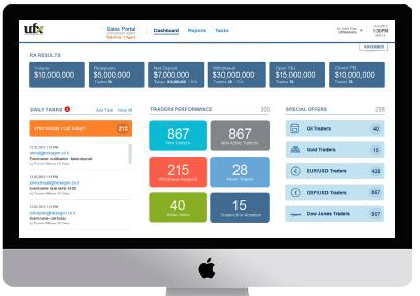
As stated above, an online firm is hugely dependant on advanced technical tools that allow the firm access to as much information as possible. At UFX Partners, we utilise a system that is based on a KPI (Key Performance Indicator) back office programme with visualised personal and team-oriented dashboards.
This allows our teams access to in-depth details about a customer’s trading history and the customer access to information without the necessity of call centre intervention, which customers have often said is a major interference to their day.
Of vital importance to your company is the ability to promote healthy competition amongst the sales team, and this technology will enable exactly that. The KPI software enables back office staff to access their own personalised dashboards and create monthly targets for each specific team in the company.
Training and Guidance
Whichever format you choose for your brokerage, and regardless of your level of expertise, training and guidance are critical throughout the process. From advice as how to conduct sales, to in-depth training about the computer software that you will be using, you must ensure that you have the constant ability to turn to someone for this crucial assistance.
We hold trading days for your team in-house and your place of business.
At UFX Partners, we hold trading days for senior members of your team in-house, as well as at your place of business. This allows you to benefit from seeing how we conduct our business practises at head office, and allows our training teams to give on the spot advice as to how to increase productivity in your workplace.
Dedicated Success Manager
I can’t stress just how essential it is for your company to have a dedicated success manager. This person will be a single point of contact whose sole job is to ensure that your company benefits from their expertise in creating and managing a personalised business plan. Whether that involves an increased focus on marketing or customer retention, this person will work alongside you to expand productivity across the business.
Overall, whilst building an online brokerage involves a lot of work, be assured that industry experts are able to assist in ensuring that your new business venture becomes successful. In choosing a model that works for you and your existing company, and works to your strengths, a partner can focus their attention on providing you with the missing elements that are necessary for success.
This article was written by Mark Tenen, VP Business Development UFX. Contact him at Markt@ufx.com, or learn more about trading platforms here.
From a business perspective, the most financially beneficial relationships that we can establish are with other companies or experts in the industry to assist them with their growth and development. The profit margins are considerable for both of the partners in such an enterprise and the benefits that are available by forging such business relationships are considerable.
In this article, I want to discuss how a company is able to build its own brokerage, and how it can benefit from the expertise available by partnering with industry authorities.
The most financially beneficial relationships we can establish are with other companies or experts in the industry.
How to Get Started
Once a company has decided to concentrate on a retail brokerage model, the obstacles can be daunting. Customers can choose from a wide variety of online brokers, and each is firmly concentrating on creating traders who remain loyal to the business.
In addition, the technology that is required to create such a business is complex, and an online brokerage firm in 2016 requires both an impressive interface that allows a customer to benefit enormously from the assets on offer, whilst simultaneously providing the back office staff with a state-of-the-art system that allows increased operational efficiency.
There are a number of models available, each of them with in-built advantages for a client:
l. Franchise
The simplest model available for a new company is to establish a franchise. At my company UFX, we work with many small to medium companies in creating franchises, which allows them to concentrate on building a first-class sales team.
This model allows your company to utilise all of the tools available above, but instead of promoting (in our case) the UFX brand, you could incorporate the brokerage into your existing company’s services.
This option is more expensive than the first, since you are able to utilise all the franchising company’s services under your own company’s banner, without the benefit of brand awareness.
III. Full brokerage
For the experienced brokerage company, an attractive option is available whereby a partnership can be established to utilise the partner company’s technology only, leaving the company to create their own business plans, sales techniques, regulation, compliance, and payment processing.
Whilst recommended only for the experienced brokers, the profit margins are larger, and the brokerage is fully independent.
To get a brokerage business off the ground, there are essential tools that are must-haves to attract new business.
Essential Tools
In order to get the brokerage business off the ground, there are certain essential tools and requirements that are must-haves in order to both attract new business, and more importantly, ensure that customers remain loyal to the business. Regulation is something that all customers are looking for from an online brokerage, and a crucial step in ensuring a successful business.
As stated above, an online firm is hugely dependant on advanced technical tools that allow the firm access to as much information as possible. At UFX Partners, we utilise a system that is based on a KPI (Key Performance Indicator) back office programme with visualised personal and team-oriented dashboards.
This allows our teams access to in-depth details about a customer’s trading history and the customer access to information without the necessity of call centre intervention, which customers have often said is a major interference to their day.
Of vital importance to your company is the ability to promote healthy competition amongst the sales team, and this technology will enable exactly that. The KPI software enables back office staff to access their own personalised dashboards and create monthly targets for each specific team in the company.
Training and Guidance
Whichever format you choose for your brokerage, and regardless of your level of expertise, training and guidance are critical throughout the process. From advice as how to conduct sales, to in-depth training about the computer software that you will be using, you must ensure that you have the constant ability to turn to someone for this crucial assistance.
We hold trading days for your team in-house and your place of business.
At UFX Partners, we hold trading days for senior members of your team in-house, as well as at your place of business. This allows you to benefit from seeing how we conduct our business practises at head office, and allows our training teams to give on the spot advice as to how to increase productivity in your workplace.
Dedicated Success Manager
I can’t stress just how essential it is for your company to have a dedicated success manager. This person will be a single point of contact whose sole job is to ensure that your company benefits from their expertise in creating and managing a personalised business plan. Whether that involves an increased focus on marketing or customer retention, this person will work alongside you to expand productivity across the business.
Overall, whilst building an online brokerage involves a lot of work, be assured that industry experts are able to assist in ensuring that your new business venture becomes successful. In choosing a model that works for you and your existing company, and works to your strengths, a partner can focus their attention on providing you with the missing elements that are necessary for success.
This article was written by Mark Tenen, VP Business Development UFX. Contact him at Markt@ufx.com, or learn more about trading platforms here.
KuCoin Introduces PROOF, a Trading Competition Focused on Transparency and Fair Play
Featured Videos
FP Markets Winner Spotlight 🏆 | Global Broker of the Year 2025 #Trading #Broker #Innovation #Shorts
FP Markets Winner Spotlight 🏆 | Global Broker of the Year 2025 #Trading #Broker #Innovation #Shorts
FP Markets Winner Spotlight 🏆 | Global Broker of the Year 2025 #Trading #Broker #Innovation #Shorts
FP Markets Winner Spotlight 🏆 | Global Broker of the Year 2025 #Trading #Broker #Innovation #Shorts
FP Markets takes the spotlight as Global Broker of the Year 2025 at the Finance Magnates Awards.
Martin Stoilov, Head of Client Experience, shares that trust, innovation, and people played a key role in the company’s success, supported by a strong foundation of integrity and client-centricity.
Following this milestone, FP Markets continues to focus on growth, technology investment, and its core values of transparency and excellence.
👉 Be part of FM Awards 2026: https://awards.financemagnates.com/#nominate
FP Markets takes the spotlight as Global Broker of the Year 2025 at the Finance Magnates Awards.
Martin Stoilov, Head of Client Experience, shares that trust, innovation, and people played a key role in the company’s success, supported by a strong foundation of integrity and client-centricity.
Following this milestone, FP Markets continues to focus on growth, technology investment, and its core values of transparency and excellence.
👉 Be part of FM Awards 2026: https://awards.financemagnates.com/#nominate
FP Markets takes the spotlight as Global Broker of the Year 2025 at the Finance Magnates Awards.
Martin Stoilov, Head of Client Experience, shares that trust, innovation, and people played a key role in the company’s success, supported by a strong foundation of integrity and client-centricity.
Following this milestone, FP Markets continues to focus on growth, technology investment, and its core values of transparency and excellence.
👉 Be part of FM Awards 2026: https://awards.financemagnates.com/#nominate
FP Markets takes the spotlight as Global Broker of the Year 2025 at the Finance Magnates Awards.
Martin Stoilov, Head of Client Experience, shares that trust, innovation, and people played a key role in the company’s success, supported by a strong foundation of integrity and client-centricity.
Following this milestone, FP Markets continues to focus on growth, technology investment, and its core values of transparency and excellence.
👉 Be part of FM Awards 2026: https://awards.financemagnates.com/#nominate
In this video, we review @HolaPrimeMarketsOfficial, a multi-asset forex and CFDs broker offering different account types, trading platforms, and flexible trading conditions.
We cover the broker’s overall offering, including account options, trading environment, platforms like MT4 and MT5, and additional services such as managed accounts and fast withdrawals.
Watch the full video to see if Hola Prime Markets fits your trading needs.
📣 Stay up to date with the latest in finance and trading. Follow Finance Magnates for industry news, insights, and global event coverage.
Connect with us:
🔗 LinkedIn: /financemagnates
👍 Facebook: /financemagnates
📸 Instagram: https://www.instagram.com/financemagnates
🐦 X: https://x.com/financemagnates
🎥 TikTok: https://www.tiktok.com/tag/financemagnates
▶️ YouTube: /@financemagnates_official
#HolaPrime #ForexBroker #CFDTrading #FinanceMagnates #Trading #Forex #BrokerReview
In this video, we review @HolaPrimeMarketsOfficial, a multi-asset forex and CFDs broker offering different account types, trading platforms, and flexible trading conditions.
We cover the broker’s overall offering, including account options, trading environment, platforms like MT4 and MT5, and additional services such as managed accounts and fast withdrawals.
Watch the full video to see if Hola Prime Markets fits your trading needs.
📣 Stay up to date with the latest in finance and trading. Follow Finance Magnates for industry news, insights, and global event coverage.
Connect with us:
🔗 LinkedIn: /financemagnates
👍 Facebook: /financemagnates
📸 Instagram: https://www.instagram.com/financemagnates
🐦 X: https://x.com/financemagnates
🎥 TikTok: https://www.tiktok.com/tag/financemagnates
▶️ YouTube: /@financemagnates_official
#HolaPrime #ForexBroker #CFDTrading #FinanceMagnates #Trading #Forex #BrokerReview
In this video, we review @HolaPrimeMarketsOfficial, a multi-asset forex and CFDs broker offering different account types, trading platforms, and flexible trading conditions.
We cover the broker’s overall offering, including account options, trading environment, platforms like MT4 and MT5, and additional services such as managed accounts and fast withdrawals.
Watch the full video to see if Hola Prime Markets fits your trading needs.
📣 Stay up to date with the latest in finance and trading. Follow Finance Magnates for industry news, insights, and global event coverage.
Connect with us:
🔗 LinkedIn: /financemagnates
👍 Facebook: /financemagnates
📸 Instagram: https://www.instagram.com/financemagnates
🐦 X: https://x.com/financemagnates
🎥 TikTok: https://www.tiktok.com/tag/financemagnates
▶️ YouTube: /@financemagnates_official
#HolaPrime #ForexBroker #CFDTrading #FinanceMagnates #Trading #Forex #BrokerReview
In this video, we review @HolaPrimeMarketsOfficial, a multi-asset forex and CFDs broker offering different account types, trading platforms, and flexible trading conditions.
We cover the broker’s overall offering, including account options, trading environment, platforms like MT4 and MT5, and additional services such as managed accounts and fast withdrawals.
Watch the full video to see if Hola Prime Markets fits your trading needs.
📣 Stay up to date with the latest in finance and trading. Follow Finance Magnates for industry news, insights, and global event coverage.
Connect with us:
🔗 LinkedIn: /financemagnates
👍 Facebook: /financemagnates
📸 Instagram: https://www.instagram.com/financemagnates
🐦 X: https://x.com/financemagnates
🎥 TikTok: https://www.tiktok.com/tag/financemagnates
▶️ YouTube: /@financemagnates_official
#HolaPrime #ForexBroker #CFDTrading #FinanceMagnates #Trading #Forex #BrokerReview
In this video, we review @HolaPrimeMarketsOfficial, a multi-asset forex and CFDs broker offering different account types, trading platforms, and flexible trading conditions.
We cover the broker’s overall offering, including account options, trading environment, platforms like MT4 and MT5, and additional services such as managed accounts and fast withdrawals.
Watch the full video to see if Hola Prime Markets fits your trading needs.
📣 Stay up to date with the latest in finance and trading. Follow Finance Magnates for industry news, insights, and global event coverage.
Connect with us:
🔗 LinkedIn: /financemagnates
👍 Facebook: /financemagnates
📸 Instagram: https://www.instagram.com/financemagnates
🐦 X: https://x.com/financemagnates
🎥 TikTok: https://www.tiktok.com/tag/financemagnates
▶️ YouTube: /@financemagnates_official
#HolaPrime #ForexBroker #CFDTrading #FinanceMagnates #Trading #Forex #BrokerReview
In this video, we review @HolaPrimeMarketsOfficial, a multi-asset forex and CFDs broker offering different account types, trading platforms, and flexible trading conditions.
We cover the broker’s overall offering, including account options, trading environment, platforms like MT4 and MT5, and additional services such as managed accounts and fast withdrawals.
Watch the full video to see if Hola Prime Markets fits your trading needs.
📣 Stay up to date with the latest in finance and trading. Follow Finance Magnates for industry news, insights, and global event coverage.
Connect with us:
🔗 LinkedIn: /financemagnates
👍 Facebook: /financemagnates
📸 Instagram: https://www.instagram.com/financemagnates
🐦 X: https://x.com/financemagnates
🎥 TikTok: https://www.tiktok.com/tag/financemagnates
▶️ YouTube: /@financemagnates_official
#HolaPrime #ForexBroker #CFDTrading #FinanceMagnates #Trading #Forex #BrokerReview
Hola Prime Review: What You Need to Know | Full Breakdown by Finance Magnates
Hola Prime Review: What You Need to Know | Full Breakdown by Finance Magnates
Hola Prime Review: What You Need to Know | Full Breakdown by Finance Magnates
Hola Prime Review: What You Need to Know | Full Breakdown by Finance Magnates
Hola Prime Review: What You Need to Know | Full Breakdown by Finance Magnates
Hola Prime Review: What You Need to Know | Full Breakdown by Finance Magnates
In this video, we review @HolaPrime_Global, a proprietary trading firm offering evaluation programs and performance-based payouts in simulated market environments.
We cover how the challenge model works, including account types, profit splits (up to 95%), trading rules, and what it takes to reach a funded account. You’ll also learn about available platforms like MT4, MT5, cTrader, and more, along with insights into payouts, support, and trading conditions.
Watch the full video to see if Hola Prime fits your trading style.
📣 Stay up to date with the latest in finance and trading. Follow Finance Magnates for industry news, insights, and global event coverage.
Connect with us:
🔗 LinkedIn: /financemagnates
👍 Facebook: /financemagnates
📸 Instagram: https://www.instagram.com/financemagnates
🐦 X: https://x.com/financemagnates
🎥 TikTok: https://www.tiktok.com/tag/financemagnates
▶️ YouTube: /@financemagnates_official
#HolaPrime #PropFirm #Trading #FinanceMagnates #Forex #FuturesTrading #TradingReview #PropFirmReview
In this video, we review @HolaPrime_Global, a proprietary trading firm offering evaluation programs and performance-based payouts in simulated market environments.
We cover how the challenge model works, including account types, profit splits (up to 95%), trading rules, and what it takes to reach a funded account. You’ll also learn about available platforms like MT4, MT5, cTrader, and more, along with insights into payouts, support, and trading conditions.
Watch the full video to see if Hola Prime fits your trading style.
📣 Stay up to date with the latest in finance and trading. Follow Finance Magnates for industry news, insights, and global event coverage.
Connect with us:
🔗 LinkedIn: /financemagnates
👍 Facebook: /financemagnates
📸 Instagram: https://www.instagram.com/financemagnates
🐦 X: https://x.com/financemagnates
🎥 TikTok: https://www.tiktok.com/tag/financemagnates
▶️ YouTube: /@financemagnates_official
#HolaPrime #PropFirm #Trading #FinanceMagnates #Forex #FuturesTrading #TradingReview #PropFirmReview
In this video, we review @HolaPrime_Global, a proprietary trading firm offering evaluation programs and performance-based payouts in simulated market environments.
We cover how the challenge model works, including account types, profit splits (up to 95%), trading rules, and what it takes to reach a funded account. You’ll also learn about available platforms like MT4, MT5, cTrader, and more, along with insights into payouts, support, and trading conditions.
Watch the full video to see if Hola Prime fits your trading style.
📣 Stay up to date with the latest in finance and trading. Follow Finance Magnates for industry news, insights, and global event coverage.
Connect with us:
🔗 LinkedIn: /financemagnates
👍 Facebook: /financemagnates
📸 Instagram: https://www.instagram.com/financemagnates
🐦 X: https://x.com/financemagnates
🎥 TikTok: https://www.tiktok.com/tag/financemagnates
▶️ YouTube: /@financemagnates_official
#HolaPrime #PropFirm #Trading #FinanceMagnates #Forex #FuturesTrading #TradingReview #PropFirmReview
In this video, we review @HolaPrime_Global, a proprietary trading firm offering evaluation programs and performance-based payouts in simulated market environments.
We cover how the challenge model works, including account types, profit splits (up to 95%), trading rules, and what it takes to reach a funded account. You’ll also learn about available platforms like MT4, MT5, cTrader, and more, along with insights into payouts, support, and trading conditions.
Watch the full video to see if Hola Prime fits your trading style.
📣 Stay up to date with the latest in finance and trading. Follow Finance Magnates for industry news, insights, and global event coverage.
Connect with us:
🔗 LinkedIn: /financemagnates
👍 Facebook: /financemagnates
📸 Instagram: https://www.instagram.com/financemagnates
🐦 X: https://x.com/financemagnates
🎥 TikTok: https://www.tiktok.com/tag/financemagnates
▶️ YouTube: /@financemagnates_official
#HolaPrime #PropFirm #Trading #FinanceMagnates #Forex #FuturesTrading #TradingReview #PropFirmReview
In this video, we review @HolaPrime_Global, a proprietary trading firm offering evaluation programs and performance-based payouts in simulated market environments.
We cover how the challenge model works, including account types, profit splits (up to 95%), trading rules, and what it takes to reach a funded account. You’ll also learn about available platforms like MT4, MT5, cTrader, and more, along with insights into payouts, support, and trading conditions.
Watch the full video to see if Hola Prime fits your trading style.
📣 Stay up to date with the latest in finance and trading. Follow Finance Magnates for industry news, insights, and global event coverage.
Connect with us:
🔗 LinkedIn: /financemagnates
👍 Facebook: /financemagnates
📸 Instagram: https://www.instagram.com/financemagnates
🐦 X: https://x.com/financemagnates
🎥 TikTok: https://www.tiktok.com/tag/financemagnates
▶️ YouTube: /@financemagnates_official
#HolaPrime #PropFirm #Trading #FinanceMagnates #Forex #FuturesTrading #TradingReview #PropFirmReview
In this video, we review @HolaPrime_Global, a proprietary trading firm offering evaluation programs and performance-based payouts in simulated market environments.
We cover how the challenge model works, including account types, profit splits (up to 95%), trading rules, and what it takes to reach a funded account. You’ll also learn about available platforms like MT4, MT5, cTrader, and more, along with insights into payouts, support, and trading conditions.
Watch the full video to see if Hola Prime fits your trading style.
📣 Stay up to date with the latest in finance and trading. Follow Finance Magnates for industry news, insights, and global event coverage.
Connect with us:
🔗 LinkedIn: /financemagnates
👍 Facebook: /financemagnates
📸 Instagram: https://www.instagram.com/financemagnates
🐦 X: https://x.com/financemagnates
🎥 TikTok: https://www.tiktok.com/tag/financemagnates
▶️ YouTube: /@financemagnates_official
#HolaPrime #PropFirm #Trading #FinanceMagnates #Forex #FuturesTrading #TradingReview #PropFirmReview
Axi Winner Spotlight 🏆 | Global Most Innovative Broker 2025 #Innovation #Trading #Fintech #Broker
Axi Winner Spotlight 🏆 | Global Most Innovative Broker 2025 #Innovation #Trading #Fintech #Broker
Axi Winner Spotlight 🏆 | Global Most Innovative Broker 2025 #Innovation #Trading #Fintech #Broker
Axi Winner Spotlight 🏆 | Global Most Innovative Broker 2025 #Innovation #Trading #Fintech #Broker
Axi Winner Spotlight 🏆 | Global Most Innovative Broker 2025 #Innovation #Trading #Fintech #Broker
Axi Winner Spotlight 🏆 | Global Most Innovative Broker 2025 #Innovation #Trading #Fintech #Broker
Axi takes the spotlight at the Finance Magnates Awards, winning Global Most Innovative Broker 2025.
Olivia Xenofontos and Ivanna Openko share how the team will feel: proud, motivated, and ready to keep delivering.
They also describe the night as well-organized, focused, and enjoyable for all.
👉 Be part of FM Awards 2026.
Axi takes the spotlight at the Finance Magnates Awards, winning Global Most Innovative Broker 2025.
Olivia Xenofontos and Ivanna Openko share how the team will feel: proud, motivated, and ready to keep delivering.
They also describe the night as well-organized, focused, and enjoyable for all.
👉 Be part of FM Awards 2026.
Axi takes the spotlight at the Finance Magnates Awards, winning Global Most Innovative Broker 2025.
Olivia Xenofontos and Ivanna Openko share how the team will feel: proud, motivated, and ready to keep delivering.
They also describe the night as well-organized, focused, and enjoyable for all.
👉 Be part of FM Awards 2026.
Axi takes the spotlight at the Finance Magnates Awards, winning Global Most Innovative Broker 2025.
Olivia Xenofontos and Ivanna Openko share how the team will feel: proud, motivated, and ready to keep delivering.
They also describe the night as well-organized, focused, and enjoyable for all.
👉 Be part of FM Awards 2026.
Axi takes the spotlight at the Finance Magnates Awards, winning Global Most Innovative Broker 2025.
Olivia Xenofontos and Ivanna Openko share how the team will feel: proud, motivated, and ready to keep delivering.
They also describe the night as well-organized, focused, and enjoyable for all.
👉 Be part of FM Awards 2026.
Axi takes the spotlight at the Finance Magnates Awards, winning Global Most Innovative Broker 2025.
Olivia Xenofontos and Ivanna Openko share how the team will feel: proud, motivated, and ready to keep delivering.
They also describe the night as well-organized, focused, and enjoyable for all.
👉 Be part of FM Awards 2026.
Recognition that matters.
Built on transparency.
Driven by the industry.
The Finance Magnates Awards 2026.
Nominations are now open.
🔗 https://awards.financemagnates.com/?utm_source=SM&utm_medium=social&utm_campaign=recognition-matters
Recognition that matters.
Built on transparency.
Driven by the industry.
The Finance Magnates Awards 2026.
Nominations are now open.
🔗 https://awards.financemagnates.com/?utm_source=SM&utm_medium=social&utm_campaign=recognition-matters
Recognition that matters.
Built on transparency.
Driven by the industry.
The Finance Magnates Awards 2026.
Nominations are now open.
🔗 https://awards.financemagnates.com/?utm_source=SM&utm_medium=social&utm_campaign=recognition-matters
Recognition that matters.
Built on transparency.
Driven by the industry.
The Finance Magnates Awards 2026.
Nominations are now open.
🔗 https://awards.financemagnates.com/?utm_source=SM&utm_medium=social&utm_campaign=recognition-matters
Recognition that matters.
Built on transparency.
Driven by the industry.
The Finance Magnates Awards 2026.
Nominations are now open.
🔗 https://awards.financemagnates.com/?utm_source=SM&utm_medium=social&utm_campaign=recognition-matters
Recognition that matters.
Built on transparency.
Driven by the industry.
The Finance Magnates Awards 2026.
Nominations are now open.
🔗 https://awards.financemagnates.com/?utm_source=SM&utm_medium=social&utm_campaign=recognition-matters