Today we will share how the bridge can strengthen the broker’s position against risks using the example of Trade Processor by Tools for Brokers.
The solution’s architecture
While there are pros and cons to the architecture of any type of solutions, the way the software is built can define how you will be protected against certain risks.
Trade Processor offers decentralised and distributed architecture. Decentralised architecture means that orders are executed quickly, as there are no extra steps to send data back and forth which might cause a change in the final pricing.
The distributed architecture ensures a more secure installation with less chance of going offline or overloading the system. It also means that the software product is scalable and will grow with your company.
Flexible order execution
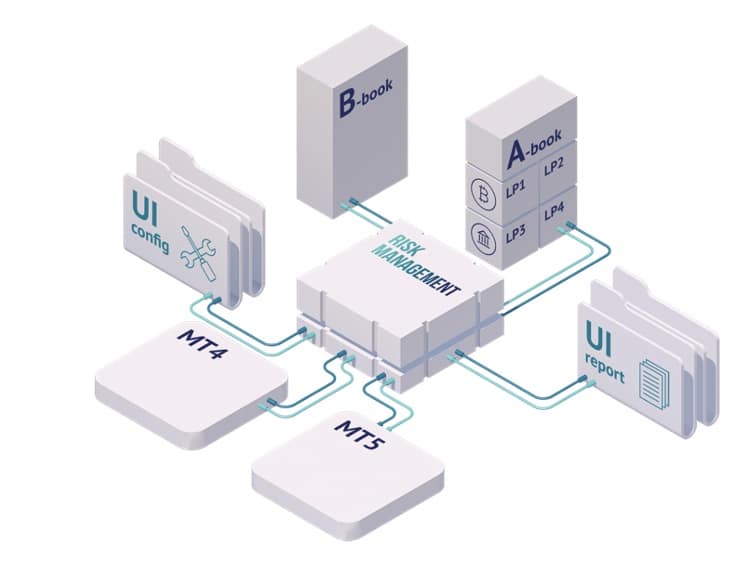
Order execution is the centrepiece of the bridge. A thought-through and flexible execution system can target several brokerage-associated risks:
Aggregation methods available with the solution directly affect the end price of the order and, subsequently, brokers’ turnover and customer satisfaction. One of the main targets for brokers is providing the best pricing for their clients. The term ‘best price’ is subjective and can mean different things to different clients. Having multiple aggregation options makes brokers more flexible and helps them get as close to the ‘best pricing’ as possible.
Liquidity Providers (LPs) that the bridge is partnering with play an essential role in the broker’s success. While the number of signed LPs is not overly critical, it is a general rule that having a list of companies to choose from reduces the risk of orders being executed at a worse price.
Continuous Execution of large orders is another functionality that allows brokers and clients to get the best pricing. Continuous Execution means that a big order is split into several smaller ones, and it is executed over a period of time. In that case, the broker is not wiping out the market depth completely but instead picks more favourable pricing over time, resulting in better overall pricing for the order.
Out-of-control exposure and swap costs can become a significant risk if they are left unattended. The reason it gets out of control is usually that the processes are not automated. The Volume Consolidation feature in the bridge takes over these tasks and automatically consolidates all open positions across all LPs at the end of each day. By using it, brokers avoid errors associated with manual work and save many hours of their time.
Integration with third-party solutions
A good solution will not prevent you from integrating with a third-party software or platform. While your technology provider may strive to give brokers every tool that they need, they mustn’t get in the way if the broker decides to integrate another tool.
It represents the risk of missing out on the latest technology and creative solutions, so ideally, a bridge should include an API to enable brokers to partner with any product they choose.
Built-in reporting for compliance
Reporting requirements for each broker depend on where they are based, which markets they operate in, and what services they offer. Yet, every brokerage needs reporting, whether it is more for internal analysis and statistics or compliance with regulators.
Not complying with regulatory requirements and failing to provide all necessary information is a critical risk for brokers.
Not having an established reporting system in place is a financial risk, as brokers may look for last-minute solutions which can be overpriced.
Ecosystem of solutions to complement the functionality of the bridge (PAMM, BBI, plugins)
A risk that brokers might face when acquiring software is that it is not fully compatible with the rest of the infrastructure.
Or it might be compatible, but some of the required functionality is missing and takes time to develop.
One way to avoid this is to run a thorough test and do the research before placing an order.
Another way is to look for technology providers that acknowledge the potential risk and work on providing brokers with comprehensive solutions that exceed their primary needs or requests.
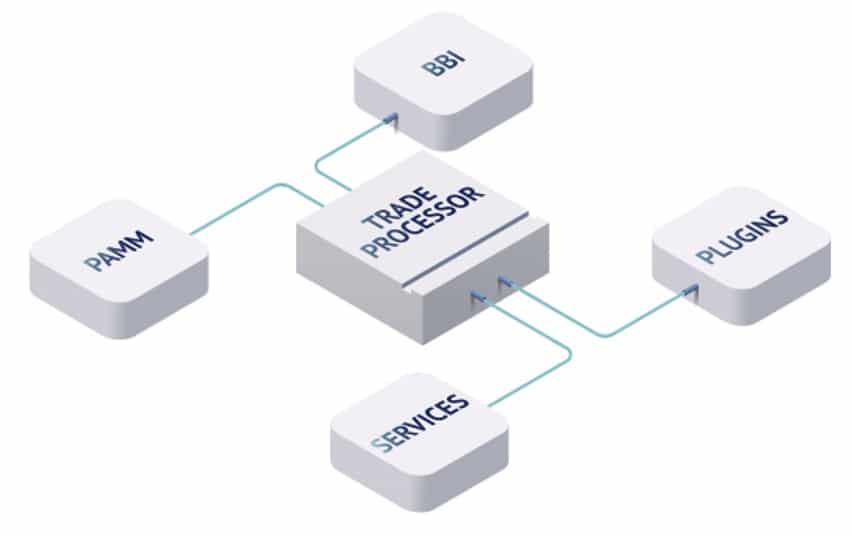
TFB has developed an ecosystem of solutions that cover more than bridging requirements.
There is an advanced data monitoring, reporting and management solution BBI, flexible and powerful PAMM money management, a separate offer for White Label brokers, and multiple plugins that cover more specific needs.
Not all problems can be solved with technology, but it is a good starting point. The right tools help avoid and mitigate strategic, financial, compliance, reputational, and operational risks.
Suppose brokers are unsure how they can optimise their workflow to reduce the threats. In that case, we recommend speaking with a trusted advisor, whether it is a technology partner or an industry peer.
There is always the potential for improvement in business, and we find that successful brokers often tend to be proactive and more open-minded in terms of new practices and methodologies.
Today we will share how the bridge can strengthen the broker’s position against risks using the example of Trade Processor by Tools for Brokers.
The solution’s architecture
While there are pros and cons to the architecture of any type of solutions, the way the software is built can define how you will be protected against certain risks.
Trade Processor offers decentralised and distributed architecture. Decentralised architecture means that orders are executed quickly, as there are no extra steps to send data back and forth which might cause a change in the final pricing.
The distributed architecture ensures a more secure installation with less chance of going offline or overloading the system. It also means that the software product is scalable and will grow with your company.
Flexible order execution
Order execution is the centrepiece of the bridge. A thought-through and flexible execution system can target several brokerage-associated risks:
Aggregation methods available with the solution directly affect the end price of the order and, subsequently, brokers’ turnover and customer satisfaction. One of the main targets for brokers is providing the best pricing for their clients. The term ‘best price’ is subjective and can mean different things to different clients. Having multiple aggregation options makes brokers more flexible and helps them get as close to the ‘best pricing’ as possible.
Liquidity Providers (LPs) that the bridge is partnering with play an essential role in the broker’s success. While the number of signed LPs is not overly critical, it is a general rule that having a list of companies to choose from reduces the risk of orders being executed at a worse price.
Continuous Execution of large orders is another functionality that allows brokers and clients to get the best pricing. Continuous Execution means that a big order is split into several smaller ones, and it is executed over a period of time. In that case, the broker is not wiping out the market depth completely but instead picks more favourable pricing over time, resulting in better overall pricing for the order.
Out-of-control exposure and swap costs can become a significant risk if they are left unattended. The reason it gets out of control is usually that the processes are not automated. The Volume Consolidation feature in the bridge takes over these tasks and automatically consolidates all open positions across all LPs at the end of each day. By using it, brokers avoid errors associated with manual work and save many hours of their time.
Integration with third-party solutions
A good solution will not prevent you from integrating with a third-party software or platform. While your technology provider may strive to give brokers every tool that they need, they mustn’t get in the way if the broker decides to integrate another tool.
It represents the risk of missing out on the latest technology and creative solutions, so ideally, a bridge should include an API to enable brokers to partner with any product they choose.
Built-in reporting for compliance
Reporting requirements for each broker depend on where they are based, which markets they operate in, and what services they offer. Yet, every brokerage needs reporting, whether it is more for internal analysis and statistics or compliance with regulators.
Not complying with regulatory requirements and failing to provide all necessary information is a critical risk for brokers.
Not having an established reporting system in place is a financial risk, as brokers may look for last-minute solutions which can be overpriced.
Ecosystem of solutions to complement the functionality of the bridge (PAMM, BBI, plugins)
A risk that brokers might face when acquiring software is that it is not fully compatible with the rest of the infrastructure.
Or it might be compatible, but some of the required functionality is missing and takes time to develop.
One way to avoid this is to run a thorough test and do the research before placing an order.
Another way is to look for technology providers that acknowledge the potential risk and work on providing brokers with comprehensive solutions that exceed their primary needs or requests.
TFB has developed an ecosystem of solutions that cover more than bridging requirements.
There is an advanced data monitoring, reporting and management solution BBI, flexible and powerful PAMM money management, a separate offer for White Label brokers, and multiple plugins that cover more specific needs.
Not all problems can be solved with technology, but it is a good starting point. The right tools help avoid and mitigate strategic, financial, compliance, reputational, and operational risks.
Suppose brokers are unsure how they can optimise their workflow to reduce the threats. In that case, we recommend speaking with a trusted advisor, whether it is a technology partner or an industry peer.
There is always the potential for improvement in business, and we find that successful brokers often tend to be proactive and more open-minded in terms of new practices and methodologies.
SMX's 1900% Surge Since November Is Not a Momentum Trade; It's Based on Transformative and Deliverable Techology
Featured Videos
Executive Interview | Charlotte Bullock | Chief Product Officer, Bank of London | FMLS:25
In this interview, we sat down with Charlotte Bullock, Head of Product at The Bank of London, previously at SAP and now shaping product at one of the sector’s most ambitious new banking players.
Charlotte reflects on the Summit so far and talks about the culture inside fintech banks today. We look at the pressures that come with scaling, and how firms can hold onto the nimble approach that made them stand out early on.
We also cover the state of payments ahead of her appearance on the payments roundtable: the blockages financial firms face, the areas that still need fixing, and what a realistic solution looks like in 2026.
In this interview, we sat down with Charlotte Bullock, Head of Product at The Bank of London, previously at SAP and now shaping product at one of the sector’s most ambitious new banking players.
Charlotte reflects on the Summit so far and talks about the culture inside fintech banks today. We look at the pressures that come with scaling, and how firms can hold onto the nimble approach that made them stand out early on.
We also cover the state of payments ahead of her appearance on the payments roundtable: the blockages financial firms face, the areas that still need fixing, and what a realistic solution looks like in 2026.
In this interview, we sat down with Charlotte Bullock, Head of Product at The Bank of London, previously at SAP and now shaping product at one of the sector’s most ambitious new banking players.
Charlotte reflects on the Summit so far and talks about the culture inside fintech banks today. We look at the pressures that come with scaling, and how firms can hold onto the nimble approach that made them stand out early on.
We also cover the state of payments ahead of her appearance on the payments roundtable: the blockages financial firms face, the areas that still need fixing, and what a realistic solution looks like in 2026.
In this interview, we sat down with Charlotte Bullock, Head of Product at The Bank of London, previously at SAP and now shaping product at one of the sector’s most ambitious new banking players.
Charlotte reflects on the Summit so far and talks about the culture inside fintech banks today. We look at the pressures that come with scaling, and how firms can hold onto the nimble approach that made them stand out early on.
We also cover the state of payments ahead of her appearance on the payments roundtable: the blockages financial firms face, the areas that still need fixing, and what a realistic solution looks like in 2026.
In this conversation, we sit down with Drew Niv, CSO at ATFX Connect and one of the most influential figures in modern FX.
We speak about market structure, the institutional view on liquidity, and the sharp rise of prop trading, a sector Drew has been commenting on in recent months. Drew explains why he once dismissed prop trading, why his view changed, and what he now thinks the model means for brokers, clients and risk managers.
We explore subscription-fee dependency, the high reneging rate, and the long-term challenge: how brokers can build a more stable and honest version of the model. Drew also talks about the traffic advantage standalone prop firms have built and why brokers may still win in the long run if they take the right approach.
In this conversation, we sit down with Drew Niv, CSO at ATFX Connect and one of the most influential figures in modern FX.
We speak about market structure, the institutional view on liquidity, and the sharp rise of prop trading, a sector Drew has been commenting on in recent months. Drew explains why he once dismissed prop trading, why his view changed, and what he now thinks the model means for brokers, clients and risk managers.
We explore subscription-fee dependency, the high reneging rate, and the long-term challenge: how brokers can build a more stable and honest version of the model. Drew also talks about the traffic advantage standalone prop firms have built and why brokers may still win in the long run if they take the right approach.
In this conversation, we sit down with Drew Niv, CSO at ATFX Connect and one of the most influential figures in modern FX.
We speak about market structure, the institutional view on liquidity, and the sharp rise of prop trading, a sector Drew has been commenting on in recent months. Drew explains why he once dismissed prop trading, why his view changed, and what he now thinks the model means for brokers, clients and risk managers.
We explore subscription-fee dependency, the high reneging rate, and the long-term challenge: how brokers can build a more stable and honest version of the model. Drew also talks about the traffic advantage standalone prop firms have built and why brokers may still win in the long run if they take the right approach.
In this conversation, we sit down with Drew Niv, CSO at ATFX Connect and one of the most influential figures in modern FX.
We speak about market structure, the institutional view on liquidity, and the sharp rise of prop trading, a sector Drew has been commenting on in recent months. Drew explains why he once dismissed prop trading, why his view changed, and what he now thinks the model means for brokers, clients and risk managers.
We explore subscription-fee dependency, the high reneging rate, and the long-term challenge: how brokers can build a more stable and honest version of the model. Drew also talks about the traffic advantage standalone prop firms have built and why brokers may still win in the long run if they take the right approach.
In this conversation, we sit down with Drew Niv, CSO at ATFX Connect and one of the most influential figures in modern FX.
We speak about market structure, the institutional view on liquidity, and the sharp rise of prop trading, a sector Drew has been commenting on in recent months. Drew explains why he once dismissed prop trading, why his view changed, and what he now thinks the model means for brokers, clients and risk managers.
We explore subscription-fee dependency, the high reneging rate, and the long-term challenge: how brokers can build a more stable and honest version of the model. Drew also talks about the traffic advantage standalone prop firms have built and why brokers may still win in the long run if they take the right approach.
In this conversation, we sit down with Drew Niv, CSO at ATFX Connect and one of the most influential figures in modern FX.
We speak about market structure, the institutional view on liquidity, and the sharp rise of prop trading, a sector Drew has been commenting on in recent months. Drew explains why he once dismissed prop trading, why his view changed, and what he now thinks the model means for brokers, clients and risk managers.
We explore subscription-fee dependency, the high reneging rate, and the long-term challenge: how brokers can build a more stable and honest version of the model. Drew also talks about the traffic advantage standalone prop firms have built and why brokers may still win in the long run if they take the right approach.
Executive Interview | Remonda Z. Kirketerp Møller| CEO & Founder Muinmos | FMLS:25
In this interview, Remonda Z. Kirketerp Møller, founder of Muinmos, breaks down the state of AI in regtech and what responsible adoption really looks like for brokers. We talk about rising fragmentation, the pressures around compliance accuracy, and why most firms are still in the early stages of AI maturity.
Ramanda also shares insights on regulator sandboxes, shifting expectations around accountability, and the current reality of MiCA licensing and passporting in Europe.
A concise look at where compliance, onboarding, and AI-driven processes are heading next.
In this interview, Remonda Z. Kirketerp Møller, founder of Muinmos, breaks down the state of AI in regtech and what responsible adoption really looks like for brokers. We talk about rising fragmentation, the pressures around compliance accuracy, and why most firms are still in the early stages of AI maturity.
Ramanda also shares insights on regulator sandboxes, shifting expectations around accountability, and the current reality of MiCA licensing and passporting in Europe.
A concise look at where compliance, onboarding, and AI-driven processes are heading next.
In this interview, Remonda Z. Kirketerp Møller, founder of Muinmos, breaks down the state of AI in regtech and what responsible adoption really looks like for brokers. We talk about rising fragmentation, the pressures around compliance accuracy, and why most firms are still in the early stages of AI maturity.
Ramanda also shares insights on regulator sandboxes, shifting expectations around accountability, and the current reality of MiCA licensing and passporting in Europe.
A concise look at where compliance, onboarding, and AI-driven processes are heading next.
In this interview, Remonda Z. Kirketerp Møller, founder of Muinmos, breaks down the state of AI in regtech and what responsible adoption really looks like for brokers. We talk about rising fragmentation, the pressures around compliance accuracy, and why most firms are still in the early stages of AI maturity.
Ramanda also shares insights on regulator sandboxes, shifting expectations around accountability, and the current reality of MiCA licensing and passporting in Europe.
A concise look at where compliance, onboarding, and AI-driven processes are heading next.
In this interview, Remonda Z. Kirketerp Møller, founder of Muinmos, breaks down the state of AI in regtech and what responsible adoption really looks like for brokers. We talk about rising fragmentation, the pressures around compliance accuracy, and why most firms are still in the early stages of AI maturity.
Ramanda also shares insights on regulator sandboxes, shifting expectations around accountability, and the current reality of MiCA licensing and passporting in Europe.
A concise look at where compliance, onboarding, and AI-driven processes are heading next.
In this interview, Remonda Z. Kirketerp Møller, founder of Muinmos, breaks down the state of AI in regtech and what responsible adoption really looks like for brokers. We talk about rising fragmentation, the pressures around compliance accuracy, and why most firms are still in the early stages of AI maturity.
Ramanda also shares insights on regulator sandboxes, shifting expectations around accountability, and the current reality of MiCA licensing and passporting in Europe.
A concise look at where compliance, onboarding, and AI-driven processes are heading next.
In this conversation, we speak with Aydin Bonabi, CEO and co-founder of Surveill, a firm focused on fraud detection and AI-driven compliance tools for financial institutions.
We start with Aydin’s view of the Summit and the challenges brokers face as fraud tactics grow more complex. He explains how firms can stay ahead through real-time signals, data patterns, and early-stage detection.
We also talk about AI training and why compliance teams often struggle to keep models accurate, fair, and aligned with regulatory expectations. Aydin breaks down what “good” AI training looks like inside a financial environment, including the importance of clean data, domain expertise, and human oversight.
He closes with a clear message: fraud is scaling, and so must the tools that stop it.
In this conversation, we speak with Aydin Bonabi, CEO and co-founder of Surveill, a firm focused on fraud detection and AI-driven compliance tools for financial institutions.
We start with Aydin’s view of the Summit and the challenges brokers face as fraud tactics grow more complex. He explains how firms can stay ahead through real-time signals, data patterns, and early-stage detection.
We also talk about AI training and why compliance teams often struggle to keep models accurate, fair, and aligned with regulatory expectations. Aydin breaks down what “good” AI training looks like inside a financial environment, including the importance of clean data, domain expertise, and human oversight.
He closes with a clear message: fraud is scaling, and so must the tools that stop it.
In this conversation, we speak with Aydin Bonabi, CEO and co-founder of Surveill, a firm focused on fraud detection and AI-driven compliance tools for financial institutions.
We start with Aydin’s view of the Summit and the challenges brokers face as fraud tactics grow more complex. He explains how firms can stay ahead through real-time signals, data patterns, and early-stage detection.
We also talk about AI training and why compliance teams often struggle to keep models accurate, fair, and aligned with regulatory expectations. Aydin breaks down what “good” AI training looks like inside a financial environment, including the importance of clean data, domain expertise, and human oversight.
He closes with a clear message: fraud is scaling, and so must the tools that stop it.
In this conversation, we speak with Aydin Bonabi, CEO and co-founder of Surveill, a firm focused on fraud detection and AI-driven compliance tools for financial institutions.
We start with Aydin’s view of the Summit and the challenges brokers face as fraud tactics grow more complex. He explains how firms can stay ahead through real-time signals, data patterns, and early-stage detection.
We also talk about AI training and why compliance teams often struggle to keep models accurate, fair, and aligned with regulatory expectations. Aydin breaks down what “good” AI training looks like inside a financial environment, including the importance of clean data, domain expertise, and human oversight.
He closes with a clear message: fraud is scaling, and so must the tools that stop it.
In this conversation, we speak with Aydin Bonabi, CEO and co-founder of Surveill, a firm focused on fraud detection and AI-driven compliance tools for financial institutions.
We start with Aydin’s view of the Summit and the challenges brokers face as fraud tactics grow more complex. He explains how firms can stay ahead through real-time signals, data patterns, and early-stage detection.
We also talk about AI training and why compliance teams often struggle to keep models accurate, fair, and aligned with regulatory expectations. Aydin breaks down what “good” AI training looks like inside a financial environment, including the importance of clean data, domain expertise, and human oversight.
He closes with a clear message: fraud is scaling, and so must the tools that stop it.
In this conversation, we speak with Aydin Bonabi, CEO and co-founder of Surveill, a firm focused on fraud detection and AI-driven compliance tools for financial institutions.
We start with Aydin’s view of the Summit and the challenges brokers face as fraud tactics grow more complex. He explains how firms can stay ahead through real-time signals, data patterns, and early-stage detection.
We also talk about AI training and why compliance teams often struggle to keep models accurate, fair, and aligned with regulatory expectations. Aydin breaks down what “good” AI training looks like inside a financial environment, including the importance of clean data, domain expertise, and human oversight.
He closes with a clear message: fraud is scaling, and so must the tools that stop it.
Exness expands its presence in Africa: Inside our interview with Paul Margarites in Cape Town
Finance Magnates met with Paul Margarites, Exness regional commercial director for Sub-Saharan Africa, during a visit to the firm’s office opening in Cape Town. In this talk, led by Andrea Badiola Mateos, Co-CEO at Finance Magnates, Paul shares views on the South African trading space, local user behavior, mobile trends, regulation, team growth, and how Exness plans to grow in more markets across the region. @Exness
Read the article at: https://www.financemagnates.com/thought-leadership/exness-expands-its-presence-in-africa-inside-our-interview-with-paul-margarites/
#exness #financemagnates #exnesstrading #CFDtrading #tradeonline #africanews #capetown
Finance Magnates met with Paul Margarites, Exness regional commercial director for Sub-Saharan Africa, during a visit to the firm’s office opening in Cape Town. In this talk, led by Andrea Badiola Mateos, Co-CEO at Finance Magnates, Paul shares views on the South African trading space, local user behavior, mobile trends, regulation, team growth, and how Exness plans to grow in more markets across the region. @Exness
Read the article at: https://www.financemagnates.com/thought-leadership/exness-expands-its-presence-in-africa-inside-our-interview-with-paul-margarites/
#exness #financemagnates #exnesstrading #CFDtrading #tradeonline #africanews #capetown
Finance Magnates met with Paul Margarites, Exness regional commercial director for Sub-Saharan Africa, during a visit to the firm’s office opening in Cape Town. In this talk, led by Andrea Badiola Mateos, Co-CEO at Finance Magnates, Paul shares views on the South African trading space, local user behavior, mobile trends, regulation, team growth, and how Exness plans to grow in more markets across the region. @Exness
Read the article at: https://www.financemagnates.com/thought-leadership/exness-expands-its-presence-in-africa-inside-our-interview-with-paul-margarites/
#exness #financemagnates #exnesstrading #CFDtrading #tradeonline #africanews #capetown
Finance Magnates met with Paul Margarites, Exness regional commercial director for Sub-Saharan Africa, during a visit to the firm’s office opening in Cape Town. In this talk, led by Andrea Badiola Mateos, Co-CEO at Finance Magnates, Paul shares views on the South African trading space, local user behavior, mobile trends, regulation, team growth, and how Exness plans to grow in more markets across the region. @Exness
Read the article at: https://www.financemagnates.com/thought-leadership/exness-expands-its-presence-in-africa-inside-our-interview-with-paul-margarites/
#exness #financemagnates #exnesstrading #CFDtrading #tradeonline #africanews #capetown
Finance Magnates met with Paul Margarites, Exness regional commercial director for Sub-Saharan Africa, during a visit to the firm’s office opening in Cape Town. In this talk, led by Andrea Badiola Mateos, Co-CEO at Finance Magnates, Paul shares views on the South African trading space, local user behavior, mobile trends, regulation, team growth, and how Exness plans to grow in more markets across the region. @Exness
Read the article at: https://www.financemagnates.com/thought-leadership/exness-expands-its-presence-in-africa-inside-our-interview-with-paul-margarites/
#exness #financemagnates #exnesstrading #CFDtrading #tradeonline #africanews #capetown
Finance Magnates met with Paul Margarites, Exness regional commercial director for Sub-Saharan Africa, during a visit to the firm’s office opening in Cape Town. In this talk, led by Andrea Badiola Mateos, Co-CEO at Finance Magnates, Paul shares views on the South African trading space, local user behavior, mobile trends, regulation, team growth, and how Exness plans to grow in more markets across the region. @Exness
Read the article at: https://www.financemagnates.com/thought-leadership/exness-expands-its-presence-in-africa-inside-our-interview-with-paul-margarites/
#exness #financemagnates #exnesstrading #CFDtrading #tradeonline #africanews #capetown