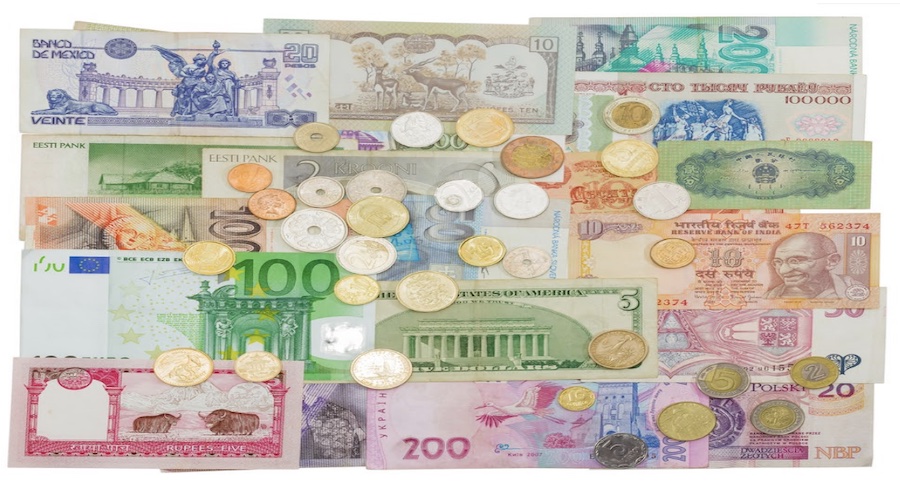
Fiat currencies are a recognized form of money, while crypto assets remain at the mercy of innovation, regulation and adoption.
Image Source: DepositPhotos
Modern-day economies are powered by fiat currencies, with each nation assuming its currency.
The U.S dollar is currently the most powerful currency, given that most countries use it as the base currency for international trade.
So, where does the fiat money in circulation come from? The answer is a simple process known as minting, which involves the manufacturing of coins and notes.
Introducing new coins into the economy dates back to the 7th century B.C when the first mint (industrial facility for coin manufacturing) was established in Lydia.
The mint coined precious metals including gold, silver, and electrum to be used as a form of money in the ancient world. Neighbouring nations led by Greece and the Roman empire would later introduce their mints, setting precedence for coin minting within the European region.
Today, every country in the world mints its currency through central authorities such as central banks and the federal reserve.
The trend is now being integrated into the nascent crypto ecosystem, which some stakeholders tout as the future of finance. Crypto users can mint utility tokens amongst other digital assets with a fundamental value.
Minting in the Crypto Ecosystem
Other than fiat currencies, the crypto ecosystem has created an opportunity for individuals to mint digital assets whose value is mainly backed by their value proposition - this is quite different from fiat currencies which are inherently legal tender.
Fiat currencies are a recognized form of money, while crypto assets remain at the mercy of innovation, regulation and adoption.
This upcoming digital ecosystem hosts a wide range of projects, including decentralized innovations that allow users to mint digital assets.
Ideally, crypto eliminates centralization by allowing users to introduce new assets into the ecosystem - a role that monetary bodies in traditional finance can only execute.
The minting process in crypto is pretty seamless and decentralized, allowing anyone to mint a new token instead of mandating the role to central authorities.
A Paradigm Shift to Distributed Monetary Ecosystems
Finance is an ever-evolving industry with the latest innovations featuring integration with web3 technology. This has given birth to cryptocurrencies and decentralized web products, which now challenge traditional finance architecture.
One of the most progressive crypto niches is Decentralized Finance (DeFi), an upcoming market ecosystem based on a decentralized infrastructure.
While the industry is still in its early stages of development, several projects have already launched minting functions within their protocols. Some notable players include Spores, an NFT platform, and Premia, a decentralized financial instrument protocol.
Let’s dive into the details of each project to understand better how crypto minting works.
Spores
Image Source: Spores
Spores is a universally full-stack NFT platform built to empower creatives through decentralized innovations. The platform allows creatives to mint new NFT tokens that represent their creative work on-chain.
This blockchain-based innovation redefines the concept of minting as it enables the introduction of new NFTs into the decentralized market.
In addition, Spores provides a marketplace where the NFT owners can sell their minted tokens. The project leverages a cross-chain architecture to further enhance interaction with the larger DeFi ecosystem. Spores users have an opportunity to buy or sell minted NFTs across various DeFi markets, capitalizing on the existing liquidity within decentralized markets.
Premia Finance
Image Source: Premia Finance
Premia finance is a decentralized financial instruments protocol designed to change the outlook of traditional finance. The project features a minting function that allows users to mint new customized coins for risk-hedging.
Premia Finance users can mint customized financial instruments, including call and put options for multiple digital assets. The minting function also allows users to customize a strike price, expiration date and quantity.
Notably, the platform features other functions such as staking and the Ethereum bonding curve. With Premia Finance, crypto users can mint new financial instrument coins and leverage existing functions to explore other opportunities within the crypto market.
Value Proposition of Minting in Traditional Finance and Crypto
Having explained the history of minting, it is apparent that the process is essential for the survival of monetary ecosystems.
Minting is the initial point of currency manufacturing before introducing new money into circulation.
This process is a fundamental pillar in supporting the existing traditional monetary ecosystem, where money is at the centre of all global economies.
Without minting, central authorities would find it hard to keep the money supply in check - a shortcoming that would threaten basic principles of monetary economics.
Similarly, the crypto ecosystem is reliant on minting to sustain its ongoing development. This developing industry uses minting as an incentive tool to attract more users while keeping tokenomics in check.
Closing Thoughts
Minting is a fundamental pillar of traditional finance and the crypto ecosystem. This ancient coin manufacturing process appears to have cemented its value proposition within monetary ecosystems.
It is no surprise that innovations like crypto have adopted minting to fuel development and ensure sustainability.
While different protocols might have varied approaches, minting is now defining the future of finance, or as some DeFi enthusiasts like to call it, ‘The Future of France’.
Modern-day economies are powered by fiat currencies, with each nation assuming its currency.
The U.S dollar is currently the most powerful currency, given that most countries use it as the base currency for international trade.
So, where does the fiat money in circulation come from? The answer is a simple process known as minting, which involves the manufacturing of coins and notes.
Introducing new coins into the economy dates back to the 7th century B.C when the first mint (industrial facility for coin manufacturing) was established in Lydia.
The mint coined precious metals including gold, silver, and electrum to be used as a form of money in the ancient world. Neighbouring nations led by Greece and the Roman empire would later introduce their mints, setting precedence for coin minting within the European region.
Today, every country in the world mints its currency through central authorities such as central banks and the federal reserve.
The trend is now being integrated into the nascent crypto ecosystem, which some stakeholders tout as the future of finance. Crypto users can mint utility tokens amongst other digital assets with a fundamental value.
Minting in the Crypto Ecosystem
Other than fiat currencies, the crypto ecosystem has created an opportunity for individuals to mint digital assets whose value is mainly backed by their value proposition - this is quite different from fiat currencies which are inherently legal tender.
Fiat currencies are a recognized form of money, while crypto assets remain at the mercy of innovation, regulation and adoption.
This upcoming digital ecosystem hosts a wide range of projects, including decentralized innovations that allow users to mint digital assets.
Ideally, crypto eliminates centralization by allowing users to introduce new assets into the ecosystem - a role that monetary bodies in traditional finance can only execute.
The minting process in crypto is pretty seamless and decentralized, allowing anyone to mint a new token instead of mandating the role to central authorities.
A Paradigm Shift to Distributed Monetary Ecosystems
Finance is an ever-evolving industry with the latest innovations featuring integration with web3 technology. This has given birth to cryptocurrencies and decentralized web products, which now challenge traditional finance architecture.
One of the most progressive crypto niches is Decentralized Finance (DeFi), an upcoming market ecosystem based on a decentralized infrastructure.
While the industry is still in its early stages of development, several projects have already launched minting functions within their protocols. Some notable players include Spores, an NFT platform, and Premia, a decentralized financial instrument protocol.
Let’s dive into the details of each project to understand better how crypto minting works.
Spores
Image Source: Spores
Spores is a universally full-stack NFT platform built to empower creatives through decentralized innovations. The platform allows creatives to mint new NFT tokens that represent their creative work on-chain.
This blockchain-based innovation redefines the concept of minting as it enables the introduction of new NFTs into the decentralized market.
In addition, Spores provides a marketplace where the NFT owners can sell their minted tokens. The project leverages a cross-chain architecture to further enhance interaction with the larger DeFi ecosystem. Spores users have an opportunity to buy or sell minted NFTs across various DeFi markets, capitalizing on the existing liquidity within decentralized markets.
Premia Finance
Image Source: Premia Finance
Premia finance is a decentralized financial instruments protocol designed to change the outlook of traditional finance. The project features a minting function that allows users to mint new customized coins for risk-hedging.
Premia Finance users can mint customized financial instruments, including call and put options for multiple digital assets. The minting function also allows users to customize a strike price, expiration date and quantity.
Notably, the platform features other functions such as staking and the Ethereum bonding curve. With Premia Finance, crypto users can mint new financial instrument coins and leverage existing functions to explore other opportunities within the crypto market.
Value Proposition of Minting in Traditional Finance and Crypto
Having explained the history of minting, it is apparent that the process is essential for the survival of monetary ecosystems.
Minting is the initial point of currency manufacturing before introducing new money into circulation.
This process is a fundamental pillar in supporting the existing traditional monetary ecosystem, where money is at the centre of all global economies.
Without minting, central authorities would find it hard to keep the money supply in check - a shortcoming that would threaten basic principles of monetary economics.
Similarly, the crypto ecosystem is reliant on minting to sustain its ongoing development. This developing industry uses minting as an incentive tool to attract more users while keeping tokenomics in check.
Closing Thoughts
Minting is a fundamental pillar of traditional finance and the crypto ecosystem. This ancient coin manufacturing process appears to have cemented its value proposition within monetary ecosystems.
It is no surprise that innovations like crypto have adopted minting to fuel development and ensure sustainability.
While different protocols might have varied approaches, minting is now defining the future of finance, or as some DeFi enthusiasts like to call it, ‘The Future of France’.
FP Markets Winner Spotlight 🏆 | Global Broker of the Year 2025 #Trading #Broker #Innovation #Shorts
FP Markets Winner Spotlight 🏆 | Global Broker of the Year 2025 #Trading #Broker #Innovation #Shorts
FP Markets Winner Spotlight 🏆 | Global Broker of the Year 2025 #Trading #Broker #Innovation #Shorts
FP Markets Winner Spotlight 🏆 | Global Broker of the Year 2025 #Trading #Broker #Innovation #Shorts
FP Markets takes the spotlight as Global Broker of the Year 2025 at the Finance Magnates Awards.
Martin Stoilov, Head of Client Experience, shares that trust, innovation, and people played a key role in the company’s success, supported by a strong foundation of integrity and client-centricity.
Following this milestone, FP Markets continues to focus on growth, technology investment, and its core values of transparency and excellence.
👉 Be part of FM Awards 2026: https://awards.financemagnates.com/#nominate
FP Markets takes the spotlight as Global Broker of the Year 2025 at the Finance Magnates Awards.
Martin Stoilov, Head of Client Experience, shares that trust, innovation, and people played a key role in the company’s success, supported by a strong foundation of integrity and client-centricity.
Following this milestone, FP Markets continues to focus on growth, technology investment, and its core values of transparency and excellence.
👉 Be part of FM Awards 2026: https://awards.financemagnates.com/#nominate
FP Markets takes the spotlight as Global Broker of the Year 2025 at the Finance Magnates Awards.
Martin Stoilov, Head of Client Experience, shares that trust, innovation, and people played a key role in the company’s success, supported by a strong foundation of integrity and client-centricity.
Following this milestone, FP Markets continues to focus on growth, technology investment, and its core values of transparency and excellence.
👉 Be part of FM Awards 2026: https://awards.financemagnates.com/#nominate
FP Markets takes the spotlight as Global Broker of the Year 2025 at the Finance Magnates Awards.
Martin Stoilov, Head of Client Experience, shares that trust, innovation, and people played a key role in the company’s success, supported by a strong foundation of integrity and client-centricity.
Following this milestone, FP Markets continues to focus on growth, technology investment, and its core values of transparency and excellence.
👉 Be part of FM Awards 2026: https://awards.financemagnates.com/#nominate
In this video, we review @HolaPrimeMarketsOfficial, a multi-asset forex and CFDs broker offering different account types, trading platforms, and flexible trading conditions.
We cover the broker’s overall offering, including account options, trading environment, platforms like MT4 and MT5, and additional services such as managed accounts and fast withdrawals.
Watch the full video to see if Hola Prime Markets fits your trading needs.
📣 Stay up to date with the latest in finance and trading. Follow Finance Magnates for industry news, insights, and global event coverage.
Connect with us:
🔗 LinkedIn: /financemagnates
👍 Facebook: /financemagnates
📸 Instagram: https://www.instagram.com/financemagnates
🐦 X: https://x.com/financemagnates
🎥 TikTok: https://www.tiktok.com/tag/financemagnates
▶️ YouTube: /@financemagnates_official
#HolaPrime #ForexBroker #CFDTrading #FinanceMagnates #Trading #Forex #BrokerReview
In this video, we review @HolaPrimeMarketsOfficial, a multi-asset forex and CFDs broker offering different account types, trading platforms, and flexible trading conditions.
We cover the broker’s overall offering, including account options, trading environment, platforms like MT4 and MT5, and additional services such as managed accounts and fast withdrawals.
Watch the full video to see if Hola Prime Markets fits your trading needs.
📣 Stay up to date with the latest in finance and trading. Follow Finance Magnates for industry news, insights, and global event coverage.
Connect with us:
🔗 LinkedIn: /financemagnates
👍 Facebook: /financemagnates
📸 Instagram: https://www.instagram.com/financemagnates
🐦 X: https://x.com/financemagnates
🎥 TikTok: https://www.tiktok.com/tag/financemagnates
▶️ YouTube: /@financemagnates_official
#HolaPrime #ForexBroker #CFDTrading #FinanceMagnates #Trading #Forex #BrokerReview
In this video, we review @HolaPrimeMarketsOfficial, a multi-asset forex and CFDs broker offering different account types, trading platforms, and flexible trading conditions.
We cover the broker’s overall offering, including account options, trading environment, platforms like MT4 and MT5, and additional services such as managed accounts and fast withdrawals.
Watch the full video to see if Hola Prime Markets fits your trading needs.
📣 Stay up to date with the latest in finance and trading. Follow Finance Magnates for industry news, insights, and global event coverage.
Connect with us:
🔗 LinkedIn: /financemagnates
👍 Facebook: /financemagnates
📸 Instagram: https://www.instagram.com/financemagnates
🐦 X: https://x.com/financemagnates
🎥 TikTok: https://www.tiktok.com/tag/financemagnates
▶️ YouTube: /@financemagnates_official
#HolaPrime #ForexBroker #CFDTrading #FinanceMagnates #Trading #Forex #BrokerReview
In this video, we review @HolaPrimeMarketsOfficial, a multi-asset forex and CFDs broker offering different account types, trading platforms, and flexible trading conditions.
We cover the broker’s overall offering, including account options, trading environment, platforms like MT4 and MT5, and additional services such as managed accounts and fast withdrawals.
Watch the full video to see if Hola Prime Markets fits your trading needs.
📣 Stay up to date with the latest in finance and trading. Follow Finance Magnates for industry news, insights, and global event coverage.
Connect with us:
🔗 LinkedIn: /financemagnates
👍 Facebook: /financemagnates
📸 Instagram: https://www.instagram.com/financemagnates
🐦 X: https://x.com/financemagnates
🎥 TikTok: https://www.tiktok.com/tag/financemagnates
▶️ YouTube: /@financemagnates_official
#HolaPrime #ForexBroker #CFDTrading #FinanceMagnates #Trading #Forex #BrokerReview
In this video, we review @HolaPrimeMarketsOfficial, a multi-asset forex and CFDs broker offering different account types, trading platforms, and flexible trading conditions.
We cover the broker’s overall offering, including account options, trading environment, platforms like MT4 and MT5, and additional services such as managed accounts and fast withdrawals.
Watch the full video to see if Hola Prime Markets fits your trading needs.
📣 Stay up to date with the latest in finance and trading. Follow Finance Magnates for industry news, insights, and global event coverage.
Connect with us:
🔗 LinkedIn: /financemagnates
👍 Facebook: /financemagnates
📸 Instagram: https://www.instagram.com/financemagnates
🐦 X: https://x.com/financemagnates
🎥 TikTok: https://www.tiktok.com/tag/financemagnates
▶️ YouTube: /@financemagnates_official
#HolaPrime #ForexBroker #CFDTrading #FinanceMagnates #Trading #Forex #BrokerReview
In this video, we review @HolaPrimeMarketsOfficial, a multi-asset forex and CFDs broker offering different account types, trading platforms, and flexible trading conditions.
We cover the broker’s overall offering, including account options, trading environment, platforms like MT4 and MT5, and additional services such as managed accounts and fast withdrawals.
Watch the full video to see if Hola Prime Markets fits your trading needs.
📣 Stay up to date with the latest in finance and trading. Follow Finance Magnates for industry news, insights, and global event coverage.
Connect with us:
🔗 LinkedIn: /financemagnates
👍 Facebook: /financemagnates
📸 Instagram: https://www.instagram.com/financemagnates
🐦 X: https://x.com/financemagnates
🎥 TikTok: https://www.tiktok.com/tag/financemagnates
▶️ YouTube: /@financemagnates_official
#HolaPrime #ForexBroker #CFDTrading #FinanceMagnates #Trading #Forex #BrokerReview
Hola Prime Review: What You Need to Know | Full Breakdown by Finance Magnates
Hola Prime Review: What You Need to Know | Full Breakdown by Finance Magnates
Hola Prime Review: What You Need to Know | Full Breakdown by Finance Magnates
Hola Prime Review: What You Need to Know | Full Breakdown by Finance Magnates
Hola Prime Review: What You Need to Know | Full Breakdown by Finance Magnates
Hola Prime Review: What You Need to Know | Full Breakdown by Finance Magnates
In this video, we review @HolaPrime_Global, a proprietary trading firm offering evaluation programs and performance-based payouts in simulated market environments.
We cover how the challenge model works, including account types, profit splits (up to 95%), trading rules, and what it takes to reach a funded account. You’ll also learn about available platforms like MT4, MT5, cTrader, and more, along with insights into payouts, support, and trading conditions.
Watch the full video to see if Hola Prime fits your trading style.
📣 Stay up to date with the latest in finance and trading. Follow Finance Magnates for industry news, insights, and global event coverage.
Connect with us:
🔗 LinkedIn: /financemagnates
👍 Facebook: /financemagnates
📸 Instagram: https://www.instagram.com/financemagnates
🐦 X: https://x.com/financemagnates
🎥 TikTok: https://www.tiktok.com/tag/financemagnates
▶️ YouTube: /@financemagnates_official
#HolaPrime #PropFirm #Trading #FinanceMagnates #Forex #FuturesTrading #TradingReview #PropFirmReview
In this video, we review @HolaPrime_Global, a proprietary trading firm offering evaluation programs and performance-based payouts in simulated market environments.
We cover how the challenge model works, including account types, profit splits (up to 95%), trading rules, and what it takes to reach a funded account. You’ll also learn about available platforms like MT4, MT5, cTrader, and more, along with insights into payouts, support, and trading conditions.
Watch the full video to see if Hola Prime fits your trading style.
📣 Stay up to date with the latest in finance and trading. Follow Finance Magnates for industry news, insights, and global event coverage.
Connect with us:
🔗 LinkedIn: /financemagnates
👍 Facebook: /financemagnates
📸 Instagram: https://www.instagram.com/financemagnates
🐦 X: https://x.com/financemagnates
🎥 TikTok: https://www.tiktok.com/tag/financemagnates
▶️ YouTube: /@financemagnates_official
#HolaPrime #PropFirm #Trading #FinanceMagnates #Forex #FuturesTrading #TradingReview #PropFirmReview
In this video, we review @HolaPrime_Global, a proprietary trading firm offering evaluation programs and performance-based payouts in simulated market environments.
We cover how the challenge model works, including account types, profit splits (up to 95%), trading rules, and what it takes to reach a funded account. You’ll also learn about available platforms like MT4, MT5, cTrader, and more, along with insights into payouts, support, and trading conditions.
Watch the full video to see if Hola Prime fits your trading style.
📣 Stay up to date with the latest in finance and trading. Follow Finance Magnates for industry news, insights, and global event coverage.
Connect with us:
🔗 LinkedIn: /financemagnates
👍 Facebook: /financemagnates
📸 Instagram: https://www.instagram.com/financemagnates
🐦 X: https://x.com/financemagnates
🎥 TikTok: https://www.tiktok.com/tag/financemagnates
▶️ YouTube: /@financemagnates_official
#HolaPrime #PropFirm #Trading #FinanceMagnates #Forex #FuturesTrading #TradingReview #PropFirmReview
In this video, we review @HolaPrime_Global, a proprietary trading firm offering evaluation programs and performance-based payouts in simulated market environments.
We cover how the challenge model works, including account types, profit splits (up to 95%), trading rules, and what it takes to reach a funded account. You’ll also learn about available platforms like MT4, MT5, cTrader, and more, along with insights into payouts, support, and trading conditions.
Watch the full video to see if Hola Prime fits your trading style.
📣 Stay up to date with the latest in finance and trading. Follow Finance Magnates for industry news, insights, and global event coverage.
Connect with us:
🔗 LinkedIn: /financemagnates
👍 Facebook: /financemagnates
📸 Instagram: https://www.instagram.com/financemagnates
🐦 X: https://x.com/financemagnates
🎥 TikTok: https://www.tiktok.com/tag/financemagnates
▶️ YouTube: /@financemagnates_official
#HolaPrime #PropFirm #Trading #FinanceMagnates #Forex #FuturesTrading #TradingReview #PropFirmReview
In this video, we review @HolaPrime_Global, a proprietary trading firm offering evaluation programs and performance-based payouts in simulated market environments.
We cover how the challenge model works, including account types, profit splits (up to 95%), trading rules, and what it takes to reach a funded account. You’ll also learn about available platforms like MT4, MT5, cTrader, and more, along with insights into payouts, support, and trading conditions.
Watch the full video to see if Hola Prime fits your trading style.
📣 Stay up to date with the latest in finance and trading. Follow Finance Magnates for industry news, insights, and global event coverage.
Connect with us:
🔗 LinkedIn: /financemagnates
👍 Facebook: /financemagnates
📸 Instagram: https://www.instagram.com/financemagnates
🐦 X: https://x.com/financemagnates
🎥 TikTok: https://www.tiktok.com/tag/financemagnates
▶️ YouTube: /@financemagnates_official
#HolaPrime #PropFirm #Trading #FinanceMagnates #Forex #FuturesTrading #TradingReview #PropFirmReview
In this video, we review @HolaPrime_Global, a proprietary trading firm offering evaluation programs and performance-based payouts in simulated market environments.
We cover how the challenge model works, including account types, profit splits (up to 95%), trading rules, and what it takes to reach a funded account. You’ll also learn about available platforms like MT4, MT5, cTrader, and more, along with insights into payouts, support, and trading conditions.
Watch the full video to see if Hola Prime fits your trading style.
📣 Stay up to date with the latest in finance and trading. Follow Finance Magnates for industry news, insights, and global event coverage.
Connect with us:
🔗 LinkedIn: /financemagnates
👍 Facebook: /financemagnates
📸 Instagram: https://www.instagram.com/financemagnates
🐦 X: https://x.com/financemagnates
🎥 TikTok: https://www.tiktok.com/tag/financemagnates
▶️ YouTube: /@financemagnates_official
#HolaPrime #PropFirm #Trading #FinanceMagnates #Forex #FuturesTrading #TradingReview #PropFirmReview
Axi Winner Spotlight 🏆 | Global Most Innovative Broker 2025 #Innovation #Trading #Fintech #Broker
Axi Winner Spotlight 🏆 | Global Most Innovative Broker 2025 #Innovation #Trading #Fintech #Broker
Axi Winner Spotlight 🏆 | Global Most Innovative Broker 2025 #Innovation #Trading #Fintech #Broker
Axi Winner Spotlight 🏆 | Global Most Innovative Broker 2025 #Innovation #Trading #Fintech #Broker
Axi Winner Spotlight 🏆 | Global Most Innovative Broker 2025 #Innovation #Trading #Fintech #Broker
Axi Winner Spotlight 🏆 | Global Most Innovative Broker 2025 #Innovation #Trading #Fintech #Broker
Axi takes the spotlight at the Finance Magnates Awards, winning Global Most Innovative Broker 2025.
Olivia Xenofontos and Ivanna Openko share how the team will feel: proud, motivated, and ready to keep delivering.
They also describe the night as well-organized, focused, and enjoyable for all.
👉 Be part of FM Awards 2026.
Axi takes the spotlight at the Finance Magnates Awards, winning Global Most Innovative Broker 2025.
Olivia Xenofontos and Ivanna Openko share how the team will feel: proud, motivated, and ready to keep delivering.
They also describe the night as well-organized, focused, and enjoyable for all.
👉 Be part of FM Awards 2026.
Axi takes the spotlight at the Finance Magnates Awards, winning Global Most Innovative Broker 2025.
Olivia Xenofontos and Ivanna Openko share how the team will feel: proud, motivated, and ready to keep delivering.
They also describe the night as well-organized, focused, and enjoyable for all.
👉 Be part of FM Awards 2026.
Axi takes the spotlight at the Finance Magnates Awards, winning Global Most Innovative Broker 2025.
Olivia Xenofontos and Ivanna Openko share how the team will feel: proud, motivated, and ready to keep delivering.
They also describe the night as well-organized, focused, and enjoyable for all.
👉 Be part of FM Awards 2026.
Axi takes the spotlight at the Finance Magnates Awards, winning Global Most Innovative Broker 2025.
Olivia Xenofontos and Ivanna Openko share how the team will feel: proud, motivated, and ready to keep delivering.
They also describe the night as well-organized, focused, and enjoyable for all.
👉 Be part of FM Awards 2026.
Axi takes the spotlight at the Finance Magnates Awards, winning Global Most Innovative Broker 2025.
Olivia Xenofontos and Ivanna Openko share how the team will feel: proud, motivated, and ready to keep delivering.
They also describe the night as well-organized, focused, and enjoyable for all.
👉 Be part of FM Awards 2026.
Recognition that matters.
Built on transparency.
Driven by the industry.
The Finance Magnates Awards 2026.
Nominations are now open.
🔗 https://awards.financemagnates.com/?utm_source=SM&utm_medium=social&utm_campaign=recognition-matters
Recognition that matters.
Built on transparency.
Driven by the industry.
The Finance Magnates Awards 2026.
Nominations are now open.
🔗 https://awards.financemagnates.com/?utm_source=SM&utm_medium=social&utm_campaign=recognition-matters
Recognition that matters.
Built on transparency.
Driven by the industry.
The Finance Magnates Awards 2026.
Nominations are now open.
🔗 https://awards.financemagnates.com/?utm_source=SM&utm_medium=social&utm_campaign=recognition-matters
Recognition that matters.
Built on transparency.
Driven by the industry.
The Finance Magnates Awards 2026.
Nominations are now open.
🔗 https://awards.financemagnates.com/?utm_source=SM&utm_medium=social&utm_campaign=recognition-matters
Recognition that matters.
Built on transparency.
Driven by the industry.
The Finance Magnates Awards 2026.
Nominations are now open.
🔗 https://awards.financemagnates.com/?utm_source=SM&utm_medium=social&utm_campaign=recognition-matters
Recognition that matters.
Built on transparency.
Driven by the industry.
The Finance Magnates Awards 2026.
Nominations are now open.
🔗 https://awards.financemagnates.com/?utm_source=SM&utm_medium=social&utm_campaign=recognition-matters