Digital payments will be based on CBDCs and Stablecoins rather than Bitcoin, Ethereum and other cryptos.
FM
Stablecoins or CBDC’s, no matter which one of them gets mainstream adoption first, it is highly essential that the merchants and vendors are prepared when consumers make this transition.
It is really inevitable now, especially with the lessons that the ongoing global pandemic has taught the world about unnecessary touch points in the financial transactions both sides of a product goes through.
During this pandemic, globally all countries have seen a reduction in consumer dependence on cash, there are new technology innovations launching every day that attempt to bridge the gap with merchants and consumers seamlessly with the least number of touch points.
There are even private companies like JP Morgan, Amazon, Facebook and Wells Fargo building their own stablecoins with the objective of keeping their currency’s value as stable as the dollar is.
in CBDC conversations its not uncommon to see the idea that this new token/network must be traceable to comply with AML.
Stablecoins are very often used as a store of value for cryptocurrency investors to enable easier on ramp into buying cryptocurrencies when needed, especially on a short notice.
A stablecoin is a class of cryptocurrencies which are backed by a reserve asset and are pegged to a certain external reference in an attempt to offer price stability in the highly volatile cryptocurrency markets.
They offer a variety of advantages to its users, like the instant transaction processing, having the privacy aspects of cryptocurrencies, and the volatility-free stable valuations of fiat currencies.
Currently, the most prominent stablecoins in the market are pegged to the United States Dollar (USD) as it’s the most used global trade currency at the moment. The most adopted USD stablecoins are Tether (USDT), USD Coin (USDC) and Binance USD (BUSD).
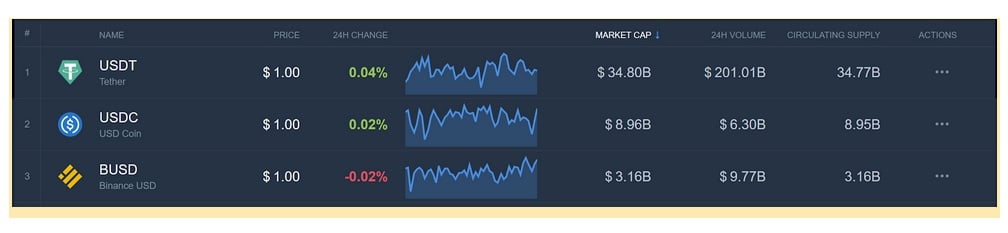
Here Tether dwarfs the other two stablecoins by a margin considering the market capitalization and the circulating supply. The market cap of Tether (USDT) is $34.80 billion in comparison with $8.96 billion of USD Coin (USDC) and $3.16 billion of Binance USD (BUSD).
On Jan. 4, the United States Treasury's Office of the Comptroller of the Currency (OCC) announced that banks would be allowed to run independent nodes for distributed ledger networks and transact in stablecoins.
After this approval, even stablecoin projects like Curve DAO (CRV), MakerDAO (MKR), Terra (Luna) and Reserve Rights (RSR) have seen a surge in incoming volume once investors realise that their regulatory concerns have been eased.
Despite Tether’s high market capitalization and circulating supply, it has been swamped with controversies as well. Tether was taken to court alongside Bitfinex, a cryptocurrency trading platform, by the New York Attorney General's (NYAG's) office for misrepresenting funds and reserves to cover Bitfinex’s losses in that year.
The two parties recently reached a settlement with the NYAG’s office. In a press release from the NYAG’s office, Bitfinex and Tether were asked to pay $18.5 million in penalties to the State of York, and that they would discontinue any trading activity with New Yorkers.
In addition, these companies must submit regular reports to the Office of Attorney General (OAG) to ensure compliance with this prohibition.
CBDC - Digital U.S. Dollar
One of the foolproof ways to avoid these methods of manipulation with balances and reserves are Central Bank Digital Currencies (CBDCs).
At present, the most advanced CBDC project is China’s digital currency project, which is currently at a widespread trial stage with more and more consumers being included in the trial along with in the inclusion of private payment companies like Ant Group and Tencent Group.
To keep up with the times and the increased hype around cryptocurrencies, the United States Federal Reserve’s Chairman, Jerome Powell announced that the U.S. Federal Reserve is approaching the topic of the Central Bank Digital Currency (CBDC) and its native digital U.S. dollar with absolute vigilance.
As mentioned in ByBit’s blog titled “The Role of CBDC in the US”, there are “significant technical and policy questions” remain unanswered, and an extended waiting period lies ahead before the rest of the world will hear about any confirmation on a launch.
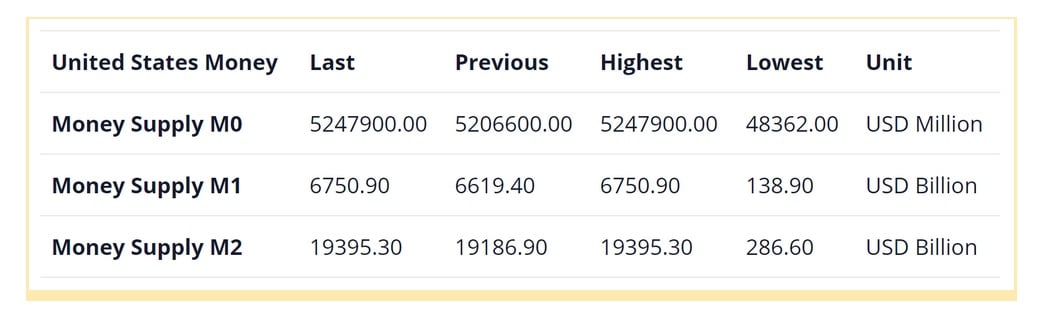
The U.S. Federal Reserve is discussing and exploring ways to replace all the M0 supply in the country which includes all physical currency in circulation in the economy at present.
Below is the data from ByBit’s blog indicates the following numbers for different money supply categories in the U.S. for January 2021:
The blog goes on to talk about how digitizing the U.S. dollar could allow the Fed to exercise end-to-end control over the monetary system aside from the printing and destroying of money, which may lead to greater financial stability for the economy.
This indicates a complete Fed oversight over the digital U.S. dollar that is distributed to the public from commercial banks and other institutions, especially as the Fed is considering utilizing a mix of current and new technologies to facilitate this financial machinery.
Now with the proliferation of USD stablecoins and China’s DC/EP in advanced stages of it’s trial, it is highly essential for the Fed to fast track their contemplating and exploration process to launch a CBDC as soon as possible.
As it currently stands, it already is bound to face major competition in adoption from Tether and upcoming stablecoin projects like Diem.
Stablecoins or CBDC’s, no matter which one of them gets mainstream adoption first, it is highly essential that the merchants and vendors are prepared when consumers make this transition.
It is really inevitable now, especially with the lessons that the ongoing global pandemic has taught the world about unnecessary touch points in the financial transactions both sides of a product goes through.
During this pandemic, globally all countries have seen a reduction in consumer dependence on cash, there are new technology innovations launching every day that attempt to bridge the gap with merchants and consumers seamlessly with the least number of touch points.
There are even private companies like JP Morgan, Amazon, Facebook and Wells Fargo building their own stablecoins with the objective of keeping their currency’s value as stable as the dollar is.
in CBDC conversations its not uncommon to see the idea that this new token/network must be traceable to comply with AML.
Stablecoins are very often used as a store of value for cryptocurrency investors to enable easier on ramp into buying cryptocurrencies when needed, especially on a short notice.
A stablecoin is a class of cryptocurrencies which are backed by a reserve asset and are pegged to a certain external reference in an attempt to offer price stability in the highly volatile cryptocurrency markets.
They offer a variety of advantages to its users, like the instant transaction processing, having the privacy aspects of cryptocurrencies, and the volatility-free stable valuations of fiat currencies.
Currently, the most prominent stablecoins in the market are pegged to the United States Dollar (USD) as it’s the most used global trade currency at the moment. The most adopted USD stablecoins are Tether (USDT), USD Coin (USDC) and Binance USD (BUSD).
Here Tether dwarfs the other two stablecoins by a margin considering the market capitalization and the circulating supply. The market cap of Tether (USDT) is $34.80 billion in comparison with $8.96 billion of USD Coin (USDC) and $3.16 billion of Binance USD (BUSD).
On Jan. 4, the United States Treasury's Office of the Comptroller of the Currency (OCC) announced that banks would be allowed to run independent nodes for distributed ledger networks and transact in stablecoins.
After this approval, even stablecoin projects like Curve DAO (CRV), MakerDAO (MKR), Terra (Luna) and Reserve Rights (RSR) have seen a surge in incoming volume once investors realise that their regulatory concerns have been eased.
Despite Tether’s high market capitalization and circulating supply, it has been swamped with controversies as well. Tether was taken to court alongside Bitfinex, a cryptocurrency trading platform, by the New York Attorney General's (NYAG's) office for misrepresenting funds and reserves to cover Bitfinex’s losses in that year.
The two parties recently reached a settlement with the NYAG’s office. In a press release from the NYAG’s office, Bitfinex and Tether were asked to pay $18.5 million in penalties to the State of York, and that they would discontinue any trading activity with New Yorkers.
In addition, these companies must submit regular reports to the Office of Attorney General (OAG) to ensure compliance with this prohibition.
CBDC - Digital U.S. Dollar
One of the foolproof ways to avoid these methods of manipulation with balances and reserves are Central Bank Digital Currencies (CBDCs).
At present, the most advanced CBDC project is China’s digital currency project, which is currently at a widespread trial stage with more and more consumers being included in the trial along with in the inclusion of private payment companies like Ant Group and Tencent Group.
To keep up with the times and the increased hype around cryptocurrencies, the United States Federal Reserve’s Chairman, Jerome Powell announced that the U.S. Federal Reserve is approaching the topic of the Central Bank Digital Currency (CBDC) and its native digital U.S. dollar with absolute vigilance.
As mentioned in ByBit’s blog titled “The Role of CBDC in the US”, there are “significant technical and policy questions” remain unanswered, and an extended waiting period lies ahead before the rest of the world will hear about any confirmation on a launch.
The U.S. Federal Reserve is discussing and exploring ways to replace all the M0 supply in the country which includes all physical currency in circulation in the economy at present.
Below is the data from ByBit’s blog indicates the following numbers for different money supply categories in the U.S. for January 2021:
The blog goes on to talk about how digitizing the U.S. dollar could allow the Fed to exercise end-to-end control over the monetary system aside from the printing and destroying of money, which may lead to greater financial stability for the economy.
This indicates a complete Fed oversight over the digital U.S. dollar that is distributed to the public from commercial banks and other institutions, especially as the Fed is considering utilizing a mix of current and new technologies to facilitate this financial machinery.
Now with the proliferation of USD stablecoins and China’s DC/EP in advanced stages of it’s trial, it is highly essential for the Fed to fast track their contemplating and exploration process to launch a CBDC as soon as possible.
As it currently stands, it already is bound to face major competition in adoption from Tether and upcoming stablecoin projects like Diem.
FP Markets Winner Spotlight 🏆 | Global Broker of the Year 2025 #Trading #Broker #Innovation #Shorts
FP Markets Winner Spotlight 🏆 | Global Broker of the Year 2025 #Trading #Broker #Innovation #Shorts
FP Markets Winner Spotlight 🏆 | Global Broker of the Year 2025 #Trading #Broker #Innovation #Shorts
FP Markets Winner Spotlight 🏆 | Global Broker of the Year 2025 #Trading #Broker #Innovation #Shorts
FP Markets takes the spotlight as Global Broker of the Year 2025 at the Finance Magnates Awards.
Martin Stoilov, Head of Client Experience, shares that trust, innovation, and people played a key role in the company’s success, supported by a strong foundation of integrity and client-centricity.
Following this milestone, FP Markets continues to focus on growth, technology investment, and its core values of transparency and excellence.
👉 Be part of FM Awards 2026: https://awards.financemagnates.com/#nominate
FP Markets takes the spotlight as Global Broker of the Year 2025 at the Finance Magnates Awards.
Martin Stoilov, Head of Client Experience, shares that trust, innovation, and people played a key role in the company’s success, supported by a strong foundation of integrity and client-centricity.
Following this milestone, FP Markets continues to focus on growth, technology investment, and its core values of transparency and excellence.
👉 Be part of FM Awards 2026: https://awards.financemagnates.com/#nominate
FP Markets takes the spotlight as Global Broker of the Year 2025 at the Finance Magnates Awards.
Martin Stoilov, Head of Client Experience, shares that trust, innovation, and people played a key role in the company’s success, supported by a strong foundation of integrity and client-centricity.
Following this milestone, FP Markets continues to focus on growth, technology investment, and its core values of transparency and excellence.
👉 Be part of FM Awards 2026: https://awards.financemagnates.com/#nominate
FP Markets takes the spotlight as Global Broker of the Year 2025 at the Finance Magnates Awards.
Martin Stoilov, Head of Client Experience, shares that trust, innovation, and people played a key role in the company’s success, supported by a strong foundation of integrity and client-centricity.
Following this milestone, FP Markets continues to focus on growth, technology investment, and its core values of transparency and excellence.
👉 Be part of FM Awards 2026: https://awards.financemagnates.com/#nominate
In this video, we review @HolaPrimeMarketsOfficial, a multi-asset forex and CFDs broker offering different account types, trading platforms, and flexible trading conditions.
We cover the broker’s overall offering, including account options, trading environment, platforms like MT4 and MT5, and additional services such as managed accounts and fast withdrawals.
Watch the full video to see if Hola Prime Markets fits your trading needs.
📣 Stay up to date with the latest in finance and trading. Follow Finance Magnates for industry news, insights, and global event coverage.
Connect with us:
🔗 LinkedIn: /financemagnates
👍 Facebook: /financemagnates
📸 Instagram: https://www.instagram.com/financemagnates
🐦 X: https://x.com/financemagnates
🎥 TikTok: https://www.tiktok.com/tag/financemagnates
▶️ YouTube: /@financemagnates_official
#HolaPrime #ForexBroker #CFDTrading #FinanceMagnates #Trading #Forex #BrokerReview
In this video, we review @HolaPrimeMarketsOfficial, a multi-asset forex and CFDs broker offering different account types, trading platforms, and flexible trading conditions.
We cover the broker’s overall offering, including account options, trading environment, platforms like MT4 and MT5, and additional services such as managed accounts and fast withdrawals.
Watch the full video to see if Hola Prime Markets fits your trading needs.
📣 Stay up to date with the latest in finance and trading. Follow Finance Magnates for industry news, insights, and global event coverage.
Connect with us:
🔗 LinkedIn: /financemagnates
👍 Facebook: /financemagnates
📸 Instagram: https://www.instagram.com/financemagnates
🐦 X: https://x.com/financemagnates
🎥 TikTok: https://www.tiktok.com/tag/financemagnates
▶️ YouTube: /@financemagnates_official
#HolaPrime #ForexBroker #CFDTrading #FinanceMagnates #Trading #Forex #BrokerReview
In this video, we review @HolaPrimeMarketsOfficial, a multi-asset forex and CFDs broker offering different account types, trading platforms, and flexible trading conditions.
We cover the broker’s overall offering, including account options, trading environment, platforms like MT4 and MT5, and additional services such as managed accounts and fast withdrawals.
Watch the full video to see if Hola Prime Markets fits your trading needs.
📣 Stay up to date with the latest in finance and trading. Follow Finance Magnates for industry news, insights, and global event coverage.
Connect with us:
🔗 LinkedIn: /financemagnates
👍 Facebook: /financemagnates
📸 Instagram: https://www.instagram.com/financemagnates
🐦 X: https://x.com/financemagnates
🎥 TikTok: https://www.tiktok.com/tag/financemagnates
▶️ YouTube: /@financemagnates_official
#HolaPrime #ForexBroker #CFDTrading #FinanceMagnates #Trading #Forex #BrokerReview
In this video, we review @HolaPrimeMarketsOfficial, a multi-asset forex and CFDs broker offering different account types, trading platforms, and flexible trading conditions.
We cover the broker’s overall offering, including account options, trading environment, platforms like MT4 and MT5, and additional services such as managed accounts and fast withdrawals.
Watch the full video to see if Hola Prime Markets fits your trading needs.
📣 Stay up to date with the latest in finance and trading. Follow Finance Magnates for industry news, insights, and global event coverage.
Connect with us:
🔗 LinkedIn: /financemagnates
👍 Facebook: /financemagnates
📸 Instagram: https://www.instagram.com/financemagnates
🐦 X: https://x.com/financemagnates
🎥 TikTok: https://www.tiktok.com/tag/financemagnates
▶️ YouTube: /@financemagnates_official
#HolaPrime #ForexBroker #CFDTrading #FinanceMagnates #Trading #Forex #BrokerReview
In this video, we review @HolaPrimeMarketsOfficial, a multi-asset forex and CFDs broker offering different account types, trading platforms, and flexible trading conditions.
We cover the broker’s overall offering, including account options, trading environment, platforms like MT4 and MT5, and additional services such as managed accounts and fast withdrawals.
Watch the full video to see if Hola Prime Markets fits your trading needs.
📣 Stay up to date with the latest in finance and trading. Follow Finance Magnates for industry news, insights, and global event coverage.
Connect with us:
🔗 LinkedIn: /financemagnates
👍 Facebook: /financemagnates
📸 Instagram: https://www.instagram.com/financemagnates
🐦 X: https://x.com/financemagnates
🎥 TikTok: https://www.tiktok.com/tag/financemagnates
▶️ YouTube: /@financemagnates_official
#HolaPrime #ForexBroker #CFDTrading #FinanceMagnates #Trading #Forex #BrokerReview
In this video, we review @HolaPrimeMarketsOfficial, a multi-asset forex and CFDs broker offering different account types, trading platforms, and flexible trading conditions.
We cover the broker’s overall offering, including account options, trading environment, platforms like MT4 and MT5, and additional services such as managed accounts and fast withdrawals.
Watch the full video to see if Hola Prime Markets fits your trading needs.
📣 Stay up to date with the latest in finance and trading. Follow Finance Magnates for industry news, insights, and global event coverage.
Connect with us:
🔗 LinkedIn: /financemagnates
👍 Facebook: /financemagnates
📸 Instagram: https://www.instagram.com/financemagnates
🐦 X: https://x.com/financemagnates
🎥 TikTok: https://www.tiktok.com/tag/financemagnates
▶️ YouTube: /@financemagnates_official
#HolaPrime #ForexBroker #CFDTrading #FinanceMagnates #Trading #Forex #BrokerReview
Hola Prime Review: What You Need to Know | Full Breakdown by Finance Magnates
Hola Prime Review: What You Need to Know | Full Breakdown by Finance Magnates
Hola Prime Review: What You Need to Know | Full Breakdown by Finance Magnates
Hola Prime Review: What You Need to Know | Full Breakdown by Finance Magnates
Hola Prime Review: What You Need to Know | Full Breakdown by Finance Magnates
Hola Prime Review: What You Need to Know | Full Breakdown by Finance Magnates
In this video, we review @HolaPrime_Global, a proprietary trading firm offering evaluation programs and performance-based payouts in simulated market environments.
We cover how the challenge model works, including account types, profit splits (up to 95%), trading rules, and what it takes to reach a funded account. You’ll also learn about available platforms like MT4, MT5, cTrader, and more, along with insights into payouts, support, and trading conditions.
Watch the full video to see if Hola Prime fits your trading style.
📣 Stay up to date with the latest in finance and trading. Follow Finance Magnates for industry news, insights, and global event coverage.
Connect with us:
🔗 LinkedIn: /financemagnates
👍 Facebook: /financemagnates
📸 Instagram: https://www.instagram.com/financemagnates
🐦 X: https://x.com/financemagnates
🎥 TikTok: https://www.tiktok.com/tag/financemagnates
▶️ YouTube: /@financemagnates_official
#HolaPrime #PropFirm #Trading #FinanceMagnates #Forex #FuturesTrading #TradingReview #PropFirmReview
In this video, we review @HolaPrime_Global, a proprietary trading firm offering evaluation programs and performance-based payouts in simulated market environments.
We cover how the challenge model works, including account types, profit splits (up to 95%), trading rules, and what it takes to reach a funded account. You’ll also learn about available platforms like MT4, MT5, cTrader, and more, along with insights into payouts, support, and trading conditions.
Watch the full video to see if Hola Prime fits your trading style.
📣 Stay up to date with the latest in finance and trading. Follow Finance Magnates for industry news, insights, and global event coverage.
Connect with us:
🔗 LinkedIn: /financemagnates
👍 Facebook: /financemagnates
📸 Instagram: https://www.instagram.com/financemagnates
🐦 X: https://x.com/financemagnates
🎥 TikTok: https://www.tiktok.com/tag/financemagnates
▶️ YouTube: /@financemagnates_official
#HolaPrime #PropFirm #Trading #FinanceMagnates #Forex #FuturesTrading #TradingReview #PropFirmReview
In this video, we review @HolaPrime_Global, a proprietary trading firm offering evaluation programs and performance-based payouts in simulated market environments.
We cover how the challenge model works, including account types, profit splits (up to 95%), trading rules, and what it takes to reach a funded account. You’ll also learn about available platforms like MT4, MT5, cTrader, and more, along with insights into payouts, support, and trading conditions.
Watch the full video to see if Hola Prime fits your trading style.
📣 Stay up to date with the latest in finance and trading. Follow Finance Magnates for industry news, insights, and global event coverage.
Connect with us:
🔗 LinkedIn: /financemagnates
👍 Facebook: /financemagnates
📸 Instagram: https://www.instagram.com/financemagnates
🐦 X: https://x.com/financemagnates
🎥 TikTok: https://www.tiktok.com/tag/financemagnates
▶️ YouTube: /@financemagnates_official
#HolaPrime #PropFirm #Trading #FinanceMagnates #Forex #FuturesTrading #TradingReview #PropFirmReview
In this video, we review @HolaPrime_Global, a proprietary trading firm offering evaluation programs and performance-based payouts in simulated market environments.
We cover how the challenge model works, including account types, profit splits (up to 95%), trading rules, and what it takes to reach a funded account. You’ll also learn about available platforms like MT4, MT5, cTrader, and more, along with insights into payouts, support, and trading conditions.
Watch the full video to see if Hola Prime fits your trading style.
📣 Stay up to date with the latest in finance and trading. Follow Finance Magnates for industry news, insights, and global event coverage.
Connect with us:
🔗 LinkedIn: /financemagnates
👍 Facebook: /financemagnates
📸 Instagram: https://www.instagram.com/financemagnates
🐦 X: https://x.com/financemagnates
🎥 TikTok: https://www.tiktok.com/tag/financemagnates
▶️ YouTube: /@financemagnates_official
#HolaPrime #PropFirm #Trading #FinanceMagnates #Forex #FuturesTrading #TradingReview #PropFirmReview
In this video, we review @HolaPrime_Global, a proprietary trading firm offering evaluation programs and performance-based payouts in simulated market environments.
We cover how the challenge model works, including account types, profit splits (up to 95%), trading rules, and what it takes to reach a funded account. You’ll also learn about available platforms like MT4, MT5, cTrader, and more, along with insights into payouts, support, and trading conditions.
Watch the full video to see if Hola Prime fits your trading style.
📣 Stay up to date with the latest in finance and trading. Follow Finance Magnates for industry news, insights, and global event coverage.
Connect with us:
🔗 LinkedIn: /financemagnates
👍 Facebook: /financemagnates
📸 Instagram: https://www.instagram.com/financemagnates
🐦 X: https://x.com/financemagnates
🎥 TikTok: https://www.tiktok.com/tag/financemagnates
▶️ YouTube: /@financemagnates_official
#HolaPrime #PropFirm #Trading #FinanceMagnates #Forex #FuturesTrading #TradingReview #PropFirmReview
In this video, we review @HolaPrime_Global, a proprietary trading firm offering evaluation programs and performance-based payouts in simulated market environments.
We cover how the challenge model works, including account types, profit splits (up to 95%), trading rules, and what it takes to reach a funded account. You’ll also learn about available platforms like MT4, MT5, cTrader, and more, along with insights into payouts, support, and trading conditions.
Watch the full video to see if Hola Prime fits your trading style.
📣 Stay up to date with the latest in finance and trading. Follow Finance Magnates for industry news, insights, and global event coverage.
Connect with us:
🔗 LinkedIn: /financemagnates
👍 Facebook: /financemagnates
📸 Instagram: https://www.instagram.com/financemagnates
🐦 X: https://x.com/financemagnates
🎥 TikTok: https://www.tiktok.com/tag/financemagnates
▶️ YouTube: /@financemagnates_official
#HolaPrime #PropFirm #Trading #FinanceMagnates #Forex #FuturesTrading #TradingReview #PropFirmReview
Axi Winner Spotlight 🏆 | Global Most Innovative Broker 2025 #Innovation #Trading #Fintech #Broker
Axi Winner Spotlight 🏆 | Global Most Innovative Broker 2025 #Innovation #Trading #Fintech #Broker
Axi Winner Spotlight 🏆 | Global Most Innovative Broker 2025 #Innovation #Trading #Fintech #Broker
Axi Winner Spotlight 🏆 | Global Most Innovative Broker 2025 #Innovation #Trading #Fintech #Broker
Axi Winner Spotlight 🏆 | Global Most Innovative Broker 2025 #Innovation #Trading #Fintech #Broker
Axi Winner Spotlight 🏆 | Global Most Innovative Broker 2025 #Innovation #Trading #Fintech #Broker
Axi takes the spotlight at the Finance Magnates Awards, winning Global Most Innovative Broker 2025.
Olivia Xenofontos and Ivanna Openko share how the team will feel: proud, motivated, and ready to keep delivering.
They also describe the night as well-organized, focused, and enjoyable for all.
👉 Be part of FM Awards 2026.
Axi takes the spotlight at the Finance Magnates Awards, winning Global Most Innovative Broker 2025.
Olivia Xenofontos and Ivanna Openko share how the team will feel: proud, motivated, and ready to keep delivering.
They also describe the night as well-organized, focused, and enjoyable for all.
👉 Be part of FM Awards 2026.
Axi takes the spotlight at the Finance Magnates Awards, winning Global Most Innovative Broker 2025.
Olivia Xenofontos and Ivanna Openko share how the team will feel: proud, motivated, and ready to keep delivering.
They also describe the night as well-organized, focused, and enjoyable for all.
👉 Be part of FM Awards 2026.
Axi takes the spotlight at the Finance Magnates Awards, winning Global Most Innovative Broker 2025.
Olivia Xenofontos and Ivanna Openko share how the team will feel: proud, motivated, and ready to keep delivering.
They also describe the night as well-organized, focused, and enjoyable for all.
👉 Be part of FM Awards 2026.
Axi takes the spotlight at the Finance Magnates Awards, winning Global Most Innovative Broker 2025.
Olivia Xenofontos and Ivanna Openko share how the team will feel: proud, motivated, and ready to keep delivering.
They also describe the night as well-organized, focused, and enjoyable for all.
👉 Be part of FM Awards 2026.
Axi takes the spotlight at the Finance Magnates Awards, winning Global Most Innovative Broker 2025.
Olivia Xenofontos and Ivanna Openko share how the team will feel: proud, motivated, and ready to keep delivering.
They also describe the night as well-organized, focused, and enjoyable for all.
👉 Be part of FM Awards 2026.
Recognition that matters.
Built on transparency.
Driven by the industry.
The Finance Magnates Awards 2026.
Nominations are now open.
🔗 https://awards.financemagnates.com/?utm_source=SM&utm_medium=social&utm_campaign=recognition-matters
Recognition that matters.
Built on transparency.
Driven by the industry.
The Finance Magnates Awards 2026.
Nominations are now open.
🔗 https://awards.financemagnates.com/?utm_source=SM&utm_medium=social&utm_campaign=recognition-matters
Recognition that matters.
Built on transparency.
Driven by the industry.
The Finance Magnates Awards 2026.
Nominations are now open.
🔗 https://awards.financemagnates.com/?utm_source=SM&utm_medium=social&utm_campaign=recognition-matters
Recognition that matters.
Built on transparency.
Driven by the industry.
The Finance Magnates Awards 2026.
Nominations are now open.
🔗 https://awards.financemagnates.com/?utm_source=SM&utm_medium=social&utm_campaign=recognition-matters
Recognition that matters.
Built on transparency.
Driven by the industry.
The Finance Magnates Awards 2026.
Nominations are now open.
🔗 https://awards.financemagnates.com/?utm_source=SM&utm_medium=social&utm_campaign=recognition-matters
Recognition that matters.
Built on transparency.
Driven by the industry.
The Finance Magnates Awards 2026.
Nominations are now open.
🔗 https://awards.financemagnates.com/?utm_source=SM&utm_medium=social&utm_campaign=recognition-matters