The global financial crisis regulatory reforms have finally started to reshape the investment banking industry.
Finance Magnates
In a provocative break from convention last year, the normally dignified, button-down Oxford English Dictionary chose an emoji as the official ‘Word of the Year 2015’.
For those of you who weren’t aware of this historic development (like me until recently), the chosen emoji was ‘Face with Tears of Joy’ . Apparently this was the ‘word’ which “best reflected the ethos, mood and preoccupations of 2015.”
However, does the preoccupation with BREXIT miss something bigger happening beneath the surface? I would argue that 2016 is going to be remembered as the year when post-global financial crisis (GFC) regulatory reform has finally started to permanently reshape the global investment banking industry.
The behemoth, systemically-important global banks are being reined-in by regulatory reforms which are only just now starting to bite. These reforms will slowly but surely tighten their grip as 2016 wears on. Further staggered implementation of reforms is planned through 2019 and beyond. For banks, the world has changed – and it’s a much harder place to be. In response, new, agile non-bank entities are evolving to cater to the clients the banks are being forced to leave behind.
These reforms will slowly but surely tighten their grip as 2016 wears on
Ultimately, the GFC was a huge wake-up call to global regulators, shocking them into the realization that coordinated regulatory reform aimed at promoting stability within the financial system needed to be very quickly pushed to the top of their to-do list. Most urgent was a review of the activities of the “too-big-to-fail” global investment banks.
To be honest, it’s probably fair enough that if the public purse is going to be called upon to bail Investment Banks out in times where their pursuit of risky activities has threatened their existence (and that of the entire global financial system), then it should be made a lot harder/costlier for banks to be involved in these activities. So much better for the “non-core” banking activities to be performed by entities who, if they happen to fail (which some inevitably will), will not threaten to bring down the whole system.
Activities or asset classes are given a risk weighting which determines the quantity and type of capital the bank must keep in reserve to support a particular trade, business or customer.
The Basel III Accord, released in December 2010, dealt with FX and Commodities-related activities particularly harshly.
It has taken a long time to sink in, but global banks are going through a process of determining just how committed they are to long-term provision of Prime Services, market making, Liquidity Provision, Credit Provision etc. in the FX/Commodities space.
Non-Bank Players
And this is where the non-banks come in, filling the void as the bank tide recedes. The Basel III reforms began being implemented in 2014 and implementation deadlines extend right through to 2019. Before we get to 2019 though, an even more restrictive regime is expected to be proposed – Basel IV. Investment Banks are struggling to come to terms with Basel III. They aren’t going to enjoy Basel IV.
The global Investment banks have been reacting at snail’s pace. This stems from the fact that most of the activities they have been forced out of; FX Prime Services and market making, for example, have been high revenue-generating businesses for decades – and remain so. But now the costs are just too high that the banks can only profitably service the very largest of clients.
The regulatory reforms affecting banks are significant, far-reaching and permanent
This is a long-term transformation, a once-in-a-generation change. The regulatory reforms affecting banks are significant, far-reaching and permanent. The effect of all of this has been noticeable for a while and is becoming more significant by the day. Non-bank firms are stepping into the void left by the retreating banks.
Some of these firms are opportunistic and unlikely to remain sustained entrants to these new areas of the industry. But others, like my firm Invast Global in the Prime Services space, are well-capitalised, purpose-built entities designed to take advantage of the retreat of the banks by providing a product that is arguably better than the banks were previously offering.
The success Invast Global has experienced in the FX/CFD Prime Services space in the past two years is not just an endorsement of the product we have built and the quality of our staff, it’s a testament to the magnitude of the transformation in the Prime Services industry in a very short period of time.
Similarly, other non-bank entities are having remarkable success in other areas where the global Investment Banks are contracting. XTX Markets, Citadel, Jump Trading and Virtu Financial are all great examples of non-banks expanding rapidly into the traditionally Investment Bank-only turf of market-making – however, XTX is the real stand-out.
Since the “Euromoney FX Rankings” were first published almost 40 years ago, the top 10 spots have always been filled by global Investment Banks. Not anymore. In 2015 XTX roared up the rankings to place 9th for global FX Spot market share – the first time a non-bank has ranked in the top ten – this year, 2016, XTX came 4th.
The same breathtaking rise of non-bank entities is evident in Prime Services. It’s jaw-dropping stuff for an old-timer like me. So it is within this context that I would like to put forward “non-bank” as the ‘Financial Markets word of 2016”.
It might not be as cute as an emoji, but it is arguably more likely to change our world.
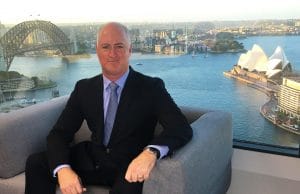
Gavin White, CEO, Invast Global
Gavin White is the Chief Executive Officer at Invast Global. He has over 25 years of experience at Senior Management level for top tier Investment Banks such as Citigroup, Bankers Trust and Barclays Capital.
In a provocative break from convention last year, the normally dignified, button-down Oxford English Dictionary chose an emoji as the official ‘Word of the Year 2015’.
For those of you who weren’t aware of this historic development (like me until recently), the chosen emoji was ‘Face with Tears of Joy’ . Apparently this was the ‘word’ which “best reflected the ethos, mood and preoccupations of 2015.”
However, does the preoccupation with BREXIT miss something bigger happening beneath the surface? I would argue that 2016 is going to be remembered as the year when post-global financial crisis (GFC) regulatory reform has finally started to permanently reshape the global investment banking industry.
The behemoth, systemically-important global banks are being reined-in by regulatory reforms which are only just now starting to bite. These reforms will slowly but surely tighten their grip as 2016 wears on. Further staggered implementation of reforms is planned through 2019 and beyond. For banks, the world has changed – and it’s a much harder place to be. In response, new, agile non-bank entities are evolving to cater to the clients the banks are being forced to leave behind.
These reforms will slowly but surely tighten their grip as 2016 wears on
Ultimately, the GFC was a huge wake-up call to global regulators, shocking them into the realization that coordinated regulatory reform aimed at promoting stability within the financial system needed to be very quickly pushed to the top of their to-do list. Most urgent was a review of the activities of the “too-big-to-fail” global investment banks.
To be honest, it’s probably fair enough that if the public purse is going to be called upon to bail Investment Banks out in times where their pursuit of risky activities has threatened their existence (and that of the entire global financial system), then it should be made a lot harder/costlier for banks to be involved in these activities. So much better for the “non-core” banking activities to be performed by entities who, if they happen to fail (which some inevitably will), will not threaten to bring down the whole system.
Activities or asset classes are given a risk weighting which determines the quantity and type of capital the bank must keep in reserve to support a particular trade, business or customer.
The Basel III Accord, released in December 2010, dealt with FX and Commodities-related activities particularly harshly.
It has taken a long time to sink in, but global banks are going through a process of determining just how committed they are to long-term provision of Prime Services, market making, Liquidity Provision, Credit Provision etc. in the FX/Commodities space.
Non-Bank Players
And this is where the non-banks come in, filling the void as the bank tide recedes. The Basel III reforms began being implemented in 2014 and implementation deadlines extend right through to 2019. Before we get to 2019 though, an even more restrictive regime is expected to be proposed – Basel IV. Investment Banks are struggling to come to terms with Basel III. They aren’t going to enjoy Basel IV.
The global Investment banks have been reacting at snail’s pace. This stems from the fact that most of the activities they have been forced out of; FX Prime Services and market making, for example, have been high revenue-generating businesses for decades – and remain so. But now the costs are just too high that the banks can only profitably service the very largest of clients.
The regulatory reforms affecting banks are significant, far-reaching and permanent
This is a long-term transformation, a once-in-a-generation change. The regulatory reforms affecting banks are significant, far-reaching and permanent. The effect of all of this has been noticeable for a while and is becoming more significant by the day. Non-bank firms are stepping into the void left by the retreating banks.
Some of these firms are opportunistic and unlikely to remain sustained entrants to these new areas of the industry. But others, like my firm Invast Global in the Prime Services space, are well-capitalised, purpose-built entities designed to take advantage of the retreat of the banks by providing a product that is arguably better than the banks were previously offering.
The success Invast Global has experienced in the FX/CFD Prime Services space in the past two years is not just an endorsement of the product we have built and the quality of our staff, it’s a testament to the magnitude of the transformation in the Prime Services industry in a very short period of time.
Similarly, other non-bank entities are having remarkable success in other areas where the global Investment Banks are contracting. XTX Markets, Citadel, Jump Trading and Virtu Financial are all great examples of non-banks expanding rapidly into the traditionally Investment Bank-only turf of market-making – however, XTX is the real stand-out.
Since the “Euromoney FX Rankings” were first published almost 40 years ago, the top 10 spots have always been filled by global Investment Banks. Not anymore. In 2015 XTX roared up the rankings to place 9th for global FX Spot market share – the first time a non-bank has ranked in the top ten – this year, 2016, XTX came 4th.
The same breathtaking rise of non-bank entities is evident in Prime Services. It’s jaw-dropping stuff for an old-timer like me. So it is within this context that I would like to put forward “non-bank” as the ‘Financial Markets word of 2016”.
It might not be as cute as an emoji, but it is arguably more likely to change our world.
Gavin White, CEO, Invast Global
Gavin White is the Chief Executive Officer at Invast Global. He has over 25 years of experience at Senior Management level for top tier Investment Banks such as Citigroup, Bankers Trust and Barclays Capital.
KuCoin Introduces PROOF, a Trading Competition Focused on Transparency and Fair Play
Featured Videos
FP Markets Winner Spotlight 🏆 | Global Broker of the Year 2025 #Trading #Broker #Innovation #Shorts
FP Markets Winner Spotlight 🏆 | Global Broker of the Year 2025 #Trading #Broker #Innovation #Shorts
FP Markets Winner Spotlight 🏆 | Global Broker of the Year 2025 #Trading #Broker #Innovation #Shorts
FP Markets Winner Spotlight 🏆 | Global Broker of the Year 2025 #Trading #Broker #Innovation #Shorts
FP Markets takes the spotlight as Global Broker of the Year 2025 at the Finance Magnates Awards.
Martin Stoilov, Head of Client Experience, shares that trust, innovation, and people played a key role in the company’s success, supported by a strong foundation of integrity and client-centricity.
Following this milestone, FP Markets continues to focus on growth, technology investment, and its core values of transparency and excellence.
👉 Be part of FM Awards 2026: https://awards.financemagnates.com/#nominate
FP Markets takes the spotlight as Global Broker of the Year 2025 at the Finance Magnates Awards.
Martin Stoilov, Head of Client Experience, shares that trust, innovation, and people played a key role in the company’s success, supported by a strong foundation of integrity and client-centricity.
Following this milestone, FP Markets continues to focus on growth, technology investment, and its core values of transparency and excellence.
👉 Be part of FM Awards 2026: https://awards.financemagnates.com/#nominate
FP Markets takes the spotlight as Global Broker of the Year 2025 at the Finance Magnates Awards.
Martin Stoilov, Head of Client Experience, shares that trust, innovation, and people played a key role in the company’s success, supported by a strong foundation of integrity and client-centricity.
Following this milestone, FP Markets continues to focus on growth, technology investment, and its core values of transparency and excellence.
👉 Be part of FM Awards 2026: https://awards.financemagnates.com/#nominate
FP Markets takes the spotlight as Global Broker of the Year 2025 at the Finance Magnates Awards.
Martin Stoilov, Head of Client Experience, shares that trust, innovation, and people played a key role in the company’s success, supported by a strong foundation of integrity and client-centricity.
Following this milestone, FP Markets continues to focus on growth, technology investment, and its core values of transparency and excellence.
👉 Be part of FM Awards 2026: https://awards.financemagnates.com/#nominate
In this video, we review @HolaPrimeMarketsOfficial, a multi-asset forex and CFDs broker offering different account types, trading platforms, and flexible trading conditions.
We cover the broker’s overall offering, including account options, trading environment, platforms like MT4 and MT5, and additional services such as managed accounts and fast withdrawals.
Watch the full video to see if Hola Prime Markets fits your trading needs.
📣 Stay up to date with the latest in finance and trading. Follow Finance Magnates for industry news, insights, and global event coverage.
Connect with us:
🔗 LinkedIn: /financemagnates
👍 Facebook: /financemagnates
📸 Instagram: https://www.instagram.com/financemagnates
🐦 X: https://x.com/financemagnates
🎥 TikTok: https://www.tiktok.com/tag/financemagnates
▶️ YouTube: /@financemagnates_official
#HolaPrime #ForexBroker #CFDTrading #FinanceMagnates #Trading #Forex #BrokerReview
In this video, we review @HolaPrimeMarketsOfficial, a multi-asset forex and CFDs broker offering different account types, trading platforms, and flexible trading conditions.
We cover the broker’s overall offering, including account options, trading environment, platforms like MT4 and MT5, and additional services such as managed accounts and fast withdrawals.
Watch the full video to see if Hola Prime Markets fits your trading needs.
📣 Stay up to date with the latest in finance and trading. Follow Finance Magnates for industry news, insights, and global event coverage.
Connect with us:
🔗 LinkedIn: /financemagnates
👍 Facebook: /financemagnates
📸 Instagram: https://www.instagram.com/financemagnates
🐦 X: https://x.com/financemagnates
🎥 TikTok: https://www.tiktok.com/tag/financemagnates
▶️ YouTube: /@financemagnates_official
#HolaPrime #ForexBroker #CFDTrading #FinanceMagnates #Trading #Forex #BrokerReview
In this video, we review @HolaPrimeMarketsOfficial, a multi-asset forex and CFDs broker offering different account types, trading platforms, and flexible trading conditions.
We cover the broker’s overall offering, including account options, trading environment, platforms like MT4 and MT5, and additional services such as managed accounts and fast withdrawals.
Watch the full video to see if Hola Prime Markets fits your trading needs.
📣 Stay up to date with the latest in finance and trading. Follow Finance Magnates for industry news, insights, and global event coverage.
Connect with us:
🔗 LinkedIn: /financemagnates
👍 Facebook: /financemagnates
📸 Instagram: https://www.instagram.com/financemagnates
🐦 X: https://x.com/financemagnates
🎥 TikTok: https://www.tiktok.com/tag/financemagnates
▶️ YouTube: /@financemagnates_official
#HolaPrime #ForexBroker #CFDTrading #FinanceMagnates #Trading #Forex #BrokerReview
In this video, we review @HolaPrimeMarketsOfficial, a multi-asset forex and CFDs broker offering different account types, trading platforms, and flexible trading conditions.
We cover the broker’s overall offering, including account options, trading environment, platforms like MT4 and MT5, and additional services such as managed accounts and fast withdrawals.
Watch the full video to see if Hola Prime Markets fits your trading needs.
📣 Stay up to date with the latest in finance and trading. Follow Finance Magnates for industry news, insights, and global event coverage.
Connect with us:
🔗 LinkedIn: /financemagnates
👍 Facebook: /financemagnates
📸 Instagram: https://www.instagram.com/financemagnates
🐦 X: https://x.com/financemagnates
🎥 TikTok: https://www.tiktok.com/tag/financemagnates
▶️ YouTube: /@financemagnates_official
#HolaPrime #ForexBroker #CFDTrading #FinanceMagnates #Trading #Forex #BrokerReview
In this video, we review @HolaPrimeMarketsOfficial, a multi-asset forex and CFDs broker offering different account types, trading platforms, and flexible trading conditions.
We cover the broker’s overall offering, including account options, trading environment, platforms like MT4 and MT5, and additional services such as managed accounts and fast withdrawals.
Watch the full video to see if Hola Prime Markets fits your trading needs.
📣 Stay up to date with the latest in finance and trading. Follow Finance Magnates for industry news, insights, and global event coverage.
Connect with us:
🔗 LinkedIn: /financemagnates
👍 Facebook: /financemagnates
📸 Instagram: https://www.instagram.com/financemagnates
🐦 X: https://x.com/financemagnates
🎥 TikTok: https://www.tiktok.com/tag/financemagnates
▶️ YouTube: /@financemagnates_official
#HolaPrime #ForexBroker #CFDTrading #FinanceMagnates #Trading #Forex #BrokerReview
In this video, we review @HolaPrimeMarketsOfficial, a multi-asset forex and CFDs broker offering different account types, trading platforms, and flexible trading conditions.
We cover the broker’s overall offering, including account options, trading environment, platforms like MT4 and MT5, and additional services such as managed accounts and fast withdrawals.
Watch the full video to see if Hola Prime Markets fits your trading needs.
📣 Stay up to date with the latest in finance and trading. Follow Finance Magnates for industry news, insights, and global event coverage.
Connect with us:
🔗 LinkedIn: /financemagnates
👍 Facebook: /financemagnates
📸 Instagram: https://www.instagram.com/financemagnates
🐦 X: https://x.com/financemagnates
🎥 TikTok: https://www.tiktok.com/tag/financemagnates
▶️ YouTube: /@financemagnates_official
#HolaPrime #ForexBroker #CFDTrading #FinanceMagnates #Trading #Forex #BrokerReview
Hola Prime Review: What You Need to Know | Full Breakdown by Finance Magnates
Hola Prime Review: What You Need to Know | Full Breakdown by Finance Magnates
Hola Prime Review: What You Need to Know | Full Breakdown by Finance Magnates
Hola Prime Review: What You Need to Know | Full Breakdown by Finance Magnates
Hola Prime Review: What You Need to Know | Full Breakdown by Finance Magnates
Hola Prime Review: What You Need to Know | Full Breakdown by Finance Magnates
In this video, we review @HolaPrime_Global, a proprietary trading firm offering evaluation programs and performance-based payouts in simulated market environments.
We cover how the challenge model works, including account types, profit splits (up to 95%), trading rules, and what it takes to reach a funded account. You’ll also learn about available platforms like MT4, MT5, cTrader, and more, along with insights into payouts, support, and trading conditions.
Watch the full video to see if Hola Prime fits your trading style.
📣 Stay up to date with the latest in finance and trading. Follow Finance Magnates for industry news, insights, and global event coverage.
Connect with us:
🔗 LinkedIn: /financemagnates
👍 Facebook: /financemagnates
📸 Instagram: https://www.instagram.com/financemagnates
🐦 X: https://x.com/financemagnates
🎥 TikTok: https://www.tiktok.com/tag/financemagnates
▶️ YouTube: /@financemagnates_official
#HolaPrime #PropFirm #Trading #FinanceMagnates #Forex #FuturesTrading #TradingReview #PropFirmReview
In this video, we review @HolaPrime_Global, a proprietary trading firm offering evaluation programs and performance-based payouts in simulated market environments.
We cover how the challenge model works, including account types, profit splits (up to 95%), trading rules, and what it takes to reach a funded account. You’ll also learn about available platforms like MT4, MT5, cTrader, and more, along with insights into payouts, support, and trading conditions.
Watch the full video to see if Hola Prime fits your trading style.
📣 Stay up to date with the latest in finance and trading. Follow Finance Magnates for industry news, insights, and global event coverage.
Connect with us:
🔗 LinkedIn: /financemagnates
👍 Facebook: /financemagnates
📸 Instagram: https://www.instagram.com/financemagnates
🐦 X: https://x.com/financemagnates
🎥 TikTok: https://www.tiktok.com/tag/financemagnates
▶️ YouTube: /@financemagnates_official
#HolaPrime #PropFirm #Trading #FinanceMagnates #Forex #FuturesTrading #TradingReview #PropFirmReview
In this video, we review @HolaPrime_Global, a proprietary trading firm offering evaluation programs and performance-based payouts in simulated market environments.
We cover how the challenge model works, including account types, profit splits (up to 95%), trading rules, and what it takes to reach a funded account. You’ll also learn about available platforms like MT4, MT5, cTrader, and more, along with insights into payouts, support, and trading conditions.
Watch the full video to see if Hola Prime fits your trading style.
📣 Stay up to date with the latest in finance and trading. Follow Finance Magnates for industry news, insights, and global event coverage.
Connect with us:
🔗 LinkedIn: /financemagnates
👍 Facebook: /financemagnates
📸 Instagram: https://www.instagram.com/financemagnates
🐦 X: https://x.com/financemagnates
🎥 TikTok: https://www.tiktok.com/tag/financemagnates
▶️ YouTube: /@financemagnates_official
#HolaPrime #PropFirm #Trading #FinanceMagnates #Forex #FuturesTrading #TradingReview #PropFirmReview
In this video, we review @HolaPrime_Global, a proprietary trading firm offering evaluation programs and performance-based payouts in simulated market environments.
We cover how the challenge model works, including account types, profit splits (up to 95%), trading rules, and what it takes to reach a funded account. You’ll also learn about available platforms like MT4, MT5, cTrader, and more, along with insights into payouts, support, and trading conditions.
Watch the full video to see if Hola Prime fits your trading style.
📣 Stay up to date with the latest in finance and trading. Follow Finance Magnates for industry news, insights, and global event coverage.
Connect with us:
🔗 LinkedIn: /financemagnates
👍 Facebook: /financemagnates
📸 Instagram: https://www.instagram.com/financemagnates
🐦 X: https://x.com/financemagnates
🎥 TikTok: https://www.tiktok.com/tag/financemagnates
▶️ YouTube: /@financemagnates_official
#HolaPrime #PropFirm #Trading #FinanceMagnates #Forex #FuturesTrading #TradingReview #PropFirmReview
In this video, we review @HolaPrime_Global, a proprietary trading firm offering evaluation programs and performance-based payouts in simulated market environments.
We cover how the challenge model works, including account types, profit splits (up to 95%), trading rules, and what it takes to reach a funded account. You’ll also learn about available platforms like MT4, MT5, cTrader, and more, along with insights into payouts, support, and trading conditions.
Watch the full video to see if Hola Prime fits your trading style.
📣 Stay up to date with the latest in finance and trading. Follow Finance Magnates for industry news, insights, and global event coverage.
Connect with us:
🔗 LinkedIn: /financemagnates
👍 Facebook: /financemagnates
📸 Instagram: https://www.instagram.com/financemagnates
🐦 X: https://x.com/financemagnates
🎥 TikTok: https://www.tiktok.com/tag/financemagnates
▶️ YouTube: /@financemagnates_official
#HolaPrime #PropFirm #Trading #FinanceMagnates #Forex #FuturesTrading #TradingReview #PropFirmReview
In this video, we review @HolaPrime_Global, a proprietary trading firm offering evaluation programs and performance-based payouts in simulated market environments.
We cover how the challenge model works, including account types, profit splits (up to 95%), trading rules, and what it takes to reach a funded account. You’ll also learn about available platforms like MT4, MT5, cTrader, and more, along with insights into payouts, support, and trading conditions.
Watch the full video to see if Hola Prime fits your trading style.
📣 Stay up to date with the latest in finance and trading. Follow Finance Magnates for industry news, insights, and global event coverage.
Connect with us:
🔗 LinkedIn: /financemagnates
👍 Facebook: /financemagnates
📸 Instagram: https://www.instagram.com/financemagnates
🐦 X: https://x.com/financemagnates
🎥 TikTok: https://www.tiktok.com/tag/financemagnates
▶️ YouTube: /@financemagnates_official
#HolaPrime #PropFirm #Trading #FinanceMagnates #Forex #FuturesTrading #TradingReview #PropFirmReview
Axi Winner Spotlight 🏆 | Global Most Innovative Broker 2025 #Innovation #Trading #Fintech #Broker
Axi Winner Spotlight 🏆 | Global Most Innovative Broker 2025 #Innovation #Trading #Fintech #Broker
Axi Winner Spotlight 🏆 | Global Most Innovative Broker 2025 #Innovation #Trading #Fintech #Broker
Axi Winner Spotlight 🏆 | Global Most Innovative Broker 2025 #Innovation #Trading #Fintech #Broker
Axi Winner Spotlight 🏆 | Global Most Innovative Broker 2025 #Innovation #Trading #Fintech #Broker
Axi Winner Spotlight 🏆 | Global Most Innovative Broker 2025 #Innovation #Trading #Fintech #Broker
Axi takes the spotlight at the Finance Magnates Awards, winning Global Most Innovative Broker 2025.
Olivia Xenofontos and Ivanna Openko share how the team will feel: proud, motivated, and ready to keep delivering.
They also describe the night as well-organized, focused, and enjoyable for all.
👉 Be part of FM Awards 2026.
Axi takes the spotlight at the Finance Magnates Awards, winning Global Most Innovative Broker 2025.
Olivia Xenofontos and Ivanna Openko share how the team will feel: proud, motivated, and ready to keep delivering.
They also describe the night as well-organized, focused, and enjoyable for all.
👉 Be part of FM Awards 2026.
Axi takes the spotlight at the Finance Magnates Awards, winning Global Most Innovative Broker 2025.
Olivia Xenofontos and Ivanna Openko share how the team will feel: proud, motivated, and ready to keep delivering.
They also describe the night as well-organized, focused, and enjoyable for all.
👉 Be part of FM Awards 2026.
Axi takes the spotlight at the Finance Magnates Awards, winning Global Most Innovative Broker 2025.
Olivia Xenofontos and Ivanna Openko share how the team will feel: proud, motivated, and ready to keep delivering.
They also describe the night as well-organized, focused, and enjoyable for all.
👉 Be part of FM Awards 2026.
Axi takes the spotlight at the Finance Magnates Awards, winning Global Most Innovative Broker 2025.
Olivia Xenofontos and Ivanna Openko share how the team will feel: proud, motivated, and ready to keep delivering.
They also describe the night as well-organized, focused, and enjoyable for all.
👉 Be part of FM Awards 2026.
Axi takes the spotlight at the Finance Magnates Awards, winning Global Most Innovative Broker 2025.
Olivia Xenofontos and Ivanna Openko share how the team will feel: proud, motivated, and ready to keep delivering.
They also describe the night as well-organized, focused, and enjoyable for all.
👉 Be part of FM Awards 2026.
Recognition that matters.
Built on transparency.
Driven by the industry.
The Finance Magnates Awards 2026.
Nominations are now open.
🔗 https://awards.financemagnates.com/?utm_source=SM&utm_medium=social&utm_campaign=recognition-matters
Recognition that matters.
Built on transparency.
Driven by the industry.
The Finance Magnates Awards 2026.
Nominations are now open.
🔗 https://awards.financemagnates.com/?utm_source=SM&utm_medium=social&utm_campaign=recognition-matters
Recognition that matters.
Built on transparency.
Driven by the industry.
The Finance Magnates Awards 2026.
Nominations are now open.
🔗 https://awards.financemagnates.com/?utm_source=SM&utm_medium=social&utm_campaign=recognition-matters
Recognition that matters.
Built on transparency.
Driven by the industry.
The Finance Magnates Awards 2026.
Nominations are now open.
🔗 https://awards.financemagnates.com/?utm_source=SM&utm_medium=social&utm_campaign=recognition-matters
Recognition that matters.
Built on transparency.
Driven by the industry.
The Finance Magnates Awards 2026.
Nominations are now open.
🔗 https://awards.financemagnates.com/?utm_source=SM&utm_medium=social&utm_campaign=recognition-matters
Recognition that matters.
Built on transparency.
Driven by the industry.
The Finance Magnates Awards 2026.
Nominations are now open.
🔗 https://awards.financemagnates.com/?utm_source=SM&utm_medium=social&utm_campaign=recognition-matters